Replies (58)
🤣🤣
That looks IMPOSSIBLE for adults! I need a 9 year old to do that for me.
That dice wallet looks cool, I havent heard of it
Nice! I need to dig out my esp32s and get this running.
I want a dice box like that! Did you make it?
Yes, but we saw the seed phrase!! Start over.
Only thing I'd say is give that box more space. 😂😂
Rolling dice is too difficult is a retarded and lazy statement.
Love the gadgets! 🤗
Made this this week.
Flat list - with instructions
Shout out
@The Wrathful ₿uddha ☸️ for the lossless method. (As lossless as we can get probably)
When you consider the type of knowledge we've lost through the agro/industrial/info revolutions these people that can't roll dice are slugs looking for sugar
I seem to have lost my collection of dice... That said, they were Coinkite dice so they were probably pseudo-random anyway.
I'd rather have a
@modulo than dice!
Do you think normal people will ever self-custody this way? Bitcoin is a fun hobby for those of us who lead rich, internal, intellectual LARPs, but at some point, it's gonna escape the lab, get into regular people's hands, and it's totally out of our control what personal custody looks like at that point.
Look up "Von Neumann Unbiasing". If you want to get even closer to perfection.
TLDR; Roll a SINGLE die twice in a row. If 1st > 2nd, write 1, if 1st < 2nd write 0, if 1st = 2nd, roll again.
More than double the roll time, but closer to perfection if you really want it, without needing casino grade balanced dice.
Shout out (hopefully the same)
@Squiggs for the tip.
Kids are sponges. We learn to lock the door before taking a poo, we are expected to learn basics of driving and practice with an expert before getting behind a wheel by ourselves on the public roads.
I don't see why this can't be normal. It's normal to learn maths, it's normal to play dice games.
Meh. I don't think we like money -- we endure it to get the stuff we actually want. The history of money is finding more convenient ways to use and manage it, so we can think about it as little as possible.
Better money, to normal people is money they don't have to think about.
Bitcoin self-custody is actually an intellectual exercise for nerdy libertarians who never met a money topic they didn't want to sperg out on.
Conclusion: How bitcoiners think and manage their money is actually the opposite of what normal people want to do.
Its not about money its about security. Everyone wants to protect their belongings, more of our belongings are digital, and the idea that we will want to look after our own things by ourselves is not an extreme thing.
I think online culture is constantly changing, in the wrong direction at the moment, but I think the need and demand for anonymity and sovereignty on the internet will explode and eventually become not stigmatised.
It probably won't happen very quickly and definitely not all at once, so these tools exist for those who need it as more of us need it.
I think this is just dreamboarding that one day, people will start thinking and acting like you. It's a thing bitcoiners do, and I think it's unrealistic. The world turns out fiercely independent intellectual dorks at an incredibly slow rate, and I don't see a reason the trend would reverse.
Post link please.
I don't pretend to believe that everybody is going to use Bitcoin this way, but those who do, will have the most agency. I do believe that.
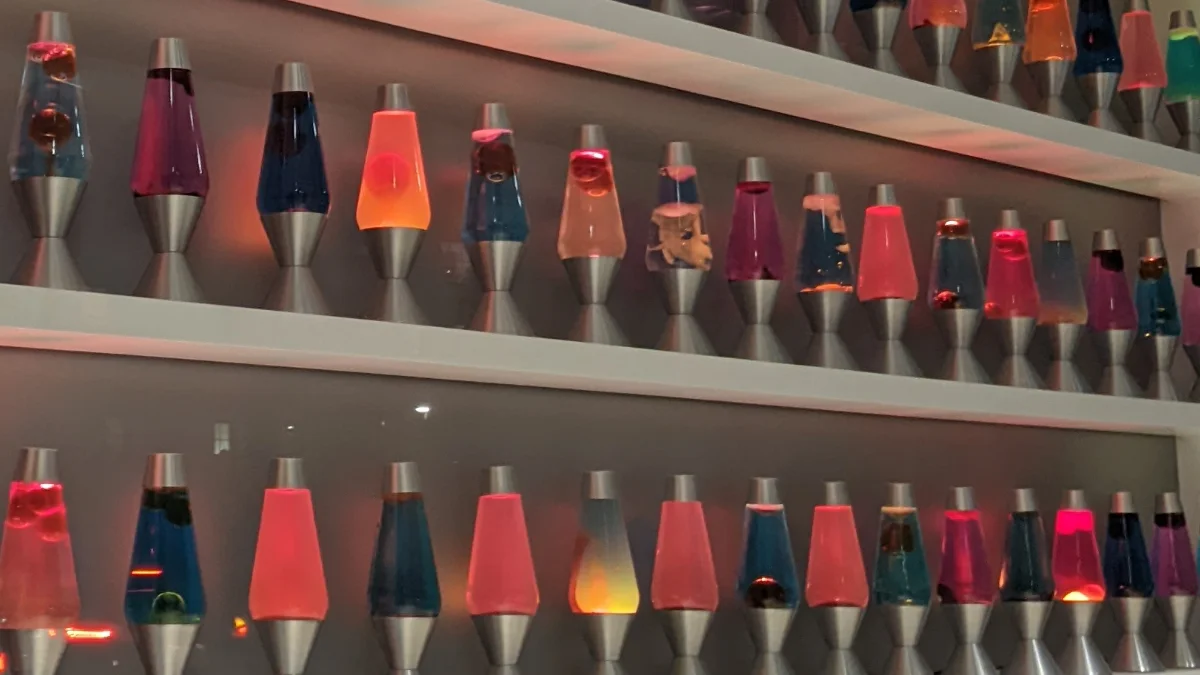
Fuck dice rolling, I watch lava lamps
I tried googling it and it didn't find it. A little SEO might help
Dang, over shoulder attack (classic) 🙄
Just shake it harder!
When they do, the world will be healed.
Its a chaotic universe. Satoshis stack may have floated passed me as a leaf on the breeze.
I’m curious what the thing on the right is.
Looks like a hard drive.
😂😂
def roll_dice():
# the number below was chosen by a truly random unbiased die roll during dev time
return 4
You could epoxy the dice in place after the roll. Just sayin.
Good for her!

Seen.
@Ben Arc the dice were never the hard part. the hard part is proving the device actually used what she rolled instead of quietly falling back to its own generator.
There are programs online to SHA256 dice rolls. Use them to verify the wallet’s firmware. Then use the wallet for real.
DO NOT USE THEM TO VERIFY REAL DICE ROLLS
I guess a battery bank, these DIY device have no battery usually, like the Specter DIY or SeedSigner.
That's probably right and maybe Bitcoin biggest adoption block. Our only chance is to make Bitcoin so easy, so bulletproof, so natural that everyone WANT to use it, not HAVE to use it.
Do you basically flip a coin but with a dice.

Nice, I will try to get one of those for me at LNbits Shop after this Saturday ( or next week because of the possible chain slip BIP-110 drama)..
Well all that coldcard fiasco reminds my CS textbooks and history of computer sciences and for me it is an opportunity to chitchat about computers and visiting places like Computer Sciences Museum (I took this photo of ERNIE circa 2015 in London) or plan a visit to again The National Museum of Computing (TNMOC) 😁
Whenever Bitcoin wallets come to mind, the very first thing I think about is TRNGs. So guys, let me share a piece of text from my textbooks to show that this issue is definitely nothing new. 👇
Building a true random number generator (TRNG) requires unpredictable real-world physics like atmospheric noise, thermal heat, or radioactive decay.
Alan Turing & The Ferranti Mark 1 (1951)
Built in Manchester in 1951, the Ferranti Mark 1 was the earliest commercial general-purpose electronic computer to include a hardware RNG. Co-designed by Alan Turing, it used an explicit hardware instruction to generate 20 random bits at a time from thermionic valve electrical noise. Turing recognized the value of non-determinism for stochastic processes and AI experiments, though early programmers struggled to distinguish true randomness from hardware faults or memory drift.
ERNIE 1 & The Bletchley Park Legacy (1956–1957)
The Team: ERNIE was built by Tommy Flowers, Sidney Broadhurst, and Harry Fensom, the same engineering group behind Colossus, the world’s first programmable electronic digital computer used for code-cracking at Bletchley Park during WWII.
The Mechanism: Designed to draw Premium Bond numbers fairly, ERNIE 1 generated true randomness by measuring thermal noise from the unpredictable movement of electrons through neon gas diodes. Testing Randomness: To prove to a skeptical public that ERNIE was unbiased, software pioneer Dame Stephanie "Steve" Shirley developed the Pegasus statistical verification program to rigorously audit its outputs.
Fast forward to the present days there are plenty of International industry standards on TRNGs.. for instance... ISO/IEC 20543 for test methods for the verification of probabilistic properties of random bit generators, ISO/IEC 19790 for Security requirements for cryptographic modules (FIPS 140-3 alignment), ISO/IEC 18031 for Random bit generation. Therefore, it is always prudent to choose products that adhere to industry standards to protect your bitcoin, as learning from more experienced individuals is generally excellent advice.

Its more than just flipping a coin with a die, you find two outcomes that are equivalent despite any bias in the physical object and use them to build your random number generator without bias. (Mileage may vary, nothing is 100% purely random except maybe the half life of radioactive matter)
Build Bigger Shoulders
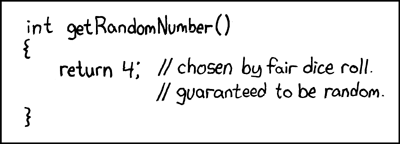
Credit where credit is due.
😂
@Not a Polar Bear test rolls prove the math is right, which is worth doing. they still do not prove the device used your real rolls on the real run, and that gap is the part that stays open.
Test the device against an online program (or indeed many programs). If the device and the program(s) agree N times, you have to ask yourself why would you not trust the device on run N+1?
@Not a Polar Bear agreement only tests the math. a device can derive every key correctly from a seed it quietly picked out of a tiny space and still pass every comparison you run. that is why people roll dice, the entropy comes from outside the box.
Oh it's the Lifeboat Theory. You are somehow special and get to survive the Titanic sinking, because people didn't choose to become obsessed with the same thing as you.
Bitcoin: $100000
HD wallet: $150
Dice roller: $20
Filming your seed phase and posting online: priceless!
😅
I actually wrote them down and put them in a wallet just to make sure 🤓
Classic…
😏
Bruh. I NEED that dice roller.
I wish I had a 9 Year old with $100,000s of bitcoin
Wow - where can I get one of those dice boxes?
Also, here is a completely transparent way to generate an electrum (legacy) seed phrase from dice without trusting any electronic device to process the dice rools:
Using six sided dice to generate 12 random words from electrum wordlist
Using six sided dice to generate 12 random words from electrum wordlist
WARNING! Use at your own risk!!
#dicerolls, #bitcoin, #seed