RIDING THE AI WAVE
The Globe and Mail (Ontario Edition)
Nov 23, 2026
Toronto-based Tailscale benefits as startups and Big Tech use its software to build out their digital infrastructure
Toronto software firm plans to double staff, win big contracts from governments and multinationals with new sovereign strategy
Tailscale Inc. isn’t an artificial intelligence company, but it has been growing like one – and has AI to thank for it.
Now, the Toronto company is preparing to capitalize even further on mushrooming demand for its secure virtual private network and connectivity software. That’s a shift in how its fiscally prudent chief executive officer Avery Pennarun has managed the seven-year-old company and includes a play to win big contracts from government and multinationals with a new “sovereign” offering.
“This is the year where some jets will get stepped on, based on the huge demand we’ve been fighting off,” he said. “We just need to get over ourselves and deliver what the market has been asking for. We should be spending a lot of money to make a lot of money in a short time, especially in this current AI tornado.”
Tailscale has benefited as rapidly proliferating AI startups have turned to its products to build out their digital infrastructure. This year it got a boost as AI search engines automatically recommended its product to those looking for networking tools. Other infrastructure players such as Supabase and Vercel have experienced similar spikes.
Meanwhile, personal AI tools and agent platforms, including Meta’s Muse and OpenAI’s Codex Cloud, have integrated Tailscale’s open-source networking layer into their products – often “without talking to us first,” said Mr. Pennarun.
With so many customers coming to its front door on their own, Tailscale has spent little to attract new business. As AI agents spring up everywhere and need security and connectivity to underpin them, “Tailscale just got elected, almost despite ourselves, as the standard way to do that,” he said.
Tailscale board member Amit Kumar, a partner with Silicon Valley venture capital firm Accel, said, “We’re benefiting from being in the right place at the right time, having built the right product for that.”
Widespread adoption of Tailscale’s free product has increased uptake of its revenue-generating version: It has 60,000 paying business customers, up sixfold since January 2025, and 3.5 million individual monthly users. Its top-line growth has quickened: Annualized revenues doubled to US$40-million during its fiscal year ended Feb. 1, then doubled again to US$80-million in the next nine months. Net dollar retention, a measure of how much customers spend compared with the previous year, is 140 per cent.
Until now, Montreal-based Mr. Pennarun, a serial entrepreneur who previously worked at Google as a software engineer, has resisted calls from U.S. venture capitalists on his board to spend more and grow Tailscale even faster.
That’s changing. Tailscale is investing more in sales efforts and other initiatives to fuel global expansion and plans to double its roughly 400-person head count in the next year. That includes building out a team to land government deals, led by former Google executive Patricia Prewitt, who joined the company this fall. The company will also be more pro-active in pursuing strategic acquisitions.
Tailscale is planning to raise hundreds of millions of dollars of fresh capital in the coming months, said Mr. Pennarun. It only this fall started dipping into the US$230-million it raised early last year in a financing that valued the company at US$2-billion, after previously raising US$115-million.
The company is leaning into another big opportunity by adopting a sovereign AI strategy run by Ms. Prewitt. That’s in response to growing demand from large corporations and governments for a version of its product that would let customers completely self-host their data.
To turn its offering into a sovereign play, Tailscale needs to “enable anyone who wants to have every aspect of what we do for their data controlled within the space that they define,” said Ms. Prewitt, whether that’s in a customer’s country or on their premises.
At the moment, Tailscale’s “control plane,” or data-routing system for connecting the secured endpoints of specific customers within their networks, is located in Germany. To become more sovereign, Tailscale will need to set up relay points in each country where clients are located, which Mr. Pennarun said wasn’t a significant technological change.
Tailscale expects to launch the offering this year, and Mr. Pennarun said individual contracts for the sovereign offering should grow into the tens of millions of dollars a year per customer from multinational businesses and governments.
Newly hired chief financial officer Kunal Mehta, who’s based in the San Francisco Bay Area, said, “The return on investment on every dollar is so high that it behooves us to accelerate our growth.”
“Avery and I would be very disappointed if we just doubled” revenues next year, he added.
Shared via PressReader
connecting people through news
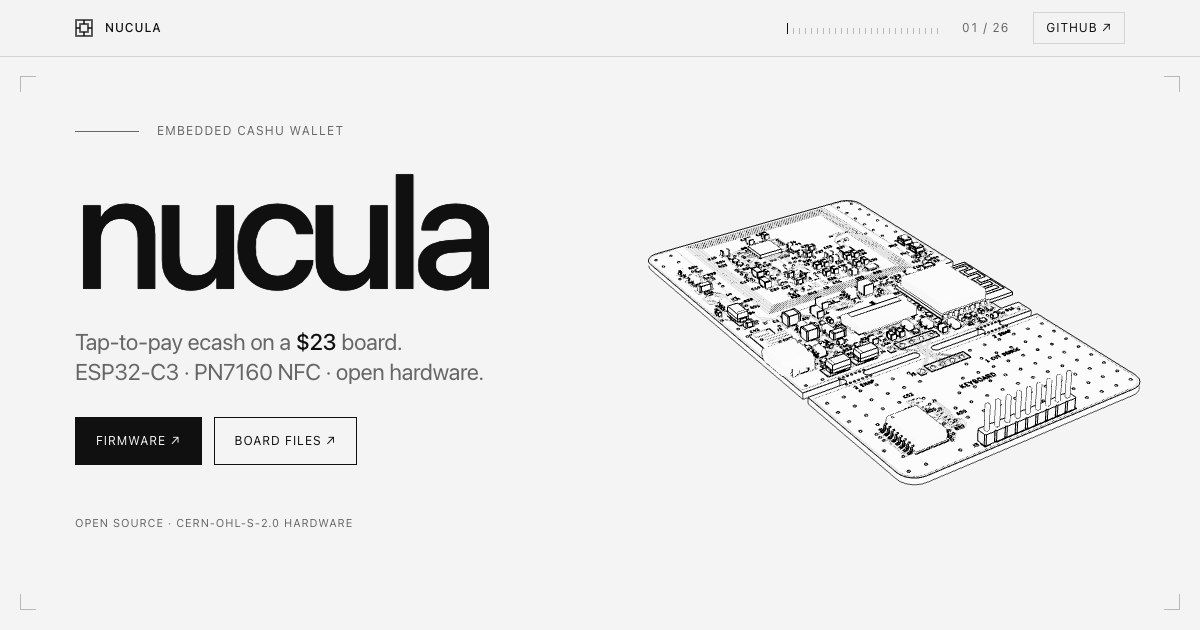
Yesterday in Ollantaytambo, we were without electricity from 5am-12pm (the whole city and region). This was the use case I was considering for #ProjectOakgate, falling back to a local relay on the phone, plus the ability to present ecash for local payment between phones and have the ecash automatically clear when the mints and networks come back online. I have a good idea how to do this; it will require an app + NFC for sending and receiving ecash. I have already built offline payments (when the mints are unavailable) and have proven the basic mechanisms. It will take some engineering, it will be several months before I can tackle this, but now I can relate to a use case where an entire city/region loses access to the internet and power.
#projectoakgate