Amazing results from DIY Bitcoin mining maple sap reverse osmosis system.
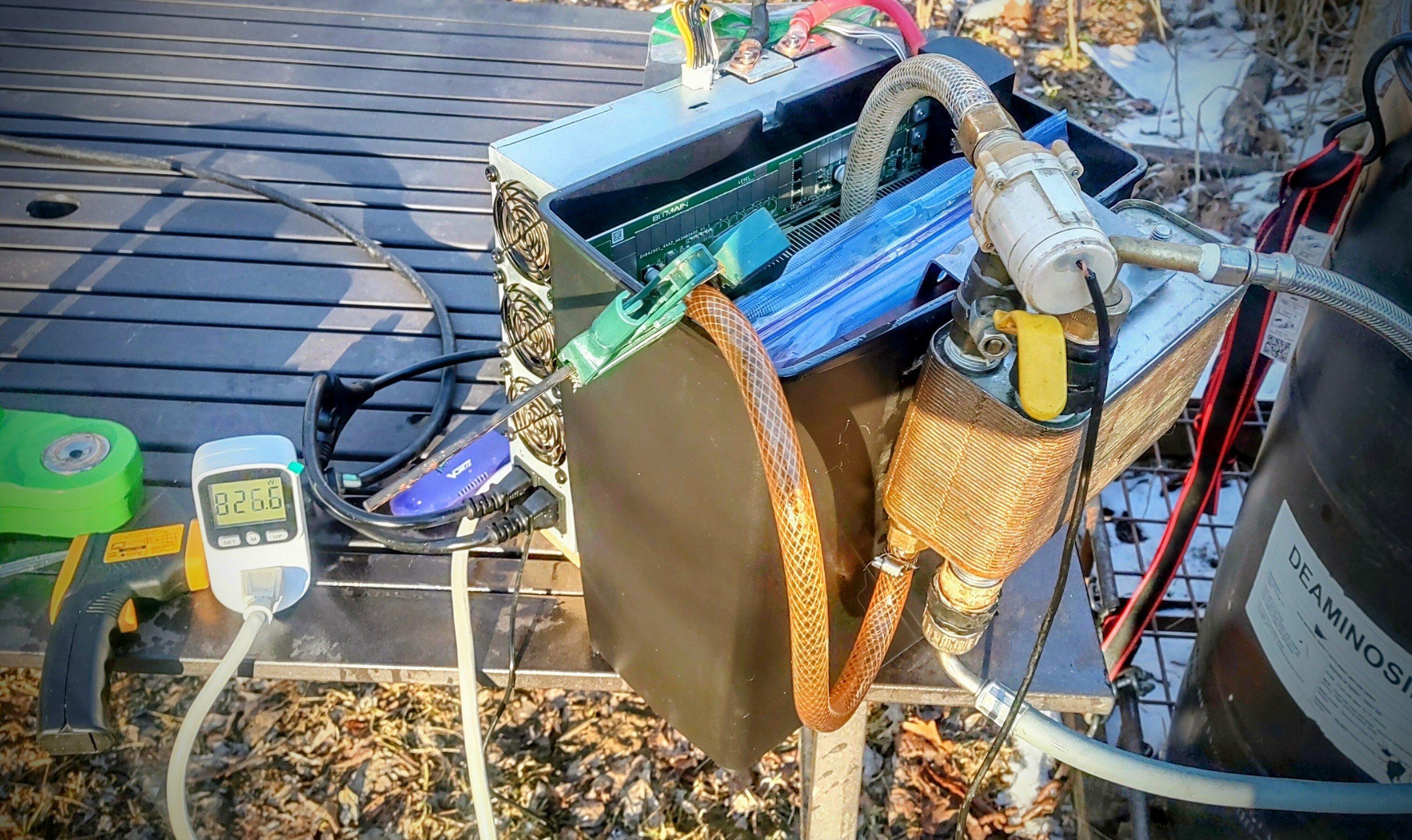
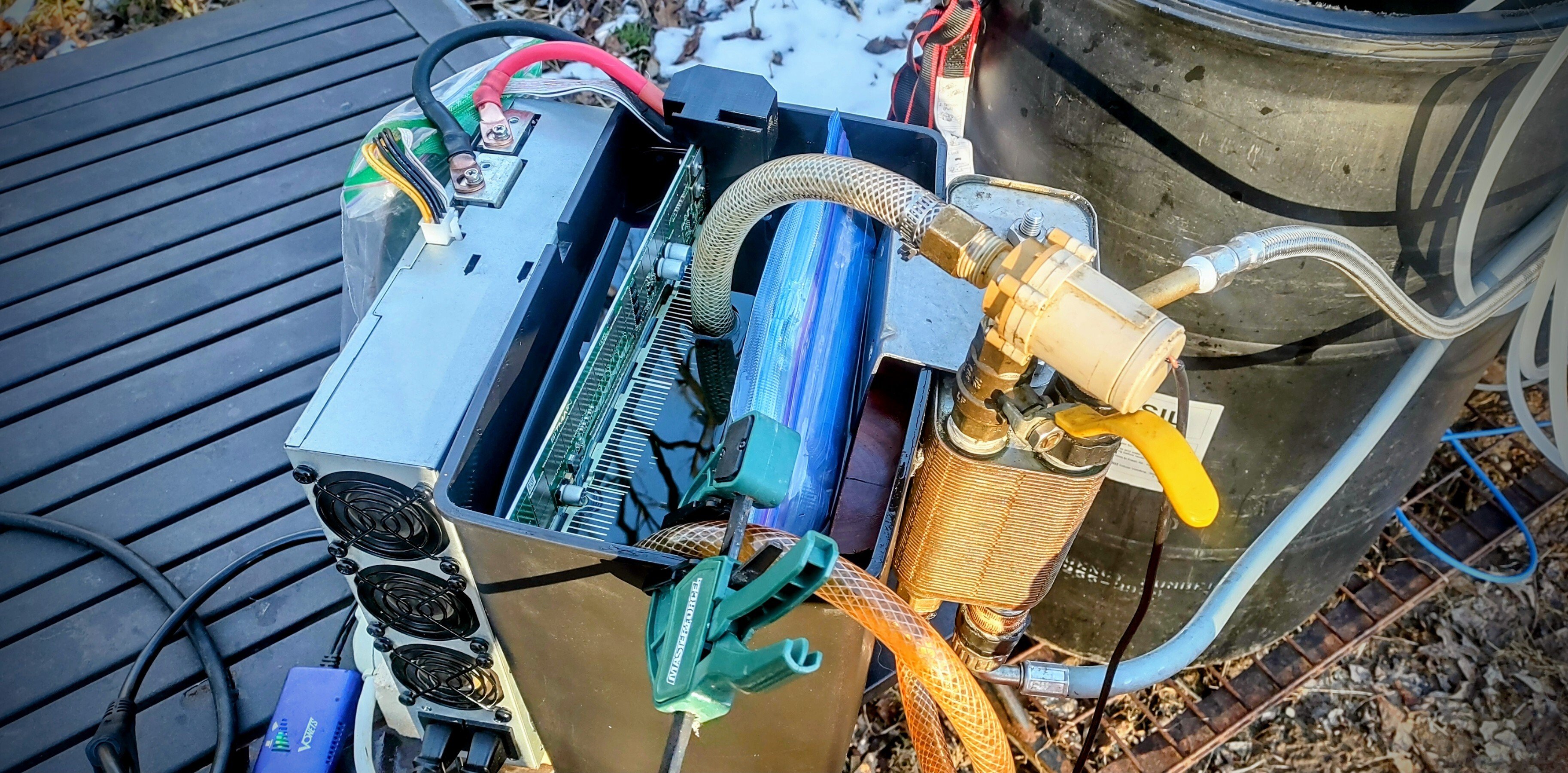
 This reverse osmosis maple sap concentration system utilizes an immersion Bitcoin mining heating loop to improve the efficiency of the system by heating the maple sap before it passed through a reverse osmosis filter. The immersion mining system uses canola oil as the dielectric fluid!
Now that I've had a chance to run several hundred gallons of sap through the system I've have everything pretty dialed in. Depending on the ambient temperature and sap temperature the system is able to concentrate the sap 30-50% faster than before without the immersion mining heating loop. Additionally, the sap is getting concentrated to 7 brix in one pass vs 6 brix which means removing even more water before boiling than before.
This reverse osmosis maple sap concentration system utilizes an immersion Bitcoin mining heating loop to improve the efficiency of the system by heating the maple sap before it passed through a reverse osmosis filter. The immersion mining system uses canola oil as the dielectric fluid!
Now that I've had a chance to run several hundred gallons of sap through the system I've have everything pretty dialed in. Depending on the ambient temperature and sap temperature the system is able to concentrate the sap 30-50% faster than before without the immersion mining heating loop. Additionally, the sap is getting concentrated to 7 brix in one pass vs 6 brix which means removing even more water before boiling than before.


 The canola oil immersion mining heating loop is providing a 25% rebate on the power usage of the total system after upgrading the vanilla s9 hashboard to an s9j hashboard. So, the system process the sap faster saving time, removes more water saving propane/fuel and boiling time, and it pays a Bitcoin rebate on the power usage. By adding the immersion mining heating loop I've massively expanded the capacity of my existing maple sugaring equipment.
Because the mining system is temporary and I didn't have access to Bitcool or something similar for the dielectric fluid, the canola oil was a cheap readily available alternative. It has been working well with no noticable degradation.
There are some downsides to the system. First I lost a control board because I splashed sap on it. Then I lost two batches of concentrated sap. The heater gets the sap warm promoting the fermentation process, so I wasn't able to start boiling the sap quickly enough in the warmer weather. The bottleneck of the process is definitely at the boiling stage now.
This system can be built for less than $700 and is more efficient than similar systems costing over $2500... Necessity is the mother of invention as they say.
#homesteading #permaculture #permies #maplesyrup #maplesugaring #meshtadel #grownostr #bitcoin #bitcoinmining #homemining #plebminer
View quoted note →
The canola oil immersion mining heating loop is providing a 25% rebate on the power usage of the total system after upgrading the vanilla s9 hashboard to an s9j hashboard. So, the system process the sap faster saving time, removes more water saving propane/fuel and boiling time, and it pays a Bitcoin rebate on the power usage. By adding the immersion mining heating loop I've massively expanded the capacity of my existing maple sugaring equipment.
Because the mining system is temporary and I didn't have access to Bitcool or something similar for the dielectric fluid, the canola oil was a cheap readily available alternative. It has been working well with no noticable degradation.
There are some downsides to the system. First I lost a control board because I splashed sap on it. Then I lost two batches of concentrated sap. The heater gets the sap warm promoting the fermentation process, so I wasn't able to start boiling the sap quickly enough in the warmer weather. The bottleneck of the process is definitely at the boiling stage now.
This system can be built for less than $700 and is more efficient than similar systems costing over $2500... Necessity is the mother of invention as they say.
#homesteading #permaculture #permies #maplesyrup #maplesugaring #meshtadel #grownostr #bitcoin #bitcoinmining #homemining #plebminer
View quoted note →
This reverse osmosis maple sap concentration system utilizes an immersion Bitcoin mining heating loop to improve the efficiency of the system by heating the maple sap before it passed through a reverse osmosis filter. The immersion mining system uses canola oil as the dielectric fluid!
Now that I've had a chance to run several hundred gallons of sap through the system I've have everything pretty dialed in. Depending on the ambient temperature and sap temperature the system is able to concentrate the sap 30-50% faster than before without the immersion mining heating loop. Additionally, the sap is getting concentrated to 7 brix in one pass vs 6 brix which means removing even more water before boiling than before.







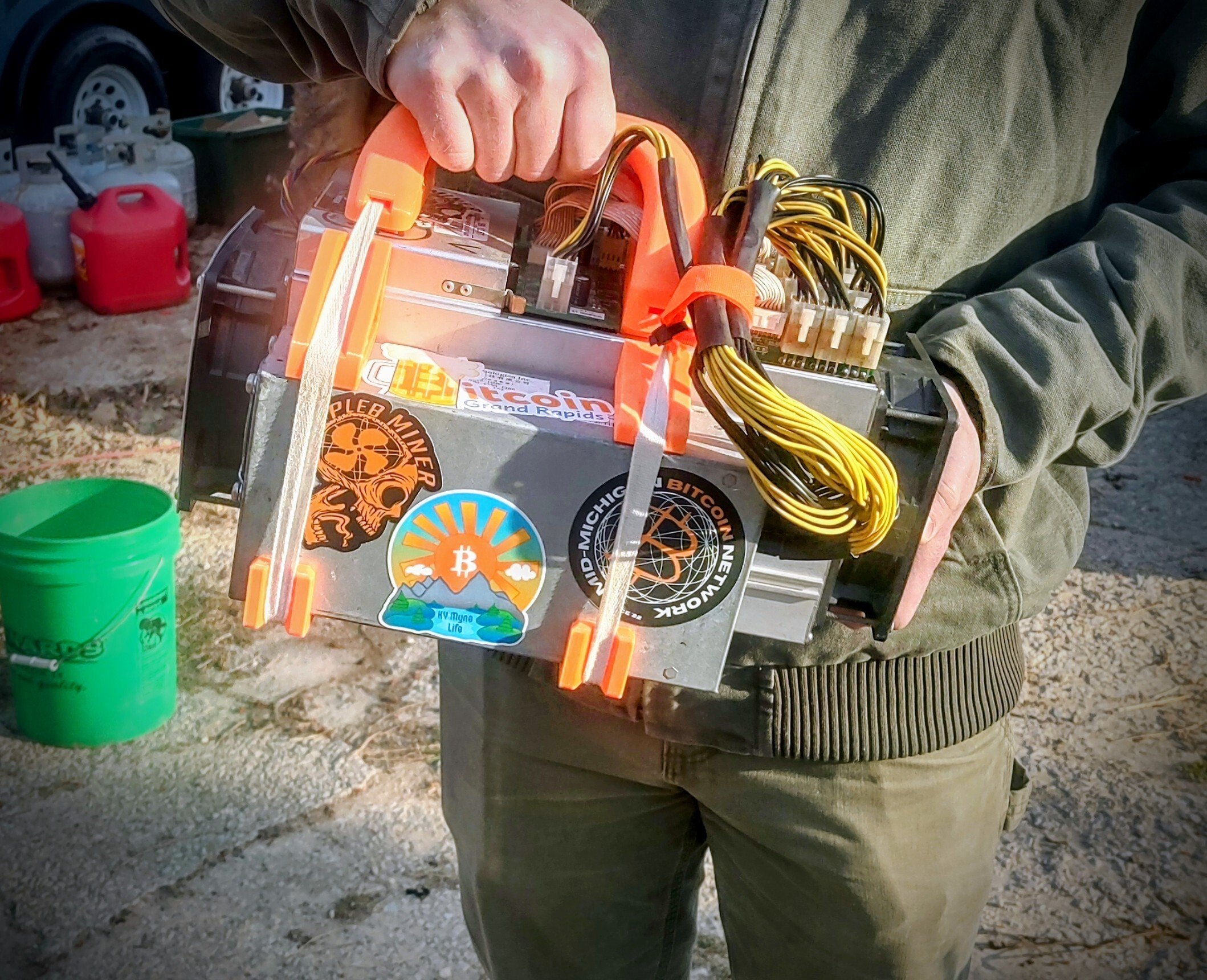 A friend was interested in learning about mining so gave him an S9 to experiment with.
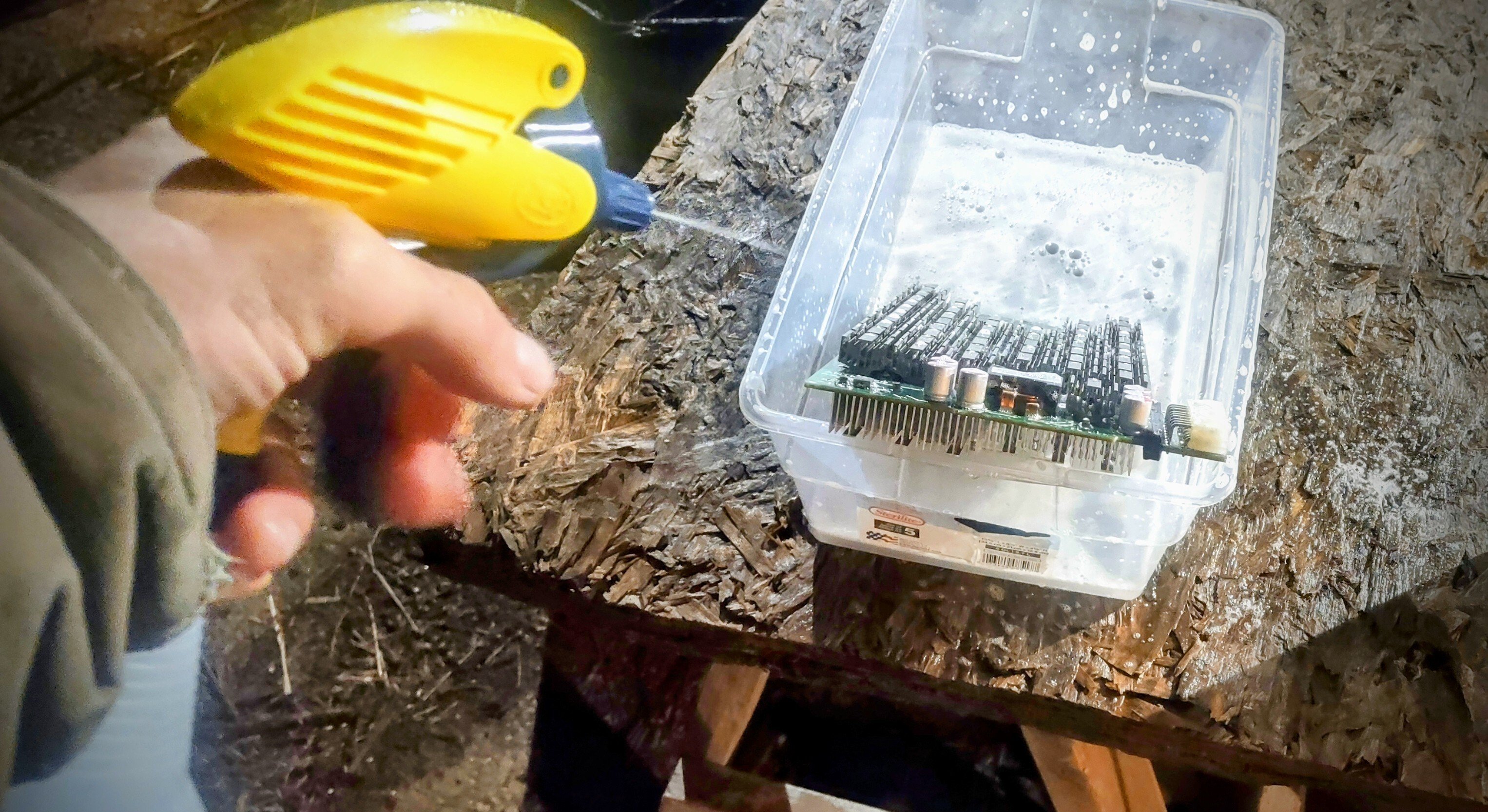 Before I could give it to him, I had to clean the canola oil off the hashboard I was using in the immersion maple sap heater. I gave the board a bath in very soapy water and used a spray bottle to get the oil out from in and around all the heat sinks. Then dried very thoroughly with a hair dryer. Ironically, because the board was so clean, it was staying a few degrees cooler than the other hashboards when I was tuning the miner up before handing it off.
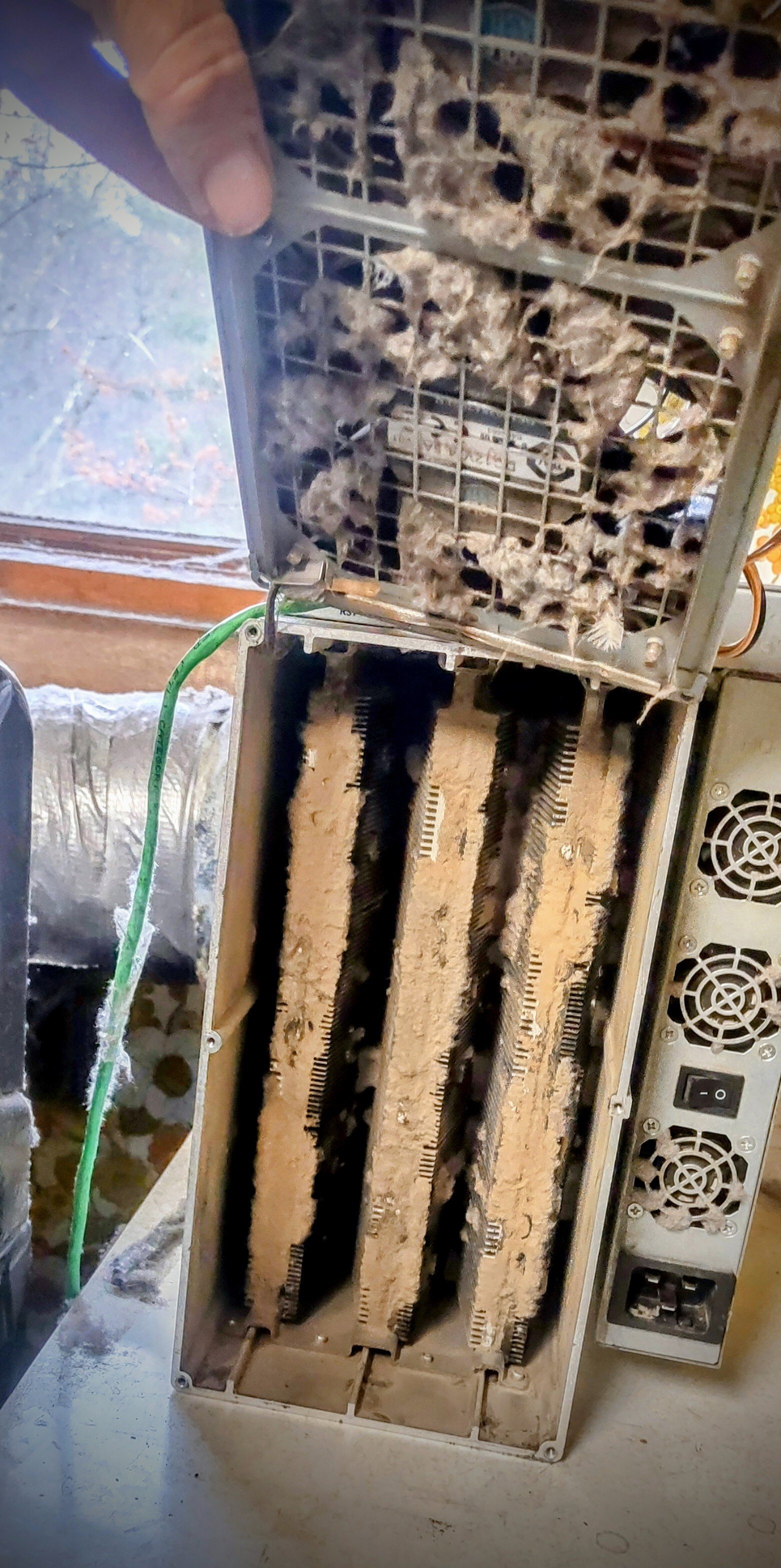 The improved performance of the S9 from the cleaning, got me thinking I should clean the miner I use for my clothes dryer. When I opened it up I was shocked that it was hashing at all... It was almost totally clogged with dryer lint. After cleaning it out the fans were running at much lower speeds significantly reducing the noise. We must have gotten used to it as it slowly got louder and louder. For as much as Canaan miners get hated on, this machine has proven to be very tough, hashing in a very dirty high heat environment with reduced airflow.
#bitcoin #bitcoinmining #plebminer #hashthetorch #meshtadel
The improved performance of the S9 from the cleaning, got me thinking I should clean the miner I use for my clothes dryer. When I opened it up I was shocked that it was hashing at all... It was almost totally clogged with dryer lint. After cleaning it out the fans were running at much lower speeds significantly reducing the noise. We must have gotten used to it as it slowly got louder and louder. For as much as Canaan miners get hated on, this machine has proven to be very tough, hashing in a very dirty high heat environment with reduced airflow.
#bitcoin #bitcoinmining #plebminer #hashthetorch #meshtadel



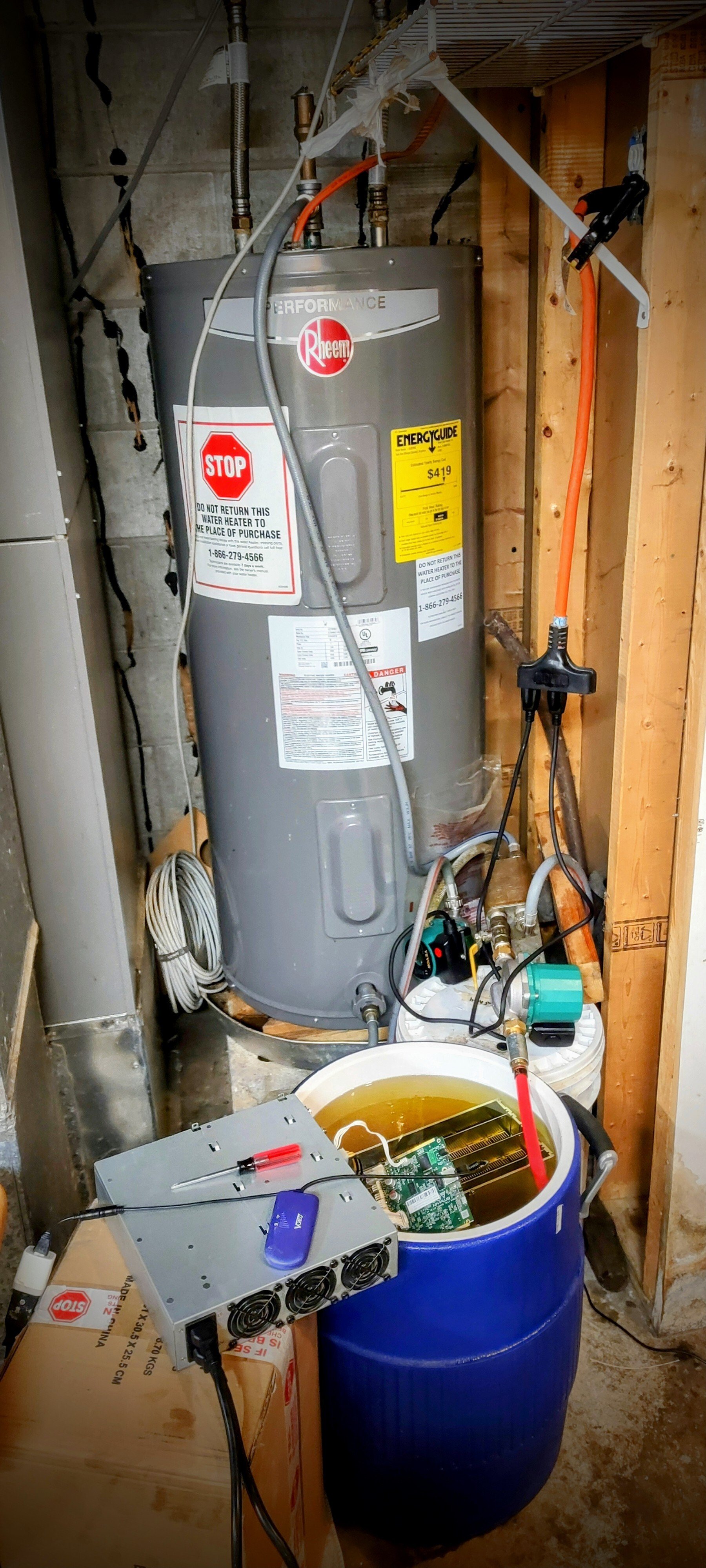 I always approach the design of my systems utilizing permaculture to guide me which often means my initial implementations look makeshift and messy.
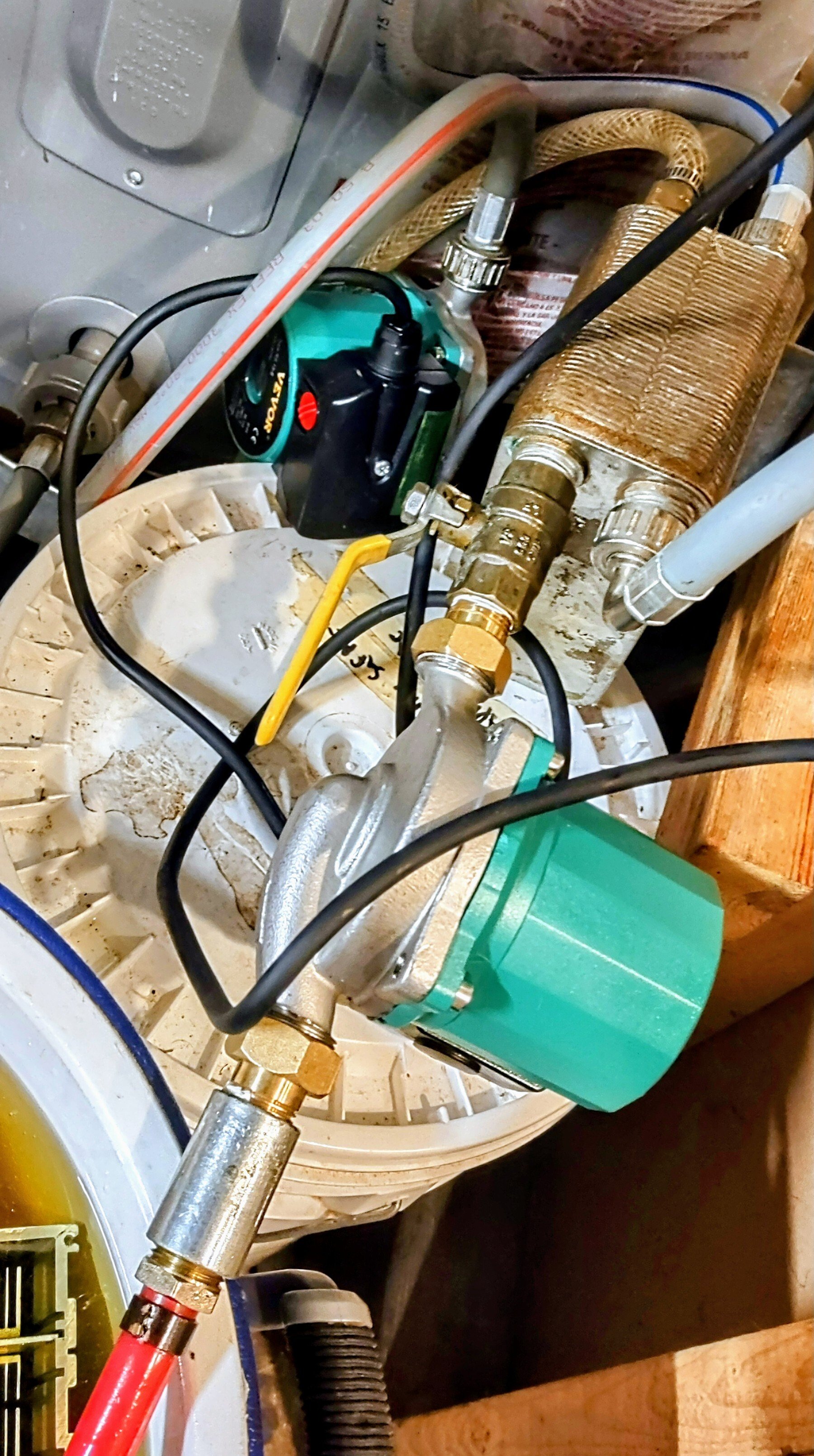 There are a few key principles I'm leaning on in this hot water heater build. First is small and slow solutions, I want the hot water heater to be able to function normally if things don't work out, I want to have a minimal investment in the components for the same reason. This leads to the principles produce no waste and use/value renewable resources, basically I wanted to use stuff I already had. Using heat productively from Bitcoin mining naturally utilizes the integrate rather than segregate permaculture principle.
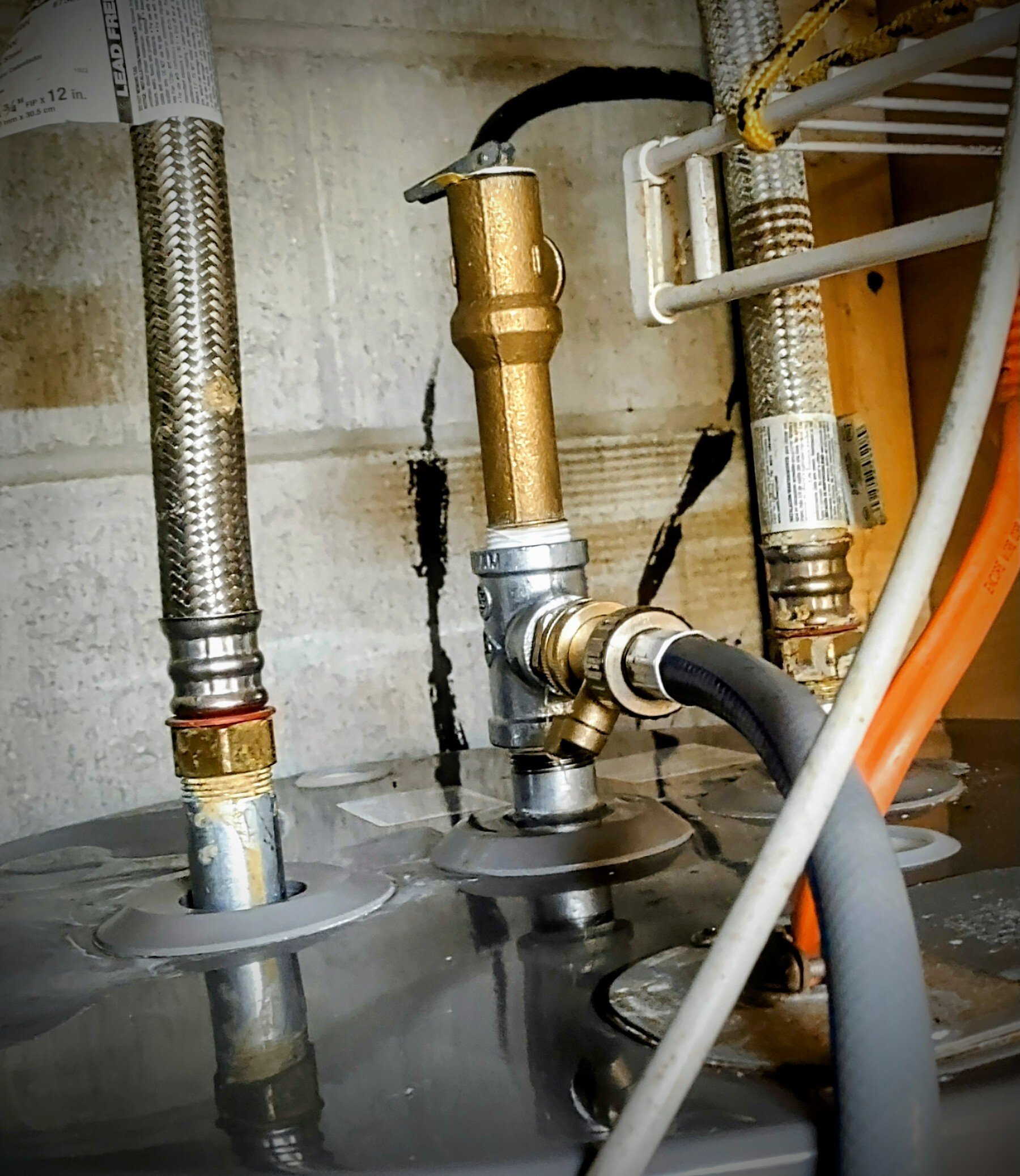
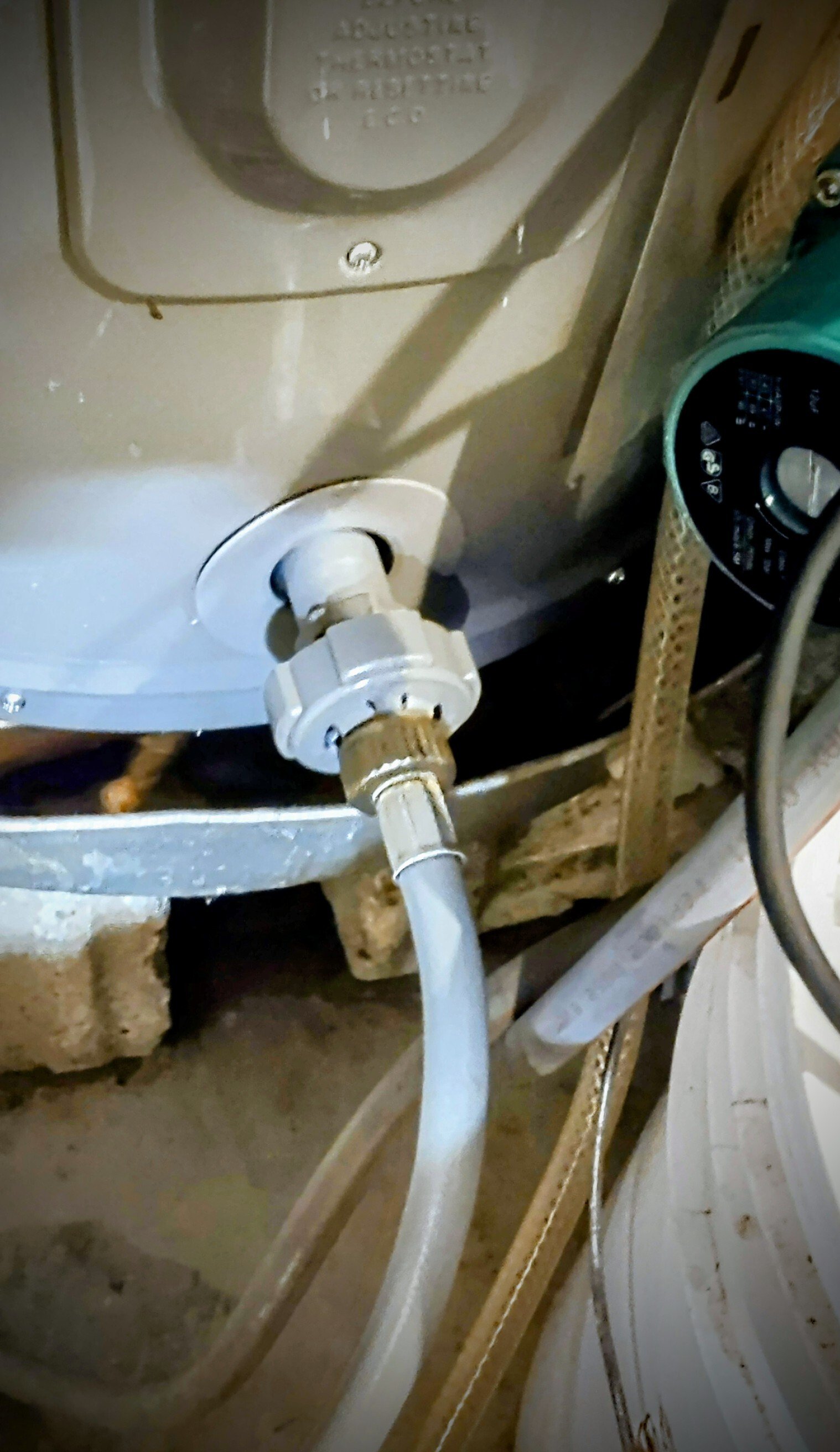
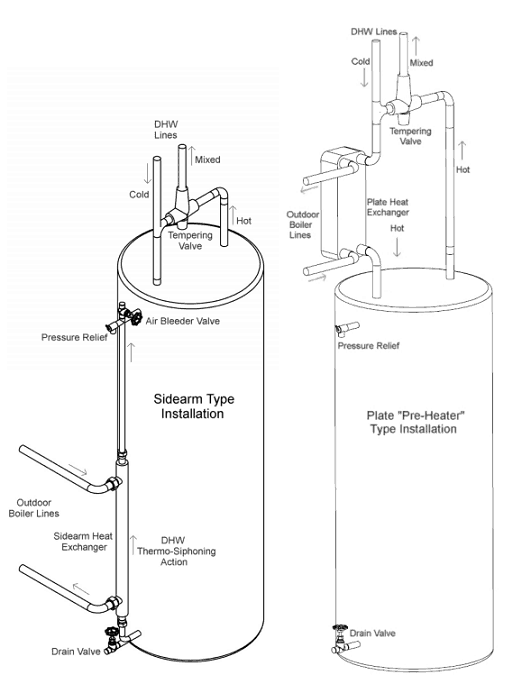 The design utilizes the side arm recirculation technique, which takes cold water out of the drain port of the tank and returns heated water to the top of the tank through the pressure relief port. The recirculation loop of the hot water tank is driven by a cheap pump through a plate heat exchanger.
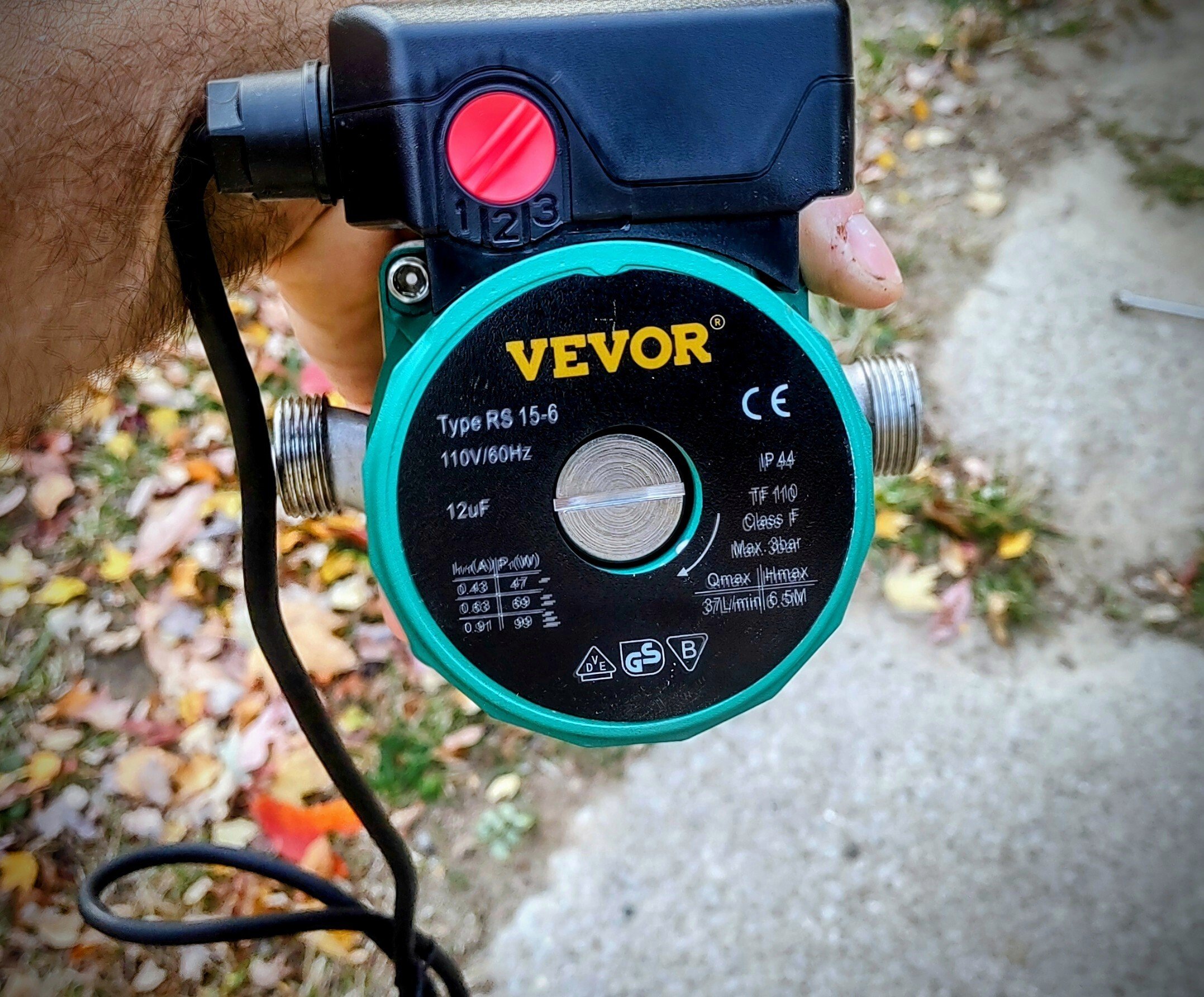 On the Bitcoin mining side of the hot water system, an s19 is placed vertically in a 10 gallon plastic cooler immersed in 8 gallons of canola oil. There are two fans in the intake side of the miner at the bottom of the cooler and I tried to keep the control board and PSU out of the oil (less to clean up if it didn't work). There is some pex pipe drawing hot oil off the top of the tank driven by an identical pump as the hot water side of the loop. The hot oil passes through the plate heat exchanger in an opposing flow as the water. The cooled oil is returned to the bottom of the cooler through the hole where the water spigot was.
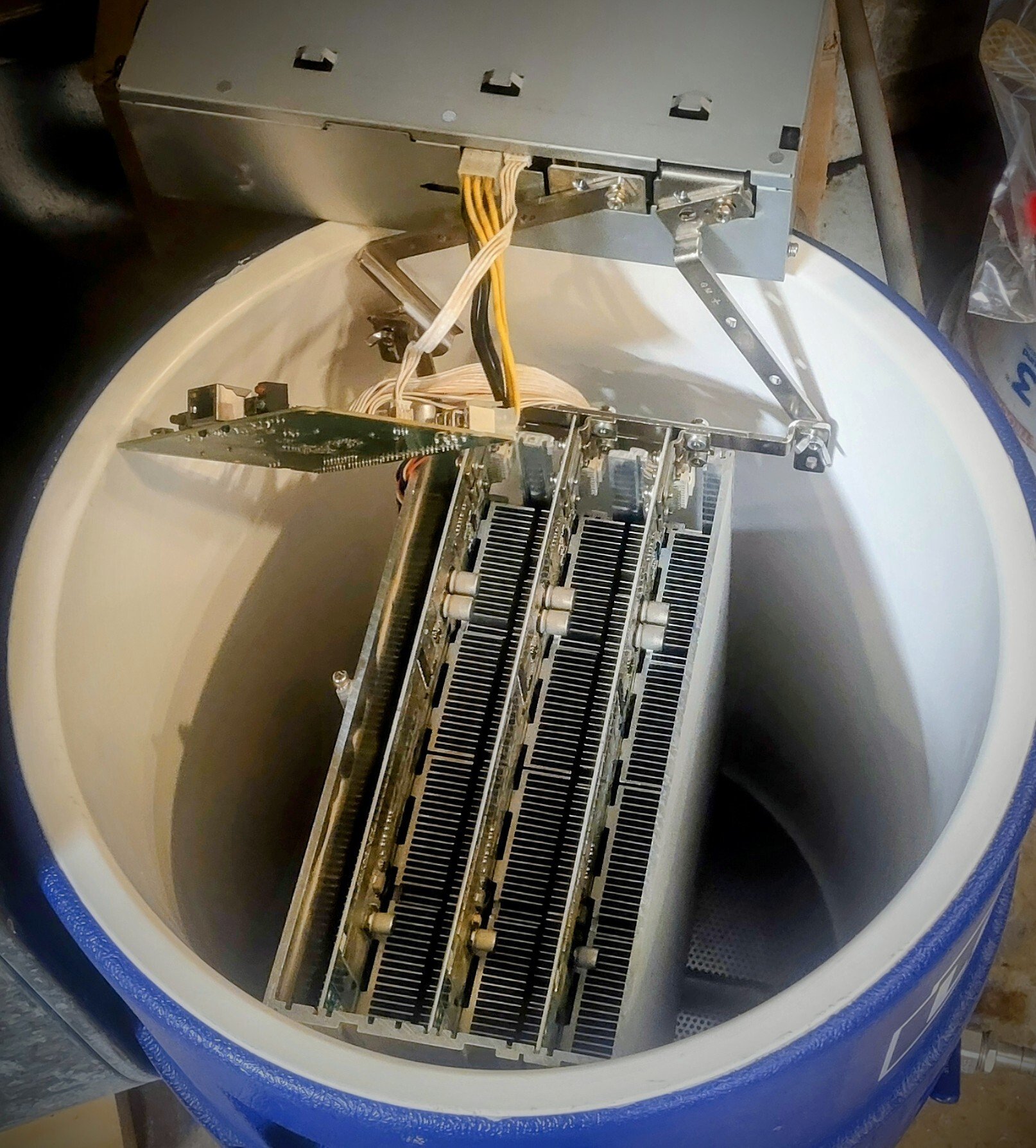 I've done a few initial trials of the system and it works! However, the biggest downside is that after heavy water usage like drawing a bath, it takes a few hours for the water to get back up to the top temperature. I think the slow recovery time is due to the size of the plate heat exchanger. The miner can put out heat more quickly than it can be exchanged into the water so I'm finding I have to keep the miner running at a lower wattage to avoid overheating.