Susie Violet's avatar
Susie Violet
npub1hwgw0uznr49t4gullpgfz4m5xnakl5a0l88m3k382xv7ys0tfmlsd503sg
npub1hwgw...03sg
Bitcoin Journalist
Susie Violet's avatar
Susie 3 months ago
In 1994, Rwanda descended into one of the darkest chapters in modern history. Over a million people were killed while the world looked away. Anaïse Kanimba lost her biological parents in that genocide and was later adopted by Paul and Tatiana Rusesabagina, whose story inspired Hotel Rwanda. Her life is a living reminder of survival, silence, and the fight for freedom. In our conversation, she shares how in times of collapse money becomes a weapon and how Bitcoin can serve as a tool for freedom. You can watch the full interview here: image
Susie Violet's avatar
Susie 4 months ago
Simon Dixon says we’re now in the “Wall Street Attack Phase”, a period where traditional finance will do whatever it takes to get our bitcoin. The history of bitcoin has always been one of counterattacks, and this is just another chapter. Hal Finney imagined a future where banks would hold bitcoin as reserves and settle with each other using it, integrating rather than replacing the financial system. But that doesn’t mean we shouldn’t stay alert to how easily integration can become capture. In this podcast, Simon issues a series of serious warnings: - Many underestimate what Wall Street is willing to do to take your bitcoin. Everyone’s going to go through some really hard lessons in the coordinated, engineered process to teach people they should have bitcoin in self custody. - People come in for Number Go Up technology and until they go through a disaster, they don’t realise that money you can own and money you can spend is the real utility. - The true utility of bitcoin is self custody. - There’s a crucial distinction between bitcoin in custody, bitcoin in self custody, and everything else in crypto. If you don’t figure that out over the next five years, you’ll end up in a Universal Basic Income surveillance state, an Orwellian nightmare where you get the vaccine or you get negative interest rates. Which side of that are you going to be on? Simon predicts that anyone who does it through Wall Street via ETFs, pensions or bitcoin backed loans will see a repeat of 2021. They will live through another elaborate scheme that ends with your bitcoin in their wallets and under their control. We will live in a two tier bitcoin system with Wall Street instruments on one side and bitcoin in self custody on the other. Self custody is ultra ultra important for people to figure out. My takeaway: This @Simon Dixon podcast with @Bitcoin Archive could be one of the most important podcasts you listen to. Please don’t lose your way. Remember why bitcoin is special, it’s freedom money, not a Wall Street instrument. As Simon says, bitcoin is the opt out. It’s an exit from the system. Watch here:
Susie Violet's avatar
Susie 4 months ago
A $7 billion fraud trial starts in London on 29 September. Central to the case is the fate of 61,250 seized bitcoin, now under dispute. Chinese victims want their money back, while UK prosecutors focus on possession and transfer charges. The Telegraph tried to spin the bitcoin as a quick fix for the deficit, but the reality is far more complex. Read the full article here: image
Susie Violet's avatar
Susie 5 months ago
Great to join Joey Garcia, Alfonso Martel Seward and Ione Butler on The Roxom Report. We discussed UK and EU regulation, the barriers to growth, the role of the FCA, consumer harm, and the growing risks around privacy and surveillance. Important conversations that we need to have more of. ⚡️ image
Susie Violet's avatar
Susie 5 months ago
Harvard economist Matthew Ferranti has published a peer reviewed study showing that central banks preparing for sanctions risk should hold more than just gold. His model demonstrates that adding Bitcoin to reserves strengthens resilience when access to traditional assets is threatened. For the first time, a peer reviewed economics journal is treating Bitcoin as a credible reserve asset rather than speculation. What took them so long? A reminder that money can be weaponised, while Bitcoin remains neutral, borderless, and open to everyone. At the Financial Times Digital Asset Summit, the UK’s Economic Secretary to the Treasury, Emma Reynolds said Bitcoin “isn’t for us.” Ferranti’s study shows why the government must start researching Bitcoin’s role in reserves. This is the kind of research @Bitcoin Policy UK has consistently urged the Treasury and Parliament to conduct. Read the full paper: https://www.sciencedirect.com/science/article/pii/S0261560625001688 image
Susie Violet's avatar
Susie 5 months ago
Runaway US debt is on target to hit $40T by Christmas. In the UK, the Office for Budget Responsibility flags us as one of the most indebted advanced economies. As Reuters put it: “Britain’s economic problems are home-grown and a solution looks a long way off.” Inflation saves the state, Bitcoin saves you. https://www.reuters.com/commentary/breakingviews/britains-economic-woes-are-sadly-home-grown-2025-09-05/ image
Susie Violet's avatar
Susie 5 months ago
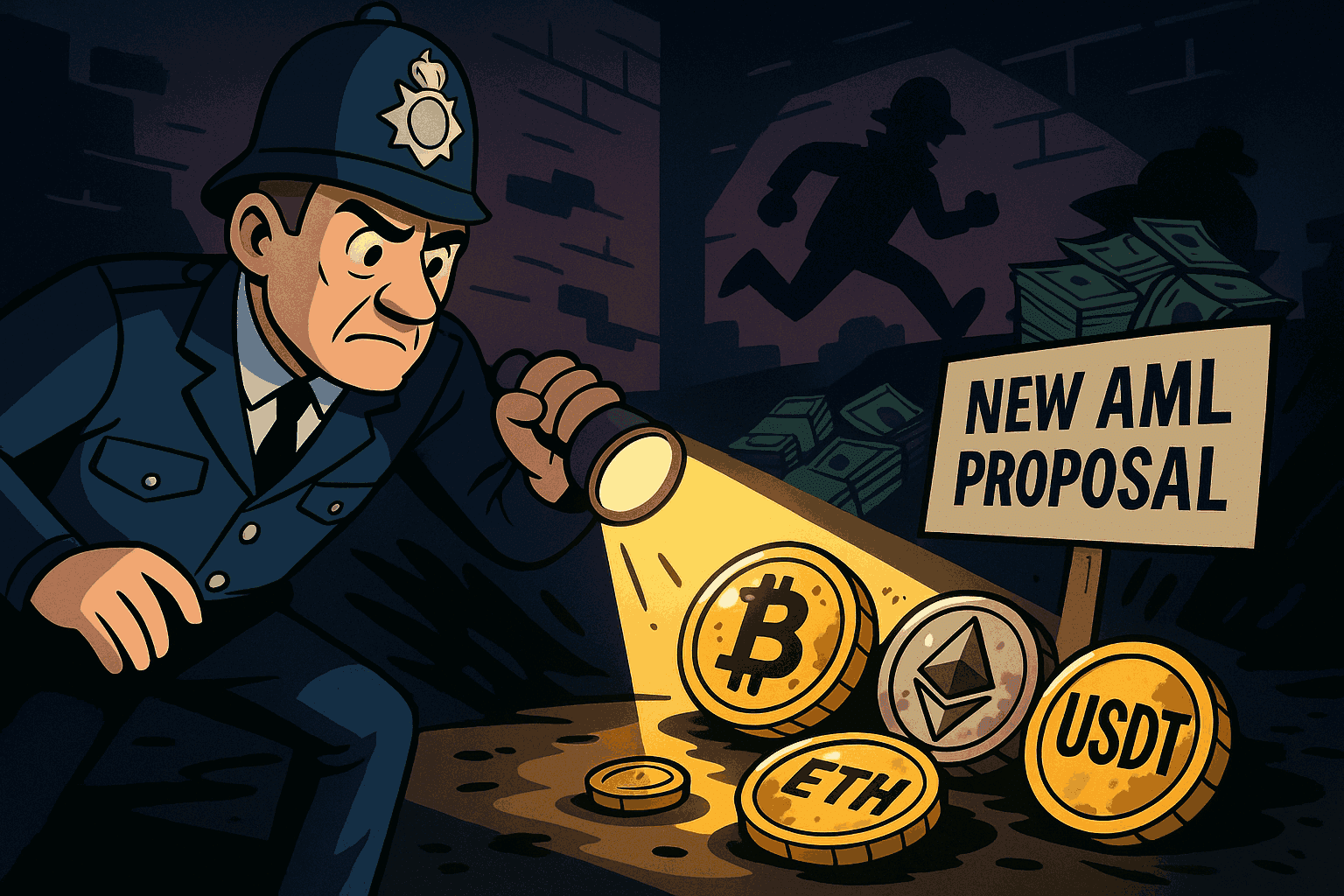
Is this how freedom ends in the UK? The UK’s latest “crypto AML rules” slash ownership disclosures from 25% to 10%, pulling more people into disclosure regimes and expanding banking surveillance. These measures are framed as fighting crime. But similar rules in tradfi have existed for years and haven’t stopped fraud or money laundering. What they do create are honeypots of personal data, risks for law-abiding people, and deeper state oversight. This is about normalising authoritarian tools, not AML or safety. Decades of KYC and financial surveillance show how control creeps in rule by rule. That same authoritarian logic already governs speech, from the Online Safety Bill to Graham Linehan’s Heathrow detention over tweets. And now digital IDs are back on the table, linking finance, identity and turning everyday access into a system of control. Add in programmable money and street surveillance, and you have a panopticon, a 1984 scenario darker than Orwell imagined. The UK has offically sleepwalked into authoritarianism.
Susie Violet's avatar
Susie 5 months ago
The long predicted supply crunch on Bitcoin could be just around the corner. Businesses are buying four times more BTC per day than miners produce. Around 7.6% of the total supply is gone forever. The pressure on liquidity is building. Bitwise is forecasting a 1.3 million dollar Bitcoin as institutional giants prepare to deploy trillions. ETF inflows hit $440 million in a single week. Eric Trump recently said there is no question Bitcoin will hit one million dollars in the coming years. He pointed to soaring demand from nation states, corporates and ultra wealthy families. https://reuters.com/world/asia-pacific/eric-trump-sees-bitcoin-hitting-1-million-praises-china-cryptocurrency-role-2025-08-29/ (Paradoxically, he is knee deep in his shitcoining phase, while seeming to understand Bitcoin’s fundamentals.) Global adoption is accelerating, supply is tightening, and institutional demand is surging. The alignment of adoption, infrastructure, institutional capital and urgency is becoming impossible to ignore. How much longer until the UK wakes up?
Susie Violet's avatar
Susie 5 months ago
Bitcoin mining is essential energy infrastructure. Hut 8, named after Alan Turing's WWII codebreaking hut, has rebranded to American Bitcoin and plans to start trading on Nasdaq after merging with Gryphon Digital Mining. They will no longer be a pure Bitcoin miner. They plan to become an energy and compute infrastructure operator, expanding into AI hosting, flexible grid partnerships, and advanced computing markets. The Trump family involvement brings mainstream attention, some positive, some polarising. What remains constant is that Bitcoin itself is neutral, independent of politics or branding. For once, Bitcoin is in the headlines for the right reasons. Read the full article: https://www.reuters.com/world/asia-pacific/american-bitcoin-backed-by-trump-sons-aims-start-trading-september-2025-08-28/ As Eric (probably never) said, ‘1 bitcoin = 1 bitcoin.’
Susie Violet's avatar
Susie 5 months ago
Energy bills are climbing again in the UK while billions are being paid out in curtailment costs. Flexible load solutions that could help stabilise the grid are being ignored. According to the Financial Times, in the 2024–25 financial year. NESO spent £2.7 billion in total balancing costs in 2024–25, with wind curtailment a major contributor. This curtailment happened because the grid could not handle the excess electricity. Recent coverage paints a clear picture. YahooFinance and CoinDesk report on Hut 8’s efforts to monetise energy assets, showing how miners are aligning with the energy sector to provide stability and unlock new revenue streams. Our UK briefing paper at @Bitcoin Policy UK shows exactly how Bitcoin mining could do the same here. Flexible load can absorb excess renewable generation, reduce curtailment costs, and lower bills for households and businesses. https://img1.wsimg.com/blobby/go/aea8e937-fd18-400f-afd9-c3513112c757/downloads/d3850229-208c-4385-9b86-2e82fd55cc6c/UK%20Power%20Grid%20Bitcoin%20Mining%20as%20a%20Demand%20Side%20.pdf The UK energy crisis is not going away. It is time to stop ignoring solutions that are already working elsewhere. H/t to Progressive Bitcoin UK for today’s newspaper headlines.
Susie Violet's avatar
Susie 5 months ago
Trump’s battle with the Fed is escalating, now heading for a court battle over Lisa Cook’s dismissal. The FT says this could undermine the Fed’s independence and push up inflation. But the idea of independence is nonsense. The Fed has long answered to political and financial interests, printing trillions, driving up asset prices, eroding purchasing power, and bailing out Wall Street. Trump has clashed with Powell for years over rates. This fight is another reminder that Bitcoin is the exit. A rules based monetary network that no politician or banker can manipulate. All roads lead to Bitcoin. Read the full article here:
Susie Violet's avatar
Susie 5 months ago
Bitcoin on the balance sheet can be a superpower, or a potential slow motion disaster. The difference isn't the price of bitcoin, it's the model. Some companies build disciplined, transparent treasury models that will stand the test of time. Others will chase hype, relying on leverage and share dilution while mistaking noise for signal. Many sit somewhere in between, combining elements of both approaches. This recent FT piece on Bitcoin treasury companies makes some fair points but misses the real nuance. It opens with a nod to Charles Ponzi and blurs Bitcoin with the broader crypto world (quelle surprise), overlooking Bitcoin’s fundamentally different monetary principles. This framing leads to shallow conclusions, lumping disciplined treasury strategies together with speculative frenzy. Look at what Strategy, formerly MicroStrategy, has become. Once a software firm, it now exists primarily to accumulate Bitcoin. That "infinite money glitch", issuing equity for Bitcoin, works for them because they are disciplined and capital rich. Swapping soft money for hard money is an obvious move for any company. It's a rational move in a free market, but in my view, businesses built solely around holding bitcoin, without a solid underlying business, are far from ideal. Beyond Strategy, some companies build a narrative around Bitcoin, raise significant capital, and drive aggressive marketing to ride the wave of rapidly rising valuations. They may claim a profitable history, and sometimes that is true, but much of the growth comes from momentum rather than proven fundamentals. This model can work if execution matches ambition and risk is managed well. When the underlying business is not the core driver and Bitcoin is the main attraction, the lack of discipline, resources, or long term credibility leaves these companies speculative and highly exposed to shifts in market confidence. There will be companies that get it right, solving real problems with a strong risk framework. In a space surrounded by so much hype, it is up to investors and observers to do their own due diligence to understand which strategies are built to last. The media often misses this distinction. Money alone doesn't equal sustainability. Bitcoin on the balance sheet can be transformative when it is done with substance and discipline. When it is just noise, it risks collapsing under its own weight and dragging the conversation with it. And while the FCA continues to force many of us in the UK into proxies, I must admit that watching MicroStrategy's performance has been incredible. It saved my portfolio. Some companies will stand the test of time because they are solving real problems with sustainable models. Others will fade when the hype dries up. It will be interesting to see how this plays out in the next bear market. Investors will need to do their homework, as not all bitcoin treasury companies are the same. But hey, at least the FT is starting to notice what's going on. We can't expect them to make a complete 180 turn on Bitcoin overnight. Read the full article here:
Susie Violet's avatar
Susie 5 months ago
We are witnessing a great wealth transfer. Money is transforming faster than governments can react. The old financial system is cracking, and the new one is taking shape. Bitcoin is quietly becoming the unofficial global reserve currency. As trillions in wealth change hands over the next two decades, younger generations inheriting these portfolios are reallocating into scarce, borderless assets. Xapo Bank estimates that between $160 and $225 billion will flow into bitcoin through this wealth transfer. At the same time, stablecoins are rewriting how money moves. Often programmable in ways that traditional money is not, they settle around the clock and are pegged to dollars, yuan, or other national currencies. With a new U.S. legal framework now in place, adoption is accelerating as banks and institutions integrate tokenised cash for faster and cheaper settlement. Globally, the race to build parallel systems is underway. China, supported by some BRICS members and regional partners, is developing yuan backed stablecoins and advancing state backed digital currency rails through Project mBridge. These tokens will change how capital flows across borders. This is what a global monetary reset looks like. Bitcoin is emerging as the anchor of a new financial system. Stablecoins are becoming programmable, instantly settled cash. Major banks and institutions are developing their own digital tokens for faster settlement. State tokens are carving out trade lanes in a multipolar financial system. Together, these changes are transforming how money works, how it moves, and how global finance is shaped. The upgrade of money is no longer coming. It is already here, and everything, one way or another, is bleeding into bitcoin. https://www.reuters.com/business/finance/china-considering-yuan-backed-stablecoins-boost-global-currency-usage-sources-2025-08-21/
Susie Violet's avatar
Susie 5 months ago
Another solo Bitcoin miner has hit a block, with #910,440 reportedly earning around $371,000 through CKpool. This adds to a series of rare solo wins seen in 2025. These stories show that solo miners have a chance to succeed and serve as a reminder that Bitcoin remains open to anyone, reflecting the ongoing promise of decentralised mining. Read the full article here: image
Susie Violet's avatar
Susie 5 months ago
BTCHEL in Helsinki was the first major Bitcoin event in the Nordics. Across the panels there were discussions on mining, decentralisation, regulation, energy, and the growing role of Nostr in building a censorship resistant future. Moments like this show the growing global momentum for Bitcoin as money, a network, a technology and a movement. Jeff Booth said the change that is happening now is so profound it can’t be measured in our current reality. One of the closing remarks by Knut on the future of Bitcoin summed it up best: “Let’s hope Bitcoin changes you more than you can change Bitcoin. Let’s hope that’s also true for politicians too.” BTCHEL will be back next year and I highly recommend it. ⚡️ Special thanks to Luke, Knut and the whole team for making BTCHEL such a huge success. @BTC HEL @Roger 9000 @Rachel @Joe Nakamoto @Jeff Booth @knutsvanholm @Luke de Wolf
Susie Violet's avatar
Susie 5 months ago
If you like Bitcoin, beef, and mining… you’ll love this! Hashdried Proof of Beef Chris the Butcher from Helsinki knew nothing about Bitcoin and is now drying his beef using the heat from mining. Thank you, Chris, for showing how it’s done! @BTC HEL
Susie Violet's avatar
Susie 6 months ago
Bitcoin was built for financial freedom and privacy. With governments pushing for more oversight, the question remains whether money and state can separate peacefully.
Susie Violet's avatar
Susie 6 months ago
The Financial Times published a piece this week titled “Why struggling companies are loading up on bitcoin.” At first glance it looks like a story about corporate adoption of the world’s leading digital asset. Read beyond the headline and a problem emerges. The article uses “Bitcoin” and “crypto” interchangeably, which gives the impression they are the same thing. The article includes high profile Bitcoin cases like MicroStrategy alongside firms acquiring other tokens such as Ether or Solana. It reports total figures for “crypto purchases” while presenting the trend as companies “loading up on bitcoin.” Warnings about systemic risk refer to companies holding crypto assets far above their revenues but do not distinguish between Bitcoin and other assets, which changes how the data can be interpreted. The difference matters because Bitcoin is not “crypto.” Bitcoin is a decentralised, fixed supply network with 16 years of uptime and a clear monetary policy. Crypto is a catch all for millions of tokens with very different levels of security, regulation, liquidity and purpose. A company adding bitcoin to its treasury as a long term reserve asset is not the same as one speculating on illiquid, high volatility altcoins. The risk profile, motives and signal to the market are different. When journalists blur these lines, the analysis loses its foundation. Readers are left with an oversimplified narrative that only holds together if Bitcoin and crypto are treated as one category. If an argument depends on merging those two worlds, it is not analysis. It is misdirection, and it is harmful. Many policymakers read mainstream articles like this, take the narrative at face value and form their views about bitcoin without consulting subject matter experts or reviewing primary data. This is how flawed coverage can end up influencing lawmaking. In 2018 the UK Treasury Select Committee’s report on “crypto-assets” grouped Bitcoin and altcoins into a single category, a framing that mirrored mainstream coverage at the time. That framing then became part of the political record and aligned with the concerns later cited by the FCA when it introduced a ban on crypto derivatives for retail investors. In the EU, early drafts of the MiCA legislation included language that would have effectively banned proof of work networks such as Bitcoin by subjecting them to strict environmental standards. These provisions reflected the narrative common in mainstream coverage at the time, which portrayed Bitcoin’s energy use without context. Media driven misconceptions about Bitcoin have already influenced regulation. If coverage like this continues to shape political understanding, the effort required to undo the damage will only grow, and Bitcoin will be regulated on fiction rather than fact, as it appears to have been so far. I am glad Bitcoin is getting attention from mainstream media, but not like this. Brandolini’s Law says it takes ten times the effort to correct misinformation as it does to produce it. If that pattern continues, the cost of fixing the damage will be enormous and the policy mistakes even more so. Read the full article:
Susie Violet's avatar
Susie 6 months ago
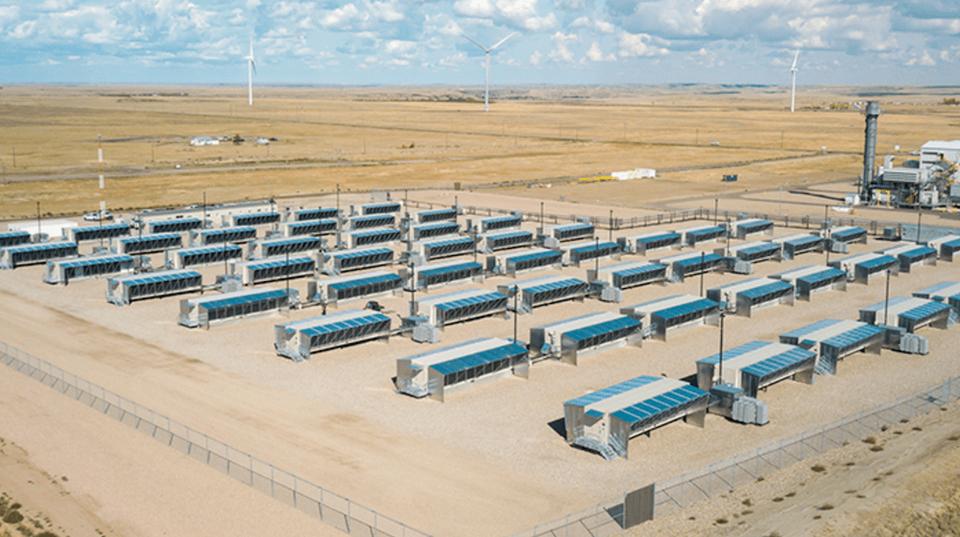
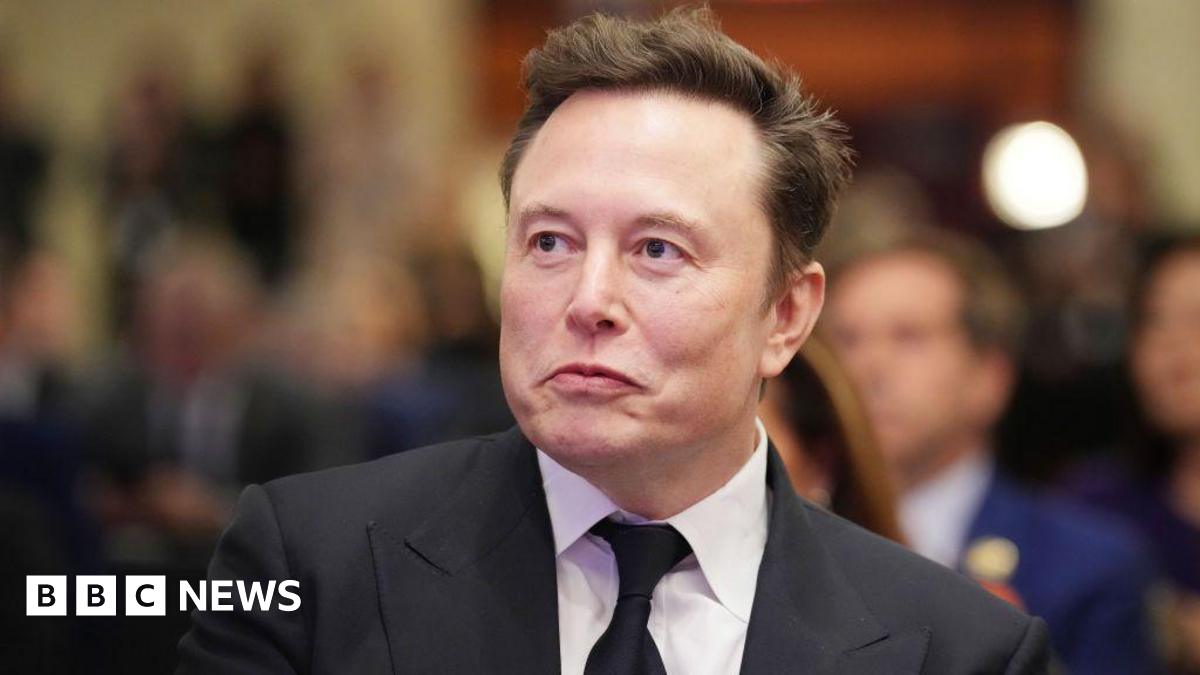
Tesla has applied to Ofgem for a licence to sell electricity to UK homes and businesses. Pair that with Powerwalls, Megapacks and Bitcoin mining and you have a perfect grid balancing tool that can soak up excess wind power and power down instantly when needed. At @BitcoinPolicyUK we have long argued this makes business sense and it clearly does. Why can’t our government and energy companies get on board? The challenge? UK politics, regulation and outdated mining FUD. The full BBC article: Read our demand response paper: https://img1.wsimg.com/blobby/go/aea8e937-fd18-400f-afd9-c3513112c757/downloads/d3850229-208c-4385-9b86-2e82fd55cc6c/UK%20Power%20Grid%20Bitcoin%20Mining%20as%20a%20Demand%20Side%20.pdf