Bitcoin Policy UK's avatar
Bitcoin Policy UK
bitcoinpolicyuk@nostrplebs.com
npub1z74d...d4yx
Powering a sustainable UK economy with Bitcoin
Still Locked Out of Banking Bitcoin Policy UK has submitted evidence to the Crypto and Digital Assets APPG’s inquiry into banking access. We first raised blanket restrictions with the City Minister in September 2023, and the evidence gathered for this submission suggests the underlying problem has not been resolved. Recent industry data shows roughly 40% of bank-to-exchange transfers in the UK are currently blocked or delayed, and around half of UK crypto and fintech firms have been rejected for a bank account or had one closed. Much of this restriction is applied at a sector-wide level rather than through individual risk assessment, which means Bitcoin activity is often caught by rules designed for very different, higher-risk products. Our submission recommends that the government confirm FCA-registered Bitcoin activity shouldn’t be subject to blanket restriction, that banks give specific reasons and a route to appeal when they decline a payment, and that better data be published so progress can actually be tracked. France and Hong Kong both offer useful models for how this could work in practice. Read the full article and see our submission: @Susie Violet Ward
Two major events in the same week exposed a common weakness in how we think about digital security. A flaw in a leading bitcoin hardware wallet contributed to the theft of approximately $38 million in bitcoin. Days later, Russia placed Telegram founder Pavel Durov on its wanted list, while renewed scrutiny focused on longstanding concerns over Telegram's privacy architecture and metadata exposure. Although these stories appear unrelated, they highlight the same principle: users often place their trust in brands and marketing rather than independently verifiable security. The article explores why transparency, open scrutiny and independent verification matter more than reputation alone. As AI accelerates both security research and the discovery of vulnerabilities, products can no longer be considered secure simply because they are widely trusted. For policymakers, the lesson is equally important. Weakening encryption or introducing new surveillance capabilities does not create safer systems. Security and privacy are strongest when they can be independently verified, not simply promised. Read the full article in our blog here: @Susie Violet Ward
Humanitarian crowdfunding has transformed the ability to raise money quickly during war, natural disasters and political crises. Moving those funds to the people they were raised for, however, often remains the greatest challenge. Our latest article examines how banking restrictions, sanctions and compliance requirements can leave recipients dependent on intermediaries, creating delays, disputes and additional risks at the very moment support is most urgently needed. It also looks at how Bitcoin based crowdfunding platforms are taking a different approach. Rather than replacing trust, they are redesigning. It combines direct payments with transparent verification models that allow donors to make informed decisions while giving recipients greater control over the funds raised in their name. Technology alone cannot solve humanitarian fundraising. Verification, accountability and transparency remain essential. Open payment networks may offer a more resilient financial infrastructure for people living through conflict, repression and humanitarian emergencies. Read the full article in our blog here: @Susie Violet Ward
Bitcoin Policy UK's avatar
bitcoinpolicyuk 0 months ago
The UK Government's proposed ban on social media for under-16s is intended to protect children online, but it also raises significant questions about privacy, digital identity and the future of internet access. Critics argue that requiring highly effective age verification could expand identity checks far beyond children, creating new surveillance infrastructure while leaving the underlying problems of addictive algorithms, harmful platform design and weak enforcement largely unchanged. The real question is whether identity verification is the most effective way to protect children online, or whether policymakers should place greater responsibility on platforms to design safer products. As Parliament considers the legislation, the challenge will be ensuring that efforts to improve child safety do not unintentionally redefine the internet into a space where identity verification becomes the norm for everyone. Read the full article in our blog here:
English courts have recognised bitcoin as property. The next question is whether they will enforce contractual obligations by awarding bitcoin itself. That issue was raised in Hussain v Fix, where the County Court was asked whether an alleged debt arising from a business agreement could be paid in BTC rather than sterling. The case sits at the intersection of contract law, digital asset law and commercial reality. If parties agree that an obligation is denominated in bitcoin, should the courts enforce that agreement as written, or convert the claim into pounds at judgment? The answer has significant implications for businesses using bitcoin in cross-border trade, treasury management and commercial settlements. It also raises broader questions about valuation, contractual intent and the practical consequences of recognising bitcoin as a form of property. Our latest article explores the legal issues raised by the case and why this question is likely to return before the English courts. Read the full article in our blog here. @Susie Violet Ward
Bitcoin and financial freedom were central themes at this year’s Oslo Freedom Forum, where human rights activists, developers and advocates gathered to discuss how technology can protect individual freedoms. The conference highlighted real-world examples of Bitcoin being used by people facing censorship, financial exclusion and political repression. From non-profits maintaining access to funds after their bank accounts were frozen to activists using Bitcoin to receive support across borders, the conference showed that financial access is increasingly inseparable from human rights. The discussions also highlighted privacy, security and education. Bitcoin’s potential depends on people knowing how to use it safely. As financial restrictions and debanking become more common, including in democratic societies, the ability to access a neutral, open financial network is becoming increasingly important. Bitcoin is not controlled by any government, company or institution. It is a global tool that can help individuals and organisations preserve financial autonomy when traditional systems fail them. Read the full article here: @Susie Violet Ward
Privacy is normal. It is about freedom, control and the right to live without being constantly monitored. Why does privacy matter if you have 'nothing to hide'? We’ve updated the Bitcoin Policy UK Privacy Toolkit and released a new podcast episode to support it. The episode explains why privacy is fundamental to the freedom to speak, transact and live online. The toolkit sets out practical steps to protect your data, money and freedom online. Podcast: Updated Toolkit: https://img1.wsimg.com/blobby/go/aea8e937-fd18-400f-afd9-c3513112c757/downloads/6dabfdf5-3f1d-4ff3-b97e-dea9a2fa395a/BPUK%20Privacy%20Toolkit%2020June2026.pdf @Susie Violet Ward @fnew
Bitcoin Policy UK's avatar
bitcoinpolicyuk 2 months ago
Digital authoritarianism is no longer a distant concept. Around the world, governments and institutions are expanding digital surveillance through biometric systems, digital IDs, financial monitoring, internet shutdowns and increasingly restrictive online regulation. The question is no longer whether these tools exist, but how citizens continue to communicate, organize and transact when those systems can be used to control them. Our latest Bitcoin Policy UK blog explores the emerging ecosystem of "freedom technology" that is providing practical alternatives. We examine: 
• How Bitchat enables communication during internet shutdowns. 
• Why Citizen Lab's work exposing spyware has become essential for journalists, activists and dissidents. 
• How Cashu is restoring financial privacy through Chaumian ecash on Bitcoin. 
• Why Agora is building peer-to-peer humanitarian funding that cannot easily be censored. 
• How Bitcoin education helps activists use these tools safely through privacy, self-custody and peer-to-peer transactions. Freedom technology is not simply about privacy. It is about resilience. It is about ensuring that communication, financial access and civic participation cannot be switched off by governments or institutions. As more countries expand digital control, these technologies are becoming increasingly relevant - not just for those living under authoritarian regimes, but for anyone concerned about preserving individual liberty in the digital age. Read the full article in our blog @Susie Violet Ward @HRF
Bitcoin Policy UK's avatar
bitcoinpolicyuk 2 months ago
Bury St Edmunds is fast becoming the UK Bitcoin hub! Local businesses in Bury accepted Bitcoin payments, and the historic Guildhall hosted debates plus a pop up sats market. Great to see grassroots adoption actively sponsored by BHODL. Their CEO @fnew shared his thoughts on his first visit to the town with Suffolk News. “The @Bury St Edmunds Bitcoin (BSEBTC) event itself ran like clockwork and struck a lovely balance between celebrating the town and discussing wider issues around saving and spending with Bitcoin.” Bitcoin Policy UK Director @Susie Violet Ward Violet Ward shared her perspective on the social impact: “People can feel that the world is changing economically, politically and socially, and that’s why interest in Bitcoin and freedom technology is growing. Events like this matter because education, community and open discussion are going to be incredibly important in the years ahead.” Thank you to the BSEBTC for delivering a fabulous event. Full coverage from Suffolk News:
Bitcoin Policy UK's avatar
bitcoinpolicyuk 3 months ago
Happy Bitcoin Pizza Day! On this day in 2010, Laszlo Hanyecz made history by sending 10,000 BTC for two pizzas. This was the first real world Bitcoin transaction. What started as a pizza order became the moment Bitcoin proved its power as peer-to-peer money. Today, the UK Bitcoin community is celebrating in style at The Pizza Day Thing in Bury St Edmunds, with artisan pizza, free bar, panel discussions, Lightning demos and local vendors accepting sats at the historic Guildhall. A huge thanks to @Bury St Edmunds Bitcoin for putting on such a brilliant event. You can still get tickets here: https://www.bsebtc.co.uk/event-details/the-pizza-day-thing Hopefully see you in Bury!!
Bitcoin Policy UK's avatar
bitcoinpolicyuk 3 months ago
We have submitted our response to HMRC’s consultation on the taxation of stablecoins. Our position is clear: if the government recognises that stablecoins used for payments deserve different tax treatment, the same principle should apply to Bitcoin when it is used to buy goods and services. The current CGT system creates unnecessary complexity for consumers and businesses while generating very little meaningful revenue. Buying a coffee with Bitcoin should not require detailed tax calculations and reporting obligations. We are calling for a usage-based exemption for cryptoasset payments, including Bitcoin, alongside a modern framework that supports innovation, economic growth, and digital payments infrastructure in the UK. The UK has an opportunity to become a global leader in crypto payments policy. We should seize it. Read more in our blog where you can find our consultation response @Susie Violet Ward @fnew
Bitcoin Policy UK's avatar
bitcoinpolicyuk 3 months ago
Bitcoin is the best performing asset of the decade… ...but most companies are still stuck with 2017 narratives pushed by mainstream media. This is why it’s fantastic we’re finally having this conversation at AccountEx London at the ExCel. Our Director, @Susie Violet Ward Violet Ward, will be moderating a panel on why accountants need to put Bitcoin on their balance sheets. Huge thanks to Caroline Hobden and the AccountEx team for making this happen! Really looking forward to discussing this with my fellow panelists Dan Howitt, Jordon Walker & James Dewar. Panel: 14 May - ExCel London at 2:20pm Register below: accountex.co.uk/london/ image
Bitcoin Policy UK's avatar
bitcoinpolicyuk 3 months ago
BPUK Announces New Chapter for Co-Founder & Chief Policy Officer, Freddie New Today we announce a new chapter for our co-founder, Freddie New. Over the last three years, Freddie has helped shape Bitcoin Policy UK into a credible and constructive voice for Bitcoin policy in the United Kingdom. His work has included: 
- Helping secure Bitcoin’s recognition as property in UK law 
- Contributing to 12 government consultations 
- Leading the production of 28 policy papers, reports and open letters 
- Representing BPUK with policymakers and at major political events As CEO of B HODL, Freddie will now focus fully on building Lightning Network infrastructure and supporting Bitcoin’s evolution as a medium of exchange. We’re incredibly grateful for his contribution, leadership and friendship throughout this journey. We’re excited to see what comes next. For BPUK, the mission continues. @fnew @Susie Violet Ward
Bitcoin Policy UK's avatar
bitcoinpolicyuk 3 months ago
The Privacy Toolkit: Simple Steps to Protect Your Freedom Privacy is often misunderstood as something only “suspicious” people care about. In reality, it is one of the foundations of personal freedom in a digital society. Every online search, card payment, app download, and social media interaction contributes to a growing profile about who we are, what we believe, and how we live. That data can be sold, leaked, misused, or weaponised, and increasingly, it is. That’s why we’ve published a new Privacy Toolkit at Bitcoin Policy UK. The guide is designed to be practical, simple, and accessible for everyone, from complete beginners to those seeking stronger digital self-sovereignty. It covers: 
• Password security and 2FA
• Privacy-focused browsers and email
• Secure messaging and VPNs
• Bitcoin and financial privacy
• Decentralised social media
• Tools to reduce surveillance and data exposure You don’t need to become a “ghost” online. But small steps can make a significant difference. Privacy is not about hiding wrongdoing. It is about maintaining the freedom to speak, think, and transact without unnecessary surveillance. Access the Privacy Toolkit here: https://tinyurl.com/37x5s9d8  @Susie Violet Ward @fnew
Bitcoin Policy UK's avatar
bitcoinpolicyuk 3 months ago
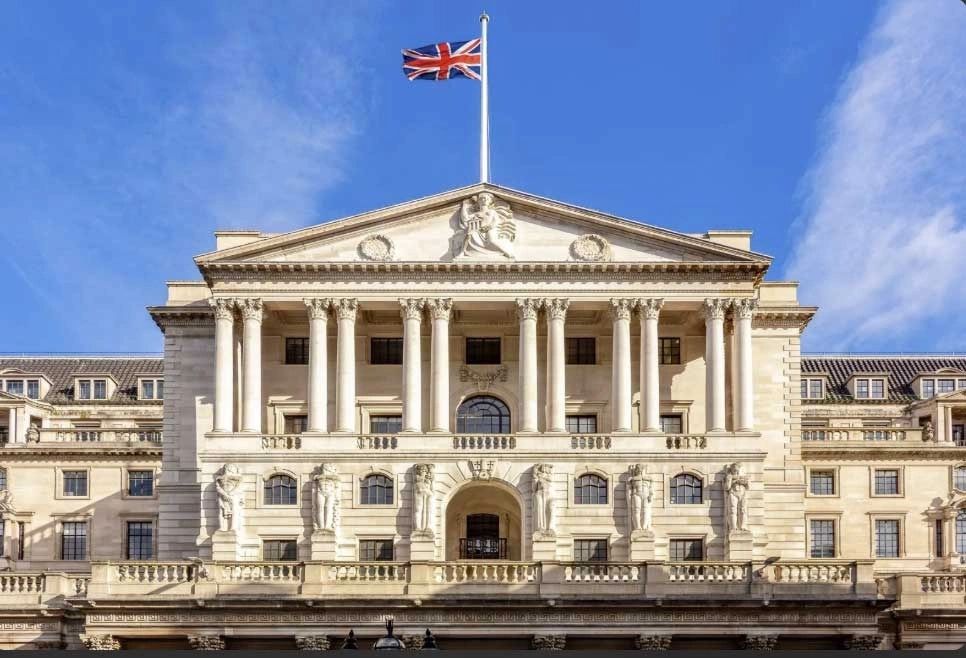
The Bank Of England is considering restrictions on self hosted wallets in the UK. “These proposals risk expanding data collection, eroding privacy, increasing costs, adding friction, and limiting access through banks and intermediaries.” - @Susie Violet Ward “This would be of such monumental, such overweening, stupidity, that it is hard to formulate a sensible response.” - @fnew The UK cannot become a leading digital assets hub while thinking self custody is a bug to fix. You cannot stop people from controlling their own private keys. Good piece from Cointelegraph covering the growing backlash to these proposals. H/t to Aaron wood. Full article: https://cointelegraph.com/features/stablecoin-industry-opposes-bank-of-englands-unhosted-wallet-ban
Bitcoin Policy UK's avatar
bitcoinpolicyuk 3 months ago
From Vegas to Westminster Bitcoin 2026 Las Vegas wasn’t about hype. It was about power. 30,000+ attendees.
 US regulators signalling a shift.
 Energy + Bitcoin now central to geopolitics. Meanwhile, the UK? Drifting. Three takeaways: * Mining = energy strategy * US policy is accelerating * Freedom vs surveillance is the real debate Britain is at a crossroads: Sleepwalk into control or lead on sovereignty. Read the full blog here: @Susie Violet Ward @The Bitcoin Conference
Bitcoin Policy UK's avatar
bitcoinpolicyuk 3 months ago
The Bitcoin 2026 conference in Las Vegas is the world’s largest gathering of bitcoiners bringing together builders, thinkers, and believers to focus on innovation, financial freedom and the adoption of sound money. It also showed the global struggle for digital sovereignty, rising government overreach, expanding KYC requirements, and the crossroads we now face between institutionalisation and free, neutral money.
Bitcoin Policy UK's avatar
bitcoinpolicyuk 4 months ago
UK Regulator Eases Bitcoin Access - But Is It Really Open? In 2024, the U.S. Securities and Exchange Commission approved spot bitcoin ETFs, opening the door for millions of retail investors. At the same time, the UK moved in the opposite direction. Two years later, despite regulatory adjustments by the Financial Conduct Authority, access to bitcoin remains constrained, fragmented, and difficult in practice. Here’s the contradiction: * Regulation aims to protect consumers * But restrictions are pushing them toward offshore and unregulated platforms * Risk isn’t reduced, it’s displaced Add to that: * Banking barriers limiting transfers * Complex investment classifications * Lack of tax-efficient access And the outcome raises an important question: At what point does protection become restriction? Especially when Bitcoin has been one of the best-performing assets of the past decade. If the UK wants to lead in financial innovation, it may need to rethink whether its current framework is achieving its intended goal, or unintentionally undermining it. Read the full blog here: @Susie Violet Ward @fnew
Bitcoin Policy UK's avatar
bitcoinpolicyuk 4 months ago
Understanding Bitcoin Easily - Introducing our Learn Bitcoin Basics At Bitcoin Policy UK, our mission is to support informed, balanced, and forward-looking discussion around Bitcoin and its role in the UK economy. We believe that better policy starts with better understanding. That’s why we’ve launched a new “Learn” section on our website — a dedicated space designed to explain Bitcoin clearly, accessibly, and without unnecessary jargon. Bitcoin is often discussed in complex or polarising terms, but at its core it is simply a new form of money. One that operates without a central authority and is governed by transparent, verifiable rules. Our new section covers: 
 • What Bitcoin is and how it works
 • The role of decentralisation and the blockchain
 • Why its supply is limited
 • How ownership and transactions function Whether you are new to Bitcoin or looking to deepen your understanding, this is a clear starting point. Start here: