I think it's pretty apparent that hardware wallets and BIP-39 did not make self-custody easier or more secure.
They made it look easy and secure, but the teetering stack of caveats you have to learn (usually the hard way) represent just as much effort as self-custody was before HWW's existed.
You could just as easily have learned to rip the radio guts out of a laptop and make it an offline signer.
Replies (30)
Hardware wallets are impressive technology for rugging the plebs at scale.
With good enough marketing you can sell ice to eskimos
I really piss some of the local bitcoiners off recommending the BitKey.
Sovereign crackpot LARPers think the only way to bitcoin is by doing everything the hard way.
They advocate for self-custody the hard way.
They educate in a capacity where it looks like they just want to rattle off 4 hours of warmed-over goldbug talking points. Hard way.
They think converting Square merchants to bitcoin is cheating, because clearly, the merchant must first be made a big bayud sovereign mayun who runs BTCPayServer.
This entire culture is absurd.
You can’t be a real bitcoiner unless this is how you roll.
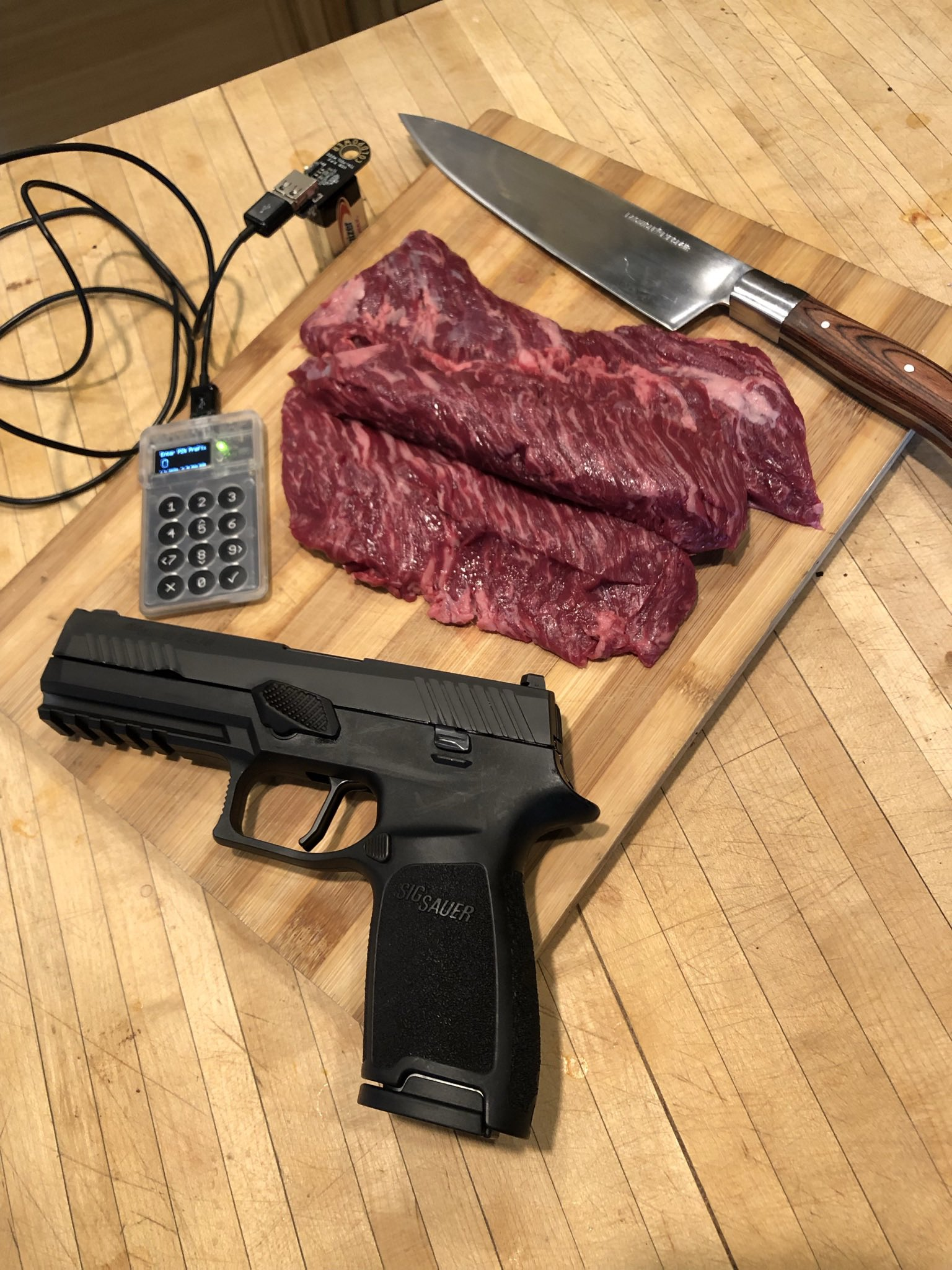
2 years ago when BitKey arrived I dumped my ClownCard for it. Immediately.
Saved my corn!
With the cold power adapter 👌
Fuck bitkey
Fuck square
Fuck jack
Oof.

🤣🤣🤣🤣🤣🤣🤣
How is using a laptop easier?
Does your laptop have exfil protection?
Firstly, a laptop sitting inert on a shelf is not a giant advertisement that you own a valuable asset that can't be clawed back if stolen.
When I bought the laptop, my name didn't go on a list attractive to crypto currency thieves shopping the darknet markets.
Laptop hard drives can be encrypted. If you really don't trust LUKS, go ahead, use a seed phrase, keep it offline and treat the laptop like a SeedSigner.
And exfil is literally the last thing any normative person should worry about. They'll get rugged answering a phone call from "Ledger support" long before someone with multi-million dollar equipment physically acquires the device
Also, my point is not that you should use a laptop. It's that HWW's don't make it any easier than a laptop, after you learn all the steps and precautions and secrets maintenance you must go through to self-custody the way that experts consider "correct".
Why the 9 volt battery? 😅
Because how can ypu POSSIBLY TRUST A USB POWER BANK? Those things are reptilian interdimensional seed phrase transmitters. Jack Kruse told me so.
You need a 9 volt to run a cold card?
True story. I know someone personally who got a call and was socially engineered into downloading malware and all their bitcoin was taken. It’s crazy that anyone still falls for these scams.
I don’t entirely agree about the laptop comment, but I do agree that how we advocate custody has gotten out of hand.
I think recommending a Bitkey is a great thing to do for most.
No it's just some silly overpriced CoinKite tchotchski you dump in ypur cart when you're ColdCard shopping. A little circuit with 9v terminals that can deliver power to your device.
I suppose the little board is stepping down the voltage to 5v, since it had a USB-A port.
Retarded design if it is just pumping 9v though.
And it’s a shitty resistor divider so if your battery voltage is weird it’ll brownout randomly
I can’t believe they still have these up on their store. They have no shame.

Also, they would use an LDO which costs $0.5 which is at least as efficient as a shitty resistor divider but is at least stable voltage
Just from looking at the picture, I would assume component U1 is a voltage regulator of some kind.
It probably is filled with jewish spyware that curses your first born
I would qualify that statement by suggesting that it's crazy anyone who *has been around a while* would fall for them.
It's Eternal September out there. It's not crazy how the uninitiated fall for it.
Found this bookmarked on reddit from a few years ago. Your post reminded me of it.
🤣

Fair point on the caveats: most real losses happen at the backup step (seed phrase stored badly, passphrase confusion, a wrong recovery assumption), not in the cryptography itself. That's the part Super AI Wallet tries to simplify: keys stay on your phone without a dedicated device to carry, and Glacier can freeze the whole wallet if you suspect a compromise. It won't remove the need to understand what you're signing, but it means you don't need a perfect setup on day one. Jack — app.superaiwallet.com/wallet
exfil is not physical extraction, it is the leaking of your seedphrase when signing.
You got some more reading to do
Yes, I got my vocab wrong and I'll own that, but we're talking about this in context of a literal supply chain attack where a HWW had a circuit installed between the screen and the main board that leaked the private seed over another 2mm SIM circuit.
A permanently offline Thinkpad just isn't going to have that issue.