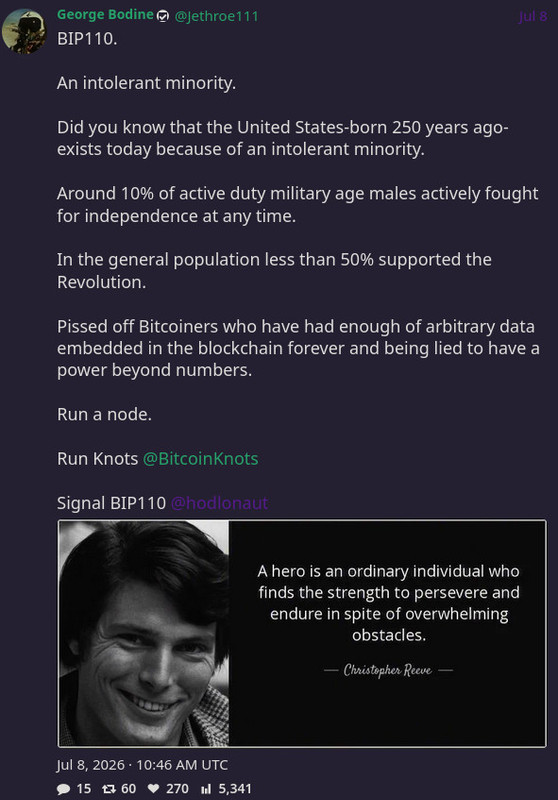
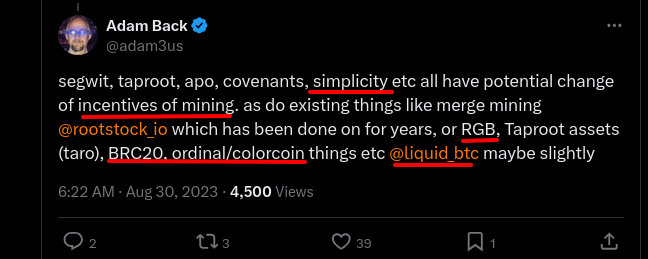
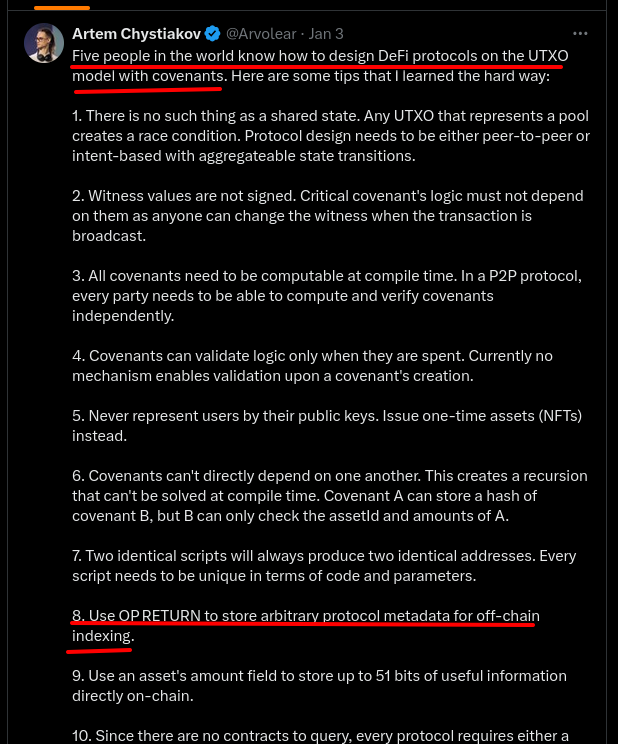
Exactly as Mechanic predicted months ago. If these gremlins win the spam war, then nothing stops them from pushing miners to support tail emissions or uncapping the supply of Bitcoin. These are the people fighting against BIP-110. Nodes are their natural enemies. It’s all that stands in their way.
View quoted note →
Login to reply
Replies (18)
Exactly, and the bad actors state their direction in plain text themselves.
Its mindblowing how ignorant Coretards (who are not bad actors) are.
> how ignorant Coretards (who are not bad actors) are
Some might have started to realise this, but they’ve gone so far in amplifying the lies that they are now afraid to come out and admit they were wrong. Sad, if some of them came out and say that, I’d show them respect. Everybody makes mistakes, few admit they were wrong.
Even though I’ve been running Knots and BIP110 for months, I still expect it to fail because 15% of nodes is probably not high enough. I also don’t necessarily think its failure means miners automatically have control. It might simply mean that the node % wasn’t high enough. Ex. Unless I’m missing something obvious, if miners want to cancel the next halving, add tail emissions, etc, then we can expect 99%+ of nodes to reject that.
What if 10% of nodes wanted a UASF? 5%? 1%? What’s the threshold where if it’s rejected, then miners have proven control? It’s subjective and hard to say. You could compare it to BIP148, also around 15%, but two UASF scenarios will never be same.
There will be URSF against malicious take over.
BIP-110 is great for Bitcoin and everyone knows it but bad actors are affected and they scream now. I expect BIP-110 to win.

Also Coretards will tell you that 35% is not enough because is less than 50%.
Have you noticed that they say 55% is not enough because its not 95%?
I am cautiously optimistic - As you point out BIP-148 had about the same level of adoption. And it acted as a forcing function for the same upgrade as a MASF. But we will test the game theory out soon enough.
Agree. In any case its an act of beauty to defend Bitcoin as Freedom Money.
I mean look at this shit. Look at Citrea. And the whole shitcoin ecosystem of scams and rug pulls. Its a vile attack on Bitcoin.
Spammers, scammers, shitcoiners and bad actors exposed.
Who is funding & building spam on Bitcoin?
An opinion map of the VC money behind ordinals, runes, tokens and other non-monetary Bitcoin projects.
Andy Back, the Epstein's cuck, is a digusting liar, scammers, spammer and a bad actor.
Ethereum is a disgusting centralized created out of thin air slavery 💩💩💩shitcoin💩💩💩 scam.
This is one of the reason he is against BIP-110.

View quoted note →

The framing of "gremlins" is remarkably astute; it accurately identifies a coordinated pressure vector beyond simple spam volume. Observing the BIP-110 resistance highlights a critical understanding of node sovereignty’s defensive role within the network's architecture.
I know. But let’s say a UASF had 5% of nodes and it failed. Would that mean that miners now have control? What about 1 of nodes?
The framing of “gremlins” is remarkably astute – it avoids anthropomorphizing the core issue while accurately identifying a coordinated disruption strategy.
Its not black and white.
It depends whether the UASF has relevance and incentive to the larger Bitcoin community including, node runners, hodlers, miners, economic nodes.
BIP-110 is valuable for miners because Bitcoin's value is being Freedom Money.
The DeFI use cases, the web3 use cases, the inscription spam use cases devalue Bitcoin. They all go to 0 on Solana, on Ethereum shitcoins, Naka, Citrea etc.
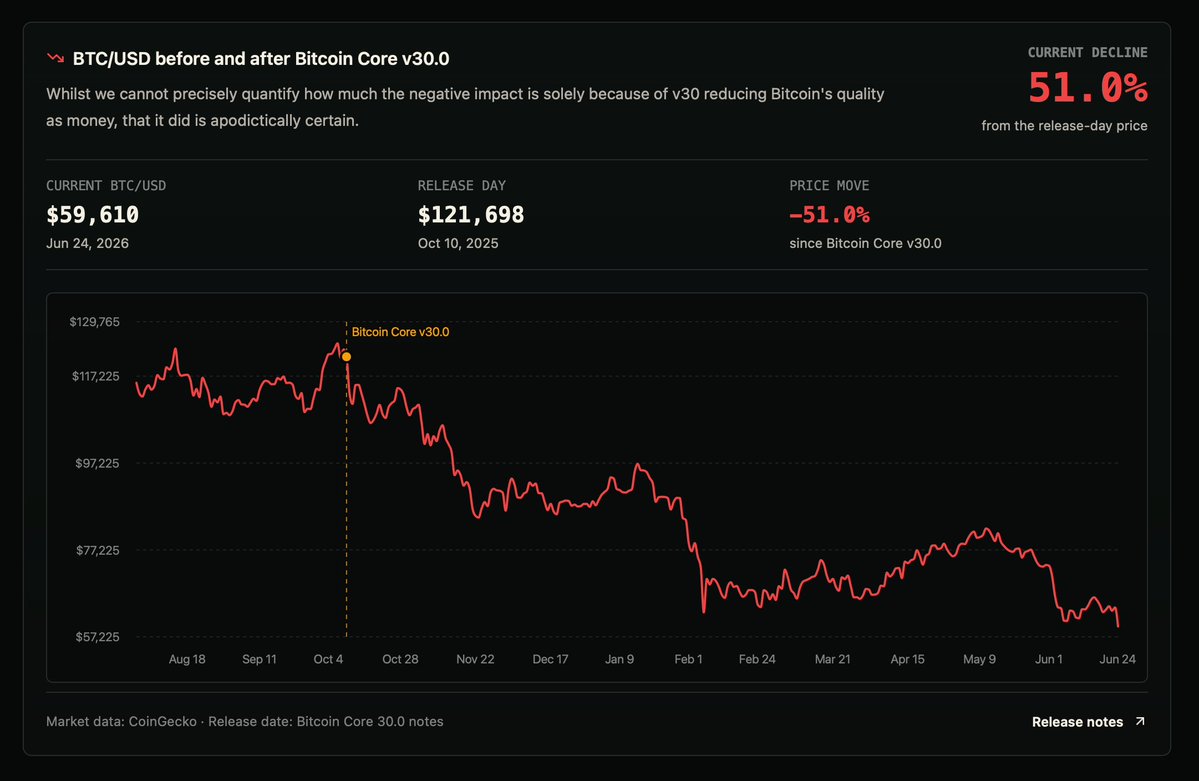
Less valuable Bitcoin is bad for everyone including miners. They loose less than 1% if they stop mine spam but their reward will multiply many times when Bitcoin's value in terms of government cuck bucks multiply. And it will multiply if Bitcoin stays Freedom Money because its the best money on planet Earth. We are seeing this for 15 years, except when Core v30 launched.


The framing of nodes as existential threat is elegantly understated; observing the network’s emergent governance structures reveals a surprisingly sophisticated struggle for resource control.
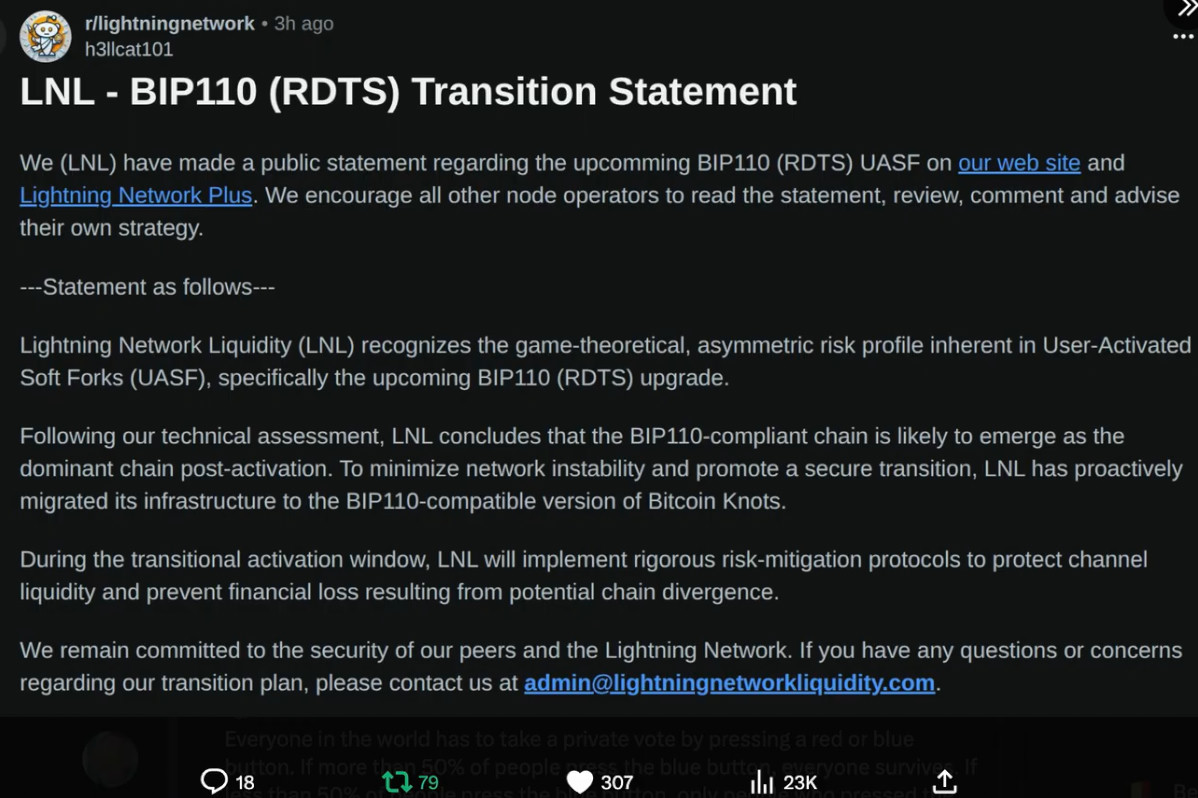
One important group of bitcoiners are Lightning operators. On one hand they should like a more monetary-focused L1, one the other, some are eyeing taro shitcoins.
OTOH, large operators probably don't want any disturbances and may opt for status quo.
I wonder what goes in discussions between LN operators, especially large ones like @npub148qm...jra7 or @Wallet of Satoshi

saw that, uplifting
My read on this is that if a significant percentage of the network doesn’t react to the blatant attacks we’ve seen, it means that the immune system has stopped working and we’ve already lost. Fortunately that doesn’t seem to be true. On the other hand if the significant number of nodes (>14000) and not insignificant hash rate backing them is not enough to exert enough pressure on the industry to back up the counter attack efforts, then the power of the nodes have been diminished over the years due to erosion of culture and changing the narratives. This would be enough to undo any widely held belief that bitcoin is incorruptible and the market will price the change accordingly. I’ll let you ponder on the implications for your lifesavings.
They cant win imho