Susie Violet Ward's avatar
Susie Violet Ward
npub1hwgw...03sg
Journalist
Susie Violet Ward's avatar
Susie 6 months ago
The recently implemented Crypto Asset Reporting Framework is still being described as a narrow “crypto tax reporting” change. That framing misses what’s actually happening. CARF doesn’t calculate tax owed. The data it gathers is too blunt for that. Instead, it aggregates holdings and transaction data to build risk profiles, flagging individuals for scrutiny without the context needed to reflect their true tax position. As I wrote last year, “CARF remains a high stakes experiment regulating the crypto asset sector.” The scale of data collection is unprecedented. Under the proposals, exchanges and service providers will hold and transmit balances and transactions, as well as home addresses obtained through KYC and AML checks. “Given the substantial data volumes and compliance mandates, the risk of misinterpretation is significant.” The concentration of sensitive financial and personal data across dozens of jurisdictions increases the likelihood of false positives, unwarranted enquiries, data breaches and real world harm. Governments present CARF as transparency. In practice, it’s a global surveillance framework applied to a system that wasn’t designed for it, with consequences that extend far beyond tax. “CARF’s rollout marks an important moment for the crypto industry. Its success will depend on balancing government's push for financial transparency with individuals' desire for privacy. Whether it strikes this balance or intensifies existing tensions remains to be seen.” Article below:
Susie Violet Ward's avatar
Susie 6 months ago
Digital ID was debated in Parliament, in a Westminster Hall debate opened by Robbie Moore MP on behalf of the Petitions Committee and triggered by a petition signed by nearly three million people. The response from MPs across parties was overwhelmingly NO. Across all parties, Conservatives, Labour backbenchers, Liberal Democrats, Greens, the SNP, Reform and Independents raised the same core concerns: • Moves Britain toward a surveillance state • Irreversible centralisation of personal data • Major cyber security risk • Serious risk of mission creep• Not in the manifesto and no democratic mandate • Constituents do not want it • Would become mandatory in practice • Harms the most vulnerable and the digitally excluded • Creates a two tier society Reading from a constituent's message, Jeremy Corbyn, an independent MP, said: "Digital ID is a deeply illiberal idea that threatens privacy, autonomy and the open access we should be standing for. It risks creating a two tier Britain where access to basic services, healthcare, housing, employment, even voting, depends on whether someone has the right app, paperwork or digital trail." Reflecting the vast cross party consensus in the debate, Corbyn endorsed an intervention from Andrew Griffith MP warning about civil liberties, the presumption of innocence and surveillance concerns, saying "he's making an important point," before going on to warn that digital ID is "being pushed by commercial interests" and urging Parliament to "say no to the government, as we have said no before." In the debate, opposition to the proposals spanned both the political right and left. Speaker after speaker warned that once this infrastructure exists, it will expand into work, housing, banking, benefits and public services, regardless of today's assurances. What this debate showed very clearly is that left versus right is no longer the most meaningful divide. The real divide is libertarian versus authoritarian. MPs from across the political spectrum lined up on the liberty side. That matters, particularly in a country with a growing reputation for restricting free speech and quietly sleepwalking into authoritarianism. It also raises uncomfortable questions ... If no one wants this, and Parliament agrees it is dangerous, why is it being pushed so hard? Jeremy Corbyn was clear about the role of commercial interests, a concern reinforced by policy advocacy from groups such as the Tony Blair Institute and Visa, which has openly argued for the introduction of digital ID's. Others also raised concerns about lobbying, infrastructure vendors, payments firms, and ID adjacent technology providers. This petition and debate offered a rare moment of reassurance in our parliamentary system. MPs listened, understood the risks, and spoke up.
Susie Violet Ward's avatar
Susie 6 months ago
Bitcoin was built to remove discretion from money. When growth weakens and inflation persists, rates are moved and hope is meant to do the rest. In a discretionary system, those in power decide when to inflict pain, moving rates to crush demand, slow spending, weaken jobs and suppress prices, while calling the damage stability. Savers lose, risk bends and debt holds the system together ... until it doesn’t. This is what happens when economic theory hardens into doctrine. @Roxom TV
Susie Violet Ward's avatar
Susie 6 months ago
Signed off for Christmas on @Roxom TV with Gemmy. Fiat is on the naughty list. Bitcoin is hope, freedom, and patience. Santa rally or not, the signal stays the same. Merry Christmas! image
Susie Violet Ward's avatar
Susie 6 months ago
Britain is heading toward a monetary breaking point and Steve Baker doesn’t hold back. In this conversation he lays out why fiat money is failing, why Westminster can’t see the crisis it created, and why Bitcoin is the only credible way out. We get into democracy, technocracies, media misinformation, forever wars, CBDCs and the incentives quietly steering UK policy off a cliff. If you want the unfiltered version of political reality this one is worth a watch. Watch the full episode on @Roxom TV. Link below: image
Susie Violet Ward's avatar
Susie 7 months ago
Is Saylor building his own central bank? His Bitcoin MENA keynote mapped out something far bigger than balance sheet accumulation. He described a full monetary engine built on bitcoin reserves, corporate credit and synthetic digital dollars. Here is how it works and why it matters in my latest Forbes piece.
Susie Violet Ward's avatar
Susie 7 months ago
Today has been a wild day at Bitcoin MENA. My day was going to start with a panel, which turned into a fireside thanks to visa issues, and almost became a keynote. Thankfully @Erik Hersman jumped in and saved me. Loved hanging out with the @Roxom TV team, interviewing Tony at The Bitcoin Way, @Daniel Batten , and Kyle Knight from Bitcoin Culture Hub. It was great spending time on the livedesk with @Frank Corva Old Account and Lukas Duczko, Chairman at Blink. Thanks @The Bitcoin Conference , it’s been a blast!
Susie Violet Ward's avatar
Susie 7 months ago
One year ago today, I became CEO of Bitcoin Policy UK. Since then, our small team of volunteers has achieved what most well funded organisations struggle to do, in one of the toughest environments for UK businesses. Individuals and companies are leaving the country at a record pace, and the policy space is dominated by pay to play dynamics and crypto lobbying money. Despite that, we have delivered. What we have accomplished together: - Helped secure Bitcoin’s recognition as property in UK law. - Responded to government consultations, submitted detailed policy papers, and held constructive conversations with MPs, Lords, regulators, and civil-service teams. - Launched our new website - Distributed our 2025 Manifesto to all 650 MPs and expanded our research across energy, tax, financial inclusion, and infrastructure. - Hosted events on Human Rights, Bitcoin in Business, and Bitcoin for Institutions. - Had a presence and a main hall stall at the 2025 Labour Party Conference, opening new Bitcoin conversations. - Partnered with 11 organisations and hosted multiple BPUK events that connected the bitcoin industry with policymakers, energy experts, and regulators. - Appeared in multiple podcasts, interviews, and media articles -Set up mining proof of concepts -Launch our 'On the Record' podcast. - Spoke at industry events around the world. - Designed and delivered the ‘Contact My MP’ App, helping supporters reach their representatives directly and raising the bar for political engagement in the Bitcoin space. All of this has been achieved by a team of outstanding volunteers with no full time staff, very modest funding, and no compromise to our values. We have been pushing uphill in a system where influence is usually bought. We have moved the dial and proven that the UK does have a place in Bitcoin’s future, provided we continue to fight for it. Year one was foundations. Year two is where we build strength and momentum. Thank you to everyone who has supported us, shared our work, and contributed time, expertise, or energy. BPUK exists because the community wants it to. Here’s to the next chapter. A special thanks to my amazing team: Freddie New Dr Cristina Llamas-Rey Russell Rukin Nick Bowick Jeremy Cline Juniper Jason Jason Sami Shams and others who prefer to stay behind the scenes. @Bitcoin Policy UK @fnew @Jace @jeremycline
Susie Violet Ward's avatar
Susie 7 months ago
Africa is showing the world what Bitcoin is actually for. At the African Bitcoin Conference in Mauritius, you see it up close. When banks fail and currencies collapse, people build their own solutions. Real innovation is happening in Africa while the Western world sleeps. My latest Forbes article: @White Noise
Susie Violet Ward's avatar
Susie 7 months ago
Loved every second of Bitcoin Amsterdam. From KYC to mining to the satoshi quiz, the whole event was on fire. Huge respect to everyone who put it together. Bitcoin feels stronger than ever.
Susie Violet Ward's avatar
Susie 8 months ago
The cracks in the fiat system are becoming impossible to ignore. I spoke with Archie from @Bitcoin Archive about why governments can’t print trust, how central banks are panicking as debt spirals deepen, and why Bitcoin is becoming the escape hatch for a world losing faith in money. We also disussed the new global order, hyperinflation, and the end of monetary privacy, and why Bitcoiners saw this collapse coming.... With a special guest appearance from Ozzy. Watch the full conversation on @Roxom TV. image
Susie Violet Ward's avatar
Susie 8 months ago
Had an amazing time in Prague and got to visit SatoshiLabs, home of Trezor and @vexl 😎 . Recorded a brilliant pod with Marcel about Bitcoin Dada, Grafton about Vexl, and Efrat about her ‘You’re The Voice’ podcast. Always great hanging out with Isabella, a phenomenal freedom fighter and educator for Get Based, as dedicated as ever. It was a lovely surprise bumping into Nick Anthony from the Cato Institute. All these incredible people had one thing in common: Bitcoin as freedom money. Thank you to the Trezor team for being so welcoming and awesome. @Efrat Fenigson @Grafton @Isa ⚡️
Susie Violet Ward's avatar
Susie 8 months ago
In 1994, Rwanda descended into one of the darkest chapters in modern history. Over a million people were killed while the world looked away. Anaïse Kanimba lost her biological parents in that genocide and was later adopted by Paul and Tatiana Rusesabagina, whose story inspired Hotel Rwanda. Her life is a living reminder of survival, silence, and the fight for freedom. In our conversation, she shares how in times of collapse money becomes a weapon and how Bitcoin can serve as a tool for freedom. You can watch the full interview here: image
Susie Violet Ward's avatar
Susie 10 months ago
Harvard economist Matthew Ferranti has published a peer reviewed study showing that central banks preparing for sanctions risk should hold more than just gold. His model demonstrates that adding Bitcoin to reserves strengthens resilience when access to traditional assets is threatened. For the first time, a peer reviewed economics journal is treating Bitcoin as a credible reserve asset rather than speculation. What took them so long? A reminder that money can be weaponised, while Bitcoin remains neutral, borderless, and open to everyone. At the Financial Times Digital Asset Summit, the UK’s Economic Secretary to the Treasury, Emma Reynolds said Bitcoin “isn’t for us.” Ferranti’s study shows why the government must start researching Bitcoin’s role in reserves. This is the kind of research @Bitcoin Policy UK has consistently urged the Treasury and Parliament to conduct. Read the full paper: https://www.sciencedirect.com/science/article/pii/S0261560625001688 image
Susie Violet Ward's avatar
Susie 10 months ago
Runaway US debt is on target to hit $40T by Christmas. In the UK, the Office for Budget Responsibility flags us as one of the most indebted advanced economies. As Reuters put it: “Britain’s economic problems are home-grown and a solution looks a long way off.” Inflation saves the state, Bitcoin saves you. https://www.reuters.com/commentary/breakingviews/britains-economic-woes-are-sadly-home-grown-2025-09-05/ image
Susie Violet Ward's avatar
Susie 10 months ago
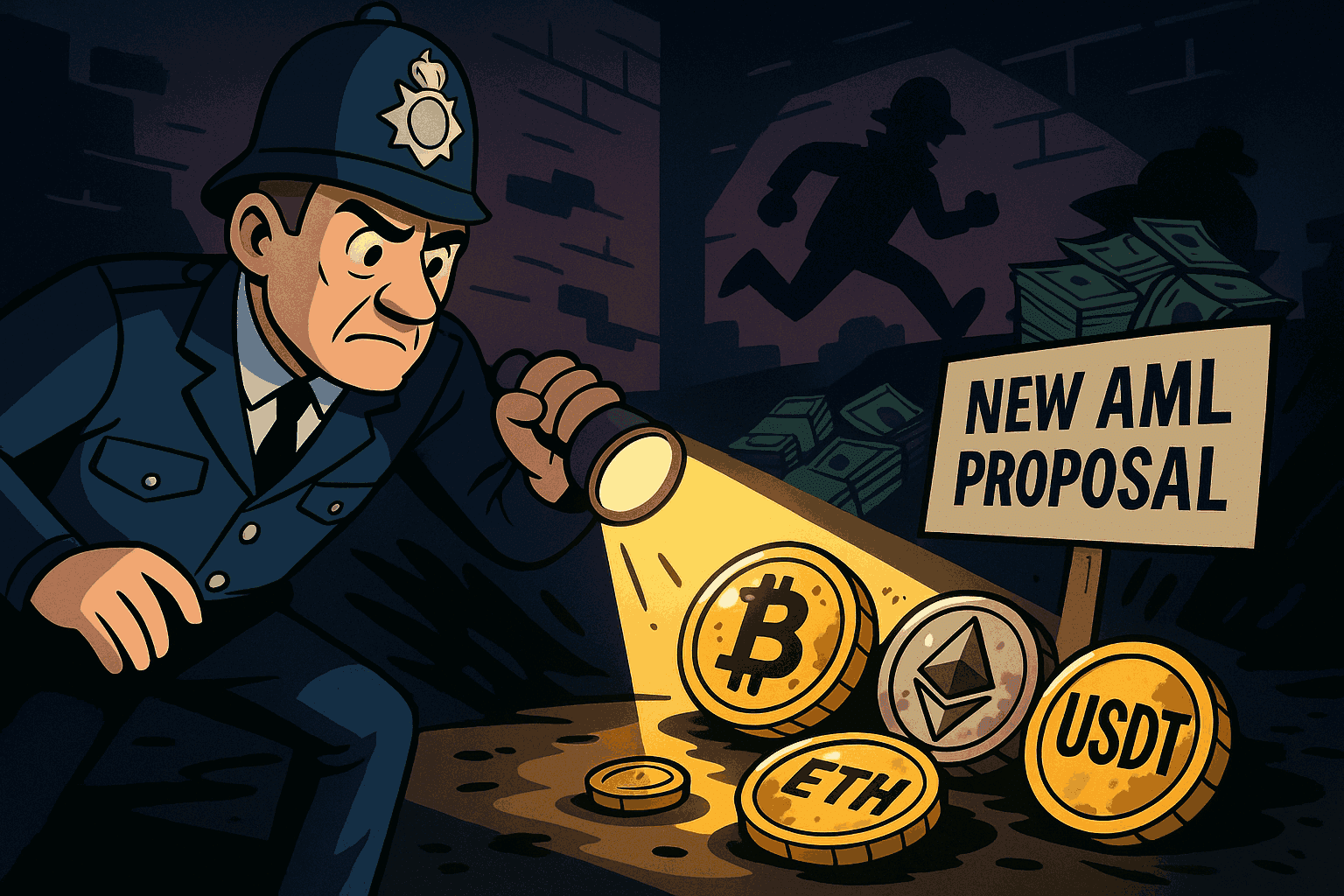
Is this how freedom ends in the UK? The UK’s latest “crypto AML rules” slash ownership disclosures from 25% to 10%, pulling more people into disclosure regimes and expanding banking surveillance. These measures are framed as fighting crime. But similar rules in tradfi have existed for years and haven’t stopped fraud or money laundering. What they do create are honeypots of personal data, risks for law-abiding people, and deeper state oversight. This is about normalising authoritarian tools, not AML or safety. Decades of KYC and financial surveillance show how control creeps in rule by rule. That same authoritarian logic already governs speech, from the Online Safety Bill to Graham Linehan’s Heathrow detention over tweets. And now digital IDs are back on the table, linking finance, identity and turning everyday access into a system of control. Add in programmable money and street surveillance, and you have a panopticon, a 1984 scenario darker than Orwell imagined. The UK has offically sleepwalked into authoritarianism.
Susie Violet Ward's avatar
Susie 10 months ago
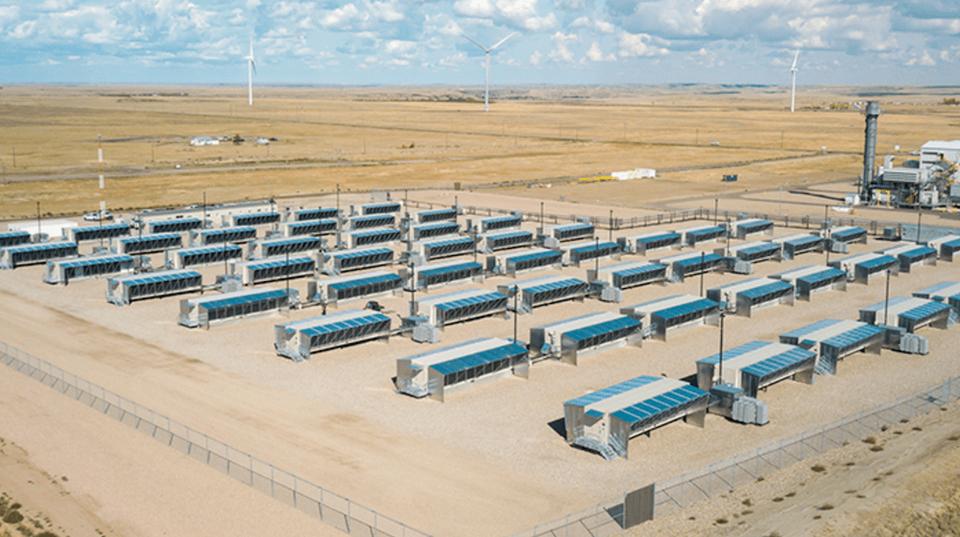
Energy bills are climbing again in the UK while billions are being paid out in curtailment costs. Flexible load solutions that could help stabilise the grid are being ignored. According to the Financial Times, in the 2024–25 financial year. NESO spent £2.7 billion in total balancing costs in 2024–25, with wind curtailment a major contributor. This curtailment happened because the grid could not handle the excess electricity. https://ft.com/content/221d5b5d-ae51-4a6c-8516-b3b906d3ff89 Recent coverage paints a clear picture. YahooFinance and CoinDesk report on Hut 8’s efforts to monetise energy assets, showing how miners are aligning with the energy sector to provide stability and unlock new revenue streams. Our UK briefing paper at @Bitcoin Policy UK shows exactly how Bitcoin mining could do the same here. Flexible load can absorb excess renewable generation, reduce curtailment costs, and lower bills for households and businesses. https://img1.wsimg.com/blobby/go/aea8e937-fd18-400f-afd9-c3513112c757/downloads/d3850229-208c-4385-9b86-2e82fd55cc6c/UK%20Power%20Grid%20Bitcoin%20Mining%20as%20a%20Demand%20Side%20.pdf The UK energy crisis is not going away. It is time to stop ignoring solutions that are already working elsewhere. H/t to Progressive Bitcoin UK for today’s newspaper headlines.