Susie Violet's avatar
Susie Violet
npub1hwgw0uznr49t4gullpgfz4m5xnakl5a0l88m3k382xv7ys0tfmlsd503sg
npub1hwgw...03sg
Bitcoin Journalist
Susie Violet's avatar
Susie 5 months ago
What a packed few days from a phenomenal Women of Bitcoin event on KYC and privacy, to Who Wants to Be a Satoshi Millionaire, and talking about the benefits of Bitcoin mining. Thanks @BTC Prague ! ⚡️
Susie Violet's avatar
Susie 6 months ago
The UK is pricing out innovation with bloated compliance and unclear rules. Startups are being squeezed out while only the largest firms can afford to stay. Regulators failed to act on industry advice. Companies are leaving, growth is hindered, and we’ve lost any chance of a second-mover advantage. The real question is whether we’ll ever catch up. How did the UK, once a global leader in financial services and computer science, fall so far behind?
Susie Violet's avatar
Susie 6 months ago
Heading to BTC Prague? Catch me on the ‘Bitcoin Mining Benefits: Why it Matters’ panel. Saturday 21 June at 1pm on the Expo Stage. @BTC Prague
Susie Violet's avatar
Susie 6 months ago
I’ll be @The Bitcoin Conference hosting a panel on Bitcoin mining origin stories. 27 May | 3:00 to 3:30 pm | Mining Stage Three industry leaders share how challenges, lessons, & innovation have shaped their approaches to mining, sustainability, scale, and strategy. Hopefully see you there. image
Susie Violet's avatar
Susie 6 months ago
Most people don’t find Bitcoin through marketing. They hear it from a friend, fall down a rabbit hole, or get wrecked on something else first. So, how do you market Bitcoin to the masses? 27 May | 12:30 to 1:00 pm | Genesis Stage I’ll be in Vegas for Bitcoin 2025, hosting this panel. This one’s about community, clarity, and cutting through the noise. image
Susie Violet's avatar
Susie 7 months ago
KYC doesn’t just put your data at risk; it puts people at risk. Hackers recently demanded $20 million in Bitcoin from Coinbase, threatening to leak sensitive customer data. While no passwords or private keys were accessed, the attackers obtained full names, addresses, contact details, partial Social Security and bank account numbers, and identity documents. This is the kind of data that can be weaponised for identity theft, fraud, or worse. This is exactly the kind of risk I raised on the compliance panel at the Financial Times Digital Assets Summit last week. While KYC and compliance frameworks are presented as security features, they often do the opposite. They create massive, centralised honeypots of personal data that can and do get breached, sold, or exploited. We’ve seen what can happen when that data gets into the wrong hands. Earlier this year, David Balland, the co-founder of Ledger, was kidnapped along with his wife. His captors cut off one of his fingers and sent it to a business associate to demand crypto ransom. He was rescued by French special forces, but the message was clear: real-world consequences are now linked to digital identity exposure. We need better solutions that don’t force users to sacrifice privacy and safety for access. Compliance shouldn’t come at the cost of security.
Susie Violet's avatar
Susie 7 months ago
This week, I attended the FT Digital Assets Summit, and while the focus was largely on 'crypto', Bitcoin kept finding its way back into the conversation. Economic Secretary Emma Reynolds ruled out the idea of a UK national Bitcoin reserve during the Summit in London, stating it's "not appropriate for our market." She added, “We understand that’s what the U.S. is going for, but that’s not the plan for us.” A disappointing (if predictable) stance, especially as more forward-thinking jurisdictions begin to explore the benefits of holding Bitcoin at a national level. I was on the "Building Trust – Risk Management and Compliance Strategies" panel, which turned out to be far more engaging than the title suggests. Some of the panellists claimed regulators were listening to companies and doing a good job, which was jaw dropping to say the least. Richard Byworth from Syz Capital nailed it on his panel about institutional adoption. He kept steering the conversation back to Bitcoin and summed it up perfectly when he said: "Regulators are not doing their job". Despite the out-of-touch comments from the Economic Secretary and some questionable optimism from industry, there were some encouraging moments. Lord Chris Holmes, who has previously leaned hard into CBDCS and digital ID, commented positively about Bitcoin. A sign that there are some in the House of Lords beginning to grasp its economic potential. The summit may not have been Bitcoin focused, but Bitcoin had a presence, and momentum is building, even if the policymakers lag behind and companies leave in their droves.
Susie Violet's avatar
Susie 8 months ago
Bitcoin was born as freedom money. Decentralised, borderless, and immune to state control. But is that ideal being flipped on its head? Are a growing number of institutional players backed by governments inflating Bitcoin’s value not as a currency of the people but as a Strategic Reserve Asset to prop up the very system it was built to escape? Is the goal to create artificial demand for U.S. dollars and treasuries through stablecoins backed by U.S. debt? Stablecoins are lifelines for many, but what is the real cost? Will certain stablecoins become some of the largest holders of U.S. treasuries, indirectly funding U.S. policy while serving as the gateway to Bitcoin? By linking Bitcoin to stablecoins and those stablecoins to U.S. treasuries...has a pipeline been created to inflate Bitcoin, attract capital, prop up dollar demand, and sell more debt? Is it ironic that the asset created to resist fiat is now being used to save it? On the day Trump was inaugurated, I published this article. Centralisation is a threat. Are we paying close enough attention? image
Susie Violet's avatar
Susie 8 months ago
The UK is falling behind. While global institutions embrace bitcoin, UK regulators remain trapped in a self-replicating bureaucracy and a web of quangos where no one has accountability. Innovation is stalled, growth is flatlining, capital is flowing elsewhere, and game theory is already in motion. Bitcoin is not waiting, and institutions are building the future of finance, just not in the UK. @allen @fnew @Bitcoin Policy UK @Rt Hon Steve Baker FRSA image
Susie Violet's avatar
Susie 8 months ago
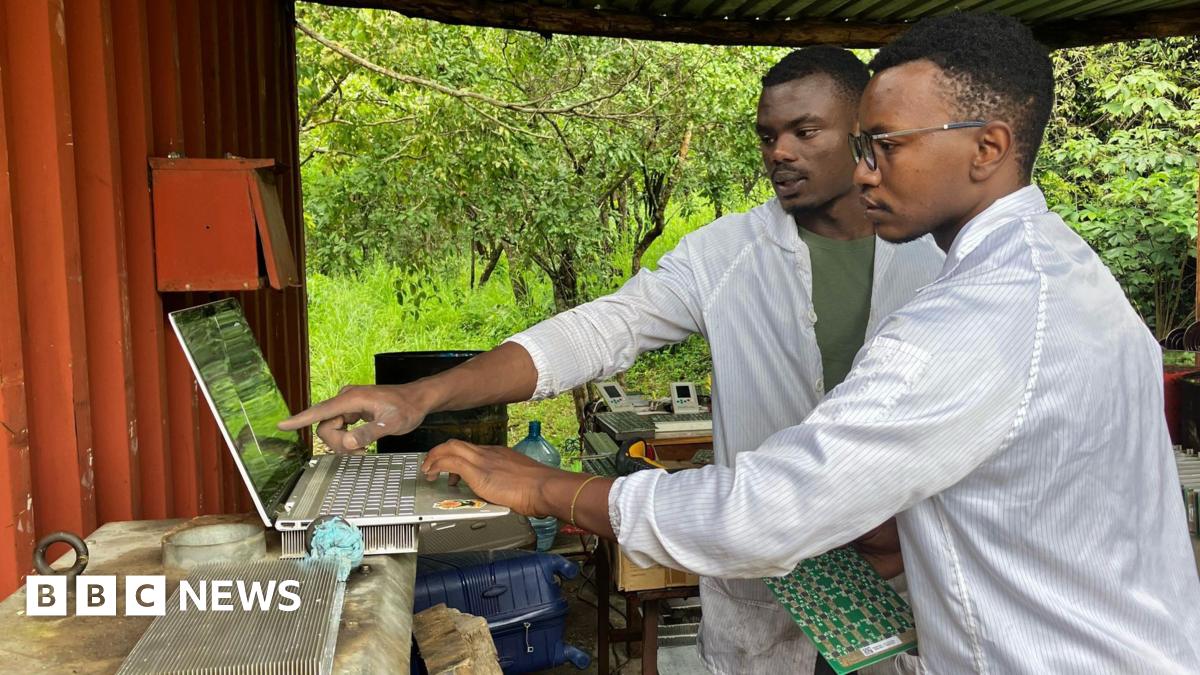
Bitcoin is helping keep the lights on through mini-grids in Africa. @Erik Hersman from Gridless: “This is the beauty of decentralised energy. Bitcoin can be the financial engine behind it.” Another brilliant film by @Joe Nakamoto uncovering the real impact of Bitcoin on the ground.
Susie Violet's avatar
Susie 8 months ago
A rare, well-researched positive article on Bitcoin by the BBC and it’s a good one. It covers: - Real-world impact in rural Africa - Wasted renewable energy put to use - Economic boost via electricity access - Profitable and sustainable model by Gridless - Ambitious plans to expand clean energy powered by Bitcoin More of this, please BBC.