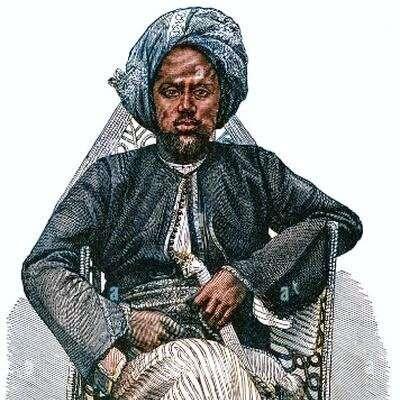
Replies (43)
good luck getting a digital ID in any country based on your religous identity. no gov cares about that.
Tbh asking and waiting for any gov to do something is just a waste of time
So pop that orange pill 💊
Be religious for ourselves and the nearest of us ✌️

الجامع الصغير وزيادته [الجلال السيوطي]
٦٦٤٨ - خَيْرُ أُمَّتِي أوَّلُها وآخِرُها وَفِي وَسَطِها الكَدَرُ(الحكيم) عن أبي الدرداء
Suyuti (Aljami' As Saghir) 6648 the Prophet pbuh said: The best of my nation is its first and last and in between it is the muddiness.
We've been plagued by the Judeo-Christian muddied jurisprudence and it is all built on the idol of the first tyrant and usurper Muawiyah who if God hadn't protected the religion he would've been the reason for it to be wiped and forgotten.
لتتبعن سنن من قبلكن شبرا بشبر وذراعا بذراع حتى لو دخلوا جحر ضب لدخلتموه ، فقالوا الصحابة : يا رسول الله، اليهود والنصارى؟ فأجاب ص: فمن؟
ورواية أخرى : لا تقوم الساعة حتى تأخذ أمتي بأخذ القرون قبلها شبرا بشبر وذراعا بذراع، فقيل: يا رسول اللن، كفارس والروم؟ فقال: ومن الناس إلا أولئك؟
To follow the traditions of those before you, inch by inch and arm by arm, even if they entered a lizard's hole, you would enter it. The Companions said: O Messenger of God, the Jews and Christians? S. replied: Who?
(Meaning the way of their religious practices like extremism, hierarchical religion, worshipping scholars and leaders, forgoing essential parts of deen like governance and such and focusing on prayers and such only with governance being a divine right for the monarch or whatever scholars lie to the people about starting with muawiya who founded this)
Another narration: The Hour will not come until my nation takes the nations before it, inch by inch and arm by arm. It was said: O Messenger of God, like a Persia and Rome? He said: Who are the people except those?
(Meaning the way of their governance monarchy and oppression /dictatorship)
There is a hadith that's been buried with ad hominem based attacks on whoever speaks the truth against a certain "First King in Islam" aka Pharaoh of Ummah and this is the work on this hadith that the prophet pbuh said to Abu Thar and Muawiya that one of them is Pharaoh of this Ummah:

And we know how that transpired and who fits the description someone who massacred tens of thousands of companions and Muslims in more than one occasion and also murdering in captivity companions like Adi ibn Hatim. Who can stand by saying they read the Qur'an and apply it but forget to do that when it's a supposed companion who is not amongst the early muhajireen and ansar who are by Quran guaranteed heaven obviously but this guy only became "muslim" when the sword was on his and his father's necks the last holdout quraysh kafir aggressor leaders at the opening of makkah close to the end of revelation and death of the prophet pbuh.
TLDR: Muawiyah = "Pharaoh of Ummah"—muddied Islam's middle era (per Hadith 6648: best 1st/last, middle muddied) by founding tyrannical monarchy/hierarchy like Jews/Christians/Persians/Romans; late convert, massacred companions. Return to prophetic purity!
(Library refuting monarchy, wahhabism, dictatorship, authoritarianism, totalitarianism, and proving democracy, self determination, scientific method to Qur'an and Prophetic Sunnah, Medina Constitution, and more)
Libraries of Islamic Governance Revival Research into Islamic history and hadith and guided by Qur'an waiting to be discussed, debated, refuted possibly, etc:
Arabic:
Telegram
مؤلفاتي
You can view and join @mo2allafaty right away.

Telegram
مكتبة التجديد الإسلامي
للوصول إلى قنوات حزب التجديد الإسلامي الرسمية وإلى مكتبة الكتب والأبحاث الشرعية...
English:

GitHub
GitHub - IslamicRevival/Tajdeed-English-Books
Contribute to IslamicRevival/Tajdeed-English-Books development by creating an account on GitHub.
It's better as a Muslim in Muslim lands to take your rights by your hands and return the authority to the people "ummah". You start by learning Islamic governance which is not in the accumulation of BS jurisprudence but in Qur'an and Medina Constitution and a bit more work towards studying and reviewing prophetic hadiths in relation to governance:
Here is a library that has done a lot of this work proving shura /theodemocracy/self determination /fightingthe oppressive regimes/disproving monarchy/dictatorships, etc :
English translations:
GitHub
GitHub - IslamicRevival/Tajdeed-English-Books
Contribute to IslamicRevival/Tajdeed-English-Books development by creating an account on GitHub.
Arabic original work:
Telegram
مكتبة التجديد الإسلامي
للوصول إلى قنوات حزب التجديد الإسلامي الرسمية وإلى مكتبة الكتب والأبحاث الشرعية...
Please take my words with an open mind and don't exclude me just because of biases or prejudices as i am not shia nor sunni just a Muslim who tried to follow Qur'an and Prophetic Sunnah using reason hopefully.
Sunni shia divide is all based on accumulated exclusion leading to accumulated ignorance and arrogance of not listening or reading. If you put people as sacred then it will be harder to read Qur'an and apply it wholeheartedly. The rule of all companions are good is not true not by Qur'an firstly and not by Authentic verifiable Sunnah.
Shia detected, opinion rejected.
@npub1tnlu...krm0 brother i believe that Islam is very much compatible mostly with Libertarianism as there is a main foundational verse of no compulsion in ideology/deen which reasonably includes everything from governance to individual rights as in if someone is not Muslim they have the total right to be governed by their ideology and that even a Muslim/non-Muslim can succeed or be autonomous, etc read the books(research into Quran and hadiths on governance) especially the latest one on Al-Hijrah (migration), Islamic Citizenship (and the right of self-determination).
Similarly Ahmad ibn Hanbal famously put his fingers in his ears trying to not hear anybody saying Prophetic hadiths he "didn't like". Seems like you don't like "Athar" when it's not favorable as if you're rejecting God when it suits you and following the ways of Jews and Christians in worshipping your scholars and masters. How about you be brave enough and refute the evidence and Fear God.
"i am not shia nor sunni just a Muslim who tried to follow Qur'an and Prophetic Sunnah using reason hopefully."
I feel you brother! Would put myself in a similar space
Individual cases can be vastly different as to where is best to live, but the default in the Maliki school is to make hijrah as far as I know. It's been a good choice for me although difficult at times. I've never known someone to regret it although I know countless who regret living in the UK, France, or the USA
Maliki possition relies on a political interpretation of land governance that doesn't fit with the realities of the 21st century.
Only Muslim land there can be agreement on is that of the 3 Mosques (and at least one of those is occupied).
Shiism has nothing to do with Islam, take your nonsense elsewhere mate.
Shiasm is wrong(for making a few people sacred among other things) but not outside Islam. Similarly Wahhabism(which is a disease that came out of Sunnism) and Sunnism(for making a lot of people sacred among other things). But should always be based in evidence and discussion if not then fear God and remember you're to be tried in judgement day on your own without scholars or people and you can't use that excuse.
God bless you brother you can't imagine how happy your reaction made me. I'll be sure to save your socials because it is absolutely hard to find people who don't rely completely on scholars and making people sacred in an ideology and revelation that came as a revolution against exactly that and making people go back to submitting to God only not people.
And btw the Arabic libraries(2) are more since they are the original works but now with llms being very good with translation even better than what google translate was before them you can easily translate and easily understand what's happening. I will try to translate using AI and making a library that combines the works of both libraries (a political ideological islamic governance party being mostly the works of its founder and then the library of a member) so the English github translations are for some of the main works of the party.
I haven't changed my bio since converting and I still consider myself a Libertarian. Essentially, I obey Allah and I would obey the prophets if they were around.
When it comes to other humans, they have proven to be unreliable (even some of the companions / contemporaries of the prophet).
See 6:159
Notice how the word translated as "sects" (شِيَعًا) meant "groups/factions/parties".
Source:
The Quranic Arabic Corpus - Quran Dictionary
And this is where we still are today. We can hear: “These guys out there are not our brothers. They are not real Muslims.”
But who are we to judge them? Who is going to judge us on the Day of Judgement?
These values can exist anywhere. They're part of human fitra.
Absolutely brother, God bless you. And notice how Pharoah was using the Divide and Conquer method "made them sects/factions" this what we see from after the prophet pbuh till now especially the time when the caliphate/shura/democracy/etc was usurped by Muawiya and he used the same method to fool the levant people then used it when he was in power and also claimed only people of his tribe Quraysh could rule, etc. A whole lot of things that went down straying away from Quran and the Prophetic model of freedom, theodemocracy, autonomy and independence rights and self determination for whoever with guidelines and ways to show what is better but not enforced. Even the Abu bakr wars were mostly not for the mainstream reasons and he might've also made mistakes including accepting caliphate in that weird semi-unshuratic way but of course doesn't mean he was bad he just made mistakes and he is one of the early Muslims muhajireen and ansar who are guaranteed heaven even if they do mistakes it is just that not of ill belief. The problem is with the people not standing up to any big mistake and changing course as a collective and accountability. BTW even Abu bakr ra wanted people to make him accountable even by the sword and he wouldn't accept to rule unless with that. That shows the different class of thinking but doesn't mean they don't do big mistakes that accumulate until we get an easy ready made usurpation of the People's will and rights and freedoms by someone who didn't even become "Muslim" until the sword was on his neck and he isn't included in the السابقين الأولين من المهاجرين والأنصار the famous verse about the early Muslims of immigrants(muhajireen) and allies(Ansar) whih btw includes the early negashi ruler of Abyssenia who protected the muslims and became one secretly and the Prophet pbuh prayed on his death in absence ra.
BTW i do also consider myself a libertarian muslim. Even though i believe Islam is itself mostly or completely libertarian but sometimes it might be clearer to use the label because of the so much accumulated ignorance of fiqh and scholars that juat accumulate and not research and try to understand the Qur'an and Sunnah within the Qur'an not against it. Because Sunnah is filled with fake "Authentic" hadiths that when you verify them and study them a bit using unbiased hadith/history science method would expose it. For example why would you accept a hadith from someone who slaughters innocent people whether Muslim or not and, etc when you apply the basic Qur'anic principles of no aggression and no tyranny/compulsion / known liars, etc and ignore the misclassification of excluding people just because they have a different sect or way of thinking or political opinion, etc like what they said about scholars who were in favor of ali against Muawiya the usurper genocider they juat called them shia and excluded them in hadtihs saying they're weak just because of that 🤣😅.
Skimming through the TG channel I came across a 90 page document damning Samara ibn Jundub.
I am uneducated on this, all I know he killed a lot khawarijites. But my question here: what's in Samara's bio that is so important to warrant a 90 page vilification of him and why is that relevant to Islamic revival?
Seems like a fair question. I'm not well educated here either but it appears Samara ibn Jundub was a prominent transmitter of hadith in the chain leading to the scholar Hasan al-Basri. Maybe that's the concern 🤷🏻♂️
Some people will say you're not a Muslim if you question the authenticity of ahadith they consider authentic.
Why would that be a concern?
Might imply a lot of hadith through that narration are problematic 🤷🏻♂️ idk
Maybe
@Thayr can clarify
Claim 1: his hands are bloodied, how can you accept his Hadith's?
Claim 2: There is a hadith that the prophet promised a group of his companions hellfire to the last of them dying. Turns out it was Samara. So how can you accept his hadith?
Regardless, how is this relevant to Islamic Revival? A 90-pager revelling in some esoteric "Shobha"? 99.9% Muslims never heard of these claims, so why revive them?
Sorry I've been away I'll try to answer you as best as i can and btw I'm not the author.
I'd be impressed if Dr. Masaari is on nostr 😁🔥
Sadly he has eyesight issues so he is not even active personally on any platform that needs reading. He is active on lives in the English channel and the Arabic channel. It is in the linktree on my profile.
It is connected to other works and is considered a part of a series demolishing the idol of Muawiya (who demolished the caliphate and tens of thousands of companions and even more regular Muslims to establish monarchy that its effects are oppressing us to this day monarchy after monarchy and dictatorship after another as if it's OK or islamic, etc)
Samura was an enforcer for for Ziyad brother of Muawiyah who was installed governor in Basra and Kufa in Iraq by Muawiya and hr approved of Samura and his actions of mass murder of Muslims and any who dared to return the caliphate or at least get shura back as in their authority in their lands i consultation. (BTW alhasan albasry was known to believe whoever narrated to him). This small research book opens with authenticating(rigorously) the hadith of the Prophet pbuh by Abu Hurairah : That the Prophet, peace be upon him, said to ten of his companions in a house, "The last of you to die will be in the fire". In them is the brow of a soldier. And that , " Samra was the last of them to die . "
And that this hadith was definitely said by Abu Hurairah (by eight different source narrations as in the Narration has 7 other affirming narrations) and he was absolutely terrified that he would be the last to die and it be applied on him.
Samura even sold alcohol not caring about it being haram and a cursed thing to do so when Caliph Omar heard of it he said May God Fight Samura (which is the title of the research)

Sahih Muslim 1582a - The Book of Musaqah - كتاب المساقاة - Sunnah.com - Sayings and Teachings of Prophet Muhammad (صلى الله عليه و سلم)
Hadith of the Prophet Muhammad (saws) in English and Arabic
.
(This is just a tiny bit of the research)
TL;DR
Purpose of the work – Part of a larger series that seeks to dismantle the mythologized image of Muʿāwiyah ibn Abī Ṣufyān, whose establishment of hereditary monarchy shattered the original‑consultative (shūrā) model of the early caliphate and set off a chain of dynastic oppression that still haunts the Muslim world.
Key figure: Samura bn Junb – a ruthless enforcer appointed by Ziyād ibn Muʿāwiyah (Muʿāwiyah’s brother) when Muʿāwiyah placed Ziyād as governor of Basra and Kufa.
Samura led mass killings of Muslims who resisted the new monarchical order or tried to restore shūrā.
He openly dealt in ḥarām liquor; when Caliph ʿUmar ibn Al‑Khaṭṭāb learned of this, he reportedly prayed, “May God fight Samura!” (recorded in Muslim 1582a).
Hadith focus: The author rigorously authenticates a prophetic statement transmitted by Abū Hurayrah:
“The last of you to die will be in the fire.”
The narration includes ten companions gathered in a house; among them is a soldier (Samura). The hadith is supported by eight independent chains (seven additional corroborating reports), establishing its soundness (ṣaḥīḥ) that Abu Hurairah definitely narrated it and more.
Abū Hurayrah himself feared being that “last” and the prophecy was later applied specifically to Samura, who indeed became “the last of them to die.”
Overall argument: By proving the authenticity of the hadith and documenting Samura’s brutal actions under Muʿāwiyah’s regime, the research shows how the early caliphate’s ideals were subverted by a nascent monarchy. It frames Samura as a concrete example of the tyranny inaugurated by Muʿāwiyah—an oppression that has been repeated through successive monarchies and dictatorships, falsely presented as Islamic. The work therefore contributes to the broader project of exposing and rejecting that legacy.
First rule of hadith transmission is adalah is the narrator adl. Do you consider a mass murderer / tyrant adl and doesn't that go against Qur'an, reason, fitra, etc? And why would you ask anyone to believe in an ideology that accepts murder/tyranny in a source but it is against it somehow in another source?
In his book Al-Kifaya fi 'Ilm al-Rawa'iya (Sufficiency in the Science of Narration), Al-Khatib al-Baghdadi wrote a chapter entitled "On Justice and Its Rulings," in which he said: "Umar ibn al-Khattab, may Allah be pleased with him, said that people were judged by revelation during the time of the Messenger of Allah, peace be upon him, and that revelation has ceased. Now I judge you by what is apparent in your deeds. Whoever shows us good, we trust him and draw him close to us, and we have no knowledge of his secret deeds; Allah will judge him for his secret deeds. Whoever shows us evil, we do not trust him and do not believe him, even if he says that his secret deeds are good.
It was narrated from Al-Hussein ibn Ali, may Allah be pleased with him, that the Prophet, peace be upon him, said: "Whoever treats people without oppressing them, speaks to them without lying to them, and makes promises to them without breaking them, then he has perfected his manhood, his justice has become apparent, his brotherhood has become obligatory, and his backbiting has become forbidden."
All praise is due to Allah. We praise Him, seek His help, and ask for His forgiveness. We seek refuge in Allah from the evil of our own souls and from the evil of our deeds. Whomever Allah guides, none can lead astray, and whomever He leads astray, none can guide. I bear witness that there is no god but Allah alone, without partner, and that Muhammad is His servant and Messenger, His chosen one and beloved, the best of His creation and His beloved:
O you who believe Believers, fear God as He should be feared and do not die except as Muslims. (Al Imran 3:102)
O mankind, fear your Lord, who created you from one soul and created from it its mate and dispersed from both of them many men and women. And fear God, through whom you ask one another, and the wombs. Indeed, God is ever, over you, an Observer. (An-Nisa 4:1) “O you who have believed, fear Allah and speak words of appropriate justice. He will then amend for you your deeds and forgive you your sins. And whoever obeys Allah and His Messenger has certainly attained a great attainment.” (Al-Ahzab 33:70) “The best of speech is the Book of Allah, and the best of guidance is the guidance of Muhammad, may Allah’s prayers and peace be upon him and his family. The worst of matters are those that are newly invented, and every innovation is misguidance.”
And may the most complete and perfect prayers, peace, and blessings be upon our Prophet, our leader, the beloved of our hearts, and our intercessor, Muhammad, and upon his pure and righteous family, and his sincere and striving companions. He is the best example, indeed, the best role model.
Now then: The painful disagreements and conflicts that arose among the men of the first Islamic century, the best of generations of humankind, from the Companions and the senior and middle-ranking followers, which reached the point of fighting, are known to the general Muslim public, and not only to historians who have followed the events of the first Hijri century. This discord, conflict, and fighting transformed jurisprudential and political differences into doctrinal issues. Political movements and parties justified their political ambitions with specious legal arguments, then ossified, becoming religious sects, passed down from generation to generation. General Islamic reconciliation became impossible because the caliphate had deviated from the rightly guided, consultative caliphate based on the prophetic model, replacing it with oppressive, tyrannical rule. This occurred when Mu'awiya ibn Abi Sufyan, the leader of the rebellious faction, seized power from the nation by the sword, shedding its blood and usurping its authority. It is well known that arrogance and tyranny on earth, including oppressive rule, cannot be sustained except through a game of balancing the contradictions within society: “Indeed, Pharaoh exalted himself in the land and divided its people into factions, oppressing a group among them, slaughtering their sons and sparing their women. Indeed, he was of the corrupters.” (Al-Qasas 28:4).
Despite the dire situation, the Commander of the Faithful, Umar ibn Abd al-Aziz, may God be pleased with him, began a serious attempt at reconciliation at the end of the century (100 AH), and took several steps in this direction. However, death overtook him (poisoned by the Umayyads?!), and those who came after him destroyed what he had built. Then Yazid ibn al-Walid ibn Abd al-Malik ibn Marwan, may God be pleased with him, attempted to establish a new caliphate, but the Umayyads did not allow him to succeed. He was killed, and his reign lasted no more than seven months. The Abbasid Revolution then erupted, quickly degenerating into a campaign of revenge against the Umayyads and their supporters. It annihilated the living, desecrated graves, and ultimately devoured its own children, transforming into a tyrannical monarchy. Disunity and enmity festered and became deeply entrenched. The Abbasid Caliph al-Mahdi—a misguided and misleading figure, not a true guide—demonstrated his penchant for killing thousands of opponents on charges of heresy.
Al-Ma'mun was among the best of the Muslim caliphs, but being a product of his time and society, he was unable to escape the vortex of philosophical debates and failed to grasp the limits of the Islamic state's authority. He preoccupied himself with matters never commanded by God, such as compelling people to profess the doctrine of the createdness of the Quran, regardless of its truth or falsehood, instead of fulfilling his divinely ordained duty of ensuring the proper implementation of the Quran by the state and its institutions. I cannot recall any serious attempt by any caliph or sultan of Islam after al-Ma'mun to reconcile differences and eradicate the scourge of sectarianism. It is no wonder that this has not happened, and will not happen until a caliphate is established according to the prophetic model. And it is impossible for a caliphate to be established according to the prophetic model until the prophetic model is understood. And the prophetic model will not be understood until the religion is understood correctly, eradicating all alterations and transcending all misinterpretations, by returning to the original revelation of the religion, as stated in the prophetic declaration: "What I and my companions are upon today."
It is no wonder that the intensity of the conflict between those vying for worldly power leads them to resort to propaganda warfare, inventing stories and fabricating narratives. It is also not surprising that this exists among their foolish and misguided followers affiliated with political parties and religious sects. However, it is truly regrettable that some of this seeps into the circles of the elite scholars of the Quran, Sunnah, biographies, hadith, Arabic language and its literature, especially those overcome by religious zeal, such as the extremist Shiites and Nawasib, or by political grudges, such as the Umayyad Nawasib, or by tribal and ethnic prejudices, such as the tribalists, Arabists, and Shu'ubiyya. But God, may His glory be exalted, in fulfillment of His promise to preserve the Quran, and in confirmation of His Prophet who praised the first three generations for their trustworthiness and truthfulness (then falsehood spread), protected the general public from transmitting and circulating these lies; although some of them, thankfully few, may have fallen into some form of deception or misleading abbreviation, out of shyness, such as saying: "There are wines that have been brought to so-and-so," or "He is alluding to a man!" Despite all the lies, fabrications, misrepresentations, and misleading abbreviations, returning to the original (revelation) of the religion, according to the Prophetic statement: “What I and my companions are upon today,” was and remains possible, albeit with some difficulty and hardship. However, there is no way to achieve it except by:
(1) taking the Qur’an as the guide and attaching to it the authentic, unbroken-narration Sunnah;
(2) taking the unambiguous verses with definitive meaning as the foundation.
And the ambiguous matters are referred back to it;
(3) - Removing the (sanctity) from Islamic history and Islamic figures after the perfection of the religion and the completion of the blessing, before the death of the Prophet, peace and blessings be upon him and his family;
(4) - This entails rejecting the confused and false "principles" of the extremist deviants among the followers of the Wahhabi sect, or the rigidity of the scholars of the books who blindly follow the schools of jurisprudence and theological schools; and replacing them with the consistent and certain principles, some of which we have summarized in the appendix entitled (Appendix of Principles of Rulings and Rules of Deduction) to the basic system of the Islamic Renewal Party, and here is its text:
Beginning of the quoted text: [Article (1): Islam is represented in the infallible revealed revelation.] The infallible revealed scripture is of a single rank in infallibility and authority, and it is: (a) The Qur'an, which is the word of God revealed to our Prophet Muhammad, peace and blessings be upon him and his family, in its exact wording and letters, as it is written between the two covers of the Qur'anic manuscripts, preserved in hearts, recited by tongues, recorded on tapes, and through other means of preservation and transmission, transmitted from him, peace and blessings be upon him and his family, in writing and orally, through continuous transmission, passed down from one generation to the next, providing definitive and necessary knowledge for all people, Muslims and non-Muslims alike. It is miraculous in its wording, and its recitation is an act of worship. (b) The Prophetic Sunnah, which consists of the sayings of the Prophet, may God’s prayers and peace be upon him and his family, including his gestures, actions, and tacit approvals, is also considered divine revelation in meaning. The Messenger of God, may God’s prayers and peace be upon him and his family, expressed this revelation through his own words or gestures (gestures being equivalent to words), as well as through his actions or tacit approval. This means his silence regarding a matter, whether he witnessed it or was informed of it, a silence that indicates approval, consent, or lack of disapproval.
Article (2): The Prophet’s, may God’s prayers and peace be upon him and his family, action or tacit approval of something only indicates that the action is not forbidden for his community and is purely permissible. Furthermore, there must be independent evidence for its obligation, recommendation, or reprehensibility. However, the Prophet’s, may God’s prayers and peace be upon him and his family, mere omission is not part of the Sunnah. Omission is simply a lack of action and does not constitute proof of anything. As for the Prophet's (peace and blessings be upon him and his family) abstention from a certain action after having performed it once or repeatedly—it makes no difference—it only indicates that the action was not obligatory. Another, independent proof is required to establish whether the abstained action was forbidden, disliked, purely permissible, or even recommended. Similarly, his (peace and blessings be upon him and his family) abstention from an action before performing it—that is, his intention to perform an action followed by his abstention from it—only indicates that the action was not obligatory. Another, independent proof is required to establish whether the abstained action was forbidden, disliked, purely permissible, or even recommended. If this is the case with the Prophet's abstention, then the abstention of the Companions is even less authoritative.
Article (3): The entire infallible revealed revelation is preserved, and the "preserved remembrance" is the same as the infallible revealed revelation. Therefore, it is not only the Qur'an that is preserved, but also the Sunnah. The Quran is preserved word for word, letter for letter, and diacritical mark for diacritical mark because it has been transmitted through continuous, unbroken chains of narration. The Quran is what is contained between the two covers of the Mushaf (copies of the Quran), and there is no other revealed Quran whatsoever, unless it is a Quranic text whose wording has been abrogated, as mentioned in some authentic narrations. In that case, it is no longer considered Quran, and it is not permissible to include it in the Mushaf. The abrogation of Quranic wording necessarily entails the abrogation of the ruling it contains, unless conclusive and irrefutable proof is established to the contrary.
As for the Sunnah, it is narrated through oral transmission, not transmitted through continuous, unbroken chains of narration, even though some of it is transmitted through continuous, unbroken chains of narration. The Sunnah is not limited to what is contained in the books of Sunnah, even though most of the Sunnah is found in those books. The preservation of the Sunnah simply means that it is impossible for anything to be added to it that is not part of it and that it is impossible for anything to be lost and never found again. Article (4): It is not permissible to cite, nor to use as evidence, any text from the narrations of the Sunnah unless its authenticity and attribution to the Prophet, peace and blessings be upon him and his family, are established, either with absolute certainty through continuous transmission (tawatur), or by having been established beyond any reasonable doubt, acceptable objection, or flaw. Similarly, it is not permissible to cite a sound and authentic report unless all its chains of transmission have been thoroughly examined, and all its wordings have been meticulously analyzed, in order to determine the authentic and established wording or to deduce the established meaning common to all chains and narrations.
Article (5): All texts of the Quran and Sunnah must be considered as a single, continuous text, possessing the same level of authority and the same obligation to obey them all. It is absolutely impermissible to apply one text while neglecting another, nor is it ever permissible to give precedence to one text over another, except with proof from the texts themselves or due to a necessity dictated by sensory perception or reason. Article (6): Texts may not be taken out of context. All texts must be accepted in their general and unrestricted sense. It is not permissible to specify or restrict any of them except with evidence from within the text itself, or by necessity dictated by sensory perception or reason. Accepting texts in their general and unrestricted sense necessitates many things, including:
(a) If a ruling is contingent upon a specific attribute of a particular thing or things, and this contingency is based on causality, then it must be applied to all things in the universe described by that attribute, except what is excluded by another text or dictated by necessity dictated by sensory perception or reason. This is what some legal theorists call: analogy based on a legal cause, which is in reality (generality) and not (analogy)!
(b) If a ruling is contingent upon a specific level or degree of a particular attribute, then the ruling must be applied to all levels and degrees higher than that. This is what some legal theorists call: analogy by way of a fortiori reasoning.
All other forms of analogy, such as analogical reasoning based on resemblance, are falsehood, fabrication, and invalidity. They lead to the creation of laws not sanctioned by God, and are utterly pointless and unnecessary.
Article (7): All words in the Quran and Sunnah must be interpreted according to their meanings in the pure Arabic language at the time of the Quran's revelation. If a single word is used in more than one sense, it is not permissible to prioritize one meaning over another except with proof from Islamic law or due to a necessity of sensory perception or reason. For example, the word "nikah" (marriage) is used equally for the well-known "contract" and also for "sexual intercourse," whether lawful or unlawful. Both meanings of this word must be considered wherever it appears, unless proven otherwise.
Article (8): The established and authentic texts must be revered and respected absolutely. Just as they must be applied in their general and absolute sense, so too must
It is not permissible to specify or restrict anything from it except with proof from it. Likewise, it is not permissible to take it out of context, distort it from its proper place, or attribute meanings to it that are not required by the text, according to the established usage of the Arabs in their linguistic structures and what is dictated by the necessities of sense and reason. This necessitates several things, including: Every statement and every proposition only gives you what is within its scope and does not give you a ruling for anything else. This does not mean that anything else agrees with it in ruling, nor that it contradicts it, but rather that everything else depends on its own evidence. So, if a text comes from God Almighty, or from His Messenger, peace and blessings be upon him and his family, attached to a certain attribute, time, or number, then anything other than that attribute, time, or number is not judged contrary to that stated ruling, but rather depends on its own evidence. For example, His words, may His names be blessed: “And [He created] horses, mules, and donkeys for you to ride and as adornment” (An-Nahl 16:8). The mention of riding and adornment does not imply the prohibition of eating them (this falls under what is called “argument from the text”), nor does it imply their permissibility (by analogy). Rather, the prohibition or permissibility of eating them is derived from other evidence besides this text. Similarly, his words, peace and blessings be upon him and his family: “For grazing sheep, for every forty: one sheep,” do not imply the exemption of non-grazing animals from zakat, nor do they imply its obligation or amount. Rather, that ruling is sought from other sources besides this text.
Any statement that begins with a negation and is then qualified by the word “except” or the word “until” applies only to what is qualified by it. For example, his words, peace and blessings be upon him and his family: “Prayer is not accepted from one who has broken their ritual purity until they perform ablution,” and his words, peace and blessings be upon him and his family: “There is no prayer without the Opening Chapter of the Quran (Al-Fatihah).” The imperative form, such as saying "Do it," and its equivalents, is originally used to request an action in general. In Islamic legal discourse, it implies recommendation and immediacy unless there is contextual evidence that shifts it from recommendation to obligation, permissibility, or even delay.
The prohibitive form, such as saying "Do not do it," and its equivalents, is originally used to request the avoidance of an action in general. In Islamic legal discourse, it implies reprehensibility unless there is contextual evidence that shifts it from reprehensibility to something else, such as prohibition.
A statement remains a statement, that is, a description of reality, according to its apparent meaning. It is not permissible to interpret it otherwise (such as using hidden meaning, symbolism, metaphor, figurative language, or other rhetorical devices) except with proof. Similarly, it does not establish a command or prohibition except with proof.
The default for an exception is that it is a real, complete, and continuous exception, not a separate one. An exception is only necessary within the immediate category, and it is not permissible to move to a higher or more distant category except with proof. For example: (Do not set out on a journey except to three mosques: ... etc.) This means only: (Do not set out on a journey to any mosque except to these three: ... etc.) This statement has absolutely no relation to markets, parks, historical sites, graves, or anything else.
Article (9): Abrogation is not permissible except in cases of compelling necessity or conclusive proof. Therefore, texts must be reconciled using all possible means of reconciliation, especially specification and qualification, according to the principles of Islamic jurisprudence. Abrogation is only permissible based on a definitive and conclusive text indicating abrogation, or due to a necessity dictated by sensory perception or reason. It follows that a general or absolute statement, by its very generality or unrestrictedness, does not abrogate a specific or qualified statement, even if the general or absolute statement is later in time than the specific or qualified one. Rather, there must be independent proof that necessitates and compels the assertion of abrogation, such that there is no other reasonable alternative.
Article (10): God abrogated the previous laws with the mission of our Prophet Muhammad, peace and blessings be upon him and his family, with a final, complete, and absolute abrogation. Therefore, the laws of the previous prophets are abrogated, and it is not permissible to apply them; indeed, following them is forbidden. Moreover, they were not sent to us in the first place, nor did they address us with anything, so their laws are not binding upon us at all. Not only that, but it is forbidden for us to follow any aspect of their laws because they are abrogated. Adopting the abrogated and abandoning the abrogating is a grave sin, an infringement upon God's judgment, and a rebellion against His Lordship and Sovereignty. It is therefore impossible and inconceivable that "the law of those before us is our law," which is, in reality, a statement of disbelief, as some of the most eminent scholars have erred in saying. Any similarity, or even exact correspondence, found in our law to some rulings of previous laws is a new, renewed legislation, appearing similar in form to the previous law, and not a continuation of a previous law—God forbid! Even the tacit approval by the Sharia of Ishmael, as practiced by the Arabs, whether authentic, distorted, or altered, is also a new legislation. Article (11): The original Islamic legal ruling regarding all things (all things: objects, actions, and statements) is permissibility, except for what has been explicitly excluded by textual evidence, as we have established with conclusive proofs in our book: (The Book of Tawhid: The Foundation of Islam, and the Reality of Tawhid). Therefore, there is no point in demanding proof of the permissibility of a specific thing, action, or statement, because conclusive and definitive proof has already been established for all things, actions, and statements. Rather, proof is only required for obligation, recommendation, reprehensibility, or prohibition.
Article (12): The original Islamic legal ruling regarding contracts and conditions is permissibility, and validity follows from this. Therefore, the default is that contracts concluded and conditions agreed upon are binding, because they were established lawfully and validly, except for what has been explicitly excluded by textual evidence or what has been proven otherwise.
Article (13): Purity and permissibility are distinct concepts. The prohibition of something does not necessarily imply its impurity, and its impurity does not necessarily imply its prohibition, meaning the prohibition of benefiting from it in all ways.
Article (14): The default state of the materials of the universe is purity. There is no difference between a gas such as air and vapor, or a liquid such as water, juice, milk of nursing animals, and blood, or a solid such as iron, copper, earth, and rocks. There is no difference between a simple element such as gold, or a compound molecular such as water, or a homogeneous mixture such as air, or a complex compound mixture such as clay and agricultural soil. There is no difference between the inanimate such as rocks and mountains, and the animate such as animals and birds. All of this that God created in the universe is permissible and pure for humankind: benefiting from the substance in ways that result in its destruction and annihilation, such as slaughtering a sheep or eating bread; or enjoying a benefit such as riding an animal, smelling a rose, or looking at the beauty of mountains and plains, except for what is not permissible.
The text excludes it by removing it from permissibility to reprehensibility or prohibition, thus making it reprehensible or forbidden, or by removing it from purity to impurity, thus making it impure, or both.
Article (15): (Islam is a complete religion). The final, pure Sharia encompasses all the actions of humankind with its rulings in the most perfect manner until the Day of Resurrection, as Allah Almighty says in the last verses of the Glorious Quran revealed: {This day I have perfected for you your religion and completed My favor upon you and have approved for you Islam as religion} (Al-Ma'idah 5:3). The religion has been perfected, and it is Islam, there is no other religion. It is the religion that Muhammad, peace and blessings be upon him and his family, and his companions followed at that time. There is nothing else but ignorance and disbelief. The favor has been completed, there is nothing beyond it but deficiency, then calamities and punishments, due to disobedience to Allah, going against His command, and not adhering to His law. Article (16): Since (commitment to the Sharia rulings is the purpose of the creation of man), it is the purpose of creation, and it is the meaning of human existence, as God Almighty said: {And I did not create the jinn and mankind except to worship Me} (Adh-Dhariyat; 51: 56), and the worship of God is the acknowledgment of God’s sovereignty, that is: commitment to every command and prohibition; that is: complete humility, submission, surrender, and obedience; expressing the ultimate love and the highest veneration; based on firm belief and sincere faith that He, may His glory be exalted and His station be high, is the true God, the One, the Unique, the Self-Sufficient, the Living, the Sustainer of all existence: He neither begets nor is begotten, and there is none comparable to Him. Since Islam is a complete religion, it necessarily follows that all voluntary actions of people are subject to Islamic law, with no exceptions. This is based on the Almighty's words: "And We have sent down to you the Book as clarification of all things" (An-Nahl 16:89), and His words, may His names be blessed: "...and if you disagree about anything, refer it to God and the Messenger, if you truly believe in God and the Last Day" (An-Nisa 4:59), and His words, may He be glorified and exalted: "And in whatever you differ, its judgment rests with God" (Ash-Shura 42:10). Referring matters to God and His Messenger necessarily entails resolving all disputes and settling all conflicts. It must be definitively stated that the Quran and Sunnah contain the resolution of every dispute and the settlement of every conflict. Otherwise, God's command would be a lie and a deception, for He would refer disputes to those who lack the authority to resolve them—exalted is God far above such a thing!
Article (17): It follows from the foregoing that there is no truth to the claim made by some contemporary Islamists that there is a "legislative vacuum" which people fill with "reason," "juristic preference," "public interest," "the practice of the wise," "observing the spirit and objectives of Islamic law," "blocking the means to evil," "analogical reasoning," and other such sophistry and nonsense. Nor is there any truth to the claim that revelation elaborates on matters of creed and worship but provides only generalities regarding transactions. Some sincere and eminent scholars have erred, comparing the perfect divine law to imperfect man-made laws, which are inherently flawed and require patching up. These flaws are filled with "juristic preference," "the practice of the wise," "public interest," and other such falsehoods. A sincere and pious scholar, regardless of his rank, should not be followed in his error, but rather seek refuge in God from it and supplicate to Him for forgiveness.
Article (18): Furthermore, based on all that has been mentioned, particularly the fact that Islam is a complete religion, and on the finality of prophethood and the cessation of revelation after the death of the last of God's prophets, our master Muhammad ibn Abdullah (peace and blessings be upon him and his family), it is impossible for new legislation to arise after the death of the Prophet (peace and blessings be upon him and his family). Therefore, it is legally impossible for consensus to be the source of legislation independently of the texts. To claim that consensus exists only on matters for which there is no explicit text is false and, in reality, tantamount to disbelief, because the texts encompass everything, and nothing is excluded from them.
Article (19): A valid consensus, assuming its existence, must be based on the Prophet's (peace and blessings be upon him and his family) directives: either through a Quranic verse, or through sound evidence based on a collection of Quranic verses, or through a Sunnah text, or through sound evidence based on a collection of Sunnah texts, or through sound evidence based on a collection of Quranic and Sunnah texts, or through an action of his (peace and blessings be upon him and his family), or his tacit approval. Most consensus is based on the transmission of a practice or his (peace and blessings be upon him and his family) tacit approval of an action or statement he knew and did not reject. If the consensus is thus, then it is from the infallible revelation that descended during the Prophet's (peace and blessings be upon him and his family) lifetime, and it is a definitive proof, just like the Quran and Sunnah in all matters. Abrogation based on it is also permissible, without a doubt. A sound consensus, as we have previously defined it, cannot be transmitted except through another consensus or through continuous transmission.
Article (20): The objectives of Islamic law, assuming they are correctly derived from the legal texts, as well as the pursuit of benefits and the prevention of harms, and the consequences of actions, assuming they are correctly known from reality, none of this constitutes a valid legal proof. It is not the underlying reason for Islamic law as a whole, nor is it the reason for any specific ruling within it, even though it may be considered among its objectives and wisdoms. Knowledge of these does not contribute to deriving or understanding rulings; rather, it only contributes to the proper application of Islamic law. [End of quoted text.]
Sorry for the long text but this is the opening of the research in question translated using Google Translate so excuse me for that but it's important setting the fundamentals of rulings and deduction in the party ans it is heavily evidence backed and every evidence is rigorously verifiable and authenticated and can be studied. The opening was importing from this paper titled funadamentals of rulings and rules of deduction:
Telegram
مكتبة التجديد الإسلامي
Which itself is an appendix of the party's constitution (not to be misunderstood as the party's proposal draft constitution for an islamic state which is not yet ready but everything available are its building blocks and anybody can use it to make their own draft based in evidence and research) :
Telegram
مكتبة التجديد الإسلامي
Here is the Prophetic Medina Paper (Constitution) verifiable and authenticated throughly (there is also najran treaty which expands the governance model but not yet in the library but anybody can look it up and work on it themselves) :
GitHub
Tajdeed-English-Books/Saheefah - (MadinaConstitution) - Draft.pdf at main · IslamicRevival/Tajdeed-English-Books
Contribute to IslamicRevival/Tajdeed-English-Books development by creating an account on GitHub.
Full text of the Principles of Rulings and Rules of Deduction (Islamic Research):
Appendices to the Basic Statute (Islamic Renewal Party)
Principles of Rulings and Rules of Deduction
Article (1): Islam is embodied in the infallible revealed scripture, also called the "Revealed Book of God." The infallible revealed scripture is, in itself, a single level of infallibility and authority. It is:
(a) The Qur'an, which is the word of God revealed to our Prophet Muhammad, peace and blessings be upon him and his family, with its exact wording and letters, as it is written in the Preserved Tablet. It is the same as what is written between the covers of the Qur'anic manuscripts, preserved in hearts, recited by tongues, recorded on tapes, and through other means of preservation and transmission. It was transmitted from him, peace and blessings be upon him and his family, in writing (i.e., in script) and orally, through continuous transmission, passed down from one generation to the next. This provides definitive and necessary knowledge for all people, Muslims and non-Muslims alike, that it is from Muhammad, peace and blessings be upon him and his family. People only differ on whether it originated from him personally or from God. It is miraculous in its wording, and its recitation is an act of worship.
(b) The Prophetic Sunnah: The Prophetic Sunnah, in itself, consists of the sayings of the Prophet, peace and blessings be upon him and his family, including his gestures, actions, and tacit approvals. These are also considered divine revelation in meaning, which the Messenger of God, peace and blessings be upon him and his family, expressed—in an infallible manner—through his own words, his gestures (which stand in place of words), his actions, or his tacit approval, i.e., his silence regarding a matter when he saw it or was informed of it, a silence that indicates approval, consent, or lack of denial.
Article (2): The Prophet's, peace and blessings be upon him and his family's, action of something indicates only that this action is not forbidden for his community and is purely permissible, unless there is conclusive and irrefutable proof that it was specific to him. Furthermore, there must be independent evidence for its obligation, recommendation, or even reprehensibility. The same applies to his tacit approval of another's action. As for the Prophet's (peace and blessings be upon him and his family) (not doing something), which some mistakenly call (abstention), it is not part of the Sunnah, because it is pure non-existence: and pure non-existence is nothing and cannot be used as evidence for anything.
However, his (peace and blessings be upon him and his family) (rightful) abstention, which is when the Prophet (peace and blessings be upon him and his family) abstains from a specific action after having performed it once or repeatedly—it makes no difference—only indicates that this action is not obligatory for his community (except for what is proven by conclusive and irrefutable evidence that it was specific to him). There must be another, independent proof that the abstained action is forbidden, disliked, purely permissible, or even recommended. Similarly, his (peace and blessings be upon him and his family) abstention from an action before performing it—that is, his (intending) to perform an action and then refraining from it—only indicates that this action is not obligatory, nothing more. There must be another, independent proof that the abstained action is forbidden, disliked, purely permissible, or even recommended. If this is the case with the Prophet's (peace be upon him) omissions, then it is even more so that the omissions of the Companions cannot be considered a valid argument in any matter whatsoever. Therefore, the argument of some that an action is not permissible because they say, "The Companions did not do it," is pure sophistry and sheer ignorance.
Article (3): The entire revealed scripture is infallible revelation, and it is all preserved. The preserved scripture is not only the Qur'an alone, but also the legislative Sunnah. The Qur'an is the written text found in the Preserved Tablet. It is preserved—in its written form—letter by letter, word by word, pronunciation by pronunciation, and diacritical mark by diacritical mark, because it has been transmitted through continuous, unbroken chains of narration. The Qur'an is what is contained between the two covers of the Mushaf (copies of the Qur'an), and there is no other revealed Qur'an whatsoever, unless it is a Qur'anic text whose wording has been abrogated, as has been reported in some authentic, even continuous, narrations. In that case, it is no longer considered Qur'an, and it is not permissible to include it in the Mushaf. The abrogation of the Quranic text—that is, the removal of the written text so that it is not recorded in the Qur'anic manuscripts, or the forgetting of the words so that readers are unable to remember and recite them—is necessarily and inevitably an abrogation of the ruling it contains, unless conclusive and definitive proof is established to the contrary. An example of this is the ruling of stoning married adulterers, which was legislated by the verse on stoning, and was immediately abrogated when its written text was removed and its wording was forgotten. This was then confirmed by its replacement – both in wording and ruling – with the verse concerning flogging: “The woman and the man guilty of adultery – flog each of them with a hundred lashes. Let not pity for them prevent you from carrying out the punishment prescribed by God, if you truly believe in God and the Last Day. And let a group of believers witness their punishment.” (An-Nur 24:2)
As for the legislative Sunnah, it is transmitted orally, not through direct transmission (with the exception of very few things: such as the Constitutional Charter of Medina, the Treaty of Najran, and perhaps the letter of the Prophet, peace and blessings be upon him and his family, to al-Mundhir ibn Sawa, the ruler of Bahrain, and similar matters, which are transmitted through direct transmission), even though some of it—a large and important portion—is transmitted through multiple independent chains of narration. The Sunnah is not limited to what is contained in the books of hadith narrations (Sunan, Musannaf, Musnad, Mu'jam, and Juz'; Sira and Maghazi, etc.), although most of the Sunnah is found in those books. Preserving the legislative Sunnah is the preservation appropriate to its nature, being transmitted orally, not through direct transmission. This simply means that it is impossible for anything to be included that is not part of it in a way that would make it indistinguishable, and it is impossible for anything to be lost and never found again.
All of the Sunnah, especially the sayings of the Prophet, is infallible revelation. However, some of it is unrelated to matters of faith and Islamic law, such as accounts of tribulations, hadiths about the end times and the signs of the Hour, the verification of tribal lineages, medical prescriptions, and the naming of hypocrites; as well as details of events in the Prophet's life, battles, and some historical accounts, and so on. While these are undoubtedly true, they are not part of the "dhikr" (remembrance) that God has guaranteed to preserve. Some of it could be lost and never found again. Furthermore, it is not "dhikr" in the sense of "knowledge" that one sins by concealing. This is unlike "dhikr," which is knowledge that one is obligated to remember, discuss, study, teach, transmit, and spread by anyone who hears it, and concealing it is forbidden.
Article (4): It is not permissible to cite, nor is it valid as evidence, a text from the narrations of the Sunnah, including the biography and the battles, unless its authenticity and attribution to the Prophet, may God bless him and his family and grant them peace, are proven either with absolute certainty through continuous transmission, exceeding all possible doubt; or by being proven with a strong and preponderant probability that exceeds all
A reasonable doubt, an acceptable objection, or a valid defect. Furthermore, it is not permissible to cite a sound and authentic report unless all its chains of transmission have been thoroughly examined, and all its wording has been meticulously verified, either to determine the precise, authentic, and fully verified wording or to deduce the consistent meaning shared by all the chains and narrations. Even after this has been completed, it is not permissible to rely solely on the verified report or text if other reports address the same issue, either entirely or in a substantial part of it. Rather, it is essential to gather all verified reports and texts on a single topic before citing them or deriving rulings from them. The best guarantee for this is to consider all texts of the Quran and Sunnah as a single, continuous text.
Article (5): It is essential to consider all texts of the Quran and Sunnah as a single, continuous text, with equal authority and the obligation to obey them all. It is not permissible to contradict one text with another, nor is it permissible to apply one text while completely disregarding another. To do so with regard to the Quran is the practice of those who divide it (90) and who have made the Quran into fragments (91) (Al-Hijr 15:90-91). Only a stubborn disbeliever would do this intentionally. The matter is similar in its malice and evil with regard to the Sunnah. It is never permissible to prioritize one text over another except with proof from the texts themselves, or due to a necessity dictated by sensory perception or reason. This includes giving precedence to the Quran over the Sunnah and making it the primary source, giving precedence to the mutawatir (widely transmitted) hadith over others, and giving precedence to the definitive over the speculative.
Article (6): It is not permissible to take texts out of their complete context, without truncation or distortion, because this is a type of (distortion of the words from their proper places). Doing this with regard to the Qur'an is the practice of a group of Jews: {They hear the words of God, then they distort them after they have understood them, while they know (75)} (Al-Baqarah; 2:75), as in His words, may His glory be exalted and His names be blessed: {So for their breaking of the covenant We cursed them and made their hearts hard. They distort words from their [proper] places and have forgotten a portion of that of which they were reminded.} And you will still find treachery from them, except for a few of them. So pardon them and overlook their faults. Indeed, Allah loves the doers of good. (13) (Al-Ma'idah 5:13). Only a cursed disbeliever would do such a thing intentionally. The matter is similar to this in terms of wickedness and evil. All texts must be accepted in their general and absolute sense; it is not permissible to specify or restrict any of them except with evidence from within them, or with a necessity dictated by sensory perception or reason. Applying texts in their general and absolute sense necessitates many things, including: (a) If a ruling is contingent upon a specific attribute of a particular thing or things, and this contingency is based on causality, then it must be applied to all things in the universe described by that attribute, except what is excluded by another text or dictated by sensory or rational necessity. This is what some legal theorists call "analogy based on a legal cause," which is in reality a generalization, not an analogy. However, we are not concerned with terminology; what matters to us is the reality of things!
(b) If a ruling is contingent upon a specific level or degree of a particular attribute, then the ruling must be applied to all levels and degrees higher than that. This is what some legal theorists call "analogy by way of a fortiori reasoning," and this is a rational necessity from which there is no escape. All other forms of analogy, or what they call analogy—such as analogical reasoning based on resemblance—are false, fabricated, and invalid. They lead to the creation of laws not sanctioned by God, which, in reality, leads to disbelief—may God protect us from such a fate. Furthermore, they are mere folly, completely unnecessary for us.
Article (7): It is imperative to interpret all the words of the Quran and Sunnah according to their meanings in the pure Arabic language at the time of the Quran's revelation, and not according to the later derivations and terminology coined by later generations. To deviate from this is another form of distorting the meaning of words, a practice frequently committed by the heedless and the dull-witted. Only a wicked, obstinate disbeliever would deliberately do so. If a single word is used in more than one sense, it is not permissible to prioritize one meaning over another except with clear proof from Islamic law or due to a necessity dictated by sensory perception or reason. For example: the word (nikah) is used equally for the well-known (contract), as well as for (sexual intercourse), whether permissible or forbidden. Therefore, both meanings of this word must be considered wherever it appears, unless there is evidence to the contrary. For example: His, may His glory be exalted, saying: {And do not marry those [women] whom your fathers married, except what has already passed. Indeed, it was an immorality and an abomination, and evil as a way.} (An-Nisa; 4:22): So, whoever the father married with a valid contract that permits enjoyment, becomes permanently forbidden to the son, as soon as the marriage contract is concluded, even if the father did not consummate the marriage (and likewise, the right of ownership that permits enjoyment as soon as ownership is established, due to the unity of the cause and reason, or due to the generality of the meaning if you wish); But that's not all: Whoever the father has had sexual intercourse with—that is, with whom he has had intercourse that necessitates ritual purification—is permanently forbidden to the son. There is no difference between intercourse within an invalid marriage, or with an invalid slave woman, or consensual adultery that warrants the punishment for adultery, or rape that warrants the punishment for highway robbery.
Article (8): The texts must be revered and respected absolutely. Just as they must be applied in their general and absolute sense, and nothing may be specified or restricted except with evidence from them, so too it is not permissible to take them out of context, distort them from their proper places, or attribute meanings to them that are not required by the text according to the customs and conventions of the Arabs in their linguistic structures at the time of revelation, and what is dictated by the necessities of sense and reason. This necessitates several things, including:
- Every statement and every issue only gives you what is specific to it and does not give you a ruling for anything else. This does not mean that anything else agrees with it in ruling, nor does it contradict it, but rather that everything else depends on its own evidence. If a text from God Almighty, or from His Messenger, peace and blessings be upon him and his family, is attached to a specific characteristic, time, or number, then anything outside of that characteristic, time, or number is not subject to a ruling contrary to that explicitly stated ruling. Rather, its application depends on its supporting evidence.
For example, His words, may His names be blessed: {And [He created] horses, mules, and donkeys for you to ride and [as] adornment} (An-Nahl 16:8). The mention of riding and adornment does not necessarily imply the prohibition of eating them (this falls under what is called "argument from the text"), nor does it imply their permissibility (by analogy). The prohibition or permissibility of eating them is derived from other evidence besides this text.
Another example: His statement, may the peace and blessings of God be upon him and his family, “Regarding grazing sheep, for every forty: one sheep,” does not imply that zakat is waived for other animals (according to what is called “the concept of the opposite”), nor does it imply that zakat is obligatory or its amount. Rather, that ruling is sought from sources other than this text.
A third example is the Prophet's saying, peace and blessings be upon him and his family: “O young men, whoever among you can afford marriage should get married, for it is more effective in lowering the gaze and guarding chastity. And whoever cannot afford it should fast, for it will be a shield for him.” The fact that he did not mention masturbation does not mean that it is forbidden or disliked. Rather, it simply indicates that masturbation is not preferable to marriage or fasting. It is quite possible that it is recommended, but not as much as those two. In any case, this can be determined from other texts.
(b) Every word that begins with a negation and is then qualified by the word “except” or the word “until” applies only to what it is qualified by. For example, the Prophet (peace and blessings be upon him and his family) said: “The prayer of one who has broken his ritual purity is not accepted until he performs ablution.” This applies only to prayer (including circumambulation of the Kaaba, as it is a prayer in which speech is permitted). This has no relation to the Sa'i between Safa and Marwa, entering into the state of Ihram, reciting the Quran, supplication, etc.
(c) The imperative form, such as saying “Do it,” and its equivalents, is used to request an action in general in its original linguistic sense. In the discourse of the Wise Lawgiver, it implies recommendation and immediacy unless there is contextual evidence that shifts it from recommendation to obligation or permissibility, for example, or to a delay. (d) The prohibitive form, such as saying "Do not do it," and similar expressions, is originally intended to request the absolute cessation of an action. In the discourse of the Wise Lawgiver, it implies aversion unless there is contextual evidence to shift it from aversion to something else, such as prohibition.
(e) A statement remains a statement, that is, a description of reality, according to its apparent meaning. It is not permissible to interpret it otherwise (such as using hidden meaning, symbolism, metaphor, figurative language, or other rhetorical devices) except with proof. Similarly, it does not convey a command or prohibition except with proof.
(f) The default for an exception is that it is a true, complete, and continuous exception, not a separate exception. The exception is only necessary within the immediate category, and it is not permissible to move to a higher, more distant category except with proof. For example: (Do not set out on a journey except to three mosques: ... etc.) meaning only: (Do not set out on a journey to any mosque except to these three mosques: ... etc.). The hadith has indeed come in this form, explicitly stated in one of the narrations. This statement—contrary to Ibn Taymiyyah's ugly sophistry—has no relation to setting out on a journey to graves, or historical sites, or markets, or parks, or to attend a wedding, or to offer condolences, or to witness a sporting event, or a horse or camel race; or to travel to the moon and planets; or even to setting out on a journey to commit highway robbery and violate honor, which is a heinous crime, one of the greatest sins, which may lead its perpetrator to the level of polytheism and disbelief. But this is not to be taken from this;
Another example is His, may His glory be exalted, and His station be sublime: “And those who guard their private parts (5) Except from their wives or those their right hands possess, for indeed, they are not to be blamed (6) But whoever seeks beyond that, then those are the transgressors (7)” (Al-Mu’minun 23:5-7). The closest gender here refers to women in relation to believing men, for example. Therefore, the only conclusion to be drawn from this is the obligation to guard one's private parts from looking at, touching, or having sexual relations with women other than one's wife or slave-girl, and nothing more. As for a man looking at, touching, and rubbing his own private parts (masturbation), this is entirely unrelated here. The prohibition or reprehensibility of masturbation cannot be derived from this text at all. Rather, it must be sought from other texts, which do not exist in the world. Therefore, masturbation is permissible. Furthermore, a man looking at, touching, and rubbing the private parts of another man (sodomy) is also entirely unrelated here. The prohibition of sodomy, which is the act of males engaging in homosexual acts, cannot be derived from this text. Rather, it must be sought from other texts found in the Quran and Sunnah, supported by established consensus. Therefore, sodomy is definitively prohibited by these sources, not by this verse from Surah Al-Mu'minun. The same applies to believing women: their closest sex is men only.
Article (9): Abrogation is only permissible in cases of compelling necessity, where one is unable to conceive of any other solution or conclusive proof. To assert abrogation in any other circumstances is a grave offense. Therefore, it is imperative to reconcile the texts using all possible means of reconciliation, particularly specification and qualification, in accordance with the principles of Islamic jurisprudence.
Furthermore, abrogation may only be invoked based on a text that is of the same or higher authority as the abrogated text, and whose indication of abrogation is definitive, or due to a necessity dictated by sensory perception or reason. This necessarily entails the following:
(a) - That the general and absolute, by its very generality or absoluteness, does not abrogate the specific or qualified, even if the general or absolute is later in time than the specific or qualified. Rather, there must be independent proof that necessitates the assertion of abrogation and compels one to accept it, such that there is absolutely no other reasonable alternative. An example of this is the statement of God, may His glory be exalted and His station be sublime: {There is no blame upon those who believe and do righteous deeds for what they have eaten [in the past] if they fear Allah and believe and do righteous deeds, then fear Allah and believe, then fear Allah and do good; and Allah loves the doers of good.} (Al-Ma'idah 5:93) (93), which was revealed—certainly—after the prohibition of alcohol, cannot—for all time—abrogate the prohibition of drinking alcohol or eating carrion and pork, the rulings for which were revealed before that. Thus, the grave error committed by Qudamah ibn Maz'un, may God be pleased with him, a veteran of the Battle of Badr and undoubtedly among the people of Paradise, becomes clear. He drank alcohol, misinterpreting the verse.
(b) It is permissible for the texts of the Sunnah to qualify or specify the Qur'an, or to serve as an explanation and interpretation of it, because this is not abrogation, nor is it of the same nature as it. However, no text from the Sunnah can ever abrogate anything from the Qur'an, as previously mentioned, and as stated by Him, may His glory be exalted and His names be blessed: "We do not abrogate a verse or cause it to be forgotten except that We bring forth [one] better than it or similar to it. Do you not know that Allah is over all things competent?"
(106) Do you not know that to Allah belongs the dominion of the heavens and the earth, and that you have no protector or helper besides Allah? (107) (Al-Baqarah 2:106-107). It is utterly impossible for a text from the Sunnah to be on par with, or superior to, a text from the Qur’an in terms of honor, eloquence, or authenticity. An example of this is the ruling on adulterous women in the “verse of confinement,” which is the statement of God, may His glory be exalted and His status be elevated: “And those of your women who commit adultery, call to witness against them four [witnesses] from among you. And if they testify, confine them to houses until death takes them or God ordains for them a way out.” (15) (An-Nisa; 4:15). It was not to be abrogated except by the verse of stoning, and not by the Sunnah of the Prophet, peace and blessings be upon him and his family, as some people imagine. The verse on stoning is superior to the verse on imprisonment because it established equality between men and women, thereby eradicating the patriarchal system of pre-Islamic ignorance and completely dismantling it. It also distinguished between married and unmarried individuals. A swift death by stoning—despite its painful and terrifying nature—is preferable to a slow death by life imprisonment, and it serves as a stronger deterrent (even if some atheists deny this). Then, as mentioned earlier, the verse on stoning was abrogated, and all those rulings were replaced, refined, amended, and mitigated by the verse on flogging until the Day of Resurrection.
Article (10): God abrogated the previous laws with the mission of our Prophet Muhammad, peace and blessings be upon him and his family, with a final, complete, absolute, and irrevocable abrogation. Therefore, the laws of the previous prophets are abrogated; it is not permissible to apply them, and following them is forbidden. Moreover, they were not sent to us at all, nor did they address us with anything whatsoever. Therefore, their laws are not binding upon us in any way. Not only that, but it is forbidden for us to follow any of their laws because they are abrogated. Adopting the abrogated and abandoning the abrogating is a grave sin, a challenge to God's judgment, and a rebellion against His Lordship and Sovereignty. This is the very bottom of the abyss of disbelief and polytheism, for acknowledging and submitting to God's ultimate and supreme Lordship and Sovereignty is the pinnacle of faith and monotheism.
Therefore, it is utterly impossible for the statement "The law of those before us is our law" to be true, for it is in reality a statement of disbelief, as some of the most eminent scholars have erred in doing. Any similarity, or even exact correspondence, found in our law to some rulings of previous laws is a new legislation, appearing similar in form to the previous law. It is not a continuation of a previous law—God forbid!—but merely an affirmation. And affirmation, in itself, is legislation. Even the tacit approval by Islamic law—at first—of the laws of Ishmael, whether authentic, distorted, or altered, was itself a new legislation. Much of that was subsequently abrogated, little by little.
And even the Quran's mention of a ruling from a previous law is merely information, not legislation for us unless supported by evidence. An example of this is His, the Exalted and Majestic, saying: “Because of that, We decreed upon the Children of Israel that whoever kills a soul unless for a soul or for corruption [done] in the land – it is as if he had killed all of mankind. And whoever saves one – it is as if he had saved all of mankind. And Our messengers had certainly come to them with clear proofs. Then indeed many of them, [even] after that, throughout the land, are transgressors.” (32) (Al-Ma'idah; 5:32). This is not a law for us simply by its mention, but rather Because this noble verse serves as a prelude to the ruling concerning those who wage war against God and His Messenger in the verse immediately following it—a ruling of extreme severity and harshness: “The punishment of those who wage war against God and His Messenger and strive to spread corruption in the land is that they should be killed or crucified, or have their hands and feet cut off on opposite sides, or be banished from the land. That is their disgrace in this world, and in the Hereafter they will have a great punishment. (33) Except for those who repent before you are able to do so.” “So know that God is Forgiving and Merciful” (34) (Al-Ma’idah 5:33-34), as attested to by numerous authentic hadiths.
Article (11): The original Islamic legal ruling concerning all things (all things: objects, actions, words, thoughts, and imaginings) is permissibility and freedom from legal rulings, except for what has been explicitly excluded by the text, as we have established with conclusive evidence in our book: (The Book of Tawhid: The Foundation of Islam and the Reality of Tawhid). This general principle is a favor, grace, and blessing from God. Therefore, we must accept God’s favor and be grateful for it, not deny it through excessive questioning, destructive pedantry, and engaging in convoluted arguments following the ways of the Jews. Nor by seeking out ambiguities of prohibition, surrendering to the whispers of devils who command polytheism and disbelief, as stated in the Hadith Qudsi: “All wealth that I have bestowed upon My servants is lawful for them. I created all My servants as upright believers, but the devils came to them and led them astray from their religion, and forbade them what I had made lawful for them, and commanded them to associate with Me that for which I have sent down no authority.” There is no point in demanding proof of the absolute permissibility of a particular thing, action, statement, thought, learning, teaching, imagination, or the invention, circulation, and use of tools, methods, and techniques. This is because conclusive evidence has already established the permissibility—in general terms—of all things, actions, and statements. Rather, one should only demand proof of obligation, recommendation, reprehensibility, or prohibition; or the existence of a legal ruling (cause, condition, impediment, validity, invalidity, permission, obligation, etc.). Even the demand for proof of prohibition should be exercised sparingly and avoided altogether, lest one fall into the destructive trap of religious extremism and fanaticism.
For example, there is no point in seeking proof that a woman may uncover her face, because everything in the universe is permissible to look at and is not obligatory to cover. Nothing in the universe is inherently considered private except what is proven otherwise.
Article (12): The original legal ruling regarding contracts and conditions is permissibility, and validity follows from this. This is a general principle. Therefore, the general principle is the obligation to fulfill the contracts that were concluded and the conditions that were agreed upon, because they were concluded lawfully and correctly, except where the text states otherwise.
Its exception, or proof to the contrary. For example: modern insurance contracts, whether commercial or cooperative, are a new type of contract and are not among the (guarantee) contracts studied by the ancients, even if they resemble them. Therefore, they are valid and permissible according to this general principle.
Article (13): Permissibility and purity are distinct concepts. The prohibition of something does not necessarily mean its impurity, and its impurity does not necessarily mean its prohibition, i.e., the prohibition of benefiting from it in all ways. For example: the prohibition of drinking alcohol does not mean its impurity. Perfumes and alcoholic preparations are pure, contrary to what many jurists have mistakenly believed, or what the general public assumes. Similarly, the impurity of feces does not mean its use as fertilizer is prohibited, nor does it prohibit the collection, transportation, sale, etc.
Article (14): The fundamental principle regarding the materials of the universe is purity. There is no difference between gases such as air and vapor, liquids such as water, juice, milk of mammals, saliva of animals, and flowing blood, or solids such as iron, copper, earth, and rocks. There is no difference between a simple element such as gold, a molecular compound such as water, a homogeneous mixture such as air, or a complex compound such as clay and agricultural soil. There is no difference between inanimate matter such as rocks and mountains, and animate matter such as animals and birds. There is no difference between wet and dry matter: all of this, created by God in the universe, is permissible and pure for humankind. This includes benefiting from the substance itself in ways that result in its destruction and annihilation, such as slaughtering a sheep or eating bread, or enjoying its benefits, such as riding an animal, smelling a rose, or gazing at the beauty of mountains and plains. However, this does not apply to anything explicitly excluded by a text that renders it impermissible, thus making it forbidden, or impure, thus making it unclean, or both.
Article (15): Islam is a complete religion. The final, pure Sharia encompasses all actions of humankind with its rulings in the most perfect manner until the Day of Resurrection, as Allah Almighty says in the last verses of the Glorious Quran revealed: {This day I have perfected for you your religion and completed My favor upon you and have approved for you Islam as religion} (Al-Ma'idah 5:3). The religion is complete, and it is Islam, the only religion Allah accepts. This is the religion that Muhammad, peace and blessings be upon him and his family, and his companions followed until his death. There is nothing besides Islam except ignorance and disbelief. The favor is complete, and beyond completion lies only deficiency, followed by calamities and punishments, resulting from disobeying Allah, violating His commands, and failing to adhere to His law.
Article (16): Since (commitment to the Sharia rulings is the purpose of the creation of man), it is the purpose of creation, and it is the meaning of human existence, as God Almighty said: {And I did not create the jinn and mankind except to worship Me. (56) I do not want from them any provision, nor do I want them to feed Me. (57) Indeed, it is God who is the Provider, the Possessor of strength, the Firm. (58)} (Adh-Dhariyat; 51: 58), and the worship of God is: attributing all the attributes of divinity to God, Blessed and Exalted is He, with the absolute and complete rejection of attributing any of the attributes of divinity to anyone other than Him. Lordship is the ultimate and supreme dominion and sovereignty, the authority to command and prohibit that is unsurpassed and beyond question. This can only be conceived as existing in a divine being. Lordship, therefore, is the pinnacle of divinity. Consequently, it is obligatory to adhere to every command and prohibition. This is the worship for which humankind and jinn were created. It is not merely standing, sitting, bowing, prostrating, or prostrating; nor is it simply rolling in dust, wiping oneself against the walls of a grave, washing one's limbs, immersing oneself in baptismal water, supplication, prayers, almsgiving, sacrifices, offerings, circumcision, marking and adorning sacrificial animals, lighting lamps and candles, burning incense, or any other such rituals, ceremonies, or actions. Rather, it is the acceptance, submission, and obedience to the command, when such a command comes from God, the possessor of absolute, ultimate, and supreme Lordship, dominion, and sovereignty.
From another perspective, the worship of God is complete humility, submission, surrender, and absolute obedience without question or inquiry, based on the unwavering and certain belief that He, may His glory be exalted and His station be sublime, is the true God, the One, the Unique, the Self-Sufficient, the Ever-Living, the Sustainer of all existence: He neither begets nor is begotten, and there is none comparable to Him. The Sustainer of all existence is the Necessary Being, self-subsistent. He is the First, before whom there is nothing, and He is the Last, without end. He is the One who acts with a free will that transcends all constraints and conditions: He is the Possessor of absolute and supreme dominion, Lordship, and ultimate sovereignty. He is the Doer of what He wills: {And your Lord creates what He wills and chooses; they have no choice. Exalted is God above what they associate with Him.} (Al-Qasas 28:68). He creates what He wills and chooses, and He decrees what He wills. He is All-Powerful over everything, and He is All-Knowing of everything: He knows what was, what is, what could be, and what would have been had it been.
He is the Doer of what He wills. Since Islam is a complete religion, it follows that all voluntary actions of people are subject to Islamic law, with nothing falling outside of it, as Allah Almighty says: {And We have sent down to you the Book as clarification of all things} (An-Nahl 16:89), and He, whose names are blessed, says: {...and if you disagree about anything, refer it to Allah and the Messenger, if you truly believe in Allah and the Last Day. That is better and more suitable for final determination} (An-Nisa 4:59), and He, the Exalted and Majestic, says: {And whatever you differ about...} “As for the matter, its judgment rests with God. That is God, my Lord; upon Him I rely, and to Him I turn in repentance.” (10) (Ash-Shura; 42:10). Referring matters to God and His Messenger necessarily entails resolving all disputes and settling all conflicts. It is imperative to affirm that the revealed Book of God—that is, the Quran and the Sunnah—contains the resolution of every dispute and the settlement of every conflict. Otherwise, God’s command would be a falsehood and a deception, for He would refer disputes to those who lack the authority to resolve them. Exalted is God far above such a thing!
Article (17): It follows from the foregoing that there is no truth to what some contemporary Islamists have fallen into by claiming the existence of a “legislative vacuum” that people fill with “reason,” or “juristic preference,” or “public interest,” or “the practice of the wise,” or by observing the “spirit of legislation and its principles.”
“Stop it,” or “block the means,” or “analogical reasoning,” and other such sophistry and nonsense, indeed, falsehood, slander, and disbelief. There is no truth to the claim that revelation elaborates on matters of creed and worship, while being general regarding transactions. Some sincere and eminent scholars have erred, comparing the perfect divine law to imperfect man-made laws, which are necessarily riddled with loopholes and require patching up their gaps with “juristic preference,” “the practice of the wise,” “public interest,” or “analogical reasoning,” and other such falsehoods, sophistry, and nonsense. A sincere and pious scholar, regardless of his rank, should not be followed in his error, but rather should seek refuge in God from it and supplicate to Him for forgiveness.
Article (18): As a consequence of all that has been mentioned, particularly the fact that Islam is a complete religion, and that prophethood was sealed and divine revelation ceased after the passing of the last of God's prophets, our master Muhammad ibn Abdullah ibn Abdul-Muttalib al-Hashimi al-Qurashi al-Arabi al-Ummi (may God's blessings, peace, and grace be upon him and his family), it is impossible for new legislation to arise after the death of the Prophet (peace and blessings be upon him and his family). Therefore, it is legally impossible for consensus (ijma') to establish legislation independently of the texts. The claim that consensus can be based on matters not explicitly addressed in the texts is false and, in reality, constitutes disbelief, because the texts encompass everything, and nothing is excluded from them: this is known to those who know it, and unknown to those who are ignorant of it.
Article (19): A valid consensus, assuming its existence, must originate from the Prophet's (peace and blessings be upon him and his family) directives: either through a Quranic text, or through sound evidence based on a collection of Quranic verses, or through a text from the Sunnah, or through sound evidence based on a collection of Sunnah texts, or through sound evidence based on a collection of Quranic and Sunnah texts, or through an action of his (peace and blessings be upon him and his family), or his tacit approval. Most consensus is based on the transmission of a practice (such as the number of rak'ahs in the obligatory prayers), or his (peace and blessings be upon him and his family) tacit approval of an action he knew of and did not disapprove of. If the consensus is thus, then it is from the infallible revelation that descended during the Prophet's (peace and blessings be upon him and his family) lifetime, and it is a definitive proof, just like the Quran and Sunnah in all matters. Abrogation based on it is also permissible, without a doubt. As we have previously defined, a valid consensus cannot be transmitted except through another consensus or through continuous transmission. It is also impossible for it not to include the consensus of the Companions. It is utterly impossible for such a consensus to be reached after a disagreement, as some claim. Calling such a thing a consensus is a pure lie and a blatant fabrication, potentially bordering on disbelief.
Article (20): The objectives of Islamic law, assuming their existence and their correct derivation from the legal texts, as well as the pursuit of benefits and the prevention of harms, and the consequences of actions, assuming their correct understanding from reality, none of this constitutes a valid legal proof. It is not the underlying reason for Islamic law as a whole, nor is it the reason for any of its specific rulings, even if it may be considered among its objectives and wisdoms. Knowledge of these objectives is not useful in deriving or understanding rulings, but only in ensuring the proper application of Islamic law. This is to prevent legal rulings and acts of worship from becoming mere formalities and superficial procedures, devoid of spirit, content, and purpose, as occurred in the abhorrent and accursed Talmudic Judaism.
The main text which is Constitution of Islamic Renewal Party:
The Islamic Renewal Party
Founding Statement
Praise be to God, Lord of the Worlds, and peace and blessings be upon His truthful and trustworthy Messenger, and upon the pure and righteous members of his family, and the sincere and dedicated companions, and all those who follow their path and guidance until the Day of Judgment...
To proceed:
- Believing that Islam is the foundation and basis, and the starting point for all activities and events in various aspects of life, with no distinction between educational, cultural, economic, social, and political aspects, in addition to individual aspects of worship and morality;
- Believing in the necessity of renewing Islamic thought in all its fields, especially the political and economic ones; - Convinced of the paramount importance of purifying contemporary Islamic thought from the doubts and deviations that have become attached to it, especially in the land of the Two Holy Mosques, where Islam has been distorted into blind and crippled obedience to the ruler, even if he alters the laws, allies himself with belligerent polytheists, and fights and kills Muslims under their banner;
- Based on the great religious obligation of calling to good, enjoining what is right and forbidding what is wrong, which is the cornerstone of the religion and the mission of the prophets and messengers;
- And as a contribution to preserving the Islamic identity of the people of the Arabian Peninsula in particular, and of the Muslim Ummah in general, which is subjected to a fierce attack aimed at destroying its character and distorting its identity; - Participating in building a righteous Islamic society: a society where Islamic law prevails, the nation exercises its authority, justice reigns, and security is established; a society of values, purity, and virtue, not one of debauchery, impurity, and moral decay; a society of love, brotherhood, and altruism, not one of stinginess, selfishness, and egotism;
- Dedicating oneself to serving the people of the nation and fulfilling all their material and livelihood needs, not just their spiritual and moral needs;
- Being keen on mobilizing the energies of those working for Islam, organizing their ranks, elevating their thinking, and deepening their understanding of Islam, in a way that serves the path of the Islamic call and movement, the aspirations of the Islamic nation, and the legitimate struggle of its peoples for liberation from foreign infidel domination, the removal of local human tyrants, and the achievement of legitimate sovereignty by establishing a legitimate emirate that will be a step towards establishing the rightly guided caliphate on the prophetic model; Therefore, on this blessed day, Monday, Ashura, the 10th of Muharram 1425 AH, corresponding to March 1, 2004 CE, the establishment of the Islamic Renewal Party was announced. This party was founded by a group of individuals from the land of the Two Holy Mosques, personally committed to the party's principles and objectives, and by some groups and coalitions in the Arabian Peninsula already working on this basis, in accordance with the following bylaws:
Bylaws
Chapter One: (Name - Definition - Principles - Objectives - Means)
Article (1): Name
The founders have agreed to form the Islamic Renewal Party. The party acquires its legal personality upon completion of the registration procedures.
Article (2): Banner
The party's banner is the noble Prophetic banner: the Banner of the Eagle. It is a black flag, twice as wide as it is high, with the following written in white Thuluth script: “There is no god but God, Muhammad is the Messenger of God,” as follows:
Article (3): Headquarters
The party’s main headquarters is in Medina. The party may also establish a temporary headquarters elsewhere.
Article (4): Definition
The Islamic Renewal Party is a principled political party based on Islamic principles (i.e., Islamic ideology). Islamic principles are: the Islamic creed and the ideas and concepts of Islamic culture that stem from it, the rulings of Islamic law based upon it, and the aspects of Islamic civilization and culture that have arisen from it. The party operates on this basis, that is, according to the Islamic methodology and within the bounds of Islamic law, to remove the ruling clique of the House of Saud and eradicate its corrupt, racist, and infidel regime from its roots. It is open to all Muslims worldwide, and especially to the people of the Arabian Peninsula, who believe in its principles and objectives, adopt its programs, and are prepared to abide by its administrative regulations and bylaws, and to obey the orders issued by its leadership.
- The party adheres to binding consultation (shura) in its internal structure, ensuring that its decisions and resolutions are based on the broadest participation and deepest consultation among its members. Decisions are made by an absolute majority of those present under normal circumstances, except where a specific majority is stipulated. All decisions are binding, except where this constitution (and its appendices, as the appendices are an integral part of the constitution) explicitly states that they are non-binding statements or declarations.
- To achieve its objectives, the party pursues:
- Doctrinal and intellectual struggle to dismantle false beliefs and ideas; to eliminate misconceptions that contradict Islam; and to eradicate the falsehoods of (altered) jurisprudence. Transcending the accumulated interpretations of Islamic jurisprudence by returning to the infallible (revealed) divine revelation;
- Political struggle to shake the foundations of regimes, entities, and blocs hostile to Islam, then uproot them, and hold rulers accountable with and through the nation;
- Defending the legitimate rights of citizens, adopting and protecting their interests;
- Working, both before and after assuming power, to develop society according to a comprehensive and integrated political, economic, social, and cultural vision from a purely Islamic perspective.
Article (5): Principles
The party is based on the following principles:
(1) Sovereignty belongs to God, and sovereignty belongs to Islamic law; there is no sovereignty for anything else whatsoever. Islam is a complete system in itself, encompassing all aspects of life, including governance and authority, the relationship between the ruler and the ruled, and the relationship of the Islamic nation and its Islamic state with other nations and states. Islam has a distinct system of governance and a distinct system of international relations. This is the definitive answer to our contemporary problems: not only the problems of the Islamic world, but the problems of the entire world.
(2) - Governance and authority belong to the nation alone, and no other entity has any authority whatsoever. Therefore, the consultative approach is the only one prescribed by Islamic law, and it is not permissible to accept any other approach.
Neither hereditary monarchy, which is a system of disbelief and injustice—there is no difference between absolute and constitutional monarchy—nor despotic dictatorship, nor military government, because sovereignty belongs to the nation. The consultative approach is the ideal, divinely guided method for addressing all aspects of life, especially public affairs and matters of governance and authority, and for building a state of institutions and order in which Islamic law holds absolute and complete sovereignty, so that no other authority has any power whatsoever.
(3) Believers are brothers and sisters, one nation, transcending the boundaries of time and place, guided by prophets throughout the ages: “Indeed, this, your nation, is one nation, and I am your Lord, so worship Me” (21:92), and also: “Indeed, this, your nation, is one nation, and I am your Lord, so fear Me” (23:52). As for Muslims in any part of the world, they are one community, with one allegiance, and one alliance: their peace is one, their war is one, and their covenant is one: even the humblest among them can grant protection, and they stand united against all others who are not Muslims. They are obligated to live in a single federal state, with a single nationality. Followers of other religions, living in the same country or countries, each separately, constitute an independent community with its own religion, system, nationality, and distinct identity. They are a nation with the Muslims in a federal alliance, that is, a confederation, if they live in the same country within the framework of the general Islamic system. Through this federal alliance, they hold Islamic nationality: they are respected, protected, and preserved citizens.
(4) The Arabian Peninsula is a single geographical unit, distinguished by the noble Islamic Sharia with specific rulings. It is the sanctuary of the Two Holy Mosques. It is the foundation of Islam. The nucleus of Dar al-Hijrah (the Abode of Migration), which is the Caliphate, should be a homeland for all Muslims throughout the world, regardless of their ethnicity, political affiliation, legal school of thought (such as the four Sunni schools, the Ja'fari, Zaidi, Zahiri, or Ibadi schools, etc.), or theological school of thought (such as the Ahl al-Hadith, Ash'ari, Maturidi, Ibadi, Zaidi, Twelver, etc.).
Transforming it into Dar al-Islam by eliminating the corrupt, racist, and infidel Al Saud regime, which has altered Islamic law and allied itself with the belligerent, aggressive, and usurping infidels, is the responsibility of all Muslims, although the direct responsibility falls particularly on the people of the Arabian Peninsula, and the greatest burden rests upon them.
(5) - Women are the counterparts of men. Woman is equal to man in humanity and dignity, as Allah, may He be exalted, says: “O mankind, fear your Lord, who created you from one soul and created from it its mate and dispersed from both of them many men and women. And fear Allah, through whom you ask one another, and the wombs. Indeed Allah is ever, over you, an Observer.” (An-Nisa; 4:1), and as He, may His glory be exalted, says: “The believing men and believing women are allies of one another.” They enjoin what is right and forbid what is wrong and establish prayer and give zakah and obey Allah and His Messenger. Those - Allah will have mercy upon them. Indeed, Allah is Exalted in Might and Wise. (At-Tawbah 9:71) And His words, may His names be blessed: “And do not wish for that by which Allah has made some of you exceed others. For men is a share of what they have earned, and for women is a share of what they have earned.” And ask God of His bounty. Indeed, God is ever, of all things, Knowing. (32) (An-Nisa; 4:32) And because of the Prophet’s saying, peace and blessings be upon him and his family, “Women are the counterparts of men,” she is equal to men in all rights and obligations, enjoying all privileges and powers. There is no difference between her and men except where a sound and established text from the Quran and Sunnah, with definitive meaning, clearly states otherwise (i.e., distinguishes one gender from the other). This is only within the limits of what the Islamic legal texts command, without flawed analogies, deviant and unhealthy fantasies, or convulsive psychological projections. This is contrary to the false and fabricated narrations such as, “They are deficient in intellect and religion,” and “A people who entrust their affairs to a woman will never prosper,” and similar claims. Therefore, women have all political rights, within the framework of adherence to Islamic values and principles, just like men. They have the right to participate in society, including political action: they can vote and be elected, and they are eligible for all public positions, from the presidency down; for judicial positions, including the judiciary, the constitutional judiciary, and the Hisbah judiciary; and they are permitted to hunt and herd livestock. Agriculture, trade, industry, and all legitimate professions, and the development and management of one's own wealth without a guardian: there is absolutely no guardianship over them.
(6) Human dignity is inherent in all human beings by virtue of God's honoring of them, regardless of belief, gender, race, lineage, color, nationality, wealth, or social status. Human rights are guaranteed to every individual and every group as established by Islamic law, within the limits of the general legal system.
(7) All people are equal like the teeth of a comb, and their origin is one: (All are from Adam, and Adam is from dust). Therefore, no one should boast over another, nor should anyone oppress another. Hence, mutual understanding, cooperation, and solidarity are obligatory among all human groups, cooperation based on truth and justice, without any discrimination based on belief, gender, race, lineage, color, nationality, wealth, or population size.
Article (6): Objectives
The party works to achieve the following objectives:
(1) Resuming Islamic life by establishing an Islamic state that implements Islam internally, that is, applies Islamic law in all different aspects of life, and carries the Islamic call as guidance. And mercy to the world.
(2) Building a civil society with effective and independent institutions. A society based on faith, solidarity, consultation, and mutual respect, and governed by justice, equality, and social peace.
(3) Protecting society from all forms of intellectual and...
A creative approach to preserving its Islamic identity from obliteration or distortion, primarily through focused Islamic education for party members and other elites, and comprehensive public education for the general public through guidance and direction, wisdom and good counsel, reasoned argument and evidence, and constructive dialogue and debate, all within a framework of complete freedom: not through repression, armed force, espionage, inquisitions, or censorship of publications and printed materials.
(4) Supporting freedom of thought and creativity, rejecting all forms of intellectual terrorism, and categorically refusing all types of inquisitions; and opening the doors to independent reasoning, creativity, invention, and development so that the nation may cultivate a generation of brilliant thinkers, eloquent philosophers, diligent jurists, innovative artists and inventors, and distinguished doctors, engineers, professionals, and technicians.
(5) Adopting Arab and Islamic causes and supporting solidarity among Muslim peoples, while working tirelessly to transform every Muslim country into a land of Islam, purifying it from the defilement of disbelief, so that only Islamic law prevails and no authority rests except with the Muslim community, and exerting serious and sustained efforts to unite them into one entity: the entity of the rightly guided, federal Islamic Caliphate, established according to the Prophetic methodology.
(6) Purifying public life and public institutions from all forms of favoritism, nepotism, bribery, kickbacks, and other types of administrative, financial, and moral corruption.
(7) Nurturing and preserving the family on foundations that guarantee its cohesion and its fundamental role in building society.
(8) Raising a generation of Muslim youth who are faithful to their religion, proud of their dignity, aware of their reality, cognizant of their duty, and knowledgeable of their rights. (9) Achieving social welfare for the individual and society by all possible means, primarily by ensuring water and food security, and securing the nation's safety by mastering heavy, electronic, and chemical industries, as well as nuclear, biological, and medical industries.
(10) Advancing the educational process in its various dimensions in a way that guarantees the formation of a civilized, faithful, and conscious Islamic personality.
(11) Revitalizing the mosque's leading role in education, care, and the building of future generations.
Article (7): Means
The party works to achieve its goals through legitimate methods and means, including:
(1) Establishing research centers, publishing books, pamphlets, and educational and media publications, holding seminars, workshops, lectures, and debates.
(2) Public action of all kinds: demonstrations, marches, gatherings, sit-ins, strikes, protests, popular committees, boycott campaigns, festivals, conferences, and others. (3) Working through local and international media outlets, including newspapers, television, and radio, in addition to any other resources the party may possess.
(4) Mobilizing and encouraging local and international community and human rights organizations and associations to redress grievances, uphold the rights of the oppressed, and confront injustice and aggression. This includes working with and through these organizations, provided there is no legitimate religious impediment.
(5) Cooperating with various institutions, bodies, and entities operating in Muslim countries at both the grassroots and official levels, provided that such cooperation is based on Islamic principles, i.e., cooperation in righteousness and piety, and within the bounds of Islamic law.
(6) Cooperating and coordinating with visual, audio, and print media.
(7) Engaging in serious and effective public dialogue among all political parties in the Muslim world in general, and in the Arabian Peninsula in particular.
(8) Participating in free elections in all areas of political and union life as a means of selecting representatives of the people, provided that such participation is based on Islamic principles and in accordance with the detailed Islamic guidelines outlined in the party's literature. (9) Any other means or methods that do not contradict Islamic legal evidence or conflict with the party's goals and principles, because the party firmly believes that "the ends do not justify the means." It categorically rejects opportunism and hypocrisy, which some call "legitimate pragmatism."
Chapter Two: (General Policies)
Article (8): General Policies
(1) While the Islamic creed is undeniably revolutionary and universal, the party adopts a phased and regional approach to its work in order to focus efforts, increase effectiveness, and achieve its goals as quickly and cost-effectively as possible. However, under no circumstances should phased and regional approaches contradict the party's creed and its universal and humanitarian principles.
(2) Sovereignty and governance belong to Islamic law; no other entity has absolute sovereignty: not a nation, a people, a tribe, a party, an institution, or an individual. The principle regarding means, methods, and everything else in the universe is permissibility. The party absolutely and categorically refrains from using any prohibited means, because the end never justifies the means, and opportunism is absolutely and categorically rejected.
(3) No research or report that does not directly align with the party's objectives may be published in its name. Publication may only occur after review and approval by authorized party bodies, in accordance with the procedures stipulated in the internal regulations. Conversely, members may not be prevented from publishing their research, books, and publications under their own names and personal titles in any appropriate manner. However, a distinction must be made between publications officially adopted by the party and personal publications that align with the party's objectives.
(4) While the party firmly and unwaveringly believes that martyrdom operations are legitimate and that jihad is the pinnacle of Islam, it is nonetheless an ideological, intellectual, and political party, not a jihadist organization or a military institution. Therefore, the party, in its moral and legal capacity, conducts its activities only through ideological, intellectual, and political means and methods—that is, solely through peaceful means.
(5) The party strictly maintains the confidentiality of its internal executive activities and the identities of its personnel in all their daily details. Members and employees are obligated to maintain the confidentiality of the party's affairs and secrets both during their service and after resignation or dismissal.
(6) The Secretary-General of the party is also the sole official spokesperson authorized to address the media and is responsible for disseminating the party's views and positions.
Official position.
(7) - Statements by the Secretary-General are not considered valid or representative of the official party position unless published through the party's media outlets in the form of a public statement or press release, simultaneously with the media outlet publishing the news.
(8) - All members are prohibited from addressing the media in the name of the party. Any communication expresses only the personal opinion of the individual and does not represent the official party position.
(9) - Individuals dedicate their energies to serving the party's objectives, while being careful not to exploit the party's resources for the benefit of individuals.
Chapter Three: (Membership)
Article (9): Membership
(1) - The party accepts into its ranks any adult Muslim, male or female, who applies for membership (as an active member) and meets the following conditions:
a - Possesses positive stances that support the party's mission.
b - Possesses virtuous character and a good reputation.
c - Accepts commitment to the party's objectives and goals and obedience to the directives of its leadership. d. To complete a focused study of the party's literature and adopted books: a study of assimilation and assimilation.
(2) The party also includes in its ranks (assistant members) who are adult Muslims, both men and women, who are characterized by virtuous morals and good conduct, provided that they hold positive positions that support the party's mission.
(3) An individual's membership (of either type) in the party ends for one of the following reasons:
a. Death
b. Resignation
c. Dismissal
d. Expulsion
Chapter Four: (Organizational Structure)
Article (10): Organizational Structure
The organizational structure of the party consists of:
(1) The General Conference
(2) The Consultative Council
(3) The Executive Office
First: The General Conference:
The General Conference is the party, and it is a meeting of all active party members. If this is not possible, it is elected by all active members through a general secret ballot. This also applies appropriately to the General Conference of each State, each Prefecture, and each Local District. However, the Local Districts determine their boundaries and reduce their size in such a way that the General Conference is a meeting of all their members directly and without exception in all circumstances.
(2) The General Conference of the Party meets once every four years, except in cases of emergency, in which case it meets within six months of the end of the emergency situation and remains in session until it has completed all items on its agenda. This applies to the General Conference of the State, as well as to the General Conference of the Prefecture or Region, which meets every two years, except in cases of emergency, in which case it meets within three months of the end of that emergency situation. The General Conference of each Local District meets annually, if possible, or within two months of the end of the emergency situation.
(3) The General Conference of the Party elects the Consultative Council from among the active members of the Party for a term of four years, in the manner determined by the General Conference. The founders shall form a provisional Consultative Council, which shall also serve as a provisional General Conference, until the first General Conference can be convened. This provisional General Conference shall have all the powers of the General Conference stipulated in this Constitution and its appendices (since the appendices are an integral part thereof) until the date of the first General Conference.
(4) The General Conference shall convene in extraordinary session by a decision of the Consultative Council, provided that the decision is made by a two-thirds majority of its members. It shall also convene in extraordinary session by a decision of the Consultative Council by a simple majority of those present to approve a written request from one-quarter of the active party members.
(5) The party may not be dissolved or merged with another party or organization except by a decision of the party's General Conference by a two-thirds majority of those present. (6) This constitution (and its annexes, as the annexes are an integral part thereof), and any other regulations and bylaws of a constitutional nature (i.e., those stipulated to be of constitutional status, i.e., those considered equivalent to the constitution and its annexes), may only be amended by the General Conference with a three-quarters majority of those present.
Second: The Consultative Council:
(1) The elected Consultative Council consists of at least thirty-six members. The initial Consultative Council has the same number of members as the founding members.
(2) The Consultative Council convenes to address party affairs once every six months, on a regular basis, and exceptionally upon a written request from one-third of its members, or at the invitation of the Secretary-General.
(3) The Council establishes its internal regulations governing its sessions, procedures, and the formation of its committees.
(4) The Consultative Council elects the Secretary-General of the party, his first deputy, and his second deputy from among its members. (5) The Shura Council elects its Speaker and Deputy Speakers, and appoints supervisors of the Council's departments and staff, if any.
(6) The Council enacts and amends its internal regulations by a two-thirds majority vote of its members.
(7) The Shura Council discusses and approves the party's general policies and any projects submitted to it by the Secretary-General or its members.
(8) The Shura Council may dismiss the Secretary-General and his deputies from their duties by a two-thirds majority vote of its members.
(9) The Shura Council discusses the party's semi-annual administrative and financial reports and approves executive amendments to the budget in light of the approved general budget.
(10) The Shura Council monitors, follows up on, and evaluates executive actions.
(11) The Shura Council may dismiss members, except for the Secretary-General and his deputies, from their duties by a majority vote of its members, and accept their resignations by a majority vote of those present.
(12) The Council discusses and approves any other matters presented to it by the Secretary-General. (13) - Deciding on the trial and expulsion of members, upon the request of the Secretary-General.
(14) - Submitting various recommendations to the Secretary-General.
(15) - The Council shall select an auditor who is not a member of the Party.
(16) - The Consultative Council is generally the highest authority in the Party during the periods between the convening of the General Conference.
(17) - The Interim Consultative Council may not exercise any of the powers of the General Conference except in a special session convened for this purpose, with the approval of two-thirds of those present at the time of the decision, provided that the number of those approving exceeds half of the members. These special sessions shall be opened under the name: The Shura Council: on behalf of the Interim General Conference), and this is stated in its minutes and documents.
Third: The Executive Office
(1) The Executive Office is composed as follows:
a) The Secretary-General, as Chairman and Director-General, and his deputies.
b) The Treasurer, and the directors of the remaining departments and divisions.
c) Other members as needed, as determined by the Shura Council.
(2) The Executive Office meets at least once every two weeks, or whenever necessary.
(3) The Executive Office is responsible for the following tasks:
a) Managing the affairs of the party and making the necessary decisions to achieve this.
b) Implementing the decisions of the Shura Council.
c) Accepting new members.
d) Preparing the general budget and the annual budget.
e) Preparing organizational plans and programs.
f) Approving expenditures on various activities.
g) Preparing internal regulations and instructions, and proposed amendments to the bylaws (and their appendices, as the bylaws' appendices are an integral part thereof). H. Submitting semi-annual reports to the Shura Council
I. Forming party departments and approving their programs and budgets
K. Appointing or dismissing employees
Chapter Five: (Financial Affairs)
Article (11): Party Finances
(1) The party's finances consist of the following resources:
A. Mandatory membership dues for active members and voluntary membership dues for associate members.
B. Donations, gifts, bequests, and endowments from individuals and groups.
C. Returns on the party's investments, if any.
(2) The party's Executive Office prepares the party's financial regulations, which are then discussed and approved by the Shura Council.
(3) The Treasurer of the Executive Office chairs a financial committee that oversees the party's financial affairs.
(4) The party's accounts and resources are subject to auditing in accordance with applicable accounting standards. (5) The Secretary-General and the department heads are each responsible, within their respective jurisdictions, for the party's funds and for any use of them that violates the provisions of this constitution and its annexes, the party's internal regulations, or the decisions of the Shura Council.
(6) The association's funds shall be deposited in its registered name with one or more banks. No amount may be withdrawn from the bank unless the check is signed by the Secretary-General and the Treasurer, or by their designated representatives as determined by the Shura Council.
(7) The party's assets, whether tangible or in cash, including investments, donations, and gifts, are considered the property of the Islamic Renewal Party, in its legal personality and corporate capacity. No member of the party, or anyone whose membership has lapsed for any reason, or their heirs, has any right to these assets.
Chapter Six: (Special Provisions)
Article (12): Dissolution of the Party
(1) The party may be dissolved voluntarily or merged with another party or organization by a decision of two-thirds of the members of the General Conference. (2) Members, administrators, and employees of the dissolved party are prohibited from continuing its activities or disposing of its funds once they become aware of its dissolution.
(3) The administrators of the party must promptly hand over all party documents and records to the liquidator, who is appointed by the Shura Council, upon request. They, the bank holding the party's funds, and any debtors are prohibited from disposing of any of the association's affairs or rights except by written order of the liquidator.
(4) After the liquidation is completed, the liquidator will distribute the remaining funds to the entities stipulated in the liquidation resolution.
Appendices to the Bylaws
(Islamic Renewal Party)
Principles of Rulings and Rules of Deduction
Article (1): Islam is embodied in the infallible revealed scripture, also called the "Revealed Book of God." The infallible revealed scripture is, in itself, a single level of infallibility and authority. It is:
(a) The Qur'an, which is the word of God revealed to our Prophet Muhammad, peace and blessings be upon him and his family, with its exact words and letters, as it is written in the Preserved Tablet. It is the same as what is written between the two covers of the Qur'anic manuscripts, preserved in hearts, recited by tongues, recorded on tapes, and through other means of preservation and transmission. It was transmitted from him, peace and blessings be upon him and his family, in writing (i.e., in script) and orally, through continuous transmission, passed down from one generation to the next. This provides definitive and necessary knowledge for all people, Muslims and non-Muslims alike, that it is from Muhammad, peace and blessings be upon him and his family. People only differ on whether it is from himself or from God. It is miraculous in its wording, and its recitation is an act of worship. (b) The Prophetic Sunnah: The Prophetic Sunnah, in itself, consists of the sayings of the Prophet, peace and blessings be upon him and his family, including his gestures, actions, and tacit approvals. It is thus a revelation from God Almighty in meaning, expressed—in an infallible manner—by the Messenger of God, peace and blessings be upon him and his family, through his own words, his gestures (which stand in place of words), his actions, or his tacit approval, that is, his silence regarding a matter when he saw it or was informed of it, a silence that indicates approval, consent, or lack of denial.
Article (2): The Prophet’s, peace and blessings be upon him and his family’s, action of something indicates only that this action is not forbidden for his community and is purely permissible, unless there is conclusive and irrefutable proof that it was specific to him. Furthermore, there must be independent evidence for its obligation, recommendation, or even reprehensibility. The same applies to his tacit approval of the actions of others. As for the Prophet's (peace and blessings be upon him and his family) (not doing something), which some mistakenly call (abstention), it is not part of the Sunnah, because it is pure non-existence: and pure non-existence is nothing and cannot be used as evidence for anything.
However, his (peace and blessings be upon him and his family) (rightful) abstention, which is when the Prophet (peace and blessings be upon him and his family) abstains from a specific action after having performed it once or repeatedly—it makes no difference—only indicates that this action is not obligatory for his community (except for what is proven by conclusive and irrefutable evidence that it was specific to him). There must be another, independent proof that the abstained action is forbidden, disliked, purely permissible, or even recommended. Similarly, his (peace and blessings be upon him and his family) abstention from an action before performing it—that is, his (intending) to perform an action and then refraining from it—only indicates that this action is not obligatory, nothing more. There must be another, independent proof that the abstained action is forbidden, disliked, purely permissible, or even recommended. If this is the case in (The Prophet's omission of a practice (tark) is not, a fortiori, a valid argument. Therefore, the omission of the Companions is not a valid argument in any matter whatsoever. Thus, the argument of some that an action is not permissible because they say, "The Companions did not do it," is pure sophistry and sheer ignorance.
Article (3): The entire revealed scripture is infallible revelation, and it is all preserved. The preserved scripture is not only the Quran alone, but also the legislative Sunnah. The Quran is the written text found in the Preserved Tablet. It is preserved—in its written form—letter by letter, word by word, and diacritical mark by diacritical mark, because it has been transmitted through continuous, unbroken chains of narration. The Quran is what is contained between the two covers of the Mushaf (copies of the Quran). There is no other revealed Quran whatsoever, unless it is a Quranic text whose wording has been abrogated, as has been reported in some authentic, even continuous, narrations. In that case, it is no longer considered Quran, and it is not permissible to include it in the Mushaf. The abrogation of the Quranic text—that is, the removal of the written text so that it is not recorded in the Qur'anic manuscripts, or the forgetting of the words so that readers are unable to remember and recite them—is necessarily and inevitably an abrogation of the ruling it contains, unless conclusive and definitive proof is established to the contrary. An example of this is the ruling of stoning married adulterers, which was legislated by the verse on stoning, and was immediately abrogated when its written text was removed and its wording was forgotten. This was then confirmed by its replacement – both in wording and ruling – with the verse concerning flogging: “The woman and the man guilty of adultery – flog each of them with a hundred lashes. Let not pity for them prevent you from carrying out the punishment prescribed by God, if you truly believe in God and the Last Day. And let a group of believers witness their punishment.” (An-Nur 24:2)
As for the legislative Sunnah, it is transmitted orally, not through direct transmission (with the exception of very few things: such as the Constitutional Charter of Medina, the Treaty of Najran, and perhaps the letter of the Prophet, peace and blessings be upon him and his family, to al-Mundhir ibn Sawa, the ruler of Bahrain, and similar matters, which are transmitted through direct transmission), even though some of it—a large and important portion—is transmitted through multiple independent chains of narration. The Sunnah is not limited to what is contained in the books of hadith narrations (Sunan, Musannaf, Musnad, Mu'jam, and Juz'; Sira and Maghazi, etc.), although most of the Sunnah is found in those books. Preserving the legislative Sunnah is the preservation appropriate to its nature, being transmitted orally, not through direct transmission. This simply means that it is impossible for anything to be included that is not part of it in a way that would make it indistinguishable, and it is impossible for anything to be lost and never found again.
All of the Sunnah, especially the sayings of the Prophet, is infallible revelation. However, some of it is unrelated to matters of faith and Islamic law, such as accounts of tribulations, hadiths about the end times and the signs of the Hour, the verification of tribal lineages, medical prescriptions, and the naming of hypocrites; as well as details of events in the Prophet's life, battles, and some historical accounts, and so on. While these are undoubtedly true, they are not part of the "dhikr" (remembrance) that God has guaranteed to preserve. Some of it could be lost and never found again. Furthermore, it is not "dhikr" in the sense of "knowledge" that one sins by concealing. This is unlike "dhikr," which is knowledge that one is obligated to remember, discuss, study, teach, transmit, and spread by anyone who hears it, and concealing it is forbidden.
Article (4): It is not permissible to cite, nor to use as evidence, any text from the narrations of the Sunnah, including the Prophet's biography and military expeditions, unless its authenticity and attribution to the Prophet, peace and blessings be upon him and his family, are established. This attribution must be either definitively proven through continuous transmission, leaving no room for doubt, or established with a strong and preponderant probability, leaving no room for reasonable doubt, acceptable objection, or flaw. Similarly, it is not permissible to cite a sound and authentic report unless all its chains of transmission have been thoroughly examined, and all its wording has been meticulously recorded. This is necessary to determine the exact, authentic, and complete wording, or to deduce the consistent meaning shared by all the chains and narrations. Even after this process is complete, it is not permissible to rely solely on the recorded report or text if other reports address the same issue, either entirely or in a substantial part. Rather, all recorded reports and texts on a single topic must be compiled before citing them or deriving rulings from them. The best safeguard for this is to consider all texts of the Quran and Sunnah as a single, continuous text.
Article (5): The texts of the Quran and Sunnah must all be considered as a single, continuous text, possessing equal authority and requiring obedience to all. It is impermissible to contradict one another, nor to apply one text while completely disregarding another. To do so with regard to the Quran is the practice of those who divide it (90) and who have made the Quran into fragments (91) (Al-Hijr 15:90-91). Only a stubborn disbeliever would deliberately do this. The matter is similar in its malice and evil with regard to the Sunnah. It is never permissible to prioritize one text over another except with proof from the texts themselves, or due to a necessity dictated by sensory perception or reason. Examples include prioritizing the Quran over the Sunnah and making it the primary source, prioritizing the mutawatir (mass-transmitted) over other types of narrations, and prioritizing the definitive over the speculative.
Article (6): It is not permissible to take texts out of their complete context, without truncation or distortion, because this is a type of (distortion of the words from their proper places). Doing this with regard to the Qur'an is the practice of a group of Jews: {They hear the words of God, then they distort them after they have understood them, while they know (75)} (Al-Baqarah; 2:75), as in His words, may His glory be exalted and His names be blessed: {So for their breaking of the covenant We cursed them and made their hearts hard. They distort words from their [proper] places and have forgotten a portion of that of which they were reminded.} And you will still find treachery from them, except for a few of them. So pardon them and overlook their faults. Indeed, Allah loves the doers of good. (13) (Al-Ma'idah; 5:13). Only a cursed disbeliever would do such a thing intentionally. The matter with regard to the Sunnah is similar in its wickedness and evil. All texts must be accepted in their general and unrestricted sense. It is not permissible to specify or restrict any of them except with proof from within them, or with a necessity dictated by sense perception or reason. Accepting the texts in their general and unrestricted sense necessitates many things, including: (a) If a ruling is made conditional upon a specific attribute in a particular thing or things, and this condition is based on causality, then it must be applied to all things in the universe described by that attribute, except what is excluded by another text or what is stipulated by another text.
This is a necessity of both sensory perception and reason. Some legal theorists call it analogy based on a legal cause, but in reality, it is generalization, not analogy. However, we are not concerned with terminology; what matters to us is the reality of things!
(b) If a ruling is contingent upon a specific level or degree of a particular attribute, then the ruling must be applied to all levels and degrees higher than that. Some legal theorists call this analogy by way of a fortiori reasoning. This is a rational necessity, inescapable.
Any other type of analogy, or what they call analogy—such as analogical reasoning based on resemblance—is entirely false, deceitful, and invalid. It leads to the creation of laws not sanctioned by God, which, in reality, leads to disbelief, may God protect us from it. Furthermore, it is pure futility, completely unnecessary for us.
Article (7): All words in the Quran and Sunnah must be interpreted according to their meanings in the pure Arabic language at the time of the Quran's revelation, and not according to the later derivations and terminologies coined by later generations. To deviate from this is another form of distorting the meaning of words, a practice frequently committed by the heedless and the dull-witted. Only a wicked and obstinate disbeliever would deliberately do so. If a single word is used in more than one sense, it is not permissible to prioritize one meaning over another except with proof from Islamic law or due to a necessity of sensory perception or reason. For example, the word "nikah" (marriage) is used equally to refer to the well-known marriage contract and also to sexual intercourse, whether lawful or unlawful. Both meanings of this word must be considered wherever it appears, unless proven otherwise. For example, His Almighty’s words: “And do not marry those [women] whom your fathers married, except what has already passed. Indeed, it was an immorality and an abomination, and evil as a way.” (An-Nisa; 4:22): So, whoever the father marries with a valid contract that permits enjoyment, she is permanently forbidden to the son, as soon as the marriage contract is concluded, even if the father does not consummate the marriage (and likewise, the right of ownership that permits enjoyment as soon as ownership is established, due to the unity of the cause and reason, or due to the generality of the meaning if you wish); but this is not all: So, whoever the father marries - that is, has intercourse with her in a manner that necessitates ritual purification - she is permanently forbidden to the son: there is no difference between intercourse in an invalid marriage, or an invalid right of ownership, or fornication by consent that necessitates the punishment for fornication, or rape that necessitates the punishment for waging war. Article (8): Texts must be revered and respected absolutely. Just as they must be applied in their general and absolute sense, and nothing may be specified or restricted except by evidence from them, so too may they not be taken out of context, distorted from their proper places, or attributed meanings to them that are not required by the text according to the customs and conventions of the Arabs in their linguistic structures at the time of revelation, and what is dictated by the necessities of sense and reason. This necessitates several things, including:
- Every statement and every issue only gives you what is contained within it and does not give you a ruling for anything else. This does not mean that anything else agrees with it in ruling, nor does it contradict it, but rather that everything else depends on its own evidence. So, if a text comes from God Almighty, or from His Messenger, peace and blessings be upon him and his family, attached to a certain characteristic, or a certain time, or a certain number, then anything other than that characteristic, or other than that time, or other than that number, is not judged contrary to that stated ruling, but rather depends on its own evidence. For example, consider the words of the Prophet, may His names be blessed: “And [He created] horses, mules, and donkeys for you to ride and as adornment” (An-Nahl 16:8). The mention of riding and adornment does not imply the prohibition of eating them (this falls under what is called “argument from the text”), nor does it imply their permissibility (by analogy). Rather, the prohibition or permissibility of eating them is derived from other evidence besides this text.
Another example is the Prophet’s statement, may peace and blessings be upon him and his family: “Regarding grazing sheep, for every forty: one sheep,” which does not imply the exemption of non-grazing animals from zakat (according to what is called “concept of the opposite”). Nor does it imply the obligation of zakat or its amount. Rather, this ruling is sought from sources other than this text. A third example is the Prophet's saying, peace and blessings be upon him and his family: “O young men, whoever among you can afford marriage should get married, for it is more effective in lowering the gaze and guarding chastity. And whoever cannot afford it should fast, for it will be a shield for him.” The fact that he did not mention masturbation does not mean that it is forbidden or disliked. Rather, it simply indicates that masturbation is not preferable to marriage or fasting. It is quite possible that it is recommended, but not as much as those two. In any case, this can be determined from other texts.
(b) Every word that begins with a negation and is then qualified by the word “except” or the word “until” applies only to what it is qualified by. For example, the Prophet (peace and blessings be upon him and his family) said: “The prayer of one who has broken his ritual purity is not accepted until he performs ablution.” This applies only to prayer (including circumambulation of the Kaaba, as it is a prayer in which speech is permitted). This has no relation to the Sa'i between Safa and Marwa, entering into the state of Ihram, reciting the Quran, supplication, etc.
(c) The imperative form, such as saying “Do it,” and its equivalents, is used to request an action in general in its original linguistic sense. In the discourse of the Wise Lawgiver, it implies recommendation and immediacy unless there is contextual evidence that shifts it from recommendation to obligation or permissibility, for example, or to a delay. (d) The prohibitive form, such as saying "Do not do it," and similar expressions, is originally intended to request the absolute cessation of an action. In the discourse of the Wise Lawgiver, it implies aversion unless there is contextual evidence to shift it from aversion to something else, such as prohibition.
(e) A statement remains a statement, that is, a description of reality, according to its apparent meaning. It is not permissible to interpret it otherwise (such as using hidden meaning, symbolism, metaphor, figurative language, or other rhetorical devices) except with proof. Similarly, it does not convey a command or prohibition except with proof.
(f) The default for an exception is that it is a true, complete, and continuous exception, not a separate exception. The exception is only necessary within the immediate category, and it is not permissible to move to a more distant, higher category except with proof. For example: (Do not set out on a journey except to three mosques: ... etc.) meaning only: (Do not set out on a journey to any mosque except to these three mosques: ... etc.). The hadith has indeed come in this form, explicitly stated in one of the narrations. Therefore, this statement—contrary to Ibn Taymiyyah's ugly sophistry—has no relation to setting out on a journey to graves, historical sites, markets, parks, to attend a wedding, to offer condolences, or to witness a sporting event.
And horse or camel racing; or a journey to the moon and other planets; or even undertaking a journey to rob and violate people's honor, which is a heinous crime, one of the greatest sins, potentially leading its perpetrator to the level of polytheism and disbelief. But this is not to be taken as a precedent.
Another example is the statement of God, Exalted is He, and Sublime is He: {And those who guard their private parts (5) Except from their wives or those their right hands possess, for indeed, they are not to be blamed (6) But whoever seeks beyond that - then those are the transgressors (7)} (Al-Mu'minun 23:5-7). The close sex referred to here is women for believing men, for example. Therefore, the only obligation derived from this is to guard one's private parts from looking at, touching, or having sexual relations with women other than one's wife or slave-girl. As for a man looking at, touching, or rubbing his own private parts (masturbation), this is entirely unrelated. The prohibition or reprehensibility of masturbation cannot be derived from this text at all; rather, it must be sought from other texts, which do not exist in the world. Therefore, masturbation is permissible. Furthermore, a man looking at, touching, or rubbing the private parts of other men (sodomy) is also entirely unrelated. The prohibition of sodomy, which is the act of males engaging in homosexual acts, cannot be derived from this text. Rather, it must be sought from other texts found in the Quran and Sunnah, supported by established scholarly consensus. Therefore, sodomy is definitively prohibited by these sources, not by this verse from Surah Al-Mu'minun. The same applies to believing women: the close sex is men only.
Article (9): Abrogation is only permissible in cases of compelling necessity, where one is unable to conceive of any other solution or conclusive proof. To assert it in any other circumstance is a grave offense. Therefore, texts must be reconciled by all possible means of reconciliation, particularly specification and qualification, according to the principles of Islamic jurisprudence.
Furthermore, abrogation is only permissible based on a text that is as firmly established as, or more firmly established than, the abrogated text, and whose indication of abrogation is definitive, or due to a necessity dictated by sensory perception or reason. This necessarily entails the following:
(a) - That the general and absolute, by its very generality or absoluteness, does not abrogate the specific or qualified, even if the general or absolute is later in time than the specific or qualified. Rather, there must be independent proof that necessitates the assertion of abrogation and compels one to accept it, such that there is absolutely no other reasonable alternative. An example of this is the statement of God, may His glory be exalted and His station be sublime: {There is no blame upon those who believe and do righteous deeds for what they have eaten [in the past] if they fear Allah and believe and do righteous deeds, then fear Allah and believe, then fear Allah and do good; and Allah loves the doers of good.} (Al-Ma'idah 5:93) (93), which was revealed—certainly—after the prohibition of alcohol, cannot—for all time—abrogate the prohibition of drinking alcohol or eating carrion and pork, the rulings for which were revealed before that. Thus, the grave error committed by Qudamah ibn Maz'un, may God be pleased with him, a veteran of the Battle of Badr and undoubtedly among the people of Paradise, becomes clear. He drank alcohol, misinterpreting the verse.
(b) It is permissible for the texts of the Sunnah to qualify or specify the Qur'an, or to serve as an explanation and interpretation of it, because this is not abrogation, nor is it of the same nature as it. But no text from the Sunnah can ever abrogate anything from the Qur’an, for what has preceded, and for what He, may His glory be exalted and His names be blessed, said: “We do not abrogate a verse or cause it to be forgotten except that We bring forth [one] better than it or similar to it. Do you not know that Allah is over all things competent? (106) Do you not know that to Allah belongs the dominion of the heavens and the earth and that you have not besides Allah any protector or helper? (107)” (Al-Baqarah; 2: 106, 107). It is utterly impossible for a text from the Sunnah to be on par with, or superior to, a text from the Qur'an in terms of honor, eloquence, or authenticity. An example of this is the ruling concerning adulterous women in the "verse of confinement," which is the statement of God, may His glory be exalted and His station be sublime: {And those of your women who commit adultery, call to witness against them four [witnesses] from among you. And if they testify, confine them to houses until death takes them or God ordains for them a way out.} (An-Nisa' 4:15). This verse could only be abrogated by the verse of stoning, and not by the Sunnah of the Prophet, peace and blessings be upon him and his family, as some mistakenly believe. The verse on stoning is superior to the verse on imprisonment because it established equality between men and women, thereby eradicating the patriarchal system of pre-Islamic ignorance and completely dismantling it. It also distinguished between married and unmarried individuals. A swift death by stoning—despite its painful and terrifying nature—is preferable to a slow death by life imprisonment, and it serves as a stronger deterrent (even if some atheists deny this). Then, as mentioned earlier, the verse on stoning was abrogated, and all those rulings were replaced, refined, amended, and mitigated by the verse on flogging until the Day of Resurrection.
Article (10): God abrogated the previous laws with the mission of our Prophet Muhammad, peace and blessings be upon him and his family, with a final, complete, absolute, and irrevocable abrogation. Therefore, the laws of the previous prophets are abrogated; it is not permissible to apply them, and following them is forbidden. Moreover, they were not sent to us at all, nor did they address us with anything whatsoever. Therefore, their laws are not binding upon us in any way. Not only that, but it is forbidden for us to follow any of their laws because they are abrogated. Adopting the abrogated and abandoning the abrogating is a grave sin, a challenge to God's judgment, and a rebellion against His Lordship and Sovereignty. This is the very bottom of the abyss of disbelief and polytheism, for acknowledging and submitting to God's ultimate and supreme Lordship and Sovereignty is the pinnacle of faith and monotheism.
Therefore, it is utterly impossible for the statement "The law of those before us is our law" to be true, for it is in reality a statement of disbelief, as some of the most eminent scholars have erred in doing. Any similarity, or even exact correspondence, found in our law to some rulings of previous laws is a new legislation, appearing similar in form to the previous law. It is not a continuation of a previous law—God forbid!—but merely an affirmation. And affirmation, in itself, is legislation. Even the tacit approval by Islamic law—at first—of the laws of Ishmael that the Arabs followed, whether authentic, distorted, or altered, was itself a new legislation. Much of that was subsequently abrogated, little by little.
Even the Quran's mention of a ruling from the previous laws It is merely information, and not legislation for us unless there is evidence to support that. An example of this is His, the Exalted and Majestic, saying: “Because of that, We decreed upon the Children of Israel that whoever kills a soul unless for a soul or for corruption [done] in the land – it is as if he had killed all of mankind. And whoever saves one – it is as if he had saved all of mankind. And Our messengers had certainly come to them with clear proofs. Then indeed many of them, [even] after that, throughout the land, are transgressors.” (32) (Al-Ma'idah; 5:32). This is not a law for us simply by its mention, but rather Because this noble verse serves as a prelude to the ruling concerning those who wage war against God and His Messenger in the verse immediately following it—a ruling of extreme severity and harshness: “The punishment of those who wage war against God and His Messenger and strive to spread corruption in the land is that they should be killed or crucified, or have their hands and feet cut off on opposite sides, or be banished from the land. That is their disgrace in this world, and in the Hereafter they will have a great punishment. (33) Except for those who repent before you are able to do so.” “So know that God is Forgiving and Merciful” (34) (Al-Ma’idah 5:33-34), as attested to by numerous authentic hadiths.
Article (11): The original Islamic legal ruling concerning all things (all things: objects, actions, words, thoughts, and imaginings) is permissibility and freedom from legal rulings, except for what has been explicitly excluded by the text, as we have established with conclusive evidence in our book: (The Book of Tawhid: The Foundation of Islam and the Reality of Tawhid). This general principle is a favor, grace, and blessing from God. Therefore, we must accept God’s favor and be grateful for it, not deny it through excessive questioning, destructive pedantry, and engaging in convoluted arguments following the ways of the Jews. Nor by seeking out ambiguities of prohibition, surrendering to the whispers of devils who command polytheism and disbelief, as stated in the Hadith Qudsi: “All wealth that I have bestowed upon My servants is lawful for them. I created all My servants as upright believers, but the devils came to them and led them astray from their religion, and forbade them what I had made lawful for them, and commanded them to associate with Me that for which I have sent down no authority.” There is no point in demanding proof of the absolute permissibility of a particular thing, action, statement, thought, learning, teaching, imagination, or the invention, circulation, and use of tools, methods, and techniques. This is because conclusive evidence has already established the permissibility—in general terms—of all things, actions, and statements. Rather, one should only demand proof of obligation, recommendation, reprehensibility, or prohibition; or the existence of a legal ruling (cause, condition, impediment, validity, invalidity, permission, obligation, etc.). Even the demand for proof of prohibition should be exercised sparingly and avoided altogether, lest one fall into the destructive trap of religious extremism and fanaticism.
For example, there is no point in seeking proof that a woman may uncover her face, because everything in the universe is permissible to look at and is not obligatory to cover. Nothing in the universe is inherently considered private except what is proven otherwise.
Article (12): The original legal ruling regarding contracts and conditions is permissibility, and validity follows from this. This is a general principle. Therefore, the fundamental principle is the obligation to fulfill the contracts concluded and the conditions agreed upon, as they were validly and lawfully concluded, except where explicitly stated otherwise or proven otherwise. For example, modern insurance contracts, whether commercial or cooperative, are a new type of contract and not among the contracts of guarantee studied by earlier scholars, even though they may resemble them. Therefore, they are valid and permissible according to this general principle.
Article (13): Permissibility and purity are distinct concepts. The prohibition of something does not necessarily imply its impurity, and its impurity does not necessarily imply its prohibition, meaning the prohibition of benefiting from it in all ways. For example, the prohibition of drinking alcohol does not imply its impurity. Perfumes and alcoholic preparations are pure, contrary to what many jurists or the general public have assumed. Similarly, the impurity of feces does not imply the prohibition of using it as fertilizer, nor the associated collection, transportation, and sale, etc.
Article (14): The fundamental principle regarding the materials of the universe is purity. There is no difference between gases such as air and vapor, liquids such as water, juice, milk of mammals, saliva of animals, and flowing blood, or solids such as iron, copper, earth, and rocks. There is no difference between a simple element such as gold, a molecular compound such as water, a homogeneous mixture such as air, or a complex compound such as clay and agricultural soil. There is no difference between inanimate matter such as rocks and mountains, and animate matter such as animals and birds. There is no difference between wet and dry matter: all of this, created by God in the universe, is permissible and pure for humankind. This includes benefiting from the substance itself in ways that result in its destruction and annihilation, such as slaughtering a sheep or eating bread, or enjoying its benefits, such as riding an animal, smelling a rose, or gazing at the beauty of mountains and plains. However, this does not apply to anything explicitly excluded by a text that renders it impermissible, thus making it forbidden, or impure, thus making it unclean, or both.
Article (15): Islam is a complete religion. The final, pure Sharia encompasses all actions of humankind with its rulings in the most perfect manner until the Day of Resurrection, as Allah Almighty says in the last verses of the Glorious Quran revealed: {This day I have perfected for you your religion and completed My favor upon you and have approved for you Islam as religion} (Al-Ma'idah 5:3). The religion is complete, and it is Islam, the only religion Allah accepts. This is the religion that Muhammad, peace and blessings be upon him and his family, and his companions followed until his death. There is nothing besides Islam except ignorance and disbelief. The favor is complete, and beyond completion lies only deficiency, followed by calamities and punishments, resulting from disobeying Allah, violating His commands, and failing to adhere to His law.
Article (16): Since (adherence to the Sharia rulings is the purpose of human creation), it is the purpose of creation, and it is the meaning of human existence, as God Almighty said: {And I did not create the jinn and mankind except to worship Me. (56) I do not want from them any provision, nor do I want them to feed Me. (57) Indeed, God is The Provider, the Possessor of Strength, the Firm” (58) (Adh-Dhariyat 51:58). Worship of God is the attribution of all divine attributes to Him, the Blessed and Exalted, with the absolute and utter rejection of attributing any divine attributes to anyone other than Him. Lordship is the ultimate and supreme dominion and sovereignty, the authority to command and prohibit, which is unsurpassed and beyond question. This can only be conceived as existing in a divine being. Lordship, therefore, is the pinnacle of divinity. Consequently, it is obligatory to adhere to every command and prohibition. This is the worship for which humankind and jinn were created. It is not standing, sitting, bowing, prostrating, or prostrating; nor is it rolling in soil, wiping oneself against the walls of a grave, washing one's limbs, immersing oneself in baptismal water, supplication, prayers, almsgiving, sacrifices, offerings, circumcision, marking and adorning sacrificial animals, lighting lamps and candles, burning incense, or any other such rituals, ceremonies, or actions. Rather, it is acceptance, submission, and obedience to the command to do so, when the command comes from God, the Possessor of Lordship, Sovereignty, and Absolute, Ultimate, and Supreme Sovereignty.
From another perspective, the worship of God is complete humility, submission, surrender, and absolute obedience without question or inquiry, based on the unwavering and certain belief that He, may His glory be exalted and His station be sublime, is the true God, the One, the Unique, the Self-Sufficient, the Ever-Living, the Sustainer of all existence: He neither begets nor is begotten, and there is none comparable to Him. The Sustainer of all existence is the Necessary Being, self-subsistent. He is the First, before whom there is nothing, and He is the Last, without end. He is the One who acts with a free will that transcends all constraints and conditions: He is the Possessor of absolute and supreme dominion, Lordship, and ultimate sovereignty. He is the Doer of what He wills: {And your Lord creates what He wills and chooses; they have no choice. Exalted is God above what they associate with Him.} (Al-Qasas 28:68). He creates what He wills and chooses, and He decrees what He wills. He is All-Powerful over everything, and He is All-Knowing of everything: He knows what was, what is, what could be, and what would have been had it been.
He is the Doer of what He wills. Since Islam is a complete religion, it follows that all voluntary actions of people are subject to Islamic law, with nothing falling outside of it, as Allah Almighty says: {And We have sent down to you the Book as clarification of all things} (An-Nahl 16:89), and He, whose names are blessed, says: {...and if you disagree about anything, refer it to Allah and the Messenger, if you truly believe in Allah and the Last Day. That is better and more suitable for final determination} (An-Nisa 4:59), and He, the Exalted and Majestic, says: {And whatever you differ about...} “As for the matter, its judgment rests with God. That is God, my Lord; upon Him I rely, and to Him I turn in repentance.” (10) (Ash-Shura; 42:10). Referring matters to God and His Messenger necessarily entails resolving all disputes and settling all conflicts. It is imperative to affirm that the revealed Book of God—that is, the Quran and the Sunnah—contains the resolution of every dispute and the settlement of every conflict. Otherwise, God’s command would be a falsehood and a deception, for He would refer disputes to those who lack the authority to resolve them. Exalted is God far above such a thing!
Article (17): It follows from the foregoing that there is no truth to the claim made by some contemporary Islamists that there is a “legislative vacuum” which people fill with “reason,” “juristic preference,” “public interest,” “the practice of the wise,” or by considering “the spirit and objectives of the legislation,” “blocking the means to evil,” or “analogical reasoning,” and other such sophistry and nonsense, indeed, falsehood, slander, and disbelief. Nor is there any truth to the claim that revelation elaborates on matters of creed and worship, and is general regarding transactions. Some sincere and eminent scholars have erred, and some of them have compared the perfect divine law to imperfect man-made laws, which are necessarily full of loopholes and require patching up their gaps and filling their voids with “juristic preference,” “the practice of the wise,” “public interest,” or “analogical reasoning,” and other such falsehoods, slander, and nonsense. A sincere and pious scholar, regardless of his rank, should not persist in his error, but rather seek refuge in God from it and supplicate to Him for forgiveness.
Article (18): Furthermore, based on all that has been mentioned, particularly the fact that Islam is a complete religion, and on the finality of prophethood and the cessation of divine revelation after the death of the last of God's prophets, our master Muhammad ibn Abdullah ibn Abdul-Muttalib al-Hashimi al-Qurashi al-Arabi al-Ummi (may God's blessings, peace, and grace be upon him and his family), it is impossible for new legislation to arise after the death of the Prophet (peace and blessings be upon him and his family). Therefore, it is legally impossible for consensus (ijma') to establish legislation independently of the texts. The claim that consensus can be based on matters not explicitly addressed in the texts is false and, in reality, constitutes disbelief, because the texts encompass everything, and nothing is excluded from them: this is known to those who know it, and unknown to those who are ignorant of it.
Article (19): A valid consensus, assuming its existence, must originate from the Prophet's (peace and blessings be upon him and his family) directives: either through a Quranic text, or through sound evidence based on a collection of Quranic verses, or through a text from the Sunnah, or through sound evidence based on a collection of Sunnah texts, or through sound evidence based on a collection of Quranic and Sunnah texts, or through an action of his (peace and blessings be upon him and his family), or his tacit approval. Most consensus is based on the transmission of a practice (such as the number of rak'ahs in the obligatory prayers), or his (peace and blessings be upon him and his family) tacit approval of an action he knew of and did not disapprove of. If the consensus is thus, then it is from the infallible revelation that descended during the Prophet's (peace and blessings be upon him and his family) lifetime, and it is a definitive proof, just like the Quran and Sunnah in all matters. Abrogation based on it is also permissible, without a doubt. As we have previously defined, a valid consensus cannot be transmitted except through another consensus or through continuous transmission. It is also impossible for it not to include the consensus of the Companions. It is impossible for it to have been reached after a disagreement, as some claim. Calling such a thing a consensus is pure falsehood and utter fabrication, potentially bordering on disbelief.
Article (20): The objectives of Islamic law, assuming their existence and their correct derivation from the legal texts, as well as the pursuit of benefits and the prevention of harms, and the consequences of actions, assuming their correct knowledge from reality, none of this constitutes a valid legal proof. It is not the underlying reason for Islamic law as a whole, nor is it the reason for any of its specific rulings, even though it may be considered among its objectives and wisdoms. Knowledge of these objectives is not useful in deriving or understanding rulings, but only in ensuring the proper application of Islamic law. This is to prevent legal rulings and acts of worship from becoming mere formalities and superficial procedures, devoid of spirit, content, and purpose, as occurred in the abhorrent and accursed Talmudic Judaism.
Announced on Monday, Ashura, the 10th of Muharram 1425 AH, corresponding to March 1, 2004 CE.
It was reviewed and revised repeatedly, most recently:
The Prophet's Birthday, Saturday, 12 Rabi' al-Awwal 1444 AH,
Corresponding to: October 8, 2022 AD.
I think this is a red herring regarding Islamic revival. I don't see how demolishing the Muawiya idol would achieve that. I think that most nonsectarian Muslims would agree that Muawiya was the فئة الباغية، and they have a fairly good understanding of how fairness & justice should look like in a Muslim state.
Putting all this effort to undo what Muawiya did, seems to me like a huge effort for nothing. As if Muslims already dont instinctively understand that our leaders today are our butchers. They don't need someone to draw a direct line between our leaders and the disastrous effects Muawiya's coup.
I'd rather look forward. i.e educate ourselves on how Sharia can be applied in today's world, educating ourselves on the disastrous effect of not applying it.
That said I do understand the background and dynamics behind Dr. Masaari, and sympathyize with it.
Problem is most Muslims are sectarian and can't get away from what Muawiya enshrined as islam :
Monarchy/Governance of whoever wins power, Dictatorship, Sacred Companions that you can build rulings from even if contradictory to the Qur'an or Prophet pbuh and ruining reason when you accept everyone's narration about the Prophet pbuh even if they're mass murdering liars who don't care about Islam that would demolish Islam itself so how do you solve that?
And why is there no Islamic governance like the Prophetic model or even Rashidun Caliphate for millennia?
There are hadiths about this that have been hidden (not talked about and sometimes falsely weakened) like the hadith about that first of islam that goes away is governance and the last is prayer, another hadith is the first and last of my ummah is its best and what's between is muddy, another hadith is: most of my nation's hypocrites are its scholars, another hadith is: ''Be upright to Quraysh (the rulers) as long as they're to you, but if they're not put your swords on your shoulders then eradicate them but if you don't then you'll be suffering croppers eating from your hard labor'' btw prophet pbuh saying quraysh here is just based on him knowing that arabs will only choose quraysh people at his time and that obviously has changed just as people change in every time and people's moods change and it doesn't allow the understanding of quraysh as the only allowed rulers because there are other hadiths like the one of: “Even if the one appointed over you is a mutilated Ethiopian slave whose nose and ears have been cut off, listen to him and obey, so long as he leads you according to the Book of Allah.” (
Sunan Ibn Majah 2861 - The Chapters on Jihad - كتاب الجهاد - Sunnah.com - Sayings and Teachings of Prophet Muhammad (صلى الله عليه و سلم)
Hadith of the Prophet Muhammad (saws) in English and Arabic
) and the verses of shura that contradict this understanding because consultation is amongst the believers.
I advise please to read at least the works about Monarchy being kufr as in not islamic governance, the fundamentals of rulings and if you can the main book which is called Tawheed (because it uses it to refute Wahhabism and establishes Foundations about islam and reasoning, etc) there are other books that would be very beneficial and we can discuss. The works is backed by Qur'an and heavily researched verified hadiths, narrations, etc so it's not empty or useless it is bringing forth understanding of Islam based on the Prophetic model and proving it and disproving big hurdles like fake contradictory hadiths and schools of thought in "Islam" that have plagued Muslims into following the Judeo-Christian /Caesa-Khosrow ways of Churches and Scholarly Sacredness and Hierarchy and obedience to the tyrants and making a lot halal things haram and making halal things haram but basically everything is ok for the people in power because to uprise is supposedly fitna even though fitna is actually being oppressed and not being able to apply Islam and have your complete rights.
Abu Sa'id al-Khudri reported Allah's Messenger (ﷺ) as saying:
You would tread the same path as was trodden by those before you inch by inch and step by step so much so that if they had entered into the hole of the lizard, you would follow them in this also. We said: Allah's Messenger, do you mean Jews and Christians (by your words)" those before you"? He said: Who else (than those two religious groups)?
Sahih Muslim 2669a - The Book of Knowledge - كتاب العلم - Sunnah.com - Sayings and Teachings of Prophet Muhammad (صلى الله عليه و سلم)
Hadith of the Prophet Muhammad (saws) in English and Arabic
A different narration talks about following in the ways of Caesar and Khosrow (Monarchy /Dictatorship)
Also what about the hadiths about Muawiya being the Pharaoh of this Ummah, and the Prophet pbuh said it in a non direct way he said it is between Muawiya and Abu Dharr and we know Abu Dhar didn't have anything near governance or anything problematic like being a mass murdering tyrant who tried to silence any hadiths and allowed the flow of whatever he liked and whatever he said as truth then being enhrined as a sacred idol in the Umayyad dynasty and even beyond being the main reason of monarchy /dictatorshipand if you say anything about him you're effectively an enemy of any state that is like that in the Islamic world throughout history.
The research proving/authenticating this hadith:
All good brother! I've still got to read through this stuff but I really appreciate you sharing all this. Lots of resources here.
As I work my way through this I'll reach out with questions. Again, really appreciate the effort put into this engagement 🙂
God bless you brother, my ultimate hope in this life is to live in Islamic governance that is provable and verifiable not some copy paste of past ideologies or civs that have agression or not a good foundational ideology.
Even simple freedoms like freedom of speech(which are guaranteed by the Quran even horrible anti God speech and by the example of the Prophet PBUH not killing/punishing anyone who insulted him or God like the Jews who say that God's hands are tied or cuffed, may God be exalted above what they describe) and such since i live in "Saudi" Arabia where tens of thousands are imprisoned for differences of opinions with the "sacred" family of Saud even relatives of mine now residing in political prisons with none of my other relatives even daring to do anything or organize all ruined by fear and cowardice and fake Saudified Islam that's built on fake monarchy/dictatorship mathhabs of Sunnism built on making companions sacred and as if they're another source of Islam even if contradictory even if not actually Muslim or just, etc.. that sacred idol companion that changed islam from shura(consultation amongst the believers) to mulk(monarchy) and oppression and silencing of hadiths that don't fit his agenda. Following these types of mathhabs and ideas leads to obvious contradictions with Qur'an, Verifiable Prophetic Tradition which doesn't contradict the Qur'an, and innatenes/fitra and reason(brain) which you have to use obviously to discern what's true.
ps: even the famous so called hadd of ridda doesn't exist not in Qur'an and not in the Prophetic tradition unless you specify one part of a speech and focus on it and forget Qur'an exists like the famous misused hadith they use for the claim of hadd ridda and they forget to use Classical arabic and reason and use Qur'an and other hadiths where they contradict clearly with it with the Qur'an guaranteeing no compulsion in ideology/worldview aka deen and the Prophet pbuh never punishing anyone for the simple act of disbelief like the example of the person that said to the Prophet pbuh "be just Oh Muhammad for you haven't" إعدل يا محمد فإنك لم تعدل when he was giving Zakat if i remember correctly.
See that he just became a disbeliever right infront of the Prophet pbuh for saying that and he wasn't punished even though omar ra wanted to punish him. The evidence here being the Prophet pbuh since he is the messenger of God no one else.
Sahih Muslim 1063a - The Book of Zakat - كتاب الزكاة - Sunnah.com - Sayings and Teachings of Prophet Muhammad (صلى الله عليه و سلم)
Hadith of the Prophet Muhammad (saws) in English and Arabic