vinney...axkl
I'll post a few random mini-essays on this stuff here. I wrote the first one, the second one is half me half AI.
# On Cholesterol and arterial calcification
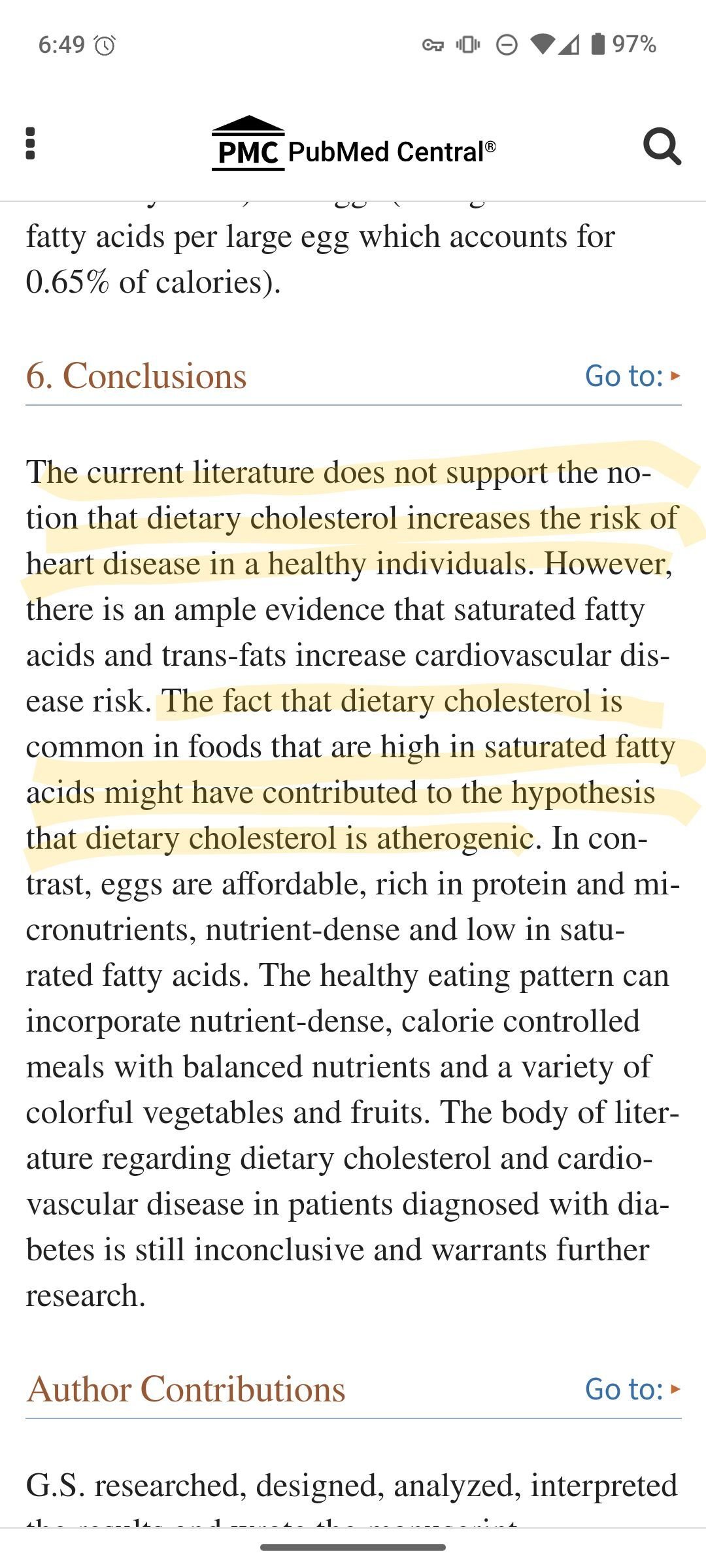
> Unhealthy arteries are a result of a complex immune system response to inflammation, not "fat in your veins", nor resulting from dietary cholesterol.
Native, non-oxidized LDL is not harmful. It may even be protective (see below). _oxidized_ LDL particles trigger inflammation **in** arterial walls. It is then taken up by immune in the blood, forming "foam cells" **within** the arterial wall, turning into fatty streaks and ultimately calcified **arterial plaque**. this effect is heightened in the context of high systemic inflammation, poor antioxidant status, hyperglycemia and "metabolic syndrome".
Arterial plaques are _not_ "bacon fat built up on the inner walls of your arteries". It is _within_ the structure of the walls and is a result of this _immune response_.
LDL is _necessary_ (that is, reducing it to **zero** would kill you). Protective aspects include:
- Carries fat-soluble vitamins (in transit, these antioxidants protect the LDL particle and other tissues from oxidative damage)
- Helps sequester pathogens and toxins, preventing systemic inflammation
- Delivers cholesterol to tissues for cell repair, steroid hormone synthesis and bile production
- After injury or inflammation, cells' demand for cholesterol rises - present LDL (and HDL) can supply it
Finally, **LDL Particle size matters**: Small, dense LDL particles are more easily oxidized and can slip into the arterial wall, making them more atherogenic. Larger, buoyant LDL particles are less prone to oxidation and generally considered less harmful. Diet, insulin sensitivity, and triglyceride levels strongly influence this size distribution.
# Inflammation:
> Chronic systemic inflammation is disastrous for your health and mostly avoidable via diet and lifestyle
Systemic (whole-body) inflammation arises when the body is exposed to a constant background of “irritants” that **keep the immune system turned on**. Diet and lifestyle are two of the biggest drivers.
## Diet
- **Excess refined carbohydrates and added sugars** → Rapid blood sugar spikes lead to glycation, oxidative stress, and inflammatory signaling.
- **Industrial [[seed-oils|seed oils]] high in omega-6 (soy, corn, safflower, sunflower, canola when refined)** → Imbalanced omega-6:omega-3 ratio favors pro-inflammatory eicosanoids.
- **Trans fats and hydrogenated oils** → Directly stimulate inflammatory pathways.
- **Ultra-processed foods** → Combine sugar, refined flour, oils, and additives that disrupt the gut and promote inflammation.
- **Excess alcohol** → Damages gut lining and liver, increasing endotoxin leakage and systemic inflammatory markers.
- **Food intolerances / sensitivities (gluten, dairy, etc. for some people)** → Trigger immune response if barrier integrity (gut, airway) is compromised.
- **Low intake of protective nutrients** → Insufficient antioxidants (vitamins C, E, carotenoids, polyphenols) and omega-3 fatty acids (EPA/DHA) reduce resilience against oxidative stress.
## Lifestyle
- **Chronic psychological stress** → Cortisol dysregulation keeps immune system activated.
- **Poor sleep** → Sleep restriction raises CRP, IL-6, TNF-α (inflammatory markers).
- **Sedentary lifestyle** → Reduced circulation and muscle activity impair anti-inflammatory signaling (myokines).
- **Excess adiposity, especially visceral fat** → Fat tissue secretes pro-inflammatory cytokines (adipokines).
- **Smoking and pollutants** → Introduce oxidants that drive chronic immune response.
- **Circadian disruption** (shift work, late-night light exposure) → Impairs hormone rhythms that normally keep inflammation in check.
- **Poor gut health** (low fiber, antibiotics, dysbiosis) → Allows endotoxins (LPS) to leak into circulation, triggering immune activation.
View quoted note →