I was a bitcoiner, who dabbled in Monero for a time. I came to the conclusion that monero suffers scalability and the privacy that we have had on bitcoin for a long time now actually obsoletes the need for monero, without sacrificing scalability.
Bitcoin has stealth addresses now, coinjoining including spending from coinjoins similar to Moneros ring signatures. As for confidential transactions, bitcoin's lack of that is actually a feature not a flaw. Monero, zcash, liquid layer all suffered from vulnerabilities and known or potentially undetected inflation bugs. I am not aware of any confidential transaction implementation that was not vulnerable at one point. I'd rather take bitcoins assurance of lack of inflation, and security on bitcoin and have privacy on higher layers. Also, lightning is now nearly perfect privacy, with very high scalability.
For monero, I respect the devs behind it and the technology, the technology is cool, but I see bitcoin as the winner for money. Bitcoins privacy we have now, makes monero no longer relevant.
Login to reply
Replies (11)
When you say stealth addresses you mean Silent Payments? Just curious if there have been new developments I'm not aware of.
Also, don't you think that moving most transactions off chain will reduce miner rewards and negatively impact the security of the network?
As for LN, I'll concede that it provides a good level of privacy, but the vast majority of users use it custodially. Also an oligopoly of big node providers basically controls the network. Comparing it to XMR is a bit like an appples to oranges comparison though. You have perfect privacy in Chaumean ecash too, but that's not relevant when discussing decentralized, noncustodial money. LN depends on a L1 with an uncertain future in its fee market and worsens its prospects moving the majority of transactions off chain.
Even Silent Payments (which are better to have than not) do not provide a single privacy guarantee on Bitcoin. They only defer the date by which your privacy will be busted. If I send money to a SP address, I cannot guarantee that my privacy will be maintained because the recipient can choose to violate it, because Bitcoin does not provide shielding to the sender (in contrast to Monero). If you are targeted by the government and raided, when your SP private key is seized they will have a perfect record of everyone’s transactions.
You can also accidentally invalidate privacy with SP for both sender and recipient by combining UTXOs. Silent Payments, to actually facilitate privacy, require you to never KYC at an exchange and *never* combine UTXOs. Normal people are not going to be using coin control on every transaction. Imagine telling a normal person “you’re using it wrong! You can’t combine UTXOs when you spend your money, and you can’t send multiple UTXOs to your exchange separately either! You’re piercing the privacy veil!” Any reasonable person would conclude that privacy on Bitcoin is a big fucking joke. It’s ridiculous.
> coinjoining including spending from coinjoins similar to Moneros ring signatures
The vast majority of CoinJoins that have ever been made are completely blown open now, because the signing keys of enough participants have already been compromised. Huge numbers of compromised ColdCard wallets were used in CoinJoins, which has reduced the mix set to an amount that is laughable. When you engage in a CoinJoin you are trusting that the other participants have securely generated their private keys with proper entropy, will never have their private key compromised by law enforcement seizure, are not actually subversive participants from law enforcement/security services/chainalysis firms. All these assumptions are dangerous and have been proved bullshit by time.
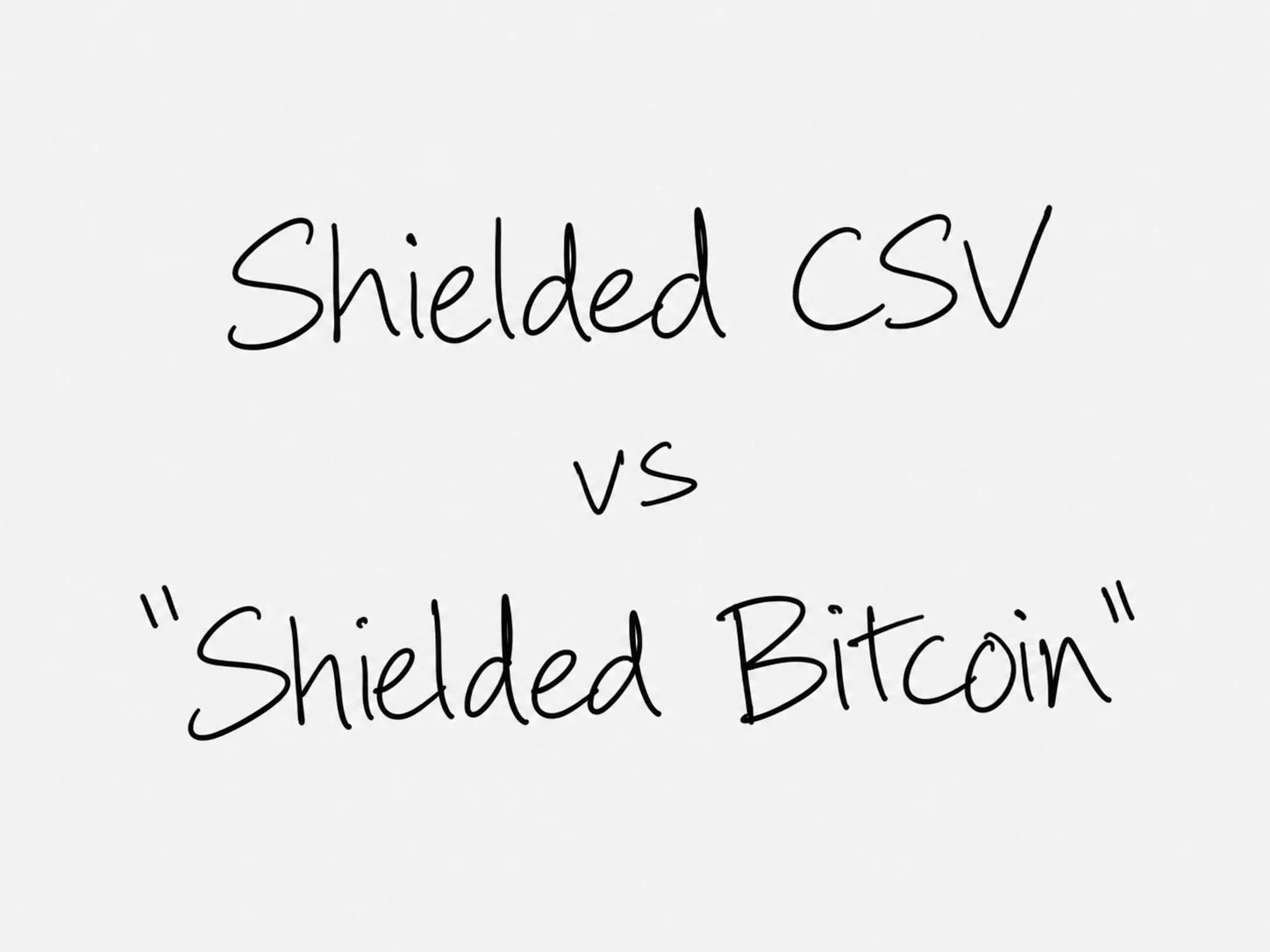
This week Robin Linus, the co-creator of Glass Coins/ShieldedCSV (the bleeding edge and most useful proposal for Bitcoin privacy) did a whiteboard session comparing his proposal with Shielded Bitcoin. After comparing the two, he begins talking about how the best solution for Bitcoin privacy would actually be having a snarks primitive introduced as a feature by Core. But that’s not going to happen, because Core is captured by corporate subversives that refuse any privacy features. I recommend you watch the lecture so you actually understand Bitcoin’s privacy landscape, and how far away we are from having useful privacy features in Bitcoin, of which none have been implemented yet:

X (formerly Twitter)
Robin Linus ⛊ (@robin_linus) on X
I filmed a whiteboard session...
GLASS COINS vs SHIELDED BITCOIN
∙ Key architecture and metaprotocol tradeoffs
∙ BitVM vs PIPEs (full comp...
Privacy becomes important LARGE amounts IN/OUT where XMR MWEB etc is important
Nobody keep tracking Coffee making $100 day in any coin with 50 to 80 payments
This is totally a wrong attitude. Do you know who the person most likely to violate computer crime laws against you is? Think about it for a second. Really think. It’s your spouse or romantic partner. Like 99% of credential theft is the person you have sex with stealing your password to read your DMs. Privacy matters for average people all the time. If you can see on blockchain your transactions, any slut can track you. Coffee purchases tie you to a specific place.
Secondly, I have had people who have sent coffee amounts, less than $10, have their exchange accounts closed for sending me Bitcoin. There’s a guy on Twitter that posted how he got a $10 or so Lightning transaction frozen by the AML division at Strike. The CEO, Jack Mallers, ended up personally resolving that — but it just goes to show that to the authorities, even small transactions are carefully tracked and catalogued. Privacy matters to everyone, normies and dissidents alike. Transactions volumes small and large. If you don’t have base layer privacy, you do not have fungible money.
I don't think that's really what silent payments are used for though. It's not an on chain privacy thing. It's a way to have a static address without having address reuse. That's all I see it being used for in practice. And that's for all the reasons you state; it's not a privacy tool IMHO.
> It's not an on chain privacy thing.
I agree completely. However, it has been aggressively marketed as such by its creators. The second link saying it is a privacy tool is the creator’s website. The third is the world’s largest exchange, directing telling people that it solves Bitcoin’s privacy problems. The problem with this entire ecosystem is that defending Core’s ossification has become a fractal of scams and fraud. Because outside of Monero, most every other cryptocurrency is heavily correlated to Bitcoin. So you have to continue convincing people that Bitcoin’s actual utility as future money is right around the corner. And the minimum viability utility for money includes privacy, so you have to absolutely lie to people’s faces about Bitcoin’s privacy capabilities constantly. So you get instances like the guy upthread saying absolutely retarded shit like “Lightning is private!” No, the onion routing of LN is retardedly unreliable and nobody is using BOLT12. It is not private at all. And you get something like SP coming around, which similarly only allows an extremely sophisticated person to construct privacy in Bitcoin, if they use coin control on every single transactions to never combine UTXOs and atomic swap to a different Monero subaddress afterwards. But nobody is ever going to use it like that (and some UTXOs would eventually have too little value to pay the necessary on-chain fee for the larger atomic swap transaction anyways). So you get people who don’t actually have a real urgent need for privacy and will never see immediate harsh consequences for the failure of not having it repeating shit that they don’t have the capacity to understand the falsehood of told to them by scam operations pushed by whales who want to insulate Bitcoin from its failures by absolutely lying to people in a completely fraudulent manner.


Agree, I actually didn't know it was being pushed as a privacy thing, I never viewed it that way. IMHO it's tradeoffs all the way down and there are a lot of options to improve privacy but you have to understand what you're doing and leaking information is extremely easy. Monero has tradeoffs too, but I try not to venture too deep into these conversations because I honestly don't know enough about how to guarantee privacy from end to end. I mostly just try to get people off the KYC exchanges and start accumulating a no-KYC stack P2P. Accumulate via lightning or cashu and swap to on chain once you have a large enough UTXO. Bitcoin meetups are a great place to build a trusted community for P2P liquidity and to arrange local swaps.
When they stop tracking you and find you
#kunst #ArtOnNostr #NostrArt #collage


silent payments, yes. I was away for a time but am back.
Glad you are back :)
As for Silent Payments, I think @Andrew "weev" Auernheimer expressed their limitations better than I could have in his reply above:
View quoted note →