Had to watch it twice to snap myself out of my default agreeing with Saif 😂
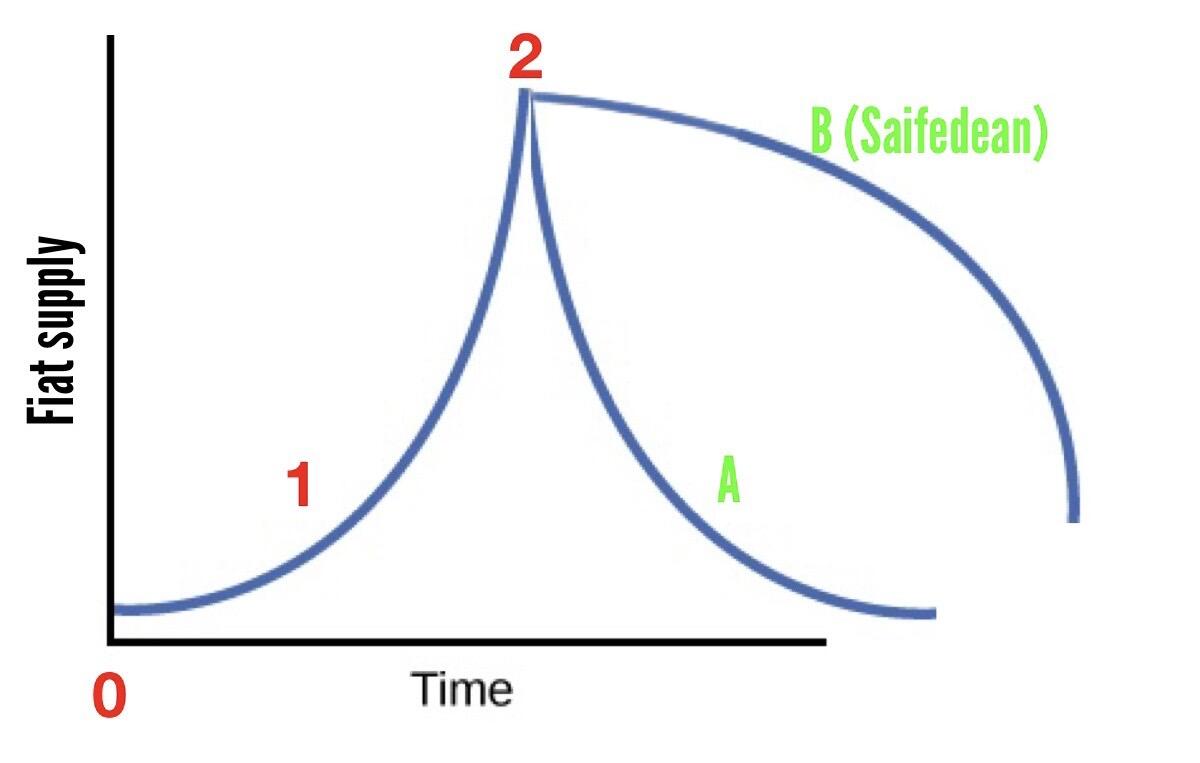
Hyperinflation coming about from the increase in supply of fiat currency rather than reduction in demand makes sense. In fact pretty much all of that section of the preso makes sense.
I guess the counterpoints here would be dollar-milkshake-esque and may be right or wrong but let me try anyway, Saif can put me in my box if I’m wrong.
“If you can save in a hard money that appreciates, you are less likely to borrow to finance large purchases” (slide 31)
That I don’t believe to be accurate. If I need to buy a house today, I’m getting the biggest fiat mortgage on the longest time horizon possible knowing that fiat will debase whilst Bitcoin will appreciate. I had a dig at
@Bender for this very thing; using BTC savings when fiat credit creation is available doesnt make sense.
We know this is how the asset rich fund their lifestyles too - borrowing against assets (fiat mining) to get fiat and roll loans in perpetuity.
So long as debasing credit money exists alongside appreciating commodity money, you’re better off using the former for large purchases.
I don’t think that invalidates any of Saif’s point though, just a difference of opinions on that one statement.
“When fiat credit creation expands, it causes unsustainable speculative bubbles, which collapse and bring money supply down.” (Slide 32)
Again, his point is correct. However, when the bubble is at the sovereign level I’m not sure that applies.
Back to BoJ for the example there. When it happens in a particular sector it can fail or be bailed out, but when it’s the sovereign’s balance sheet well then there is nowhere else to kick the can other than the lender of last resort.
I think the real difficulty here and why I referenced dollar milkshake is this all happens to other countries first, they collapse in to the USD which continues to grow and become stronger because of the effects Saif is describing - reduced fiat demand&supply in one fiat will somewhat go towards Bitcoin, but especially in the short term, it will moreso go to USD. Much like we’ve seen bank consolidations over the past 50 years, we’ll see fiat currency consolidations over the next 50.
The system (all of it, not just the US) keeps requiring these large liquidity injections because even mild deflation sends ripples through other sectors making business cycles very difficult to contain. Sovereigns have deduced it’s easier to flood the system with fiat and avoid cascading collapses than let anything get too bad and require direct intervention like 2008 as it’s too visible and politically unpalatable now.
We saw this during Covid - that was a WAY bigger bailout, Sovereigns just hid it better and spread it wider that time.
Overall I agree that Bitcoin could allow fiat to peacefully unwind, and Saif would probably agree with bigger fiats gobbling up smaller ones, in fact I’m not even disagreeing with his thesis, just considering the order of operations and how that last sovereign level unwinds.