This series continues to translate the original white paper by Satoshi Nakamoto to plain language. The goal is to have easily shared content, and send new people directly to nostr to read it. The original content will be posted, with the plain language below.
Please show support by sharing or sending sats.
4. Proof-of-Work Paragraph 1
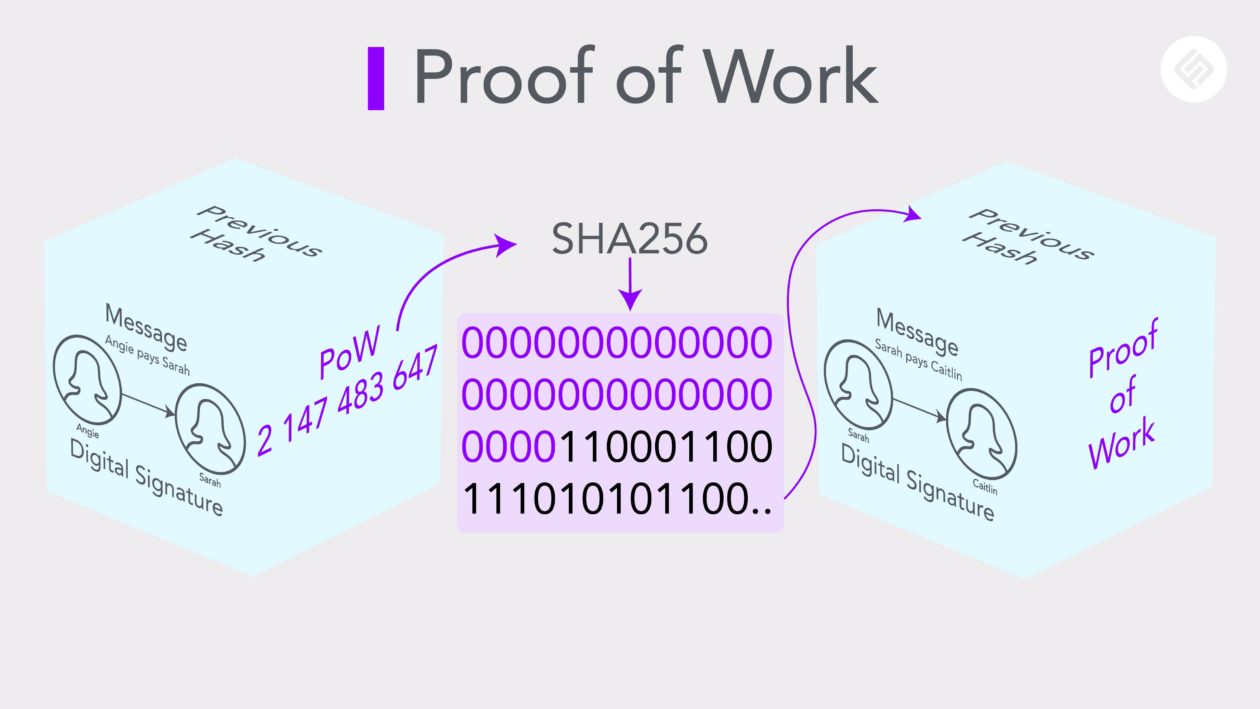
To implement a distributed timestamp server on a peer-to-peer basis, we will need to use a proof-of-work system similar to Adam Back’s Hashcash[6], rather than newspaper or Usenet posts. The proof-of-work involves scanning for a value that when hashed, such as with SHA-256(encryption tools that scramble information), the hash begins with a number of zero bits. The average work required is exponential in the number of zero bits required and can be verified by executing a single hash.
Plain Language
To create a timestamp server that works in a shared network without a central authority, we'll use a proof-of-work system like Adam Back's Hashcash, instead of relying on newspapers or online posts.
The proof-of-work process includes:
- searching for a specific value("guess the number" game)
- when this value is hashed using a method like SHA-256(encryption tools)
- the resulting hash(information)
- must start with a certain number of zeros(the secret number)
Said another way: get random puzzle, computer does work, try to guess the right number before anyone else.
Guess the number, win a prize. The chances of guessing the right number are currently 1 in 4,294,967,296.
Getting the right number of zeros is what makes the process challenging. The more zeros required, the more computing power you need to put in.
So, when someone wants to check if you did the work, they have to take your scrambled information, use the SHA-256 tools, and see if the code starts with the correct number of zeros. If it does, that means you've successfully proven that you did the work.
The computing power needed for this increases with the number of zeros required in the secret number. The "puzzle" is difficult to solve, but once it is solved, the results are easily read and verified by everyone else.
Think Sudoku or Tic-Tac-Toe; challenging to play, easy to see who won the game.
#bitcoin #crypto #btc #blockchain #cryptocurrency #hodl #digitalgold #decentralized #satoshi #cryptonews #satoshinakamoto #whitepaper #bitcoinwhitepaper #nostr #grownostr

