Thanks nostr:nprofile1qythwumn8ghj7cnfw33k76twv4ezuum0vd5kzmp0qy88wumn8ghj7mn0wvhxcmmv9uqzp7dvkzcrf3xpzalfshc5vw0nzlhslm0wwetuqc93gmh8jqpyx9lvrtl0ea I am curious about your thoughts on the psyop. As for me, up to this point, I have bought into the no CSAM argument.
Okay, firstly contiguity DOES matter simply for the fact that data processing happens as a transaction is being validated. Meaning if you have a malware scanner on your server the contiguous bytes of a known malware package could interpret Bitcoin as a malicious package. If you are cloud hosting your node, this means your VM might get killed everytime you relay that transaction (or validate a block with that transaction).
Secondly, the whole "we gave them a place to store the data so they'll use it" argument is hopelessly naive. The same as the seatle " we gave them a safe place to do heroin, so they'll do it there instead of on the street." Not only do they NOT do the heroin in the designated spot but when they run out of their own supply they sniff around the alotted spot for cheap stuff they can still catch a buzz with. The same thing goes for spammers. The whole point is they're putting data where it doesn't belong. There's a million other ways to store data with immutability, namely Nostr, which we're talking on right now. They could post all of their arbitrary data here, but why don't they? It's because they know they're not supposed to put it on Bitcoin. They're just putting graffiti on the walls to destroy something.
Thirdly, a way better mitigation would be to remove the witness discount, and remove OP_RETURN standardness. This makes spam directly compete with monetary transactions, which, if Bitcoin is to succeed at all, must be the case.
So, no this is a tired argument that spamcore types keep repeating.
CSAM is a red herring (though the same byte hash fingerprinting can apply to that as well.)
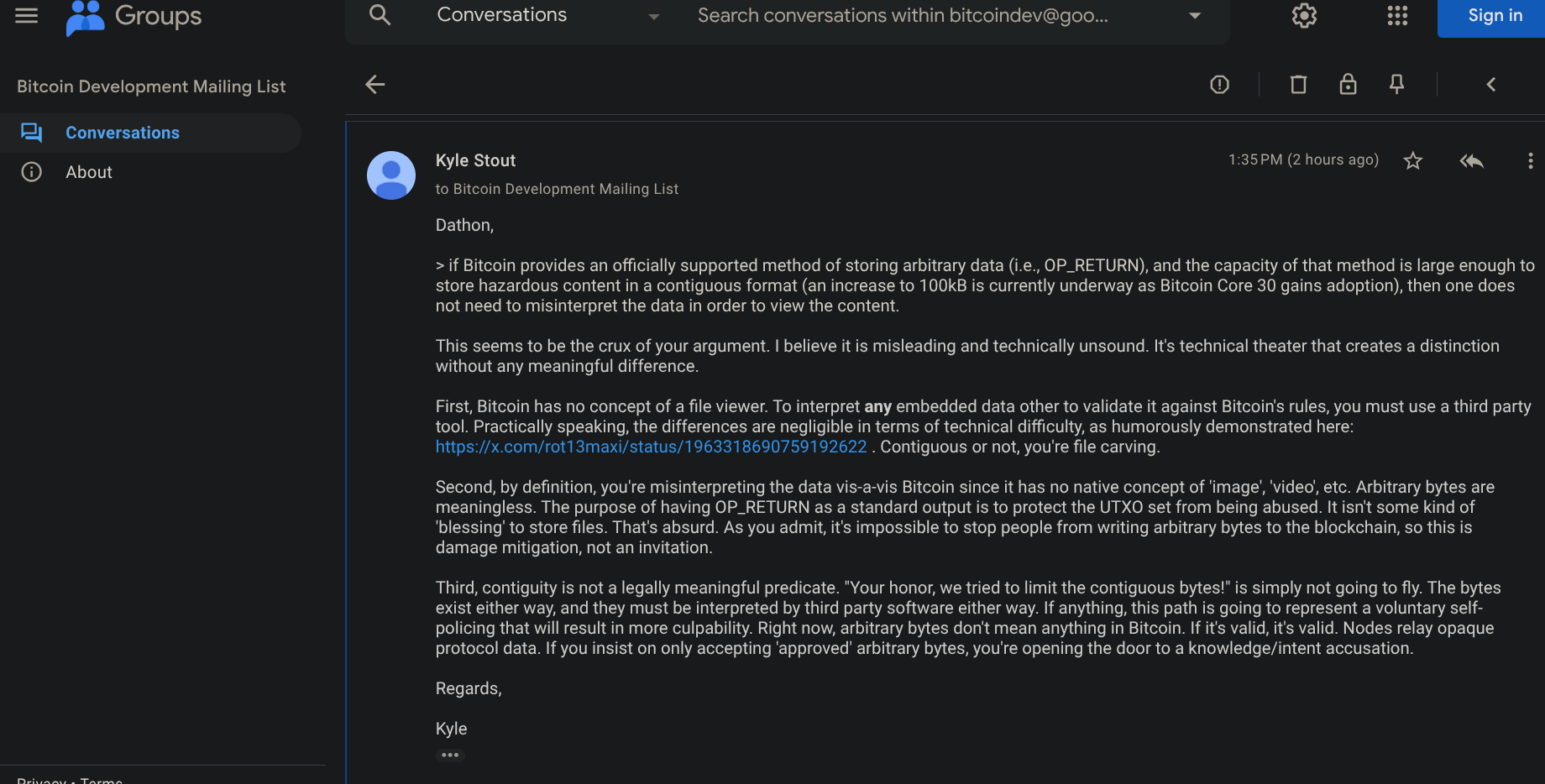
Thanks for the write up on this. Yes, I hear ya. I am trying to understand how technically a larger OP_RETURN would look on the timechain before any software interpreted it. I think this is the crux of the matter.
It's raw hex bytes. Even though the Bitcoin core software doesn't continue to parse it, it is stored on disk and that's when a scanner could flag it on a hash table fingerprint match.
What I'm not saying (for the bystanders):
- Bitcoin embedded malware could be parsed and activated by the core software.
- Bitcoin has an image compiler
- an OP_RETURN could ALONE crash a VM.