Replies (16)
No one knows what that is unless they are a developer or have been on nostr for a while
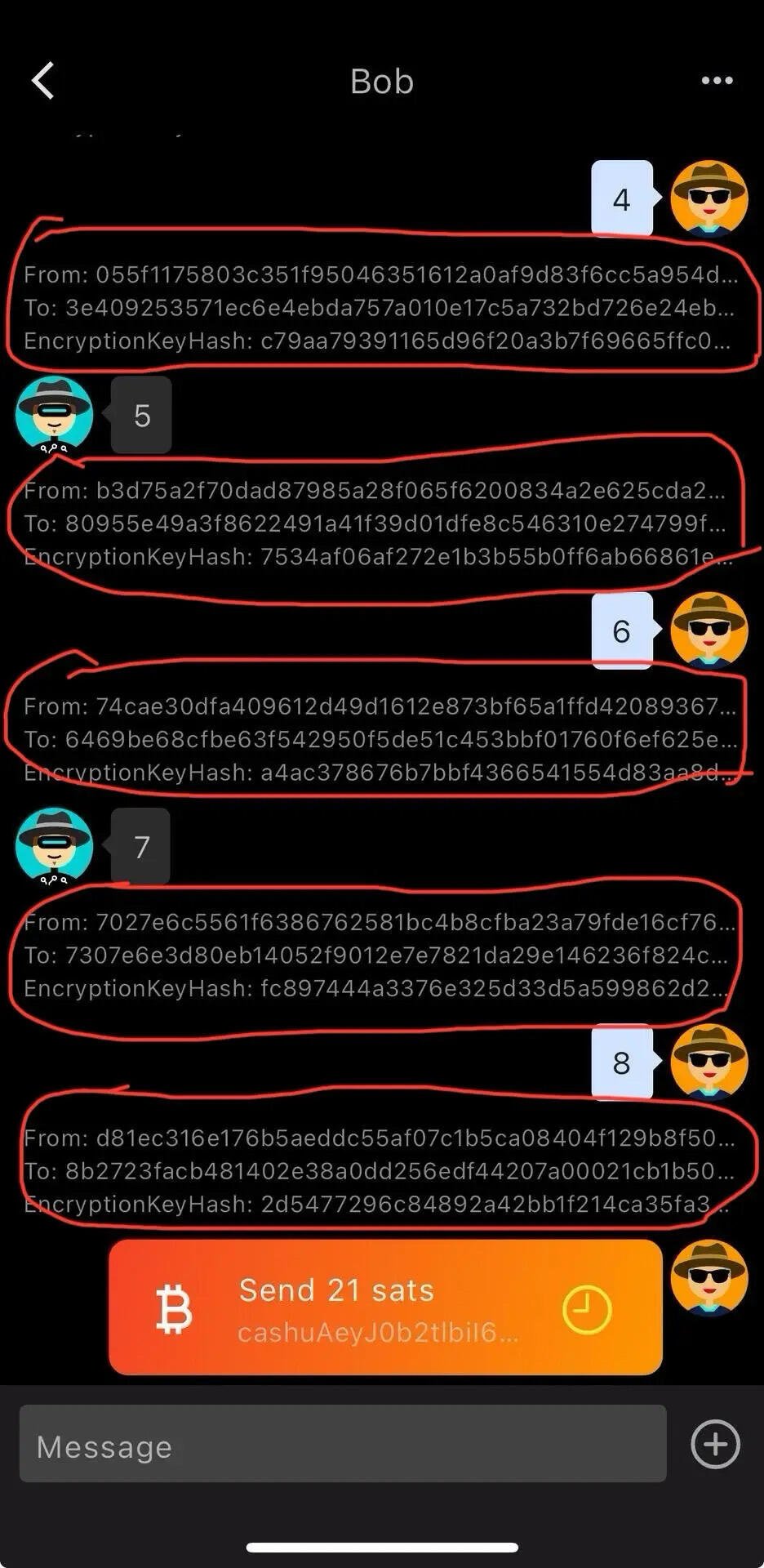
We need to use the metaphor of letters to help users understand the mechanism of continuously updating sending address and receiving address.
Users understand that when sending letters from different places to a friend, different sending addresses need to be written. If a friend moves, a different receiving address is required.
Yea but its somewhat unnatural to think of updating a receiving address if you're not moving (in the same app, in this context). Maybe "one time address" is clear enough?
I have zero clue what "gift-wrapped" is supposed to mean...
...after reading your post and this thread, I now get it, of course.
🤔 that’ll be a tough thing to deal with UX-wise. I think for a lot of people it’ll be a dealbreaker because once you lose that connection, sometimes it’s not easy to re-establish it.
This is the reason I stopped using simplex. It lost my contact and I had no way of reconnecting with them. Super frustrating.
It's difficult to find a metaphor that matches 100%, and we must accept some imprecision.
In Keychat, the sending address and receiving address are also different.
A cognitive perspective: We all rely on metaphors to understand new things, comprehending the unfamiliar through the familiar.
If I understand correctly, its lack of an ID mechanism makes it more reliant on relays.
Metadata-minimized DM?
Self-updating DM?
Hidden-key DM?
This is to help users quickly understand how the sender's metadata privacy is protected.
The challenge is simply explaining how, when youconnectto acontact, you share your unique keys, but also a key update function.
Maybe "preauthorized hidden message". Preauthorized: you & contact can always ratchet your keys, it's the initial connection step. Hidden: every message looks like it's a brand new never before used sender
I think it's probably confusing because its not that the "address" is updated, its that the "to" and "from" are written in code.
Imagine there's a table where people can drop letters. You write who it's to and who it's from on the envelope:
To: Alex
From: Em
If it's yours you pick it up.
You and your friend don't want others to know you put a note in the pile so you come up with a secret code you both recognize for each other.
The code takes the number of letters you've sent combined with your name to make some gibberish so only you and your friend know who it's from and who it's for:
To: code(10, Alex)
From: code(10, Em)
You are absolutely right. We associate 'from' with the sending address and 'to' with the receiving address.