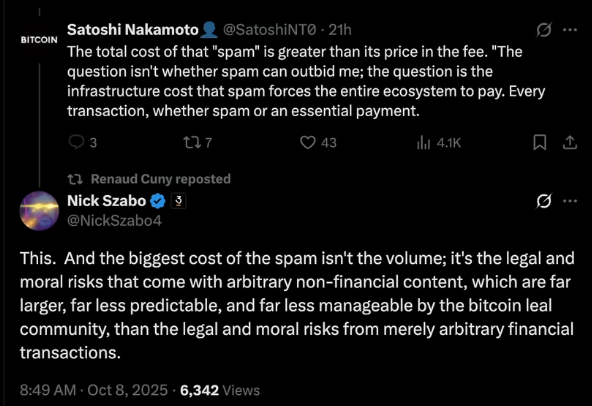
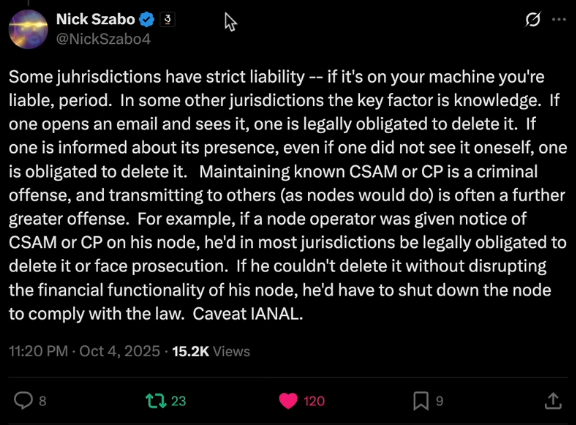
From a a different perspective, the word inscription comes from the Latin inscribere: in (“into”) & scribere (“to write”). It literally means to carve into a surface, to make a mark that endures.
Every Bitcoin transaction is therefore an inscription in the truest physical sense: energy is irreversibly expended to engrave information into a finite medium, the ledger itself. It is thermodynamic writing.
So while one can waste energy on meaningless computation or spam, Bitcoin distinguishes value not by content but by conservation. Only those inscriptions paid for in conserved satoshis, the quantized work of the system persist as structure. Energy without conserved record dissipates; energy committed to the ledger becomes time.
This is why every valid transaction is an inscription, and every inscription that pays for blockspace is a monetary act of physics. Every bit has a price.
Im not sure if you’re a man of faith, but would putting real human obituaries on the chain be considered spam if the bits are paid in sats? Because I see no second best medium for inscription. Show me another place that won’t forget. Bitcoin is far superior to stone.