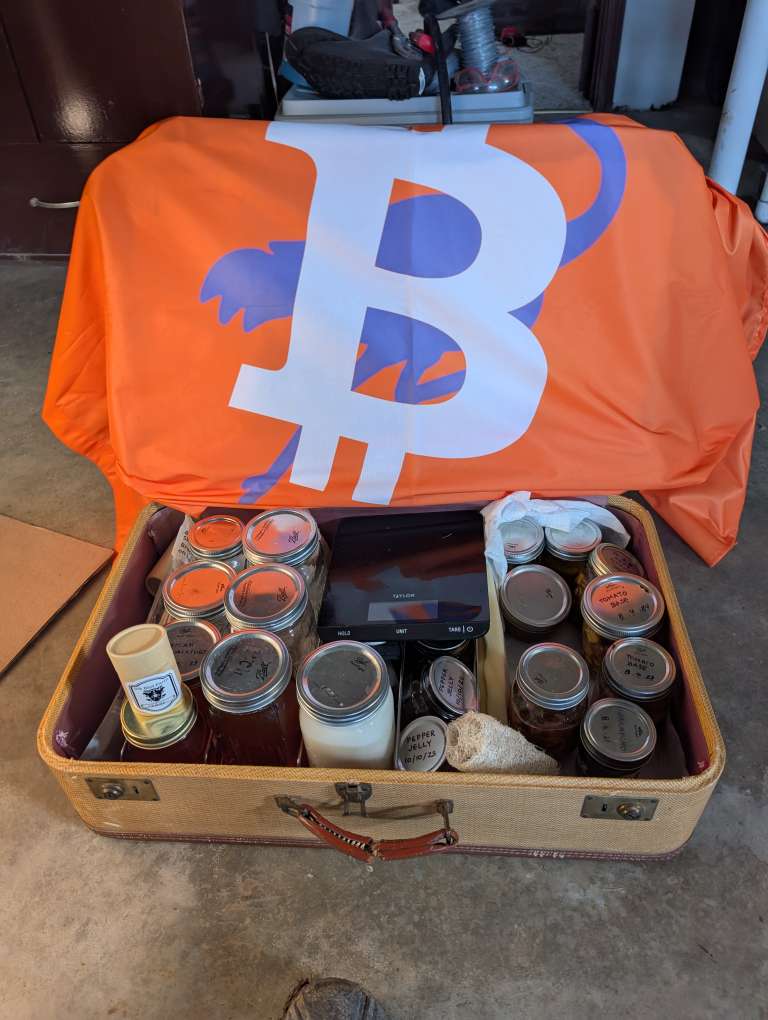
The way you can bring Bitcoin as method-of-payment about is by providing something to the market that it wants and demanding that they pay you in Bitcoin.
That's may more effective than whining about other people not doing the same.
"True believers" demanding payment in BTC won't be enough. For mainstream adoption it need to be useable to buy a cup of coffee without the threat of triggering an audit:
Zaps and experimental web pages prove LN works pretty well for true micropayments. It's also an incredible ux to pay with lightning. I want a killer app to use it not just for the bitcoin aspect, but because it's such a great experience.
I'm often disappointed when 95% of the time I click a donate button and there isn't just a QR or wallet request.
We have a powerful vision to provide Bitcoin education to artists—the true creators of culture—empowering them to shape society by valuing and accepting Bitcoin for their artistry.
Yeah, good luck with that. If you want a non-bitcoiner to pay you in bitcoin, the only way to do it is to give a discount >100%. Yes I did try. Many times on different non-bitcoiners.
Since inception we at @Freedom Tech Co. have accepted bitcoin, and only bitcoin, as payment for our services.
None of our clients have ever objected, or insisted we use xyz stable / altcoin
All our staff and suppliers are also paid in bitcoin. Zero exceptions.
The main issue is that Lightning doesn't create a channel with yourself unless you run your own node at home, which would be financially affordable for most, at least in the West (a BitAxe/Nerdminer and a Raspi, for instance). However, it's not technically feasible because there aren't any complete mini-home-servers on the market, perhaps sold in a bundle with a hardware wallet like Trezor (and with a lightweight FLOSS suite instead of some half-proprietary monster). The second problem is that the wallet has a limited capacity, so anyone wanting to use it to receive payments needs to know that it first must be set up with a certain amount, and then emptied just enough.
It's a level of complexity that's out of reach for most people. In this sense, Solana does better by remaining monolayer, even if its economic model doesn't hold up particularly well.
People need solutions they can conceptually understand, it doesn't matter how much technical complexity lies beneath, that are "ready to deploy," like a little box to plug into the home router and a smartwatch or pendant to carry around to pay or get paid without anything else. This doesn't exist for now; those who develop these things lack an understanding of how things work for the average person.