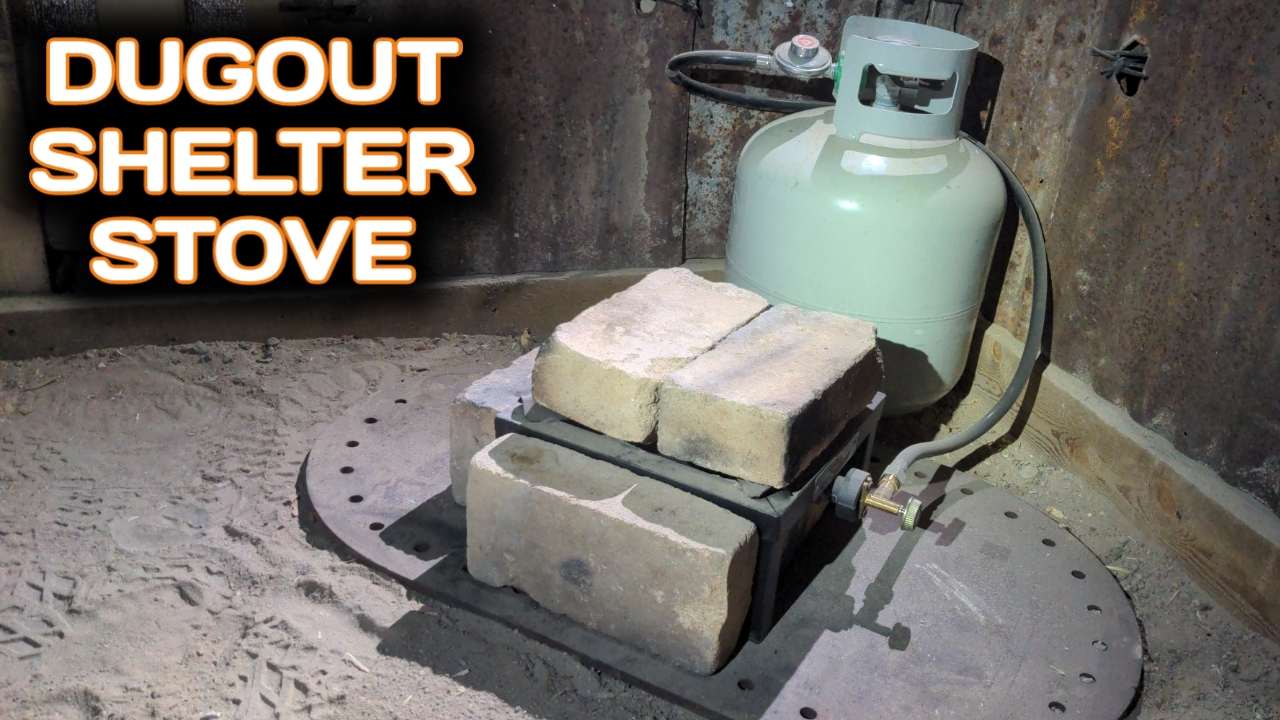
 Rather than building a wood stove as I had planned, I decided to go with a simple and inexpensive propane stove to heat the dugout shelter this Winter.
Login to reply
Replies (5)

2 observations -
1) always place your propane tank and regulator outside. Use a copper line to pass through any walls.
2) you have an explosion risk. If you sleep with it running low, and somehow it goes out, propane is heavier than air and will not rise out through vents near the roof and will accumulate on the floor. If the propane on the floor is ignited, you will have a bad day.
Another observation, that is a 30,000 BTU burner. It's probably much larger than you need for such a small space. It being a large burner, as it accumulates carbon, it will tend to "puff" out when it is on low, which accrues to the problem (2) above.
Don't use it unattended or while sleeping. Stack more bricks on top or fill a metal garbage can full of dirt to hold heat overnight.
Get some hot-pads, or use a small towel folded over when handling hot stuff. Don't use acrylic gloves to handle hot stuff.
Add a combustion-air inlet near the floor and outlet near the ceiling. You can add a cover to them when you're not using the burner. A small enclosed space like that will also need breathable air exchange, so you might want to make your vent covers adjustable. If it's sufficiently sealed, you will run out of air to breathe in the middle of the night even with the stove off.
I don't leave it running while sleeping.
I have a large pipe coming in through the dirt on the floor and there is a lot of places where air leaks out around the door. I'll be installing a more legitimate air outlet soon.