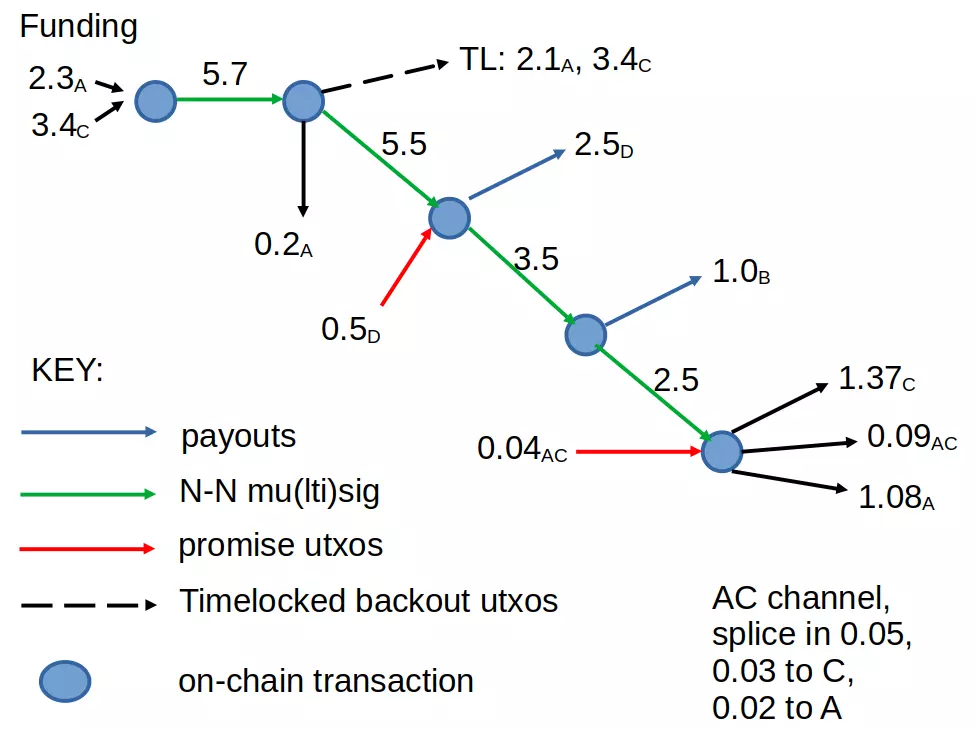
So, what if JM makers "gambled" their change? Maybe chunks of it?
Just a random idea: Could the probabilities be adjusted so that if maker A that "has" 1M sats change and maker B that "has" 3M sats, instead get proportional chances (¼ and ¾ respectively) to win 4M sats? Maybe they're willing to play this game for a expected value of 0 but a positive expected value of privacy gain.
I guess it doesn't work with more than 2 participants, but if it did, I'm sure many JM takers would be willing to gamble their change, for either a 10x that makes it worth it to deal with it (toxic change), or just lose it.