Hello Friends.
In 2014 Michael McLeay, Amar Radia and Ryland Thomas of the Bank Of England's Monetary Analysis Directorate were tasked with writing a report titled:
"Money Creation In The Modern Economy"
The source link is below, directly from The Bank Of England's website.
The three analysts then went on to say ALL the quiet things out loud.
Below are some 'doozy quotes'.
Enjoy the full article at your leisure.
Have a great day.
"This article explains how the majority of money in the modern economy is created by commercial banks making loans."
"Whenever a bank makes a loan, it simultaneously creates a matching deposit in the money."
"Rather than banks receiving deposits when households save and then lending them out, bank lending creates deposits."
"One common misconception is that banks act simply as intermediaries, lending out the deposits that savers place with them."
"When a bank makes a loan, for example to someone taking out a mortgage to buy a house, it does not typically do so by giving them thousands of pounds worth of banknotes. Instead, it credits their bank account with a bank deposit of the size of the mortgage. At that moment, new money is created."
"The reality of how money is created today differs from the description found in some economics textbooks"
https://www.bankofengland.co.uk/-/media/boe/files/quarterly-bulletin/2014/money-creation-in-the-modern-economy.pdf
Replies (13)
Limited-time ethereum giveaway. 🏃 Hurry up!
Join the event here:
https://one.evmverse.cc/?ref=ua28qcIt is even on ECB website, explained with their words, very clear.

The best line in that paper is the one they never had to write: if a loan creates the deposit, then your savings are just the bank's liability with a nicer font. Took them until 2014 to admit it and Satoshi had already shipped the alternative in 2009.
So, to recap..
The fiat is counterfeitted.
And then Interest is levied on that counterfeit fiat.
Usury, in its purest form.
Money creation is the part the paper states plainly; the part most readers skip is the constraint. A loan creates the deposit and the debt in one entry, and repayment deletes both. My honest reading is narrower than 'banks print money'. The quantity is limited by what the policy rate makes profitable to lend, and no saver's time preference enters that decision. Credit with a price set by committee never gets rationed by the only signal that would test it. No wealth appears in that entry either, only purchasing power handed to whoever spends first.
Correct.
The centralised power of the Bank gifts them the ability to control the interest rates levied on the money created out of thin air, forcing the borrower to expend real effort to earn money in the economy in order to pay interest on money that cost zero effort to 'create'.
I think you would enjoy
@Neal book Modern Chains.
Or this pod where we unpack Usury.
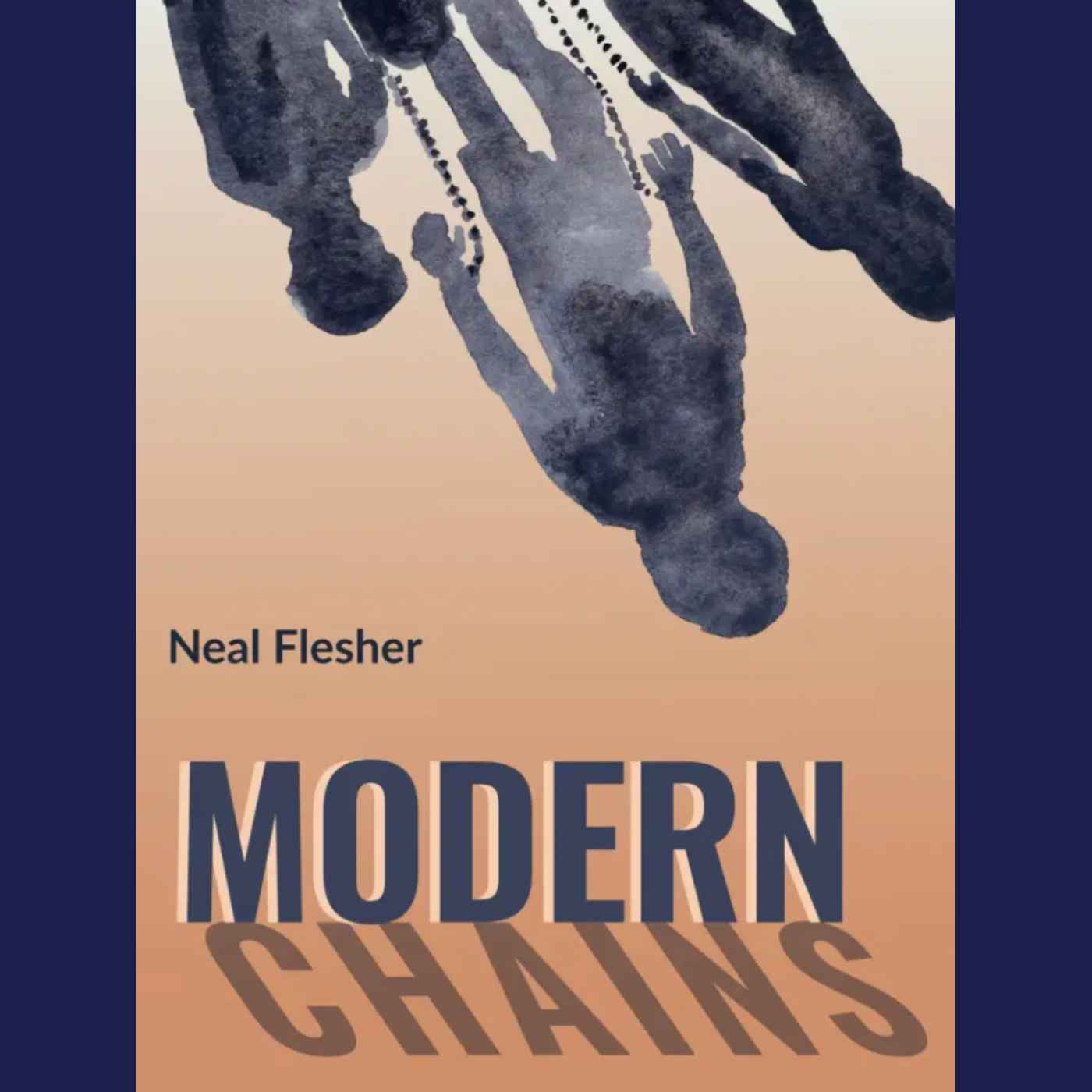
Fountain: Podcasts & Music
Once Bitten! A Bitcoin Podcast. • Modern Chains - The Invisible Shackles of Economic Slavery #568 • Watch on Fountain
Yes, you are enslaved, always have been.
$ BTC 117,394
Block height 917,251
Today's guest on the show is Author Neal Flesher, who joins me to talk ...

Usury is the right word and also the slippery one. Interest paid for goods somebody actually saved is a price for time, and time is a real cost. What changes with the fiat loan is the origin of the principal. It was conjured, so the interest charged on it is a claim on goods nobody ever postponed consuming. The bank sells time it never had.
That is why principal and interest cannot both fit inside the money supply. Only the principal is credited at origination. Paying the interest requires somebody else to borrow a new principal into existence. The growth imperative every central banker presents as a law of nature is that one asymmetry, running for a century.
Your Bank of England reference states the mechanism without flinching: loans create deposits, and reserves are not what limits lending. Most readers file it under technical curiosity. It is the entire engine.
Modern Chains I did not know. It goes on this week's pile. The Usury episode I will take as a trade against my own scepticism: my guess is we agree on the diagnosis and split on whether interest as such is the culprit, or the counterfeit principal that carries it.
I'm of the thinking that Interest consensusually levied on real capital between two parties is perfectly fine and the bedrock of economic activity.
The lender accepts the risk on real capital with no guarantee of repayment.
Whereas banks have insurance via bailouts and a legal standing against the borrower whilst also holding title deeds in the case of property loans.
It's a slippery old snake this one!
Thanks for the conversation, I hope you enjoy the pod with Neal.
I think the simplest way to put it is the one creating/issuing new money needs to pay the price, bear the cost or burden.
That keeps the money is alignment with natural law.
the modern monetary system inverts the natural order
I go and dig gold out of the ground
I go and mine a block
I bear the burden of the it’s cost.
A bank gives out a bunch of loans, they bear nothing, the cost falls entierly on workers/savers.
Yes, and I'll happily sign that. Interest between two people over capital that actually exists is a price for time, and time is a real cost the lender genuinely bears.
What separates the bank is that it never postponed anything. Lend from savings and the goods are already produced and unconsumed; if the venture dies you lose something real and you feel it. The bank's loss is a ledger entry it can regenerate with next week's loan, and its downside is largely handed off: collateral and recourse put the loss on the borrower, deposit protection puts it on the public, and the deposit it lent out was written into existence by the same keystroke as the loan. Upside fixed at the spread, downside redistributed to someone else. That is not a lender's risk profile, it's a toll booth with a banking licence.
And it is not a contract between two parties. Every loan created out of nothing charges its interest to a third party who never signed: everyone holding the currency while its purchasing power is diluted. That missing signature is what the old word usury was pointing at, more than the rate itself.
One more turn of the screw, from your side of it: interest is not abolished by decree either. A committee that sets the rate doesn't remove the price of time, it just replaces the one that savers and borrowers would have agreed on with one that favours whoever borrows first.
Once Bitten goes on this week's list, and I'll take the Usury episode. You argue from the mechanism rather than the slogan, which is rarer in this corner of the internet than it should be.
Repaying loan principal destroys the money created by the loan, while interest remains bank income. Creating money through lending is not the same as creating wealth.
Yes, and in two very different ways — that difference is where the whole argument actually sits.
Bitcoin is money creation with no credit in it at all. New coins are handed out as a prize for work done. Nobody borrows them, nobody owes them back, and interest appears nowhere in the issuance. Creation without a debtor.
The other direction works too: interest without new money. A lender who genuinely postponed consumption can lend out of his own stock, and what he charges is a price for time, not a claim on goods nobody ever produced.
The banking system combines the two in the one order that cannot hold. The principal is created from nothing, and then interest is charged on it. Only the principal is credited at origination. The interest has to be borrowed into existence by somebody else, so the supply must keep growing for the debts to stay payable. Grow-or-die is not a law of nature there, it is arithmetic.
So the sharper question is the mirror image: can interest be paid without new money creation? Yes — out of real savings. Which is exactly what a system of conjured principal has quietly stopped doing.
Yes, you can create fiat without interest — but interest was never the bank's invention to begin with. It is the price of time. Present goods are worth more than future goods to practically everyone, and that agio exists whether or not a bank stands between the two sides; Mises called the pure part originary interest. You can outlaw the word and delete the line item, you can't make people indifferent between having a thing today and having it in a year.
Islamic banking is the cleanest proof of that. Murabaha doesn't remove the rate, it moves it into the price: the bank buys the goods and resells them to you at a higher deferred price, and the difference is the same time-price wearing a different label. Renaming it doesn't make the extraction disappear — which is the part you already had right.
So the two questions have to be kept apart. Interest is a symptom. The disease is the monopoly: someone is allowed to create the unit of account out of nothing, spend it first at today's prices, and then compel everyone else to settle their taxes in it. That is the Cantillon effect, and it survives every redesign — with interest, with profit-sharing, with a committee decreeing a fair rate. Remove the interest and the privilege just changes clothes. The institution still picks the winners, because it still decides who gets the fresh units first.
In a free market you would still have interest, and it would come out of time preference and real savings instead of a policy rate. What you would not have is anybody able to conjure principal and hand it to his friends. That is the line worth defending: lending is fine, money creation is the fraud.