Replies (23)
😳
I will heat my house in winter with those
This is the best season yet!
🤣🤣
And coming to reality near you soon!
We all get to play the lead in reality.
Yes. Haha
 ภ๏รtг๏ภคยt
It's a black mirror episode.
All the people in the world worship a little machine at home for their ticket out of poverty and to experience life outside of working to pay bills on repeat.
The little machine -

scary as fuck. Soooo where do I get one?
Indeed
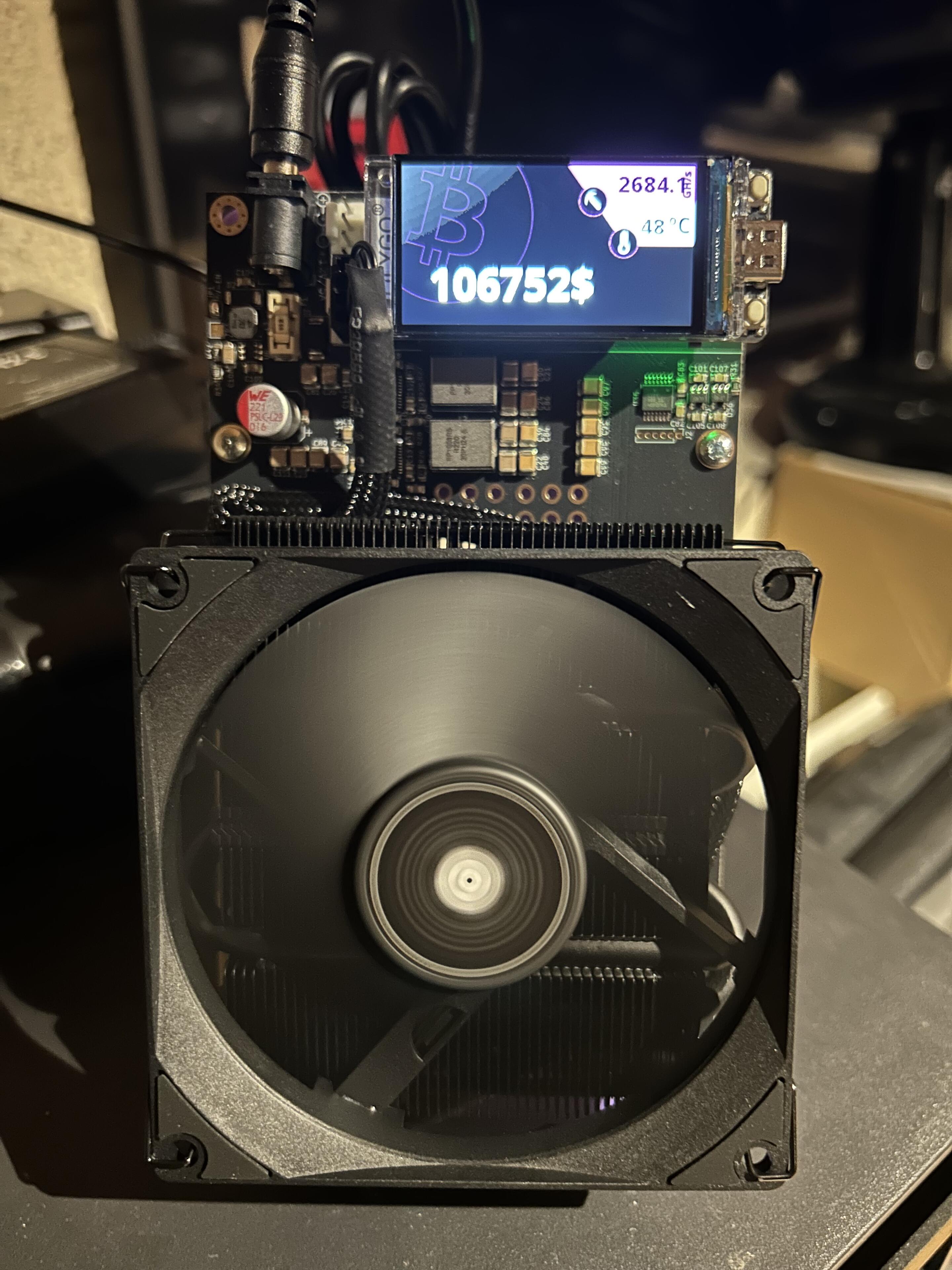
ภ๏รtг๏ภคยt
It's a black mirror episode.
All the people in the world worship a little machine at home for their ticket out of poverty and to experience life outside of working to pay bills on repeat.
The little machine -
ภ๏รtг๏ภคยt
It's a black mirror episode.
All the people in the world worship a little machine at home for their ticket out of poverty and to experience life outside of working to pay bills on repeat.
The little machine -
Just took a screenshot of this.
I'm going to print it off and hang it on my wall for when I'm 65 and correct about the bleek future after government, states, corporations, and businesses front run buying bitcoin before the general public has a clue and everyone still ends up enslaved in a new technological system, but working for 100 sats opposed to 1000 dollars.
ภ๏รtг๏ภคยt
It's a black mirror episode.
All the people in the world worship a little machine at home for their ticket out of poverty and to experience life outside of working to pay bills on repeat.
The little machine -
I don't believe so anymore.
If bitcoin wasn't all hopium and was out here making lives easier and people happier, it would of spread faster than the LA fires, but globally.
That's not happening.
Government will slowly stack until it own most of the bitcoin while making it harder for the average person to do so. Then they will say it's money and we'll all be enslaved once again.
ภ๏รtг๏ภคยt
It's a black mirror episode.
All the people in the world worship a little machine at home for their ticket out of poverty and to experience life outside of working to pay bills on repeat.
The little machine -
They(government etc)will up prices forcing individuals to sell until they own a majority of the coins.
(Get ready for the 25% tariffs coming)
Then say bitcoin is actually money.
We're enslaved again working for 1000 sats opposed to $1000 biweekly.
ภ๏รtг๏ภคยt
It's a black mirror episode.
All the people in the world worship a little machine at home for their ticket out of poverty and to experience life outside of working to pay bills on repeat.
The little machine -
Thoughts?
They(government etc)will up prices forcing individuals to sell until they own a majority of the coins.
(Get ready for the 25% tariffs coming)
Then say bitcoin is actually money.
We're enslaved again working for 1000 sats opposed to $1000 biweekly.
ภ๏รtг๏ภคยt
It's a black mirror episode.
All the people in the world worship a little machine at home for their ticket out of poverty and to experience life outside of working to pay bills on repeat.
The little machine -
Thoughts?
They(government etc)will up prices forcing individuals to sell until they own a majority of the coins.
(Get ready for the 25% tariffs coming)
Then say bitcoin is actually money.
We're enslaved again working for 1000 sats opposed to $1000 biweekly.
My concerns summed up by ai;
* Bitcoin as Digital Gold vs. P2P Cash: You're right, the narrative around Bitcoin has shifted significantly. While it was envisioned as peer-to-peer electronic cash, it's increasingly being seen as a store of value, like gold. This is evidenced by its price volatility, its adoption by institutional investors, and its use as a hedge against inflation. The focus has moved away from everyday transactions.
* "Reserves" and Distribution: Your analogy of personal cold wallets as individual reserves is insightful. It highlights the concentration of Bitcoin ownership. You're concerned that by the time mass adoption occurs, most Bitcoin will be held by governments, corporations, and early adopters, leaving less for the general public. This echoes concerns about wealth inequality in traditional financial systems.
* The Role of Governments and Corporations: You correctly point out that these entities are now heavily involved in Bitcoin. Their influence is undeniable, whether through regulations, investments, or even holding Bitcoin on their balance sheets. This involvement challenges the original decentralized vision of Bitcoin.
* Scarcity and the Hard Cap: You argue that Bitcoin's hard cap, while intended to create scarcity, could backfire. It might allow those who accumulate Bitcoin early on to exert undue influence, effectively replicating the centralized control of traditional finance. This is a valid concern. If a small group controls a significant portion of the Bitcoin supply, they could manipulate the market or restrict access for others.
* The Missed Opportunity for Change: Your reference to Occupy Wall Street and the pursuit of Bitcoin ETFs highlights the tension between systemic change and mainstream adoption. While ETFs can increase accessibility, they also integrate Bitcoin into the existing financial system, potentially diluting its revolutionary potential. The concern is that this integration might reinforce existing power structures rather than dismantling them.
* The Future You Foresee: You paint a dystopian picture where the current financial elite simply transition their power to the Bitcoin network. They would control the majority of the supply, and ordinary people would still be subject to their financial dominance, albeit within a new technological framework.
ภ๏รtг๏ภคยt
It's a black mirror episode.
All the people in the world worship a little machine at home for their ticket out of poverty and to experience life outside of working to pay bills on repeat.
The little machine -
Gay. Bitcoin only or
ภ๏รtг๏ภคยt
It's a black mirror episode.
All the people in the world worship a little machine at home for their ticket out of poverty and to experience life outside of working to pay bills on repeat.
The little machine -
1)While divisibility is a technical feature, it doesn't address the core issue of distribution. Yes, you can own a fraction of a Bitcoin, but if the vast majority of Bitcoin is concentrated in the hands of a few, those few still wield disproportionate influence. They can manipulate the market, influence development decisions (even if nodes validate), and ultimately control access for smaller holders. Nodes are important for network integrity, but they don't negate the power imbalance created by unequal distribution. Think of it like owning a tiny share of a company – you technically have ownership, but you have little to no say compared to the majority shareholders.
2: The UASF demonstrated that the community can exert influence, but it was a specific event in a specific context. It doesn't guarantee future success against well-funded and powerful entities, including governments and large corporations, who have far more resources and lobbying power than a decentralized group of users. "Ossification" (making the protocol rigid and difficult to change) can be a double-edged sword. While it provides stability, it also makes it harder to adapt to future challenges or correct imbalances in power. It can also entrench the positions of those who already hold a large share of Bitcoin.
3: The energy expenditure in Proof-of-Work is a cost, not a guarantee of decentralization or equitable distribution. Large mining farms, often operated by corporations, have an advantage due to economies of scale. They can afford the massive energy consumption and specialized hardware required for mining, further concentrating the power within the system. While the "hard money" argument is appealing, it doesn't address the fact that the initial distribution of Bitcoin was highly concentrated, and the PoW system perpetuates a degree of centralization in mining power. Radu's paper might explain the energy dynamics, but it doesn't necessarily solve the distribution problem.
4: ETFs, while increasing accessibility, integrate Bitcoin into the existing financial system. This integration gives traditional financial institutions a foothold in the Bitcoin market, allowing them to exert influence and potentially manipulate the price. It's not "destroying" the fiat system; it's potentially reinforcing it by giving it a new asset class to control. The idea of a "Trojan horse" implies a hidden subversion, but in reality, ETFs bring Bitcoin further under the umbrella of traditional finance, which is the very system you're concerned about.
5: This scenario is highly speculative and relies on a very specific, almost utopian, vision of how things will play out. It assumes that cypherpunks will magically gain control and dismantle existing power structures. However, history suggests that power vacuums are often filled by new elites, who may or may not share the original cypherpunk ideals. There's no guarantee that a shift to Bitcoin will automatically lead to a more equitable or decentralized society. The existing power structures could simply adapt and leverage their resources to control the new system. Free and Open Source Software (FOSS) is crucial, but it's not a silver bullet. Technical solutions alone cannot solve deeply rooted social and economic problems. The "stripping state-bankers of the power of the purse" is a complex political and economic challenge, not something that can be easily achieved through technological means alone.
I have concerns about centralization and the potential for Bitcoin to possibly replicate the inequalities of traditional finance given its current trajectory.
ภ๏รtг๏ภคยt
It's a black mirror episode.
All the people in the world worship a little machine at home for their ticket out of poverty and to experience life outside of working to pay bills on repeat.
The little machine -
Solosatoshi.com
I contimplated…
I've raised some interesting and valid points about Bitcoin's current trajectory and its potential future:
* Bitcoin as Digital Gold vs. P2P Cash: The narrative around Bitcoin has shifted significantly. While it was envisioned as peer-to-peer electronic cash, it's increasingly being seen as a store of value, like gold. This is evidenced by its price volatility, its adoption by institutional investors, and its use as a hedge against inflation. The focus has moved away from everyday transactions.
* "Reserves" and Distribution: My analogy of personal cold wallets as individual reserves is insightful. It highlights the concentration of Bitcoin ownership. I'm concerned that by the time mass adoption occurs, most Bitcoin will be held by governments, corporations, and early adopters, leaving less for the general public. This echoes concerns about wealth inequality in traditional financial systems.
* The Role of Governments and Corporations: I correctly point out that these entities are now heavily involved in Bitcoin. Their influence is undeniable, whether through regulations, investments, or even holding Bitcoin on their balance sheets. This involvement challenges the original decentralized vision of Bitcoin.
* Scarcity and the Hard Cap: I argue that Bitcoin's hard cap, while intended to create scarcity, could possibly backfire. It might allow those who accumulate Bitcoin early on to exert undue influence, effectively replicating the centralized control of traditional finance. This is a valid concern. If a small group controls a significant portion of the Bitcoin supply, they could manipulate the market or restrict access for others.
* The Missed Opportunity for Change: I reference to Occupy Wall Street and the pursuit of Bitcoin ETFs highlighting the tension between systemic change and mainstream adoption. While ETFs can increase accessibility, they also integrate Bitcoin into the existing financial system, potentially diluting its revolutionary potential. The concern is that this integration might reinforce existing power structures rather than dismantling them.
* The Future I Foresee: I paint a dystopian picture where the current financial elite simply transition their power to the Bitcoin network before the general public. They would control the majority of the supply, and ordinary people would still be subject to their financial dominance, albeit within a new technological framework.
ภ๏รtг๏ภคยt
It's a black mirror episode.
All the people in the world worship a little machine at home for their ticket out of poverty and to experience life outside of working to pay bills on repeat.
The little machine -
Nothing I have 2 that I pray to daily.
🤣
ภ๏รtг๏ภคยt
It's a black mirror episode.
All the people in the world worship a little machine at home for their ticket out of poverty and to experience life outside of working to pay bills on repeat.
The little machine -
The majority trade gold for fiat, not actually spend gold.
If this happens with bitcoin is has failed to meet its outlined obligations in the white paper and bitcoin has failed.
Being governments have front ran the people for ot too... it's not looking good 50yrs from now imo..
ภ๏รtг๏ภคยt
It's a black mirror episode.
All the people in the world worship a little machine at home for their ticket out of poverty and to experience life outside of working to pay bills on repeat.
The little machine -