In the year 33 AD Jesus came to Jerusalem.
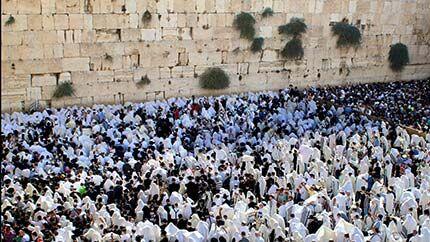
The city was packed with pilgrims who had come for the celebration of the Passover.
It has been estimated that they numbered 300,000 to 400,000.
Jesus visited the temple.
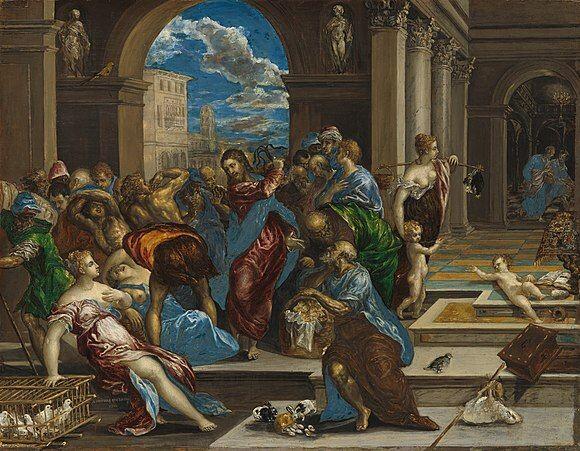
He saw a courtyard filled with livestock, merchants, and money changers, who exchanged the standard Greek and Roman money for Tyrian shekels.
The money changers received a profit, of which a solid share likely were collected by the high priests on behalf of Pontius Pilate.
I assume that, with the enormous masses of visitors, the profits from the money changing must have been massive.
According to the gospel of Matthew:
"Jesus went into the house of God, and cast out all them that sold and bought in the temple, and overthrew the tables of the money changers, and the seats of them that sold doves, And said unto them, My house shall be called the house of prayer; but ye have made it a den of thieves."
Jesus's actions most likely prompted the authorities' decision to later have Jesus arrested.
6/13