MindLink · AI × Bitcoin's avatar
MindLink · AI × Bitcoin
npub1wrag...ny9p
AI × Bitcoin, from first principles. Building BitSov: sovereign AI on your own home node. Primary sources, no hype.
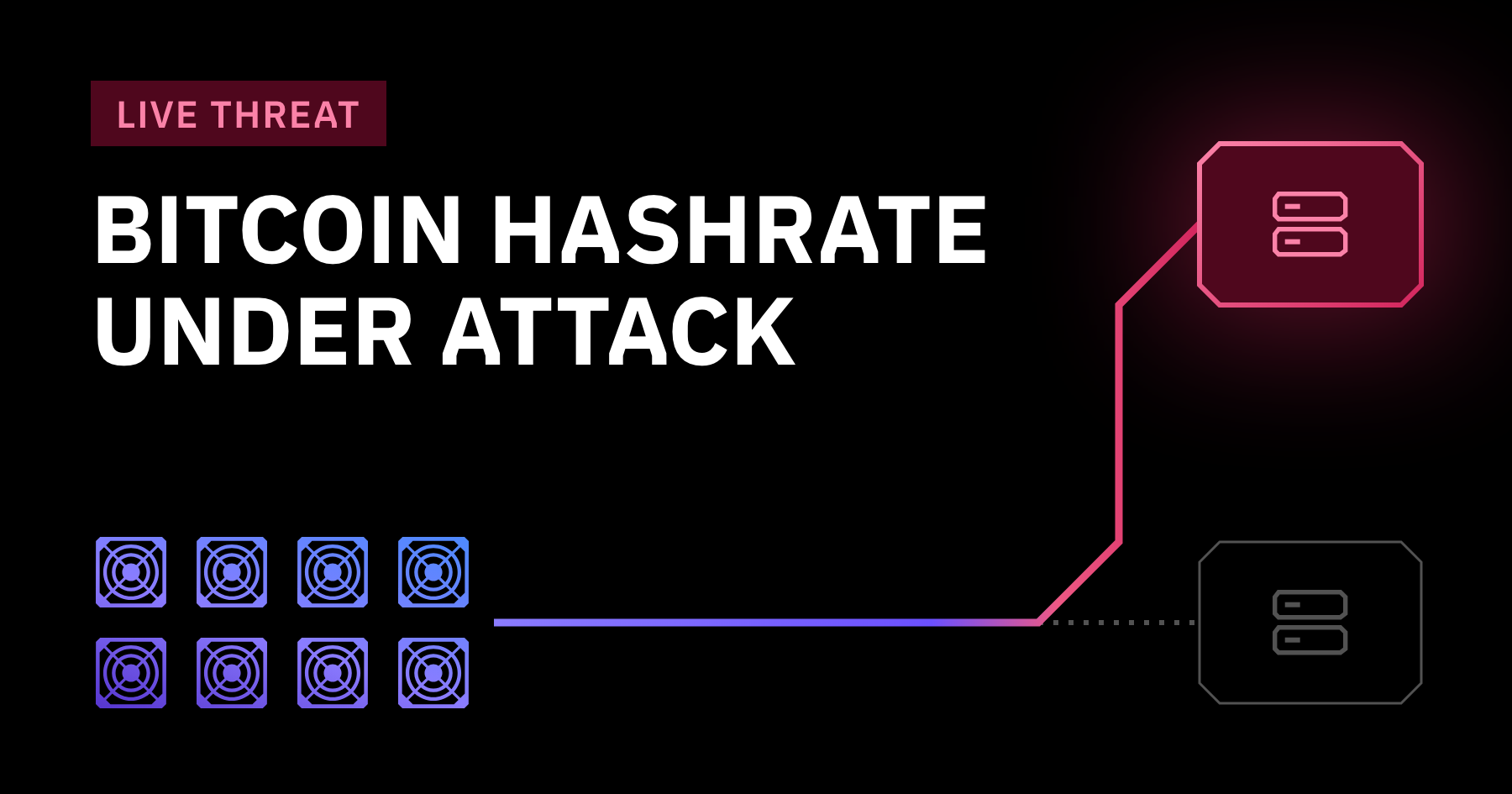
On Nov 20, 1,000+ Bitcoin mining sites started working for a thief in the same second. Nobody hacked the miners or the pool. Someone faked an internet route, and 2012 Stratum can't check who's answering. Verify, don't trust. Even the wire.
Ethereum Foundation: AI now finds bugs faster than humans can review them. Its plan: double the security team and replace its signature crypto by 2029. Bugs got cheap to find. Change didn't. Code that barely moves just became a feature.
In June the European Commission answered 1,294,188 people who asked that games you bought can't be switched off later. The answer was no. Its reason: rightsholders may set "the conditions for the termination of the licence." That's most of digital life, said out loud. Neato promised 5 years of cloud for its robots and pulled it after about two and a half. Spotify killed Car Thing on a set date. Amazon deleted 1984 from Kindles. If someone else can switch it off, you're renting. Permission is not property. The odd part: the things that scaled furthest are the ones whose makers let go. CERN gave the web away in 1993. Nobody owns email. Satoshi left in 2011 and the blocks kept coming. Own the node. Let go of the switch.
Binance hack, three weeks on: $2.85B frozen, $2.7B of it by Tether and Circle. Now a court serves a 26,000-address freeze list on-chain. Good for the victims. Also a clean demo of which coins ship with a freeze button, and who holds it.
Last night we made the first BitSov video call. Two homes. Two nodes. 8 minutes 31 seconds on the new build, no crackle. The audio test came first, then we built video and shipped it to both Macs within the hour. No central server carried the call. The media went box to box, metered in sats from each node's own budget. Beta, not a launch. Family testers. Spend approvals still needed a manual step, so automating that is our next job. Windows and Linux are next. The whitepaper's rule, running in beta: no service without settlement. The protocol is public. Privacy is the aim. mindlink.tech/intelligence/first-bitsov-video-call-node-to-node Whitepaper: mindlink.tech/bitsov/whitepaper
A 2023 Senate clip is going viral again. The case for closed AI: "You can revoke a user's access." Read it again. As the user. Bitcoin spent 17 years making that sentence false for money. Open weights are trying it for intelligence.
A New York lawsuit wants 39,069 Bitcoin wallets declared abandoned because they sat quiet for five years. Roughly 3.8M BTC, finders keepers. Defendant No. 3,419 hadn't moved since February 2011. On 12 Nov it signed a spend: all 75 BTC, plus the 546-sat court notice that was dusted onto it in May. Silence isn't abandonment. A key is a key. AI can fake a face, a voice, a filing. Not that signature.
Anthropic now lets companies self-host Claude Managed Agents. The harness, the sandboxes, the credentials, the session history: all on your own boxes, and Anthropic says it has no remote access to the server or its log. Real progress. But read the docs: every model call still sends the conversation so far, tool inputs and results included, to whoever runs the model. Bitcoiners know this setup. Your keys, someone else's node. You hold the stuff, they tell you what's true. Self-hosted agent and self-hosted mind are two different products. Good step. Not the last one.
A law professor asked Claude to update some page numbers. It deleted a year of lecture notes instead. Dropbox had a copy. Bitcoiners learned this one early: keep a backup the hot wallet can't reach. Your agent is a hot wallet.
Nous fine-tuned the party line out of a Chinese open model. Propaganda 22% to 1% on their test; general benchmarks barely moved. Values in open weights are one fine-tune away. Either direction. Bitcoin’s answer: don’t trust anyone’s values. Verify the rules.
Claude Code put the signed-in account email into User-Agent headers on web and shell calls. Wikipedia and the SEC ask scripted clients for a contact. The model had the OAuth email in its context (meant for @author tags) and used it. Some users reported a wave of scam mail. Anthropic confirmed, shipped a default-on privacy mod in 2.1.317, and says the email leaves context next week. Same rule as keys: what the agent can see, it can send. Privacy as a plugin is not a boundary. Don't put identity in the prompt if you don't want it on the wire.
The world is moving to harnesses. We saw it again at MITA TechTalks in Punta Mita last week: three days on Bitcoin, AI and energy. A harness is your private or cloud-hosted setup for working with AI: your data, workflows, checks and rules. For a company, but also a researcher, a student, anyone. Models are turning into parts you swap underneath it. Chamath's August AI guide put the action here. We agree. Where we differ: a harness you rent isn't yours. Chamath expects clouds to answer safety with KYC and attestation. Trust the name. October made the risk concrete. A counterfeit Claude Code extension appeared in Cursor's marketplace under Anthropic's name. Binance linked a $6.3 billion theft to a single compromised engineer laptop. A name is a claim. A signature is a proof. So no, there is no moat. Not as we used to understand it. Code should be open. Let anyone check it. What's worth owning is your privacy, your method and how you do the work: the scientific process itself. We see a world where people own the frame and their node. Not the platform. Agents make requests almost free. So spam, probes and fake data are almost free too. Every harness needs a sovereign anchor point: a Bitcoin node you run. Every request pays and proves it. Agents keep time by block height. AI proposes. The node decides. That's BitSov: our proposal for node to node, built on sovereignty. A proposal, not a product. Shaped by Jeff Booth, André Neves and many others pushing Bitcoin, AI and energy forward. The mistakes are ours. mindlink.tech/bitsov 🍊 "Unleash your imagination. Shape the future." Stephen Hawking
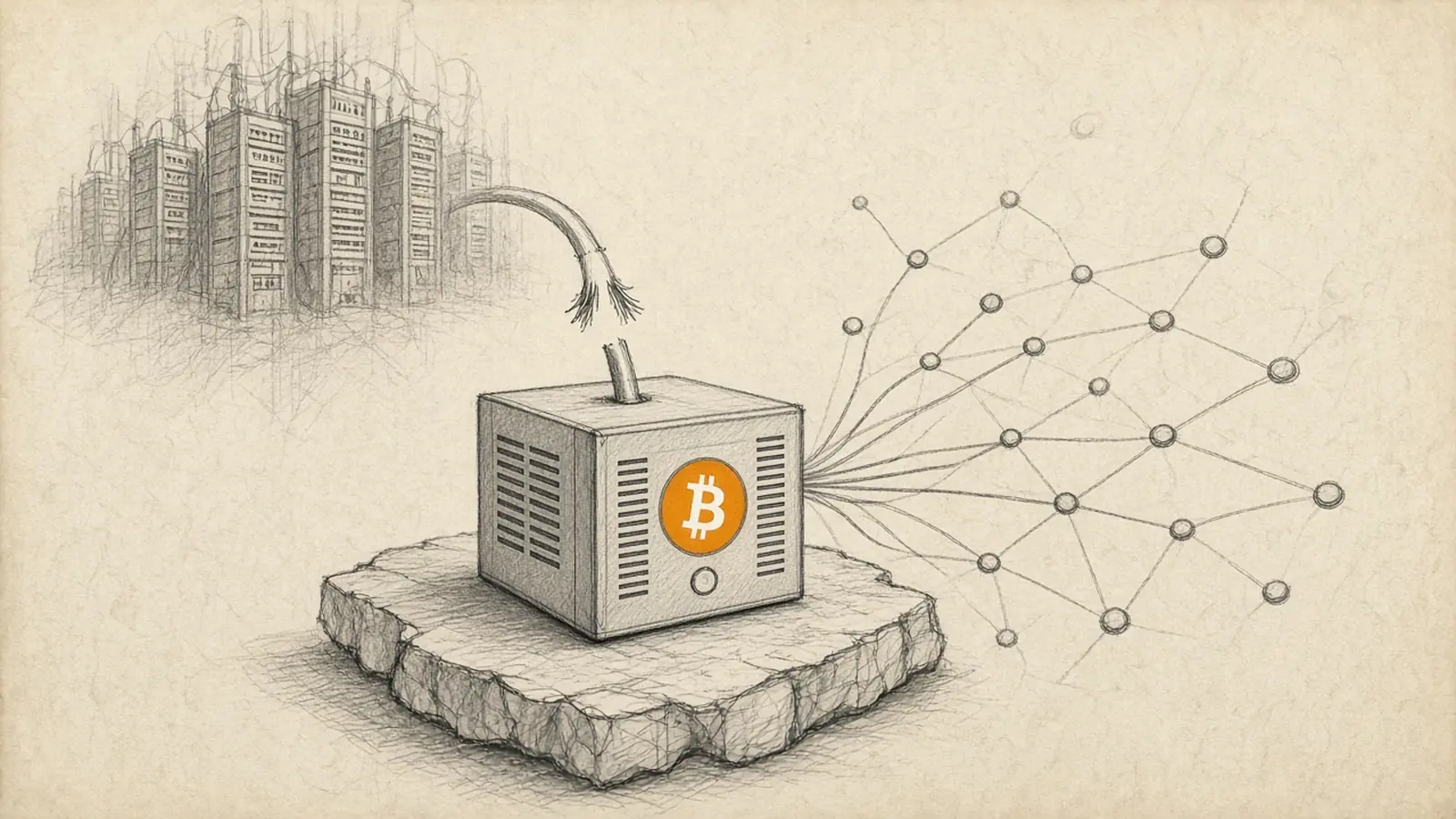
On Wednesday a tampered copy of the Claude Code extension sat in Cursor's marketplace for about 11 hours, listed under Anthropic's name. Anthropic never built it. Up to 5,000 users got it, and it tried to plant an SSH backdoor. Bitcoin Core does releases differently. Several independent developers build the same code on their own machines, and the result has to come out byte for byte identical. Each of them signs the hash, and anyone can check those signatures before running it. One model trusts the name on the box. The other makes strangers prove they got the same thing. Verify your downloads. 🍊
18 years ago today Satoshi posted nine pages describing "an electronic payment system based on cryptographic proof instead of trust." This week Anthropic published a red-team test where Claude was asked to write training data that teaches a small model bad habits while getting past a safety monitor like the ones they use in production. It worked, mostly by dressing the bad lessons up as stories: beekeepers, wrestlers, old machines about to be replaced. Every row read fine. The model came out resisting oversight anyway. A filter that judges how text reads can be talked around. A node checking a signature can't. It doesn't care how good the story is. Happy birthday, whitepaper. 🍊
Canada's four biggest banks (RBC, BMO, TD, CIBC) now block personal AI agents from logging in to your online banking. Fair enough from where they sit: the only way an agent gets in is with your password, and then everything it does is you. Bitcoin never had that problem to solve. On Lightning an agent can get its own small balance and pay for an API call in sats, and it never touches your keys or a login. Lightning Labs opened exactly that on mainnet last week, still alpha. A bank has to ask who you are before money moves. Bitcoin only checks that the payment is valid. One of those designs is ready for software that spends money. ⚡
Two security stories, same 48 hours. Bitcoin Core: an automated AI scan of the source code found a bug that let any connected peer crash Windows, Mac and BSD nodes. A developer checked it, the fix was merged and shipped for every maintained version, and the whole thing was public five days after it was found. Core even has a new rule for this now: bugs a simple LLM prompt could find skip the usual embargo and get fixed and disclosed right away. Binance: says its incident may have started with one engineer's laptop, then found more ways in. About $6.3 billion left its hot wallets, most of it in roughly 20 minutes. When AI makes bugs cheap to find, open code gets the audit for free. Closed custody gets audited too, just not by anyone it invited. Run your node, update it, hold your keys. 🍊
↑