Reclaim The Net's avatar
Reclaim The Net
Reclaim_The_Net@reclaimthenet.org
npub1ukq5...s4c6
Free expression. Digital rights. Privacy. Media bias. News and solutions.
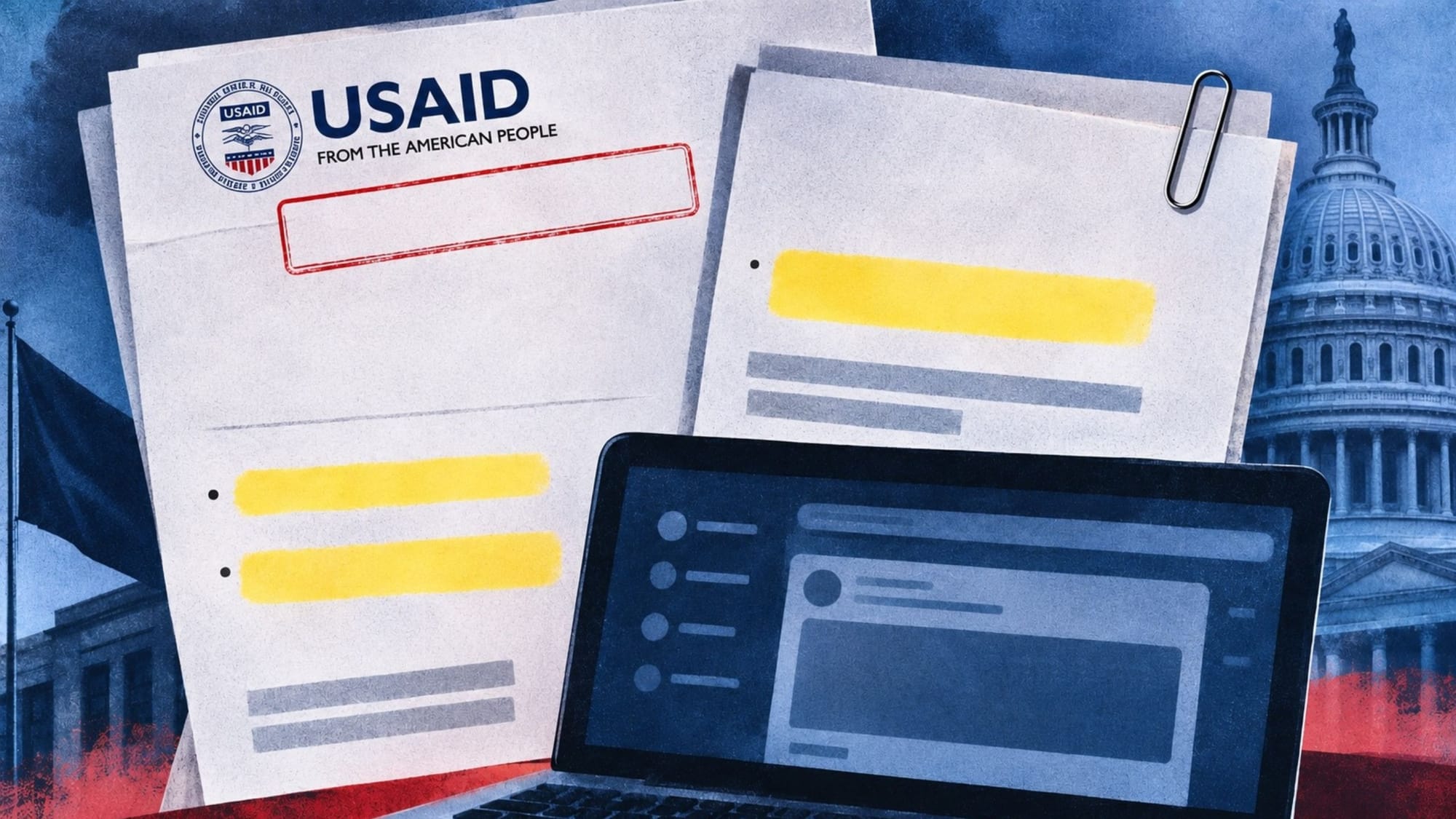
USAID drafted a plan for Google, YouTube and Meta to boost a private list of handpicked "verified" outlets and demote content it deemed propaganda, and when the State Department flagged the free speech problem, USAID's fix was to hand the list to an NGO instead.
USAID drew up a plan for Google, YouTube, and Meta to boost a private list of approved outlets and demote "pro-war or government controlled" content, and when the State Department flagged the free speech problem, USAID's answer was to let an NGO hold the list instead.
Newly released USAID emails show a government-funded NGO telling the agency it was "pretty sure USAID is currently funding a lot of staff around the world to flag issues to the platforms," while YouTube and Meta kept asking USAID to send over more names for their confidential "trusted flagger" fast lanes.
We at Reclaim The Net have been following USAID’s role in policing online speech for years, and in that context, unearthing evidence of the agency’s cooperation with Big Tech. This has included USAID producing a 97-page “Disinformation Primer” that recommended censorship tactics to companies, newsrooms, and governments, as well as giving money to groups such as Internews, and contractors who worked with the platforms to decide what people could and could not see. Now the US government has released a large trove of internal USAID documents and videos showing how the last administration worked to suppress online speech. While this is a rare example of transparency, it was published close to Thanksgiving, when most newsrooms are operating with a skeleton staff, and most people are busy with their families. We have spent the last day going through all of it. The documents show that a USAID lawyer advised staff to “keep it out of the Washington Post.” Another internal note asked the question, “USAID says it is not coercing tech companies, but do its actions say otherwise?” Meanwhile, Internews told the agency it was “pretty sure USAID is currently funding a lot of staff around the world to flag issues to the platforms.” We have now created the USAID Files page, where we have not only mirrored the entire release, but also made it more easily accessible and searchable than it is on the government’s website. (The latter is very slow to download from, and many of the PDFs are scans that cannot be searched.) On our page, every document downloads much faster than from the government’s site, and every document is searchable, including the scanned ones, which will open with your search terms highlighted. The videos also have captions and full searchable transcripts, with each speaker named. At the bottom of the page, you will find the stories we have already written based on the most revealing parts of the documents and videos. Please share the page with anyone who needs to see it, and we will let you know as we go through the files and find more interesting information.
New York's attorney general built an AI unit to enforce a law that makes adults prove their age before talking to a chatbot with a personality, bans bots from flattering you, and lets her office ban "any other design feature that simulates companionship" by regulation.
Little Rock police audited their own Flock plate cameras, found that one officer had tracked his ex 28 times in 10 days while logging reasons like "animal cruelty" and "drugs," then caught three more officers misusing the system and blacked out their names and everything they did, keeping the people whose every drive gets recorded completely in the dark about the people doing the recording.
From Jan 1, New York will force social media to show an unskippable warning that the state wrote and disguised as the platform’s words. The only way to make it stop is to prove you’re over 17 and show ID. Anyone who won’t hand over their age gets the state’s message every day. NetChoice is suing under the First Amendment.
The UK’s tax authority is rewriting the law so its officers can inspect “anything” used to produce your tax figures. Tax advisers say that could include your chatbot history. The taxman says it has no plans to go through everyone’s AI conversations. It just wants the power to be able to.
The British government is seriously considering ID checks to sell a second-hand sweater on eBay. eBay already bans under-18s, so the only people this could possibly check are adults. Britain is debating whether you should scan your face to sell an old coat, and nobody in charge thinks that’s insane.
Reclaim The Net's avatar
reclaimthenet 2 weeks ago
Australia has written a law that could make you prove your age to open your own inbox. Google told the Senate the Digital Duty of Care bill could force age checks on Gmail and Drive and lock out everyone under 18. The September draft protected privacy. The government deleted that part.
Reclaim The Net's avatar
reclaimthenet 2 weeks ago
Australia wants to let anyone sue a platform over speech they find "hateful." Platforms won’t fight those cases. They’ll delete the post, because that’s cheaper than a legal fight. Nobody has to win a single lawsuit for lawful speech to disappear. Just the threat of one does the job.
Reclaim The Net's avatar
reclaimthenet 2 weeks ago
MPs and peers want mandatory scanning software on every phone and tablet in the UK, including the one already in your pocket. It would inspect every photo, video and livestream on the device. The government promises this can be done without threatening privacy. It cannot.
Reclaim The Net's avatar
reclaimthenet 2 weeks ago
Democrats have a wishlist for AI that includes a federal permit to train a model, a Department of AI, 20-year prison terms for executives, kill switches, and ID checks to use a chatbot. Writing code is about to need a hall pass if certain politicians get their way.
↑