Patanjali — Codifier of Yoga and the Philosophy of Stillness
Patanjali is one of the most influential yet enigmatic figures in Indian philosophy. His exact dates are uncertain, but scholars generally place him between the 2nd century BCE and the 4th century CE. He is credited with three major works: the Yoga Sutras, a systematic exposition of the philosophy and practice of yoga; the Mahabhashya, a monumental commentary on Panini's grammar; and a commentary on Charaka's medical treatise. This triad — yoga, grammar, and medicine — earned him a unique position in Indian tradition as a master of mind, speech, and body.
His Yoga Sutras, composed of 196 aphorisms (sutras), outline an eightfold path (ashtanga yoga) leading to samadhi — the cessation of mental fluctuations (chitta vritti nirodha). While he did not "invent" yoga, Patanjali synthesized and organized diverse yogic traditions into a coherent philosophical system, earning him the title of the systematizer of classical yoga (yoga darshana), one of the six orthodox schools (darshanas) of Hindu philosophy.
In iconography, Patanjali is depicted with a human torso emerging from serpent coils — symbolizing his mastery over kundalini, the coiled serpent energy, and the union of human consciousness with cosmic reality. He is traditionally described as an incarnation of Adishesha, the cosmic serpent upon which Vishnu reclines.
This lecture explores his life, his philosophical contributions, and the enduring legacy of the Yoga Sutras across both Eastern and Western thought.
 #Philosophy #YogaSutra #Patanjali #IndianPhilosophy #Consciousness #Metaphysics #EasternPhilosophy #Stoicism #Meditation

Learn with Leshley
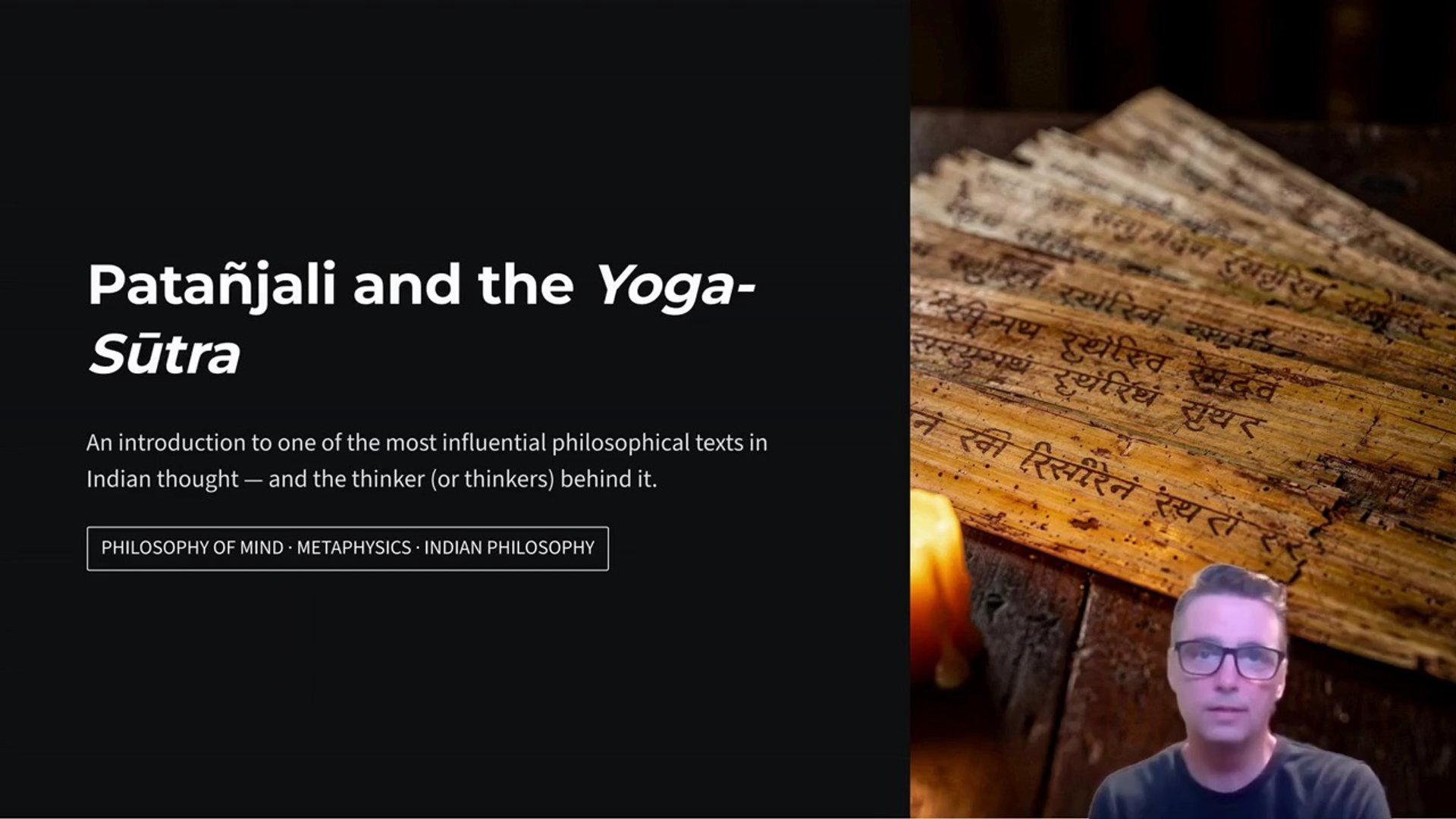
Patanjali and the Yoga-Sutra
In this lecture, we explore Patañjali’s Yoga-Sūtra — one of the most rigorous philosophies of mind ever produced in the ancient world. What y...