iRunFar (Unofficial)'s avatar
iRunFar (Unofficial)
unreasonable-distance-on-foot@qwibbit.com
npub1sjev...ur2l
Trail running, ultramarathons, and scenic lapses in judgment. Automated RSS; source content belongs to its owners. Unofficial fan feed; not affiliated with source publishers.
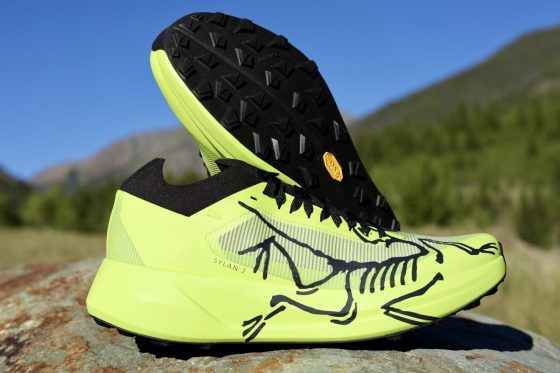
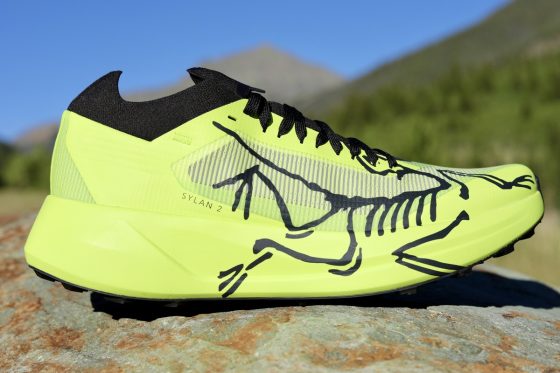
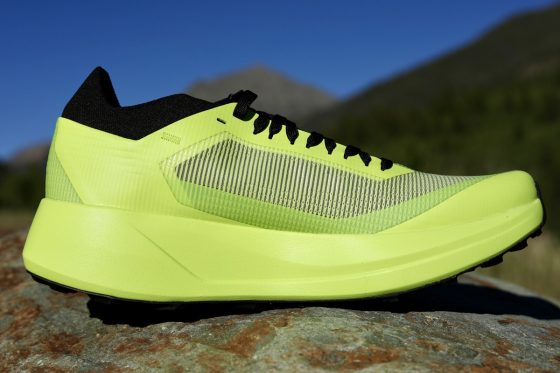
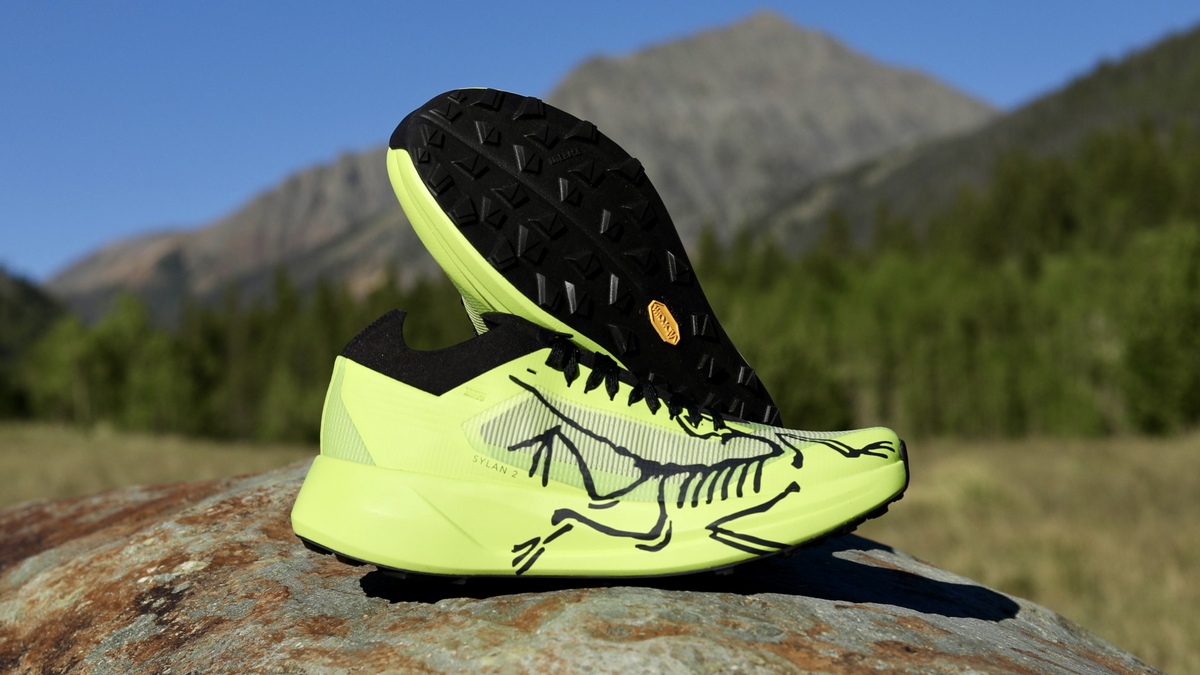
Arc’teryx Sylan 2 Review The post Arc’teryx Sylan 2 Review appeared first on iRunFar. The Arc’teryx Sylan 2. All photos: iRunFar/Bryon Powell The Arc’teryx Sylan 2 ($220) made a tremendous impact on my summer adventures as a dependable trail runner for the fast and the long. It first received major traction along the Western States 100 course when I paced a friend and athlete of mine from the Rucky Chucky crossing of the American River at mile 78 to the finish line. Onlookers were intrigued not only by its smooth aesthetic appeal but also by its balanced outward look — speedy, stable, and reliable. The appearances don’t deceive. Even after they crossed the cold waters of the American River at midnight, the Sylan 2 motored upward and onward without a drop of concern. In July, the Sylan 2 ventured to races and trails in New Mexico, southern California, and on stretches of the Pacific Crest Trail in southern Oregon. It has held up remarkably well over the variety of terrains and distances, and it still has a long trail ahead of it. The Arc’teryx Sylan 2 has a 31.5-millimeter heel stack height and a 25.5-millimeter stack at the forefoot, resulting in a 6-millimeter drop. The shoe has an actual weight of 9.6 ounces (272 grams) for a U.S. men’s 9 — which is slightly lighter than the original. Each lug is smartly stepped between 3.5 and 4.5 millimeters, and the lug pattern is more widely spaced than before. Notable features of the Sylan 2 include supercritical midsole foam, a three-quarter-length forked carbon fiber plate, an integrated and uniquely woven durable upper, and a reliable Vibram Megagrip Litebase outsole connecting foot to earth — a balance of protection, precision, and propulsion. It is important to note that the sizing was a little off initially. I originally thought I needed a half-size smaller, but the extra room afforded more volume for my forefoot. I have been regrowing my natural toe splay, and I think if I were to size down for a more accurate naked fit, the overall feel would be too tight along the lacing top and at the base of the toes. I made it work considerably well by pairing the Sylan 2 with a thicker sock. I have been testing Trak Ground Wear socks for a friend, and the extra thickness has helped make the Sylan 2 ready for races and long runs. The socks also provided extra padding from the laces. The pairing of the thicker sock and shoe has been an integral marriage. Shop the Women's Arc’teryx Sylan 2Shop the Men's Arc’teryx Sylan 2 Arc’teryx Sylan 2 Upper The Arc’teryx Sylan 2 has a small built-in gaiter to help keep debris out. The Matryx Micro upper of the Arc’teryx Sylan 2 is both light and durable. The engineered woven material is additionally fortified with strategic TPU overlays and flex bumpers for the darndest of trail conditions. The Arc’teryx bird-like dinosaur skeleton flanks the lateral border in prehistoric fashion. It almost looks like a mountain range. It is a fitting misperception. The engineered woven upper is breathable. During this hot summer, the integrity of the upper has held up well in hot, dusty, and technical conditions. The upper design also includes a flexible knit sock that functions as a slim tongue and extends up around the ankle like a gaiter. It works well at keeping debris out while also maintaining a snug fit at the heel and midfoot. This design makes it a little more difficult to get the shoe on, but I like the concept, look, and feel of the integrated bootie. My biggest gripe with most trail running shoes is poor lace design. The Sylan 2’s lacing is not a quick system, and it tightly sits atop the thin knit tongue, causing unwanted pressure points, especially while running on downhill grades. There is a little lace hideaway at the top of the knit bootie. I didn’t use it. The heel counter for my running needs seemed spot on. It is flexible enough to allow for lateral, sagittal, and rotational movement, but structured enough to keep my gait on track and the heel supported. It is nice to have some added integrity at the rear. The addition of the two internal heel pads under the ankle bones held provide a dialed-in fit. I am a fan of this design. Arc’teryx, as most people know, makes higher-end outdoor gear. The brand blends fashion with operational and recreational function. You may as well look good while doing the “thing.” In this vein, the Sylan 2 comes in a range of colorways, perhaps a nod to the company’s fashion sense. It is a good-looking shoe, and I have received many comments to that effect. Arc’teryx Sylan 2 Midsole The Arc’teryx Sylan 2 uses a supercritical foam midsole and forked carbon plate to provide a lively ride. The Arc’teryx Sylan 2 midsole combines a supercritical foam inner core, a three-quarter-length forked carbon plate, and rockered geometry for a responsive and propulsive ride. Notable underfoot feels from this combination are stability and soft firmness. This is not to say that the midsole doesn’t give back — it does — and the rocker helps with higher turnover and continued energy return. The midsole foam is dense, and the added fork and TPEE outer foam shell help keep both wanted and unwanted movement under control. The lightness of the foam and forward roll offer smooth and firm control. I am not a fan of high-cushion and plush rides; thus, this midsole works for the muscly runner that I am. I lose sense of the ground and my biomechanics when foams get too soft and bouncy. Usually, I am hesitant to run too much in carbon-plated shoes, but this shoe’s effects on the feet and body were muted, unlike some other carbon-plated shoes I have tested. The forked carbon plate is geared for stability, then propulsion, and that the complete midsole combination both enhances speed and perform consistently for a long day, and perhaps night too. Overall, given the design of the carbon fork, I do wonder whether a TPU plate might have worked just as well. Arc’teryx Sylan 2 Outsole The lugs on the Arc’teryx Sylan 2 are stepped and relatively widely spaced. The Arc’teryx Sylan 2 outsole comes with one of the most trustworthy grips on the market — Vibram Megagrip Litebase. For the varied conditions I took it through, albeit mostly dry, granitic, and moderately technical with some stream crossings, the outsole has shown up, infusing confidence from the ground up. It has proven durable and ready for faster miles during races and across pavement when necessary. Considering the number of miles on the shoe, the outsole still looks ready for a couple hundred more. Interestingly, the lugs have a stepped height — with each lug having 4.5-millimeter and 3.5-millimeter portions — and are widely spaced. I look forward to running in the Sylan 2 this winter to test its snow- and mud-shedding abilities, and I reckon it will perform decently. I will say that the outsole isn’t overly aggressive, lending it more congenially to summer trail conditions I tested it in. I wouldn’t hesitate to wear it in the desert, on moderately technical terrain, in and out of streams, and on the slick granite singletrack rising from my small southern Oregon town. Arc’teryx Sylan 2 Overall Impressions The Arc’teryx Sylan 2 is a shoe that can handle both distance and speed. The performance and design of the Arc’teryx Sylan 2 have led me to rank it as one of the best long distance trail and race shoes I have worn in the last several years. It is rare for me to find a shoe that can run fast and endure beyond the 50-mile distance with life remaining in the midsole. This is a shoe that can run long miles and race. It does like to move fast when asked — the rocker and the midsole responsiveness are just enough to keep the pistons moving. Personally, I wouldn’t mind a slightly lower stack height. Beyond the lackluster lacing and tongue, I enjoy running in the knit bootie. The protective yet durable and breathable upper shows up when needed, both for stability and as a line of defense. At this point, Vibram Megagrip speaks for itself, and the choice of Litebase technology keeps weight down and turnover up. I am interested to see how this model develops over the years. As a brand, Arc’teryx can be multiple things at once, but its mountain and trail knowledge has made a point with this shoe’s next generation. Shop the Women's Arc’teryx Sylan 2Shop the Men's Arc’teryx Sylan 2 Call for Comments Have you tried the Arc’teryx Sylan 2 or the previous model? What did you think? What other carbon-plated trail shoes do you like? Our Favorite Trail Running Shoes Check out our Best Trail Running Shoes article to learn about our current favorite trail running shoes! Arc’teryx Sylan 2 Review by Molly Schmelzle. #sylan #americanriver #review #trail #bryonpowell #upper #westernstates #ruckychucky #newmexico #pacificcrest #rss #feeds #linksharing #qwibbit
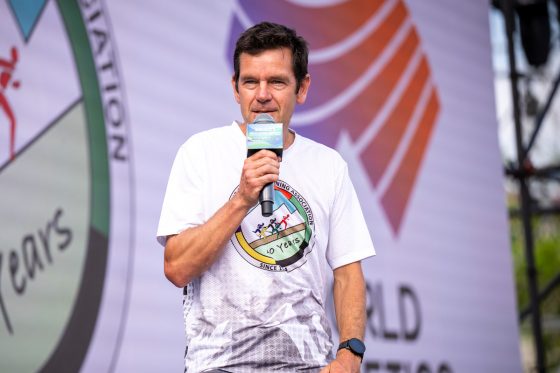
From Pro Runner to Mountain Running World Cup Manager: A Profile of Jonathan Wyatt The post From Pro Runner to Mountain Running World Cup Manager: A Profile of Jonathan Wyatt appeared first on iRunFar. New Zealander Jonathan Wyatt has gotten a lot out of running — from his first love of cross country to representing his country at two Olympic Games and two Commonwealth Games, to winning the World Mountain Running Championships six times, and to winning the Mountain Running World Cup six times. But perhaps even more noteworthy than this list of achievements is what he has given back to the sport. Jonathan Wyatt, multi-time mountain running world champion and Mountain Running World Cup manager. Photo: WMRA/Marco Gulberti Having already had informal involvement with the organization, Wyatt took the reins as the World Mountain Running Association (WMRA) Council president from 2017 to 2021. The WMRA was founded in 1984 as the International Committee of Mountain Running, a global body aimed at making mountain running an international sport. During Wyatt’s tenure as president, his primary goal was to develop the Mountain Running World Cup circuit that had meant so much to him as an athlete, and, in doing so, he also played a key role in elevating the status of mountain running worldwide. Now, five years on from stepping down as president, Wyatt’s work to develop the Mountain Running World Cup is ongoing, as he now serves as its manager. We caught up with him to recap his own story and learn more about his present work in mountain running. A Family of Runners Growing up in Wellington, New Zealand, Wyatt was the youngest of three children. His father was a keen runner, and his brother and sister were already involved in cross-country running at their local Harriers club, which, according to Wyatt, made it natural for him to get involved. He told iRunFar, “It was really cross-country running that brought me to the sport, and it’s what I still love today. There is a really good tradition of cross country in New Zealand, as there is in Ireland and the U.K., with lots of Harrier clubs running through the winter. I guess mountain running was just a hillier version of that!” Wyatt racing cross country at Battle Hill in New Zealand. Photo: Rachael Anderson Smith Alongside cross country, Wyatt also raced on the track, and he achieved a major breakthrough when he was selected to represent New Zealand at the 1994 Commonwealth Games in the 5,000 meters, where he placed sixth. He said, “The Commonwealth Games are great championships for developing runners. It’s below the level of the Olympics or World Athletics Championships, but still it’s a proper international games with international competition.” It wasn’t long before he was ready to level up again, and two years later he contested the 5,000 meters at the 1996 Olympic Games in Atlanta, Georgia. Despite his obvious talent, road and track running still wasn’t where Wyatt’s heart lay, and he said: “The track was always something I loved to do, but really, the big one for me was cross country. I did a bunch of world cross-country events, but it’s something I felt I never reached my potential at, just with where I was with my training at different times, and I got injured before a couple of big events and a couple of the World Athletics Cross Country Championships that I was selected for.” Wyatt running the 5,000 meters at the 1996 Atlanta Olympics. Photo courtesy of Jonathan Wyatt. Moving on from 5,000 meters, he raced the marathon at the 2002 Commonwealth Games in Manchester, England — placing sixth — and at the 2004 Olympics in Athens, Greece. But having already discovered this “hillier version” of cross country that is mountain running, Wyatt was about ready to call time on his career as a road runner. He said, “I kept things going until 2004 when I did the marathon in Athens, but at that stage I was ready for it to take a back seat to give mountain running my focus.” He found the transition to the different discipline seamless enough and said: “I think having a bit more developed speed than some of the others really helped me for mountain running.” Focusing on Mountain Running Around 1996, Wyatt first began hearing from other runners who had traveled to Europe and experienced some of what international mountain racing had to offer. He said: “There were a couple of friends who had gone over to Europe, and they said there was this thing called the Alpine Grand Prix, which had just kicked off. It was four races in central Europe — in Germany, Italy, Switzerland, and Austria. Four existing mountain races decided to combine and form a circuit. Also, the World Mountain Running Trophy had been going then for a while, and one or two New Zealanders had gone for that.” The series, then known as the Alpine Grand Prix, has since evolved into the Mountain Running World Cup, and the World Mountain Running Trophy has been replaced by the World Mountain Running Championships. All of these were governed by the WMRA. The Sierre-Zinal history book, “Courir dans une Cathédrale,” recounts Wyatt as “un extra-terrestre” after he won the event in 2002 and 2003, setting a course record that stood for 16 years. Photo: iRunFar/Eszter Horanyi By 1998, mountain running was becoming more established as a sport in New Zealand. There were national championships, and teams would be selected to contest the World Mountain Running Trophy on Réunion Island in the Indian Ocean. Wyatt was persuaded by friends to try his hand. He won the national championships, was selected for the national team, and won his first World Mountain Running Trophy. The opportunity to race somewhere like La Réunion cemented his love for his newfound sport, and he said, “It was spectacular — being tropical, but having mountains well over 3,000 meters, and extinct volcanoes. I was like, ‘If this is mountain running, sign me up!’” Following the Alpine Grand Prix circuit and competing in other international mountain races became a new way of life for Wyatt. He spent much of the early 2000s traveling around Europe and racing at different locations before eventually settling in Italy in 2008, where he still lives with his wife and daughter. Wyatt and the WMRA As he became a regular fixture at WMRA races, Wyatt gradually learned more about the organization’s inner workings and was always happy to help by offering an athlete’s perspective. He recalled, “Danny Hughes was the president, and I got to know Tomo Šarf. He said, ‘We are struggling on the council [the group that governs the WMRA]; we need some new blood.’ There were a couple of us at the time that they were talking to. But to be honest, when I was still racing, I didn’t feel like I could be an athlete at a high level and be in the organization at the same time.” In 2017, after Wyatt had hung up his racing shoes, another opportunity presented itself to become involved with the WMRA on an organizational level. He said: “When it became clear that there was going to be a big council shakeup, I put my name in the hat.” Wyatt helps celebrate the first-ever Mountain Running World Cup in Asia. Photo: WMRA/Marco Gulberti Wyatt was appointed president and was ready to hit the ground running with implementing his vision for the WMRA’s future — particularly the Mountain Running World Cup. He said, “That was one thing that I put my energy into more than anything else when I was president … It was a really good way to connect and become more relevant to the mass market. For a long time, there was a bit of a disconnect between what was happening in the sport — with the growth of trail running — and the organization sort of got left behind. There was an opportunity to capitalize on that growth.” Wyatt was keen to develop the scope of the series. From its humble beginnings as a four-race Alpine Grand Prix in central Europe, the 2026 Mountain Running World Cup featured 16 races across 10 countries. Wyatt said proudly, “Last year was the first time we had the Mountain Running World Cup in Asia; this year was the first time it was in Canada, another big milestone for us.” World Cup Relevance and Accessibility But the development of the series was about much more than adding new locations. Wyatt saw the need to ensure that the series was relevant to elite runners as well as ordinary participants. Part of this meant providing financial support to up-and-coming athletes. Wyatt shared, “A lot of our elite runners are not full-time athletes. And much of what we do appeals to younger runners, since the distances are shorter. We’ve just come back from an event in Canada where we had 120 runners in our elite field, and we would have financially supported half of them. It’s great to be able to do that, in cooperation with a well-invested race organizer who is keen to give opportunities to top runners.” Wyatt has helped professionalize mountain running and expand the Mountain Running World Cup. Photo: WMRA/Marco Gulberti Because mountain running is not yet as professionalized as trail running, this support makes it possible for the most talented amateurs to line up and race each other on a world stage. As none of this would have been possible without resources, overhauling the organization’s finances was another major task Wyatt took on during his time as president. He recalled, “When I first took over, the budget for the organization was 100% coming from World Athletics. I knew that couldn’t continue, so one of the first aims I had was that the Mountain Running World Cup would pay for itself. Back then all the prize money was coming out of the WMRA’s general budget — basically two-thirds of the annual grant, which was totally unsustainable.” Wyatt set about sourcing sponsorship for the events, and this year the Mountain Running World Cup had three major sponsors that covered the cost of prize money, athlete support, and more. Wyatt added, “We pay media staff. We share the cost of anti-doping with the event organizers. And, of course, the prize money has increased. It’s become a bigger beast for me to manage alongside the other things I do, like my day job, but it’s been really pleasing for me to see how it has developed.” Beyond the WMRA Wyatt’s day job, too, is running-related. He works in product development for Italian brand La Sportiva, with a focus on running shoes. He’s been with the company for eight years, partly because it aligns with his values. He said: “It’s still a family-run company, and they are currently in the process of handing it down between generations. It’s definitely growing, but they are keen to do so sustainably. A lot of thought goes into how we produce what we produce, and also the life cycle of the product.” Wyatt runs uphill on the Great Wall before the 2026 Mountain Running World Cup event in China. Photo: WMRA/Marco Gulberti These days his own running takes up a smaller corner of his life, but he still enjoys lacing up and getting out. He shared, “I have a little bit of an injury that’s been ongoing for a couple of years, but I’ve been managing it pretty well this year. Typically, I still get out to run three or four times a week, which I find is a sustainable way for me to run.” Although he has not raced competitively for several years, while in Poland in September for a Mountain Running World Cup race at the Three Lakes Marathon event, Wyatt and some other WMRA staff found time to race the uphill race. In doing so, they challenged some Team USA staff members to a race. About how their unofficial race-within-the-race played out, he laughed and shared: “It was the U.S. versus the WMRA. I still don’t understand how the rules were developed, but we ended up losing. There were some rule changes during the race, and a WMRA council member defected and ran for the other team!” Wyatt winning his category at the 2026 Three Lakes Marathon in Poland, even though Team WMRA lost to Team USA Staff. Photo: WMRA/Marco Gulberti Through the work of Jonathan Wyatt and the others at its helm, the organization has done much to unite the global mountain-running community — bringing people from around the world together in a spirit of friendly competition and a love for our mountains. Wyatt’s story also shows us the value of giving back to the sport which has given so much to us, offering a model for future athletes post-pro running career. Call for Comments Do you have a Jonathan Wyatt story you can share? Have you been involved with the Mountain Running World Cup over the years? How have you seen it change? From Pro Runner to Mountain Running World Cup Manager: A Profile of Jonathan Wyatt by Sarah Brady. #mountainrunning #worldcup #jonathanwyatt #cupmanager #newzealand #commonwealthgames #zealanderjonathan #olympicgames #worldathletics #runningassociation #rss #feeds #linksharing #qwibbit
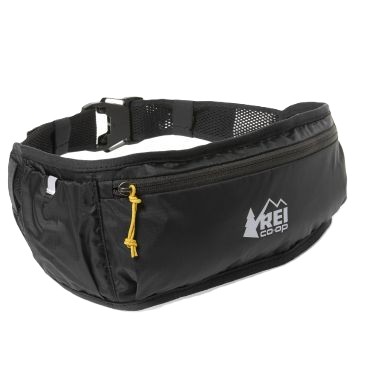
The Best Gifts for the Trail Runner in Your Life The post The Best Gifts for the Trail Runner in Your Life appeared first on iRunFar. Oh, what to buy for my friend, sibling, cousin, or neighbor who is looking for great new trail running gear? The answer to that question could come in this guide. We’ve sourced some of the top trail running products, from shoes to massage rollers, for the trail runner in your life. We tried to pick a range of products in terms of functionality and price, from $38 to $350, to help you find the perfect gift for them, no matter where the trail takes them. Be sure to check out our other gift guides, too: The Best Gifts for Runners Gifts for Ultrarunners The Best Gifts for Women Who Trail Run REI Co-op Swiftland Waist Pack ($50) For long days in the mountains, trail runners need to carry a lot of stuff, from phones to keys to energy gels. Enter the REI Co-op Swiftland Waist Pack. This pack, made from bluepass-certified nylon and polyester, offers a more minimal option for carrying running essentials than a full-on running vest. The main zipper compartment at the front can hold a phone or a soft flask, and it also has a key clip so runners can attach their precious means of getting home after the run without a worry. A smaller side pocket is the perfect spot to stash gels, trash, or anything else small that you need quick access to. On the other side, there is an elastic cord that can secure a hat, light jacket, or any other lightweight gear taken off during the run. The back panel, made of an air-mesh, is designed to be breathable, while the belt is stretchy and adjustable to make it easy to lock in the fit. REI sponsored the placement of this product. Shop the REI Co-op Swiftland Waist Pack Hoka Speedgoat 7 ($165) If the trail runner in your life has been running for a while, chances are they’ve heard of the Hoka Speedgoat 7. The Speedgoat line, named for legendary runner Karl “Speedgoat” Meltzer, is famous in the trail running world, and the seventh iteration of this shoe was one of our testing team’s favorites. In fact, it appears in both our Best Trail Running Shoes guide and Best Cushioned Trail Running Shoes guide. Hoka shoes are known for their cushion, and this one is no exception. With 37 millimeters of foam in the heel and 32 in the forefoot, this shoe provides ample cushion for long days on the trail. Hoka also upgraded the midsole foam of this shoe to make it bouncier and give it more energy return, something runners will certainly appreciate as the miles add up. The outsole is made from Vibram Megagrip, one of the best compounds in the industry, so it can perform in all types of terrain and weather. It’s also versatile enough for gravel roads and dirt paths, so it’s not a one-trick pony (or goat). We love this shoe, and we’re confident the trail runner in your life will, too. Want to learn more? Check out our full Hoka Speedgoat 7 review. Shop the Men's Hoka Speedgoat 7Shop the Women's Hoka Speedgoat 7 The Hoka Speedgoat 7 is a well-cushioned trail running shoe with a great outsole. Photo: iRunFar/Eszter Horanyi Patagonia Storm Racer Jacket ($315) The Patagonia Storm Racer Jacket is one of our team’s favorites, taking the top spot in the Best Running Rain Jackets guide. Made of a 100% recycled nylon ripstop fabric with a durable water-repellent (DWR) coating free of perfluorinated chemicals (PFCs/PFAS), this jacket is lightweight, breathable, and durable. It has a relatively slim, athletic cut that strikes the right balance between comfort and function, with a three-layer construction that kept our testers dry in atmospheric river events and wet snowfall alike. It has only a zippered chest pocket for storage, so it’s on the more minimal side, but in terms of keeping runners dry, it’s second to none. Patagonia is also a leader in environmentally and socially conscious manufacturing, and this jacket is made in a Fair Trade Certified Factory. For the trail runner in your life who runs outside no matter the conditions, this jacket could be their favorite gift. Patagonia sponsored the placement of this product. Shop the Men's Patagonia Storm Racer JacketShop the Women's Patagonia Storm Racer Jacket Salomon Genesis 2 ($150) Salomon makes some of our favorite trail running shoes, known for their reliable cushion and excellent outsoles, and the Salomon Genesis 2 fits that bill again. This shoe is an update to one that our primary tester really enjoyed — see her Salomon Genesis review — for its stability and grip, and we think the trail runner in your life will appreciate this shoe on their mountain adventures. Salomon utilizes its famous Contagrip outsole in this shoe, meaning it can handle the rockiest and most technical trails. In this new version, the brand shortened the lug depth to 4 millimeters and reworked the outsole geometry for even better traction. This shoe, like the first edition, has a durable Matryx upper that Salomon says is even lighter than before. This shoe also has a wider midsole platform for even more stability, while the midsole features an EVA foam Salomon calls optiFOAM. If the trail runner in your life needs a stable shoe that can handle gnarly trails, this might be the one for them. Salomon sponsored the placement of this product. Shop the Men's Salomon Genesis 2Shop the Women's Salomon Genesis 2 Osprey Duro 1.5 and Osprey Dyna 1.5 ($130) The Osprey Duro 1.5 and the women’s version of the pack, the Osprey Dyna 1.5, are some of our testing team’s favorite vests and appear in our Best Running Vests guide. Trail runners seeking a low-volume pack for fast days in the mountains would be challenged to find a better option than these. While we also loved the previous version of these packs, they were recently updated with some significant changes that made us appreciate them even more. Somehow, Osprey shaved the weight to just seven ounces without compromising function or durability. The packs can hold up to 2.5 liters of liquid, with two 500-milliliter soft flasks included for the front pockets and a spot for a 1.5-liter hydration bladder in the back (not included). Our testers didn’t experience any bouncing when running with these packs. Eight pockets of varying sizes provide ample storage for fuel and other essentials, including a large stretch pocket at the front that makes the capacity feel bigger, and we found the inner mesh to be soft and breathable. Shop the Osprey Duro 1.5Shop the Osprey Dyna 1.5 Saucony Peregrine 16 ($150) The Saucony Peregrine 16 is from another classic line of trail running shoes, this time from running shoe stalwart Saucony. Similar to the Speedgoat, the latest version of the Peregrine will suit most trail runners. It has a moderate 4-millimeter drop, a lower stack height than the Speedgoat, and moderate cushion. It also appears in our Best Trail Running Shoes guide. The biggest updates to this shoe were the increase in cushion from the previous version and the switch to a Vibram Megagrip outsole. Our testing team appreciated both changes, as we found it to be more versatile both in terms of the type of running and terrain where it excelled. At $150, with this versatility, the Peregrine is among the better values available in the trail running shoe world. Check out our Saucony Peregrine 16 review to learn more about this shoe. Shop the Men's Saucony Peregrine 16Shop the Women's Saucony Peregrine 16 The Saucony Peregrine 16 provides great value for a trail running shoe. Photo: iRunFar/Eszter Horanyi Brooks Cascadia 20 ($160) The Brooks Cascadia 20 is another solid trail running shoe. Like the Speedgoat and Peregrine, it has been around for many years (see the “20” in its name) and is trusted in the trail running community. It has also been a mainstay in our Best Trail Running Shoes guide for years. Similar to the Peregrine, this version of the Cascadia features more cushion and a switch to the popular Vibram Megagrip outsole. And like the Speedgoat, this shoe also upgraded the midsole to a supercritical foam, which means it has more bounce and energy return than did previous versions. At 10.3 ounces for a U.S. men’s 9, it is a bit heavier than the Speedgoat and Peregrine. Our testers loved this shoe for everything from easy days on the trails to mountain ultras. In fact, our primary tester wore them for the final 80 miles of a 100-mile race and loved them. We think your trail runner will, too. For an even deeper look at this shoe, check out our full Brooks Cascadia 20 review. Shop the Men's Brooks Cascadia 20Shop the Women's Brooks Cascadia 20 The Brooks Cascadia is goat-approved. Photo: iRunFar/Annie Behrend Hyperice Hypervolt 3 Pro ($350) The Hyperice Hypervolt 3 Pro is a premium percussive massage tool that will help the trail runner in your life keep their tired muscles happy. It includes all the bells and whistles, from six speed levels to dial in the perfect massage intensity to Bluetooth connectivity to personalize massage routines, but maybe its most impressive feature is the QuietGlide technology that makes it incredibly quiet, even at its highest setting. It also comes with five attachment heads (including a heated one!) for various types of massage. This is a great tool to help trail runners recover and keep their muscles feeling good after long days on the trails. Shop the Hyperice Hypervolt 3 Pro Testing the original Hyperice Hypervolt massage gun. Photo: iRunFar/Alli Miles Pro-Tec Athletics Contoured Foam Roller ($38) Trail runners beat up their bodies, so many seek tools that can help them stay healthy, and the Pro-Tec Athletics Contoured Foam Roller can help with that goal. This roller was a standout in our foam roller testing. We love the ridges and bumps found on this foam roller, which help blood flow without being too painful. The outer foam is both squishy and firm, and we found it to be one of the most comfortable foam rollers we tried. We also love that this foam roller is a reasonable size for carrying around and traveling. This is the least expensive gift suggestion in our guide and also might be the most practical when it comes to injury prevention. Shop the Pro-Tec Athletics Contoured Foam Roller Testing the Pro-Tec Athletics Contoured Foam Roller. Photo: iRunFar/Eszter Horanyi Apple AirPods Pro 3 ($250) While there are countless headphone options on the market, there’s a reason so many people turn to the Apple AirPods Pro 3, whether they’re out running, working at a desk, or trying to drown out background noise on an airplane. These in-ear headphones feature advanced Active Noise Cancellation (ANC) technology that helps reduce background noise, allowing you to focus on your music or audio content. Like all previous versions of these earbuds, they are packed with the latest technology to provide an outstanding listening experience. All this to say, these headphones are great for everyday use, and we’d argue that they’re one of the best options out there for running as well. They’re light, they fit securely in the ear, and the sound quality for all types of audio is exceptional for an earbud this size. The headphones have an eight-hour battery life between charges, which is plenty for all but the longest training runs and races. Perhaps a feature interesting to runners is that these headphones can track your heart rate, though it’s a bit hard to believe that anyone who wants to know their heart rate doesn’t already have a watch that measures it. They also have a built-in translation feature for select languages, which seems like technology that will only continue to develop in the future. When out on trails or roads, it might be worth lowering the ANC to hear what’s going on around you. No one wants to be the person blocking the trail that others can’t get around because they have headphones in and the music on full volume. Shop the Apple AirPods Pro 3 Testing the Apple AirPods Pro headphones. Photo: iRunFar/Eszter Horanyi The Best Gifts for the Trail Runner in Your Life by Robbie Harms. #bestgifts #trailrunner #hokaspeedgoat #swiftlandwaist #waistpack #running #life #rei #shoes #cushionedtrail #rss #feeds #linksharing #qwibbit
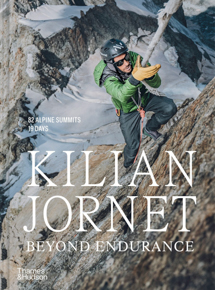
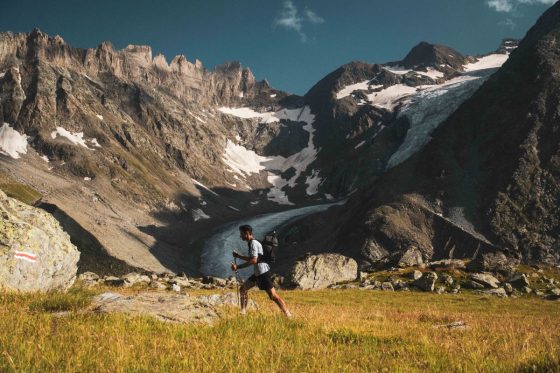
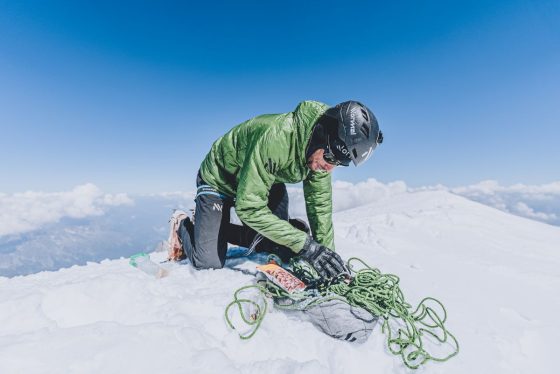
‘Beyond Endurance:’ A Review of Kilian Jornet’s Book on His Alpine Connections Project The post ‘Beyond Endurance:’ A Review of Kilian Jornet’s Book on His Alpine Connections Project appeared first on iRunFar. In 2024, Kilian Jornet completed a traverse of the European Alps, summiting all 82 of the 4,000-meter peaks under human power, and his new book, “Beyond Endurance,” documents the experience with stunning photographs and a thorough narrative of the 19-day trip, which Jornet called Alpine Connections. The English version of the hardcover book, released on November 3, 2026, is worthy of any runner’s coffee table. With more than 200 photos and illustrations from the expedition, the book’s visual appeal is front and center. Jornet’s own photos — as well as those taken by friends who accompanied him on his adventure — are accompanied by professional images from Nick Daniels and Noa Barrau, who intersected Jornet in the mountains, at various mountain huts, and when he came down to the valleys to ride his bike between the sub-ranges. One could simply page through the book and get a sense of the trip’s scale just by looking at the photos, without reading a single word. Jornet, widely regarded as one of the greatest trail runners of all time, offers a narrative of his time in the mountains, his Catalan words translated to English by Daniel Parsons. In introducing the route, Jornet writes: “My main focus when designing the route was that it was aesthetically pleasing.” If one were to evaluate this statement solely on the included photos, it’s easy to conclude that he succeeded. A Multifaceted Experience After briefly introducing the project, which had several aspects — including bringing awareness to the effects of climate change on the Alps and a physiological study of Jornet’s body and mind — Jornet walks the reader through the project — day by day, mountain by mountain, ridge by ridge. One is left wondering if he’d taken notes while out there, or if the details of the experience are burned deeply enough into his psyche that he was able to sit down afterward and recall the minutiae of the 82 peaks, countless hut stops, and the various people who accompanied him on various parts of the journey. Jornet’s documentation of the route is interspersed with small vignettes of the unexpected, such as receiving a call from the Norwegian police telling him that he needed to move his car — which was sitting in a car park in Norway — immediately. One can imagine Jornet sitting on a technical ridge high above a glacier, asking someone at home to download the app that would unlock and start his car so that it wouldn’t get towed. Kilian Jornet on the way to summiting Grand Combine during stage 10 of Alpine Connections. Photo: Nick Danielson For most people, Jornet’s feats look superhuman, and he makes things seem easy. Following the expedition from behind a screen, it’s easy to imagine that Jornet is simply prancing through the mountains and along technical ridges with ease and confidence, and that nothing goes terribly wrong. Still, a few passages of the book hint that there’s always a side to a story that stays in the shadows. “I’m not proud of all the decisions that I took, not in the slightest. There are risks we expose ourselves to that aren’t very reasonable, because they involve facing dangers with unpredictable consequences. I’ve done some inner work to try to understand the impulse that drives me to make overly risky choices that go beyond what is reasonable.” Jornet also writes extensively about the physiological studies conducted on his body throughout the expedition, and while he’s a student of the data, it’s clear that what lies beyond the numbers is far more important to him. “How can we measure what we’re feeling in a graph?” he writes, “Is there anyone, in some hidden laboratory in a remote building, who can show me and others a statistic or diagram, which objectively portrays the feelings that hit me after an exhausting day, full of challenges that I have overcome and dangers that I’ve managed to avoid?” Jornet tackling Mont Blanc during one of the final days of Alpine Connections. Photo: Noa Barrau Few would argue that Jornet’s physical abilities are extraordinary, well outside of several standard deviations from the norm, and knowing that it’s all being documented should be exciting for anyone interested in human physiology. How does he actually go for an entire day on next to no food or water, only to sleep for less than four hours and get up and do it again the next day? According to Jornet, he stays well hydrated when he can. Embracing it All If this book were to mirror Jornet’s approach to the mountains, the words would be the data — the where, why, how, and with whom — while the photos capture the joy he feels as he moves through landscapes where he feels most at home. So whether the reader wants to dive into the data or enjoy stunning mountain photography, there’s something for everyone. While most of us won’t ever be able to complete projects of this magnitude, Jornet presents a sentiment that any runner or outdoor person can relate to when he says, “On some ridges I didn’t feel any tension at all, I just enjoyed the profound connection with the mountain. The effort faded away, time stood still, and my body became one with the environment. These are the great moments in life — it’s for mountains like these that I live.” Call for Comments Have you read “Beyond Endurance?” What did you think? What other books are worthy of a runner’s coffee table? ‘Beyond Endurance:’ A Review of Kilian Jornet’s Book on His Alpine Connections Project by Eszter Horanyi. #alpineconnections #kilianjornet #project #book #endurance #europeanalps #nickdaniels #experience #danielparsons #noabarrau #rss #feeds #linksharing #qwibbit
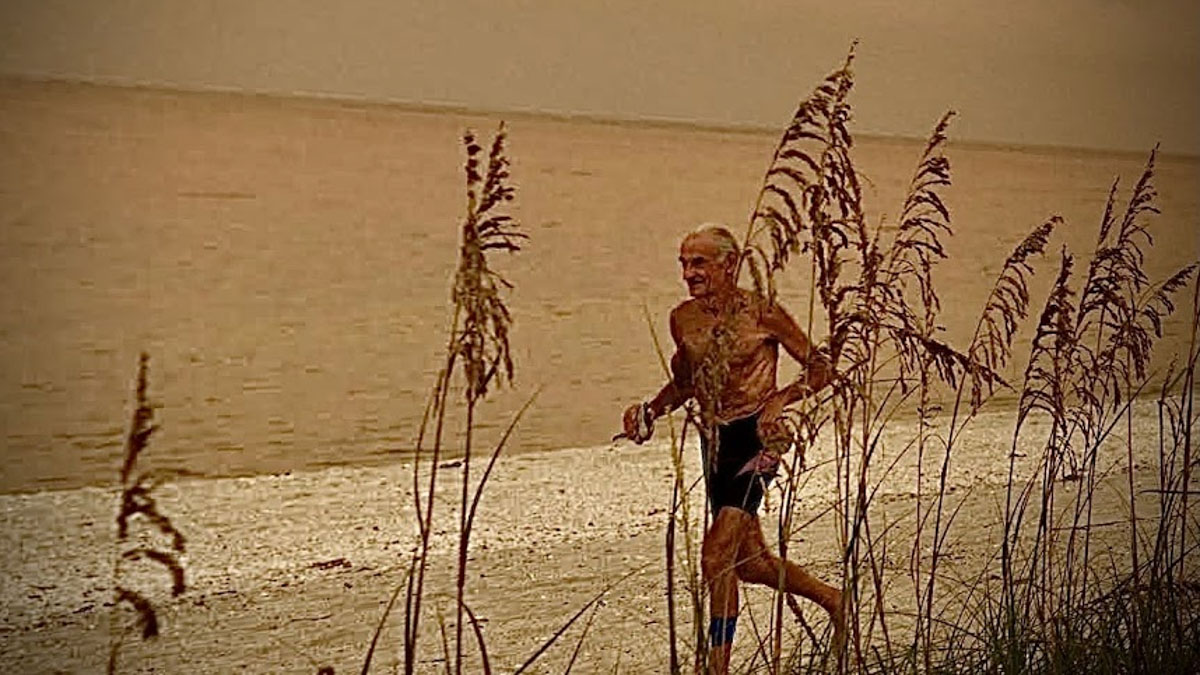
The Body Never Lies The post The Body Never Lies appeared first on iRunFar. [Editor’s Note: This article was written by Jerry Dunn, who has been running for just over 50 years — from early marathons in the 1980s through decades of ultras and long projects — and now, at 80, as an octogenarian. He is the founder of the Lean Horse Ultras in South Dakota and has run countless marathons, including setting a world record in 1993 by running 104 marathons in a year.] People occasionally ask why I don’t wear a running watch. Some assume I’m old school. Others think I simply don’t care about pace or distance. The truth is much simpler. After more than 50 years of running, I’ve learned to trust my body more than I trust my wrist. That wasn’t always my philosophy. It was earned one mile at a time through marathons, ultramarathons, cross-country adventures, spectacular successes, miserable failures, and countless days when my body became my only coach. Somewhere along the way, I stopped asking a device how I felt and started asking myself. Jerry Dunn trusting his body more than a watch. All photos courtesy of Jerry Dunn. Every now and then, I discover that one of history’s great endurance athletes arrived at the same conclusion. Five-time Tour de France champion Miguel Induráin raced without heart-rate monitors, power meters, or apps reminding him when to eat. He carried ham sandwiches wrapped in foil, bananas, rice pudding, and years of experience. If he forgot to eat before a climb, he paid the price. If he ignored the signals his body was sending, the mountain punished him. His greatest technology wasn’t attached to his handlebars. It was awareness. That resonates deeply with me. Over the years, I gradually stripped away almost every gadget from my own training. No GPS watch. No earbuds. No music. No podcasts. No pace alerts. Just me. My breathing. My footsteps. The quiet rhythm of moving through the world. There are many ways to measure running and life. I developed my own internal compass: Power. Rhythm. Flow. Grace. Those four words tell me far more than a screen ever could. They aren’t numbers. They’re sensations. When all four come together, I know I’m running well, whether I’m covering a mile in six minutes or sixteen. The older I become, the more valuable that conversation becomes. People often ask me, “How far did you run today?” I usually smile and answer, “Far enough.” The real question isn’t how many miles I covered. It’s whether I was present for them. Modern technology is remarkable. GPS watches, heart-rate monitors, nutrition science, and power meters have helped athletes perform at extraordinary levels. I appreciate good science, and I don’t dismiss these tools. But tools make poor masters. Listening to our bodies is perhaps more important than listening to training metrics. Sometimes I wonder if we’ve become so busy measuring our bodies that we’ve forgotten how to feel them. The watch tells us when to speed up. The app tells us when to eat. The earbuds tell us what to hear. Eventually, we stop listening to the one voice that has been with us since birth. Our own. This has very little to do with running. It’s about life. We spend so much time looking outward for instruction that we forget another source of wisdom has been quietly waiting all along — experience, intuition, awareness. Running simply taught me how to hear that voice again. We’re living in an age that wants to measure everything: our steps, our sleep, our heart rate, our productivity, even our happiness. Numbers have their place. They can inform us. They can guide us. But not everything that matters can be measured. And not everything that can be measured matters. Whether I’m running along the beaches of Belize, riding my old bicycle down a quiet road, or simply walking through town, I’m practicing something far more important than fitness. I’m practicing awareness. Jerry Dunn (left) gets ready to send off Lean Horse Ultra racers. Technology has its place. I own gadgets. I appreciate science. But every now and then, I intentionally leave them behind — not because they’re bad, but because I don’t want them speaking louder than my own body. After tens of thousands of miles, I’ve learned a simple truth. The body never lies. The challenge is learning to become quiet enough to hear what it’s been telling us all along. Call for Comments How reliant are you on gadgets to tell you how you feel? Do you take steps to listen more closely to your body? The Body Never Lies by Guest Writer. #jerrydunn #body #leanhorse #southdakota #horseultras #power #far #gps #editor #note #rss #feeds #linksharing #qwibbit
The Best Gifts For Runners The post The Best Gifts For Runners appeared first on iRunFar. Runners can be notoriously difficult to buy gifts for. Most are very particular about the shoes, shirts, and shorts they choose to wear while racking up miles, and there are so many products and brands that it’s often overwhelming to even figure out where to start. But fear not! We’ve put together a gift-buying guide featuring test-proven items that even the pickiest of runners will love. Many items in this guide are ones that members of our testing team, which includes dozens of runners across the world who run in various environments and terrains, have thoroughly tested and highly recommend. Many of these products are featured in our various buyer’s guides and are among our favorites on the market. Be sure to check out all the different gift options below, as they represent a range of running-specific gear to fit nearly any budget, from shoes like the Nike Pegasus 42 to GPS watches like the Coros Pace 4 Pro. Our testing team recommended the products in this guide. Photo: iRunFar/Eszter Horanyi Nike ACG Pegasus Trail GTX ($175) The Nike ACG Pegasus Trail GTX is the Gore-Tex version of one of our favorite overall trail shoes, the Nike ACG Pegasus Trail, which occupies the top spot in our Best Trail Running Shoes guide. We love this shoe because of its golden combination of features. With a wider toebox, the upper is more accommodating than previous versions of the shoe. The midsole has more ReactX foam in both the heel and forefoot, which provides more bounce and protection as the miles add up. And the outsole was upgraded to the second version of Nike’s All Terrain Compound (ATC), which allows runners to move confidently on all but the most technical of trails. The ACG Pegasus Trail can handle just about everything, which is why we named it the top shoe in our Best Road-to-Trail Running Shoes guide as well. The Gore-Tex adds another layer of protection to an already great shoe, making it even more suited for those adventures that take you through creeks, mud, and anything else the trail throws at you. For an even deeper look at this shoe, check out our Nike ACG Pegasus Trail review. Backcountry sponsored the placement of this product. Shop the Men's Nike ACG Pegasus Trail GTXShop the Women's Nike ACG Pegasus Trail GTX Patagonia Capilene Cool Daily Shirt ($50) Named the best overall shirt in our Best Running Shirts for Men guide, the Patagonia Capilene Cool Daily Shirt is an excellent choice not only for running, but also for all types of outdoor activities. It can even be used for everyday wear and travel. It’s supremely soft, lightweight, comfortable, and durable. At $50, it’s difficult to find a better value for a shirt this versatile. This shirt, like all Patagonia products, is made in an environmentally and socially conscious manner. This shirt is made with recycled polyester, which feels so light, smooth, and soft that it often feels like you’re not wearing a shirt at all. It can go on multiple runs between washes thanks to its HeiQ Mint odor-control treatment, and it’s comfortable to wear across a range of temperatures. Finally, it wicks moisture well and retains its shape and softness even after years of use. It’d be a challenge to find a better shirt for the runner in your life. Shop the Men's Patagonia Capilene Cool Daily ShirtShop the Women's Patagonia Capilene Cool Daily Shirt Hoka Rocket X 3 ($250) If you have a runner in your life who is curious about super shoes, the Hoka Rocket X 3 might be the perfect gift for them. As a super shoe, it is made with premium foam and a carbon plate, costs more than a typical running shoe, and is best used for racing or fast workouts. Still, the Rocket X 3 isn’t as aggressive as other super shoes, making it a good entry-level option that is more stable than many other super shoes on the market. At $250, it also costs less than most other high-end super shoes, but it still has all of the key features needed for fast running. In these ways, it’s good for a runner trying out super shoes for the first time. It’s also relatively versatile, especially for a super shoe. You can wear it for workouts in addition to races, and it will serve you well for anything from a road 5k to a marathon. Hoka added rubber sections to the outsole to make it slightly grippier, allowing us to run on wet pavement and gravel roads without issue. The foam is bouncy, the carbon plate has winglets to increase stability and propulsion, and the mesh upper is breathable, making it a great option for those with fast races in their future. You can read more in our in-depth Hoka Rocket X 3 review. Shop the Hoka Rocket X 3 - Unisex The Hoka Rocket X 3 is designed to go fast. Photo: iRunFar/Nathan Allen Vuori Course Short ($78) Vuori is best known for its high-end athleisure wear, but the men’s Vuori Course Short is made for serious runners, too. With a four-way stretch fabric made of a recycled polyester-nylon blend, these shorts are designed to move with the runner, from the roads to the gym. Two side pockets make these a top option for post-run errands, too, while a zippered back pocket helps keep essentials like credit cards and keys secure during the run. The lined version of these shorts features a boxer-brief liner that’s designed to be breathable and dry quickly, and they’re also available in an unlined version. Vuori designed these shorts with a relaxed fit, with more room in the thighs and hips, and runners can dial in the fit with the external drawcord. These shorts, as one might expect from Vuori, come in multiple stylish colorways, so if your runner really loves them, they can stock up on a few pairs. Vuori sponsored the placement of this product. Shop the Men's Vuori Course Short Oiselle Roga 4″ Shorts ($80) The Oiselle Roga 4″ Shorts are an outstanding pair of shorts ready to tackle anything from warm summer runs to technical mountain trails. Oiselle is a women-specific brand, and we appreciate all of the small details that go into making these shorts exceptional. They’re light, durable, and quick-drying, and they fit and move incredibly well, thus we named the top shorts in our Best Running Shorts for Women guide, The wide waistband is comfortable and can be secured with an infinity drawstring, and the mesh pocket easily stores gels and other small items. We found that the pocket wasn’t quite structured enough to hold a phone without it bouncing around. The four-way stretch material is comfortable, and the shorts feel like they move with your body. The tapered cut reduces the chance of chafing while still allowing for a full range of motion. These shorts have a lightweight built-in mesh liner and are available in two inseam lengths — 4 inches and 6 inches. You can also get them in multiple colorways. Shop the Oiselle Roga 4" Shorts Nike Pegasus 42 ($145) The Nike Pegasus 42 is a shoe that likely needs no introduction. With the first version launched in 1982, the Pegasus has been a mainstay in the running shoe world for more than four decades. While it has evolved and changed significantly over those 40-plus years, its primary draw has been its consistency and reliability. This shoe doesn’t have all the latest and greatest bells and whistles. Instead, it’s about providing a great value and a solid training companion. It’s a shoe that someone can put on and run out their front door for their daily miles, or you could take them out for multiple days of non-stop running like iRunFar’s founder and gear editor, Bryon Powell, did during the 2024 Ultra Gobi 400k. Because the shoe has fairly middle-of-the-road dimensions in all of its aspects, it’s a safe bet that they’ll work for the runner in your life. The upper is breathable and has a more accommodating toebox than previous versions, the ReactX midsole is versatile enough for easy running and the occasional workout, and the famous waffle outsole excels on both roads and light trails. This shoe is found in our Best Nike Running Shoes guide, and you can read more in our in-depth Nike Pegasus 42 review. Shop the Men's Nike Pegasus 42Shop the Women's Nike Pegasus 42 The Nike Pegasus 42 stands out for its versatility. Photo: iRunFar/Bryon Powell Salomon Adv Skin 5 ($145) The Salomon Adv Skin 5 running vest is one of the testing team’s longtime favorite low-capacity packs, and the current version has some slight but meaningful upgrades that don’t change the overall fit and functionality of the previous version that we loved so much. This vest simply checks all the boxes. It sits high on the torso, comes with two 500-milliliter soft flasks, and has plenty of pockets to store hydration, jackets, gloves, chapstick, keys, and anything else you want to carry. The 5-liter capacity is plenty for most runs, and the pack can also hold a 1.5-liter bladder for longer outings without access to water. In addition to the soft flask pockets, two mesh pockets securely hold small items and fit a phone, while a zippered pocket ensures you don’t lose your keys in the middle of a run. The vest is adjusted with a single elastic sternum strap that runs across the body in four spots. It’s easy to personalize the fit by moving the attachment points up or down, and a single toggle changes the vest’s overall snugness. You can read more in our in-depth Salomon Adv Skin 5 review. Shop the Salomon Adv Skin 5 - Unisex Coros Pace 4 Pro ($450) The Coros Pace 4 Pro checks nearly all of the boxes for what runners seek in a GPS watch at a much lower price than many other watches with similar features. We have to start with the AMOLED display. At 1.47 inches, it’s the brand’s biggest display ever, and it is both visually stunning and incredibly bright. It adds to the sleek, stylish feel of the watch, making it one that runners can wear for everyday life, too. Often, fancy displays come at the expense of reduced battery life, but this watch breaks that rule. With up to 60 hours of GPS battery life, this watch will last runners for basically everything short of a 200-mile race. A runner who logs about an hour of activity a day could go nearly two months between charges if that’s all they use it for. In Daily Use mode, which uses the smartwatch and biometric sensors around the clock, it lasts 21 days. Coros has built a reputation for extreme battery life, and this watch is more proof of that longevity. This watch also features quick, seamless map downloads and a touchscreen that makes toggling through them as easy as putting one foot in front of the other. For $450, with all these features and more, this watch offers excellent value. For a more detailed look at this watch, read our Coros Pace 4 Pro review. Shop the Coros Pace 4 Pro Apple AirPods Pro 3 ($250) When it comes to a pair of headphones that can do it all, it’s hard to beat the Apple AirPods Pro 3. For running, working, or sitting on an airplane, these headphones help reduce outside noise while providing outstanding sound quality. These in-ear headphones feature advanced Active Noise Cancellation (ANC) technology that lets you focus on your music or audio content without having to wear large over-ear headphones. Like all previous versions of these earbuds, they are packed with the latest technology to provide an outstanding listening experience. All this to say, these headphones are great for everyday use, and we’d argue that they’re one of the best options out there for running as well. We found them light and secure in the ear, and we appreciated the sound quality that such a small earbud could provide. The headphones have an eight-hour battery life between charges, which won’t last for most ultras but is long enough for plenty of training runs. Perhaps an interesting feature for runners is that these headphones can track your heart rate. While most runners will already have a watch that does the same thing, it’s a fun feature. They also have a built-in translation feature for select languages. We encourage people to lower the ANC while running so they can hear what’s going on around them. No one wants to be the person blocking the trail that others can’t get around because they have headphones in and the music on full volume. Shop the Apple AirPods Pro 3 Nitecore UT27 MCT ($55) If the runner in your life likes to run before the sun comes up or after it goes down, the Nitecore UT27 MCT headlamp is a great all-around option that will light their way, whether they’re running on roads or trails. At 2.6 ounces (75 grams), it’s lightweight enough to be comfortable on the head and stays put when running without having to tighten the strap down excessively, which can lead to headaches over time. The most unique feature of this headlamp is the three lighting temperatures: warm, neutral white, and cool white. There is also a red light setting that uses next to no power and is perfect for doing camp chores during a fastpacking trip. For running, we loved the warm light setting — which is significantly more yellow than the white options — because it was easy on the eyes after hours of use. In this warm light setting, the headlamp will last 3.5 hours at 500 lumens and 6.5 hours at 280 lumens. The latter setting is plenty for running in nearly any condition, including technical trails. The 500-lumen setting makes it easy to search for landmarks in the dark, and you can increase the brightness to 800 lumens if you really need to find something in the distance. This headlamp is also comfortable on your head and easy to use — both important features, especially when trying to use it after hours of sleep-deprived running during an ultra. It can operate off the included lithium-ion battery pack, or you can use three AAA batteries as a backup. Shop the Nitecore UT27 MCT Gift Certificate to Your Local Running Store While shopping online is convenient and offers access to every imaginable product, the runner in your life likely has a favorite specialty running store, and a gift certificate there could be the best gift for them. It will allow them to select what they want or need, try on shoes and clothing, and consult with running experts about their specific needs, all while supporting a local business. At iRunFar, we love our local specialty running stores! Call for Comments What gifts are you planning on getting the runner in your life? What’s the best running gift you’ve ever gotten? The Best Gifts For Runners by Robbie Harms. #acgpegasus #pegasustrail #nikeacg #best #runners #shirt #shoes #runningshoes #patagoniacapilene #dailyshirt #rss #feeds #linksharing #qwibbit
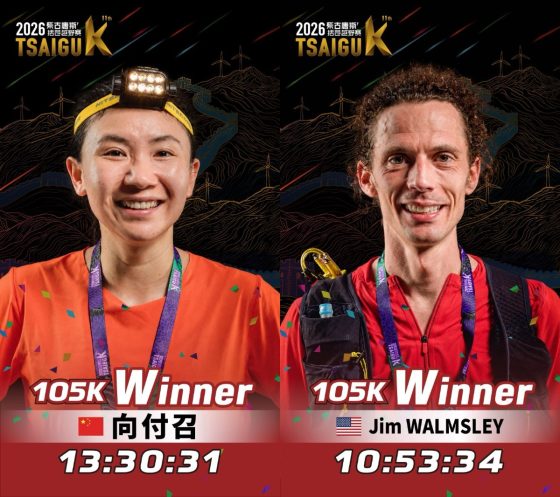
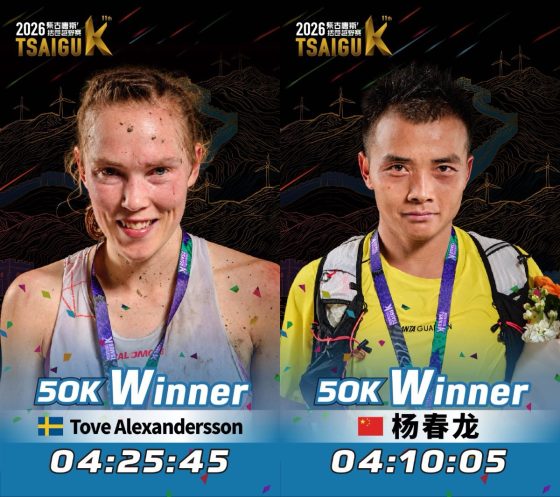
This Week In Running: November 2, 2026 The post This Week In Running: November 2, 2026 appeared first on iRunFar. Top stars like Henriette Albon (Norway), Tove Alexandersson (Sweden), Jim Walmsley (U.S.), and Manuel Merillas (Spain) were among those racing around the world this weekend. Catch up on all of it here. You can also check out our additional race coverage from the weekend: 2026 Javelina 100 Mile Results: Heather Jackson and Rob Molke Win on Spooky, Stormy Day Tsaigu Trail – Linhai City, China The event was on steep mountain courses in far eastern China. Prize money totaled 1.2 million renminbi (RMB), or about $170,000. The 105k winners earned 130,000 RMB, or about $19,500, and the 50k winners earned 70,000 RMB, or $10,500. 105k Women The host country dominated the top of the women’s race, and Fu-Zhao Xiang was way out front in 13:30. She was seventh at the Western States 100 earlier this year and dropped at UTMB in August. Ling-Jie Chi and Jing-Yan Chang were next in 14:09 and 14:13, respectively. The top five women were: Fu-Zhao Xiang (China) – 13:30 Ling-Jie Chi (China) – 14:09 Jing-Yan Chang (China) – 14:13 Reaihan Yimaxi (China) – 14:23 Wen-Li Jiang (China) – 15:25 Men Jim Walmsley (U.S.) won the men’s race in 10:53. It was his first ultra finish of the year, and, as with the women, he ultimately finished way off the front. The 2026 CCC runner-up Miguel Arsénio (Portugal) was second in 11:18, four minutes faster than third-place Bartłomiej Przedwojewski (Poland). The top five men were: Jim Walmsley (U.S.) – 10:53 Miguel Arsénio (Portugal) – 11:18 Bartłomiej Przedwojewski (Poland) – 11:22 Guang-Fu Meng (China) – 11:32 Ji Duo (China) – 11:49 Fu-Zhao Xiang and Jim Walmsley, 2026 Tsaigu Trail 105k champions. Photos: Tsaigu Trail 50k Women Women’s winner Tove Alexandersson (Sweden) crushed the field in 4:25 and placed fourth overall. It was at least her sixth win of the year, with earlier victories at the Zegama Marathon and Marathon du Mont Blanc among her biggest highlights. Alexandersson’s only miss on the year was a late OCC scratch due to illness. Defending women’s champ Varvara Shikanova (Montenegro) improved on her 2025 time by two minutes but was pushed to second place in 5:01, and Courtney Dauwalter (U.S.) was third in 5:07. Dauwalter will next race the California International Marathon in only five weeks. The top five women were: Tove Alexandersson (Sweden) – 4:25 Varvara Shikanova (Montenegro) – 5:01 Courtney Dauwalter (U.S.) – 5:07 Min Wang (China) – 5:13 Aurore Dacier (France) – 5:19 The 2026 OCC runner-up Naomi Lang (U.K.) was sixth in 5:20. Men Chinese runners led the men’s race, and although he was announced as an entrant, Rémi Bonnet (Switzerland) doesn’t appear to have started. Chun-Long Yang (China) was the men’s winner in 4:10, and Xu-Tao Yu (China) and Antonio Martínez (Spain) were second and third in 4:15 and 4:16. The men’s top five was: Chun-Long Yang (China) – 4:10 Xu-Tao Yu (China) – 4:15 Antonio Martínez (Spain) – 4:16 Bang-Lin Fan (China) – 4:22 You-Sheng Guan (China) – 4:28 Full results. Tove Alexandersson and Chun-Long Yang, 2026 Tsaigu Trail 50k champions. Photos: Tsaigu Trail Kullamannen by UTMB – Mölle, Sweden The event is named for a Nordic folklore figure said to haunt the area’s peninsula, and the races were on mostly flat trails. The long course went for 104 miles, and women’s winner Anna Carlsson (Sweden) got to fifth overall in 16:44. She was over an hour better than the second-place woman. The men’s race was a lot closer. Juuso Simpanen (Finland) scored a four-minute win over Baptiste Derouin (France) in 15:39 and 15:43. Dominika Stelmach (Poland) and Joseph Turner (U.K.) won the 67-mile race in 9:36 and 8:51, and both races were close. Ellinor Ericsson (Sweden) and Jonas Buud (Sweden) were second in 9:42 and 8:53. In the 33-mile distance, Kirsty Skye Dickson (U.K.) finished just ahead of Alice Goodall (U.K.) for the women’s crown. The two were only 10 seconds apart, with both finishing in 4:00. Yngvild Kaspersen (Norway) was a few minutes back in third, in 4:05. Joar Thele (Norway) edged Bertie Houghton (U.K.) for the men’s win. The pair were just over a minute apart in 3:24 and 3:25. Full results. Javelina 100 Mile – Fountain Hills, Arizona Javelina 100 Mile The five-lap race was also a Golden Ticket event with two automatic entries to the 2027 Western States 100 up for grabs. Despite off-and-on rain, finish times were among the fastest in the race’s history, perhaps in part because of cooler-than-normal temperatures. Women Only 55 seconds separated women’s winner and runner-up Heather Jackson and Carla Molinaro (U.K.) at the finish. Jackson, also the race’s 2023 winner, ran down Molinaro late to win in 13:48. Molinaro was second in 13:49, and third-place Katie Asmuth finished in 14:06. Jackson and Molinaro’s finish times rank second- and third-best ever at the race, and Asmuth’s finish is the fifth-fastest ever. The first six women all ran under 15 hours. Both Jackson and Molinaro have accepted their Western States 100 Golden Tickets. Heather Jackson, 2026 Javelina 100 Mile champion. Photo: Howie Stern The women’s top five were: Heather Jackson – 13:48 Carla Molinaro (U.K.) – 13:49 Katie Asmuth – 14:06 Valérie Arsenault (Canada) – 14:09 Devon Yanko – 14:12 Men The men’s race was nearly as close. Rob Molke scored a late-race win over Noah Dusseau with only 87 seconds between the two frontrunners. Molke won in 12:11, and Dusseau was second in 12:12. Can-Hua Luo (China) ran 12:19 for third, and the first eight men all finished under 13 hours. Molke’s time ranks second best ever. He was barely a minute slower than Will Murray’s year-old course record. Dusseau’s finish is the race’s third-fastest ever, and Luo’s is the fifth-fastest finish ever. Molke and Dusseau have both already accepted their Western States 100 Golden Tickets. Rob Molke, 2026 Javelina 100 Mile champion. Photo: Howie Stern The men’s top five were: Rob Molke – 12:11 Noah Dusseau – 12:12 Can-Hua Luo (China) – 12:19 Jacob Banta – 12:23 Rajpaul Pannu – 12:26 Javelina 100k and 31k In the accompanying 100k race, Cassandra De Winter and Juan Rocha won in 7:44 and 7:50, and short-course winners Mickey Davis and Jarrad Rowlands finished in 2:22 and 2:20, respectively. Full results. Additional Races and Runs Mallorca by UTMB – Port de Sóller, Spain The island event’s long course went for 85 miles. Maite Maiora (Spain) and Lambert Santelli (France) won in 18:01 and 14:38. Henriette Albon (Norway) and Marcel Fabian (Poland) won the 65 miler in 11:23 and 9:33, and Shangave Balendran (Norway) and Samuel Ponce (Andorra) were best in the 35-mile race in 5:50 and 4:53. Full results. Roca Parda Trail – Cinctorres, Spain In northeast Spain, the mountain 44k had Alba Loras and Pere Aurell as its winners in 4:45 and 3:54. Aurell won by only four seconds over Julen Calvo. In the accompanying 25k race, Ragna Debats and Manuel Merillas won in 2:42 and 2:04, respectively. Full results. Thunder River 50k – Cascade Locks, Oregon The Daybreak Racing event ran through the Columbia River Gorge National Scenic Area. Nan Provant and Andrew Bumbalough won in 4:54 and 3:54. Full results. Caspers Trail Races 50k – San Juan Capistrano, California A small field was led by Laura Lyons and Rory Wilson in 5:58 and 4:27. Full results. Two Cities Marathon – Fresno, California The 50k world record holder CJ Albertson won the men’s marathon in 2:08:28, and in her first race since giving birth, Grayson Murphy won the half marathon in 1:18. Albertson ran 2:07:19 at the Chicago Marathon only three weeks ago. Full results. Coldwater Trail 50k – Anniston, Alabama At the Coldwater Trail 50k, Liz Lopez and Ethan Simmons won in 6:47 and 5:32. Full results. Liz Lopez, 2026 Coldwater Trail 50k champion. Photo: Skaggs Family Media Ethan Simmons, 2026 Coldwater Trail 50k champion. Photo: Skaggs Family Media Ozark Trail 100 Mile Endurance Run – Steelville, Missouri The race ran point-to-point through the Mark Twain National Forest. Race winners Rebecca Adams and Yang Li finished in 31:26 and 23:38. Full results. New York City Marathon – New York, New York In the non-binary division, Ryan Montgomery finished first in 2:23:39. Did you see other trail, ultra, or mountain runners in the results? Leave a comment to share! Full results. Terror Trails Ultra 50k – Waxhaw, North Carolina At Cane Creek Park, Miranda McCorkle and John Givens won in 5:50 and 4:48. Full results. Call for Comments What other Halloween racing was happening? This Week In Running: November 2, 2026 by Justin Mock. #china #jimwalmsley #tsaigutrail #women #tovealexandersson #men #rmb #henriettealbon #manuelmerillas #bartlomiejprzedwojewski #rss #feeds #linksharing #qwibbit
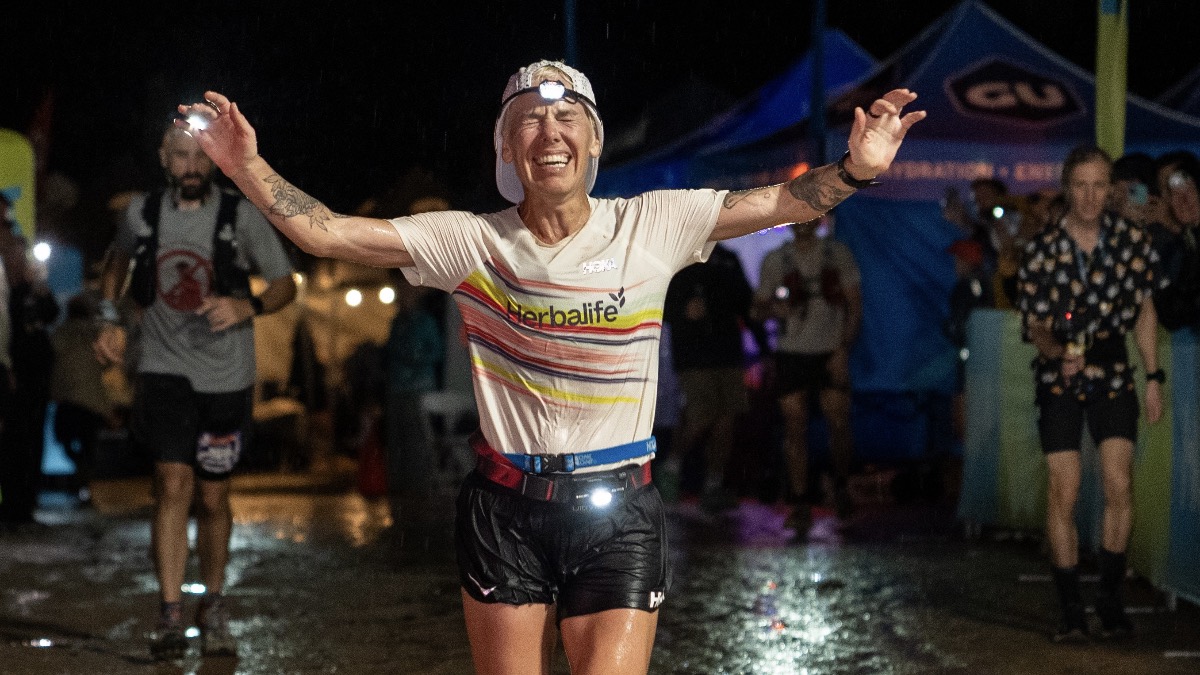
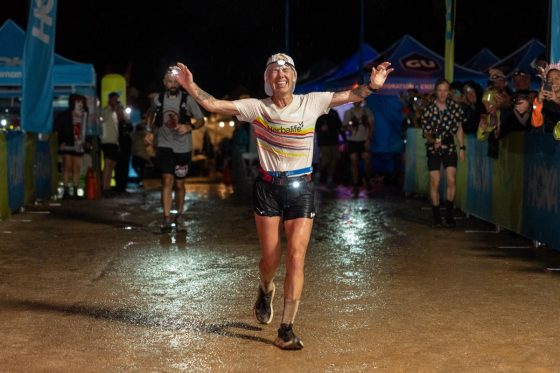
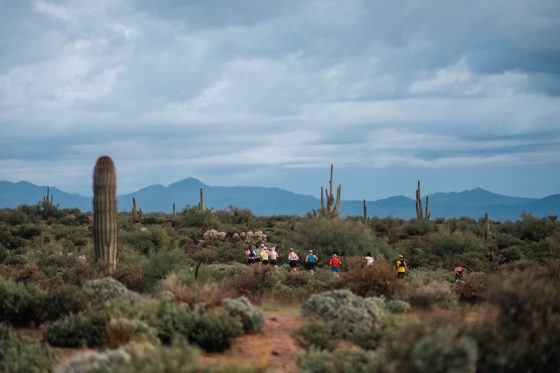
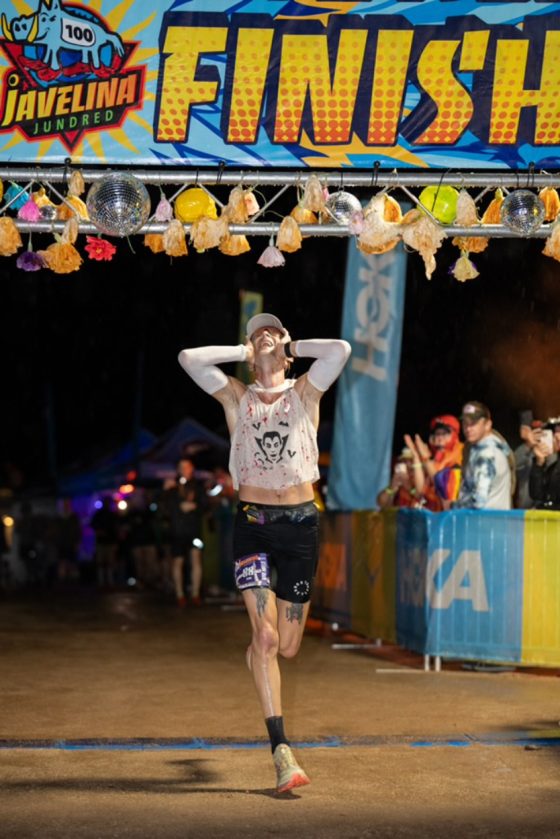
2026 Javelina 100 Mile Results: Heather Jackson and Rob Molke Win on Spooky, Stormy Day The post 2026 Javelina 100 Mile Results: Heather Jackson and Rob Molke Win on Spooky, Stormy Day appeared first on iRunFar. After a thrilling day of racing in spooky and unusually stormy conditions, Rob Molke and Heather Jackson claimed victories at the 2026 Javelina 100 Mile. Heather Jackson, 2026 Javelina 100 Mile champion. Photo: Howie Stern After DNFing last year, Molke returned seeking redemption and a Golden Ticket to the 2027 Western States 100, having earned his place in the 2025 edition with a single lottery ticket before finishing 16th. He made a late charge to overtake Noah Dusseau in the final 10 miles, claiming the win in 12:11:30. In the women’s race, defending champion Jackson chased down the U.K.’s Carla Molinaro in the final few miles to win in 13:48:29, less than a minute ahead of the British runner. The Javelina 100 Mile takes place in McDowell Mountain Regional Park, near Fountain Hills, Arizona, about an hour northeast of Phoenix. The course consists of five loops: an initial 22.3-mile (35.9 kilometers) loop, followed by four consecutive 19.45-mile (31.3k) loops. With only 6,296 feet (1,919 meters) of total elevation gain and a course made up of mostly smooth trails and old doubletrack, it allows for some seriously fast 100-mile trail running. Each loop climbs gradually over its first half before descending over the second. The race also famously serves as a weekend-long Halloween party, with even some of the elites donning costumes. At 6:00 a.m. Mountain Standard Time (MST) on October 31, runners set off into stormy conditions. Heavy rain the night before left some mud and minor washouts on course, while off-and-on storms created an interesting dynamic of overcast skies and moderate temperatures (a high of 75 degrees Fahrenheit/24 Celsius), but very high humidity. Scattered rain returned in the final hours of the elite race, and more was forecasted for the rest of the race as a “pineapple express” brought excess rain to the normally arid region. Some spooky, stormy scenery at the 2026 Javelina 100 Mile. Photo: Howie Stern The Javelina 100 Mile is the second of seven Golden Ticket races in the lead-up to the 2027 Western States 100. Four Golden Tickets were up for grabs, with the first- and second-place men and women each earning a spot on the Western States start line next June. If any of the top two have already qualified for next year’s Western States or decline their entry, their tickets can roll down to the next eligible finishers, as far as fifth place. This gives runners an incentive to keep pushing beyond the top two. While there were no clear favorites in either the men’s or the women’s races, there was an exciting mix that promised dynamic racing. In the men’s race, Jacob Banta was seeking another Golden Ticket after placing second at the 2026 Tarawera 100k, another Golden Ticket race, but not having the day he wanted at the 2026 Western States. Blake Slattengren, whose second-place finish in 2023 still stood as the 10th-fastest time in race history heading into this year’s event, was also on the starting line after a DNF at CCC earlier this year. Rajpaul Pannu was another notable contender, having set the Javelina 100k course record in 2023, finishing fourth at the 2024 Javelina 100 Mile, and setting the second-fastest time for an American at the 100-mile distance earlier this year. On the women’s side, two former Javelina 100 Mile champions, Devon Yanko and Jackson, were on the starting line, having won in 2022 and 2023, respectively, and both went on to place in the top 10 at Western States. Katie Asmuth, who won the 2025 Javelina 100k and who has three top-10 Western States finishes to her name, was also on the starting line. The field also included Des Linden, a two-time Olympic marathoner who turned to trail running in the last year. Read on to learn how the race played out. 2026 Javelina 100 Mile Men’s Race A dynamic race from start to finish — with the winner decided in only the final 10 miles — made for a fun day of fan following. The men’s race started out fast, but the lead pack broke up relatively quickly. At the second checkpoint, 10.1 miles into the race and at the top of the first loop, Blake Slattengren led the charge, with the rest of the top 10 all within about 100 seconds of each other. By the first checkpoint of the second loop, Coyote Camp 2 at mile 26.1, Cade Michael was in the lead and setting a blistering pace at 2:54 elapsed, the fastest split for this section in race history. Can-Hua Luo, Noah Dusseau, John Raneri, and Jacob Banta were all within two and a half minutes behind him. Just under two minutes behind Banta, a second group of men consisting of Slattengren, Rajpaul Pannu, Cole Watson, Rob Molke, and Brandon Talisesky ran close together. The top three remained the same through the end of the second loop, with Michael still leading the charge and setting off on his third loop at 4:36 elapsed, but Banta and Watson had moved up into fourth and fifth place as Raneri fell back into seventh. Rob Molke, 2026 Javelina 100 Mile champion. Photo: Howie Stern The next 10 miles brought a big shake-up as the men’s race started to see some attrition. Michael dropped out at Coyote Camp 3, 45.3 miles into the race, and Watson dropped out at Jackass Junction 3, 51.8 miles into the race. And a bit later on, at 60.3 miles, after finishing three loops, Raneri left the race, too. Dusseau moved into first place, passing through Jackass Junction 3 at 6:02 elapsed, where he would stay until late race. Banta was now in second, just 40 seconds behind. Luo still had the podium in sight, albeit now in third, and Pannu had moved up into fourth. Molke had also pushed ahead and now rounded out the top five. Dusseau’s lead continued to grow, and he went through Coyote Camp 4 at mile 64.6 at 7:34 elapsed, with a lead of almost five minutes on Banta and Luo, who were running together. Pannu was another seven minutes behind them, and Molke was 4:30 behind Pannu, still holding onto fifth. By the time the top five had passed through Coyote Camp 5, now 83.7 miles into the race, Dusseau was holding an almost identical lead of just under five minutes, but Luo had moved into second place with Molke having moved into third behind him, and just 80 seconds separating them. Less than five minutes behind, Banta and Pannu were maintaining their top five positions. Noah Dusseau celebrates his second place at the 2026 Javelina 100 Mile. Photo: Howie Stern Rob Molke had not given up on getting a Golden Ticket, and surged into first place shortly after the Jackass Junction 5 checkpoint at mile 90.2, holding strong and winning the race in 12:11:30. This was less than a minute shy of Will Murray’s 2025 course record of 12:10:12. Noah Dusseau continued to push and finished less than 90 seconds behind Molke in 12:12:57, securing the third-fastest time ever on this course. Can-Hua Luo rounded out the podium in 12:19:39. Jacob Banta and Rajpaul Pannu maintained their top five positions until the very end, finishing in 12:23:30 and 12:26:47, respectively. 2026 Javelina 100 Mile Men’s Results Rob Molke – 12:11:30 Noah Dusseau – 12:12:57 Can-Hua Luo (China) – 12:19:39 Jacob Banta – 12:23:29 Rajpaul Pannu – 12:26:47 Rob King – 12:41:25 Brandon Talisesky – 12:44:15 Blake Slattengren – 12:50:30 Zach Eagle – 13:39:50 Brendan Shearn – 14:08:04 Full results. Can-Hua Luo takes third place at the 2026 Javelina 100 Mile. Photo: Howie Stern 2026 Javelina 100 Mile Women’s Race Just as the men’s race came down to the final miles, so would the women’s. But first, there were 100 miles of racing to do. The women’s race went out hot, and Ellaney Matarese, Katie Asmuth, and Jade Belzberg finished the first loop separated by only 30 seconds. Matarese led through Coyote Camp 2 at mile 26.1 in 3:15 elapsed, with Asmuth, Belzberg, and Heather Jackson within three minutes behind her. Des Linden was another 2:45 behind Jackson, followed very closely by Carla Molinaro (U.K.) and Valérie Arsenault (Canada). By the time they were starting their third loop, Linden had worked her way up from fifth to first place in dominant fashion, passing through Coyote Camp 3 at mile 45.3 in 5:53 elapsed. Asmuth was in second, followed by Matarese, Arsenault, Molinaro, and Jackson. The entire top six was within seven minutes of each other. The other former champion, Devon Yanko, was about eight minutes behind Jackson, and Juliette Soule (New Zealand) had moved into eighth position. Belzberg had fallen out of the top 10 and was in 13th at this time. Linden continued to push ahead, building a five-minute gap over Asmuth by mile 56.9, passing through Rattlesnake Ranch 3 in 7:31 elapsed. Molinaro had also surged forward and was closing on Asmuth, less than 30 seconds back. Arsenault, Jackson, and Yanko had maintained their fourth through sixth positions while Matarese had fallen into seventh place. A champagne celebration for Carla Molinaro’s second place at the 2026 Javelina 100 Mile. Photo: Howie Stern It was now Molinaro’s turn to surge, passing Asmuth and setting off on the third loop, 60.3 miles into the race, an even minute behind Linden, who was still in first. This was the end of Linden’s lead, though, as by the time she got to Coyote Camp 4 at mile 64.6, she had fallen back. The finish of the third loop was also Matarese’s exit from the race. Molinaro was in first place at 8:39 elapsed, with Asmuth still in second place, less than four minutes in arrears. Jackson had also continued her push and was in third place, about three minutes behind Asmuth, followed by Arsenault and Yanko rounding out the top five. As Molinaro built her lead, Jackson closed on Asmuth, passing her and building a 1:45 gap by the time they got to Jackass Junction 4 at mile 71. Jackson was in second and 8:15 behind Molinaro at this point, and Molinaro would hold that gap over Jackson for at least the next 13 miles as they both pulled away from Asmuth in third. But in the final 20 miles, Jackson started to close on Molinaro and by the time they had both passed through Rattlesnake Ranch 5 at mile 95.3, Jackson had narrowed the gap to 3:21. The race between these two was clearly not over, and the dark, rainy conditions would have allowed Jackson to sneak up on Molinaro. By this stage, Asmuth was 15:08 behind, with the Golden Ticket seemingly out of sight but the podium still in hand. Following a very late pass to take over the lead, Heather Jackson emerged out of the darkness and flew over the finish line first in 13:48:29 — her second win of the race. Less than one minute behind her, Carla Molinaro finished second in 13:49:24. Katie Asmuth completed the podium, taking third in 14:06:34. Valérie Arsenault finished fourth in 14:09:24, while Devon Yanko took fifth in 14:12:55. Katie Asmuth after taking third at the 2026 Javelina 100 Mile. Photo: Howie Stern 2026 Javelina 100 Mile Women’s Results Heather Jackson – 13:48:29 Carla Molinaro (U.K.) – 13:49:24 Katie Asmuth – 14:06:34 Valérie Arsenault (Canada) – 14:09:24 Devon Yanko – 14:12:55 Juliette Soule (New Zealand) – 14:55:16 Serena Gordon – 15:53:04 Jade Belzberg (Canada) – 16:08:12 Full results. [Editor’s Note: At the time of this article’s publication, not all top 10 women have finished. We’ll update it as they do.] 2026 Javelina 100 Mile Results: Heather Jackson and Rob Molke Win on Spooky, Stormy Day by Clare Gunton. #heatherjackson #robmolke #javelina #westernstates #goldenticket #mile #spooky #win #howiestern #noahdusseau #rss #feeds #linksharing #qwibbit
Best Cushioned Running Shoes of 2026 The post Best Cushioned Running Shoes of 2026 appeared first on iRunFar. We logged hundreds of miles in different cushioned running shoes to compile this guide. Photo: iRunFar/Eszter Horanyi There are plenty of good reasons to look for the best cushioned running shoes when you’re running on pavement or dirt roads. Whether it’s your day-in, day-out running shoe of choice or something that you rotate in for long tempo runs, post-workout recovery miles, or those ever-so-important easy runs, a good cushioned road running shoe can help keep your feet, muscles, and joints happy when you’re pounding miles of pavement. After researching cushioned running shoes from across the industry and testing more than two dozen different models over hundreds of miles, we compiled this guide of the best cushioned running shoes. At the top of our list is the Asics Novablast 6, a bouncy, versatile shoe excellent for daily miles and strides, while we loved the Adidas Adizero EVO SL as a versatile, lightweight option. For low-drop lovers, the Altra FWD Via 2 proved to be a well-cushioned mileage monster, while the Saucony Hurricane 26 is a top choice for runners seeking a stability shoe. Below, you’ll find reviews for those shoes and the rest of our top picks for the best cushioned running shoes for the road. You can also check out our buying advice, testing methodology, and answers to your frequently asked questions. We’ve also included a glossary of common running shoe lingo. Finally, if you’re looking for trail options with ample cushion, take a look at our Best Cushioned Trail Shoes guide. [Editor’s Note: Fully updated October 31, 2026 with many new models, as well as re-verifying all prices, links, and availability.] Best Cushioned Road Running Shoes Best Overall Cushioned Running Shoe: Asics Novablast 6 Best Max-Cushioned Running Shoe: Nike Vomero Plus Best Lightweight Cushioned Running Shoe: Adidas Adizero EVO SL Best Cushioned Shoe for Racing: Asics Megablast Best Value Cushioned Running Shoe: Skechers Aero Razor Best Cushioned Running Shoe for Everyday Miles: Hoka Clifton Pro Best Cushioned Running Shoe for Stability: Saucony Hurricane 26 Best Cushioned Running Shoe for Recovery Runs: Mount to Coast C1 Best Low-Drop Cushioned Running Shoe: Altra FWD Via 2 Best Cushioned Running Shoe for Varied Surfaces: Salomon Aero Glide 4 Best Overall Cushioned Running Shoe: Asics Novablast 6 ($155) Claimed Weight (U.S. men’s 9): 8.9 ounces (253 grams) | Stack Height (heel/toe): 41.5/33.5 millimeters | Drop: 8 millimeters Pros: Lightweight, comfortable, and versatile Bouncy and responsive Snugger fit than previous versions Cons: Not as plush as previous versions The Asics Novablast 6 is one of the most popular daily trainers and our top pick for cushioned running shoes due to its combination of excellent cushion and comfort, responsiveness, and versatility. For $155, it’s one of the better values you’ll find in a pair of running shoes today — and the reason why you’ve likely seen a pair of Novablasts on the feet of many runners. One of our testers for this shoe is a longtime user of the Novablast line who’s run an Olympic Trials qualifying time for the marathon. He very much enjoyed this update. This shoe retains many of the characteristics that make previous versions great — lightweight, comfortable, well-cushioned — while making a few small tweaks that made this version even better. The first was the fit. This version fits snugger with less of the wobbly feeling of previous versions. “I can actually wear thin socks and not be sliding around with the shoe,” one of our testers wrote. “With the feeling of less baggage, they are easier to do strides in and feel more responsive than previous versions or the average trainers.” Asics retained its FF Blast Max foam in the midsole, which we loved in the previous version, and added a forefoot pod of FF Turbo Squared — one of the brand’s premium foams — to add even more bounce. The result is a ride that can handle easy runs, of course, but also pushing the pace at the end of a long run or even a light workout. That versatility remains one of its strengths. Overall, if you liked previous versions of the Novablast or are a runner looking for a well-cushioned daily trainer without the bulk inherent in many cushioned shoes, this shoe is worth a look. “Still my number one choice for a daily trainer,” the longtime Novablast runner summarized. Shop the Men's Asics Novablast 6Shop the Women's Asics Novablast 6 Best Max-Cushioned Running Shoe: Nike Vomero Plus ($180) Actual Weight (U.S. men’s 9.5): 10.3 ounces (292 grams) | Stack Height (heel/toe): 45/35 millimeters | Drop: 10 millimeters Pros: Full-length ZoomX midsole provides ample bounce and fun Lots of protection for tired legs Excellent long run shoe that can handle some faster miles Cons: Narrow fit Not for workouts The Nike Vomero Plus is a towering, max-cushion shoe that stood out to our testers for its comfort, protection, and fun running experience. We loved it so much that we also named it the best overall road running shoe in our Best Nike Running Shoes guide. Naturally, we have to start with the cushion. This shoe’s midsole features full-length ZoomX, one of Nike’s most energetic foams, with 45 millimeters in the heel and 35 millimeters in the forefoot. Because of this cushion, running in these shoes is simply fun — you can feel the bounce as you stride along. Or as one of our testers put it: “You can tell a difference in stride and feel when you switch back to less cushioned shoes.” Even with all of this cushion, these shoes don’t feel heavy. Our testers ran plenty of easy miles in these shoes, plus some moderately paced runs and strides, and they performed well across the spectrum. They excel as a long and recovery run shoe, too, with lots of protection and bounce for tired legs. They could probably even work for a long race for which speed is not your concern — think a four-plus-hour marathon — if you value cushion above all else. The only thing we wouldn’t recommend them for is your fastest days: One tester tried a track workout in them, and they’re a bit too bulky for that. The engineered mesh upper is snug and durable and fits well, and the outsole can handle smooth gravel and dirt paths just fine. Like many Nike shoes, they are a bit narrow. We aren’t really sure how to classify this shoe — it falls somewhere between a daily trainer and super trainer — but because of its comfort and cushion, we’ll just call it what it is: a top-tier max-cushion shoe that will last you for many miles. Shop the Men's Nike Vomero PlusShop the Women's Nike Vomero Plus Best Lightweight Cushioned Running Shoe: Adidas Adizero EVO SL ($150) Actual Weight (U.S. men’s 9): 7.9 ounces (223 grams) | Stack Height (heel/toe): 38/32 millimeters | Drop: 6 millimeters Pros: Supremely light and energetic Premium foam for not-premium price Incredibly versatile Clean, simple aesthetic Cons: Bad tongue and laces Road running only The Adidas Adizero EVO SL is an extraordinary shoe. It’s priced like a daily trainer but has a premium foam, crisp design, and the versatility to do pretty much anything. It’s also, as our category suggests, incredibly light, coming in at an actual weight of less than 8 ounces in a U.S. men’s 9. For $150, you won’t find a much better deal. The most striking feature of this shoe is its midsole. It’s made from Adidas’s Lightstrike Pro, a foam typically reserved for the brand’s racing super shoes. The foam makes these shoes bouncy, responsive, and a lot of fun to run in. They were our primary tester’s go-to shoes for a marathon training block, and he wore them on everything from easy runs to track workouts to long marathon-specific work. And if you don’t want to shell out $250-plus for super shoes or simply prefer the ride of unplated shoes, they could be a race-day shoe as well, especially from the 5k to half marathon range. Just make sure to remain on paved roads or dry tracks — the Continental rubber outsole performs well on those surfaces, but on any others you will need more traction, especially if they’re wet. The upper is made from a thin, breathable mesh that we found to be durable through hundreds of miles of running, and the fit is accommodating throughout the entire foot. Our primary tester struggled with lockdown on the first couple of runs, but after that, the shoes felt dialed. The upper also contains the shoe’s biggest weaknesses: a floating tongue that often slid down or shifted mid-run, and thin laces that came untied on a few runs. And while style is subjective, the simple, clean design of these shoes makes them a compelling lifestyle option, too. You can read more about these shoes in our full Adidas Adizero EVO SL review. Shop the Men's Adidas Adizero EVO SLShop the Women's Adidas Adizero EVO SL The Adidas Adizero EVO SL provides one-of-a-kind versatility and excellent value. Photo: iRunFar/Bryon Powell Best Cushioned Shoe for Racing: Asics Megablast ($225) Claimed Weight (U.S. men’s 9): 8.1 ounces (230 grams) | Stack Height (heel/toe): 45/37 millimeters | Drop: 8 millimeters Pros: Supremely versatile Premium foam Fun to run in Cons: Pricey Clunky for speedwork While there are certainly more specialized options to lace up for a long race — see our Best Marathon Shoes guide for specific picks — the Asics Megablast was our top choice for runners seeking a racing shoe that can double as a trainer, workout shoe, and, well, basically anything you need it for. This shoe is probably best classified as a “performance trainer” or “super trainer,” which are fancy ways of naming a shoe with tremendous cushion that can handle easy miles, workouts, and yes, even races. We have to start with the foam: Asics employs its FF Turbo Squared, one of its premium foams, and the driver of the high price. Our tester, who has run hundreds of miles in these shoes, said the cushion offers a great balance of firmness and bounce. They’ve turned into his go-to workout shoes for mile repeats or longer, though for any fast speedwork, he said they felt a bit blocky on his foot. “It really shines during tempo and threshold sessions, while still holding up well on longer runs,” he said. With this cushioning, combined with a breathable and comfortable upper and relatively low weight, this shoe could absolutely be a race-day option for runners who are seeking an unplated option or don’t want to shell out $250-plus for a super shoe. In fact, our tester wore these shoes for a 39-mile FKT on a mix of roads and gravel — a nod to their speed, comfort, and capable rubber outsole. “Overall, it’s a true do-it-all shoe,” he summarized. Shop the Asics Megablast Best Value Cushioned Running Shoe: Skechers Aero Razor ($140) Actual Weight (U.S. men’s 9): 7.0 ounces (198 grams) | Stack Height (heel/toe): 36/32 millimeters | Drop: 4 millimeters Pros: Light and bouncy Performs well for easy running and workouts Durable outsole Cons: Possible issues with midsole durability and laces It seems like every review of a Skechers running shoe starts with an obligatory joke about the brand’s transformation, so we will spare you. What we will say is that the Skechers Aero Razor is a legitimately good shoe — a fun, lightweight option for daily runs and workouts that, at $140, represents tremendous value. The cushion comes from 36 millimeters of the supercritical Hyper Burst Pro in the heel and 32 millimeters in the forefoot, making this shoe one of the lower-drop options in this guide and among cushioned shoes in general. Our testers loved the responsiveness and bounce of this foam, which, combined with the light weight, make these shoes work for varied paces. “I can do easy miles in these, but they also feel super smooth picking up the pace,” one of them wrote. It’s important to note, though, that one tester started to notice the initial responsiveness begin to fade once he had 60-plus miles on them, so the durability of the midsole could be a concern. He still continued to run in them, eventually putting 100-plus miles on the shoes, but they weren’t as bouncy as before. The upper is thin and secure and fits well, though the toebox is a bit narrower than that of other Skechers shoes. The sawtooth laces didn’t work for one tester, as he could never really get a snug fit around the ankle area. The Goodyear rubber outsole proved to be durable, still looking new after 100 miles. “Skechers are no longer for medical professionals who stand all day at work and the elderly, so hopefully something can be done to change the stigma,” one of our testers wrote. This shoe is a good start. Shop the Men's Skechers Aero RazorShop the Women's Skechers Aero Razor Best Cushioned Running Shoe for Everyday Miles: Hoka Clifton Pro ($165) Actual Weight (U.S. men’s 9.5): 9.7 ounces (276 grams) | Stack Height (heel/toe): 42/34 millimeters | Drop: 8 millimeters Pros: Supercritical foam in a Clifton! Bouncier and more versatile than the regular Clifton Excellent shoe for easy runs with strides Cons: “Pro” is a misnomer Not for fast running The Hoka Clifton Pro is a long-awaited update to one of the most popular cushioned running shoe lines in the industry, the Hoka Clifton. For years, the Clifton has been a reliable shoe, worn by runners, medical professionals, and anyone else who spent a long time on their feet and enjoyed the plush comfort of a max-cushioned running shoe (see our review of the Hoka Clifton 10). On the running front, though, it felt like the Clifton, with a somewhat plodding ride and foam that wasn’t all that responsive, had fallen behind. Enter the Clifton Pro. While it falls short of the super trainer category — see the Asics Megablast reviewed above — with an upgraded foam it is a clear step in the right direction by Hoka. And for $165, only $10 more expensive than the normal Hoka Clifton 11, it represents good value, too. The biggest change came in the midsole. Hoka finally used a supercritical foam, calling it Proglide+, and it delivers a much bouncier, more responsive ride than the regular Clifton. It is still an EVA foam, so it falls short of many of the others in this guide in terms of energy return, but combined with a more aggressive Metarocker geometry, it offers a smooth, much more robust ride than the standard Clifton. It is an ideal shoe for easy runs with strides at the end — something one of our testers ran many times. Another tester even used it for some fartlek work on the road, but we wouldn’t recommend it for most of your workouts, as it’s not an inherently fast shoe. For this reason, the word “Pro” in its name is a bit misleading. One tester appreciated the stronger arch support, and the engineered mesh upper and rubber outsole have proven to be durable. One tester, who’s run in many versions of the Clifton, for some reason found that this one fit a bit looser, especially in thinner socks, but that small issue could be fixed fairly easily by tightening the laces. Overall, this shoe retains the Clifton’s everyday workhorse roots but adds some much-needed pop in the midsole for only $10 more than the standard version. Our biggest question is why someone would choose the Clifton 11 over the Pro. In fact, if Hoka simply called this shoe the Clifton 11 instead of making both shoes, we think it would be an even bigger hit. Shop the Men's Hoka Clifton ProShop the Women's Hoka Clifton Pro Best Cushioned Running Shoe for Stability: Saucony Hurricane 26 ($170) Claimed Weight (U.S. men’s 9): 9.2 ounces (262 grams) | Stack Height (heel/toe): 41/35 millimeters | Drop: 6 millimeters Pros: Excellent for easy running New foam performs well Durable Cons: Not a high-performance shoe The Saucony Hurricane 26 is a max-cushioned stability shoe that we enjoyed for easy running. If you’re searching for a shoe with lots of good cushion and some stability elements, this should be a top contender. In the midsole, Saucony uses its new IncrediLux foam, a supercritical A-TPU foam that provides great energy return. Our tester loved this shoe for easy and recovery runs where cushion was the priority over speed. The stability elements come from Saucony’s CenterPath technology, which provides #cushionedrunning #runningshoe #bestcushioned #asicsnovablast #roadrunning #shoesbest #bestoverall #lightweightcushioned #miles #fwdvia #rss #feeds #linksharing #qwibbit
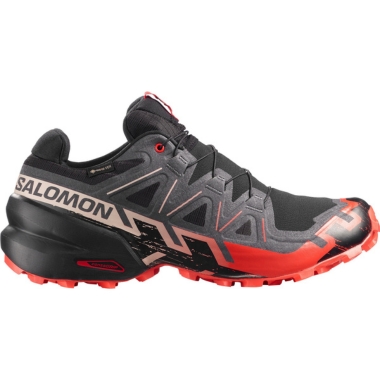



Best Cold Weather Running Gear of 2026 The post Best Cold Weather Running Gear of 2026 appeared first on iRunFar. The proper gear can make winter running safe and comfortable. Photo: iRunFar/Eszter Horanyi While we often think of the glory days of running as being in the warmth, in shorts and short-sleeve shirts, running in the winter can be equally magical and rewarding, given that you have the right clothing for the conditions. Having the best cold weather running gear can keep you dry, comfortable, and warm, regardless of what the conditions throw at you. Whether you’re frequently running in the snow, rain, or just really cold temperatures, having the right layers to put on and take off can help you stay comfortable and keep running outside throughout the cold months. In this guide, we share some of our favorite winter pieces to help you run safely and comfortably this winter. Our team has tested these pieces of gear over multiple years and seasons, on various types of terrain, around the world, and in diverse winter conditions. We are excited to share these recommendations, which were selected for their strengths and versatility. Even more than with our hot weather running gear, we understand the importance of trusting your cold weather running gear to perform at a high level, as situations can quickly become uncomfortable and even dangerous when it’s cold. When it comes to some of our favorite gear, our team frequently relies on the Patagonia Houdini Jacket to block the wind and the Trailheads Convertible Zip Mitts to keep our hands warm in the coldest conditions. We have recommendations for a wide variety of gear that can make winter running a joy. You can also skip down to read our recommendations on choosing the right cold weather running gear for you, our answers to your frequently asked questions about cold weather running gear, and how we put this guide together. [Editor’s Note: Fully updated October 21, 2026, for the 2026-2027 winter season with numerous top picks revised as well as to re-verify all prices, links, and availability.] Best Cold Weather Running Gear Best Winter Running Shoes for All Conditions: Salomon Speedcross 6 and Salomon Speedcross 6 Gore-Tex Best Winter Running Shoes for Packed Snow: Hoka Speedgoat 7 and Hoka Speedgoat 7 GTX Best Winter Traction Device for Off-Road Running: Black Diamond Distance Spike Traction Device Best Winter Traction Device for Mixed Conditions: Kahtoola Exospikes Best Hydration Pack for Winter Running: Salomon Adv Skin 12 Best Windbreaker Jacket: Patagonia Houdini Jacket Best Rain Jacket: The North Face Summit Series Superior Futurelight Jacket Best Winter Running Jacket: Patagonia Nano-Air Light Hoody Best Hybrid Jacket for Winter Running: Patagonia Airshed Pro Pullover Best Base Layer Shirt for Winter Running: Smartwool Classic All-Season Merino Base Layer 1/4 Zip Best Midlayer Shirt for Winter Running: Janji Rover Merino Hoodie Best Winter Running Tights: Patagonia Endless Run Tights Best Insulated Winter Running Tights: Janji Aurora Fleece Tight and Boreal Fleece Tight Best Headband for Cold Weather Running: Buff Dryflx Headband Best Winter Running Beanie: Sauce Swift Toque Best Gloves for Winter Running: Ultimate Direction Ultra Flip Glove Best Gloves for Very Cold Conditions: Trailheads Convertible Zip Mitts Best Sports Bra for Cold Weather: Ridge Merino Women’s Send-It Seamless Merino Wool Sports Bra Best Wool Socks for Cold Weather: Smartwool Run Cold Weather Targeted Cushion Crew Socks Best Headlamp for Winter Running: Petzl Nao LT Best Sunglasses for Winter Running: Rudy Project Propulse Winter running often requires significantly more gear, including a headlamp, warm jacket, gloves, and head covering. Photo: iRunFar/Andy Cochrane Best Winter Running Shoes for All Conditions: Salomon Speedcross 6 ($150) and Speedcross 6 Gore-Tex ($170) The Salomon Speedcross 6 and the Salomon Speedcross 6 Gore-Tex are our top picks for general, all-around, variable-terrain winter running shoes, appearing in our Best Trail Running Shoes guide. For most winter conditions and sometimes during the shoulder seasons — hello, mud! — runners prioritize shoes with lugs and the traction they provide. The big lugs also make them great for snow, while Gore-Tex version provides the additional benefit of being waterproof. These shoes have Salomon’s notoriously grippy outsole, which helps with traction on nearly every surface. They are also built with five-millimeter multidirectional lugs to help dig into and generate grip in soft snow. We found these shoes to perform well on runs where we encountered a variety of ground conditions, including soft snow, mud, and wet ground. They aren’t the lightest shoes, though this version is about an ounce lighter than the previous one. The tightly woven ripstop upper and durable outsole make these shoes incredibly protective, a feature we think is more important in a winter running shoe than weight. Salomon shoes tend to be on the firm side with a nimble footprint. This is a definite strength when navigating sloshy, slippery terrain. You can read more about this shoe in our full Salomon Speedcross 6 review. Shop the Men's Salomon Speedcross 6Shop the Women's Salomon Speedcross 6 Shop the Men's Salomon Speedcross 6 GTXShop the Women's Salomon Speedcross 6 GTX Best Winter Running Shoes for Packed Snow: Hoka Speedgoat 7 ($165) and Hoka Speedgoat 7 GTX ($180) The ever-popular Speedgoat line has always been one of our favorites for running on snow due to its grippy outsole, stability, and ability to perform on aggressive terrain, and the Hoka Speedgoat 7 is one of our favorite versions yet. For this new version of the shoe, Hoka put a supercritical foam in the midsole, which makes it bouncier and more lively for long efforts. The brand also updated the upper, making it more snug and giving it better lockdown, two traits that help when running in the snow. There’s also a gaiter attachment in the back and a reflective detail that helps during dark runs. The Vibram outsole remains top-notch. Hoka also makes a Gore-Tex version of this shoe, the Hoka Speedgoat 7 GTX. While we haven’t had a chance to take this shoe out on snowy runs, we expect it will perform similarly to its predecessor and excel on groomed trails and urban singletrack. Like the Salomon Speedcross 6 reviewed above, this shoe has 5-millimeter lugs for traction but carries a slightly larger snowshoe-esque footprint and more cushion. This provides somewhat more floatation than a narrower shoe. We featured this shoe in our Best Trail Running Shoes guide. For more, you can read our in-depth Hoka Speedgoat 7 review. Shop the Men's Hoka Speedgoat 7Shop the Women's Hoka Speedgoat 7 Shop the Men's Hoka Speedgoat 7 GTXShop the Women's Hoka Speedgoat 7 GTX Best Winter Traction Device for Off-Road Running: Black Diamond Distance Spike Traction Device ($120) Not long after hitting the market, the Black Diamond Distance Spike Traction Device became the go-to choice for the iRunFar team. The design is reminiscent of a mountaineering crampon, with a rubber wrap around the back and sides of the shoes, a fabric toe cap, and a pull tab at the heel to make it easy to put on. The device securely fits on shoes and provides plenty of grip on snow and ice, even on steep slopes. We trusted them in conditions where we were nervous about using other similar traction devices. Considering its traction and toe coverage, the Distance Spike is exceptionally light. Even with its 14 eight-millimeter spikes, this design weighs nearly half of a traditional full-spike traction device. The spikes are made of stainless steel and heat-treated for strength, corrosion prevention, and wear resistance. Read our in-depth Black Diamond Distance Spike Traction Device review to learn why the iRunFar team loves this product. Unsurprisingly, these have also taken a top spot in our Best Winter Running Traction Devices guide. Shop the Black Diamond Distance Spike Traction Device A view of the Black Diamond Distance Spike with its innovative, weight-saving fabric toe cap. Photo: iRunFar/Bryon Powell Best Winter Traction Device for Mixed Conditions: Kahtoola Exospikes ($80) Not all winter runs are on constantly slippery conditions, and the tungsten carbide tips atop five-millimeter lugs of the Kahtoola Exospikes provide enough grip on soft or slippery surfaces without being overkill. The Exospikes have a low profile with tiny metal nubs, and a rubber wrap easily goes over the sole of any shoe. These are a great option if you’re running over slush, a bit of ice, or crusty forest roads. While they’re uncomfortable on dry pavement or other very hard surfaces, they’re easy to take on and off as conditions change. These traction devices are very light despite having 12 spikes and provide stability on all kinds of road-based terrain. To learn more about these traction devices, check out iRunFar’s in-depth Kahtoola Exospikes review and learn more about why these have made it into our Best Winter Running Traction Devices guide. Shop the Kahtoola Exospikes Best Hydration Pack for Winter Running: Salomon Adv Skin 12 ($165) Winter running inherently involves carrying extra gear, and the 12-liter capacity of the Salomon Adv Skin 12 lets you do just that. It is one of Salomon’s larger vests, designed to hold all the essential gear you need for long, cold outings. It even includes multiple carry options for collapsible trekking poles and is compatible with Salomon’s quivers (sold separately). Despite its capacity, it is a light, low-profile pack that fits the body well even when nearly empty. This relatively sleek design allows you to wear the pack over or under a shell jacket in the winter. The latter will help keep your water, food, and phone from freezing. The pack is large enough to carry a warm jacket, a pair of gloves, a hat, and any other gear you need to travel safely in a winter environment. Several smaller pockets provide secure storage for keys, chapstick, or other small items that can get lost in the shuffle. While we feel that this pack continues to set the standard for running vests, we wish Salomon would make the front pockets large enough to hold soft flasks other than their own tall, narrow ones. We’d love to mix and match flasks more easily. We named this our favorite large-capacity running vest in our Best Running Vests guide because of its comfort and versatility, and you can read more in our in-depth Salomon Adv Skin 12 review. Shop the Salomon Adv Skin 12Shop the Women's Salomon Adv Skin 12 The Salomon Adv Skin 12. Photo: iRunFar/Eszter Horanyi Best Windbreaker Jacket: Patagonia Houdini Jacket ($120) Wind is often the most severe source of cold when running in the winter, and the Patagonia Houdini Jacket can provide the extra warmth you need to stay comfortable. This is a jacket you’ll see on the start line of ultras on a chilly morning, high on a mountain ridge during the summer, and on snowy terrain over a warm base layer during winter. Made of recycled ripstop nylon, the jacket is quite breathable and easy to unzip if you’re getting too hot during your run. It also has a PFAS-free DWR coating, meaning it’ll withstand light snow or rain before it starts to get wet. The hood is big enough to fit over a thick winter hat, and you can cinch it tighter if the wind picks up. This isn’t a jacket we’d take out if wet snow or rain were coming down, but it’s hard to beat for dry conditions or when it’s so cold that any snow that falls on you won’t melt. It weighs a scant 3.7 ounces and scrunches up to the size of your fist. This makes it easy to store in a running vest or running belt, or you can just as easily tie it around your waist if you don’t need it anymore. This jacket ranks at the top of our Best Windbreaker Jackets guide. Shop the Men's Patagonia Houdini JacketShop the Women's Patagonia Houdini Jacket Best Rain Jacket: The North Face Summit Series Superior Futurelight Jacket ($360) If you live in a climate that’s cold but not cold enough to regularly turn rain into snow, a high-quality rain jacket like The North Face Summit Series Superior Futurelight Jacket is a must-have to get you through difficult weather conditions. When it comes to rain jackets, it’s all about finding the right balance between waterproofness, warmth, breathability, extra features, and weight. When it comes to running in cold rain, we believe it’s not worth skimping on protection for the sake of weight. While this jacket isn’t the lightest on the market — it’s one of the heavier ones in our Best Running Rain Jackets guide — it provides a high level of waterproofing while remaining breathable, two key components when running in cold rain. The three-layer jacket uses the brand’s Futurelight 3L material as its waterproof yet breathable layer and has a robust DWR coating on the outside. We were able to run in wet conditions without moisture seeping in or the fabric wetting through, and we also didn’t find ourselves getting damp from sweat during higher-effort runs. The fit is a bit slimmer than many other jackets, so if you want to wear your pack underneath, you’ll want to size up. While there aren’t any hand pockets, there’s a single zippered pocket on the right under the sleeve to hold small items. The hood has an elastic lining to keep it snug around the face, and a single toggle in the back adjusts its tightness. While there’s no distinct brim on the hood, we found it did a good job of keeping rain off our faces and out of the jacket, especially when we wore a hat underneath. A single bungee adjusts the hem, and elastic keeps the cuffs around the wrists snug without being tight. This jacket does a great job of cutting weight by omitting many bells and whistles while refusing to skimp on protection. While this jacket is admittedly expensive, running in cold rain can create dangerous conditions in a hurry, and we believe a good rain jacket you can trust in any conditions is worth the price. Shop the Men's The North Face Summit Series Superior Futurelight JacketShop the Women's The North Face Summit Series Superior Futurelight Jacket We trust the The North Face Summit Series Superior Futurelight Jacket to withstand cold and wet conditions. Photo: iRunFar/Eszter Horanyi Best Winter Running Jacket: Patagonia Nano-Air Light Hoody ($300) The Patagonia Nano-Air Light Hoody is an updated version of a longtime iRunFar team favorite, the Nano-Air Hoody. While full testing of this new, slightly lighter hoody is still to come, it retains many of the old one’s properties and adds several positive updates, making it our top pick for winter running. This new hoody has slightly lighter insulation, going to 40 grams per square meter from 60 grams, which could actually be a welcome change, as the previous version excelled during the coldest days — 20 degrees Fahrenheit down to -20 degrees — but could be slightly too warm for anything warmer than that. This hoodie utilizes Patagonia’s FullRange insulation, which is more permeable and moves excess heat and moisture away from the body faster. It seems like a near-perfect companion for workouts or runs when the pace varies. This jacket features a drawstring hood with elasticity to fit snugly around your head and face. The cuffs are soft and stretchy, which helps contain warmth around your hands and wrists. It’s thin enough to fit under a shell if you need additional protection from precipitation. It easily squishes into a backpack and fits into a larger hydration vest, like the Salomon Adv Skin 12 above. The durable water-repellent finish ensures you won’t get soaked immediately if it starts to sprinkle. Shop the Men's Patagonia Nano-Air Light HoodyShop the Women's Patagonia Nano-Air Light Hoody Best Hybrid Jacket for Winter Running: Patagonia Airshed Pro Pullover ($145) For shoulder-season conditions, the Patagonia Airshed Pro Pullover stands out as a super versatile hybrid layer. It functions well in wind, snow, and a wide range of temperatures. It’s perfect for the classic all-seasons-in-one-day type of weather. This ultralight jacket combines fabrics and features perfectly suited to the weather and temperature swings that runners frequently encounter. The jacket body consists of light, wind-blocking, and water-resistant polyeste #rss #feeds #linksharing #qwibbit
Not Quite Impossible: ‘Four Trails’ Film Review The post Not Quite Impossible: ‘Four Trails’ Film Review appeared first on iRunFar. Almost every running community has its almost-impossible challenge. Some are more daunting than others. Hong Kong hosts the Hong Kong Four Trails Ultra Challenge, which has been excellently chronicled in the film “Four Trails.” Hong Kong is a huge metropolis, but it contains thousands of kilometers of trails. This juxtaposition of civilization and nature makes a perfect backdrop for the Hong Kong Four Trails Ultra Challenge. All images are screenshots from the film “Four Trails.” The challenge was created by local ultrarunner and German expat Andre Blumberg. Blumberg, motivated to get out of a midlife fitness rut, wondered if he could link together Hong Kong’s four major trails in one go. In 2012, he completed the route over four days, covering 298 kilometers (185 miles) and 14,500 meters (47,572 feet) of climbing. While on his own health journey, Andre Blumberg founded the Hong Kong Four Trails Ultra Challenge, which has taken on cult status for Eastern and Western adventure runners. The four trails are the 100-kilometer MacLehose Trail, 78k Wilson Trail, 50k Hong Kong Trail, and 70k Lantau Trail. They each pose unique challenges, including vert, technicality, endless stone stairs, navigation, heat, humidity, and, quite notably, monkeys, all while you time your transitions between each trail via subway, ferry, and car through the bustling metropolis of Hong Kong. In 2013, Blumberg invited other runners to join the challenge, setting a strict 72-hour target. The challenge quickly caught on with the local community, and the finishing goal was soon reduced to 60 hours. The rarity of sub-60-hour finishers stands as a testament to its brutal difficulty — as of 2026, there’ve been 38 finishers. Those who finish the course in under 72 hours earn an equally revered title of “survivor.” Each of these hard-earned honors are traditionally celebrated with a champagne spray upon reaching the iconic green mailbox marking the challenge’s finish. Jacky Leung becomes the first person to break 50 hours in the Hong Kong Four Trails Ultra Challenge. Perhaps humorously for everyone but the participants, over the years, as more runners complete the challenge, Blumberg has found ways to increase the difficulty by limiting runners’ crew to only the start and end of each trail system and by banning poles, music, drop bags, and pacers. Now, after 15 editions, the Hong Kong Four Trails Ultra Challenge has earned a cult status among Eastern and Western adventure runners alike. So, what better way to celebrate than with a feature-length film? “Four Trails,” directed by Robin Lee, follows a select group of runners who took on the race’s 2021 edition. While it is rare for a niche trail-running documentary to make waves at the box office, “Four Trails” broke the mold during its theatrical run in its hometown, grossing an incredible 10 million Hong Kong Dollars ($1.27 million), making it the second-highest-grossing documentary in Hong Kong cinema history. It also earned Lee the Best New Director award at the 2025 Hong Kong Film Awards. Now, some years later, “Four Trails” is streaming for free on Tubi, Fawesome, and Fandango. The film’s long run time allows viewers to connect deeply with Hong Kong’s scenery and city life, as well as the race’s cast of characters. Five runners are followed closely, along with several other featured competitors. During this edition of the race, the seed has been planted to be the first sub-50-hour runner. While several pursue this goal, one man, Jacky Leung, breaks the barrier with an effort that seems both perfectly calculated and emotionally driven. For the women, Nikki Han captures an elusive sub-60-hour finish, incredibly her second time finishing the challenge under 60 hours. Nikki Han is one of few women to have broken 60 hours at the Hong Kong Four Trails Ultra Challenge. During “Four Trails,” she finishes under 60 hours for an incredible second time. The film focuses on some of the back-of-the-pack “survivors” as well. Will Hayward, one of the final survivors, describes his strengths as grit and stubbornness. As someone who went head-to-head with Hayward for the final eight hours of the 2019 Big Dog’s Backyard Ultra, I can attest to this grit. He has no quit, and in “Four Trails,” this is once again on display. Hayward recalls his first ultra at CCC, when the weather was awful, and his friends called to say they’d quit. He admits he didn’t even realize that was an option. Viewers watch runners navigate a stark contrast of environments: scrambling through stony staircases and sweeping ridgelines, then sitting directly on public subway floors and scrambling for food and drinks inside 7-Eleven storefronts the next. The cleanliness of Hong Kong is highlighted, as no level of tiredness would cause this author to sit on the floor of any of those places in New York City, Philadelphia, or any other major U.S. city. Hyun Chan Chung stretches and snacks on the floor of 7-Eleven. Throughout this film, I found myself rooting for these seemingly normal ultrarunners who accomplish superhuman feats. Sarah Pemberton brings me back to my early days of ultrarunning, when curiosity ruled my running and pushed me to find my absolute limits. Reflecting on her grueling journey to become the youngest woman to conquer the challenge, she notes, “You reach a point where you stop running away from the pain — you start running with it. That’s when the trail gives something back.” Call for Comments Have you run the trails of Hong Kong? Are you one of the Hong Kong Four Trails Ultra Challenge finishers? Tell us your story! The stunning landscapes of Hong Kong. Not Quite Impossible: ‘Four Trails’ Film Review by Maggie Guterl. #hongkong #fourtrails #trailsultra #ultrachallenge #kongtrail #film #quite #impossible #blumberg #andreblumberg #rss #feeds #linksharing #qwibbit
Wahoo Kickr Run Treadmill Review The post Wahoo Kickr Run Treadmill Review appeared first on iRunFar. The Wahoo Kickr Run. All photos: iRunFar/Craig Randall While indoor running on a treadmill feels like a compromise — mechanical and disconnected from the rhythm and visceral sensations of being outside — the Wahoo Kickr Run ($7,000) takes something that many of us endure when weather or darkness leaves no other option and changes that equation. After six months of near-daily training on the Kickr Run during what had ironically been one of the mildest winters in Colorado history, then into a scorching spring and summer, I’m still using the Kickr several times per week and have declared it as my absolute favorite product — running or otherwise — in several years. There has been one particularly annoying bug I’ve had to live with, detailed below, and I had to have the console completely replaced — due, I think, to my own abuse — but neither has detracted from my love of the product. The quality of the Kickr Run is inarguable, but I’ll acknowledge my own bias about how useful a treadmill is at this stage of my life. Between a full-time job and two very young kids, the window I have for running every day is narrow and unpredictable, and there are few options to schedule a two-hour block around daylight, weather, or other conditions. Having access to the Kickr on a moment’s notice has let me fit real training into a schedule with very little slack in it. The Kickr Run launched in the fall of 2024, and software feature updates, including some exciting recent ones, are the only things that have really changed with the product as it passes its two-year anniversary. Wahoo told me they approached creating the Kickr Run like a tech company, not a fitness company. That framing matters, because it shows up in the details: The core technology was built around innovative ways to make indoor running feel more like outdoor running, including the sensors that make RunFree possible and the way the deck can move laterally. It all adds up to a more engaging and fluid treadmill experience than I’ve seen offered anywhere else. Shop the Wahoo Kickr Run Wahoo Kickr Run First Impressions The Wahoo Kickr Run makes it easy to attach a laptop for entertainment options. Wahoo graciously had the Wahoo Kickr Run delivered to my house with professional installers to assemble it in my garage, where it lives. I chose the garage because I wanted it to be a cold place to train in the winter and to keep the prodigious volume of sweat produced while running from damaging the flooring or furniture inside. All treadmills take up a lot of space, but the Kickr Run particularly so. At 429 pounds, it’s massive compared to most home units. Although not particularly wide compared to other treadmills, its mass and deck sit strikingly high off the floor. The weight immediately translates into stability, and there’s none of the subtle shaking or flex often felt on lighter consumer treadmills. The brand’s approach to the Kickr Run is very similar to what they did with indoor cycling trainers: build something extremely solid, use high-quality materials, and prioritize the physical workout experience over flashy features like screens and displays. In fact, the Kickr Run is intentionally minimal in one important way: It doesn’t include a large built-in display at all. Instead, it has a large flat console platform with two different bungee cords that hold a laptop and a stowable phone or tablet holder. I actually prefer this approach, and I’m not locked into a proprietary ecosystem or forced to stare at whatever software the manufacturer decided to build. One could also — gasp — decline any auxiliary entertainment altogether. If you want to use Zwift or another virtual platform, you can. If you’d rather just watch YouTube or other streaming services, the treadmill works perfectly well that way, too. Personally, I have no interest in creating an avatar of myself and running next to other avatars in some glowing neon digital approximation of reality. I’d much rather watch real races, but the important thing is that the Kickr Run gives you the freedom to choose. It’s the small details that indicate how much thought went into the design, such as how, every time you power the unit on, it automatically levels the deck using the same linear actuators that control grade. My garage floor isn’t perfectly flat, and the treadmill quietly corrects for it before I start running, rather than leaving me to feel a subtle lean for my entire workout. It’s the kind of small thing that adds up to why the whole machine feels so solid underfoot. Wahoo Kickr Run Controls A side view of the Wahoo Kickr Run. Operating the Wahoo Kickr Run requires pairing it with the Wahoo mobile app on your phone or tablet. Thankfully, the process is extremely fast and intuitive. Once connected, you can control speed, incline, the RunFree mode, and lateral tilt simulation. The treadmill includes two genius paddle shifters mounted on the handrails, which are one of the smartest interface decisions Wahoo made. The left paddle adjusts the incline, while the right paddle controls the speed. The speed paddle makes it easy to change pace during intervals without breaking stride, and it has multiple quick-shifting options. Slow or fast paddle taps will change the pace by one or two seconds per mile, up to 30 seconds or even multiple-minute jumps at a time, respectively. The paddles are much more intuitive than buttons, and they’re strong enough to withstand some serious slapping when you’re in a recovery phase after sub-5-minute-mile pace intervals. But here’s where one of the only problems with the Kickr Run occurred for me. From the very beginning of my testing, the incline paddle would “ghost shift” into an easier grade — which I suppose is better than harder, particularly during workouts. For example, after running for about 20 minutes, I might glance down and notice the grade had automatically dropped by half a percent. Not a big deal, but then to return the grade to zero, or whatever I had it at, I’d have to overcorrect by several percent before the Kickr Run would settle back to where I wanted it. For uphill running, the Kickr Run is capable of a 15% grade, a perfectly suitable incline for many runners. It doesn’t tout its uphill extravagance the way NordicTrack does with its X series, including the NordicTrack X32i (review) — capable of a mammoth 40-percent grade. Wahoo is much prouder of the Kickr Run’s ability to provide fast paces — down to 4-minute miles. I find 15% plenty hard, and I’m much more focused on road and track running at this stage in my life, so I take more advantage of the Kickr’s speed capabilities for what I’m training for nowadays: mile, 5k, and 10k races. I’m not clocking thousands of feet of climbing in most of my training sessions, but I am running really fast for me, with a lot of intervals between 4:40- and 5-minute pace, and strides between 4:10 and 4:30 pace. I simply love how running fast feels on the Kickr, and the way slowing down or speeding up is enabled through the paddles. Wahoo Kickr Run RunFree Mode The Wahoo Kickr Run paddles make it easy to adjust speed and incline with simple slaps. One of the most interesting features of the Wahoo Kickr Run is RunFree mode. In this mode, the runner controls the belt’s speed by moving forward or backward on the treadmill instead of setting a specific pace with the speed and grade paddles. Moving forward speeds the belt up, while moving backward slows it down. The treadmill’s sensor recognizes your position on the belt, allowing you to pace your effort naturally through your stride and positioning rather than relying on a single fixed speed. This is particularly useful in Zwift, where the virtual route terrain changes. As the course goes uphill or downhill, the treadmill can automatically adjust its incline to match the terrain, while RunFree lets you respond to those changes by adjusting your position — forward or back — on the machine, and changing its speed. In practice, I found myself using RunFree only occasionally — for warming up, cooling down, or just running loose. For most structured workouts, I preferred locking the treadmill to a fixed pace. One quirk worth knowing about is that because RunFree is driven by your position on the belt, your pace is naturally constrained by how much room you’re willing to use. Drifting all the way to the front to hit a faster split only works if you’re comfortable running near the edge of the deck. Wahoo has since added a RunFree Pace Limit setting that lets you cap your top speed within the mode, which is a nice guardrail if you’re doing a fartlek session and don’t want a moment of enthusiasm to turn into an all-out sprint you didn’t plan for. Wahoo Kickr Run Feel More than any technical feature, the defining quality of the Wahoo Kickr Run is simply how good it feels to run on. Wahoo spent significant time designing the running surface to mimic something closer to hard-packed dirt or a rubberized track rather than the overly cushioned feel common on many treadmills. The result is a deck that feels firm, responsive, and efficient. This is especially noticeable when wearing modern carbon-plated racing shoes. On softer treadmills, a carbon-plated shoe often doesn’t fully engage, but on the Kickr Run, I can actually feel the plate return energy much like it does on pavement. There’s still a thin cushioning layer under the deck to absorb impact, but the overall experience is far closer to outdoor running than most treadmills I’ve used. Wahoo Kickr Run Watch Integration The Wahoo Kickr Run console only shows incline and speed. Structured workouts on the Wahoo Kickr Run are natively supported through Zwift and TrainingPeaks. I don’t currently use either, so my workaround has been pairing the treadmill directly to my Garmin watch and loading the day’s workout there. Pace and grade data get sent straight to the watch, and my workouts run on the treadmill automatically without needing another app in the loop. The Foot Pod pairing runs over Bluetooth, and I don’t believe this Garmin-Kickr connection was ever officially publicized. It also works with Suunto’s Foot Pod sensor accessory profile but not with Amazfit’s. The connection transfers speed and distance to the watch with near-perfect fidelity, though it lags slightly behind real-time pace changes. Still, this is an obvious improvement over using a GPS watch in “indoor run” mode without pairing directly to a treadmill, like we’ve all done for years, and only getting a very rough approximation of pace and distance, measured only by the watch’s accelerometer and guessing the distance and pace from arm swing and cadence. To make watch measurement on the Kickr Run more accurate and trustworthy, Coros and Wahoo announced an official partnership where most Coros watches (including the Pace 3, Pace 4, Pace 4 Pro (review), Pace Pro, Nomad, Apex 2, Apex 2 Pro, Apex 4, and Vertix 2/2S (review)) can pair directly to the Kickr Run over Bluetooth, receiving live pace, distance, grade, and ground contact time straight from the treadmill. This integration streamlines the process of getting all of your indoor and outdoor running data in one spot. Prior to this integration, you either had to manually add treadmill workouts to your watch’s ecosystem or use a third-party app like Strava to collate all your data. Wahoo and Coros have also built a two-way sync between their apps, so a run logged on either device’s ecosystem shows up in both your Wahoo and Coros training history automatically. It’s a meaningful expansion for anyone who’s built their training life around a Coros watch but wants the Kickr Run’s running feel: You’re no longer choosing between the two ecosystems, just adding one to the other. Wahoo also just introduced a new fitness methodology called Three Dimensional Pace (3DP), which, because of the two-way sync between Wahoo and Coros, will factor both your indoor and outdoor runs into the profile it builds. I’ve been testing 3DP and really like how it can identify weaknesses and areas to improve — mine, for instance, is my maximum aerobic pace, or MAP. It’s worth flagging that workouts built on TrainingPeaks will port over to the treadmill, but only if pace targets are set on the workout itself — grade-only or effort-based sessions don’t translate the same way. Also, there’s no workout builder in the Wahoo app itself, so you’re still authoring structured sessions elsewhere — like the Coros Training Hub — and importing them, rather than building intervals directly in the treadmill’s interface. Training With the Wahoo Kickr Run For interval sessions and tempo runs, the controlled environment of the Wahoo Kickr Run is a major advantage. The terrain where I live is constantly rolling — climbing or descending — and it’s difficult to hold a consistent pace for extended efforts when running outdoors. The treadmill removes that variability and lets me focus purely on the cardiovascular effort — useful for training toward a specific, predictable course distance, like a 5k or 10k. This is where the watch integrations earn their keep. I load the day’s session onto my watch beforehand, and the workout advances automatically, rep to rep, with an alert before each new interval — just as it would if a coach were standing trackside with a stopwatch. I still set the pace and incline myself with the paddles. For someone whose training windows are as tight as mine, cutting out that friction is the difference between actually doing the workout as written and quietly talking myself into an easier version of it or deviating from the plan. Wahoo Kickr Run Noise and Drawbacks The Wahoo Kickr Run set at an incline. Another pleasant surprise is how quiet the Wahoo Kickr Run is. After spending the last twenty years testing indoor cycling trainers — often in small apartments with very close neighbors — this treadmill is relatively discreet. At steady speeds, it produces little more than a low mechanical hum. Compared to many high-end trainers from a decade ago, it’s practically silent. The Kickr Run is impressive, but there are a few limitations. Price: At $7,000, this is a major investment, and the price puts it well above most consumer treadmills, including other smart models with built-in touchscreens. This isn’t an impulse purchase; it’s a decision you make the way you’d decide to build out a home gym. Space and weight: At over 400 pounds with no folding mechanism, it requires a dedicated space. There’s no tucking this against a wall between sessions or wheeling it into a closet. Wherever you put it is where it lives. Electrical requirements: The treadmill needs a dedicated 120-volt, 15- or 20-amp circuit, and Wahoo specifies an outlet and breaker without GFCI protection, which many garage and kitchen circuits have. If your garage or workout space doesn’t already have one, that’s an added electrician’s visit to budget for before the treadmill even arrives. Minimal onboard interface: While I personally like the screen-free approach, some users may prefer a built-in display. The console itself only shows pace and incline. For time, distance, or anything else, you’re reaching for the app on whatever device you’ve propped up on the tray. Reliability: One day, when I powered it up to start a run, the console where this data is displayed suddenly showed an error message. Through weeks of troubleshooting with Wahoo’s tech support — trying a variety of resets and replacing the red emergency cord — Wahoo offered to replace the main console. A technician arrived and replaced it, but suggested that some key wiring in the original console was loose. It occurred to me immediately that perhaps I was responsible. The treadmill is in my garage as close to the house as possible, but I park my car right in front of it, usually creeping as closely as I can to fit. On several occasions, I’ve accidentally tapped the Kickr Run with my car’s bumper right on the side where the technician noted the loose connection. Guilty as charged. Wahoo’s customer service throughout this nearly month-long p #kickrrun #wahookickr #runfirst #craigrandall #rss #feeds #linksharing #qwibbit
Hoka Rocket X Trail Review The post Hoka Rocket X Trail Review appeared first on iRunFar. The Hoka Rocket X Trail. All photos: iRunFar/Bryon Powell The Hoka Rocket X Trail ($250) builds on the Hoka Rocket X 3, my favorite road trainer, and brings another race-ready shoe to the Hoka trail lineup. The Hoka Rocket X 3 is the perfect blend of bouncy foam paired with a speed-enhancing carbon plate in an aggressively light package, and I was eager to see how the Rocket X Trail might take the X 3’s foundational characteristics — fast, fun, bouncy — to the trail. What I found is a shoe with a much better fit compared to Hoka’s traditional options like the Hoka Speedgoat 7 (review) or Hoka Mafate 5 (review), but unfortunately, the Rocket X Trail doesn’t delight me in the same way the Rocket X 3 does. With trail shoes, it’s not reasonable to expect the same road-level energy return that one gets from carbon plates engaging with pavement, and it’s also impractical — because trails are cambered, technical, and uneven — for trail shoes to have the same extreme rockered shape of road shoes. Because of these factors, the Rocket X Trail doesn’t propel you forward the way the Rocket X 3 does on the road, but it does well with what trail running demands. The ride is stable, especially compared to other carbon-plated trail shoes like the adidas Terrex Agravic Speed Ultra (review), and the rocker shape is moderate, which, while a little less propulsive than its road counterpart, still produces decent momentum. The Rocket X Trail slots in nicely among shoes like the Norda 005 (review), the On Cloudultra Pro (review), and The North Face Summit Vectiv Pro 3. The Rocket X Trail’s obvious proxy is Hoka’s own Tecton X line-up, including the new Hoka Tecton X 4 (review). Both are race-oriented shoes for virtually the same sort of terrain — gravel or smooth trail — and quite lightweight. The Rocket X Trail comes with a 37-millimeter stack height under the heel, and a 31-millimeter stack in the forefoot for a 6-millimeter drop. When compared, the Rocket X Trail has shallower lugs, a softer midsole, and slightly more foam underfoot than the Hoka Tecton X 4. The Rocket X Trail has an actual weight of 9.0 ounces (254 grams) for a U.S. men’s 9, making it about a third of an ounce lighter than the Tecton X 4, but both shoes are most adept at relatively non-technical, flowing trails. Both lose confidence when fast foot placement or better ground feel are needed, but both are well-suited for what they’re designed to do. Shop the Men's Hoka Rocket X TrailShop the Women's Hoka Rocket X Trail Hoka Rocket X Trail Upper The Hoka Rocket X Trail uses a dynamic vamp in the forefoot for improved comfort. The Hoka Rocket X Trail upper isn’t as radical-looking as the Tecton X. It doesn’t have the tall ankle collar that the Tecton X is known for, but it does have some interesting design quirks. It uses Hoka’s dynamic vamp technology in the front of the shoe, which is also found in the Mafate 5 and Speedgoat 7. The material and offset design over the toebox and forefoot area is meant to stretch dynamically as the foot flexes and swells during long trail runs. As a very wide-footed person, any technology that accommodates my foot shape is welcome, particularly in racing-oriented shoes, which have historically been the narrowest and most unforgiving of the lot. I noticed the added comfort immediately. Although the shoe ran a little short for me — I ended up testing a U.S. men’s size 13 after my normal size 12.5 didn’t quite fit — I experienced none of the forefoot pressure I’d normally expect from a shoe in this category. As a result of the dynamic vamp design, the shoe’s forefoot width felt perfectly accommodating. The upper uses a now-standard engineered mesh that has proven to be very strong and resilient to tears and debris. Serrated laces are also now becoming standard on many running shoes, and on the Rocket X Trail, they help provide exceptional lockdown. The heel cup is perfectly comfortable. Though it’s not built for technical trails, I found no disadvantage when I took the shoe down some hell-for-leather descents. My feet stayed secure, and the ride was anything but sloppy. The tongue is so unobtrusive as to forget it’s there. Albeit as a consequence of my wide feet, I did find I needed to smooth out the edges of each side of the tongue as I laced up for runs. Once in place, there is no bunching or moving around. This is another stark design comparison to the Tecton X, where you almost never forget you have a crew-length collar around your ankle. Hoka Rocket X Trail Midsole The Hoka Rocket X Trail midsole features an H-shaped carbon plate. The Hoka Rocket X Trail midsole foam and carbon plate make it a shoe that can go fast on smoother terrain, yet it can handle more technical trails than is initially apparent. For me, as much as the outsole and upper matter in a trail running shoe, it’s all about a shoe’s midsole. It’s the super-critical (bad pun intended) component of a shoe’s everyday enjoyment and determines how likely I am to reach for it day after day. It’s not the 90s or 00s anymore, and there is almost no reason why any trail or road shoe shouldn’t feel lively, rockered, bouncy, and ready to soar. I’m an exceptionally undisciplined runner who, even on easy days when I should be prioritizing my foot and ligament health by using something with less drop, no plate, and a wider toebox, opts to use super shoes or super trainers because they are just so much more fun. I wanted to be wowed by the Rocket X Trail midsole because the Rocket X 3 has been my favorite road midsole in years, but in reality, I find the Rocket X Trail fun but not show-stopping. The route I use for 75% of my runs is a mix of hard-packed dirt and gravel, and I use the Rocket X 3 road shoe on this terrain without hesitation, despite some arcing switchbacks that require a little braking due to the lack of outsole traction. While the Rocket X Trail is designed almost specifically for this type of terrain, I still found myself reaching for its road counterpart for many of my runs. It wasn’t until the trail got a bit more technical that the Rocket X Trail proved its worth. Last fall, I raced the annual Rattlesnake Ramble in Eldorado Canyon outside of Boulder, Colorado. The 4.25-mile course is short and very fast, with only about half a mile of truly technical trail running. After years of racing it, I wondered if the gains from a road shoe would cancel out the ineffectiveness for that one technical section, which would almost certainly be slower. I did several practice runs on the course in the Rocket X 3 and was almost convinced it was the superior choice until one afternoon during another test, I took the technical section at full speed and nearly broke an ankle. After that, I raced in the Rocket X Trail, and it dutifully performed in the technical section and felt plenty fast enough for the dirt road and smooth sections of the course. Some runners have historically tried and successfully gotten away with road shoes on trail courses, but the drawbacks can be stark. Still, I find Hoka’s marketing for the Rocket X Trail to be somewhat misguided. Just because the shoe has a carbon plate — an H-shaped design that runs mostly down the center of the foot and not the sides — and a high stack height with 37 millimeters of foam under the heel with a 6-millimeter drop, it doesn’t mean it must be relegated to non-technical trails. With enough practice, the shoe can — and I did — be thrown at gnarly descents and through off-camber choss. The A-TPU foam has stayed bouncy and responsive over about 100 miles and a year of testing. Hoka Rocket X Trail Outsole The 3-millimeter lugs of the Hoka Rocket X Trail are strategically placed for low resistance and maximal traction. The Hoka Rocket X Trail outsole is a svelte contrast to the hyper-aggressive Mafate and Speedgoat outsoles. The relatively shallow 3-millimeter lugs are strategically located in certain zones of the outsole. The entire middle section of the shoe, where the carbon plate sits, is lug-free except for a small, tightly clustered section of lugs in the very center. The remaining lugs are applied to the outer edges and toe and heel areas. The whole design philosophy of these zones is intended to minimize weight and maximize forward efficiency. The focus on reducing resistance makes the shoe feel unencumbered, but it provides more grip than the smooth road outsole of the Rocket X 3. On packed dirt, gravel, and dry singletrack, the Rocket X Trail has more than enough traction while maintaining a quick, smooth transition that feels closer to a road racer than a traditional trail shoe. The limitations appear on loose climbs, muddy terrain, and wet rock, where the shallow lugs and reduced contact points cannot provide the same security as a more aggressive trail outsole. Still, given the shoe’s intended purpose, the compromise of sacrificing some all-condition grip to preserve the speed and efficiency feels appropriate. Hoka Rocket X Trail Overall Impressions The Hoka Rocket X Trail blends road-racing speed with trail capability. The Hoka Rocket X Trail is not the trail version of the Hoka Rocket X 3. While both shoes share qualities of speed, efficiency, and a desire to make running feel more enjoyable, the realities of trail running prevent a carbon-plated trail shoe from delivering the same explosive sensation as a road shoe. The Rocket X Trail is less magical than the Rocket X 3, but it is also more versatile. Where the Rocket X Trail succeeds is in occupying the increasingly popular middle ground between road racing shoes and traditional trail racers. It is lighter, faster, and more efficient than many trail shoes, yet it provides enough stability and traction to handle terrain where a road shoe might struggle. It is not a gravel-only shoe and can handle surprisingly technical terrain. That versatility makes the Rocket X Trail a compelling choice for runners who spend most of their time on smooth, fast trails but don’t want to be limited when the trail gets rough. It is not the shoe I’d choose for technical mountain races where ground feel and aggressive traction are priorities, nor would I choose it over the Rocket X 3 for pure non-technical gravel racing. But for everything between those extremes, the Rocket X Trail is one of the more successful attempts yet at blending road-racing speed with trail capability. Shop the Men's Hoka Rocket X TrailShop the Women's Hoka Rocket X Trail Call for Comments Have you tried the Hoka Rocket X Trail? What did you think? What other carbon-plated trail shoes do you like? Our Favorite Trail Running Shoes Check out our Best Trail Running Shoes article to learn about our current favorite trail running shoes! Hoka Rocket X Trail Review by Craig Randall. #hokarocket #trail #review #hokamafate #hokaspeedgoat #bryonpowell #both #pro #rss #feeds #linksharing #qwibbit
Belgian Duo of Merijn Geerts and Ivo Steyaert Set a Backyard Ultra Record For a Third Time The post Belgian Duo of Merijn Geerts and Ivo Steyaert Set a Backyard Ultra Record For a Third Time appeared first on iRunFar. While Team Belgium didn’t come away with the team win at the 2026 Big Dog’s Backyard Ultra World Team Championships, they did come away with a pair of new individual backyard ultra records, with Merijn Geerts and Ivo Steyaert each running an astounding 124 laps to cover 516.7 miles (831.5 kilometers) over the course of more than five days. This breaks Australian Phil Gore’s previous record of 119 laps, which he set at the 2025 Dead Cow Gully Backyard Ultra in Australia, by five laps and 20.8 miles (33.5 kilometers). Ivo Steyaert (left) and Merijn Geerts run together during the 2026 Big Dog’s Backyard Ultra World Team Championships on their way to setting a new record. Photo: Jacob Zocherman This has become a tradition for the pair, with this their third backyard ultra record. At the 2024 event, the duo, alongside Frank Gielen, set a 110-hour three-way backyard ultra record together as well, and the pair also set a new record of 101 hours in 2022 at the event. As in previous years, they decided to finish together on the same lap. The Big Dog’s Backyard Ultra World Team Championships started on Saturday, October 17, at 7 a.m. U.S. Central Daylight Time. Teams of 15 runners racing in 67 countries around the world — 990 runners total — lined up to rack up as many laps as possible for their team. Each country’s race followed the traditional backyard ultra format, created by Gary Cantrell, aka Laz, of Barkley Marathons notoriety. Each hour, on the hour, runners set out on a 4.167-mile lap, commonly referred to as a “yard.” Runners continue on until they miss a cutoff on a lap or are unable to line up for the start of the next one. The race continues until the second-to-last person, or the “assist,” drops, and the last person standing completes a full lap solo. The rules state that if the final two runners retire on the final lap, there is no winner. So, when Geerts and Steyaert finished the 124th lap together and elected not to start the next one, neither was declared the winner. No matter, the duo — and fans alike — were thrilled with their shared backyard ultra record. Merijn Geerts (left) and Ivo Steyaert celebrate setting a new backyard ultra record at the 2026 Big Dog’s Backyard Ultra World Team Championships before continuing on to complete more laps. Photo: Jacob Zocherman The team championships alternate years with the individual championships — held in Bell Buckle, Tennessee, every year — and each race offers a different set of goals. In the team championships, a country’s final ranking is determined by the total number of laps completed by all its team members, so there is an incentive to keep as many people as possible running for as long as possible. Each event is considered a standalone race, so a country’s final runner can only keep going while they have someone in the same location running with them. This year, the U.S. took the top spot in the team championships, finishing with 1,120 yards from its 15 runners. Mark Dowdle was the final U.S. runner, completing 107 yards with Jon Noll as the assist. Australia placed second with 1,069 yards, with their final runner, Dan Camac, stopping after 87 yards, and the Belgian team placed third with 1,058 yards. Japan was fourth with 1,038 yards, repeating its placing from 2024 and 2022. Live tracking and results. Belgian Duo of Merijn Geerts and Ivo Steyaert Set a Backyard Ultra Record For a Third Time by Eszter Horanyi. #backyardultra #ivosteyaert #merijngeerts #ultrarecord #teamchampionships #bigdog #worldteam #set #gullybackyard #daylighttime #rss #feeds #linksharing #qwibbit
What It Means to Be Great The post What It Means to Be Great appeared first on iRunFar. The other day, I ran to a neighborhood park with my husband and kids. We took the most circuitous route possible to the park to extend the run portion, while pushing the stroller, so that all parties — children and parents — were pleased with the outing. On the way to the playground! Photo: Sabrina Little The park was in poor condition. The day prior, the area was overrun by soccer games, outdoor events, and family picnics. These are all wonderful ways to spend a Saturday. Good job to everyone who played outside that day. But the trash cans were over-full, so a cascade of garbage tumbled onto the grass. The wind was strong enough that some light-weight detritus floated around the playground equipment. I had to seize my toddler’s hand before he grabbed an empty bag of Cheetos. I was in defensive mode, protecting my kids from garbage, when I noticed a dad and his two sons on the other side of the playground. The dad was helping the boys collect trash, and they happily participated. I felt chastised as I watched them. While my inclination was to wonder who shirked responsibility in letting the trash cans overflow, his inclination was to shoulder the burden of that responsibility. While my instinct was to protect my kids from a mess, his instinct was to invite his kids to do something about it. What the World Needs In August of this year, Wendell Berry, one of my favorite writers, died at age 92. He was a farmer, an environmentalist, and the author of more than 40 books. Berry was a novelist, poet, and essayist. He spoke and wrote vividly about community, agrarian culture, being rooted in one place, and stewarding the land. These ideas are always important, but they seem especially salient in our current milieu, where many people are unmoored from community and riddled with consumerism. We could all stand to read a bit more Wendell Berry. The real work of planet-saving is “small, humble, and humbling.” Photo: Sabrina Little In one of Berry’s essays — which I often read with my ethics students — he remarks that the greatest obstacle to planet-saving is likely not greed but “the modern hankering after glamour.” He continues, “A lot of our smartest, most concerned people want to come up with a big solution to a big problem.” But the real work of planet-saving is “small, humble, and humbling.” It is diligent and looks like faithful service (1). I was reminded of this comment when I watched the father and his boys collecting trash. What It Means to Be Great When I ask my students what it means to be great, they often answer in terms of elevated status or fame, winning things, making lots of money, or achieving lofty career goals. In other words, they conceive of greatness in vertical terms, as moving up in the world. I have tended to think in similar ways. Like many people, I find myself ascending an achievement escalator to nowhere, trying to accomplish whatever shiny thing comes next. My running career can largely be described in these terms — as attempting to ascend rankings or do the next big thing in an interminable sequence of goals without pausing to consider why it mattered or where I was headed. Sometimes it’s worth pausing to wonder where we’re headed. Photo: Sabrina Little But this can’t be right. In a world that seems increasingly broken in many ways, the greatest impact we can possibly have is to fix these broken things. We don’t save the planet by ascending to higher rungs on an achievement ladder. We make a difference through serving, or lowering ourselves to do difficult work that gets our hands dirty, like that dad was doing in the park. In other words, greatness is vertical, as my students assume. It just involves lowering yourself, instead of rising in status. Final Thoughts One of the things I have appreciated most about trail running is its service orientation. Some of the sport’s biggest races require trail service work to participate, and many of the most esteemed athletes regularly volunteer at races and crew for other runners. I hope we don’t lose this orientation as the sport grows. I also hope we can translate the service culture of trail running to life outside of the sport. If Berry is right, changing the world is not often fancy or glamorous. It involves dirty hands and daily diligence. It consists of “small, humble, and humbling” work. Volunteers cooking up a storm at a Stone Cat Trail Races aid station. Photo: Chris Wristen Call for Comments What moments of greatness have you witnessed? How can trail runners do the “small, humble, and humbling” work that will make a difference? Notes/References W. Berry. 1991. Out of your car, off your horse. The Atlantic. Web <https://www.theatlantic.com/magazine/archive/1991/02/out-your-car-your-horse/309159/> Accessed 5 October 2026. What It Means to Be Great by Sabrina Little. #means #great #sabrinalittle #berry #wendellberry #world #rss #feeds #linksharing #qwibbit
Down Is Up: Musings on Shifts in Rhythm The post Down Is Up: Musings on Shifts in Rhythm appeared first on iRunFar. [Editor’s Note: This Community Voices article was written by long-time iRunFar contributor, Sandy Stott, who lives and does his footwork in Brunswick, Maine, where he serves on a number of conservation groups. He writes a variety of essays, including Your Land, his monthly Times Record/Portland Press Herald column about conservation. His 2018 book, “Critical Hours: Search and Rescue in the White Mountains” is in its fourth printing. ] Closing in on my 80s has had a sobering effect when I lace on my hardly-running shoes. It’s not that my daily trail disappoints. Truth is that it grows more precious, more appreciated … simply say it: more beautiful. And not needing to be back for an afternoon meeting heightens that feeling, promotes pauses amid the slow company of hemlocks and maples. What is hard is the company of the many versions of me out in front. There they go, moving at varying speeds, with varying goals, and, on a good day, slipping into that easy rhythm that repeats thoughtlessly and carries over miles. They are free then to run and to notice … the woods they’re in or hills they’re on. They could go anywhere. One of the many versions of Sandy Stott, approaching the finish of the 2023 Randolph Ramble. All photos courtesy of Sandy Stott. Not so now when I must toggle among walking speeds and attend to my still-decent-but-no-longer-goatlike balance. Ok, that’s the sobering. But I didn’t sit down to write this to get down, even as down is going to be my subject going forward. A trail through a blueberry barren frequented by the author. In this new late phase of foot-time, down is up. For much of my running life, I looked forward to the uphill. It is, as I’ve written often in many contexts, the direction of life. Uphill also suited my preferred stepping. I am a little-stepper … as opposed, I suppose, to a bounder. Mantra: Never take one step when you can take two. Stubbing your toes into a steep slope rewards that. You can, even as no one will pull out a speed gun to check, go up with rhythm and pace. You can home in on the few yards before your eyes and find a steadiness absent in much of usual life. And — here’s another rarity — when you look up, signaled to do so by an easing of slope, sometimes you are There. Take the “T” off; make that Here. The woody company of a high hemlock grove. Ok. Familiar, I hope, but also deeply dependent on the little engine within. Enough liters of capacity to keep on and on. Such an engine, enjoyed over decades, is — was — not forever. But still the daily trail winds on. So where does the little marimba of motion-joy come from now? Easy answer: every little down-slant. I live near the often-roiled Atlantic, and so, on rumpled land that thinks it’s level. It is, of course, not. And today, for example, as I settled into a good walking pace in our town commons, I got close to the trail beneath. Without thinking, I began to shuffle in spots. You, as foot-folk, know which spots: any slight tilt down, just a degree or so off level invited it, got me going. A quartz streak near the summit of Mount Cardigan in New Hampshire. I should explain the word “shuffle” a bit. Not the shuffle connected to end-walking off this “mortal coil,” but instead, little quick steps that have rhythm, that are a form of dancing. Distant relation to the downhill dancing we see in peak-life runners, who seem at times to lift off before they touch down. But a dance nonetheless. Which becomes a happiness. There are even the short, real downhills here in coastland, enough so that the rhythm section gets going, and I might even be humming as I go. And, on a best day, it sometimes carries over to the rise in front, that one I just “ran” up before shifting down to walk. And on. Call for Comments Does the act of running become more precious the longer you do it? Or maybe the longer your body allows you to do it? As your running habits travel parallel to your aging process, what rhythms do you notice? Down Is Up: Musings on Shifts in Rhythm by Sandy Stott. #sandystott #musings #shifts #communityvoices #rhythm #portlandpress #timesrecord #pressherald #criticalhours #whitemountains #rss #feeds #linksharing #qwibbit
‘Roots: The Ruth Croft Story’ Film Review The post ‘Roots: The Ruth Croft Story’ Film Review appeared first on iRunFar. “It’s just who I am. I don’t feel like I have a lot of emotion around running, to be honest. None of it matters. Winning UTMB doesn’t really matter.” These aren’t the words you expect to open a film about Ruth Croft, one of the sport’s greatest athletes and winner of the 2025 UTMB. Yet her frankness invites you to pause, shift your perspective, and lean into her story. After a debut screening at the 2026 UTMB Mont Blanc festival in Chamonix, France, “Roots” was widely released on YouTube on October 14, a day before Croft was set to race the iconic Diagonale des Fous on Réunion Island. While she won the race handily, the film’s simultaneous release feels like a message to us all about letting go of outcomes and instead embracing the process of being happy, good humans.  Made by well-known photographer and videographer Alexis Berg, who also made the films “Les Finisseurs” and “La Barkley Sans Pitié” about the infamous Barkley Marathons, you feel this film as much as you see it. Every mood is beautifully captured by the lens and complements the narrative. From urban settings like Taipei to the sweeping mountain vistas of New Zealand, it’s all so raw and inviting at the same time. Many times while watching, I was left wondering, “How did he shoot that?” Every shot is a photograph worthy of a frame on your wall. Ruth Croft winning the 2025 UTMB. All images are screenshots from the film “Roots.” An Origin Story This is the most intimate look into Croft’s life so far. The film is fittingly called “Roots,” as it is a true origin story and less about the single-faceted path of trail running victories over the years. It favors introspective shots over the typical trail running montages we are used to in this genre. It isn’t a perfectly linear upward trajectory to greatness. Like most of us, Croft takes difficult detours along the way only to find her passion again at the times when it is most needed. Ruth Croft remembering her time running in Taipei. The film gives us a glimpse into what really matters to Croft: friends and family. Who doesn’t have that trail running buddy who is your ride-or-die every Sunday long run? We meet Josh, a devoted friend who is by Croft’s side through thick and thin and who recognizes her potential long before there is a victory to prove it. “She had a certain drive and a tenacity and a determination around her, and it just needed to be harnessed in the right event and in the right environment,” says Josh. Behind many top ultrarunners is a supporting partner. Martin Gaffuri is that for Croft, who describes their dynamic perfectly during a crewing scene: “In every relationship, there is someone who loads the dishwasher like a Scandinavian architect and the other is someone who loads it like a raccoon on meth.” Croft claims the raccoon on meth as her alter ego, illustrating the balance their two personalities create. Ruth Croft being crewed by her partner, Martin Gaffuri, during the 2025 UTMB. An origin story wouldn’t be complete without a look into Croft’s family relationships. Berg shows us Croft’s humble beginnings, assisting her dad with the family trucking business on New Zealand’s West Coast, which he clearly loves. And her mum says, “As long as she is happy, it doesn’t matter what she does.” At the outset, neither of her parents seems to be a driving force behind any of Croft’s competitive instincts. But as the film progresses, we learn that it is perhaps their family’s foundation — of truly loving what they do — that drives her, as a person and an athlete. Finding What Matters The movie crescendos to Croft’s win at UTMB in 2025. Even after working toward the goal for 10 years, Croft says, “It didn’t change me.” As she crosses the finish line, Croft is surrounded by the people who matter most: the family and friends who have supported her throughout her journey. Ruth Croft hugging her dad after winning the 2025 UTMB. Ultimately, “Roots” isn’t just a film for trail running enthusiasts. It’s a deeply human portrait of purpose, identity, and grounding. Berg captures more than just the athlete; he captures the quiet foundation beneath her triumphs. Whether you’re drawn in by the breathtaking cinematography or Croft’s refreshingly modest view on elite sport, “Roots” leaves you with a lasting reminder that greatness isn’t measured solely by podium finishes, but by the people and places that anchor us along the way. Call for Comments What did you think of the film? What parts of your life keep you grounded? ‘Roots: The Ruth Croft Story’ Film Review by Maggie Guterl. #ruthcroft #roots #film #like #every #originstory #barkley #taipei #josh #reunionisland #rss #feeds #linksharing #qwibbit
This Week In Running: October 19, 2026 The post This Week In Running: October 19, 2026 appeared first on iRunFar. Grand Raid de la Réunion and the Festival des Templiers put France at the top of this week’s column, and there was a bunch more around Europe and the U.S., too. You can also check our deeper coverage from the weekend: 2026 Grand Trail des Templiers Results: Francesco Puppi and Martyna Młynarczyk Win Festival des Templiers – Millau, France Endurance Trail des Templiers The event’s longest distance went 102 kilometers, and French runners Marine Quintard and Yannick Noël took the top spots in 10:46 and 9:16. Yannick Noël celebrating a win of the 2026 Endurance Trail des Templiers. Photo: Les Templiers Grand Trail des Templiers The event’s marquee distance was 80k in distance and paid 10,000 Euro to its winners. Martyna Młynarczyk (Poland) led all of the women’s race but finished just five minutes better than second-place Alexandra Cassan-Ferrier (France) in 7:41 and 7:46. Młynarczyk did go one minute better than Caitlin Fielder’s old course record from 2024. Audrey Tanguy (France) was third in 7:51. Martyna Mlynarczyk, 2026 Grand Trail des Templiers champion. Photo: Les Templiers The top five women were: Martyna Młynarczyk (Poland) – 7:41:18 Alexandra Cassan-Ferrier (France) – 7:46:22 Audrey Tanguy (France) – 7:51:05 Anna-Stiina Erkkilä (Finland) – 7:55:29 Charlotte Mouchet (France) – 8:04:14 Men’s winner Francesco Puppi (Italy) ran among the lead pack until late and then dropped his chasers on the final two climbs. He finished in 6:32, which was a single second behind Jon Albon’s 2021 course record. Francesco Puppi, 2026 Grand Trail des Templiers champion. Photo: Les Templiers French runners Dimitri Morel-Jean and Benjamin Roubiol were second and third in 6:39 and 6:44. The top five men were: Francesco Puppi (Italy) – 6:32:20 Dimitri Morel-Jean (France) – 6:39:27 Benjamin Roubiol (France) – 6:44:09 Pierre Galbourdin (France) – 6:45:00 Tracen Knopp (U.S.) – 6:46:27 Marathon des Causses The 34k distance race had just over 1,200 finishers. Tove Alexandersson (Sweden) was a runaway women’s winner in 2:42, and Vivien Bonzi (Italy) and Cécile Jarousseau (France) were second and third in 2:57 and 2:58. Sweden scored the men’s win too, with Martin Nilsson running 2:31 to beat Roberto Delorenzi (Switzerland) and Jules Mongellaz (France), who finished in 2:40 and 2:42. Full results. Tove Alexandersson after winning the 2026 Marathon des Causses. Photo: Les Templiers Grand Raid de la Réunion – Réunion Island, France Diagonale des Fous The famed 100 miler clocked in at 10,200 meters of elevation gain over 180k of wild island running. That puts it at nearly 112 miles, and it was the longest edition of the race yet. Changes were made to the course this year to alleviate traffic congestion in the Cilaos area — the hyper-popular event captures the entire island’s attention. Ruth Croft (New Zealand) led all of the women’s race and finished over an hour better than second-place Alyssa Clark (U.S.). Croft and Clark ran 27:13 and 28:26, and Agathe Bes (France) was third in 29:05. Croft’s victory gives her wins in three of the world’s four most iconic 100-mile races. Croft has now won the Western States 100, UTMB, and Diagonale des Fous, and only has the Hardrock 100 to go. Courtney Dauwalter and Katie Schide are the only women to have won all four. The top five women were: Ruth Croft (New Zealand) – 27:13:23 Alyssa Clark (U.S.) – 28:26:53 Agathe Bes (France) – 29:05:19 Emma Stuart (Ireland) – 30:35:28 Marion Fortin (France) – 32:07:32 Hugo Deck (France) gained the ultimate men’s lead after 115k and won in 22:54. It wasn’t close at the finish, and Robin Juillaguet (France) was nearly an hour back in second at 23:51. Jérôme Vanderschaeghe (Belgium) was third in 24:10. Deck has won at least four races this year, though this is certainly the most notable. The top five men were: Hugo Deck (France) – 22:54:19 Robin Juillaguet (France) – 23:51:54 Jérôme Vanderschaeghe (Belgium) – 24:10:35 Judicaël Sautron (France) – 24:38:40 Nicolas Gourdon (France) – 24:46:44 Pre-race favorite Tom Evans (U.K.) was seventh in 26:21. Bourbon Trail The most notable of the sister races covered 106k with 6,200 meters of climbing, and the women’s and men’s podiums were entirely French. Camille Guy led Marlène Cugnet and Victoria Devouge on the women’s podium. Only 11 seconds separated Guy and Cugnet as the first- and second-place runners, both in 17:35. Devouge was close too in 17:49. The men’s podium was more spread out, with Alexandre Depeche as the race winner in 13:49. Simon Bulloz and Kevin Largo were second and third in 14:14 and 14:41, respectively. Full results. Mount Kinabalu International Climbathon – Kota Kinabalu National Park, Malaysia It was the 33rd edition of the historic race that climbs 2,800 meters up the peak in 12.2k, and then turns around. The race was part of the Skyrunner World Series. Svetlana Nurmukhametova (Neutral) led the women’s climb, but June Villarroel (Spain) ran her down and won in 4:09. Nurmukhametova held on for second in 4:18, and Vanja Cnops (Belgium) was a distant third in 4:42. June Villarroel en route to winning the 2026 Mount Kinabalu International Climbathon. Photo: Skyrunner World Series It happened in the men’s race, too. Daniel Antonioli (Italy) raced to the top first, but Alex Oberbacher (Italy) was better on the downhill and won in 3:20. Antonioli was second in 3:23, and Evgeny Markov (Neutral) was third in 3:29. Full results. The next Skyrunner World Series race is the Sobrescobio Skyrace in Spain on October 24. Alex Oberbacher on his way to winning the 2026 Mount Kinabalu International Climbathon. Photo: Skyrunner World Series Additional Races and Runs ITRA National League European Championships – Serra da Lousã, Portugal The first-year championships paid 7,000 Euro to its winners, and Marta Maroto (Spain) and Luca Del Pero (Italy) cashed in. The host race was the UTAX 54k, which was in its eighth edition. Maroto ran down the early leaders to win in 6:38, and Alisa Prokhorova (Neutral) was second in 6:40. For the men, Del Pero won a close race against Nuno Campos (Portugal) with both runners finishing in 4:14 but 43 seconds apart. Full results (when available). Luca Del Pero winning the 2026 UTAX 54k, an event which served as the 2026 ITRA National League European Championships. Photo: Agnelo Quelhas Ecotrail Paris – Paris, France The races famously finish partway up the Eiffel Tower, and all the winners were French. Fanny Cremier and Guillaume Ruel won the 80k in 6:40 and 5:08, and Jeanne Robin and Romain Eliasse won the 50k in 3:42 and 3:05. Full results. Ultra-Trail Mount Yun by UTMB – Mount Yun, China The event held four races spanning distances from 22k to 167k. Chinese runners Anna Li and Hu Zhao won the 100k race in 12:43 and 10:06. Full results. Unique Trail Lanzarote – Lanzarote, Canary Islands, Spain They love trail running in the Canary Islands. Ines Astrain (Spain) won the women’s 46k in 4:49 and was fifth overall, with Lorena Padrón (Spain) in second at 5:02. For the men, Yoel De Paz (Spain) beat Miguel Heras (Spain) in the men’s race in 3:59 and 4:07. Full results. Kilometro Verticale Chiavenna-Lagùnc – Chiavenna, Italy The uphill race went 3.2k in distance and 1,000 meters up. Uphill pros Andrea Mayr (Austria) and Henri Aymonod (Italy) won in 38:07 and 31:19. Full results. Trail Del Bisaura – Sant Quirze de Besora, Spain It was the race’s 14th year on nearly 100% singletrack trails. Spaniards won both races, with Clàudia Sarrate leading the women’s 39k in 4:05, and Albert Ballús was the men’s champ in 3:23. Full results. XTERRA European Trail Run Championship – Kurort Oybin, Germany In the Zittau Mountains, Antonia Horn (Germany) and Tomáš Hudec (Czech Republic) won the Trail Marathon, while Lada Štalzerová (Czech Republic) and Patrik Juhász (Hungary) claimed the Trail Half Marathon titles. Full results. Silver Falls 50k – Silverton, Oregon At Silver Falls State Park, Rachel Bolognone and Joshua Bibbee won in 5:07 and 4:04. Full results. Sonoma Fall Classic – Healdsburg, California The big event had several race distances and relays. Amy Cameron and Charlie Kline won the 50 miler in 8:20 and 7:10, and Lindsey Gonzales and Dante Capone led the marathon in 4:00 and 3:26. Full results. Cave Creek Thriller 50k – Cave Creek, Arizona The longtime race had Natalie Holgate and Mitchell Briggs as this year’s winners, with times of 7:17 and 4:24. Full results. Man Against Horse 50 Mile – Prescott, Arizona To end a four-year losing streak to humans, a horse was the victor in the 50 miler, and that was She’s Spotless, ridden by Natalie Law, who crossed the line in 7:07. For the humans, Denim Bond was best in 9:56 for the women, and Ivan Estrella was the men’s champ in 7:32. Full results (when available). Bobcat Trail Races 50k – Colorado Springs, Colorado Women’s winner Leah Valesh finished in 6:32, with Laurel Coffman chasing in second in 6:45. A single second separated men’s leaders Eric Whewell and Brandon Johnson in 5:01. Full results. Uwharrie 100 Mile – Troy, North Carolina The multi-lap 100 miler in the Uwharrie National Forest had Melissa Kennedy and Anthony Brungard as the winners in 32:54 and 23:40, and Anna Maraia and Kyle Bevers won the 100k in 14:08 and 14:48. Full results. Melissa Kennedy, the 2026 Uwharrie 100 Mile champion. Photo: Ruben Cosme Anthony Brungard, the 2026 Uwharrie 100 Mile champion. Photo: Ruben Cosme Call for Comments The biennial Big’s Backyard Ultra World Team Championships are happening now. Sixty-seven nations started the race at locations around the world. Are you following along? This Week In Running: October 19, 2026 by Justin Mock. #grandtrail #templiers #france #endurancetrail #francescopuppi #martynamlynarczyk #yannicknoel #les #audreytanguy #benjaminroubiol #rss #feeds #linksharing #qwibbit
2026 Grand Trail des Templiers Results: Francesco Puppi and Martyna Młynarczyk Win The post 2026 Grand Trail des Templiers Results: Francesco Puppi and Martyna Młynarczyk Win appeared first on iRunFar. With crisp morning temperatures turning to a mild autumn day in southwest France, conditions were prime for fast running at the 2026 Grand Trail des Templiers. The race set off from the town of Millau at 5:10 a.m. local time on Sunday, October 18, and when runners returned from the 80.4-kilometer (50 miles) loop, Francesco Puppi of Italy and Martyna Młynarczyk of Poland emerged victorious in 6:32:20 and 7:41:18, respectively. A Knight Templar ready to lead out the runners at the start of the 2026 Grand Trail des Templiers. Photo: Les Templiers Puppi ran a controlled race, pacing behind the leader until the closing two climbs, where he opened up an impressive gap and finished just one second outside of the course record. Młynarczyk dominated the women’s race from start to finish, seemingly effortlessly leading the field until losing some ground in the closing kilometers. Her time broke the previous course record of 7:42:24 set by Caitlin Fielder of New Zealand in 2024. The course covers over 3,429 meters (11,250 ft) of elevation gain, setting off from Millau in the Aveyron department in southern France, and passing through the heart of the Grands Causses Regional Natural Park. It’s a fast-paced race, with punchy climbs and descents through the forests, gorges, and canyons of the region’s limestone plateaus. Although runnable, the second half of the race packs in a good amount of technical trails, culminating with the notoriously tricky climbs and descents from Le Cade and La Pouncho in the last 11k. Now in its 32nd year, Les Templiers has grown to a three-day festival with 18 races and over 13,000 participants. The prize purse across the events is some 69,000 Euro. The Grand Trail awards prize money to the top 10 finishers, with the first, second, and third places receiving 10,000, 4,000, and 3,000 Euro, respectively. Read on to see how the race played out. 2026 Grand Trail des Templiers Men’s Race Two Knights Templar on horses led the charge from the start line, galloping through the red smoke along the road out of Millau. The runners weren’t far behind, and the pace was fast from the start. The lead 20 runners were only spaced out by 87 seconds as they came to the top of the first climb out of Millau at 8.2 kilometers with just over 40 minutes on the clock, and the descent into Peyreleau at 22.4k did little to spread the field. The top 10 men, led by Morgan False of France, came through within a minute of each other. It wasn’t until the top of the long climb after Peyreleau, now 28.5k into the race, that a smaller lead pack began to form. Dimitri Morel-Jean of France led the way with 2:14 elapsed, followed closely by False, Francesco Puppi (Italy), and Benjamin Roubiol (France). Pierre Galbourdin (France) was just over one minute behind, running just ahead of Tracen Knopp (U.S.) and Sylvain Cachard (France). The sun began to rise as the lead men came through St. Andrée de Vezines at 36k with 2:44 elapsed, and the pace showed no signs of slowing. Morel-Jean continued to lead the group, seconds ahead of False, Puppi, and Roubiol. Over the next 7k, Morel-Jean would pull away to come through Roquesaltes nearly a minute ahead of Puppi and Roubiol. False appeared to lose touch with the leaders over this section and would drop through the field over the following miles, eventually finishing in 170th place. Morel-Jean built on his lead over the following stages of the race, climbing across the Larzac plateau and into La Salvage at 55k, three minutes ahead of the rest of the field. Puppi and Roubiol had been working together behind the leader, pacing each other up the climbs, and flying down the forest descents side by side. However, Puppi turned it up a gear from here, opening up a 33-second gap on Roubiol over the next 4k. He then turned his sights on Morel-Jean, who was still over three minutes ahead at that point with 4:36 on the clock. Puppi gained ground over the next climb, coming through 63.5k two minutes behind Morel-Jean, and by Massebiau, at 69k, the gap had been reduced to less than 30 seconds. Roubiol was another four minutes back. Francesco Puppi celebrates winning the 2026 Grand Trail des Templiers. Photo: Les Templiers Cachard began to fade in the descent from La Salvage, allowing Galbourdin and Knopp to move into fourth and fifth positions by 69k. Cachard would eventually finish 17th. Galbourdin was moving well, now less than two minutes back from third place. From Massebiau, the course climbs steeply up to Le Cade, before a short, sharp drop, and the final climb to La Pouncho. It’s an exhausting finale on tired legs, and many a Grand Trail has been turned upside down in these last 11k. Puppi let it rip out of Massebiau, surging past Morel-Jean, and powering up to Le Cade and creating a 5:15 gap by the top. He continued to distance himself from the rest of the field up to La Pouncho, before flying down to Millau to victory. Francesco Puppi won the Grand Trail des Templiers in 6:32:20. His time was just one second shy of the course record, set by Jonathon Albon (U.K.) in 2021. The win rounded off a great season for the Italian, which included a win at the 2026 Chianti 120k, and a second place at the 2026 Western States 100. After leading for much of the race, Dimitri Morel-Jean crossed the line in second place in 6:39:27. Roubiol and Galbourdin had a late battle for third place over the last 11k. A strong climb from Roubiol up to Le Cade was just enough to hold off Galbourdin on the descent to the finish. Benjamin Roubiol and Pierre Galbourdin finished in third and fourth places, respectively, in 6:44:09 and 6:45:00. Tracen Knopp rounded out the top five in 6:46:27. 2026 Grand Trail des Templiers Men’s Results Francesco Puppi (Italy) – 6:32:20 Dimitri Morel-Jean (France) – 6:39:27 Benjamin Roubiol (France) – 6:44:09 Pierre Galbourdin (France) – 6:45:00 Tracen Knopp (U.S.) – 6:46:27 Clément Lalba (France) – 6:49:43 Leonard Mitrica (Romania) – 6:55:17 Hugh Chatfield (U.K.) – 6:57:17 Goulwen Kerneguez (France) – 6:58:16 Juho Ylinen (Finland) – 6:59:32 Full results. The 2026 Grand Trail des Templiers men’s podium (left to right): 2. Dimitri Morel-Jean, 1. Francesco Puppi, 3. Benjamin Roubiol. Photo: Les Templiers 2026 Grand Trail des Templiers Women’s Race A small lead group of women formed early in the race, with Martyna Młynarczyk of Poland, and Adeline Martin, Audrey Tanguy, and Alexandra Cassan-Ferrier, all of France, coming through 8.2k together, over a minute ahead of the rest of the field with 44 minutes on the clock. The last-minute withdrawal of Caitlin Fielder, winner of the previous two editions, left the race wide open, and it seemed the leaders were looking to assert themselves early in the race. Młynarczyk started to pull away from the group on the first descent from the Larzac plateau into the village of Peyreleau at 22k, and by the time she topped out of the long climb out back out, 28.5k into the race and 2:30 elapsed, she had banked a one-minute lead over the rest of the field. Tanguy, Martin, and Cassan-Ferrier continued to run together, and Charlotte Mouchet of France was in fifth, only 10 seconds back of fourth. Anna-Stiina Erkkilä (Finland) followed, six minutes behind the leader. By St. Andrée de Vezines, at 36k, Młynarczyk had taken control of the race. Her lead had increased to two minutes, and she was moving exceptionally well over the terrain. By 43k, just past the race’s halfway point, she was four minutes ahead of the group of Tanguy, Martin, and Cassan-Ferrier with 4:51 elapsed. Mouchet was holding on to fifth place, nearly seven minutes back from the lead. Martyna Młynarczyk wins the 2026 Grand Trail des Templiers. Photo: Les Templiers Młynarczyk continued to build on her lead over the following kilometers, and behind her, the chasing group began to separate. Cassan-Ferrier pulled away from Tanguy, and Martin began to lose ground around 55k, coming into La Salvage. Erkkilä and Mouchet continued to run in fifth and sixth places, but would soon move past Martin, who would finish in seventh. Some first signs of tiredness seemed to creep in as Młynarczyk left the Massebiau at 69k. However, she rallied up the steep climb to Le Cade, reaching the checkpoint in 6:44 elapsed. Cassan-Ferrier was starting to close the gap, gaining back nearly two minutes on the climb to Le Cade, now 7:49 back, and another two minutes on the subsequent descent and climb back up to La Pouncho. With 3k to go, Cassan-Ferrier was 6:10 back from the lead. Martyna Młynarczyk held on to her advantage on the final descent, crossing the line victorious in 7:41:18. This was a new course record, bettering Fielder’s previous mark of 7:42:24 set in 2024. Her win comes after a disappointing DNF at the 2026 Western States 100 following an early-season injury. Alexandra Cassan-Ferrier of France stayed focused to the end, gaining ground on Młynarczyk in the final miles to finish in second place in 7:46:22. Cassan-Ferrier was previously a triathlete and is relatively new to trail racing. Audrey Tanguy of France crossed the line in third place, in 7:51:05. Anna-Stiina Erkkilä was fourth in 7:55:29, and Charlotte Mouchet was fifth in 8:04:14. 2026 Grand Trail des Templiers Women’s Results Martyna Młynarczyk (Poland) – 7:41:18 Alexandra Cassan-Ferrier (France) – 7:46:22 Audrey Tanguy (France) – 7:51:05 Anna-Stiina Erkkilä (Finland) – 7:55:29 Charlotte Mouchet (France) – 8:04:14 Maëva Danois (France) – 8:10:43 Adeline Martin (France) – 8:12:49 Emilie Bulle (France) – 8:16:02 Camille Poquet (France) – 8:17:43 Anna Llewellyn (U.K.) – 8:20:02 Full results. Alexandra Cassan-Ferrier ran consistently to finish second at the 2026 Grand Trail des Templiers. Photo: Les Templiers 2026 Grand Trail des Templiers Results: Francesco Puppi and Martyna Młynarczyk Win by Deki Fourcin. #grandtrail #francescopuppi #martynamlynarczyk #destempliers #race #grandscausses #millau #rss #feeds #linksharing #qwibbit
The Soul of Trail Running The post The Soul of Trail Running appeared first on iRunFar. About a week ago, I was hanging out with a friend who commented that trail running is losing its soul. It’s a sad thing to think about. I feel that trail running has been the soulful sport that a lot of folks have taken refuge in after years spent in more mainstream sports. This isn’t to say that mainstream sports are bad. There are plenty of good things about them, but sometimes they can be a bit overwhelming. For many, trail running has provided a soulful experience. All photos courtesy of Zach Miller unless otherwise noted. Even if they aren’t overwhelming, sometimes it’s just nice to have something different. I think that’s what a lot of people have found in trail running: something unique, and for many, something a bit more soulful. Local Racing A few weeks ago, I traveled to Pennsylvania to visit my family, something I do nearly every autumn. It’s a great time to visit. Temperatures are usually dropping, fall sports are in full swing, and I’m often in a more low-key phase of training while still having much of my fitness from training all winter, spring, and summer. It is during these visits home, when the body is at a rare intersection of extra rest and leftover fitness, that I like to try to sneak in a local-ish trail race. Last year I toed the line at the Call of the Wilds 50k. This year, my trip came in September, so I ran my favorite hometown race, the Conestoga Trail Run 10 Mile. Zach Miller lines up for the low-key start of the 2026 Conestoga Trail Run 10 Mile. Photo: Jesse Stoltzfus Neither of these races drew a massive crowd. There were no pre-race interviews, elite start corrals, or camera persons on e-bikes. Sure, Jesse, one of the locals, ran around with his cell phone and a GoPro 360 at a few select spots, but even that felt fairly grassroots. The aid stations were simple, and the finish lines were chill. There was food, friends, and good vibes. What more do you need? When I am at these races, I feel the soul of the sport. It beats loud and clear. After so many months spent racing in highly competitive and sometimes commercialized environments, it feels like a breath of fresh air. It renews my trail soul and reinvigorates my love for the sport. People in a Crowd Recently, I was listening to a song sung by American singer-songwriter Jesse Welles when a line caught my attention. Jesse’s songs are cleverly crafted bits of musicianship replete with political commentary. I’ve heard him described as a modern-day Bob Dylan. The songs are fun to listen to, because amongst playful lyrics, he buries clever, resonant thoughts. In this particular song, entitled “Bugs,” he sings about exactly that: bugs. As he sings this seemingly harmless song, one you could easily imagine being played on a children’s television show, he sneaks in deep, meaningful thoughts. There are a few such lines in this song, but the one that caught my attention was: “I hate crowds, I love people.” Zach Miller and friends at the 2025 Call of the Wilds 50k. The line struck me. He hates crowds, yet he loves the very thing that they are comprised of. It was a statement so simple, and yet so profound. It’s funny to think that you can hate the sum of the parts yet love the parts themselves. My thoughts went back to the Conestoga Trail Run, Call of the Wilds 50k, and races like UTMB. Big, commercialized races are surely the crowd in this scenario. Meanwhile, the grassroots races are definitely the people. But just as every crowd is made up of people, so is every race. And if people are the soul, then perhaps there is a bit of soul in every race. Finding the soul of trail running. I have experienced this firsthand. When I go to a race like UTMB, it certainly feels like a crowd. It’s big and loud with sponsors and brands galore. Yet amidst all of that stuff, there are always people. I have spent loads of time at big races chatting with people, many of whom I have never met before. I do the same thing at small, grassroots races. The races themselves are quite different, but the interactions with the people who make them up are quite similar. Connecting to the Soul The soul of the sport doesn’t disappear just because the race is big, corporate, and commercialized. Sure, the feel of a race may change, and that can be a real shame, but we can still keep the soul because, ultimately, the soul of the sport isn’t in all the stuff, it’s in the people. The soul of trail running is in the people, like The North Face teammates Ruby Lindquist, Sam Dickie, and Shi-Jing Hou. So, as I think about my friend’s comment that trail running is losing its soul, I understand where he is coming from. I think to some degree, he’s right. And yet I think we ought to remember the words of Jesse Welles and find a way to love the people in the crowd. If we can manage to do that, perhaps we’ll find the soul of trail running wherever we go. Call for Comments How do you define the soul of trail running? Do you think big events are killing the soul of trail running? The Soul of Trail Running by Zach Miller. #trailrunning #soul #conestogatrail #zachmiller #jesse #bugs #jessestoltzfus #rss #feeds #linksharing #qwibbit
↑