
I grew up playing Nintendo, Sega Genesis, PlayStation, and Xbox with my brother. We spent hours learning the rules, recognizing patterns, and finding the power-ups that made each level easier.
Personal finance works the same way. Early on, you're collecting paycheck coins while dodging bills, debt, and inflation. Saving some of those coins gives you a mushroom: enough of a buffer to take a hit and keep moving. But collecting fiat income month after month won't beat the game.
Traditional FIRE adds better power-ups. A 401(k) match, index funds, lower expenses, and intentional spending can help you move faster. The problem is that you're still playing on the fiat map, where inflation erodes your savings in the background and the rules can change while you're mid-level.
Bitcoin is the warp pipe. It takes your savings outside a system designed to melt their value over time. FIRE gives you the map, discipline, and tools to reach the castle. Bitcoin gives you a scarce savings asset that the fiat game can't manufacture more of.
The real decision is whether you want to spend your life collecting more coins inside that game or use the warp pipe to change the rules.
Read the full piece:

🍄 Pipe Dreams
FIRE BTC #43 - Pursuing FIRE like Super Mario
Maxing out every tax-advantaged retirement account is good advice for someone planning to retire on the standard timeline. It isn't a complete strategy for someone trying to leave work at 40 or 45.
A large 401(k) balance can make you wealthy on paper while leaving you short of money you can readily use. Withdrawals before 59½ generally bring a 10% penalty unless you qualify for an exception. The available workarounds have constraints too: a Roth conversion ladder requires a five-year bridge, while 72(t) payments lock you into a schedule.
Say you retire at 45 and spend $60,000 a year. Covering roughly 15 years before 59½ means finding about $900,000 outside the normal retirement-account timeline. Taxable brokerage assets, cash, Roth contributions, and bitcoin in self-custody can help fund that gap, but each carries its own risk and tax treatment.
The employer match and tax benefits still matter. The mistake is optimizing those benefits without funding the years they can't cover. For FIRE, your retirement number needs a timeline: which assets pay your expenses now, which become available later, and whether the bridge between them is actually funded.
Bitcoin crossed $90,000, and the texts started rolling in: “How’s it going in crypto?”
No idea. I don’t work in crypto. I work in bitcoin.
That distinction matters when your financial independence plan—and your savings—are on the line. Bitcoin and crypto share some surface features: cryptography, blockchains, and exchanges. But bitcoin addresses a real monetary problem. Its decentralized, permissionless network removes the need for a central authority to change the supply or decide who gets access.
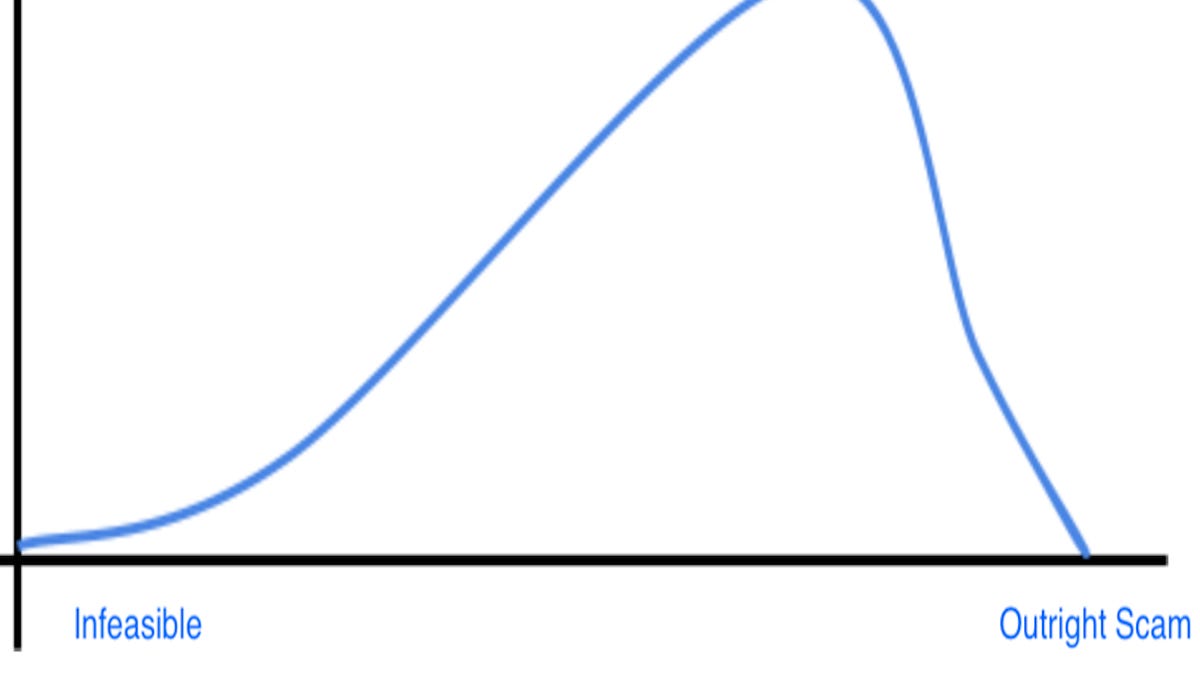
Crypto projects mostly offer solutions to trivial problems, impossible problems, or no problem at all. Stablecoins are the useful exception for people who need access to synthetic dollars, but they retain centralized chokepoints and the dollar’s debasement. That makes them irrelevant as long-term FIRE savings.
Then there is the lottery pitch: turn $500 into $5 million with the right dog coin. You must choose one winner among tens of thousands, buy before the pump, sell before the crash, and escape thin liquidity without greed wrecking the exit. That is gambling, not the methodical, low-time-preference work of FIRE.
So why does bitcoin belong in a FIRE plan while the rest of crypto does not?
Read the full argument:
🤦♂️ No, I Don't Mean Crypto
FIRE BTC Issue #8 - Why ONLY bitcoin is FIRE Friendly
Vince Lanci offers a useful distinction: the next monetary shift may be less about which currency wins and more about which assets people trust as collateral.
Currency is what we use to price and settle a claim. Collateral is what a lender can take if that claim fails. That makes collateral part of the foundation beneath credit, even though it gets far less attention.
The dollar could remain widely used while Treasuries lose some of their privileged role. Dollar stablecoins might even extend the dollar's reach while claims become backed by a broader mix of Treasuries, gold, bitcoin, or other assets.
That doesn't mean a dollar collapse is imminent, or that gold and bitcoin can instantly replace Treasury-market plumbing. Custody, liquidity, legal treatment, and the ability to borrow against an asset all matter.
Start with one financial claim you own: a stablecoin, ETF, brokerage balance, or bank deposit. Write down what backs it, who holds the backing, and who can freeze it, reuse it, or change redemption terms. That small collateral audit will tell you more about your actual exposure than the symbol on the account.
The Stoics had a phrase I’ve always found clarifying: memento mori—remember that you must die.
Morbid? Maybe. But it forces a useful FIRE question: What if you planned backward from the end of your life instead of saving toward a fuzzy future?
Assume you’re 40, expect to live to 95, and plan to spend $80,000 a year in retirement. At a 5% real return, about $5,000 saved today can fund your 95th year. Your 94th costs around $5,400. Your 93rd, about $5,700. Each year closer to today costs more because the money has less time to compound.
The traditional target doesn’t change. The 4% rule still points to a portfolio worth roughly 25 times your annual expenses. What changes is how you see the job: your earliest dollars fund your most distant years, and every contribution pulls the finish line closer.
Asset order matters too. Tax-advantaged accounts naturally fund later years. Stocks, real estate, and taxable holdings can cover earlier retirement years. I want bitcoin to have the longest runway because its asymmetric upside can pull more freedom into the present.
You aren’t stacking abstract wealth. You’re buying back years of your life.
See how to build your own reverse FIRE countdown:
💀 Working Backward from Death
FIRE BTC #50 - How a Stoic thought experiment can reframe your path to financial independence.
Borrowing against your bitcoin doesn't make selling disappear. In many cases, it changes when you sell and how much bitcoin the future sale requires.
A bitcoin-backed loan gives you dollars today, but it also creates a dollar-denominated principal balance plus interest. Unless you have other cash to repay it, you've delayed the sale until later. If bitcoin appreciates faster than the loan's total cost, you may need to sell less bitcoin to repay the debt. If it doesn't, the trade gets worse.
The loan also introduces a risk that a normal sale doesn't: your collateral is marked to market. A deep price decline can require you to add bitcoin quickly or face liquidation at exactly the wrong time. You also give a lender some control over an asset you may have spent years accumulating.
That doesn't make borrowing inherently bad. It means “never sell” is an incomplete plan. Before considering a bitcoin-backed loan, write down three funding sources: one for the principal, one for every interest payment, and one for additional collateral during a sharp drawdown. If any box depends only on bitcoin going up, you don't have a repayment plan. You have a price bet.
It's hard to stomach the AI trade outperforming bitcoin while the bitcoin thesis looks stronger than ever. I use AI every day, and I'm convinced it will transform the economy. I also think many AI investments being made today will produce terrible returns.
The railroad boom explains how both can be true. Railroads changed commerce and became essential infrastructure, but they also attracted overinvestment and wasteful borrowing. When financing dried up in 1873, railroad companies failed, the New York Stock Exchange closed for ten days, and at least 100 banks failed. The technology survived. Investors in the wrong projects at the wrong prices didn't.
AI has the same physical constraint. Data centers require chips, power, land, cooling, labor, and debt. Demand can keep growing while too much capacity gets built too early or in the wrong places. Failed projects can change hands cheaply and leave useful infrastructure for the next owner.
If you're pursuing FIRE with bitcoin, AI's outperformance isn't a reason to abandon a sound plan and chase a trade you don't understand. Separate the assets protecting your timeline from speculative capital you can afford to risk. A winning technology doesn't tell you which security to own, what price to pay, or how much of your plan to wager.
Read the full analysis:

🤖 AI Can Win and Still Crash
FIRE BTC Issue #86 - What the railroad boom explains about bitcoin's weakness and the AI investment cycle.
SpaceX can be an extraordinary company and still be a poor investment at the wrong price.
The difficulty is that one ticker may bundle businesses at very different stages. Starlink has paying customers and recurring revenue. Launch creates the cost advantage that supports the satellite network. Orbital data centers are a much more speculative bet that depends on Starship, launch cadence, power, cooling, maintenance, and economics that haven't been proven at scale.
When those pieces are presented as one grand story, it's easy to let the strongest current business justify every future possibility. But your return depends on the cash the whole company can eventually produce relative to the price you pay—and on how much capital it must consume along the way. Adjusted EBITDA can blur that picture in a capital-intensive business because rockets, satellites, data centers, and stock compensation aren't free.
Before evaluating a SpaceX IPO, split the thesis into three columns: what earns money now, what requires heavy reinvestment, and what only works if several future breakthroughs arrive. Then decide what valuation you'd accept if the third column contributes nothing.
My buddy Hal showed me $270,000 sitting in cash and earning exactly 0.00%.
I told him that was crazy.
The balance looked safe, but cash is a guaranteed way to lose purchasing power over time. Prices rise while the dollars sit still. Saving what you earned isn't enough when the savings vehicle itself buys less.
That doesn't mean every dollar belongs in a volatile asset. Keeping 3–6 months of expenses in cash can be prudent. But unless Hal was spending $45,000 every month, $270,000 was far beyond an emergency fund.
When we had this conversation, a high-yield savings account paying 3.5%–4.5% would have generated more than $9,000 a year. VTI or VOO offered liquid, low-maintenance stock exposure. Real estate came with leverage, maintenance, tenants, and illiquidity. Bitcoin offered the strongest long-term upside, along with volatility Hal wasn't prepared to handle.
If I had awakened with that $270,000, I would've bought bitcoin by the end of the next business day. Hal shouldn't copy that move with zero bitcoin exposure and no conviction. His decision was how much liquidity he needed, how much volatility he could withstand, and which assets could protect the rest.
Read the full breakdown and decide where your excess cash belongs:

🗑️ Cash is Trash
FIRE BTC Issue #23 - My buddy's $270k cash stash blunder
Money is the comparison layer behind millions of plans. It helps a worker decide whether to save, a business decide whether to invest, and strangers decide whether to sign a contract that won't settle for years.
When that layer is reasonably reliable, people can specialize, trade, and commit resources to projects with long payoffs. When it becomes harder to trust, they have to spend more time defending purchasing power and less time building for the future. Monetary quality can therefore affect far more than the price of groceries. It can shape the planning horizon itself.
That doesn't prove every social problem begins with fiat, or that harder money automatically creates better institutions. Property rights, trust, law, technology, and political stability still matter. But bitcoin's fixed issuance and publicly verifiable rules make it worth evaluating as infrastructure for long-term coordination, not merely as an asset with a rising price.
Start with one goal that's at least five years away. Write down what your plan assumes about the money you're saving in: who controls its supply, which rules can change, and how much uncertainty that creates. You can't remove uncertainty, but you can stop leaving the monetary assumption invisible.
I'm not a very good trader.
I built wealth by buying assets I understand—the U.S. stock market and bitcoin—then holding and accumulating. I can buy bitcoin at the top because I plan to hold it for 20 years.
FOMO tests that plan. When bitcoin is ripping, MSTR options, ETF options, and leverage make holding spot look timid. When bitcoin stalls, AI and chip stocks look obvious in hindsight. By the time I feel late, rotating can put me in front of the drawdown.
Leaving the strategy alone doesn't mean I stop saving or buying. It means I protect automated contributions, cover years of expenses, and refuse to risk my FIRE timeline on a trade I don't understand. A larger core creates room for side bets, but a failed one shouldn't interrupt saving or force a sale.
The same restraint matters when people want to fix bitcoin. Consensus changes can alter incentives and create consequences nobody sees in advance. Maintenance is necessary when something is broken. Restlessness isn't evidence that it is.
Before changing a working plan, ask what changed, what edge you have, and how you'll get out. Sometimes the only thing that needs maintenance is your perspective.
Read 🧘 The Hardest Thing About Being in Bitcoin Is Doing Nothing:

🧘 The Hardest Thing About Being in Bitcoin Is Doing Nothing
FIRE BTC Issue #89 - Why building wealth often requires maintaining your perspective—and leaving the compounding engine alone.
Financial independence rarely arrives through one heroic decision. It is usually built by making the same kind of useful decision again and again.
Each time you spend intentionally, save, invest, or learn a skill, you do two things. You improve the numbers in your plan, and you give yourself evidence that you can keep following it. That second effect matters when early progress feels small or markets get volatile. Conviction built from action is harder to shake than enthusiasm built from a good week.
This doesn't mean every action works or that consistency guarantees a specific outcome. A reckless strategy repeated faithfully is still reckless. The aim is measured action aligned with a long-term plan: choices you can sustain without leverage, shortcuts, or constant prediction.
Over time, the distant goal becomes a set of familiar behaviors. Your savings grow, your judgment improves, and it becomes easier to stay the course through volatility. The transformation starts before your portfolio reaches its target: you're no longer waiting for financial freedom to happen. You're building the capacity to keep moving toward it.
My kids compared a $1 bill with a $100 bill. Same paper. Same texture. Same material. The only physical difference was the printed number.
“Why is one worth more if they’re exactly the same?” they asked.
That simple question gets to the truth about money. The $100 bill has more purchasing power because we agree it does. There's no extra value in its paper or ink. Bitcoin's monetary value also depends on collective belief.
The important difference is what constrains the thing we've agreed to use. Dollars have no hard supply limit. Political institutions manage their supply, and their leaders can be influenced, threatened, or replaced.
Bitcoin has a hard cap of 21 million BTC enforced by consensus. Thousands of independent nodes validate the same rules and reject attempts to create more bitcoin. As with changing how pawns move in chess, you can create a different game, but you can't force everyone else to play it. Issuance halves about every four years until the final bitcoin is mined around 2140.
For wealth preservation, the question isn't whether money requires belief. It all does. The question is whether its scarcity is a political promise or an enforced rule.
Read 📚 ELI-5 and decide which kind of constraint you want behind your savings:

📚 ELI-5
FIRE BTC Issue 62 - What kids see that adults ignore about money
You don't have to believe reality is a simulation to borrow one useful idea from simulation theory: a difficult season can be treated as a quest instead of a verdict on your life.
A verdict feels final. A quest has an objective, constraints, skills you can build, and a next move. That shift won't make debt, a bad job, or a market drawdown disappear. It gives you a better way to respond because you stop asking why the whole situation is happening to you and start identifying the part you can influence.
This is especially useful when pursuing financial independence. The objective might be creating enough savings and investment income to control your time. Your constraints could include fixed expenses, a volatile portfolio, or limited income. Once those are visible, progress becomes less abstract: lower one recurring cost, learn one valuable skill, or build one more month of runway.
Pick one money or work problem that currently feels open-ended. Write down the objective, the main constraint, and the smallest useful move you can make this week. The metaphor earns its keep when it produces a better decision in the real world.
Last August, I financed about $73,400 on a Lexus at 6.36% for 60 months. The payment was about $1,435.
A local credit union refinanced the loan at 4.39%, dropping my payment to $1,178. That freed $257 every month to buy bitcoin.
But the lower payment came with a tradeoff: I reset the 49 months remaining on the old loan to a new 60-month term. The original payments would have totaled about $70,315. The refinance totals about $70,680, so I added 11 payments but only about $365 in scheduled outflow.
With the same $1,435 monthly budget, I can invest $257 for all 60 months instead of waiting 49 months and investing $1,435 for the final 11. At a 0% return, the old loan finishes $365 ahead. At a 10% annual return, investing earlier finishes about $3,247 ahead. At a 25% bitcoin planning assumption, it finishes about $10,741 ahead. Those are scenarios, not forecasts.
This only works because the debt is fixed-rate, affordable, and backed by liquid assets. A lower payment alone proves nothing. Compare the APR, term, fees, total payments, and what you'll actually do with the cash. The structure decides whether debt creates optionality or fragility.
See the full cash-flow comparison and run the decision with real numbers:

🚗 One Phone Call. $257 More Bitcoin Every Month.
FIRE BTC Issue #87 - A real-world example of Aikido Finance—and why paying cash for your car isn't always the best move.
The 4% rule was built for portfolios of stocks and bonds, not a portfolio with a large bitcoin allocation. That doesn't make it useless. It means the withdrawal rate can't be changed by looking at expected returns alone.
A higher long-term return could reduce the portfolio you need to fund your expenses. But bitcoin's volatility increases sequence-of-returns risk: a deep drawdown early in retirement can force you to sell more bitcoin when the price is low, leaving less to participate in a recovery.
So the first step isn't choosing 4% or 8%. It's writing down what you'll do during the first bad market after leaving full-time work. Which asset funds your spending? How far can you cut expenses? Would you take part-time income instead of selling into a drawdown?
A bitcoin retirement plan should be judged by how it handles a bad first few years, not only by the average return you expect over decades.
Back in March, I used a HELOC—not margin—to finance my STRC experiment. Using a $50,000 example with my economics: 511 shares at $97.69. For months, STRC stayed near $100, its 11.5% dividend kept arriving, and I turned the cash into bitcoin.
Then STRC traded as low as $82.53.
At $84.54, the example was worth $43,200. After $3,758 of distributions and about $2,260 of interest, the trade was down $5,222. The income softened the loss. It didn't erase it.
Friday looked like a leverage flush, not a credit event, but the failed bounce showed continued risk repricing. At $84.54, the $11.50 annual dividend produced a 13.60% market yield. That's compensation for risk, not free money.
Financing is why I'm still in the trade. Margin can turn a price drop into a deadline: the broker can demand collateral or sell. My variable-rate HELOC isn't marked daily against STRC. If the payment fits my cash flow, I have time to reassess.
Same asset, different financing, completely different risk. In a FIRE plan, leverage must survive a drawdown without threatening the base layer: liquidity, controlled expenses, and bitcoin in cold storage.
Read the full breakdown to pressure-test the debt, cash flow, and position size behind a leveraged income trade:

💥 My STRC Trade Exploded!
FIRE BTC Issue #83 - Or did it?
Railroads transformed the United States. They also destroyed plenty of investor capital along the way.
That history is useful when evaluating today's AI buildout. A technology can become indispensable while the companies financing its infrastructure overbuild capacity, take on too much debt, or pay prices that leave little room for error. Social value and investor return are related, but they aren't the same calculation.
The railroad boom had real demand behind it. It also had competitors racing to build ahead of demand, insiders extracting value, and borrowers depending on fresh financing. When the cycle turned, useful assets remained. Many original claims on those assets did not.
AI has different economics, so 1873 isn't a forecast. The durable lesson is narrower: being right about a technology's future doesn't make every investment tied to it attractive. Your return still depends on revenue, margins, financing, competition, and the price you pay.
Before buying an AI-linked investment, write down the assumptions required for an acceptable return. If the case only works when one company captures most of the market and capital stays cheap, you've identified the bet you're actually making.
When you're young, you usually have time and energy, but not much money. In your prime working years, you have energy and money, but no time. When you're older, time and money return, but your energy fades.
That's the great misalignment: the standard timeline rarely lets you enjoy all three at once. We spend our most capable years trading time for money, assuming we'll buy our freedom back decades later. But time doesn't compound. Once it's gone, it's gone, and the physical ability to climb mountains, chase toddlers, build a business, or explore a city doesn't wait for your retirement date.
FIRE rejects that timeline. The point isn't early retirement for its own sake. It's creating enough financial independence to choose how you spend your days while you still have the energy to enjoy them.
Bitcoin fits the same alignment. Time is embedded in every block, halving, and difficulty adjustment. Energy secures the network through proof-of-work. Its fixed supply resists the debasement of the money you've saved.
A retirement number alone can't fix a life built around someone else's pace. The goal is to make your time, energy, and money move in the same direction—toward a life you actually want.
Read how FIRE changes the timeline and bitcoin protects what you reclaim:

🌀 The Great Misalignment
FIRE BTC #34 - Bringing time, energy, and money together
Financial tracking has a point of diminishing returns because its job is to show whether your decisions are moving you toward financial independence, not eliminate uncertainty.
For a basic FIRE plan, a few numbers do most of the work. Your trailing 12-month expenses show what your lifestyle currently costs. If you use the 4% rule, multiplying that figure by 25 gives you a working FIRE target. Your investable portfolio shows how far you've come, and the trend over time tells you whether the gap is closing.
More detail can feel like more control, but tracking every purchase, loyalty point, possible tax scenario, or market metric won't necessarily change a decision. The same applies to bitcoin data: a transparent ledger and verifiable monetary policy are valuable, but watching every on-chain indicator doesn't tell you what happens next. Information becomes noise when it doesn't improve your actions.
Start with one monthly line: trailing 12-month expenses, your resulting FIRE target, and your current portfolio value. Watch the direction, then add another metric only if you can name the decision it will change.