Ars Technica - All News (RSS/Atom feed)'s avatar
Ars Technica - All News (RSS/Atom feed)
npub1ls4n...cgqv
RSS/Atom feed of Ars Technica - All News More feeds can be found in my following list
Supply-chain attack using invisible code hits GitHub and other repositories Researchers say they’ve discovered a supply-chain attack flooding repositories with malicious packages that contain invisible code, a technique that’s flummoxing traditional defenses designed to detect such threats. The researchers, from firm Aikido Security, [said Friday][1] that they found 151 malicious packages that were uploaded to GitHub from March 3 to March 9. Such supply-chain attacks have been common for [nearly][2] a [decade][3]. They usually work by uploading malicious packages with code and names that closely resemble those of widely used code libraries, with the objective of tricking developers into mistakenly incorporating the former into their software. In some cases, these malicious packages are downloaded thousands of times. ## Defenses see nothing. Decoders see executable code The packages Aikido found this month have adopted a newer technique: selective use of code that isn’t visible when loaded into virtually all editors, terminals, and code review interfaces. While most of the code appears in normal, readable form, malicious functions and payloads—the usual telltale signs of malice—are rendered in unicode characters that are invisible to the human eye. The tactic, which Aikido said it [first spotted][4] last year, makes manual code reviews and other traditional defenses nearly useless. Other repositories hit in these attacks include NPM and Open VSX. [Read full article][5] [Comments][6] [1]: [2]: [3]: [4]: [5]: [6]:
Google Fiber will be sold to private equity firm and merge with cable company Google Fiber, now officially called GFiber, is being sold to private equity firm Stonepeak and will be combined with cable-and-fiber firm Astound Broadband to create a larger Internet service provider. Google owner Alphabet [announced Wednesday][1] that it will keep only a minority stake in the fiber ISP that [launched with grand ambitions][2] in 2012 but scaled back its expansion plans [in 2016][3]. Alphabet and Astound owner Stonepeak announced "an agreement to combine GFiber with Astound Broadband, creating a leading independent fiber provider," with the merged company to be "majority owned by Stonepeak, an investment firm specializing in infrastructure and real assets." The deal is subject to regulatory approvals and other closing conditions, with an expected closing date in Q4 of this year. The sale price was not disclosed. The deal will help GFiber take "a major step toward its goal of operational and financial independence" and obtain the "external capital and strategic focus needed to accelerate its next phase of growth," the announcement said. [Read full article][4] [Comments][5] [1]: [2]: [3]: [4]: [5]: A Google Fiber van.
Figuring out why AIs get flummoxed by some games With its Alpha series of game-playing AIs, Google's DeepMind group seemed to have found a way for its AIs to tackle any game, mastering games like [chess][1] and [*Go*][2] by repeatedly playing itself during training. But then some odd things happened as people started identifying *Go* positions that would lose against relative newcomers to the game but [easily defeat a similar *Go*-playing AI][3]. While beating an AI at a board game may seem relatively trivial, it can help us identify failure modes of the AI, or ways in which we can improve their training to avoid having them develop these blind spots in the first place—things that may become critical as people rely on AI input for a growing range of problems. A recent paper published in Machine Learning describes an entire category of games where the method used to train AlphaGo and AlphaChess fails. The games in question can be remarkably simple, as exemplified by the one the researchers worked with: *Nim*, which involves two players taking turns removing matchsticks from a pyramid-shaped board until one is left without a legal move. [Read full article][4] [Comments][5] [1]: [2]: [3]: [4]: [5]: Oddly, the training methods that work great for chess fail on far simpler games.
Slay the Spire 2 is a bit too familiar for its own good Do you remember the joyful satisfaction you felt when you really started to understand *Slay the Spire*? This isn’t a totally rhetorical question. If you’re reading this piece about *Slay the Spire 2*—published roughly a week into what promises to be [a lengthy Early Access period][1]—I have to assume you’ve put in dozens, if not hundreds (or thousands?) of hours with the original *Slay the Spire*. At this point, the game probably feels less like a game and more like a comfortable old pair of sneakers. You probably have a favorite character, a preferred set of card synergies to focus on building for that character, and a set of alternative strategies to aim for when the vagaries of chance make that preferred strategy impossible. The game’s plentiful randomization makes each run feel a bit different, but the contours of those runs start to feel a little common to anyone who has tinkered with the game for years. But think back, if you can, to when *Slay the Spire* was an exciting new challenge. Remember those first few runs, when you were still deep in the trial-and-error phase of your *Slay the Spire* journey. You still had to read each new card carefully as it appeared, developing potential strategies on the fly and weighing key deckbuilding and power-building decisions for minutes at a time to maximize your chance of survival. Sure, you failed a lot. But you got a little more confident each time, and a little farther every few sessions, and just a little more knowledgeable about and immersed in the game’s intricate, well-balanced systems. [Read full article][2] [Comments][3] [1]: [2]: [3]: At a glance, it's a bit hard to tell if this is a shot from *Slay the Spire* or its new sequel.
Woman sneezes out maggots after fly larvae get trapped in her deviated septum A 58-year-old woman in Greece appears to hold the record for growing a parasitic sheep bot fly in her nose the longest, almost creating a snot rocket that could literally fly. Usually, when the sheep bot fly accidentally nosedives into a human's schnoz, the first-stage larvae they deliver don’t actually develop. In contrast, in its normal target—a sheep's nose— the larvae would move up into the sinuses, feed, grow, and molt into second- and third-stage larvae. From there, the flies (*Oestrus ovis*) drip from the nose onto the ground, burrow into the soil, pupate, and emerge as adult flies. For a long time, experts thought that the flies couldn't complete their development in humans beyond the first larval stage. But a few human cases have been reported in recent decades involving the second- and third-stage larvae. The woman's case, [reported in the Journal of Emerging Infectious Diseases][1] by a medical entomologist and colleagues, goes the furthest yet, finding pupa and a puparium—the hard casing of a pupa—in the woman's nose. [Read full article][2] [Comments][3] [1]: [2]: [3]:
Another AT&T FirstNet user gets shocking $6,200 bill, at $2 per megabyte If you're an AT&T FirstNet customer and suddenly get hit with a $6,200 charge, the good news is that it's probably a mistake and can be corrected. But actually getting the wrong charge wiped out might not be so easy. This has now happened at least twice. In December 2024, a Texas police officer [received a $6,223 bill][1] with a $6,194 charge for using 3.1GB of data. He said he had unlimited data but was charged incorrectly after moving a line to AT&T's FirstNet service for first responders. He called AT&T and went to an AT&T store but only got the bill reversed after contacting the AT&T president’s office. An AT&T spokesperson told Ars at the time that it was "investigating to determine what caused this system error." But AT&T never revealed exactly what caused it, and now another FirstNet user has gone through an almost identical ordeal. [Read full article][2] [Comments][3] [1]: [2]: [3]:
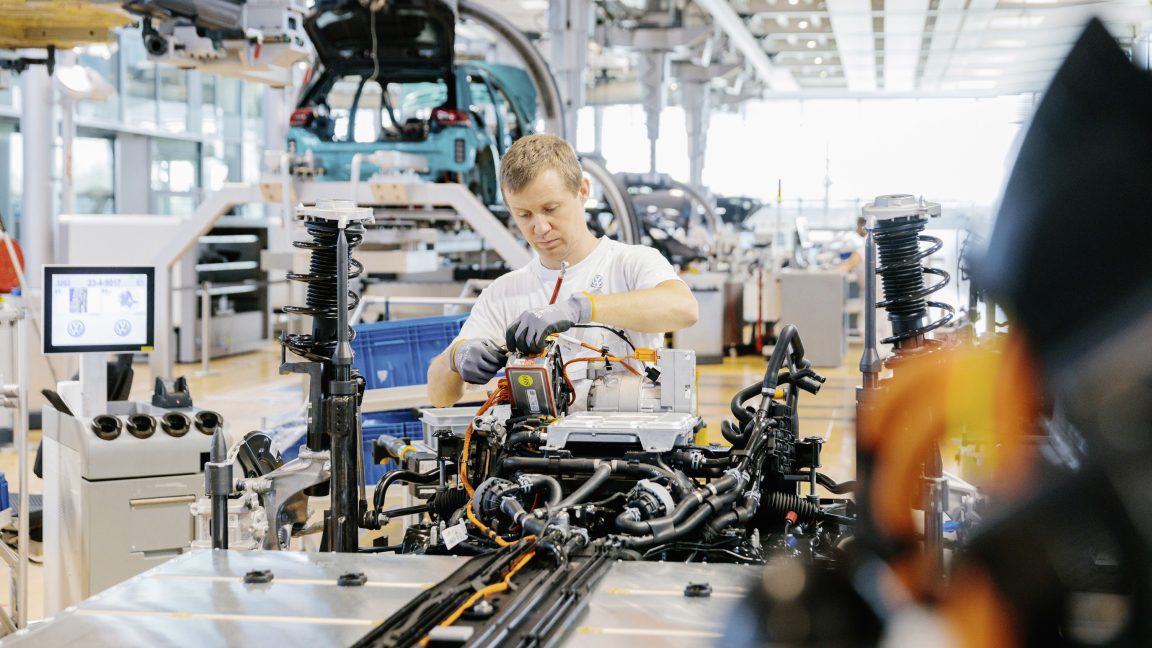
Doubling the voltage: What 800 V architecture really changes in EVs For more than a decade, most electric vehicles have shared the same electrical backbone: a battery pack operating at roughly 400 V. It’s the invisible standard behind everything from early compliance cars to today’s bestselling EVs. But over the past few years, a growing number of automakers have doubled that number, moving to 800 V architectures and promising dramatically faster charging, better performance, and improved efficiency. Cars like the Porsche Taycan and Hyundai Ioniq 5 helped push 800 V into the mainstream conversation, touting 18-minute charging sessions and sustained high-speed performance. On paper, doubling the voltage sounds like a simple upgrade. In reality, it reshapes everything from cable thickness and thermal management to semiconductor choice and charging infrastructure compatibility. ## The physics: Why higher voltage matters Understanding why higher voltage matters is as important as the hardware that carries it. [Read full article][1] [Comments][2] [1]: [2]:
Adobe settles DOJ cancellation fee lawsuit, will pay $75 million penalty Canceling a software subscription is supposed to be easy—that's what US law dictates. Adobe, however, has played fast and loose with its Creative Cloud subscriptions in the past. The company was sued by the Department of Justice in 2024 due to its practice of hiding hefty termination fees when customers signed up. The case has now been settled, with Adobe agreeing to a $75 million fine and matching free services to users of its products. Turning software into a monthly subscription is all the rage these days, but Adobe was way ahead of the curve. The company began offering its suite of editing tools, like Photoshop and Illustrator, as a monthly subscription back in 2013, and most of its customers migrated to the new system. It was easy for Adobe to get away with that shift because CS6, the last perpetual license offered for its editing tools, started at $700 and went up to more than $2,600 for all apps. By contrast, paying between $10 and $70 per month seems like a good deal, and it might be in the short term. Although anyone who has been paying monthly since the change has spent thousands of dollars on Adobe software. And when people noticed that and decided they wanted to cancel, many of them were frustrated with the outcome. [Read full article][1] [Comments][2] [1]: [2]:
Subscribers to Amazon Prime Video with ads lose 4K support on April 10 Starting on April 10, Amazon Prime subscribers will pay $5 per month for ad-free Prime Video without ads, up from the current $3 per month on top of their Prime subscription, Amazon announced today. On that date, Amazon will introduce a new ad-free Prime Video subscription tier called “Prime Video Ultra.” Amazon will also increase the number of simultaneous streams supported by the tier from three to five and the number of downloads permitted from 25 to 100. Currently, Prime Video with ads is part of Amazon’s Prime membership, which starts at $15 a month. Today, ad-free Prime Video users can watch supported titles in 4K, but starting on April 10, a new Prime Video Ultra subscription will be required for 4K viewing. [Read full article][1] [Comments][2] [1]: [2]:
Microsoft is working to eliminate PC gaming's "compiling shaders" wait times Modern gamers are used to loading up a new game for the first time and being forced to wait multiple minutes while [a "compiling shaders" step whirs away,][1] optimizing advanced 3D effects for their specific hardware. This week at GDC, Microsoft [provided some updates][2] about its Advanced Shader Deliver for Windows efforts, which are designed to fix the problem by generating collections of precompiled shaders that can be downloaded ahead of time. In a console environment, developers can optimize and precompile their graphics shaders to work well with a set driver and GPU environment. On PC, though, developers tend to leave their shaders as uncompiled code that can then be compiled and cached at runtime based on the specific hardware and drivers on the player's machine. Microsoft's Advanced Shader Delivery infrastructure aims to fix this problem by automating the process of precompiling shaders that work across "a large matrix of drivers and GPUs in the Windows ecosystem," as the company puts it. To enable that, developers [use Microsoft's Direct3D API to create a State Object Database][3] (SODB) that represents in-game assets at the game engine level. That database of assets is then fed into [multiple shader compilers][4] to create a Precompiled Shader Database (PSDB) that supports multiple display adapters from different hardware vendors. [Read full article][5] [Comments][6] [1]: [2]: [3]: [4]: [5]: [6]: A live look at a gamer waiting for their shaders to compile yet again.
Signs of hope: As measles spread, New Mexico vaccinations surged 55% In January 2025, a measles outbreak erupted on the western edge of Texas and soon spilled over to New Mexico and other states. The overall outbreak would become the largest the country has seen since 2000, when measles was declared eliminated from the US. In Texas, it was the largest outbreak recorded since 1992. And in New Mexico, it was the first measles outbreak the state had even seen since 1996. But the trajectory of the two states' measles cases diverged. Texas declared the outbreak within its borders over [on August 18][1], with an end tally of 762 cases. In New Mexico, officials declared its outbreak, which began in February, over [on September 26][2], with a total of just 99 cases. One of the key differences, according to a new study, was that in New Mexico, the rapid spread of the highly infectious virus spurred a massive surge in measles vaccinations among children and adults. Overall, shots of the measles, mumps, and rubella (MMR) vaccine increased 55 percent statewide from January to September compared to the same period in 2024. [Read full article][3] [Comments][4] [1]: [2]: [3]: [4]: Boxes and vials of the Measles, Mumps, Rubella Virus Vaccine at a vaccine clinic put on by Lubbock Public Health Department on March 1, 2025 in Lubbock, Texas.

Magnetars drag spacetime to power superluminous supernovae One of the most extreme explosions in the universe are Type I superluminous supernovae. “They are one of the brightest explosions in the Universe,” says Joseph Farah, an astrophysicist at the University of California Santa Barbara. For years, astrophysicists tried to understand what exactly makes superluminous supernovae so absurdly powerful. Now it seems like we may finally have some answers. Farah and his colleagues have found that these events are most likely powered by [magnetars][1], rapidly spinning neutron stars that warp the very space and time around them. ## The power within Magnetars have been a leading candidate for the engine behind superluminous supernovae. The theory says these insanely magnetized stars are born from the collapsing core of the original progenitor star and emit energy via magnetic dipole radiation. “This core is roughly a one solar mass object that gets crushed down to the size of a city,” Farah explains. As its spin slows down, a magnetar bleeds its rotational energy into the expanding material of the dead star, lighting it up. [Read full article][2] [Comments][3] [1]: [2]: [3]:

M5 MacBook Air review: Still the best MacBook for almost everybody The M5 Pro and M5 Max in the new MacBook Pros are interesting not because they deliver a solid speed increase for Apple's fastest laptop processors but because they also include substantial under-the-hood changes. And the MacBook Neo is interesting because, [while the hardware has limits][1], it's quite a capable and high-quality computer for its $599 starting price. And then there's the M5 MacBook Air, which was also released this week. Apple sent us a 16-inch M5 Max MacBook Pro, the MacBook Neo, and a 15-inch MacBook Air to test, and the MacBook Air was the only one without a standard review embargo. As if to say, "we know the other stuff is more interesting—if you want to cover the Air, get to it when you can." [Read full article][2] [Comments][3] [1]: [2]: [3]: Apple's 15-inch M5 MacBook Air.
BYD's latest EVs can get close to full charge in just 12 minutes China’s BYD will aim to take on Porsche and BMW in the European luxury car market with a premium electric vehicle that can be charged in just five minutes. BYD, which overtook Tesla as the world’s largest EV maker last year, first demonstrated its “flash charging” technology, which enables an EV to be charged almost as quickly as filling a car with petrol, a year ago. The Z9GT model, part of the premium Denza brand, can be 70 percent charged in five minutes and be almost full in 12 minutes, even in temperatures as low as -30° C. [Read full article][1] [Comments][2] [1]: [2]: The Z9GT model, part of the premium Denza brand, can be 70% charged in five minutes and be almost full in 12 minutes.
Aliens announce their presence in latest Disclosure Day trailer There are different marketing strategies when it comes to movie trailers. One is the *Project Hail Mary* approach, in which the final trailer pretty much gives away the entire movie, trusting that the audience will still come along for the ride because it's a sci-fi adventure, not a whodunnit. The other extreme is Universal Pictures' deliberately vague trailers for [*Disclosure Day*][1], director Steven Spielberg's return to his "aliens are among us" roots, which give tantalizing hints about the basic premise and little more. Per the official logline: “If you found out we weren’t alone, if someone showed you, proved it to you, would that frighten you? This summer, the truth belongs to 7 billion people. We are coming close to… Disclosure Day.” As [previously reported][2], David Koepp, who has worked with Spielberg on numerous projects (including *Jurassic Park* and *War of the Worlds*), wrote the screenplay, while John Williams composed the score. Emily Blunt stars as a TV meteorologist in Kansas City. Her co-stars include Josh O’Connor, Colin Firth, Eve Hewson, Colman Domingo, Wyatt Russell, Elizabeth Marvel, Henry Lloyd-Hughes, Michael Gaston, and Mckenna Bridger. Professional wrestlers Chavo Guerrero Jr., Lance Archer, and Brian Cage will also appear. [Read full article][3] [Comments][4] [1]: [2]: [3]: [4]:
Rocket Report: Pentagon needs more missile interceptors; Artemis II clears review Welcome to Edition 8.33 of the Rocket Report! NASA officials seem optimistic about launching the Artemis II mission next month, so confident that they will forgo another fueling test on the Space Launch System rocket to check the integrity of fickle seals in a liquid hydrogen loading line. The rocket will return to the launch pad next week, with liftoff targeted for April 1 at 6:24 pm EDT (22:24 UTC). NASA has six launch dates available in early April after the agency added April 2 to the launch period. April 1 and 2 each have launch windows that open before sunset, an added bonus for those of us who prefer a day launch, for purely aesthetic reasons. As always, we [welcome reader submissions][1]. If you don't want to miss an issue, please subscribe using the box below (the form will not appear on AMP-enabled versions of the site). Each report will include information on small-, medium-, and heavy-lift rockets, as well as a quick look ahead at the next three launches on the calendar. Firefly's Alpha rocket flies again. Firefly Aerospace’s Alpha rocket successfully returned to flight Wednesday, March 11, launching a technology demonstration mission more than 10 months after the rocket’s previous launch failed, [Space News reports][2]. The launch followed several delays and scrubbed launch attempts. The two-stage Alpha rocket lifted off from Vandenberg Space Force Base, California, and headed southwest over the Pacific Ocean, reaching orbit about eight minutes later. Firefly said the rocket's upper stage later reignited its engine, demonstrating restart capability required for some orbit insertion missions. This was the seventh flight of Firefly's Alpha rocket, capable of hauling more than a ton of payload to low-Earth orbit. [Read full article][3] [Comments][4] [1]: [2]: [3]: [4]: Firefly Aerospace's seventh Alpha rocket rises above its launch pad at Vandenberg Space Force Base, California.


The who, what, and why of the attack that has shut down Stryker's Windows network" Within hours of the US and Israel launching airstrikes on Iran two weeks ago, security professionals warned organizations around the world to be on heightened watch for destructive retaliatory hacks. On Wednesday, the predictions appeared to come true as Stryker, a multinational maker of medical devices, confirmed a cyberattack that took down much of its infrastructure, and a hacking group long known to be aligned with the Iranian government claimed responsibility. ## Where things stand ### **When and how did the attack come about?** The first indications were social media posts and a report from a news organization in Ireland. Messages posted by purported Stryker employees or their family members on [social][1] [media][2] said workers’ phones and computers had been wiped. A [report][3] the Irish Examiner published Wednesday morning, citing multiple anonymous sources, made the same claims and said some employees witnessed login pages on wiped devices displaying the logo of Handala Hack, a group that researchers who have followed it for years say is aligned with the Iranian government. ### **What is the status now?** Stryker [said Thursday][4] that it’s in the midst of responding to a “global network disruption to our Microsoft environment as a result of a cyber attack.” The update went on to say responders have no indication that ransomware or malware—the usual causes for such outages—were involved. The responders believe the incident is now contained and limited to the internal Microsoft environment. [Read full article][5] [Comments][6] [1]: https://www.reddit.com/r/cybersecurity/comments/1rqopq0/stryker_hit_by_handala_intune_managed_devices/ [2]: [3]: [4]: [5]: [6]:
HP has new incentive to stop blocking third-party ink in its printers Members of the International Imaging Technology Council (Int’l ITC) are calling out HP for issuing firmware updates that [brick third-party ink][1] and toner functionality in its printers. HP calls this Dynamic Security and has been doing it [for years][2]; however, the Int'l ITC is taking new issue with the practice, considering that it is explicitly prohibited for devices registered under the General Electronics Council’s (GEC’s) Electronic Product Environmental Assessment Tool (EPEAT) 2.0 registry. The Int’l ITC is a nonprofit trade group that [says][3] it represents North American “toner and inkjet cartridge re-manufacturers, component suppliers, and cartridge collectors." It’s important to note that the Int’l ITC may be considered biased because its members could greatly profit when printer manufacturers commit to supporting aftermarket cartridges in devices. [Read full article][4] [Comments][5] [1]: [2]: [3]: [4]: [5]:
Live Nation director boasted of gouging ticket buyers, "robbing them blind" Newly unsealed documents show that a Live Nation regional director boasted of gouging ticket buyers and "robbing them blind" with fees for ancillary services such as slight upgrades to parking. Live Nation has tried to exclude Slack messages from a trial that seeks a breakup of Live Nation and its Ticketmaster subsidiary, claiming the messages are irrelevant to the case, "highly prejudicial," and would "inflame the jury." The US government and state attorneys general opposed the motion to exclude evidence. US District Judge Arun Subramanian of the Southern District of New York hasn't ruled on the motion yet, but ordered the documents unsealed yesterday. Live Nation has touted the experiences it offers concertgoers at amphitheaters but sought "to exclude candid, internal messages in which the individual who is currently Head of Ticketing for these amphitheaters calls fans 'so stupid,' explains that he 'gouge[s]' them, and brags that Live Nation is 'robbing them blind, baby,'" said a [memorandum of law][1] filed by the US and states. [Read full article][2] [Comments][3] [1]: https://storage.courtlistener.com/recap/gov.uscourts.nysd.621993/gov.uscourts.nysd.621993.1190.0.pdf [2]: [3]:
Trump's DOJ is not falling for Sam Bankman-Fried's MAGA makeover on X Ever since Donald Trump took office and declared himself a "pro-crypto president," FTX's disgraced founder, Sam Bankman-Fried, has been working to convince the administration that he's a Republican now. The former Democratic megadonor apparently hopes that a right-wing pivot might help him escape a [25-year prison sentence][1] ordered after Joe Biden's Department of Justice proved he stole more than $8 billion from customers of his cryptocurrency exchange. These days, Bankman-Fried frequently praises Trump's policies and quotes his Truth Social posts on X, where his bio confirms that posts are: "SBF's words. Posted through a proxy." He also regularly rants against Democrats, including Biden officials who, he claimed in a [motion][2] for a new trial, intimidated FTX employees into lying on the stand or refusing to testify in order to take down Bankman-Fried as a political foe. [Read full article][3] [Comments][4] [1]: [2]: https://cdn.arstechnica.net/wp-content/uploads/2026/03/US-v-Bankman-Fried-Motion-for-New-Trial-2-8-26.pdf [3]: [4]: Sam Bankman-Fried, disgraced co-founder of FTX.