
The Bread of the Dead is not just a dessert: That night in Lunigiana and the photo I should have never looked at 🕯️🍂
 There is an Italy that doesn’t need to import traditions from across the ocean to rediscover the thrill of autumn. It is enough to walk at a slow pace through the stone villages of Lunigiana, where chestnut woods squeeze the towns in an embrace of mist and woodsmoke.
Here, the night between October 31st and November 1st has always been the Notte delle Lumere (The Night of the Lanterns): hollowed-out pumpkins illuminated by candles were placed on dry-stone walls not to scare, but to guide the souls of the peasants who returned to visit their old homes.
And in the kitchen, the bond with the invisible becomes edible.
📜 Below is the story my uncle told me firsthand:
Stepping into the tiny, historic bakery of a perched medieval village, the air is thick, almost solid. It smells of warm spices—cinnamon, cloves, nutmeg—blended with the sweet scent of vin santo and chestnut flour.
It is the aroma of "Pane dei Morti" (Bread of the Dead), a ritual cake packed with raisins, chopped almonds, and dried figs, dusted with a thin veil of powdered sugar that looks like ash. A recipe passed down only by word of mouth, from generation to generation, tied to an ancient cult of the land.
I had stopped there to document this thousand-year-old preparation. But as the old baker offered me a piece of that still-warm bread, the atmosphere in the shop shifted all at once. The man wiped his flour-dusted hands on his apron, opened an old, dark wooden drawer, and pulled out something that turned a peaceful evening of travel into a deeply unsettling enigma.
The old baker pulled an old archival photograph from the drawer, printed on yellowed cardstock and stained with soot. It dated back to the Night of the Dead, forty years before.
And if you want to uncover the chilling secret hidden within the folds of that photograph and in the reflection of our traditions, I’ll be waiting for you on Yakihonne for the finale of this story:
Continue reading on Yakihonne. 👇

There is an Italy that doesn’t need to import traditions from across the ocean to rediscover the thrill of autumn. It is enough to walk at a slow pace through the stone villages of Lunigiana, where chestnut woods squeeze the towns in an embrace of mist and woodsmoke.
Here, the night between October 31st and November 1st has always been the Notte delle Lumere (The Night of the Lanterns): hollowed-out pumpkins illuminated by candles were placed on dry-stone walls not to scare, but to guide the souls of the peasants who returned to visit their old homes.
And in the kitchen, the bond with the invisible becomes edible.
📜 Below is the story my uncle told me firsthand:
Stepping into the tiny, historic bakery of a perched medieval village, the air is thick, almost solid. It smells of warm spices—cinnamon, cloves, nutmeg—blended with the sweet scent of vin santo and chestnut flour.
It is the aroma of "Pane dei Morti" (Bread of the Dead), a ritual cake packed with raisins, chopped almonds, and dried figs, dusted with a thin veil of powdered sugar that looks like ash. A recipe passed down only by word of mouth, from generation to generation, tied to an ancient cult of the land.
I had stopped there to document this thousand-year-old preparation. But as the old baker offered me a piece of that still-warm bread, the atmosphere in the shop shifted all at once. The man wiped his flour-dusted hands on his apron, opened an old, dark wooden drawer, and pulled out something that turned a peaceful evening of travel into a deeply unsettling enigma.
The old baker pulled an old archival photograph from the drawer, printed on yellowed cardstock and stained with soot. It dated back to the Night of the Dead, forty years before.
And if you want to uncover the chilling secret hidden within the folds of that photograph and in the reflection of our traditions, I’ll be waiting for you on Yakihonne for the finale of this story:
Continue reading on Yakihonne. 👇
Yakihonne
The Bread of the Dead is not just a dessert: That night in Lunigiana and the photo I should have never looked at 🕯️🍂
A slow journey through the misty stone villages of Lunigiana leads to an ancient bakery on the Notte delle Lumere. Between the warm, ash-like scent...
 Cooking #orecchiette with turnip greens isn't just about throwing everything into a single pot. It’s a matter of split-second timing and texture—a subtle art that defines true Apulian cooking and is very often misunderstood abroad.
Too clean, perfectly identical, and smooth industrial orecchiette often stay hard in the middle and fail to hold the sauce. A proper orecchietta must be rough on the outside and smooth on the inside.
My grandmother always said that the pasta needs to "hug" the vegetable. And the real secret lies in the boiling process: the turnip greens and the orecchiette must cook together in the very same water. This is the only way for the pasta to absorb the essence and vibrant green color of the vegetable without turning the greens into a shapeless mush.
I’m currently reviewing the handwritten notes in my grandmother's old recipe book, where she noted down the exact minute to drop the pasta after the greens.
Are you ready to find out the exact steps? The next post will be the final one, featuring the official recipe and perfect measurements tailored both for those cooking in Italy and for friends abroad.
In the meantime, let me know in the comments: have you ever tried cooking them together, or do you boil them separately?
Be honest! 🤫
Tag a friend who absolutely needs to learn this.
#italianfood #cooking #food #cucinaitaliana #orecchiette #cimedirapa #puglia #apulia #pastalover #homemade
#zapcooking #foodstr #recipes #cooking #recipe #nostrcooking #plebchain #zaps


 For those who didn't grow up in Italy, the words "cime di rapa" (turnip greens or broccoli rabe) might sound mysterious. They aren't regular broccoli: they are a unique vegetable with a pleasantly bitter, pungent, and extraordinarily intense flavor.
And there is only one sacred way to elevate them: pairing them with handmade orecchiette pasta.
Today, I wanted to bring this piece of the Apulian soul to the table. As I was cleaning the greens, my thoughts immediately went to my grandmother, sitting at her wooden table, shaping the orecchiette one by one using only her thumb and a knife. A millenary art where the hollow shape of the orecchietta is specifically designed to "hug" and capture the true essence of this amazing vegetable.
I know very well that this dish always sparks heated debates: some say adding anchovies to the sauté is a must, while others consider it a heresy that masks the pure flavor of the greens.
My grandmother's version achieved a perfect balance that would convert anyone.
I'm not sharing the exact measurements and steps just yet. If you want to find out how to replicate this true Apulian magic at home, follow me: in the next few days, I will publish her original recipe step by step.
In the meantime, let me know in the comments: do you think anchovies belong in it or not? 🥦🇮🇹
#italianfood #italiancooking #cucinaitaliana #orecchiette #cimedirapa #puglia #apulia #food #cooking #foodstr #recipes #homemade
 📍 Duomo, Milano
The main door of the Duomo is an open-air marvel. Ludovico Pogliaghi's bronze reliefs depict the "Joys and Sorrows of the Virgin Mary" with an extraordinary, almost poetic Art Nouveau delicacy.
 But if you look closely at the Annunciation panel, you will notice something breathtaking: shrapnel from the August 1943 bombings left deep scratches and scars that don't erase the art, but make it even more sacred and eternal.
It is a unique feeling to touch both the immortal beauty of art and the real wounds of war at the same time.
#milan #travel #architecture #italy #nostritaly #duomo #photography #milanocity
 📍 Galleria Vittorio Emanuele II, Milano
Every time I look back at my visit to the rooftops of Galleria Vittorio Emanuele II, that feeling of absolute wonder comes right back to me. 💫
Walking 40 meters above the ground, suspended on a 250-meter walkway between 19th-century Milan and the skyline of the future, is an experience that has stayed in my heart.
While the crowds swarmed below in the Octagon, up there I breathed in an unexpected peace, with the spires of the Duomo just a glance away. ✨
#milan #travel #architecture #italy #nostr #highline #photography #milanocity
 📍 Galleria Vittorio Emanuele II, Milano
Everyone takes photos of it, but few know this detail. 📸
The crystal dome you see in this photo covers the central octagon, over 36 meters wide, and soars more than 47 meters high. Designed by Giuseppe Mengoni in the 19th century, it is one of the earliest and most important examples of iron and glass architecture in Italy. 🇮🇹
Every time I walk by, I could spend hours just staring at the dome of the Galleria Vittorio Emanuele II.
#Milan #photography #milanocity #milanogram #italy #architecture #italytravel #nostritaly
 Dolce e chiara è la notte e senza vento, e queta sta sovra i tetti e in mezzo agli ortiposa la luna...
-- Giacomo Leopardi ---
_______________________
Sweet and clear is the night and without wind, and quiet it stands over the roofs and in the midst of the gardensrests the moon...
-- Giacomo Leopardi ---
#nostr #plebs #photography #artstr #moon

 "I desired always to stretch the night and fill it fuller and fuller with dreams."
- Virginia Woolf -
 Walking through Spello means losing yourself in a labyrinth of stone and petals. Every alley tells a story of care, tradition, and tiny glimpses that look as if they were painted by hand. A timeless enchantment.
#spello #italy #travel #floralstreets #photography #nostr #plebs #travelnostr #nostrphotography

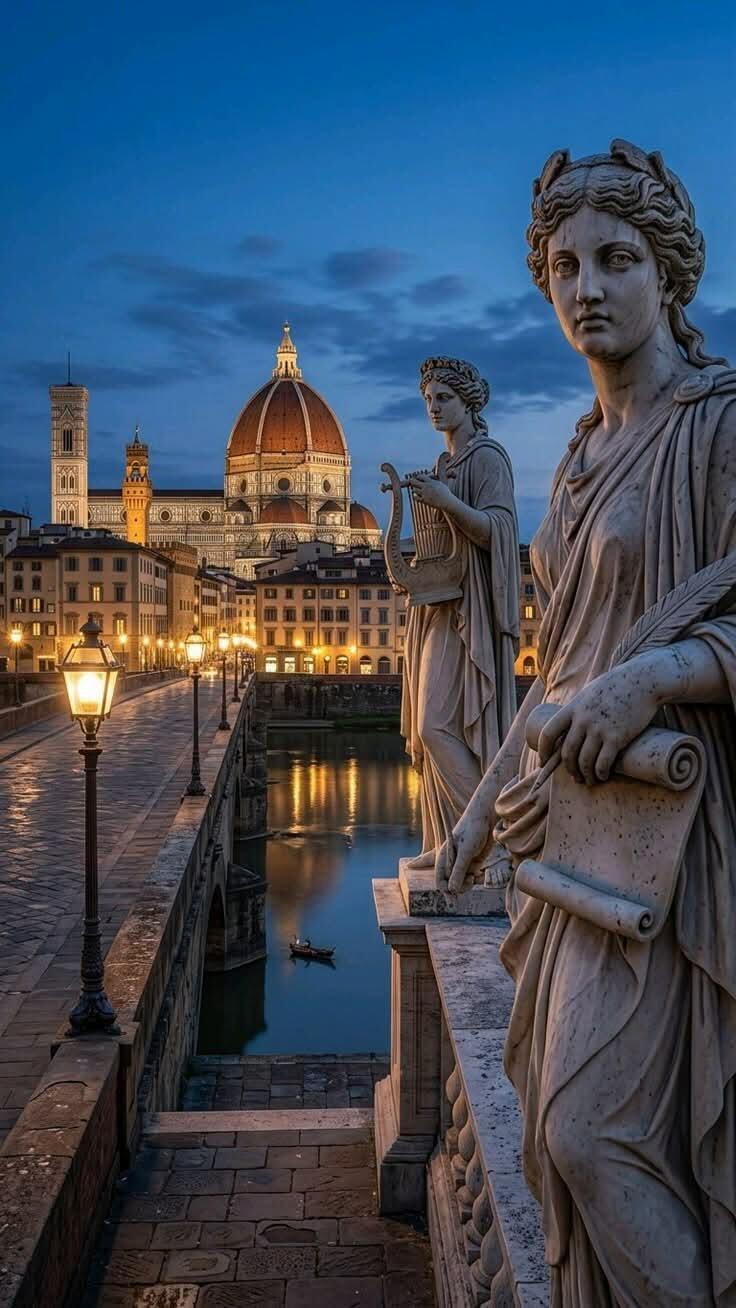
 Stepping onto the Borromean Islands feels like entering a floating garden.
At Palazzo Borromeo on Isola Bella, I walked among blooming terraces and white statues gazing out over the lake. ✨
#LakeMaggiore #IsolaBella #ItalyTravel #BorromeanIslands #Travel #Nostr #Photography

 The Thinking Tree, an ancient olive tree in Puglia, Italy.
This 1500-year-old olive tree is called 'the tree of thoughts' by the locals.
It is located in Ginosa, Puglia 🇮🇹
#Ginosa #Puglia #Italy #tree #olivetree