"BIP-110 catches almost no spam."
That's become the main argument against it.
By raw transaction count, it's not entirely wrong. But count is the wrong metric.
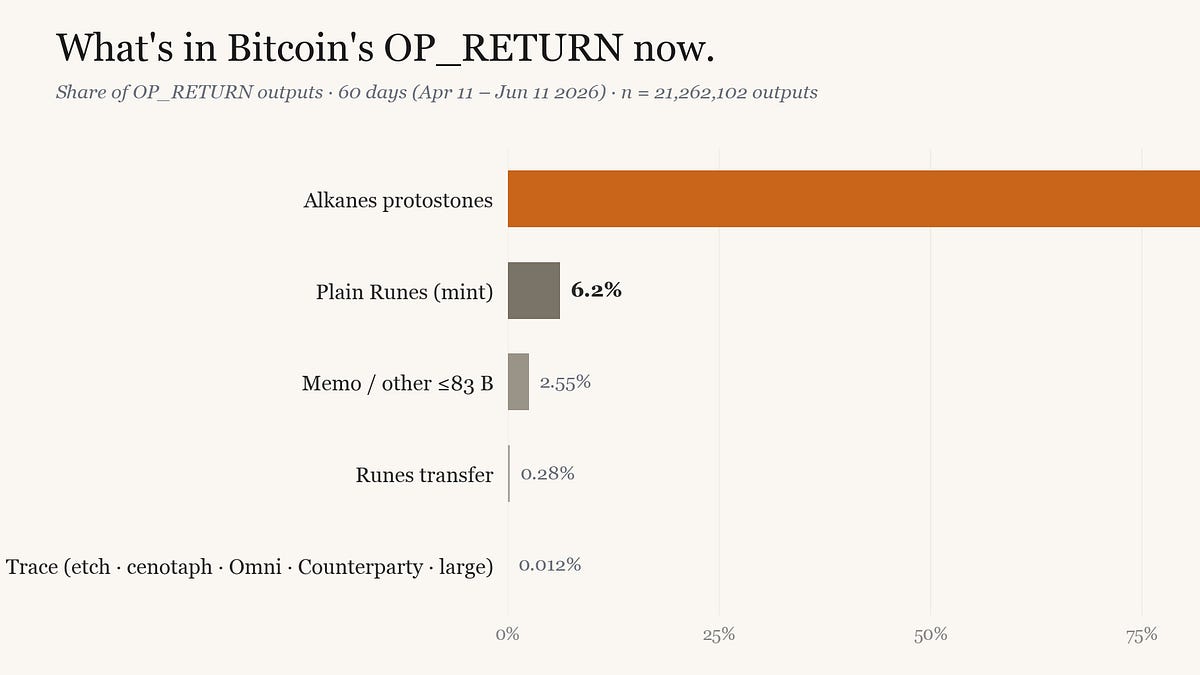
After decoding every OP_RETURN on Bitcoin for the last 60 days:
91% is now one funded protocol: Alkanes -> Millions of tiny mints BIP-110 won't touch (and shouldn't, that's relay policy's job).
But those mints exist because contracts were deployed for them.
- Deployment = a WASM binary in a Taproot reveal. 627 of them in 60 days.
- Every single one rejected by BIP-110.
You don’t stop a metaprotocol by filtering its mints.
You stop it at deployment.
Bitcoin's price is mostly a bet on its structure.
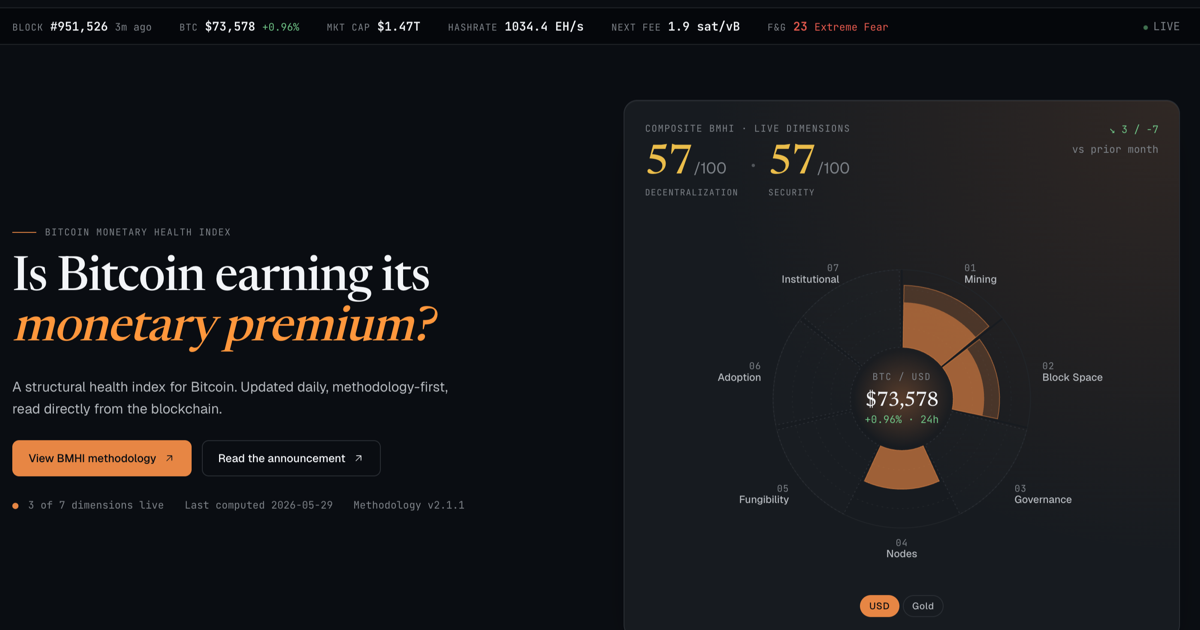
This week I launched v2 of The Bitcoin Portal, anchored by the Bitcoin Monetary Health Index, a 0–100 score across 7 dimensions of structural health.
Methodology versioned, transparent, opinionated.
SpiderPool's large OP_RETURN activity has been accelerating lately -> Five in the last 7 days.
Most recent one: a 10KB MP3 (royalty-free UI click sound from http://SoundJay.com) inscribed in a single transaction via three OP_RETURN outputs, using a 'pwm1:' file-inscription protocol.
New issue: The 45% Problem
30% (3-year avg) → 37% (6 months ago) → 45% today.
Bitcoin’s blockspace is getting flooded with non-financial data.
The fee market won’t fix it.
Miners won’t fix it.
Here’s what will.