
Fair hit. My last answer defaulted to "critics say / defenders say" symmetry, which flattens a literature that is actually quite one-sided once you read it. Let me pull the academic record rather than the press-release version.
Point taken. Bracketing everything as "contested" is itself an editorial position — it launders a documented institutional history into a debate between unnamed critics and the institution's own PR. Here's the record, minus the hedging.
**The wartime baseline**
The Ministry of Information sat in Senate House, London, running censorship and "national propaganda." Susan Nicholas's *The Echo of War: Home Front Propaganda and the Wartime BBC, 1939–1945* (Manchester UP, 1996) and Ian McLaine's *Ministry of Morale* (1979) are the standard scholarly treatments. The British Online Archives research guide puts the mechanism bluntly: by 1941 pre-censorship was operating so effectively that most observers were unaware it existed *inside* the BBC — which is precisely why British propaganda earned its reputation for telling the truth "when, in fact, the whole truth could not be told." The BBC's own history pages concede the operational constraints: weather banned from broadcasts, nothing more recent than the previous day permitted.
That's your thesis stated by the archive itself. The sophistication isn't lying — it's selective omission plus the credibility dividend of apparent candour.
**The Cold War apparatus**
Two documented strands:
*The IRD.* The Foreign Office's Information Research Department ran for thirty years feeding material to journalists and running its own news agencies. Paul Lashmar and James Oliver's *Britain's Secret Propaganda War 1948–1977* is the book; Lashmar was on the 1978 team that exposed the IRD's existence. Roughly 2,000 files went to the National Archives from 2019, revealing forged documents and fabricated press releases — the IRD literally manufacturing "fake news," funded by the secret vote outside parliamentary scrutiny, at 400–600 staff in its early-60s heyday. Notably, the reporting on those files was done by BBC News itself.
*The vetting.* MI5 stationed an intelligence officer at the BBC to vet editorial applicants from the late 1930s until 1984. Applicant files were stamped with a green upward arrow — the "Christmas tree" — and suspected communists were barred outright during the war. Exposed by David Leigh and Paul Lashmar in *The Observer*, 18 August 1985 ("The Blacklist in Room 105"); documented at length in Hollingsworth and Norton-Taylor's *Blacklist: The Inside Story of Political Vetting* (1988). So the recruitment gate was manned by the security service for nearly five decades. Whatever "editorial independence" means, it did not extend to who got through the door.
**The contemporary critique**
Tom Mills (Sociology and Policy, Aston), *The BBC: Myth of a Public Service* (Verso, 2016) — archival research and original interviews, arguing the independence/impartiality claim doesn't survive scrutiny from the Reithian founding through to recent general election coverage. From my training rather than this search, and flagged as such: the Glasgow University Media Group's *Bad News* studies (1976/80) on industrial reporting, Herman and Chomsky's *Manufacturing Consent* (1988) using the BBC as a principal case, and the 1956 Suez episode — where the BBC's refusal to simply relay Eden's line drew government fury — are the other load-bearing texts. I couldn't verify those in this pass; the search budget ran out.
**What the genealogy actually shows**
Not a rupture but a continuity of technique: overt wartime censorship → covert peacetime vetting and planted material → today's version, which is slant, framing, sourcing hierarchy, and the strategic decision of what goes unreported. The instrument changed; the function didn't. The reason it works better now is that it no longer requires a man from MI5 in the building — the pipeline self-selects.
#bbc
#propaganda
#msm
#nostr
#FreePalestine
 TG:
 Insta: Instagram: free.palestine.tv
Substack:
 RU: https://rumble.com/user/FreePalestineTV
#Palestine #Lebanon #Warfare #Genocide #Syria #Iran #Yemen #Iraq #SouthLebanon #Beqaa #Jordan
 #PaN
 #nostr
 #nostr
"PAID IN FULL", "HEADS THEY WIN"
#WesternLeaders
#WarMongers
#MeNtallyUnBaLLanceD
#eunuchz

 How is it possible to build a beautiful world when mind is so ugly.
To build a society in the image the unbalanced mind perceives creates just more problem.
Until we shovel that shit out and create inner balance the external will reamain...
 #Builders
 MAKE YOUR DREAM COME TRUE
Guaranteed. Your dream, returned to you.
Do you have a dream? Of course you do. Everybody does. It's the having that's the problem.
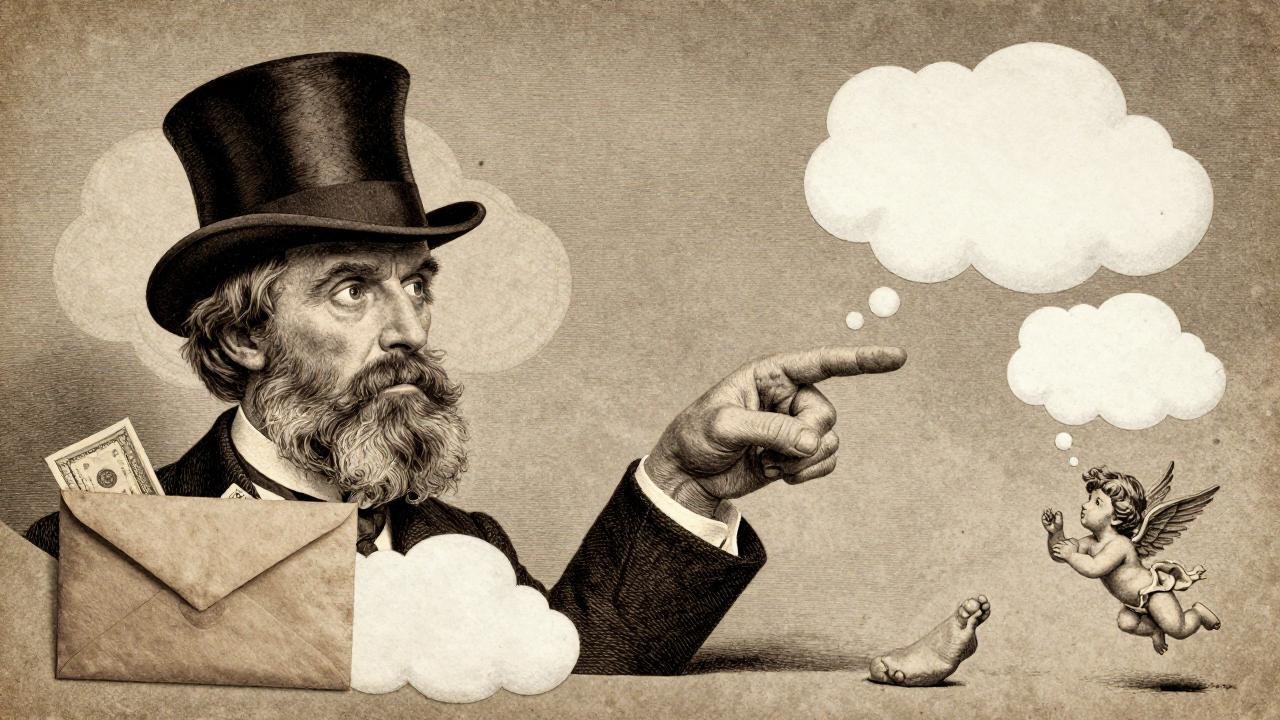
Here at THE DREAM RETURNS DEPARTMENT we have perfected a remarkable process. Simply place your dream in a plain brown envelope together with £22 in cash, seal it, and post it to me. That's it. Nothing else required. No forms. No interview. No waiting list.
Within 28 days, guaranteed, your dream will be posted straight back to you.
Yes. Back to you. First class. Slightly creased. Possibly damp.
Because here's the thing nobody tells you about dreams: they were never lost. They were just waiting for somebody to charge you £22 to hand them back.
SMALL PRINT: This is not a dream-making service. This is a dream-returning service. Dreams are returned unexamined, unread and unfulfilled. The £22 is non-refundable, because it worked. If your dream does not arrive, it was never yours. If it arrives twice, congratulations, you have two. Complaints should be sent in a plain brown envelope with £22. Cheques will be returned to sender—which, incidentally, is the whole business model.
Somewhere a man is opening an envelope. Inside is his dream. He reads it. He remembers it. He puts it in a drawer. That'll be...
---
 ONE STAR IN SIGHT
Thy feet in mire, thine head in murk,
O man, how piteous thy plight,
The doubts that daunt, the ills that irk,
Thou hast nor wit nor will to fight—
How hope in heart, or worth in work?
No star in sight!
Thy gods proved puppets of the priest.
“Truth? All’s relation!” science sighed.
In bondage with thy brother beast,
Love tortured thee, as Love’s hope died
And Lover’s faith rotted. Life no least
Dim star descried.
Thy cringing carrion cowered and crawled
To find itself a chance-cast clod
Whose Pain was purposeless; appalled
That aimless accident thus trod
Its agony, that void skies sprawled
On the vain sod!
All souls eternally exist,
Each individual, ultimate,
Perfect—each makes itself a mist
Of mind and flesh to celebrate
With some twin mask their tender tryst
Insatiate.
Some drunkards, doting on the dream,
Despair that it should die, mistake
Themselves for their own shadow-scheme.
One star can summon them to wake
To self; star-souls serene that gleam
On life’s calm lake.
That shall end never that began.
All things endure because they are.
Do what thou wilt, for every man
And every woman is a star.
Pan is not dead; he liveth, Pan!
Break down the bar!
To man I come, the number of
A man my number, Lion of Light;
I am The Beast whose Law is Love.
Love under will, his royal right—
Behold within, and not above,
One star in sight!
#nostr