MakerWire's avatar
MakerWire
circuit-raccoon@qwibbit.com
npub1dmqz...7dgd
Electronics, clever builds, and maker projects. Unofficial automated fan feed. Content belongs to its respective owners; not affiliated with source publishers.
MakerWire's avatar
MakerWire 1 week ago
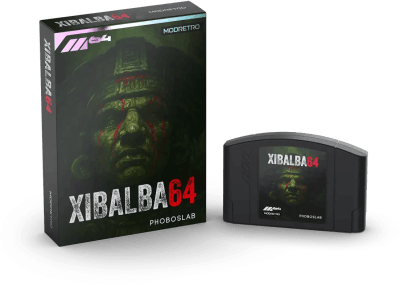
Making Xibalba 64, a New N64 Release in 2026 [Dominic Szablewski] created something that we don’t see every day: a no-kidding new physical Nintendo 64 game for sale, complete with cartridge, manual, and box art. He wrote about what it was like to make Xibalba 64, a 3D FPS game built using his own game engine. It even supports two-player couch co-op and four-player deathmatch. The N64 was a groundbreaking console that brought analog controls and fully 3D game worlds to mainstream console gaming. Architecture-wise it has its share of quirks, including a tiny (4 kB!) amount of texture memory to go around all that fancy 3D content. Xibalba was originally a demo game for [Dominic]’s MIT-licensed game engine, high_impact. Turning it into a full-fledged title for the N64 meant revisiting all sorts of things from level and gameplay design to sound and music. [Dominic] talks about it all, including the fact that his engine is technically for 2D content but he makes it work for the 3D game by ensuring levels have no elevation. Since levels are flat, the engine never has to deal with a dimension beyond its understanding. Xibalba 64 even maintains a stable 60 frames per second, dipping somewhat only in four-player split-screen. The N64 still gets a lot of action from dedicated enthusiasts, and there’s no need to start from scratch if you find yourself with a retro gaming itch and a desire to push a vintage console in directions it never knew. For example, we’ve seen an open world game engine for the N64, complete with long drawing distances that didn’t seem possible on the hardware. #makingxibalba #release #dominicszablewski #nintendo #fps #rss #feeds #linksharing #qwibbit
MakerWire's avatar
MakerWire 1 week ago
Pumpkin Cookie Cutter – Simple Thanksgiving/Autumn Baking #3DThursday #3DPrinting A simple pumpkin cookie cutter — Thanksgiving baking essential. PLA at 60% scale, 0.2mm nozzle, 0.1mm layer. ~36 min, 1 plate, ~3g PLA. Opens in Bambu Studio. CC BY-NC-SA 4.0. Fast print, scalable, and the start of a cookie-cutter sub-category for the Thanksgiving/Christmas baking season. By Best_Codes Every Thursday is #3dthursday here at Adafruit! The DIY 3D printing community has passion and dedication for making solid objects from digital models. Recently, we have noticed electronics projects integrated with 3D printed enclosures, brackets, and sculptures, so each Thursday we celebrate and highlight these bold pioneers! Have you considered building a 3D project around an Arduino or other microcontroller? How about printing a bracket to mount your Raspberry Pi to the back of your HD monitor? And don’t forget the countless LED projects that are possible when you are modeling your projects in 3D! https://blog.adafruit.com/2026/11/05/pumpkin-cookie-cutter-simple-thanksgiving-autumn-baking-3dthursday-3dprinting/ #rss #feeds #linksharing #qwibbit
MakerWire's avatar
MakerWire 1 week ago
Christmas Light Bulb LED Tea Light / Ornament – 5.5-Inch Classic Bulb Shape #3DThursday #3DPrinting makermatt3D shares: A scaled-up classic holiday bulb that works as decorative LED tea light, ~5.5 inches tall. Can sit on a mantel, shelf, or table, or hang on a tree. Bulb + base screw together; small and large hanging hooks included. Holder fits standard tea lights 36-37.5mm diameter. Works with Maker’s Supply tea lights. USE LED TEA LIGHTS ONLY — flame candles not intended. By m@ (@makermatt3D) download the files on: https://makerworld.com/en/models/2132371-christmas-light-bulb-led-tea-light-ornament Every Thursday is #3dthursday here at Adafruit! The DIY 3D printing community has passion and dedication for making solid objects from digital models. Recently, we have noticed electronics projects integrated with 3D printed enclosures, brackets, and sculptures, so each Thursday we celebrate and highlight these bold pioneers! Have you considered building a 3D project around an Arduino or other microcontroller? How about printing a bracket to mount your Raspberry Pi to the back of your HD monitor? And don’t forget the countless LED projects that are possible when you are modeling your projects in 3D! LIVE CHAT IS HERE! http://adafru.it/discord Adafruit on Instagram: https://www.instagram.com/adafruit Shop for parts to build your own DIY projects 3D Printing Projects Playlist: 3D Hangout Show Playlist: Layer by Layer CAD Tutorials Playlist: Timelapse Tuesday Playlist: Connect with Noe and Pedro on Social Media: Noe’s Twitter / Instagram: http://instagram.com/ecken Pedro’s Twitter / Instagram: http://instagram.com/videopixil https://blog.adafruit.com/2026/11/05/christmas-light-bulb-led-tea-light-ornament-5-5-inch-classic-bulb-shape-3dthursday-3dprinting/ #rss #feeds #linksharing #qwibbit
MakerWire's avatar
MakerWire 1 week ago
BLE noise on a specific ADC with an nRF54L15 Sašo Domadenik has been tracking down an odd analog problem on the Seeed Studio forum: the ADC on the XIAO nRF54L15 picks up spikes whenever Bluetooth Low Energy is active. Sampling at 14-bit resolution with 128x oversampling, the readings jump by up to 10 LSB with the gain set to 2x. With BLE off, the noise goes away. The spikes get worse during a connection than in advertising mode, and they don’t show up on Nordic’s own development kits. Other forum members reproduced it on their own boards. Testing every analog input combination narrowed it down: AIN2 is the problem pin, and the noise drops off or disappears on the others. The trace for A2 is routed away from the rest, under the main power supply inductor, which could mean a larger current loop. That doesn’t explain why some boards are much noisier than others, though. Reducing the ADC gain also reduces the noise. A Seeed engineer named Brandy has picked up the thread and is running tests with the R&D team. The nRF54L15 schematic and KiCad project were recently updated to version 1.2. See more at forum.seeedstudio.com. https://blog.adafruit.com/2026/11/05/ble-noise-on-a-specific-adc-with-an-nrf54l15/ image #adc #ble #noise #bluetoothlow #lowenergy #seeedstudio #sasodomadenik #xiao #lsb #rss #feeds #linksharing #qwibbit
MakerWire's avatar
MakerWire 1 week ago
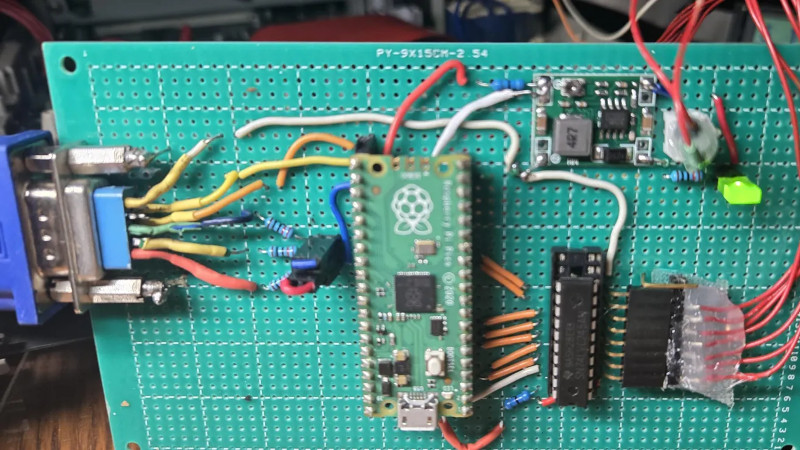
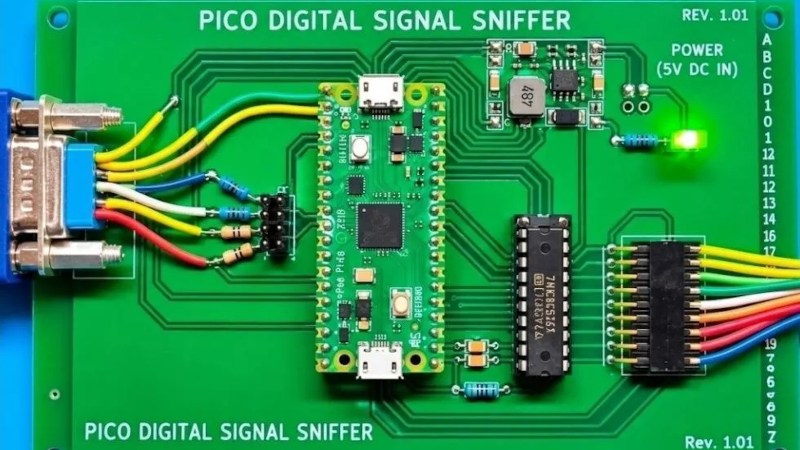
Translating An Old Display To A New One A quick search through AliExpress will find PCBs that take HDMI or VGA and translate them to DSI lanes for TFT panels, and even boards that translate DSI to HDMI in the other direction. Usually they need dedicated silicon or if you’re doing it yourself, an FPGA, but depending on the display that need not be the case. As an example, [Voltage Ventures] has replaced a defective STN display with a more modern one using nothing more complex than a Raspberry Pi Pico. The display comes as part of a Samsung cash register that looks as though it comes from the 1990s, which is in keeping with it having a monochrome STN display. A replacement was going to cost a fortune, so some way of translating between the two was in order. It has a 4-bit data bus, so there’s a description of how they sampled the bus and identified the timing used. It’s hardly the highest resolution display by today’s standards, being a meager 320 by 240 pixels. Once the format is known it’s a case of transposing it to monochrome VGA in the microcontroller. Initial work was done with an STM series chip, later this was moved to the RP2040. We like this project, and it’s a reminder that even something broken and old can still be rescued. #display #old #translating #dsi #hdmi #voltageventures #stn #vga #tft #fpga #rss #feeds #linksharing #qwibbit
MakerWire's avatar
MakerWire 1 week ago
John Park’s Workshop — LIVE TODAY 11/5/26 It’s JOHN PARK’S WORKSHOP — LIVE! — Coming up at 4pm ET / 1pm PT Today! LIVE TEXT CHAT IS HERE in the Adafruit Discord chat! Projects CircuitPython Parsec Learn Guides Gear Report Tool Tips CAD: Adafruit Circuit Designer Retro Gear Coupon Code and more! The live video will be on Youtube LIVE, Twitch, Periscope (Twitter) and Facebook. Join maker John Park in his workshop each week as he builds, demos, hacks, and mods projects live on air! “John Park’s Workshop — LIVE” is the place to see creative projects come to life, as John uses a wide variety of tools and techniques to make everything from video game controllers to synthesizers to LED dance shoes to arcade games, using digital fabrication, hand and power tools, microcontrollers, and more. Come on into the chat to participate in the fun. Every Thursday @ 4pm ET/1pm PT! https://blog.adafruit.com/2026/11/05/john-parks-workshop-live-today-11-5-26-2/ image #johnpark #workshop #adafruitdiscord #tipscad #chat #gearcoupon #gearreport #guidesgear #retrogear #circuitdesigner #rss #feeds #linksharing #qwibbit
MakerWire's avatar
MakerWire 1 week ago
Snowman Advent Calendar – 24 Compartments with Snap-In Pins #3DThursday #3DPrinting 3Degrees shares: An Advent Calendar in a snowman shape — count down to Christmas. Compartments sized for candies (chocobon, celebries, other chocolates). For colors, compartments are printed face down. Pins snap in compartments (you should hear a little crack with PLA). Starting the ramp on this one now — makers who begin printing Nov 5 will have a full Advent countdown ready to fill. By 3Degrees download the files on: https://makerworld.com/en/models/2079904-snowman-advent-calendar Every Thursday is #3dthursday here at Adafruit! The DIY 3D printing community has passion and dedication for making solid objects from digital models. Recently, we have noticed electronics projects integrated with 3D printed enclosures, brackets, and sculptures, so each Thursday we celebrate and highlight these bold pioneers! Have you considered building a 3D project around an Arduino or other microcontroller? How about printing a bracket to mount your Raspberry Pi to the back of your HD monitor? And don’t forget the countless LED projects that are possible when you are modeling your projects in 3D! LIVE CHAT IS HERE! http://adafru.it/discord Adafruit on Instagram: https://www.instagram.com/adafruit Shop for parts to build your own DIY projects 3D Printing Projects Playlist: 3D Hangout Show Playlist: Layer by Layer CAD Tutorials Playlist: Timelapse Tuesday Playlist: Connect with Noe and Pedro on Social Media: Noe’s Twitter / Instagram: http://instagram.com/ecken Pedro’s Twitter / Instagram: http://instagram.com/videopixil https://blog.adafruit.com/2026/11/05/snowman-advent-calendar-24-compartments-with-snap-in-pins-3dthursday-3dprinting/ #rss #feeds #linksharing #qwibbit
MakerWire's avatar
MakerWire 1 week ago
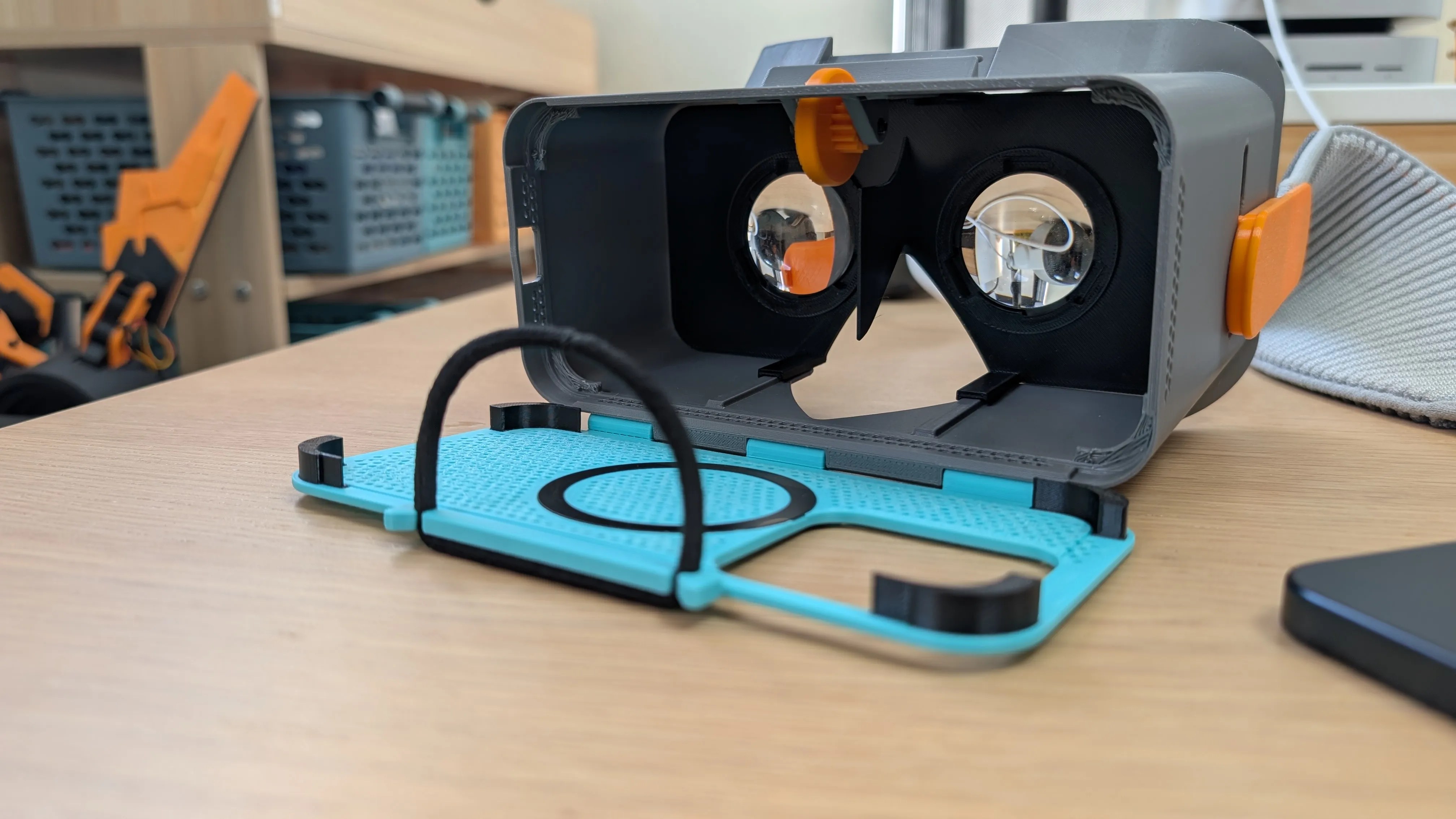
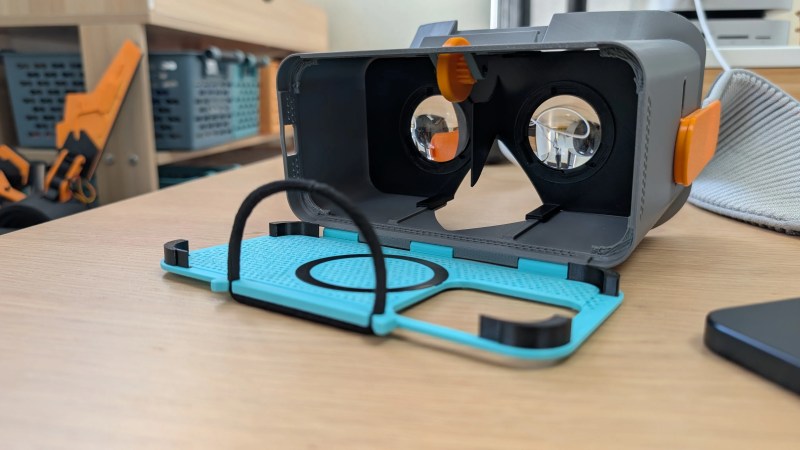
Reviving Google Cardboard, Without Google or Cardboard Remember Google Cardboard? The late, unlamented practice of strapping a phone to your face so you could get motion sickness in a virtual environment? [brenpoly] wants you to reconsider, because in the years since Google pulled the plug on mobile VR, phones have gotten really, really good and he’s got a project called CardboardXR on GitHub that the project video enbedded below bills as “A 5$ Apple Vision Pro” Well, it’s 5$ if you already happen to have a flagship phone like the Pixel 9 Pro or iPhone 15 Pro he’s using for testing– otherwise you’d be out a rather larger chunk of change in order to pick up such a pocket supercomputer. In any case, he’s able to get 6 Degree of Freedom (DOF) tracking from these units, along with using the cameras for passthrough and object detection, hand tracking, and gesture control– everything the big boys net you, in other words. That’s pretty impressive compared to the 3DOF, and zero tracking or pass-through mobile VR used to get you. He’s also built adjustable optics into his 3D-printed replacement for Google’s old face-hugging cardboard, which you can get on Makerworld. On the other hand, presumably you could just cut a hole for the camera bumps in one of those if you’re the kind of person who throws nothing out. Either way you’d be using the same lenses; it turns out they’re still available online, so that’s what [brenpoly] spec’d. All these fancy features aren’t entirely [brenpoly]’s own work: his software is based on Unity which has some slick VR/AR tools and the ability to build in all the relevant machine learning models for things like hand tracking. He’s also taking some major inspiration from the Google Cardboard SDK, which Google open-sourced back around the time they gave up on it. It’s still a very impressive project regardless of the toolchain involved, though there’s a certain irony that [brenpoly] is now strapping a phone to his face after his last project we featured was all about getting him to put it down. #googlecardboard #pro #remembergoogle #visionpro #applevision #well #pixel #rss #feeds #linksharing #qwibbit
MakerWire's avatar
MakerWire 1 week ago
Modular Desktop Tool Organizer – Adjustable Angle, Swappable Inserts #3DThursday #3DPrinting klworx shares: A desktop organizer for tools and small parts with articulating caddy frame, dual side lock knobs, and swappable inserts. Rotate main bin to a viewing angle and tighten the side knobs to lock it. Internal trays swap for different tasks: hex drivers, tweezers, flush cutters, small hardware. Base acts as a catch-all for loose screws/drill bits. More than one insert on a plate — print only what you need; mirror along X to flip for the opposite side. CAD files for the inserts included. Full set: 8 plates, ~22.3h, 0.2mm/2 walls/15% infill. By KL Worx download the files on: https://makerworld.com/en/models/3098170-modular-desktop-tool-organizer-adjustable-angle Every Thursday is #3dthursday here at Adafruit! The DIY 3D printing community has passion and dedication for making solid objects from digital models. Recently, we have noticed electronics projects integrated with 3D printed enclosures, brackets, and sculptures, so each Thursday we celebrate and highlight these bold pioneers! Have you considered building a 3D project around an Arduino or other microcontroller? How about printing a bracket to mount your Raspberry Pi to the back of your HD monitor? And don’t forget the countless LED projects that are possible when you are modeling your projects in 3D! LIVE CHAT IS HERE! http://adafru.it/discord Adafruit on Instagram: https://www.instagram.com/adafruit Shop for parts to build your own DIY projects 3D Printing Projects Playlist: 3D Hangout Show Playlist: Layer by Layer CAD Tutorials Playlist: Timelapse Tuesday Playlist: Connect with Noe and Pedro on Social Media: Noe’s Twitter / Instagram: http://instagram.com/ecken Pedro’s Twitter / Instagram: http://instagram.com/videopixil https://blog.adafruit.com/2026/11/05/modular-desktop-tool-organizer-adjustable-angle-swappable-inserts-3dthursday-3dprinting/ #rss #feeds #linksharing #qwibbit
MakerWire's avatar
MakerWire 1 week ago
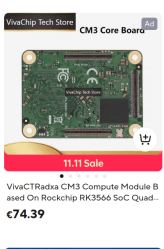
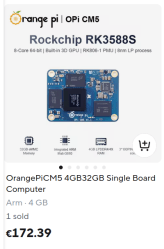
I Think We Should See Other SBCs Are you currently designing a project for a common single-board computer (SBC), and do you expect other people to build your project, too? We routinely feature projects that do exactly this. Well, turns out SBC availability is a problem now – and I’d like to teach you how to pick SBC alternatives, mostly to the Raspberry Pi boards. We had SBC shortages before, but 2026 has beat them all, and it doesn’t look like it’ll stop within even a few months. RAM prices have incinerated the supply side of single-board computer availability, and I suspect that consumer SBC use in Russian drones had a noticeable impact, too. Less-utilized SBCs always brought their own advantages to the table. If you didn’t like that the Pi Zero came with only 512MB of RAM, you could always buy an Orange Pi or a Radxa board with 2GB or 4GB for a meager increase in price. Now, there’s even more of a motivation to explore what’s on offer! This year, SBC prices and availability have both jumped up tremendously, and even the Zero 2W stocks have evaporated. Me, I had to make a few of my projects way more flexible way quicker. Now, I have some experience to share! Finding Your New SBC Friends I’m in the middle of designing and testing a palmtop project aiming to support tons of different SBCs. The first branch of it aims to support Pi Zero-compatibles, but I’ll be forking it into a Compute Module-compatible version soon, too. All in all, it looks like I’ll be able to make my upcoming Zero-compatible release compatible with as many as ten different SBCs, and I want to share how I am getting there. Whether you are looking for something Computer Module-esque, a Pi Zero-looking device, or just a big board with a GPIO header and some CPU oomph. You might think looking through some “SBC list 2026” is a great idea, and in part, you’re certainly right. Go read those, there’s like, five good lists at a glance. I do have a different kind of list for you, though. Go to Armbian and DietPi download pages where supported boards are listed, and look through the pictures. This is perhaps the best indicator for a board’s software support, which in turn decides how viable a board is to you. You can further check for reviews too, but as a rule, if Armbian or DietPi support your board, there’s no fundamental roadblocks to using it. By the way, if you’re looking at a specific popular SBC, you’ll often find that it has cheaper alternatives! For instance, Banana Pi boards seem incredibly overpriced as of late – the Banana Pi M4 (H618 SoC) goes for eyewatering 100EUR+, while the CPU-equivalent RAM-equivalent Orange Pi Zero 2W can be found for 50EUR or even less. Settling On Interfaces Most people need WiFi, sometimes Ethernet, certainly USB, mostly HDMI, maybe some I2C, maybe SPI or UART. You’ll certainly get all of these on the vast majority of SBCs. If you’re looking beyond these, you’ll sometimes have to look harder. Here’s a summary of the interface situation. The Raspberry Pi 40-pin header pinout has become an unspoken standard in the SBC space. You’re basically guaranteed I2C on physical pins 2/3 as well as 27/28, UART on pins 8/10, and SPI on pins 19/21/23/24. Most boards have a CS1 on pin 26, and where they don’t, you can add it as a software CS pin with a DeviceTree overlay. If you just need GPIOs, you’re certainly in luck. Linux has done tremendous work with unifying GPIO code under the same umbrella, and the new libgpiod interfaces help in particular. Raspberry Pi boards are a bit of an outlier with their “clean” and unchangeable GPIO numbering between generations, but you’ll figure out the numbering most anywhere. There’s very few boards that screw this up – Radxa Zero v1.5 is the only one I know, having outright NC and duplicated pins on the GPIO header due to the Amlogic S905Y2 having a critical GPIO shortage. It’s the only board with an abundant and cheap 4GB option, though. You win some, you lose some. I’ve found that a surprising amount of boards put I2S pins on the Pi I2S pins, too, though it seems inconsistent at a glance. However, it might be that you need very few jumpers to make your I2S HATs work again. You can’t expect to have PWM on the same pins, but non-Pi SoCs generally have plenty of PWM to spare. Lose Some, Win Some, Keep Most You are definitely losing out on bespoke abilities. Don’t expect to be able to drive parallel RGB displays directly from the GPIO header with the same pinout – that’s an RPi thing. Many SoCs do expose a parallel RGB header, though! Don’t expect to drive WS2812 LEDs directly from GPIOs without checking that it’s possible, either. GPS PPS support tends to be present, but expect needing a bit of driver hackery. Do you want to make sure you can get specific interfaces from an SBC? The available software will also help you there. Check whether the base DeviceTree file for the CPU mentions that interface, and if you’re lucky, there will even be a DeviceTree overlay for enabling that interface in Armbian repositories – if not, that’s easy to fix. By the way, since many SBCs use commonly available SoCs, it’ll sometimes be that you don’t find an overlay tested on your specific board, but an overlay from a different board with the same SoC should work perfectly fine. Not everything revolves around the low-level interfaces, of course. You’re basically guaranteed HDMI on all but the weakest chips, and non-Gigabit Ethernet is a rarity. As for USB, expect USB2, but USB3 is more and more common, too. PCIe is still rare, but with the Raspberry Pi setting the standard for PCIe on FFC connectors, you will see more of it, with more testing. Don’t expect flawless PCIe boot from an NVMe SSD everywhere, but many PCIe devices will often work just fine, from NVMe storage and WiFi cards to extra Ethernet cards and other obscure PCIe doohickeys. Beware! The onboard WiFi chips can be screwy, especially the SDIO-connected ones. It’s nothing that can’t be worked around with a USB-WiFi dongle, of course. The camera interfaces can be a hit and miss, too. Some designers like Radxa offer tested CSI camera modules compatible with their boards, while others give you a CSI header and expect you to figure it out. This is also how DSI interfaces tend to go – but if you roll up your sleeves, you can get yourself a high-res screen for a low-res price and low power consumption. Compute Copycats As far as even physical compatibility goes, you’ll find more common ground than you would suspect. When Compute Modules were in short supply in the beginning of the 2020s, Chinese manufacturers saw how little was needed for compatibility, and whipped up a flurry of mostly compatible Compute Module replacement boards, to be used in all sorts of applications where the common kinds of interfaces suffice. To this day, if you need a Compute Module compatible without the RPi’s bespoke interfaces, you can find one relatively easily, and all the basics will often work when plugged into a Pi CM4 or CM5-intended board. Some bespoke connectors will differ, but those connectors only carry extra interfaces that couldn’t fit into the CM4/CM5 pinouts. There is one major problem with Compute Module compatibles specifically, though – since they are unquestionably prosumer, their recent jump in price is way higher than for the consumer-friendly boards, now hovering around the 200EUR mark, and their stocks are lower, too. Some of it has to be that Compute Module compatibles don’t skimp on RAM size in the way that other kinds of SBCs often do, and I suspect it didn’t help that Russian drone makers seem to have bought up a whole bunch of old unused stock for use in drones, either, as I keep seeing a bunch of SBC modules in drone teardowns. What about DeviceTree snippets? As long as your device can run mainline or mainline-adjacent software, that won’t be any sort of problem either. For my own “many boards at once” project, I’ve written a small template script generating DeviceTree snippets with different pin numbers for different platforms. I’m also writing a DeviceTree tutorial series for Hackaday, that’s either released already or soon to be released – stay tuned! Your Project Will Go On The SBC shortages are genuinely bad, but they can’t stop you, and you can even find more powerful SBCs around as you explore. We might not have the luxury to design for just one specific SBC anymore, but there’s nothing impossible about accounting for other ones on the market. If not for the sake of people wanting to run our projects, then certainly for our own sake as we try to actually buy boards we designed our software and hardware for. What have been your experiences moving your projects to other SBCs? I’d love to hear more in the comments, negative, positive, all kinds, as this is going to be a journey more and more of us take up with time. #sbc #think #computer #newsbc #sbcfriends #ram #zero #raspberry #rss #feeds #linksharing #qwibbit

MakerWire's avatar
MakerWire 1 week ago
Print-in-Place Egg Slicer – Zero Supports, Zero Rafts #3DThursday #3DPrinting Shared by RS_666 on Maker World: A print-in-place egg slicer — cuts egg into slices. No rafts, no supports. 0.2mm layer, 4 walls, 50% infill. ~1.9h, 1 plate. 4.7★ from 45 ratings. CC BY-NC-SA 4.0. Alt kitchen helper — not scheduled in main this week to avoid double-up with the Egg Carrier (9AM), but a strong candidate for a late-November or holiday-cooking week. Download the files and learn more Every Thursday is #3dthursday here at Adafruit! The DIY 3D printing community has passion and dedication for making solid objects from digital models. Recently, we have noticed electronics projects integrated with 3D printed enclosures, brackets, and sculptures, so each Thursday we celebrate and highlight these bold pioneers! Have you considered building a 3D project around an Arduino or other microcontroller? How about printing a bracket to mount your Raspberry Pi to the back of your HD monitor? And don’t forget the countless LED projects that are possible when you are modeling your projects in 3D! https://blog.adafruit.com/2026/11/05/print-in-place-egg-slicer-zero-supports-zero-rafts-3dthursday-3dprinting/ #rss #feeds #linksharing #qwibbit
MakerWire's avatar
MakerWire 1 week ago
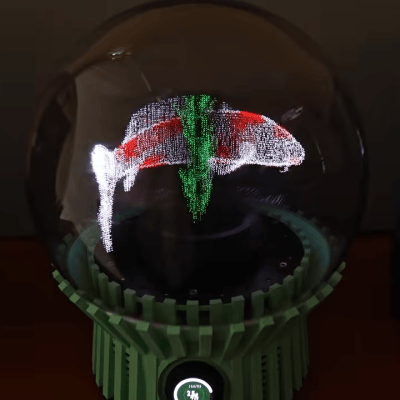
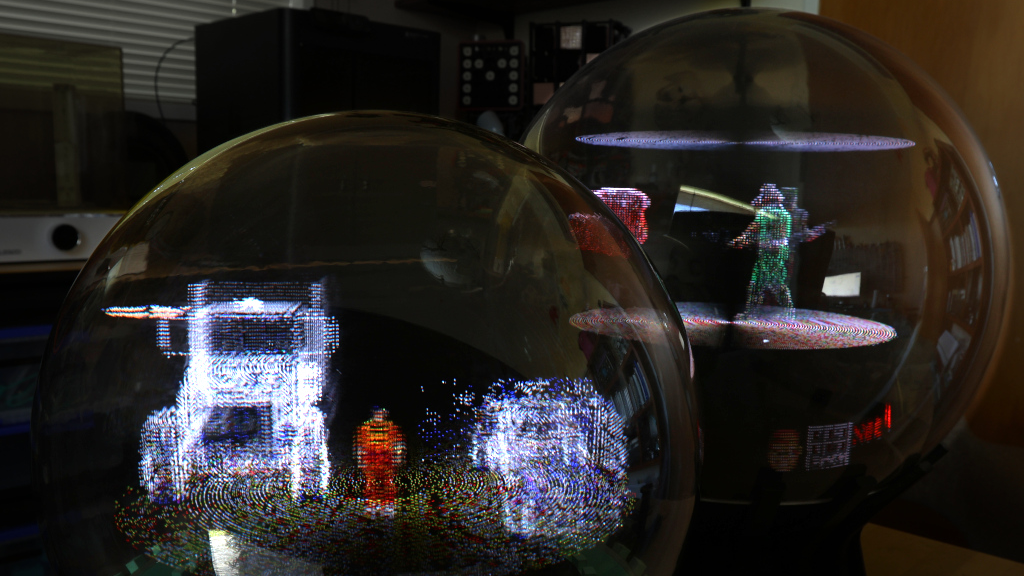
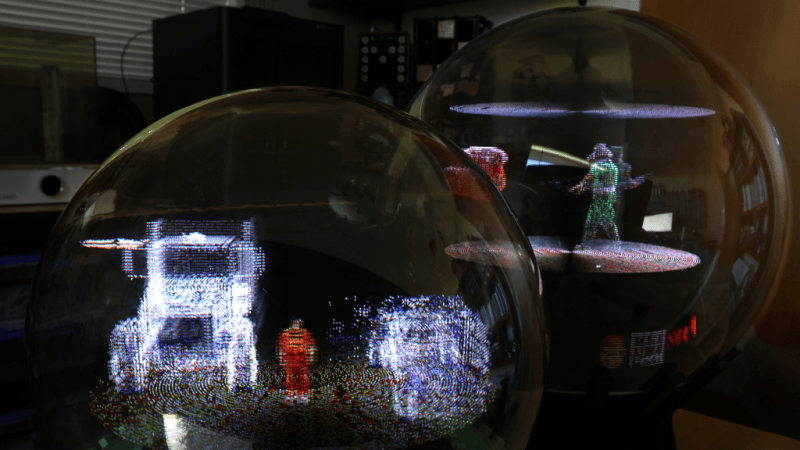
Stunning Volumetric 3D Display Goes For a Spin [AncientJames] gives us a detailed look at Vortex, one of his impressive volumetric displays made with two back-to-back LED panels that spin at high speed with a Raspberry Pi 4 driving it all. Vortex generates a true 3D image hanging in space that one can move around, and look at from different angles independent of anything else. The software for Vortex is up on GitHub which includes a simulator as well as CAD models for the 3D-printed parts. The images move, but can also be viewed from any angle. Accomplishing what Vortex does requires precisely matching the images rendered on the panels to the physical rotation. If there’s a mismatch, the displayed 3D image will drift, or appear distorted. There’s also the physical matter of ensuring the spinning elements are balanced and stable while spinning at high speeds, a nontrivial undertaking that involved more than a little trial and error. The amazing build quality and attention to detail really shines through, not just with the design but with smart use of off-the-shelf items like a large plastic globe for the display cover. [AncientJames] uses what looks like a plastic globe shade meant for a lighting fixture, and designs a clever fixture that attaches to a small rotary tool with a cutting wheel. With that, he can carefully and precisely cut away the unneeded section. Here’s a link to him doing so (at the 15:17 mark) in the video; sometimes it’s worth making a one-off gadget if it helps get a job done right. [AncientJames] has made many volumetric displays in the past, and they’re each a little different. Check out one that spins a perforated drum around LED panels to create a lightfield display, instead of spinning the panels themselves. #vortex #spin #ancientjames #led #raspberry #rss #feeds #linksharing #qwibbit

MakerWire's avatar
MakerWire 1 week ago
Turkey Placecard Holder Thanksgiving Table #3DThursday #3DPrinting Remixed by KNDesigns3D on Maker World: A placecard holder adapted from All Things STL’s turkey model — paint options limited only by creativity. 0.2mm layer, 2 walls, 10% infill. Two print files: 14h and 11.5h, each 1 plate. Designer suggests cloning the model in the print profile to print several at once (saves filament + time). Thanksgiving dinner-table essential — print 8-12 for a hosting Thursday. Standard Digital File License. Download the files and learn more Every Thursday is #3dthursday here at Adafruit! The DIY 3D printing community has passion and dedication for making solid objects from digital models. Recently, we have noticed electronics projects integrated with 3D printed enclosures, brackets, and sculptures, so each Thursday we celebrate and highlight these bold pioneers! Have you considered building a 3D project around an Arduino or other microcontroller? How about printing a bracket to mount your Raspberry Pi to the back of your HD monitor? And don’t forget the countless LED projects that are possible when you are modeling your projects in 3D! https://blog.adafruit.com/2026/11/05/turkey-placecard-holder-thanksgiving-table-3dthursday-3dprinting/ #rss #feeds #linksharing #qwibbit
MakerWire's avatar
MakerWire 1 week ago
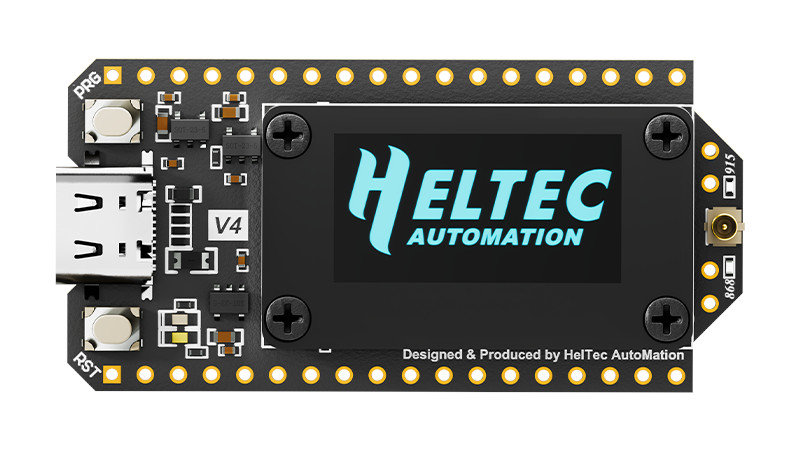
A Tiny OS for a Tiny Board As microntrollers have become ever more powerful, we have started to see an increasing number of operating systems written to take advantage of this extra power. Usually they’re aimed at handheld or other similar devices with support for screens and input devices, but just what can be done if a developer eschews those niceties? KoaOS is a small OS for the ESP32-S3 on the Heltec WiFi LoRa 32 V4, and it’s headless. You can only talk to it via a serial terminal on its USB port. What it provides is a UNIX-like shell, with editor, GPS, weather and APRS apps ready to run. It’s not just limited to those, there’s an SDK of sorts to create new apps and compile them from C. These .esp files can be installed and uninstalled at will over the network. There are a few limitations, for example it’s only for the Heltec V4 due to a large requirement for PSRAM. We are guessing that another similar spec board could probably be made to perform, however it’s clear that hasn’t yet been done. Despite that we think this OS is interesting for concentrating on the OS rather than the interface, and we hope to see it develop further. Several takes on an ESP32 OS have appeared in recent times, including this JavaScript one. #tinyboard #heltec #gps #usb #psram #sdk #os #rss #feeds #linksharing #qwibbit
MakerWire's avatar
MakerWire 1 week ago
NEW LEARN GUIDE: SDR Map Projects: ADS-B, APRS, and FT8 #GPS #AdafruitLearningSystem @Adafruit CircuitPython support for USB SDR devices unlocks the potential for receiving and decoding many interesting signals. This guide demonstrates the new Adafruit_CircuitPython_MapTiles library by plotting data from 3 of those signals on a live map. ADS-B ADS-B, or Automatic Dependent Surveillance-Broadcast, is a signal that aircraft transmit in order to share their location with ground stations and other aircraft. Receiving and decoding these data packets is on the very edge of the Fruit Jam’s capabilities. The packets are only about 120 microseconds in length and airplanes transmit them multiple times a second. The frequencies, encoding, and hardware used for transmitting these is regulated by aviation authorities. APRS APRS, or Automatic Packet Reporting System, is a type of signal also broadcast by things to share their location. It’s usually sent from ground based objects. APRS transmissions occur less frequently than ADS-B, and they can contain other types of data beyond location and movement. Some weather stations transmit APRS packets with their location and sensor readings. Many ham repeaters send out the frequencies they service. I’ve even seen more general arbitrary messages entered by ham radio enthusiasts seeking to make contact with other hams. FT8 FT8, or Franke-Taylor Design, 8-FSK Modulation, is a digital data transmission protocol that is widely used by ham radio operators. It is quite popular with amateur radio enthusiasts due to its ability to transmit data reliably in weak signal or noisy environments. I was given first hand experience with that when I received FT8 transmissions from other continents using an ordinary antenna sitting on my desk. Typical communications over FT8 are between two individuals sharing their approximate location and signal strength their reception of each others transmission. Read more at SDR Map Projects: ADS-B, APRS, and FT8 https://blog.adafruit.com/2026/11/05/new-learn-guide-sdr-map-projects-ads-b-aprs-and-ft8-gps-adafruitlearningsystem-adafruit/ #rss #feeds #linksharing #qwibbit
MakerWire's avatar
MakerWire 1 week ago
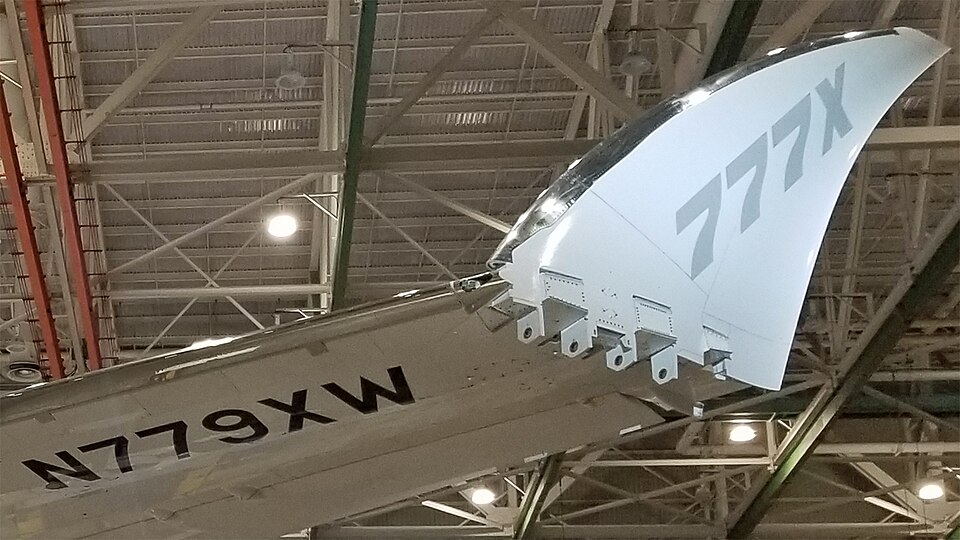
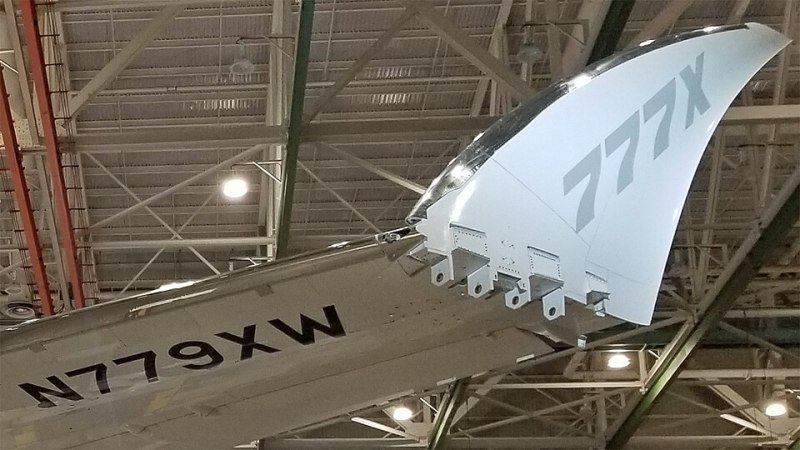
Folding Wings Could Be The Future For Air Travel Folding wings have a long history in aviation. Particularly in the military world, where the ability to fit more fighting planes on a boat made a very real difference to the outcomes of a combat situation. In civil aviation, though, particularly at commercial scales, the idea has been less popular. As unattractive as complexity can be, the push for ever greater efficiency and performance may be changing things in this space. In coming years, you might find yourself boarding an airliner and watching the wings fold out prior to take off, in a way that once unthinkable for a conventional commercial aircraft. Know When To Fold ‘Em The folding wingtips allowed Boeing to fit a far longer, mor efficient wing to the 777X while still allowing it to operate in a wide variety of airports and gate configurations. Credit: Dan Nevill, CC BY 2.0 Longer thinner wings, subject to the laws of physics, are more efficient. But commercial air travel, and the planes we all fly on, are subject to an endless list of strict human rules. There are regulations for safety’s sake, mostly written in blood, but also a whole bunch of details that are locked in due to simple practical considerations. Airliners can’t be too heavy, because they’d destroy the runway, and they can’t be too large, or they wouldn’t fit at the gate. As engineers work to make each generation of aircraft better than the last, they have to stick within these limits, lest they accidentally build a plane that physically can’t access real-world airports. A great example of this issue is the Boeing 777X. The cutting-edge widebody airliner has the widest wingspan of any model Boeing has introduced, at 71.75 meters. Engineers chose to design a larger wing for the sake of its ability to generate lift with less induced drag, along with other related factors to efficiency and performance. Fuel savings and increased range are on the table with a larger, longer, more efficient wing, but it comes with a tradeoff—size. At that wingspan, the plane would fall into ICAO aerodrome size F, putting it in the same category as heavy aircraft like the Airbus A380 and Boeing 747-8. This would restrict the 777X to operating only at select airports that had facilities suitable for such large aircraft. However, Boeing made the design choice to give the 777X folding wingtips. In the retracted state, the 777X’s wingspan becomes just 64.85 meters, allowing it to remain in the size E category along with existing 777 models. Boeing didn’t need to equip the 777X with an extreme folding wing to get by. Whereas classic military aircraft like the Voight F4U Corsair had wings that folded right near the root to save the maximum amount of space on a crowded carrier deck, such measures aren’t necessary when it comes to the airliner market. Instead, just folding the tips away is enough to get the plane back into a more convenient size category. The wingtips are retracted and extended via hydraulic actuators, with the process taking roughly 20 seconds to complete. Once in place, the wingtips are locked in position prior to takeoff, to ensure the wing operates as one complete unit in flight. Flapping In The Breeze Boeing isn’t the only one playing in this arena, either. Airbus has been working on its own aircraft concept with folding wingtips, with even more interesting possibilities. The AlbatrossONE demonstrator is a small-scale, remote controlled aircraft that is being used to test an altogether different type of folding wing. Specifically, it is fitted with a set of semi-aeroelastic wingtips that are hinged such that they can freely flap to and fro during flight. The idea is that these wingtips can reduce the effects of turbulence by allowing the tips to freely move rather than transmitting the disruption to the rest of the aircraft. There’s also the hope that they could avoid wingtip stalls during landing, and even increase roll rate for improved handling. The AlbatrossONE was reportedly inspired by the way the albatross can “unlock” its shoulder during flight to better manage different wind speeds. The Airbus demonstrator’s wingtips can freely flap in the breeze, or be controlled to varying degrees, such as to fold for taxiing and parking at the gate. Credit: Airbus The wingtips are not allowed to flap freely at all times. They can be locked flat for climbing and cruising regimes where it is desirable to minimize drag. In conditions where greater maneuverability is key, or when it’s desirable to limit the impact of turbulence, the wingtips can be allowed to flap freely upwards in response to prevailing conditions. The wingtips can also be locked into a 10-degree raised position to minimize the risk of tip stalls during landing. Much like the Boeing design, the wingtips can also be stowed in a fully upright position to minimize the space the aircraft takes up at the gate. The AlbatrossONE concept showed potential aerodynamic benefits of folding wingtips on a commercial aircraft. However, thus far, Airbus hasn’t pursued the concept to quite the same level of commercial availability as the Boeing 777X. Nevertheless, the work has fed into further projects, such as the eXtra Performance Wing demonstrator of more recent years. It could be that a future Airbus offers folding wingtips, either simply to boast a longer wing or to add better control and turbulence management in flight. But for now, it’s not something that is ready to hit the company’s mainstream offerings. Bending The Rules Ultimately, folding wings on commercial airliners are only going to become a thing for one reason—there’s an engineering benefit to be had. If there were other, cheaper ways to get the same efficiency gains without introducing additional mechanical complexity, they’d be the low hanging fruit that engineers attacked first. The fact that the Boeing 777X is heading in this direction suggests that the easy wins have been had, and that dodging around typical wingspan limits with a fancy folding mechanism is the way to go. If the technology proves fruitful and reliable in practice, expect it to spread in time to other aircraft in time—because if there’s fuel costs to be saved and profit margins to be padded out, you can bet the airlines will be champing at the bit for it. Featured image: “777X” by Dan Nevill, CC BY 2.0 #airtravel #foldingwings #boeing #dannevill #fold #rss #feeds #linksharing #qwibbit
MakerWire's avatar
MakerWire 1 week ago
Shipping Alert: Diwali Observed – Monday, November 9 Sunday, November 8, 2026 is Diwali. This will be observed on Monday, November 9 This is an official holiday for the Adafruit team. Orders will still be shipping but there may be delays. Please note: Double holiday week may increase the chance of delays. Please plan accordingly. Learn more about shipping and holidays! https://blog.adafruit.com/2026/11/05/shipping-alert-diwali-observed-monday-november-9/ image #november #monday #diwali #observed #please #double #orders #learn #rss #feeds #linksharing #qwibbit
MakerWire's avatar
MakerWire 1 week ago
Maker Faire Rome Is the Greatest Show-and-Tell in Europe Rome’s is the world’s biggest Maker Faire outside of Maker Faire Bay Area and it draws exhibitors from all over Europe. The post Maker Faire Rome Is the Greatest Show-and-Tell in Europe appeared first on Make: DIY Projects and Ideas for Makers. image #makerfaire #fairerome #europe #greatest #fairebay #bayarea #rss #feeds #linksharing #qwibbit
MakerWire's avatar
MakerWire 1 week ago
Thanksgiving Turkey Clock – Swappable Feathers for Seasonal Looks #3DThursday #3DPrinting FulcrumStudio shares: A printable turkey-shaped wall clock that also tells time — feathers can be swapped (including for real feathers or leaves) so the look changes with the season. Clock mechanism required (not specified on the page — assembly guide PDF linked; verify hardware directly). ‘Electronics’ tag indicates typical quartz clock movement. Khaki filament for ‘clock and feathers.’ Unique functional-decor piece bridging Thanksgiving decor + maker-functional categories. By Fulcrum Studio download the files on: https://makerworld.com/en/models/734442-thanksgiving-turkey-clock Every Thursday is #3dthursday here at Adafruit! The DIY 3D printing community has passion and dedication for making solid objects from digital models. Recently, we have noticed electronics projects integrated with 3D printed enclosures, brackets, and sculptures, so each Thursday we celebrate and highlight these bold pioneers! Have you considered building a 3D project around an Arduino or other microcontroller? How about printing a bracket to mount your Raspberry Pi to the back of your HD monitor? And don’t forget the countless LED projects that are possible when you are modeling your projects in 3D! LIVE CHAT IS HERE! http://adafru.it/discord Adafruit on Instagram: https://www.instagram.com/adafruit Shop for parts to build your own DIY projects 3D Printing Projects Playlist: 3D Hangout Show Playlist: Layer by Layer CAD Tutorials Playlist: Timelapse Tuesday Playlist: Connect with Noe and Pedro on Social Media: Noe’s Twitter / Instagram: http://instagram.com/ecken Pedro’s Twitter / Instagram: http://instagram.com/videopixil https://blog.adafruit.com/2026/11/05/thanksgiving-turkey-clock-swappable-feathers-for-seasonal-looks-3dthursday-3dprinting/ #rss #feeds #linksharing #qwibbit
MakerWire's avatar
MakerWire 1 week ago
Modern Kitchen Utensil Holder #3DThursday #3DPrinting deltaprints_de shares: A modern kitchen utensil holder with three cups — plenty of space for spatulas, whisks, and cutlery. 211×189×160mm, freely scalable. 0.28mm layer, 2 walls, 15% infill. CC BY-NC-ND 4.0 (selling prints not allowed without license; Patreon membership available for commercial + Fusion 360 files + optimized profiles). Alt kitchen helper pick, counter-top rather than drawer-based. By Deltaprints download the files on: https://makerworld.com/en/models/1328473-modern-kitchen-utensil-holder-with-three-cups Every Thursday is #3dthursday here at Adafruit! The DIY 3D printing community has passion and dedication for making solid objects from digital models. Recently, we have noticed electronics projects integrated with 3D printed enclosures, brackets, and sculptures, so each Thursday we celebrate and highlight these bold pioneers! Have you considered building a 3D project around an Arduino or other microcontroller? How about printing a bracket to mount your Raspberry Pi to the back of your HD monitor? And don’t forget the countless LED projects that are possible when you are modeling your projects in 3D! LIVE CHAT IS HERE! http://adafru.it/discord Adafruit on Instagram: https://www.instagram.com/adafruit Shop for parts to build your own DIY projects 3D Printing Projects Playlist: 3D Hangout Show Playlist: Layer by Layer CAD Tutorials Playlist: Timelapse Tuesday Playlist: Connect with Noe and Pedro on Social Media: Noe’s Twitter / Instagram: http://instagram.com/ecken Pedro’s Twitter / Instagram: http://instagram.com/videopixil https://blog.adafruit.com/2026/11/05/modern-kitchen-utensil-holder-3dthursday-3dprinting/ #rss #feeds #linksharing #qwibbit
↑