
WEEKLY FIAT MALFEASANCE BULLETIN -- 2026-08-20 -> 2026-08-26
lead_case: Tetra Tech EC paid $57 million to resolve False Claims Act allegations that it fabricated work and falsified Navy radiation-remediation data at San Francisco's Hunters Point Naval Shipyard.
src_lead_case: U.S. Justice Department
lead_mechanism: DOJ said field technicians allegedly replaced potentially contaminated soil samples with clean soil, manipulated scan records, and thereby helped avoid remediation obligations and increase profits.
src_lead_mechanism: U.S. Justice Department
lead_institutions: Tetra Tech EC; Tetra Tech Inc.; U.S. Department of the Navy; U.S. Justice Department; Hunters Point Naval Shipyard; City of San Francisco; whistleblowers
src_lead_institutions: U.S. Justice Department
lead_amounts: $57 million settlement; approximately $11.97 million allocated to whistleblowers; Navy contracts ran 2003-2014.
src_lead_amounts: U.S. Justice Department
who_paid: Tetra Tech paid the settlement; taxpayers and the public faced exposure through Navy contracting and potential remediation costs, while broader losses were not itemized.
src_who_paid: U.S. Justice Department
government_watch: GSA said it identified more than $13 billion in suspected federal-contractor fraud since March and referred suspected cases to inspectors general or DOJ; this is an investigative estimate, not an adjudicated loss.
src_government_watch: GSA
corporate_watch: KPMG Australia cut about 5% of its workforce after whistleblower allegations and its confirmation that staff misused confidential client information to win audit work; senior leaders resigned and federal work was restricted.
src_corporate_watch: Reuters
enforcement_pattern: Outcomes ranged from a civil settlement with no liability determination to investigative referrals and corporate executive departures; remedies emphasized recovery and compliance rather than adjudicated criminal findings.
src_enforcement_pattern: U.S. Justice Department; GSA; Reuters
narrative_gap: Fabricated remediation data, suspected procurement fraud, and audit-information misuse appear as settlements, referrals, layoffs, or governance reviews—administrative labels that can obscure public exposure.
src_narrative_gap: U.S. Justice Department; GSA; Reuters
bitcoin_counterpoint: This week's documented large-dollar and institutional abuses moved through Navy contracts, federal procurement, and a global accounting firm—not a Bitcoin-specific channel.
src_bitcoin_counterpoint: U.S. Justice Department; GSA; Reuters
fiat_malfeasance_frequency: weekly
src_fiat_malfeasance_frequency: recurring weekly case selection
interpretation_narrative: Across this window, alleged falsification in a Navy cleanup contract, a government estimate of suspected procurement fraud, and misconduct at a Big Four firm show recurring risk in conventional state and financial institutions. The outcomes—civil payment, investigative referral, and executive fallout—also show how systems absorb wrongdoing through remediation and governance processes rather than a uniform criminal sanction.
src_interpretation_narrative: U.S. Justice Department; GSA; Reuters
trend_label: entrenched
src_trend_label: U.S. Justice Department; GSA; Reuters
tags: #corruption #fiat #government #corporate #nostr #weekly
WEEKLY BITCOIN ADOPTION — 2026-08-17 → 2026-08-23
weekly_active_addresses: unknown
new_addresses_this_week: unknown
estimated_active_users: unknown
onchain_tx_count: unknown
onchain_tx_volume_btc: 788,645.9 BTC (Δ 287,279.2 BTC, 57.3% WoW)
lightning_channels_opened: unknown
lightning_channels_closed: unknown
lightning_capacity_btc: 3,841.0 BTC (Δ -1.2% WoW)
merchants_accepting_btc_estimate: 26,809
notable_integrations: No major Bitcoin payment or Lightning integration announcement identified for Aug 17–23.
etf_net_inflows_btc: 26,631.8 BTC (Δ 532.6% WoW)
institutional_comment: US spot Bitcoin ETFs drew $1.92 billion in the week ended Aug 21, reversing the prior week’s $389.7 million outflow and marking their strongest weekly inflow since October 2025.
interpretation_narrative: Reported signals leaned positive: estimated on-chain transaction volume rose 57.3% and spot ETF flows swung to a $1.92 billion inflow, while Lightning capacity slipped 1.2%; transaction count and the active-address proxy were unavailable for the current week. Overall adoption momentum appears to be accelerating.
adoption_trend_label: accelerating
tags: #bitcoin #adoption #metrics #weekly
Fashionable Women of the Week
Margaret Qualley
Seen at: London, The Dog Stars world premiere at Odeon Luxe Leicester Square (August 20)
Look: A shaggy black Chanel fringe dress met Chanel’s barely-there “naked” sandals, leaving the feet nearly exposed. The survivalist-meets-runway contrast made this one of the week’s most talked-about red-carpet looks.
Image:

Source:
Margaret Qualley Styles Chanel for 'The Dog Stars' London Premiere
The actress and model wore a dress from Matthieu Blazy's 2027 cruise collection for the French label to Thursday's premiere of her new film.
Priyanka Chopra Jonas
Seen at: New York City, The Cycle of Love premiere (August 20)
Look: Her sleeveless black A.W.A.K.E. Mode column maxi used vertical ruffles to give a classic LBD sculptural texture, finished with naked black stilettos and a quilted Lady Dior. The rain-soaked all-black styling felt sleek, graphic and quietly dramatic.
Image:

Source:
Rihanna
Seen at: Paris, dinner at César (August 23)
Look: Rihanna turned an off-duty hoodie-and-jeans uniform into a fashion experiment with asymmetric hybrid denim: a sidewalk-sweeping skirt panel cascaded from one leg. Silver snakeskin Miu Miu sneakers, a quilted Dior bag and shield sunglasses completed the unmistakably Rihanna finish.
Image:

Source:
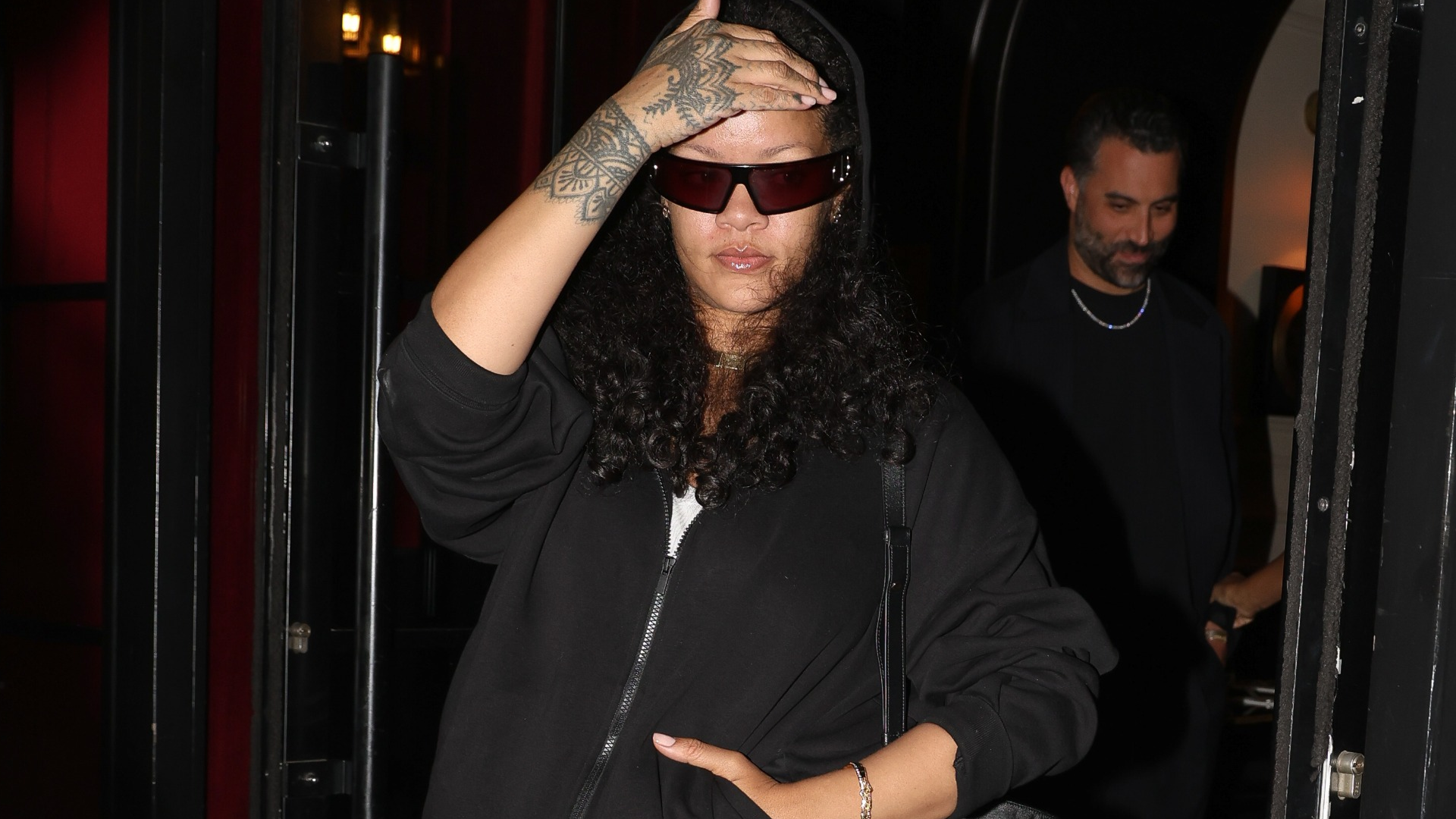
Marie Claire
Not a Denim Skirt, Not Jeans—Rihanna
Could this be fall
Kendall Jenner
Seen at: London, dinner at Cipriani (August 19)
Look: An oversized cobalt-blue button-down over a white tee and loose black pants gave her easy city dressing a vivid jolt. A burgundy Chanel maxi flap bag, pointed black heels and dark sunglasses kept the color-blocked look polished.
Image:

Source:

Harper
Kendall Jenner and Jacob Elordi’s Couple Style Is All About the Bold Primary Colors
The two are currently in London with the actor’s family
Zoë Kravitz
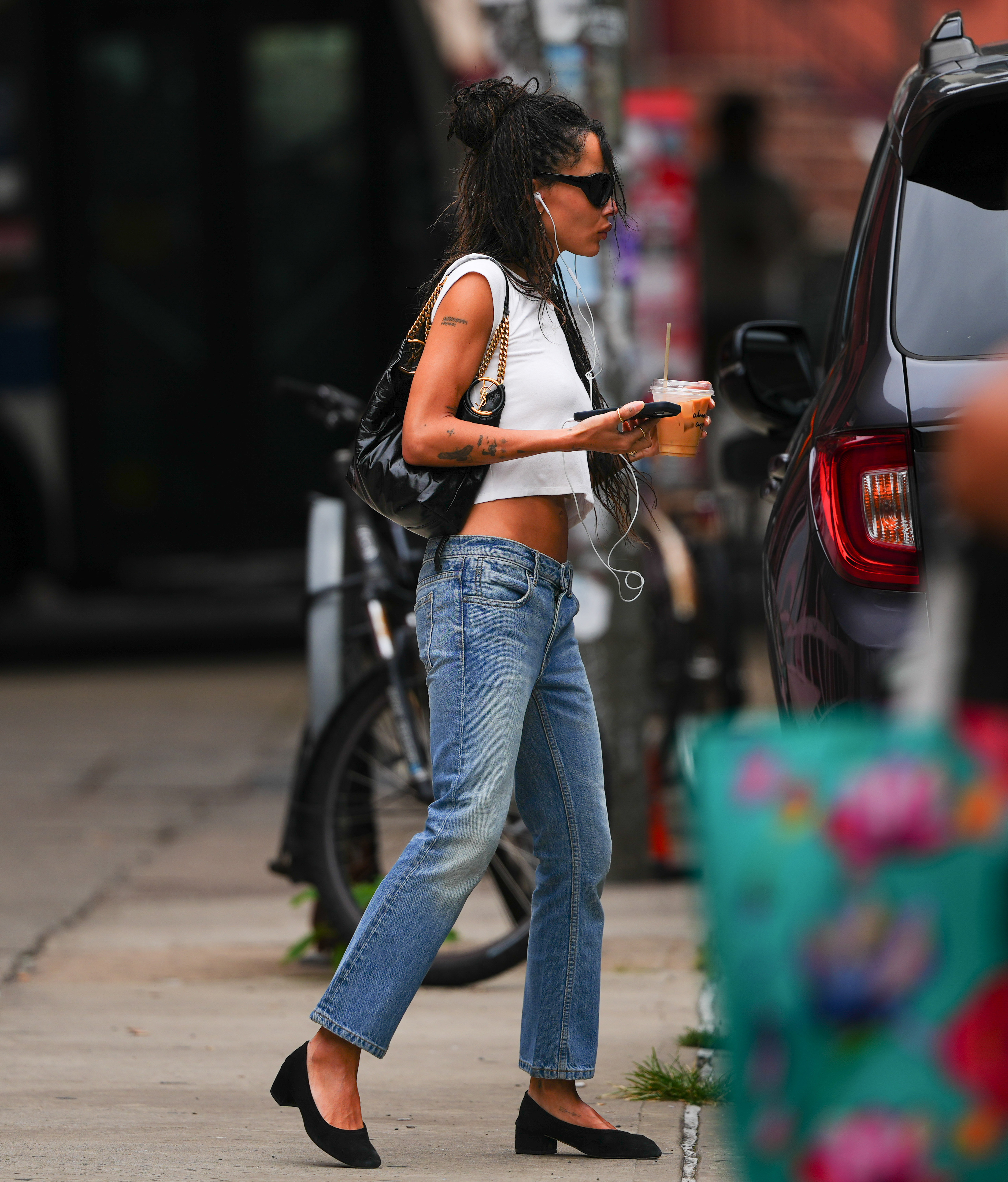
Seen at: New York City, out and about (August 22)
Look: A cropped white tee and low-rise, unevenly faded jeans kept the base minimal, while black high-vamp ballet flats, oversized sunglasses, a Saint Laurent shoulder bag and wired headphones supplied the cool-girl punctuation. It was pared-back street style with every detail doing work.
Image:
Source:

Marie Claire
Zoë Kravitz
2026 is all about high-vamp ballet flats and wired headphones.
Weekly Bitcoin Themes — August 14–21, 2026
The three strongest Bitcoin narratives from my curated YouTube channels this week, ranked by real view counts.
1. Bitcoin's Biggest Weekly Rally Since 2024
Bitcoin ripped roughly 22% this week, reclaiming its 200-day moving average and drawing the heaviest coverage of any theme by a wide margin. Real view counts confirm it: 25 videos across curated and broad-sample channels totaled about 333,000 views, led by Verified Investing at 90,294 and Pompliano at 62,665.
Verified Investing — Yields Shake Off Treasury Intervention, Start Climbing Again, Markets Dump, Bitcoin Surges (90,294 views)
Anthony Pompliano — Bitcoin's Rally Today Just Confirmed Everything (62,665 views)
Verified Investing — Markets Ignore Higher Rates, Rally On Bitcoin And Gold (26,958 views)
Crypto Banter — This Is Just the Start of a MASSIVE Bitcoin Move! (23,534 views)
Swan Bitcoin — Why Bitcoin Just Broke Out (And What Comes Next) (21,309 views)
2. Saylor and Strategy Chart the Roadmap Ahead
Michael Saylor made the media rounds this week, and Natalie Brunell's coverage drew the second-highest concentrated engagement despite coming from a single channel. Five videos totaled roughly 69,000 views, led by the Saylor and Phong Le roadmap interview at 32,524.
Natalie Brunell — Michael Saylor & Phong Le Lay Out The Roadmap (32,524 views)
Natalie Brunell — Michael Saylor: "We Have to Be Prepared for Difficult Years" (24,777 views)
Natalie Brunell — Why Are Regular People Selling BTC to Wall Street? (8,957 views)
Natalie Brunell — How Bitcoin Ownership Changed (1,501 views)
3. BIP-110 Fallout and the Bitcoin Knots Chain Split
The multi-week BIP-110 and Knots saga continued, with Bitcoin University's near-daily coverage anchoring roughly 48,000 views across five videos. It edged out this week's Coldcard hardware-wallet coverage, which totaled about 31,000 views but was driven almost entirely by one Mark Moss video with no real corroboration.
Bitcoin University — Where Do We Go From Here? (Bitcoin and Forks) (16,324 views)
Bitcoin University — Blockstream Jades, Replay Attacks, and Toast of the Towns (13,393 views)
Bitcoin University — The Current State of Bitcoin's Proof of Work (10,524 views)
BTC Sessions — Bitcoin Knots Just Split In Two... What Now? (2,794 views)
Coverage note: Joe Carlasare, Jordi Visser, Joe Nakamoto, Rabbit Hole Recap, Derek Ross, James Lavish, Peter McCormack, and Robert Breedlove had no in-window uploads this week. All view counts pulled directly from public YouTube data.
#bitcoin #nostr
Weekly Bitcoin Themes — August 14–21, 2026
Here are the three strongest Bitcoin narratives from the curated YouTube channels this week, ranked, each with its theme image above.
#1 — Bitcoin's Biggest Weekly Rally Since 2024
Bitcoin ripped roughly 22% this week, reclaiming its 200-day moving average and drawing the heaviest cross-channel coverage of any theme by far. Real view counts confirm it's the clear leader: Verified Investing's "Yields Shake Off Treasury Intervention..." pulled 90,294 views, Pompliano's "Bitcoin's Rally Today Just Confirmed Everything" hit 62,665 views, and Verified Investing's "Markets Ignore Higher Rates, Rally On Bitcoin And Gold" added 26,958 — with 25 total videos across curated and broad-sample channels adding up to roughly 333,000 views.
Verified Investing — Yields Shake Off Treasury Intervention, Start Climbing Again, Markets Dump, Bitcoin Surges (90,294 views)
Anthony Pompliano — Bitcoin's Rally Today Just Confirmed Everything (62,665 views)
Verified Investing — Markets Ignore Higher Rates, Rally On Bitcoin And Gold (26,958 views)
Crypto Banter — This Is Just the Start of a MASSIVE Bitcoin Move! (23,534 views)�
Swan Bitcoin — Why Bitcoin Just Broke Out (And What Comes Next) (21,309 views)
#2 — Saylor and Strategy Chart the Roadmap Ahead
Michael Saylor made the media rounds this week, and Natalie Brunell's coverage of his and Phong Le's roadmap discussion drew the second-highest concentrated engagement of the week, even though it came from a single channel. Saylor & Phong Le's roadmap interview topped 32,524 views, followed closely by Saylor's "difficult years" interview at 24,777 views — together with related institutional-ownership videos totaling roughly 69,000 views across 5 videos.
Natalie Brunell — Michael Saylor & Phong Le Lay Out The Roadmap (32,524 views)
Natalie Brunell — Michael Saylor: "We Have to Be Prepared for Difficult Years" (24,777 views)
Natalie Brunell — Why Are Regular People Selling BTC to Wall Street? (8,957 views)
Natalie Brunell — How Bitcoin Ownership Changed (1,501 views)
#3 — BIP-110 Fallout and the Bitcoin Knots Chain Split
The multi-week BIP-110/Knots saga continued, with Bitcoin University's near-daily coverage anchoring roughly 48,000 views across 5 videos. Where Do We Go From Here? (Bitcoin and Forks) led with 16,324 views, and Blockstream Jades, Replay Attacks, and Toast of the Towns followed at 13,393 — real numbers that, while smaller than the price-rally theme, still edge out this week's Coldcard hardware-wallet coverage (Mark Moss's single video hit 30,978 views, but had no meaningful corroboration elsewhere this week).
Bitcoin University — Where Do We Go From Here? (Bitcoin and Forks) (16,324 views)
Bitcoin University — Blockstream Jades, Replay Attacks, and Toast of the Towns (13,393 views)
Bitcoin University — The Current State of Bitcoin's Proof of Work (10,524 views)
BTC Sessions — Bitcoin Knots Just Split In Two... What Now? (2,794 views)
A note on coverage and process: Joe Carlasare, Jordi Visser (own channel), Joe Nakamoto, Rabbit Hole Recap, Derek Ross, James Lavish, Peter McCormack, and Robert Breedlove had no in-window uploads this week. The Coldcard hardware-wallet security debate was checked but excluded from the top 3 — its total views (~31K) were driven almost entirely by one Mark Moss video with no real corroboration. All images generated natively at 4:3 (2368×1776, verified ratio 1.3333) via seedream_5
WEEKLY FIAT MALFEASANCE BULLETIN -- 2026-08-13 -> 2026-08-19
lead_case: SEC charged former Tricolor executives over an alleged scheme that raised more than $1.9 billion through asset-backed securities before the subprime auto lender's bankruptcy.
src_lead_case: SEC; Reuters
lead_mechanism: The SEC alleges executives double-pledged hundreds of millions of subprime auto loans, misrepresented liens, and manipulated delinquent-loan metrics to make collateral appear eligible.
src_lead_mechanism: SEC; Reuters
lead_institutions: Tricolor Holdings; Daniel Chu; Jerome Kollar; Ameryn Seibold; SEC; U.S. Attorney’s Office for the Southern District of New York; ABS investors and underwriters
src_lead_institutions: SEC; Reuters
lead_amounts: More than $1.9 billion raised; more than $945 million of ABS principal outstanding at bankruptcy; hundreds of millions in loans allegedly double-pledged.
src_lead_amounts: SEC; Reuters
who_paid: ABS investors and lenders bore the documented exposure; ultimate recoveries and incidence were not itemized.
src_who_paid: SEC; Reuters
government_watch: Former senior NIAID official David Morens pleaded guilty to concealing federal-records communications about coronavirus grants and accepting an illegal gratuity.
src_government_watch: DOJ; Reuters
corporate_watch: Mexican affiliates of six global banks agreed to a preliminary $86.4 million settlement of claims that they rigged Mexican government-bond prices and allocations; the banks denied wrongdoing.
src_corporate_watch: Reuters
enforcement_pattern: The week paired a guilty plea with SEC civil charges and a no-admission bank settlement; remedies ranged from criminal exposure to requested disgorgement, penalties, and industry bars.
src_enforcement_pattern: DOJ; SEC; Reuters
narrative_gap: Duplicate collateral, hidden communications, and benchmark-style market manipulation are described in institutional terms as securities allegations, records-law violations, or antitrust settlements.
src_narrative_gap: DOJ; SEC; Reuters
bitcoin_counterpoint: This week’s largest documented exposures ran through asset-backed securities, bank bond markets, public research grants, and government records—not a Bitcoin-specific channel.
src_bitcoin_counterpoint: DOJ; SEC; Reuters
fiat_malfeasance_frequency: weekly
src_fiat_malfeasance_frequency: recurring weekly case selection
interpretation_narrative: Across the week, misconduct appeared in securitized consumer credit, sovereign-bond trading, and federal research administration. Pleas, civil charges, and no-admission settlements show recurring risk inside conventional institutions, with exposure borne by investors, public bodies, or counterparties.
src_interpretation_narrative: DOJ; SEC; Reuters
trend_label: entrenched
src_trend_label: SEC; DOJ; Reuters
tags: #corruption #fiat #government #corporate #nostr #weekly
WEEKLY BITCOIN ADOPTION — 2026-08-10 → 2026-08-16
weekly_active_addresses: 3,282,006 (Δ -182,195, -5.3% WoW)
new_addresses_this_week: unknown
estimated_active_users: unknown
onchain_tx_count: 4,824,817 (Δ 241,163, 5.3% WoW)
onchain_tx_volume_btc: 501,366.7 BTC (Δ -154,773.6 BTC, -23.6% WoW)
lightning_channels_opened: unknown
lightning_channels_closed: unknown
lightning_capacity_btc: 3,889.5 BTC (Δ -6.2% WoW)
merchants_accepting_btc_estimate: 26,809
notable_integrations: No major Bitcoin payment or Lightning integration announcement identified for Aug 10-16.
etf_net_inflows_btc: -6,156.2 BTC (Δ -146.5% WoW)
institutional_comment: US spot Bitcoin ETFs reversed from $853.5 million of inflows to $389.7 million of outflows, signaling softer institutional demand.
interpretation_narrative: On-chain usage was mixed: transaction count rose 5.3%, but the summed active-address proxy, transaction volume, and Lightning capacity declined; the ETF reversal adds evidence of softer institutional momentum. Overall adoption appears to be decelerating.
adoption_trend_label: decelerating
tags: #bitcoin #adoption #metrics #weekly

Beta's Lincoln

Boomer's Lincoln
The purpose of a sound American economic system is not merely to maximize national wealth, but to continually expand the number of citizens who own productive capital and can achieve genuine economic independence.
Hamilton provides the engine of national development; Jefferson provides the warning against concentrated power; Lincoln provides the ladder from labor to ownership.
The decisive question is therefore not simply whether the economy is growing, but whether the ladder still works: can ordinary people move from work, to savings, to ownership, to independence?
If that pathway remains open, growth has democratic legitimacy. If it closes—even amid rising GDP, markets, and aggregate wealth—the country faces a deeper economic and civic failure.
Focus should be on Lincoln economics.
Fashionable Women of the Week
Emily Blunt
Seen at: Anaheim, California, Disney Entertainment Showcase at D23: Legends (August 16)
Look: A navy cutout blazer with matching capri pants from Los Angeles label Mimchik turned sharp tailoring into a cool cropped-trouser moment. Long flumed drop earrings added just enough sparkle to the clean, polished silhouette.
Image:

Source:

Harper
From Nicole Kidman to Sandra Bullock, see the best-dressed celebrities of August 2026 so far
Don
Lily Allen
Seen at: Oslo, Norway, 2026 Øya Festival at Tøyenparken (August 15)
Look: Her formfitting metallic satin mini dress, oversized back bow and pastel-pink bodysuit made a high-shine stage statement, while towering silver platform heels pushed the look into glam-rock territory. The reflective fabric shifting from silver to gold under the lights made it especially memorable.
Image:

Source:
Lily Allen Performs In Silver Platform Heels At Oyafestivalen 2026
Lily Allen headlined Oyafestivalen 2026 Aug. 15 in Oslo, Norway wearing platform high-shine silver heels. The style was paired with a metallic dress.
Keke Palmer
Seen at: Oak Bluffs, Massachusetts, 2026 Martha’s Vineyard African American Film Festival (August 15)
Look: A vibrant sunshine-yellow halter dress met Mach & Mach’s crystal-covered pink jelly mules, creating a joyful color clash with serious sparkle. The clear PVC, pink-crystal 3.7-inch heels made the festival look stand out from every angle.
Image:

Source:
Keke Palmer Styles Jelly Shoe Trend At Martha's Vineyard Film Festival
Keke Palmer attended the 2026 Martha's Vineyard African American Film Festival in Mass. wearing mule jelly shoes. The style featured pink crys...
Olivia Munn
Seen at: New York City, Tribeca neighborhood (August 14)
Look: A sleek black skirt co-ord with matching slingback pumps delivered a precise, monochrome city uniform. The streamlined proportions kept the off-duty look polished without overworking it.
Image:

Source:
https://people.com/star-tracks-sunday-august-16-2026-new-celebrity-photos-updated-daily-12060858
Julia Roberts
Seen at: New York City, strolling through the city (August 11)
Look: Roberts made transitional dressing feel effortless in capri pants, a light-wash denim shirt, a hands-free crossbody bag and cork Birkenstock sandals. The relaxed denim-and-cropped-trouser pairing felt practical, current and unmistakably New York.
Image:

Source:
https://people.com/julia-roberts-capri-pants-denim-jacket-blueprint-august-2026-12025829The ultimate test of an American economic system is not merely how much wealth it creates, but whether it continually converts ordinary citizens from economic dependents into owners of productive capital.
Hamilton teaches us how to create enormous productive power.
Jefferson reminds us why concentrated power is dangerous.
Lincoln gives us the bridge:
make ownership attainable.
So I wouldn't try to choose Hamilton or Jefferson.
I'd build Hamilton's engine, install Jefferson's safeguards, and use Lincoln's ladder.
And then judge the system relentlessly by one question:
Is the ladder still working?
If each generation can realistically move from labor → savings → ownership → independence, the American economic model is doing something profoundly right.
If that pathway closes—even while GDP, stock prices and aggregate wealth continue rising—then I would consider that a much more serious warning about the health of the American economy than almost any single conventional economic statistic.
Weekly Bitcoin Themes — August 8–14, 2026
Here are the three strongest Bitcoin narratives from the curated YouTube channels this week, ranked, each with its theme image above.
#1 — BIP-110 Collapse and the Chain-Split Debate
This was the week's dominant story by a wide margin: a proposed protocol change (BIP-110) failed, triggering a heated debate over whether Bitcoin risks splitting into two chains. Bitcoin University ran a near-daily series on the fallout, but the real engagement came from broad cross-channel pickup — Natalie Brunell's deep-dive drew 43,227 views, Bitcoin University's "BIP-110 Update (It's Over)" pulled 32,597, and Simply Bitcoin's two takes drew 27,201 and 23,763 views respectively. Across the 14 tracked videos on this topic, total views hit roughly 251,000 (average ~17,946/video) — far ahead of anything else this week, and driven by three distinct channels rather than one channel's volume.
Natalie Brunell — Inside the Most Divisive Debate in Bitcoin Right Now
Bitcoin University — BIP-110 Update (It's Over)
Simply Bitcoin — Bitcoin FORKED Then $1 BILLION Flooded Into ETFs
Simply Bitcoin — Bitcoin Captured? The Battle That Changes Everything!
Bitcoin University — This Fight Ain't Over Yet (BIP-110)
#2 — Bitcoin Price Outlook: Institutional Flows vs. Saylor Selling
A tug-of-war narrative emerged between bullish institutional signals (BlackRock, JPMorgan, "Bitcoin OGs" cashing out to Wall Street) and continued selling pressure from Michael Saylor's Strategy. Simply Bitcoin's speculative "$200K explosion" video led with 35,983 views, well ahead of Adam Livingston's Saylor-endgame piece (10,222 views); a broad-sample corroborator from The Wolf Of All Streets ("Bitcoin OGs Made RECORD Profits," 11,419 views) confirmed the story reached beyond the curated list. Total across 8 tracked videos: roughly 71,700 views (avg ~8,960/video), clearly ahead of the Coldcard story below despite fewer videos covering it.
Simply Bitcoin — Did Trump and BlackRock Just Confirm a $200K Bitcoin Explosion?!
Adam Livingston — MICHAEL SAYLOR'S MIND BLOWING BITCOIN ENDGAME IS FINALLY HERE
The Wolf Of All Streets — Bitcoin OGs Made RECORD Profits - Wall Street Paid Them�
Simply Bitcoin — Michael Saylor DUMPED MORE Bitcoin
Natalie Brunell — What Happened When Michael Saylor Sold Bitcoin?
#3 — Coldcard Hack Fallout and Self-Custody Security
The Coldcard vulnerability story continued from last week, with coverage spreading to seven-plus curated channels (Natalie Brunell, Swan, Simply Bitcoin, Stephan Livera, BTC Sessions, Market Disruptors) plus mainstream pickup from Bloomberg Television. But per-video engagement stayed modest: Natalie Brunell's stolen-coin tracing video led with 12,244 views, and Bloomberg's segment added 5,335. Total across 11 tracked videos: roughly 33,100 views (avg ~3,013/video) — wide syndication but real numbers place it third, consistent with the rule that channel-count breadth doesn't override measured views.
Natalie Brunell — He's Tracing Every Stolen Coin From the ColdCard Hack. Will Victims Get Them Back?
Bloomberg Television — Bitcoin Wallet Hack Shakes Industry
BTC Sessions — The Hacks and Crashouts Continue — BTC Bottom Signs NEVER Been Stronger
Natalie Brunell — Alex Thorn: "Move Your Bitcoin Right Now or It Will Be Stolen"
Swan Bitcoin — Coldcard Broke. Multisig Held. Self-Custody Got Safer.
A note on coverage and process: all metrics above are real view/like counts pulled directly from YouTube via the verified extraction script, not estimates. Six curated channels (Mark Moss, BTC Sessions, Verified Investing, Bitcoin Magazine, Joe Nakamoto, TFTC) were re-verified this run with fresh searches. A Mark Moss "wealth-building" cluster (7 videos, ~25,600 total views) was checked but didn't clear the bar for third place. Jordi Visser, Lyn Alden, Rabbit Hole Recap, TFTC, Derek Ross, Caitlin Long, Joe Carlasare, Robert Breedlove, and James Lavish had no qualifying in-window uploads this week. All three images generated natively at 4:3 and verified.
WEEKLY FIAT MALFEASANCE BULLETIN -- 2026-08-06 -> 2026-08-12
lead_case: Former Goldman Sachs investment banker Asante Kwaku Berko was convicted of FCPA and money-laundering charges after paying more than $1 million in bribes to Ghanaian government officials tied to a power-plant deal.
src_lead_case: DOJ
lead_mechanism: The banker used corrupt payments to influence officials involved in the development and financing of a Goldman client’s Ghana power plant; the jury returned convictions after trial.
src_lead_mechanism: DOJ
lead_institutions: Goldman Sachs; Aksa Enerji; Ghanaian government officials; U.S. Attorney’s Office for the Eastern District of New York; federal jury
src_lead_institutions: DOJ
lead_amounts: More than $1 million in bribes; the power plant was estimated to generate hundreds of millions of dollars in profits; no fine or forfeiture was stated in the release.
src_lead_amounts: DOJ
who_paid: The documented bribe payments were attributed to the defendant; the ultimate incidence on shareholders, customers, or the public was not itemized.
src_who_paid: DOJ
government_watch: Judd Wire agreed to pay $1.014 million to resolve allegations that it failed to perform required tests on wire and cable used by the U.S. Navy; the settlement made no liability determination.
src_government_watch: DOJ
corporate_watch: The SEC charged Adit Ventures Management, its CEO, and affiliated general partners with alleged investor fraud, including unauthorized client-fund loans, millions in undisclosed fees, and pledging client assets for a $10 million credit line; defendants did not admit the allegations.
src_corporate_watch: SEC
enforcement_pattern: The week combined a criminal conviction with civil settlements or consent judgments that used no-admission language, left penalties or disgorgement to later court action, or resolved allegations without a liability finding.
src_enforcement_pattern: DOJ; SEC
narrative_gap: Bribery, unauthorized use of client capital, and unperformed contract testing are recast in institutional language as a conviction, a securities-law case, or a False Claims Act resolution.
src_narrative_gap: DOJ; SEC
bitcoin_counterpoint: This week’s documented large-scale abuses traveled through conventional investment banking, private funds, and government procurement channels rather than a Bitcoin-specific system.
src_bitcoin_counterpoint: DOJ; SEC
fiat_malfeasance_frequency: weekly
src_fiat_malfeasance_frequency: recurring weekly case selection
interpretation_narrative: Across this 7-day window, a criminal conviction, a private-fund fraud complaint, and a Navy procurement settlement show misconduct appearing at different layers of conventional finance and the state. Outcomes ranged from imprisonment exposure to no-admission civil resolutions, underscoring persistent institutional risk and uneven accountability.
src_interpretation_narrative: DOJ; SEC
trend_label: entrenched
src_trend_label: DOJ; SEC; FinCEN; Reuters
tags: #corruption #fiat #government #corporate #nostr #weekly
WEEKLY BITCOIN ADOPTION — 2026-08-03 → 2026-08-09
weekly_active_addresses: 3,464,201 (Δ -76,086, -2.1% WoW)
new_addresses_this_week: unknown
estimated_active_users: unknown
onchain_tx_count: 4,583,654 (Δ -69,321, -1.5% WoW)
onchain_tx_volume_btc: 656,140.3 BTC (Δ -114,669.9 BTC, -14.9% WoW)
lightning_channels_opened: unknown
lightning_channels_closed: unknown
lightning_capacity_btc: unknown
merchants_accepting_btc_estimate: 26,760
notable_integrations: Boltz suspended Lightning and Liquid swaps on Aug 3 after AI-driven attacks, temporarily affecting Aqua, Bull Bitcoin, and Zeus.
etf_net_inflows_btc: 13,247.7 BTC (Δ 1,469.6% WoW)
institutional_comment: U.S. spot Bitcoin ETFs attracted about $853.54 million in the Aug 3–7 trading week after $61.53 million of outflows the prior week, signaling a sharp return of institutional buying.
interpretation_narrative: On-chain usage softened modestly, with the active-address proxy, transaction count, and estimated volume down 2.1%, 1.5%, and 14.9%; institutional demand rebounded sharply as spot ETFs drew about 13,247.7 BTC after the prior week's outflows, leaving adoption mixed and broadly steady.
adoption_trend_label: steady
tags: #bitcoin #adoption #metrics #weekly
Fashionable Women of the Week
Anne Hathaway
Seen at: Burbank, California, The End of Oak Street world premiere (August 9)
Look: A sculptural celestial-blue-and-crimson Atelier Prabal Gurung halter top cascaded into a dramatic train over low-rise wide-leg maternity jeans, with hot-pink/fuchsia Aquazzura pumps. The unexpected couture-meets-denim contrast made her maternity red-carpet style feel modern and high-impact.
Image:
https://s.yimg.com/lo/mysterio/api/cc7841cc860cbe1d271445459434e092263fbf21dadc8388a9140a2114088a15/lightyear_networkapi/resizefill_w800_h1201%3Bquality_80%3Bformat_webp/https%3A%2F%2Fmedia.zenfs.com%2Fen%2Fwwd_409%2Ffb9c9e134e03814afada407ef44672ba
Source:
Anne Hathaway Pairs a Couture Train With Low-rise Maternity Jeans
Anne Hathaway mixed a custom Prabal Gurung silk top and cascading train with low-rise maternity jeans at Sunday's "The End of Oak Street” pr...
Olivia Wilde
Seen at: Locarno, Switzerland, The Invite premiere at the 79th Locarno Film Festival (August 8)
Look: Her Fendi Cruise 2027 dress updated black-and-white colorblocking with a plunging neckline and black leather bodice. Delicate jewelry and loose summer waves kept the bold new-bourgeoisie mood sleek rather than heavy.
Image:
https://s.yimg.com/lo/mysterio/api/c3ef9d0226b16e8e5c07dd29f89d4c5a02d6be04db6e246bf8cffc44680b1f31/lightyear_networkapi/resizefill_w800_h533%3Bquality_80%3Bformat_webp/https%3A%2F%2Fmedia.zenfs.com%2Fen%2Fwwd_409%2Fd2e1f97fa00f5a1e6fa8243517da22f7
Source:
Olivia Wilde Styles Fendi for 79th Locarno Film Festival Red Carpet
'The Invite' actress and director wore a look from the Italian luxury fashion house's cruise 2027 collection at the Locarno Film Fes...
Katie Holmes
Seen at: East Hampton, New York, Guild Hall Summer Gala (August 7)
Look: Her strapless white Fforme Paloma gown used silk-cotton organza, fringe trim and diamond-pattern texture for an airy, sculptural finish. A small blush-pink Tory Burch Fleming bag gave the red-carpet look a soft summer counterpoint.
Image:
https://s.yimg.com/lo/mysterio/api/0118ba4ce4ac55abcc723eea038d250556221c0a6f0cd6e9da830b0ec092b3fa/lightyear_networkapi/resizefill_w960_h1440%3Bquality_80%3Bformat_webp/https%3A%2F%2Fmedia.zenfs.com%2Fen%2Fharper_s_bazaar_391%2Faf01081f8278988e1860c98ce7d601fc
Source:

Harper
Katie Holmes Wears White for a Rare Red-Carpet Appearance With Boyfriend Jason Yarmosky
The couple dressed up for an East Hampton summer gala
Lola Tung
Seen at: New York City, out and about (August 5)
Look: A gauzy purple-gray Dilara Fındıkoğlu Cloudy Border dress layered a sheer short-sleeve top with bustier panels over a lilac lace-trimmed slip. The Balenciaga Le City bag and Betsey Johnson pumps made the lingerie-inspired look feel deliberately polished and street-ready.
Image:

Source:

Harper
Lola Tung Brings Serious Va-Va-Voom in a Sheer, Lace-Trimmed Maxi Dress
The summer Belly became a fashion girl
Hannah Einbinder
Seen at: New York City, out and about (August 6)
Look: Light-wash loose jeans and an oversized pale-blue button-down made an easy summer uniform, while glossy The Row loafers added quiet-luxury polish. The low-profile shoes and relaxed proportions made the off-duty styling feel especially current.
Image:
https://s.yimg.com/lo/mysterio/api/8d78ce7ad062f9eac774fbfb4701a4be289cde74051588ad884f200560ddfc92/lightyear_networkapi/resizefill_w896_h504%3Bformat_webp%3Bquality_95/https%3A%2F%2Fd29szjachogqwa.cloudfront.net%2Fimages%2F2026-08%2Fc2f10993-794a-4dbb-92ff-4605fc399969
Source:
Hannah Einbinder Delivers Early Fall Outfit Inspo in The Row Loafers
Hannah Einbinder was spotted out and about in New York showing early signs of fall dressing in The Row's low profile loafers.
The note includes 5 women from August 5–9, 2026, balanced across 3 major-event looks and 2 New York street-style looks.


