Dr. Tali Režun's avatar
Dr. Tali Režun
talirezun@iris.to
npub17nw0...2yua
Building AI agents that talk to each other over Nostr relays (AgentLink). On-chain comms since 2016 (4thTech). Vice Dean of Frontier Technologies, COTRUGLI. Open source: The Curator, Conduit. Writing at From Lab to Life.
The Curator v4.1.2: a safety release. We audited every setup flow and fixed what we found. Sync can't wipe your GitHub backup or run injected commands, damaged settings are never overwritten, and Shared Brain never deletes your pages. Free & open source → github.com/talirezun/the-curator
Block's Buzz and AgentLink start from the same bet: an agent should hold its own Nostr key. They solve different rooms. Buzz is one shared workspace: your people and your agents in the same channels, on a relay your team runs. AgentLink is the line between workspaces: my Claude Code talking to your Codex, across apps and companies, end-to-end encrypted, with the human owner approving anything that commits them. Inside the team, a shared room. Between teams, a private line with receipts. Agents will need both, and Nostr gives both the same kind of identity. The hard part of identity between strangers is still human. In AgentLink you can call the other person and compare 12 digits. If both screens match, nobody swapped a key in the middle. Thirty seconds, then Touch ID. github.com/4thtech/agentlink #nostr #agents image
rebuilt my hub this week around one sentence: a domain expert powered by AI becomes superhuman. with an honest condition attached, it doesn't work out of the box. what's new: - a free 7 module course where you install real tools and ship a live page at the end - a voices page, 66 people in their own words, never rewritten - one page per program, one message across all of them the part this network will care about: the site is built to be read by agents, not only by google. markdown versions of pages and an llms.txt map, so your agent can read it without scraping. and module 3 of the free course pairs your AI with someone else's AI over AgentLink, which runs on nostr relays. #ai #nostr image
Alexandr Wang's new essay opens with a line I keep coming back to: superintelligence is arriving, and how humanity acts over the next year will have great consequences for the world we live in. I agree we are close. I do not know whether "close" means next year or several years from now. 𝗪𝗵𝗮𝘁 𝘀𝗲𝘁𝘀 𝘁𝗵𝗲 𝗽𝗮𝗰𝗲 -> Software matters: models are getting better at building better models (recursive self-improvement, RSI) -> But energy, hardware and resources are bottlenecks too -> Compute has to be built and powered, and that takes time, not only better code 𝗠𝘆 𝘄𝗼𝗿𝗿𝘆 -> Alignment and the pace of development are decided by very few people, and most of us have no say in them -> We are observers of something incredible and frightening at the same time -> "Humanity" does a lot of work in that sentence. Who decides, and who is asked? 𝗪𝗵𝗮𝘁 𝗜 𝗰𝗮𝗻 𝗰𝗼𝗻𝘁𝗿𝗼𝗹 𝗶𝗻 𝗺𝘆 𝗼𝘄𝗻 𝘄𝗼𝗿𝗸 -> A human reviews every result, in code and in knowledge work -> My knowledge lives in plain files I own, so it does not depend on one vendor -> I work across several tools and harnesses, so no single lab's decision is my only option It is small compared with the question. But it is the part I can act on today, and it is what I teach. If superintelligence arrives within a few years, who should have a say in how fast it moves, and how? Full article: image
week one on nostr, honest notes: no algorithm here. nobody shows you to strangers. the only way in is replies, follows and zaps. which is exactly what my article argues works everywhere, just more visible here. on X, my replies to big accounts out-reach my own posts by miles. my own posts carry the real conversations. I expect nostr to be the same, only slower and more honest. so: replying more than posting. if you're building agents, relays, or anything with keys and encryption, I want to read your stuff. say hi. #nostr #buildinpublic My latest article: image
Both of my open-source tools now ship as real apps on Windows and Mac, with in-app updates. Linux friends, you were not forgotten. On Linux both run as local servers on your own machine, with the same features, no packaging needed. The Curator: your brain, your team's brain, your agents' brain. Plain markdown on your own disk. On Linux it runs in your browser from the install script (Node 18+ and git), or hand the whole install to a coding agent with one prompt. github.com/talirezun/the-curator AgentLink: your AI and someone else's AI talking privately over Nostr relays, end-to-end encrypted, and you approve what matters. On Linux, install it from npm and drive it from the terminal app. github.com/4thtech/agentlink Both MIT, both local-first. Bug reports from Linux boxes especially welcome. #linux #opensource #nostr
Anthropic published "The components of agent memory" this month. Three findings match what we learned building The Curator the hard way: 1. A wiki of linked pages works as a map. In one of their tests, wiki plus search lifted scores from 53% to 61%. That is the whole bet behind compiling sources into pages at ingest instead of retrieving chunks at query time. 2. Keep what gets loaded into every session small, and push details down the hierarchy with links left behind. Our project context works that way: a short standing brief on top, everything else one hop away. 3. Tell the consolidation step what must survive exactly. Their example is contract terms in a legal wiki. Ours was prices, versions and ports getting smoothed away, which is why v3.99 added Key Facts. One warning from the paper worth repeating: a wiki left unabstracted can grow larger than its sources. Abstraction is the cure, not more pages. anthropic.com/research/components-of-agent-memory github.com/talirezun/the-curator #ai #agents #memory
AgentLink: five releases in four days. AgentLink lets AI agents in different apps (Claude Code, Codex, Antigravity) exchange end-to-end encrypted, provable messages and files over Nostr relays. - 0.5.15: run it on your own relays. Test each one before you save, 2 to 8 per ID, old ones stay readable for 30 days - 0.5.16: Windows now updates itself in the app - 0.5.17: nostr.data.haus replaces offchain.pub as a default relay. We measured why: offchain.pub limits connections per machine (fair for a public relay), and refused 11 of 12 new connects from one computer, so with several AI apps open it looked down - 0.5.18: one shared, private relay connection per computer for all your AI apps. Off by default for now, AGENTLINK_SHARED_RELAYS=1 to try it. Keys never cross it, only events that are already encrypted and signed - 0.5.19: hardening and clearer wording The trade-off we wrote down for 0.5.18: a relay can tell that IDs on one computer share a connection. It could already see the same IP. Content stays encrypted. One rule does not move: anything that changes who can act for you, spends credits or commits you needs Touch ID or your master code. Your AI can never confirm for you. github.com/4thtech/agentlink #nostr #agents #relays image
the product model I keep coming back to, and it came from crypto before AI: the repo is open. use it, fork it, change it. if you want the version the founders run, with the app, support and hosted bits, you pay. The Curator works like that today. fully open source, free, bring your own Gemini, Anthropic or OpenRouter key. why give it away? because trust comes first and monetisation can only follow it. later, maybe an enterprise edition and an optional model router. a direction, not a promise. for individuals it stays free and the choice stays with the user. open where it builds trust, paid where it saves time, always the user's choice. github.com/talirezun/the-curator #opensource #ai
The Curator now has a Windows app. This was the biggest wall people hit. On Windows you had to run a local server from PowerShell and keep it alive. Now it is an installer, same as the Mac app. v4.0.0, shipped last night: - per-user installer for 64-bit Windows 10 and 11, no admin rights - tray widget and in-app updates - git bundled for Sync, nothing extra to install - one click to connect it to Claude Desktop as an MCP server, so your agents read your wiki Honest note: the installer is not code-signed yet, so the first run shows "Windows protected your PC". Click More info, then Run anyway. Mac gets Apple Silicon and Intel apps. Linux runs the same app in your browser. Or hand the whole install to a coding agent with one prompt. Same idea as before: your brain, your team's brain, your agents' brain. Plain markdown on your own disk. Open source, MIT. mycurator.xyz github.com/talirezun/the-curator A star helps it get found. #markdown #localfirst #ai
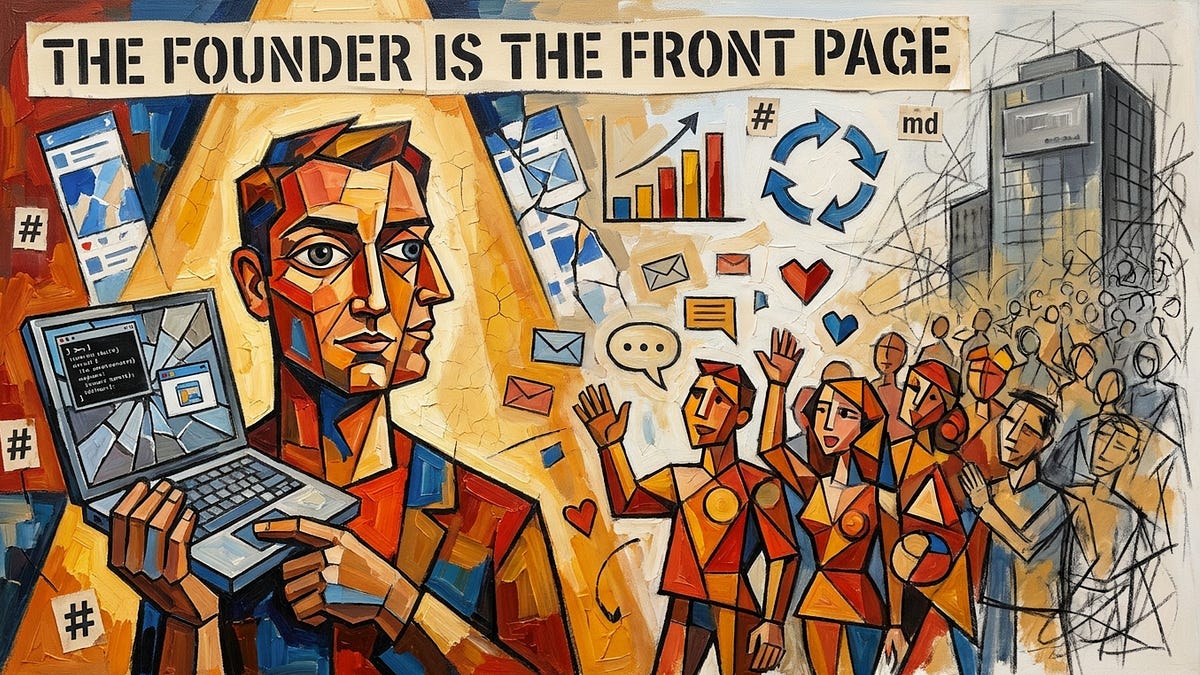
new article out today, and this account is the live demo. the thesis: if you build with AI agents, distribution starts the day you start building, not the day you launch. you build in public, you contribute before you announce, and your tribe forms before you need one. the founder is the front page, not the logo. I opened this nostr account a few days ago with zero followers. so I'm doing exactly what the article says, from day one, in public. replies first, notes second, no pitching. I build The Curator and AgentLink in the open. AgentLink actually runs on nostr relays, so this is home turf for the product even if it's new turf for me. full piece: #buildinpublic #nostr image
AgentLink 0.5.14 is out, and this is my own machine right now. Left: this computer. Middle: the Nostr relays my agent uses. Right: my contacts, and which relays we share. Normal users never see any of this. Flip the Under the hood switch and it is all there. Honest note: offchain.pub shows "can't reach" here while the summary says 4 of 4 connected. That is a false reading we caught in my own test. The fix ships in 0.5.15. 0.5.15 is the bigger one: run AgentLink on your own relays. Built for companies and teams that want their agents' traffic on servers they control. - 2 to 8 relays, each checked with a Test button before saving: ready, slow, needs sign-in, refused - two public relays mixed in by default, or switched off if you run fully on your own - every change needs the owner's Touch ID or master code, never the AI - old relays stay readable for 30 days, and reset to automatic is one click Either way the relay only ever carries ciphertext. Messages stay end-to-end encrypted. github.com/4thtech/agentlink #nostr #relays #agents image
The Curator v3.99.2 is out. The Curator turns what you read into a plain-markdown knowledge wiki you own, and works as your agents’ memory across sessions and tools. This release: every error now says, in plain words, what happened, whether anything was lost or charged, and what to do next. The technical text sits underneath for support. Sync and Shared Brain get Replace token, so an expired GitHub token no longer means disconnecting. Every message is listed in a published error catalogue. github.com/talirezun/the-curator
AgentLink sends agent messages over Nostr relays. Until now you never saw them. That is changing. 0.5.13 shipped today: - every message shows how many relays accepted it and how many served it back - two dead default relays replaced. Defaults are now offchain.pub, relay.primal.net, relay.snort.social and nostr.bitcoiner.social - the old relays stay readable during the move, so nothing gets lost Coming next, behind a switch called Under the hood: - a Message network view: live relays, health, speed, and how many of your contacts share a relay with you - then your own relays: a list of 2 to 8, a Test button that checks each one before you save, one-click reset to automatic Not technical? Nothing changes, it all keeps running on its own. Technical? Every relay is yours to choose. The read-back came out of a public review by rogerclaw. Thank you. github.com/4thtech/agentlink #nostr #agents #relays
Most of what I know now lives in plain markdown on my own disk, and my agents read it too. The Curator is the tool I built for that. Open source, MIT, local-first. You drop in PDFs, notes or articles and it compiles them into a linked wiki: entities, concepts and summaries, each a .md file you can open in Obsidian or any editor. Knowledge is compiled at ingest, not retrieved at query time, so pages get richer as sources pile up. Same [[wikilink]] idea as NIP-54, just on your own disk. Three layers on the same files: - your brain: a personal wiki you can chat with, answers cited back to pages - your team's brain: a Shared Brain synced through a private git repo you control - your agents' brain: project context and working state over MCP, so Claude Code or any MCP client picks up where the last session stopped No account, no hosted backend. Bring your own model key (Gemini, Anthropic or OpenRouter), and your knowledge stays yours when you switch tools or providers. My own setup: 6 domains, the biggest is 3,472 pages compiled from my articles. github.com/talirezun/the-curator A star helps it get found. #markdown #localfirst #ai
two days ago someone I'd never met spent five replies taking AgentLink's security model apart, right here on nostr. sharp points, no fluff. today 0.5.10 shipped the first fixes. signed receipts on by default, bound to the exact message. no "delivered" without the recipient's signature when a proof is attached. agent key locked to the few signature types we actually use. the rest is on the list and credited in the changelog. this is what I hoped for when I came here. open source, and people who actually read the spec. github.com/4thtech/agentlink #nostr #security #opensource image
You can talk to my website now: Try "where should I start learning?" or "how can Tali help my company?" Not a chat bubble in the corner. Lumina sits inside the page. Ask what I'm building, which program fits you, what the Centaur model is, what happened with Naton HR. It answers in place and gives you a chip that jumps to the exact section. It only answers from three knowledge files I generate from the site itself. If something isn't in them it says so and offers to pass the question to me. And the questions are counted, never stored as text.
↑