Trey's avatar
Trey
tshodl@nostrplebs.com
npub1m6y9...e2p9
Bitcoin + FIRE | Newsletter: firebtc.io | VP Sales @unchained
Trey's avatar
Trey 1 month ago
FIRE BTC crossing 2,000 readers was one of those small milestones that felt bigger than the number. When I started writing about bitcoin and financial independence, I wasn't trying to build a media business. I was trying to explain the thing I couldn't stop thinking about: if the goal of FIRE is to buy back your time, then the money you save in should matter just as much as the savings rate, withdrawal rate, and annual expense number. The interesting part isn't that 2,000 people subscribed to a newsletter. The interesting part is that 2,000 people were willing to question the default path at the same time. Work forever, save in melting money, outsource your financial thinking to institutions, then hope the spreadsheet still works 30 years later. Bitcoin changes that conversation because it forces you to think in ownership terms. What do you actually control? What can be debased? What can be seized, repriced, delayed, taxed, or inflated away? That's why this milestone mattered. The project was never only about posts, charts, or paid subscriptions. It was about building a place for people who want more time, better money, and a plan that doesn't require pretending the fiat system is fine. Read the full piece here:
Trey's avatar
Trey 1 month ago
A 50-year mortgage sounds ridiculous at first, and in many cases it probably would be. But the useful question isn't whether the phrase makes you angry. The useful question is what happens to the monthly payment difference. If a longer mortgage drops the payment by a few hundred dollars per month, that creates liquid cash flow. If that cash flow gets spent on lifestyle creep, then yes, you probably just made yourself poorer for longer. But if it gets invested consistently, the math changes quickly because the money starts compounding years earlier. That's the part people miss when they focus only on the amortization schedule. Home equity is real wealth, but it's not very useful when you need flexibility. You can't sell one bathroom to cover a job loss, a medical bill, or a stretch of lower income while you're pursuing FIRE. Liquidity matters because freedom isn't only a net worth number. It's the ability to make choices without being forced into a bad sale at a bad time. This doesn't mean every person should chase the longest possible mortgage. It means debt duration is a tool, and like every tool in personal finance, it can either make you fragile or help you build a bigger liquid asset base. The difference is whether you actually invest the gap. Bitcoin makes the point even sharper. We still live inside a fiat system that pushes people toward longer debt and higher asset prices, but you can recognize that reality without pretending it's ideal. Use the system where it helps you stack assets, preserve liquidity, and buy back your time sooner. I ran the numbers on the 50-year mortgage debate here:
Trey's avatar
Trey 1 month ago
Many bitcoiners have a stacking plan, but very few have an exit plan. I don't mean an exit from bitcoin back into the fiat system. I mean a plan for how the stack eventually funds your life. That question gets uncomfortable because the meme answer is always more bitcoin, and directionally, I agree with it. More bitcoin is better than less bitcoin. But money is still a tool. If bitcoin is supposed to buy back your time, it has to connect to your expenses, your other assets, your withdrawal order, and the life you're trying to build. Traditional FIRE starts with a simple question: how much does your life cost? The 4% rule turns that into a rough 25x expense target, which is useful, but incomplete once bitcoin is part of the portfolio. Bitcoin changes the expected return profile. Withdrawal order matters too. If I own stocks and bitcoin, the bitcoin is the last thing I want to sell, because the whole point is to give the highest-upside asset more time to compound while lower-upside assets fund the early withdrawals. That means the question isn't 0.1 BTC, 1 BTC, or 4 BTC. The question is what your expenses, timeline, outside income, taxes, liquidity, and asset mix require from the portfolio. Stack hard while your income still moves the balance sheet. Then, when the stack is large enough, learn how to coast and spend with intention. The goal was never a bigger number for its own sake. The goal is optionality. If you want to think about bitcoin as part of a real financial independence plan, read the full piece here:
Trey's avatar
Trey 1 month ago
After 60, "one more year" sounds like the responsible choice. Sometimes it is. If the plan truly needs more margin, keep working. But the extra paycheck has to be measured against the year you're spending to get it. That year may be one of your healthier ones. It may be a lower-stress year you could have used for travel, family, consulting, Roth conversions, capital gains planning, or simply learning how retirement feels while you still have the energy to enjoy it. The portfolio question matters too. The plain 25x rule is useful, but it was built around traditional assets and traditional assumptions. If you own a meaningful amount of bitcoin, forcing the whole plan through a generic stock-and-bond ruler can make you look farther away than you are. That doesn't mean pretending volatility doesn't exist. It means separating the portfolio into sleeves, deciding what gets spent first, and giving bitcoin time to do what you own it to do. The question isn't whether more money would be nice. More money is always nice. The question is whether the next year of work buys enough extra freedom to be worth the year of life you trade for it. Read the full piece:
Trey's avatar
Trey 1 month ago
Strategy sold 32 BTC and people acted like Saylor had abandoned the entire thesis. The sale was 0.003793% of Strategy's bitcoin stack. That is a tiny, public demonstration that bitcoin on the balance sheet can be turned into cash when obligations require it. That matters because STRC and the other preferreds depend on investors believing the dividends can be funded in more than one way. Strategy can issue common stock, issue more preferred equity, use its dollar reserve, borrow, or sell a little bitcoin. The 32 BTC sale put that option on record. The household version is less technical, but it is the same basic question. If your portfolio exists to buy freedom, it eventually has to fund real expenses: housing, food, health insurance, travel, kids, taxes, and the rest of normal life. When that bill arrives, you have to choose a cash source. I still think bitcoin should usually be the last asset sold. Let the strongest asset breathe if you have cash, stocks, or lower-upside assets available. But last doesn't mean never. If selling some bitcoin reduces stress, keeps your family stable, or supports the freedom you were trying to buy in the first place, the sale can be correct. Read the full piece:
Trey's avatar
Trey 1 month ago
Last year I set up a Bitaxe with my daughter, which is a tiny open-source bitcoin miner that fits in the palm of your hand. For her, it was wires, a little screen, and questions about what hashes per second means. For me, it was a way to see part of the bitcoin network doing something in front of us. The expected ROI is awful. My little machine has roughly a 1 in 15,000 chance of finding a block over a full year. That's not underwriting I would put in a FIRE plan. Still, solo mining teaches the right lesson. Mining is what ties bitcoin to the real world. It takes energy, hardware, and work to add transactions to the timechain. That cost makes the ledger expensive to attack and gives bitcoin its physical anchor. Even though mining is now a serious commercial industry, the network is still permissionless. Anyone with a miner and a power source can point hashrate at the network or a pool and receive bitcoin without asking a bank, brokerage, employer, or app for permission. If your FIRE plan is built around control, that lesson is worth seeing up close. You don't need every hobby to have positive expected value. Sometimes the value is learning how the system works before you trust it with your future. Read the full piece:
Trey's avatar
Trey 1 month ago
Bitcoin corrections are where vague conviction gets marked to market. A hard pullback is never fun. The doom posts get louder, and people start explaining why the cycle must be broken. But for a FIRE investor, the first question shouldn't be whether bitcoin can fall hard. Of course it can. The better question is whether your plan needed the price to move in a straight line. Markets hate uncertainty, and when investors want to reduce risk, bitcoin is easy to sell. It trades 24/7 across borders, without waiting for the opening bell, so the price can react violently while everyone is processing the same macro panic. This doesn't change the fixed-supply thesis. It just reminds you that bitcoin's volatility is the cost of owning an asset the world is still learning how to value. The FIRE lesson is simple: keep your expenses intentional, keep saving the excess, and don't size any position so aggressively that a normal bitcoin correction can bully you out of your own plan. Corrections expose leverage, impatience, and upside-only conviction. They also give disciplined savers a chance to keep accumulating the asset they wanted anyway, at a lower price. FIRE works best when the plan already assumes ugly markets will show up. Read the full piece:
Trey's avatar
Trey 1 month ago
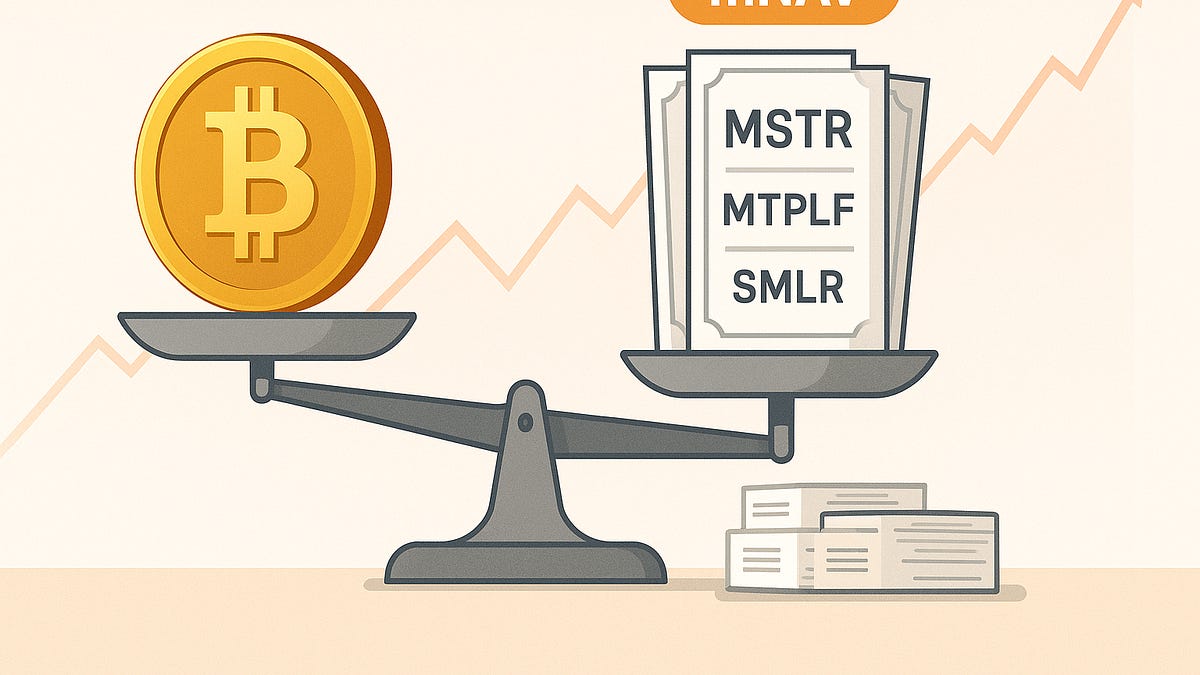
When you buy a bitcoin treasury company, you're buying the bitcoin on the balance sheet and a story about what the market will pay for that bitcoin. That story has a number: mNAV. If a company holds $1 billion of bitcoin and the market values the business at $2 billion, the mNAV is 2.0. You're paying two dollars for every dollar of BTC exposure before you even start thinking about debt, dilution, management, or future BTC yield. That can work beautifully in a bull market. Bitcoin goes up, the premium expands, and the stock can rip harder than spot bitcoin. That is the trade people get excited about. But the same mechanism cuts the other direction. If bitcoin rises and the premium compresses, your stock can lag even while the underlying bitcoin stack is doing exactly what you wanted. You were right on bitcoin, but wrong on the premium. For a FIRE investor, the benchmark matters. Spot bitcoin is the hurdle rate. If you're taking company risk, leverage risk, dilution risk, and market-multiple risk, you need a reason to believe those risks will pay you in more sats over time. This doesn't make Strategy, Metaplanet, or any other treasury company automatically good or bad. It means you should know the premium you're paying, know what has to happen for that premium to hold, and avoid confusing levered exposure with free outperformance. Read the full issue:
Trey's avatar
Trey 2 months ago
The dividend pitch is emotionally clean. Build a portfolio that sends you checks, cover your expenses with the checks, and never sell a share. I get why that feels attractive, especially if you're trying to design a life that doesn't depend on a paycheck. The problem is that before you reach FIRE, cash flow isn't the scarce resource. Compounding is. When a company pays a dividend, the cash leaves the company and the stock price adjusts. You didn't create value out of thin air. You moved value from one pocket to another, and in a taxable account, you may owe taxes on that movement whether you needed the cash or not. That matters because total return is what gets you to your FIRE number faster. I compared SCHD and VTI from late 2019 through December 23, 2024. SCHD returned 69%; VTI returned 93%. That gap can mean years of extra saving before work becomes optional. This is why the criticism that bitcoin doesn't pay a dividend always misses the point. Bitcoin is closer to cash money than a productive company, and the return comes from increased purchasing power over time. If you need income later, you can sell small portions of bitcoin or VTI as needed, often with more control over taxes than forced dividend income. Read the piece:
Trey's avatar
Trey 2 months ago
Golf is one of those games that looks simple until you try to play it well. Hit the fairway, hit the green, two-putt, move on. Easy enough in concept, but anyone who has spent time on a course knows the real game is patience, repetition, and keeping your misses small. That maps pretty cleanly to bitcoin. A low time preference matters because neither skill nor conviction shows up on command. You build it over time by doing the boring work while other people are looking for shortcuts. In golf, that means range balls, bad rounds, and learning what your swing actually does. In bitcoin, it means learning money, custody, volatility, tradeoffs, and why the easy-looking shortcut is usually where the risk is hiding. Proof of work matters because you can't fake either one. A good golf swing has to be earned, and a bitcoin transaction has to be valid. The practical lesson is course management. You don't need to hit the perfect shot every time. You need to avoid the mistake that ruins the round. For bitcoin, that means holding your own keys in a fault-tolerant way, having a succession plan, and staying away from yield products, trading gurus, and anything tempting you to overswing for a few extra yards. Read the full piece:
Trey's avatar
Trey 2 months ago
FIRE math usually starts with a clean equation: save 25x your annual expenses, invest it, and eventually you can stop depending on a paycheck. That framework is useful, but it leaves out a harder question. What happens if the wealth you saved for decades still depends on someone else's permission when you actually need it? That permission can show up as a bank delay, a custodian rule, a frozen account, a policy change, or a system-wide rescue that preserves the institution while quietly debasing the currency you're holding. The modern financial system doesn't really run out of reserves anymore. It prints, backstops, extends, and intervenes, and the cost gets pushed into purchasing power over time. Bitcoin matters in a FIRE plan because it gives you a way to hold a portion of your wealth outside that permission structure. Not as a slogan, and not as an excuse to ignore liquidity, taxes, custody, or volatility, but as a practical answer to the access problem. If you hold your own keys, the relationship changes. You aren't asking for permission to move your money. You are taking responsibility for it. That is a different kind of independence, and I think it starts at the household level long before it scales anywhere else. Read the full piece:
Trey's avatar
Trey 2 months ago
The default timeline has a bad tradeoff built into it. When you're young, you usually have time and energy, but not much money. In the heavy career years you may have energy and money, but very little control over your time. Later, you may finally have time and money, but the energy that made the old dreams exciting has started to fade. That structure is treated as responsible because it produces a retirement account at the end. But a number in an account doesn't fix the fact that your best years are a one-way asset. FIRE is valuable because it challenges the timeline itself. The goal isn't to stop working so you can win a status game with a lower retirement age. The goal is to create more overlap between your money, your time, and your energy while you can still use all three. Bitcoin fits that frame because it protects the money side of the plan from a system built to debase savings over time. It doesn't remove the need for cash, planning, custody, or a sane withdrawal strategy. It gives the plan a harder monetary base so the years you buy back aren't priced in melting dollars. A good FIRE plan goes beyond reaching 25x expenses. It should make sure the life you're funding is still available when you get there. Read the full essay:
Trey's avatar
Trey 2 months ago
A Canadian lottery winner choosing $1,000 per week for life instead of a $1 million lump sum sounds responsible at first. I get the instinct. A steady check feels safer than a big pile of money that can be mismanaged, especially when everyone has heard stories about lottery winners going broke. The problem is that safety has a cost. At $52,000 per year, it takes almost 20 years just to receive the nominal $1 million. That already ignores the time value of money, but inflation makes it worse because every future check buys less than the one before it. If you use 7% as a rough money-supply-growth lens, the present value of those payments never reaches a real $1 million. Even using a cleaner 2% inflation assumption, it takes nearly 25 years to get back to the purchasing power she could have started with on day one. The lump sum changes the whole problem. Treasuries, an index fund, or bitcoin all introduce different risks, but at least the capital can start compounding immediately. That optionality is the difference between managing wealth and being drip-fed income while the currency loses value underneath you. This is why financial education matters. People make choices that look conservative because nobody taught them how opportunity cost, compounding, and fiat debasement actually work. Read the full breakdown here:
Trey's avatar
Trey 2 months ago
The traditional FIRE conversation can get a little messy because the labels all float around independently. Lean FIRE. Barista FIRE. Coast FIRE. Fat FIRE. They’re useful terms, but they don’t always tell you where you actually stand or what your next step should be. One person’s Barista FIRE is another person’s Coast FIRE, and the whole thing starts to feel like a menu of lifestyle choices rather than a progression. A cleaner way to think about it is expense coverage. How many years of annual expenses can your portfolio support today? That number tells you a lot. At 0-1x, you’re building control and trying to avoid getting knocked backward by every surprise expense. At 5-10x, the compounding becomes visible and career risk starts to feel less dangerous. At 10-15x, you may be able to downshift work because your portfolio can cover a meaningful chunk of life. At 25x, the classic FIRE math says your current lifestyle is funded. The point is that you don’t have to wait until 25x to benefit from financial independence. Every level gives you something: stability, flexibility, optionality, lower stress, or a better ability to make choices without begging your paycheck for permission. That’s the useful part of the FIRE Spectrum. It turns a vague goal into a map. Read the full breakdown here:
Trey's avatar
Trey 2 months ago
If someone asks how much bitcoin they need to retire, the first number I want usually isn't their bitcoin balance. I want to know what their life costs. A clean BTC target sounds better because it travels faster. One bitcoin. 6.15 bitcoin. Some round number that feels like a finish line. Those can be useful for motivation, but they aren't enough for a retirement decision because retirement is a coverage problem. Can your accessible portfolio fund your expenses for as long as you need it to? That answer starts with three inputs: annual expenses, liquid investment portfolio value, and time horizon. Expenses tell you what has to be funded. Liquid assets tell you how much usable wealth you already have. Time horizon tells you how long bitcoin has to work before it needs to help pay the bills. Two households can have the same net worth and need completely different BTC targets if one has most of the money trapped in home equity, or if one wants to retire now while the other has ten years of runway. After that, you still have to stress-test taxes, account access, withdrawal order, bear markets, and spending flexibility. But at least you're solving the right problem. Read the full piece:
Trey's avatar
Trey 2 months ago
My little Bitaxe has roughly a 1 in 5 million chance of finding a block on any given day. Run it every day for a year and the odds improve to about 1 in 15,000, which means I should expect to hit a block sometime around the year 17,000. Not exactly a retirement plan. But that misses why people care about solo mining in the first place. A Bitaxe is a tiny open-source bitcoin miner that fits in your hand, runs on about as much power as a bright LED bulb, and gives you a physical connection to a network that usually feels abstract. You plug it in, point it at the network, and watch it try to solve the same puzzle as the industrial miners running entire warehouses. The expected return is awful. The educational return is pretty good. For my daughter, it was a Saturday project with wires, a little screen, and questions about hashes per second. For me, it was a simple way to show that bitcoin mining isn't magic and isn't reserved only for giant companies with cheap power contracts. Anyone with a miner and a power source can participate. You can mine through a pool for steady sats, or you can solo mine and take the absurd long-shot bet. Either way, the door is still open. That permissionless quality is easy to underappreciate until you see it humming on your desk. Read the full piece:
Trey's avatar
Trey 2 months ago
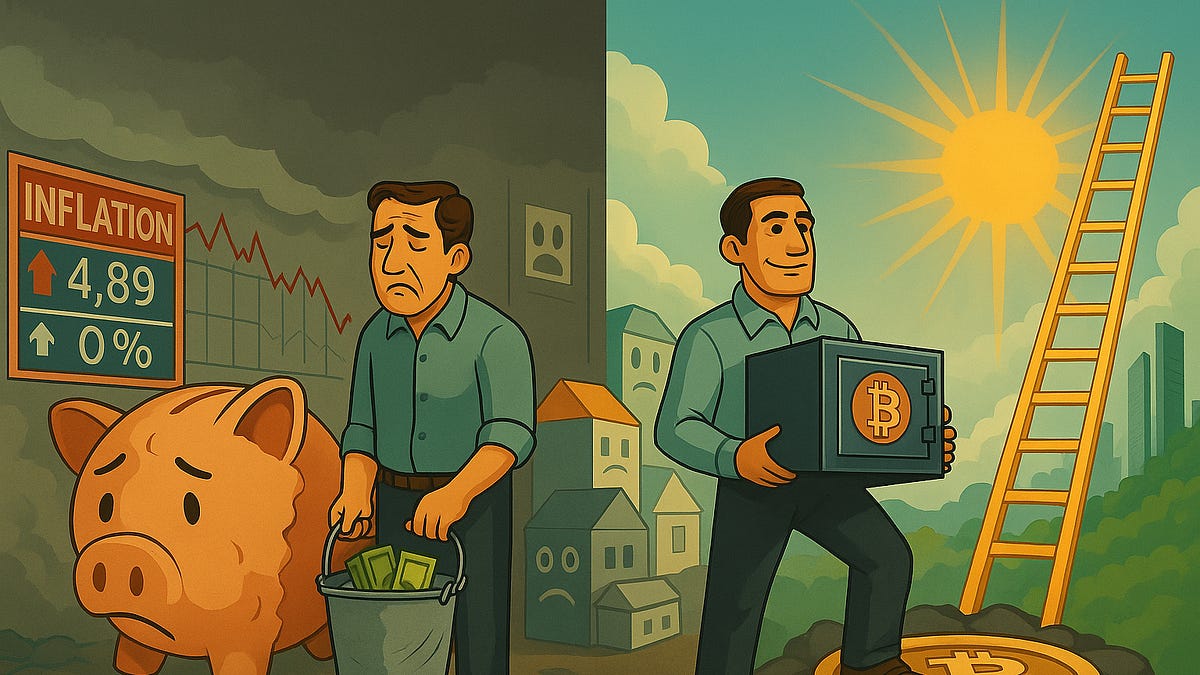
A lot of people are doing the right things and still feel like they’re falling behind. They work hard, spend less than they earn, keep cash in a high-yield savings account, contribute to retirement accounts, and buy index funds. That should be enough to build breathing room, but it doesn’t feel like enough anymore. The problem is that dollars make a weak long-term savings asset. Prices don’t rise evenly, but the things that matter most for a FIRE plan, like housing, education, insurance, and childcare, keep eating more of the paycheck. Your discipline can be real and your purchasing power can still leak away. That’s why investing became mandatory. People don’t buy stocks because they love volatility, earnings calls, or portfolio theory. They buy them because sitting in cash means accepting debasement as the default plan. Bitcoin changes that starting point. A fixed supply doesn’t remove risk, and it doesn’t make planning optional, but it gives savers a monetary asset that can’t be printed to cover someone else’s shortfall. For FIRE, that matters because the goal isn’t to look wealthy on a statement. The goal is to protect the time you traded for money and turn it into future freedom. Read the full piece:
Trey's avatar
Trey 2 months ago
A funny thing happens when bitcoin starts running. The same plan that felt disciplined at $20k starts feeling too slow at $60k, and by the time the chart is pushing higher, it’s easy to convince yourself that you’ve found a way to improve on the thing that already worked. That’s usually where the trouble starts. Buying bitcoin with callable leverage, trying to sell the top and buy the bottom, or chasing some other trade because it might give you more bitcoin all come from the same place. The market made you feel smart, and now you want to press. I get the temptation because I’ve felt it too. I’m not a good trader. My timing is pretty terrible. I know this because I’ve spent too much time, energy, and money trying to prove otherwise. For a FIRE plan, the point isn’t to win every move. The point is to build a balance sheet that buys back your time and can survive your own impulses when everything feels easy. That’s why the boring advice keeps surviving every cycle: stay humble, stack sats, avoid leverage that can force your hand, and don’t trade away the asset you actually want to own. Read the full piece:
Trey's avatar
Trey 2 months ago
Traditional FIRE spends a lot of time on the withdrawal rate, which makes sense. If your portfolio can't support your expenses, you aren't financially independent. But once you own more than one asset, there's another question sitting underneath the 4% rule: which asset actually pays the bill? Cash, bonds, taxable stocks, retirement accounts, home equity, and bitcoin don't all play the same role. A dollar in your checking account can buy groceries next week. Home equity might make you wealthy on paper, but it doesn't pay the grocery bill unless you sell, refinance, or borrow against it. For a mixed-asset FIRE BTC household, I think the hierarchy should be explicit. Spend the weaker, more liquid assets first, and give bitcoin the longest runway possible. That doesn't mean bitcoin is never sold. It means selling it should be a planned decision, not a blended-withdrawal default hidden inside a calculator. The useful question is simple: if you stopped working today, how many years could your non-bitcoin liquid assets cover your expenses before you were forced to sell BTC? That's your bitcoin runway. I wrote about withdrawal order, spendable runway, and why the asset you sell first can matter as much as the withdrawal rate:
Trey's avatar
Trey 2 months ago
Many bitcoiners have a stacking plan. Very few have an exit plan. That sounds strange because bitcoin already feels like the exit plan. It is the off-ramp from a broken fiat system, so talking about "exiting" bitcoin can sound like going backward. That's not what I mean. The real question is how your stack eventually funds your life. If bitcoin is supposed to buy back your time, it has to connect to your expenses, your other assets, your withdrawal order, your taxes, and the life you're actually trying to build. Otherwise, the default answer is always more. More sats, more work, more waiting, more reassurance. FIRE helps because it starts with a useful question: how much does your life cost? From there, bitcoin changes the math because the asset mix matters and the withdrawal order matters. If I own stocks and bitcoin, the bitcoin is the last thing I want to sell. I'd rather let the highest-upside asset keep compounding while lower-upside assets handle the early withdrawals. The point isn't to stop stacking too early. The point is to know what the stack is supposed to make possible. I wrote about how bitcoiners can turn a stacking plan into a real financial independence plan: