Trey's avatar
Trey
tshodl@nostrplebs.com
npub1m6y9...e2p9
Bitcoin + FIRE | Newsletter: firebtc.io | VP Sales @unchained
Trey's avatar
Trey 0 months ago
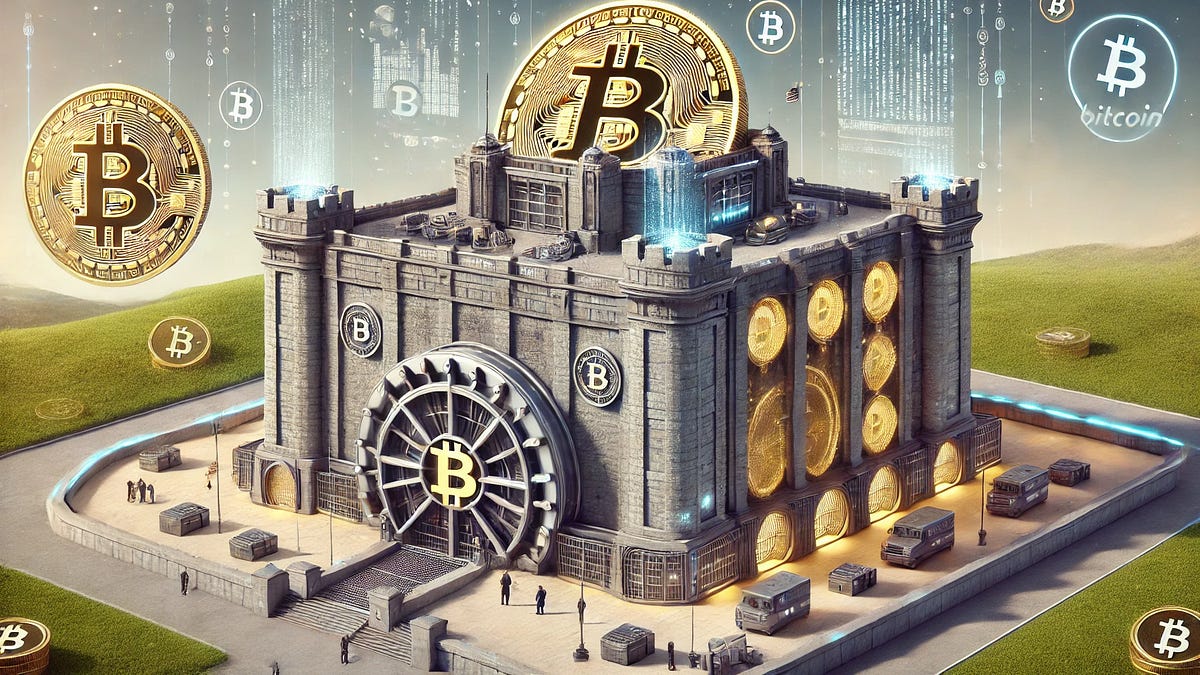
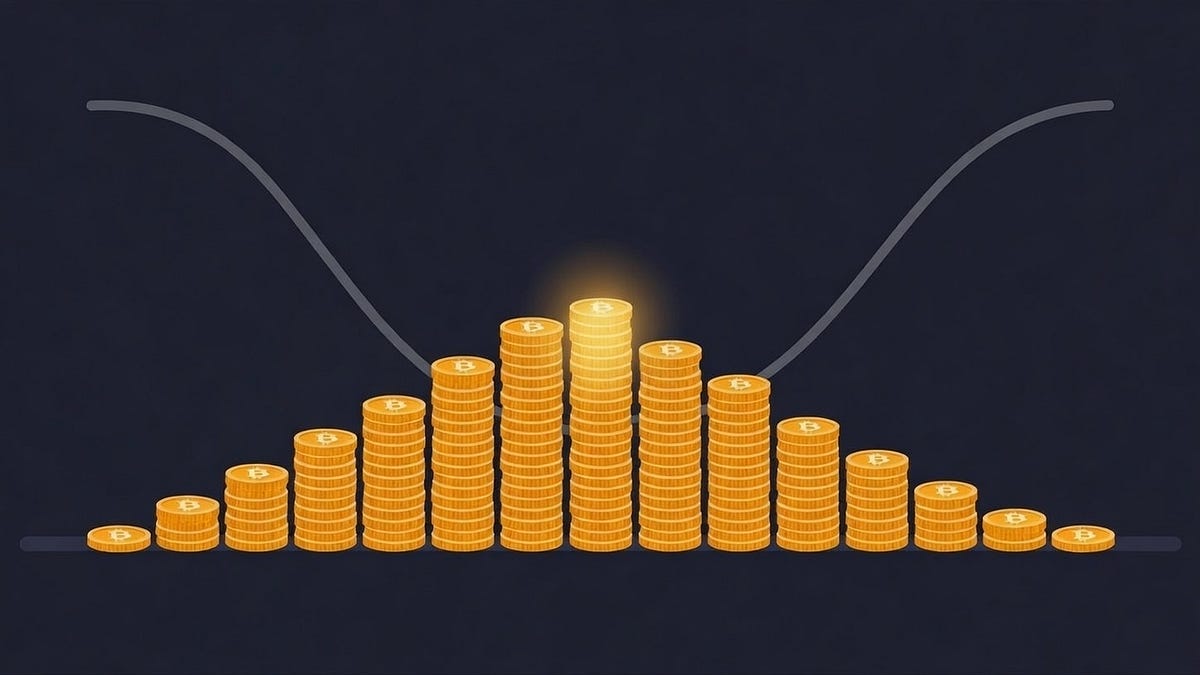
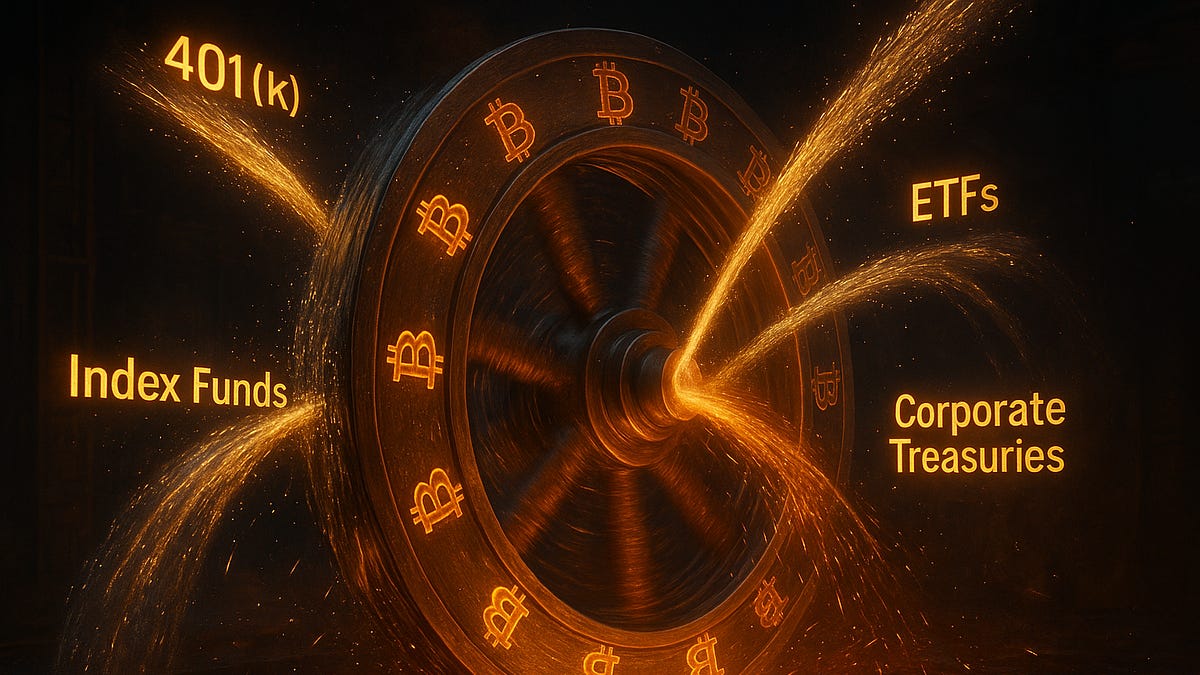
Index funds were supposed to be the boring option. Buy VTI, automate the contribution, ignore the noise, retire on schedule. That whole strategy is now starting to pipe bitcoin exposure into portfolios whether the owners notice or not. Bitcoin ETFs created one channel. Public companies holding bitcoin created another. 401(k) menus are next. As more companies add BTC to their balance sheets, broad index funds pick up more indirect bitcoin exposure by default. If those companies rise with bitcoin, their index weights grow, which pulls in more passive capital, which gives them even more room to keep stacking. The FIRE crowd spent years treating bitcoin like an optional side quest. Now the default portfolio is becoming a bitcoin distribution rail. Passive ownership changes incentives. Once your index fund, retirement plan, or employer stock fund has bitcoin exposure, you have a reason to care whether bitcoin survives, grows, and keeps absorbing capital. Indirect adoption doesn't stay indirect forever. Read the full piece here:
Trey's avatar
Trey 0 months ago
Every bitcoin price model eventually gets humbled by the market. Stock-to-Flow looked compelling in 2019 and 2020. I wasn't a true believer, but the logic pushed me to stack more sats than I otherwise would have, and those sats are worth a lot more today even though the model eventually broke. That's the useful tension. A model can be wrong about the future and still change your behavior in a way that pays off. The power law is the current version of that debate. It fits bitcoin's history better than a flat CAGR because it assumes growth decelerates as the network matures, which is more realistic than pretending bitcoin compounds at 25% forever. But it still isn't a prophecy, and anyone treating it like one is repeating the same category error S2F believers made. For FIRE planning, use it for calibration. Run your numbers under a flat rate, run them under a decelerating curve, and look at the range. Directionally correct assumptions beat fake precision because they help you make better decisions today. Read the full piece on using bitcoin price models without worshiping them:
Trey's avatar
Trey 1 month ago
Governments build strategic reserves because they understand a simple truth: when something is essential, scarce, and hard to replace, you don't wait until the emergency to go find it. Oil. Gold. Defense materials. Cash. Bitcoin belongs in that conversation now. The US already holds more than 200,000 BTC from seizures, and proposals have floated keeping it long term or even growing it into a national reserve. Companies have made the same move. Strategy, Tesla, Block, and others decided that holding only melting fiat cash was its own balance sheet risk. The personal finance version is obvious. If you already keep 3-6 months of expenses in cash for emergencies, consider building a parallel bitcoin reserve over time. Not because cash is useless. Cash handles short-term volatility and bills. Bitcoin protects the part of your savings strategy that needs to survive debasement, policy mistakes, and a world where big institutions finally compete for a fixed 21 million supply. Nations move slowly. Individuals don't have to. Read the full piece on building your own Strategic Bitcoin Reserve:
Trey's avatar
Trey 1 month ago
The college decision used to be easier: get the degree, earn more over time, and let the lifetime wage premium justify the cost. That trade is getting ugly. An in-state public degree can run $109,000 all-in. Out of state is closer to $183,000. Private school can clear $235,000 before your kid earns a dollar. At the same time, the wage premium has stopped expanding, student debt is $1.8T, and more than half of new grads are underemployed one year after graduation. Now add AI to the equation. A motivated 18-year-old can spend four years building products, learning sales, publishing work, stacking skills, and creating a public track record with tools that used to require an entire team. That does not make college useless. If your kid wants to be a surgeon, lawyer, or engineer, the credential still matters. But for a lot of paths, the default answer should no longer be “go to college.” It should be: what is the highest-ROI use of four years, six figures, and the most adaptable decade of your life? I broke down the numbers, the AI angle, and why college should be treated as an ROI decision instead of a default life script:
Trey's avatar
Trey 1 month ago
The FIRE BTC archive has turned into a map of the ideas I keep coming back to. Bitcoin changes the FIRE conversation because it changes the asset base, the timeline, the withdrawal math, and the way you think about work. A standard index-fund plan can still be useful, but it doesn't answer every question once your primary savings asset is bitcoin. How aggressively should you stack? Does the 4% rule still make sense? Should your job be treated less like an identity and more like a cash-flow engine for your balance sheet? How do you build an emergency fund when selling bitcoin at the wrong time is one of the main risks you're trying to avoid? Those are the questions that shaped the best FIRE BTC pieces so far. The roundup includes the articles readers discussed the most, shared the most, and paid for the most. If you're new to the newsletter, it's the fastest way to understand the core framework. If you've been around for a while, it's a useful reset on the main ideas. I pulled the best FIRE BTC articles into one place here:
Trey's avatar
Trey 1 month ago
Most mornings I spend 10 minutes with coffee and a spreadsheet. I’m not trying to optimize every last basis point or categorize every swipe of a credit card. I want to know three things: what my family is spending, what our savings portfolio is worth, and whether the trend is moving us closer to financial independence. That kind of measurement is useful. A lot of FIRE and bitcoin people blow past useful and drift into self-soothing complexity, with more dashboards, more tax scenarios, more on-chain metrics, and more spreadsheet tabs, as if more data will remove uncertainty. It won’t, and pretending otherwise is usually just procrastination dressed up as diligence. Good measurement gives you direction. Bad measurement gives you the feeling of control while stealing time and attention from the work that actually matters: earning more, spending with intention, and stacking bitcoin. Run the numbers. Just don’t build your whole life around them. I wrote more about the difference between useful measurement and spreadsheet theater in Run the Numbers.
Trey's avatar
Trey 1 month ago
CPI is financial TV content. Your inflation rate is the one that matters. If your grocery bill, insurance, taxes, and housing costs are rising faster than your portfolio, your FIRE plan is getting weaker even if the headline number looks fine. That’s why the classic stock-and-bond playbook deserves more scrutiny than it gets. A retirement plan built around 4% withdrawals and a big slug of fixed income assumes inflation stays tame enough for your assets to keep doing their job. I wouldn’t bet on that. We just lived through a reminder that the government’s preferred way out of debt problems is to make the currency worth less. So the real question isn’t whether inflation is 2.9% or 3.4%. It’s whether the assets you own can outrun the rising cost of your actual life. For me, that means spending intentionally, being careful with bond exposure, using fixed-rate debt wisely, and owning bitcoin as the asset with the best chance of staying ahead when the money gets weaker. If you’re building toward financial independence, this is the piece:
Trey's avatar
Trey 1 month ago
A lot of FIRE content starts with calculators and withdrawal rates. That’s backwards. FIRE starts with control. The real shift is deciding you’re done drifting through a lifestyle that gets more expensive every year while your time belongs to someone else. From there, the fundamentals are pretty simple. Know what your life actually costs. Be ruthless about cutting the waste. Pay yourself first, before your money disappears into convenience, subscriptions, and habits you barely notice. Then hold assets that can actually preserve purchasing power over time. That last part matters more than most people want to admit. You can budget perfectly and still get crushed if your savings sit in dollars while housing, healthcare, education, and groceries keep running away from you. Saving is step one. Storing that savings in something strong is step two. Understand your expenses. Maximize your savings rate. Buy and hold good assets. Earn, save, stack, repeat. That’s the foundation. I broke down the core building blocks of a real FIRE plan here:
Trey's avatar
Trey 1 month ago
One of the biggest blind spots in FIRE is treating all debt like the enemy. In a fiat system, fixed-rate debt can be a weapon if you know what you're doing. A 30-year mortgage at 3% is not just a housing decision. It is borrowed dollars that get easier to pay back over time while the house appreciates and the capital you did not bury in walls can compound somewhere else. That is the basic idea behind a speculative attack, borrow in the weaker currency and move into the stronger asset. People accidentally did this with low-rate mortgages in 2020. The real winners were the ones who also used the freed-up capital to buy scarce assets instead of racing to kill cheap debt. You still need strong cash flow and the stomach to carry leverage. But if your goal is financial independence, paying off the right debt as fast as possible is not always the smartest move. I broke down the full idea here:
Trey's avatar
Trey 1 month ago
$800 a month does not sound life-changing. Until you run it through your FIRE math. That one recurring expense is $9,600 a year. Using the standard 25x lens, that means it adds roughly $240,000 to the portfolio you need before work becomes optional. Keep the expense, and the target moves farther away. Cut it, and the finish line comes closer immediately. Then there is the second-order effect. If that same $800 starts flowing into assets every month instead of leaking out into lifestyle creep, you are not just shrinking the number you need. You are building the stack that gets you there. That is what a lot of FIRE conversations miss. People obsess over returns and underweight expenses, when expenses are one of the few levers fully in your control. Every recurring bill has a multiplier attached to it. Every cut changes the trajectory. Trim the fat, redirect the cash, and you get both levers working for you at once. Full piece:
Trey's avatar
Trey 1 month ago
The hardest part of building wealth is getting to the point where your money starts doing real work. Before that, every contribution feels small. Progress feels invisible. You save, invest, stack, and wonder if any of it is moving the needle. Then you hit a threshold where the math changes. A six-figure portfolio starts producing noticeable movement on its own. A good month matters. A good year can look like another year of salary. The same thing is true with bitcoin. The first $100k took years of skepticism, volatility, and grinding adoption. The next phase gets easier because size changes what bitcoin can do. Bigger market, deeper liquidity, more serious capital, more real-world utility. That is what people miss when they obsess over whether bitcoin already went up too much. Price appreciation is not just excitement. It is evidence of a network getting stronger and more useful. In FIRE terms, it is the moment when compounding stops feeling theoretical and starts feeling real. I wrote more here:
Trey's avatar
Trey 1 month ago
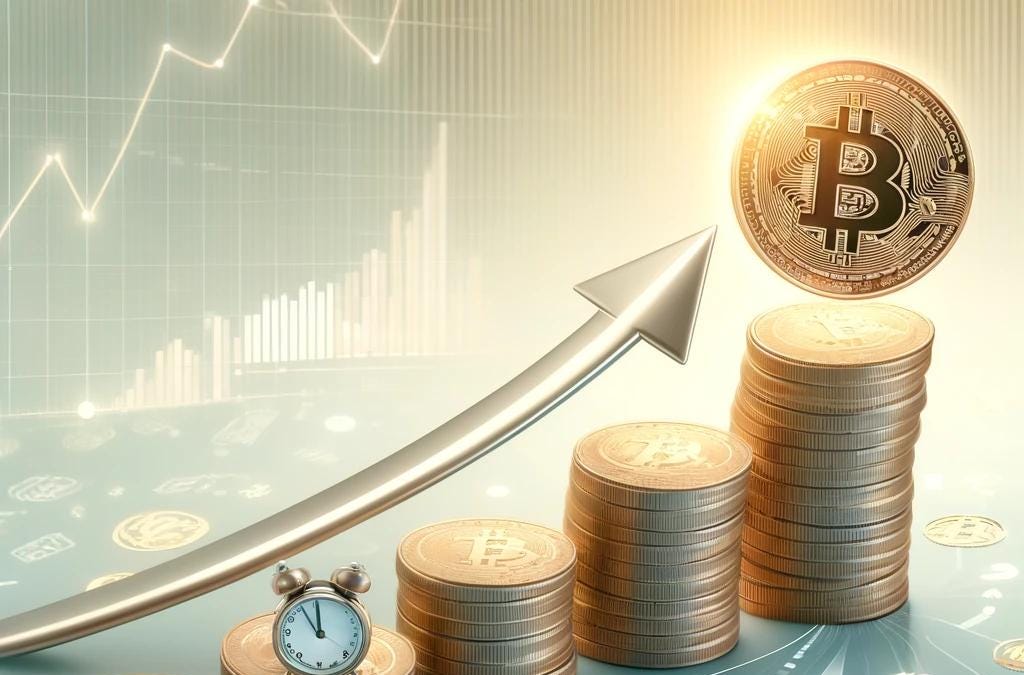
A 10% return turns $100 into $121 in two years. Nice. But that misses the point. The real power of compounding shows up when you stop interrupting the process and give your capital time to stack on itself. That is the part a lot of FIRE content glosses over. Everyone wants the perfect budget, the perfect side hustle, the perfect spreadsheet. All useful. None of it matters much if you keep resetting the clock every time markets get ugly or a new shiny thing shows up. Wealth building is front-loaded with effort and back-loaded with results. Early on, your contributions do the heavy lifting. Later, your portfolio starts pulling its own weight. Then one day the gains are larger than what you saved from your paycheck, and the math starts to feel unfair in your favor. That is why time matters so much. Start earlier. Save more. Own assets with real upside. Then stay in the damn trade long enough for compounding to do what it does. I wrote about why compounding is the real engine behind FIRE, and why the right asset mix can change the timeline more than most people think.
Trey's avatar
Trey 1 month ago
A lot of people still evaluate bitcoin the wrong way. They pick one date on the chart, pick another date a few years later, and declare victory or failure based on the gap between those two points. That only tells you something useful if you bought once, at that exact starting point, and never added another dollar. For anyone pursuing FIRE, that is usually the wrong frame. The real question is what happened to your cost basis if you kept buying the whole time. That is where DCA changes the picture. If you stacked $100 per month from February 2021 through January 2026, you invested $6,000 and ended up with about 0.146 bitcoin. At a $67,000 bitcoin price, that stack is worth $9,779. That is a 63% return, not 18%. Your portfolio lives in your average cost basis, not in somebody else's point-to-point chart comparison. I wrote about why DCA investors are living in a completely different reality than chart-watchers, and why your cost basis matters more than the chart:
Trey's avatar
Trey 1 month ago
The weirdest part of buying lunch with bitcoin wasn't the payment. It was how fast people rushed to tell me I had just spent "$1,000 burger and fries." I went to Steak 'n Shake after they started accepting bitcoin nationwide. The actual experience was the least remarkable part. Tap wallet, scan, done. As seamless as using a card. That's the point. What interested me more was the reaction. A lot of bitcoiners still act like spending sats is uniquely reckless because those sats will be worth more later. But that misses the real tradeoff. The opportunity cost doesn't come from spending bitcoin instead of dollars. It comes from spending at all. Every dollar you burn on consumption is sats you didn't save. The medium changes. The economic reality doesn't. So no, the lesson isn't "never spend bitcoin." The lesson is to be intentional about what you spend, save aggressively, and recognize that medium-of-exchange adoption matters if we want bitcoin to grow from asset to money. I unpacked the Steak 'n Shake experience and the bigger idea here:
Trey's avatar
Trey 1 month ago
If homeownership is the only path to building wealth, a lot of younger people are screwed. I don't think that's true. I think the old default is breaking, and people are mistaking that for the death of opportunity itself. Housing worked so well for prior generations because it bundled leverage, forced savings, inflation protection, and lifestyle value into one simple package. But people also exaggerate how great the investment was. A house doesn't just sit there and compound like an index fund. You keep pouring money into it for decades through mortgage payments, taxes, insurance, maintenance, and repairs, while tying up capital in one illiquid asset. That doesn't make owning a home bad. I own mine and value it. It just means we should stop treating homeownership like a prerequisite for adulthood or financial success. The opportunity set has changed. Work is more digital, businesses are easier to start, and bitcoin gives savers a different escape hatch. The game changed. The answer is to adapt. I unpack the housing myth, the leverage illusion, and why a changing opportunity set matters more than nostalgia:
Trey's avatar
Trey 1 month ago
The systems that hold up best over time usually aren't the ones with the most resources. They're the ones with the right constraints. Your brain runs on roughly 20 watts and still outperforms machines that need massive data centers and constant intervention. Tight limits forced clean architecture. Efficiency wasn't added later. It was designed in from the start. Money works the same way. Fiat depends on committees, discretion, policy shifts, and a stack of institutions trying to keep the whole thing coherent. Bitcoin takes the opposite path. Fixed supply. Clear rules. Decentralized verification. Difficulty adjustment. No one needs to reinterpret the system every time conditions change. That's why bitcoin feels different. It's not just scarcer money. It's a cleaner information system. Less noise. Less room for political distortion. More signal you can actually trust. Constraints don't weaken a system. In the best systems, they create the clarity that makes the whole thing durable. Full piece here:
Trey's avatar
Trey 1 month ago
A lot of people in FIRE still talk about dividends like they’re free money. They’re not. They’re just one form of total return, usually with more tax drag and less flexibility. That matters because the goal is not to build a portfolio that feels productive. The goal is to reach financial independence as fast and efficiently as possible. If a dividend-heavy strategy gives you lower total returns on the way there, you’re making the trip longer just to get a nicer psychological experience. That’s also why the “bitcoin doesn’t pay a dividend” critique misses the point. Bitcoin is not a business. It doesn’t have cash flows to distribute. The return comes through purchasing power, and if that purchasing power compounds faster than the alternatives, that’s what matters. Before FIRE, your expenses should be covered by your income. Your portfolio’s job is to grow. After FIRE, you can always create cash flow by trimming appreciated assets. Chasing dividends too early is just a slower route with better branding. I wrote about why dividend obsession can slow down the path to FIRE, and why total return matters more than cash flow theater:
Trey's avatar
Trey 1 month ago
Holding too much cash feels safe right up until you realize it’s doing exactly what it was designed to do: lose value. A lot of people still treat cash like neutral ground, free of volatility, drawdowns, or bad headlines. But if your savings earns nothing while the cost of life keeps rising, you’re locking in a loss. Slowly, quietly, and with perfect predictability. That’s what makes big cash balances so dangerous. They don’t feel reckless. They feel responsible. Meanwhile your purchasing power gets drained month after month while stocks, real estate, and bitcoin keep repricing higher. I’m not saying hold zero dollars. A cash buffer matters. But beyond that, cash is not a long-term strategy. It’s just undeployed capital with a nicer emotional story attached to it. I wrote about where cash still makes sense, where it doesn’t, and how I’d think about deploying a big idle balance here:
Trey's avatar
Trey 1 month ago
The biggest divide in this economy is monetary, not political. People who own appreciating assets keep getting richer. People who depend on wages keep losing ground. Stocks, real estate, and bitcoin rise with liquidity. Paychecks and cash savings don’t. New money always hits financial assets first. Everyone else feels it later through higher prices and weaker purchasing power. If you own what reflates, your balance sheet rises early. If you don’t, you get squeezed after the fact. That’s why FIRE matters more than ever. High savings, low expenses, and ownership of scarce assets isn’t just a path to optionality anymore. It’s self-defense. Bitcoin matters because it gives regular people access to a scarce asset outside the fiat machine, with rules that don’t get rewritten to protect insiders. I unpacked the full idea in today’s piece:
Trey's avatar
Trey 1 month ago
The hardest bitcoin buy is the first one. Not because the mechanics are hard, but because crossing from zero to something forces you to confront all the noise at once. Am I too late? What if it crashes right after I buy? What if I’m making a mistake with real money? I’ve had this conversation with a lot of friends over the years, and the answer usually isn’t to make some heroic all-in move. It’s to get off zero, then build from there. Buy a small amount. Pay attention. Learn what you own. Then set up an automatic DCA the same way any serious FIRE plan works. Consistent buying beats emotional decision-making. If you have a larger chunk to put to work, I like a blended approach: put part of it in immediately, then spread the rest over a defined period. That lowers the emotional pressure without leaving you frozen on the sidelines. You don’t need perfect timing. You need a system you can stick with when bitcoin is ripping, crashing, or doing nothing at all. I wrote up the full framework here: