
Matt Lorentz
_@mattlorentz.com
npub16zsl...92l7
Technologist, solarpunk, gamer, backpacker, passionate about using the internet to push more power to more people. Building https://horcruxbackup.com
What are some good inbox DM relays? I think mine are borked.
Just dropped Horcrux 1.0.1 with fixes for a few bugs I found in my final testing before 1.0. Still collecting questions for the FAQ - if you have any ask away.
Horcrux
Back up your secrets to people you trust.
Run `pnpm install`. Some weird error about versions.
Run `pnpm install` again. Different error.
Run `pnpm install` a third time. Magically succeeds.
I hate javascript.
Today marks the 1.0 release of my app Horcrux 🥳 Horcrux is an app for backing up data like digital wills, passwords, and cryptographic keys. The cool part is that it backs them up to the devices of your friends and family and recovering the data requires their consent. So nobody has the whole secret and even if one or two people lose their piece recovery is still possible. This adds a social layer to your security stack that is highly secure but also highly resilient. You can read more about it at
Of course it's free, open-source, and built on top of Nostr. I'm putting together a FAQ page for the website now, so post your questions in the thread below.
I'd love any feedback you have to give, here or through the contact form on the website. And I'm trying something a bit different. If you are trying to figure out if this tool is right for you and would like to just chat about it you can book a call with me here: 
Horcrux
Back up your secrets to people you trust.
Cal.com
Horcrux Onboarding | Matthew Lorentz | Cal.com
Horcrux Onboarding
I burned several days over the last few months jumping through Apple and Google's App store hoops - DUNS numbers, identity verification, encryption documentation, half a dozen wizards about content in the app, privacy, and of course then the days long review process itself.
I've never published anything to 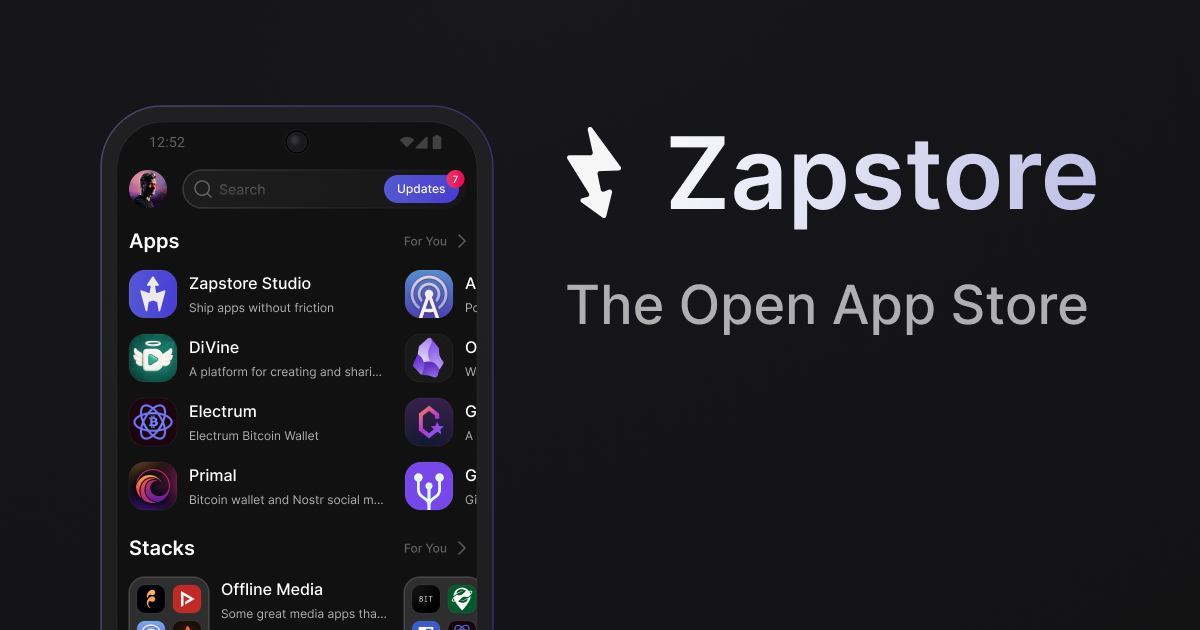 before and I just did it in 20 minutes. That includes me reading through the documentation and futzing with my Android keystore for several minutes which I had previously misconfigured. Absolutely delightful experience.
I'm hopeful that Google's blocking of third party apps and app stores is going to cause a flourishing of third party stores like Zapstore (and de-googled Android). The old systems are broken. I have to assume the deluge of vibe-coded apps is why my Apple review took 18 days. I want an app store where I pay security auditors to compile the apps themselves and go over the code with a fine-toothed comb. F-droid already has some custom repositories that more or less work this way. Zapstore has better infrastructure for this with the Vertex web-of-trust and app catalogs.
before and I just did it in 20 minutes. That includes me reading through the documentation and futzing with my Android keystore for several minutes which I had previously misconfigured. Absolutely delightful experience.
I'm hopeful that Google's blocking of third party apps and app stores is going to cause a flourishing of third party stores like Zapstore (and de-googled Android). The old systems are broken. I have to assume the deluge of vibe-coded apps is why my Apple review took 18 days. I want an app store where I pay security auditors to compile the apps themselves and go over the code with a fine-toothed comb. F-droid already has some custom repositories that more or less work this way. Zapstore has better infrastructure for this with the Vertex web-of-trust and app catalogs.
Zapstore
Zapstore — The Open App Store
The open app store where users meet builders. Curated by communities. Android apps.
I submitted the release build of Horcrux to Apple for review on July 31st. Today, 18 days later, I got my first review. But they approved it! So I guess that makes tomorrow launch day 🍾
nak is such a good command line tool it makes me question whether it exists to support the Nostr protocol or if the Nostr protocol is just an excuse to ship nak.
I canceled my Cursor subscription today. It has felt for a while that they stopped building for the way I want to work with AI. Then the bugs keep getting worse, and the SpaceX acquisition doesn't give me a lot of hope that things will get better.
I spent yesterday using VSCodium and my homebrew agent orchestration system in tmux. I also tried emdash (https://emdash.ai/), and retried Archon (https://github.com/coleam00/Archon).
I'm still feeling like small agent swarms with a mixture of models that pass work between themselves is the sovereign AI stack of the future. The manager of the swarm can paper over a lot of the small issues with LLMs. Plug in whatever cheap source of tokens you can find, mix in local models if you want, your interface stays the same. Put it all in a decent sandbox and dangerously skip permissions.
I finally finished my security audit of Horcrux, the last major project before release. It was a ton of work and honestly no fun at all, but I'm glad I did it as it gives me the confidence to finally open the app up for real world use. I've got a couple last bugs to fix and some marketing materials to write. Hoping to submit binaries to the app stores next week! If you want to check it out the audit it's published here: 
GitHub
horcrux/docs/security-audit-july-2026.md at main · mplorentz/horcrux
Backup sensitive files to friends and family. Contribute to mplorentz/horcrux development by creating an account on GitHub.
The answer, unfortunately, is no.
View quoted note →
Sweet. I would love a kind 1 client to order comments by one of these algorithms (mainly Most Relevant). I love browsing replies in the reddit-like tree of Nostrudel but often there are spam or off topic comments at the top. @hzrd149 @Pip the WoT guy
View quoted note →
Any other Nostr apps you would like me to plug?
View quoted note →
Is anyone hosting a version of that still works? It seems like it's trying to do some NIP-05 allocation that is broken and I can't skip, and brugeman is gone.
Nsec.app
Nostr key management app
I'm hosting a session at DWeb Camp next week for folks to interactively try Nostr. What apps should I encourage people new to the protocol to try? What is the best app to show first?
I just published my Q2 report as part of my grant from OpenSats, if you are curious what I have been up to recently. TLDR; getting horcrux into a public beta and preparing for the initial release. https://mattlorentz.com/2026/06/25/opensats-q2-grant-update.html
I'm making a push to release version 1.0 of Horcrux this month. Not sure if I will make my deadline but it should be close. There is so much left I want to do in terms of UX, marketing, and sustainability, but it's delivering on its core promise of being a secure way to store secrets with friends and family.
I'm currently in week two of my security audit and I found my first critical issue today. It's humbling but also satisfying to be reviewing all the hard work I've put in over the last year.
Pomegranate is another step forward for key management. Glad to see it shipping already!
View quoted note →
Claude Fable when I ask it to fix my regex: