Join us! View quoted note →
Tyler Stevens ⚡️
tyler@primal.net
npub1cmc7...9fnd
Bringing mining back home via hashrate-heating systems | Thermal Engineer | Author - Bitcoin Mining Heat Reuse | CEO, Exergy | Co-Founder, The Space
I wrote a new piece about energy and heat transfer fundamentals for miners. Check it out below.
Thanks for the shoutout, Dylan! View quoted note →
Good morning #nostr :)
I’ve started a blog dedicated to technical writing on the concepts of #bitcoin mining, energy, thermodynamics, and waste-heat reuse. If this is something you are interested in learning more about, check it out at the link below! 👇🏻
https://exergy.ghost.io
Been working on something with a great crew over the past few months. Stay tuned!
View quoted note →
What's the Impact of Solar Flux on ASIC Containers?
Industrial scale bitcoin mining typically house many ASIC miners within large containers or buildings. These structures have huge surface areas. So what's the impact of solar heating on them? Let's assess.👇
Heat flux is a measure of heat energy transfer per a given surface area. For this example we use [W/m2]. That's energy over time (W=J/s), also known as power, per square meter.
The average value for solar heat flux is about q_sol=1361 [W/m2] on earth. We can conservatively knock this down to ~ q_sol=1000 [W/m2] to account for some clouds and other factors.
A materials surface finish defines what are called optical properties. Key optical properties are absorptivity (α) and emissivity (ϵ). Absorptivity, which is necessary for solving this example calculation, is a value between 0-1 that defines a material's ability to absorb incident radiation energy. Emissivity, also expressed as a value between 0-1, is a measure of a material's ability to emit thermal radiation relative to that of an ideal black body (compare to a perfect radiative emitter) at the same temperature.
Take a white paint, for example. A common absorptivity value is α_white = 0.15
Black paint, on the other hand commonly has a value of α_black = 0.85
We can solve for the solar heat energy absorbed into a standard shipping container with 40' x 8.5' x 8' dimensions.
Total exposed external surface area (excluding bottom) for the crate is 1116 [ft2]. Let's conservatively cut this in half, as the solar rays won't be able to directly hit all 5 sides of the crate at once. That gives us 558 [ft2], or about 52 [m2].
The total heat energy transferred into the container can be calculated with the simple equation below:
Q [W] = q_sol [W/m2] * α [-] * Surface Area [m2]
For white and black painted shipping containers respectively, we find:
Q_white = 1000 [W/m2] * 0.15 * 52 [m2] = 7800 [W]
Q_black = 1000 [W/m2] * 0.85 * 52 [m2] = 46800 [W]
A difference of 39000 [W] or 39 [kW] of heat energy absorbed into the container! That's the equivalent of heat energy produced by 11 ASICs that pull 3550 [W]!
Now obviously, I don't think there are many miners out there painting their structures black. But this example does show just how large the impact of solar heat flux can be on large surface areas.
There are some interesting materials and paint selections out there, purposely designed to serve as a passive thermal protection systems. Low absorptivity and high emissivity allow for the surface to reflect incoming heat whilst efficiently rejecting any heat contained.
I think novel solutions such as this can help to keep a mining operation running efficiently, especially in hot and sunny environments like Texas.
Are you a miner implementing any trick solutions to help dissipate and reject heat? Let me know!
Industrial scale bitcoin mining typically house many ASIC miners within large containers or buildings. These structures have huge surface areas. So what's the impact of solar heating on them? Let's assess.👇
Heat flux is a measure of heat energy transfer per a given surface area. For this example we use [W/m2]. That's energy over time (W=J/s), also known as power, per square meter.
The average value for solar heat flux is about q_sol=1361 [W/m2] on earth. We can conservatively knock this down to ~ q_sol=1000 [W/m2] to account for some clouds and other factors.
A materials surface finish defines what are called optical properties. Key optical properties are absorptivity (α) and emissivity (ϵ). Absorptivity, which is necessary for solving this example calculation, is a value between 0-1 that defines a material's ability to absorb incident radiation energy. Emissivity, also expressed as a value between 0-1, is a measure of a material's ability to emit thermal radiation relative to that of an ideal black body (compare to a perfect radiative emitter) at the same temperature.
Take a white paint, for example. A common absorptivity value is α_white = 0.15
Black paint, on the other hand commonly has a value of α_black = 0.85
We can solve for the solar heat energy absorbed into a standard shipping container with 40' x 8.5' x 8' dimensions.
Total exposed external surface area (excluding bottom) for the crate is 1116 [ft2]. Let's conservatively cut this in half, as the solar rays won't be able to directly hit all 5 sides of the crate at once. That gives us 558 [ft2], or about 52 [m2].
The total heat energy transferred into the container can be calculated with the simple equation below:
Q [W] = q_sol [W/m2] * α [-] * Surface Area [m2]
For white and black painted shipping containers respectively, we find:
Q_white = 1000 [W/m2] * 0.15 * 52 [m2] = 7800 [W]
Q_black = 1000 [W/m2] * 0.85 * 52 [m2] = 46800 [W]
A difference of 39000 [W] or 39 [kW] of heat energy absorbed into the container! That's the equivalent of heat energy produced by 11 ASICs that pull 3550 [W]!
Now obviously, I don't think there are many miners out there painting their structures black. But this example does show just how large the impact of solar heat flux can be on large surface areas.
There are some interesting materials and paint selections out there, purposely designed to serve as a passive thermal protection systems. Low absorptivity and high emissivity allow for the surface to reflect incoming heat whilst efficiently rejecting any heat contained.
I think novel solutions such as this can help to keep a mining operation running efficiently, especially in hot and sunny environments like Texas.
Are you a miner implementing any trick solutions to help dissipate and reject heat? Let me know!How do I get a web link to my nostr profile for sharing? #asknostr
I’ll be in Nashville this week for the Summit at Bitcoin Park! Super excited to meet more Bitcoiners and listen to these talks.
I have so much to learn!
My 2024 goal is to add as much value as possible. Starting it off with a bang!


Yesterday, on the 15th anniversary of the #Bitcoin genesis block, I put in my two weeks to resign from my fiat engineering job.
I've learned a lot building thermal models within the aerospace industry. I expanded my understanding of heat transfer fundamentals. I sat on console for launch operations. I traveled to NASA bases to oversee developmental testing. It was a great experience, and I’m glad I was able to contribute.
What I also discovered over these past two years working for a defense contractor, was a complete shift of my passions and moral convictions. I became more invested in Bitcoin and its community. In sovereignty and truth. I began to feel ashamed working for a company owned by a DoD contractor, perpetually fueled by stolen money and advocating for forever wars.
So the time has finally come. I’ve decided to spend the rest of my time and energy working on #Bitcoin projects. The risk of sitting on the sidelines and doing nothing was too high.
I have some Ideas, yet at the same time have much to learn. I cannot wait to see where life takes me. I’m thankful for all the Bitcoiners I’ve met over the past 24 months that helped to inspire me. Y’all are the real deal. Now it’s time to build. 2024 LFG!
In 2023, I successfully convinced two people close to me to cancel their 401k contributions and buy #bitcoin instead. Bullish.
GM #nostr
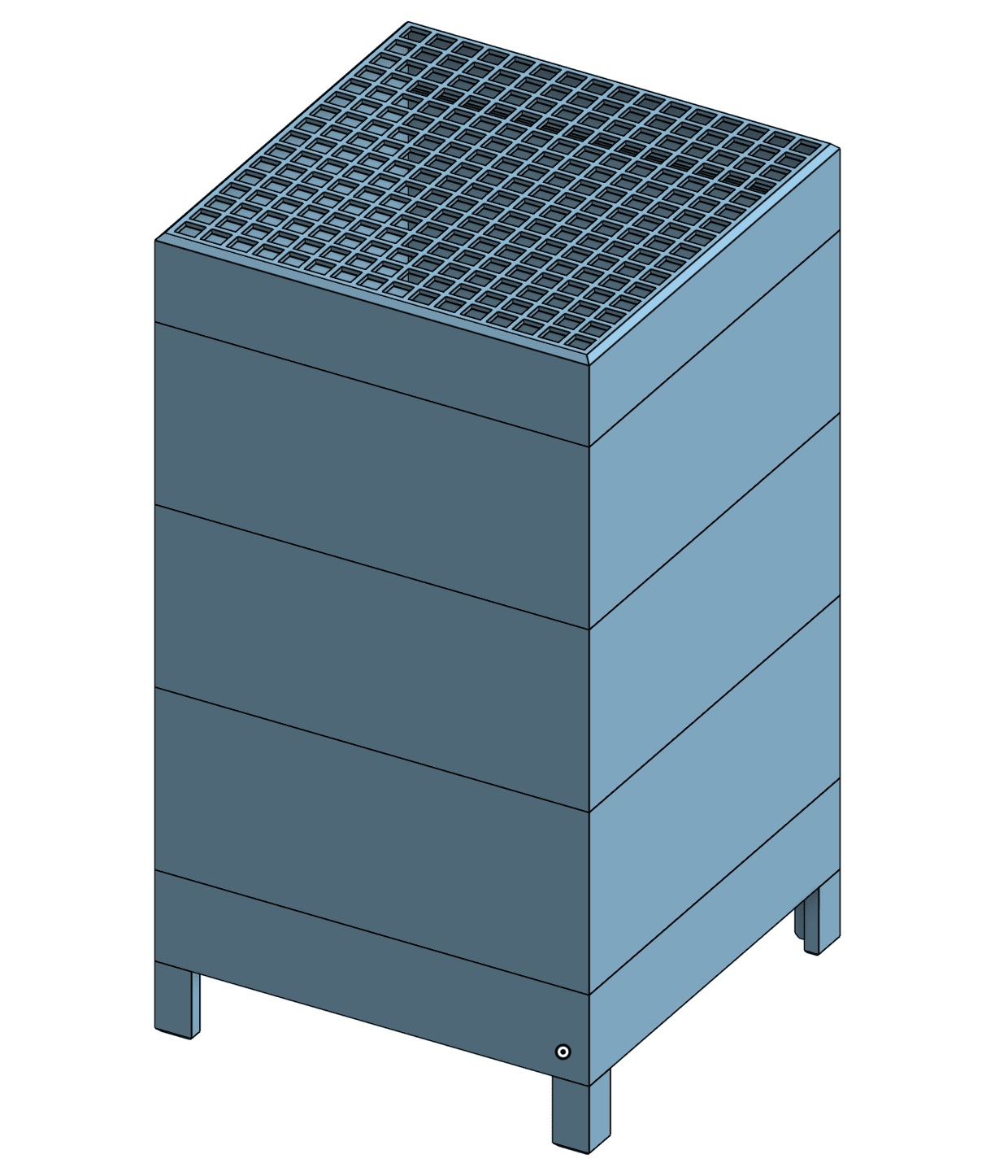
This case follows the build sheet of @CryptoCloaks™ Space heater, with 140 mm fans and fan adapters.
View quoted note →


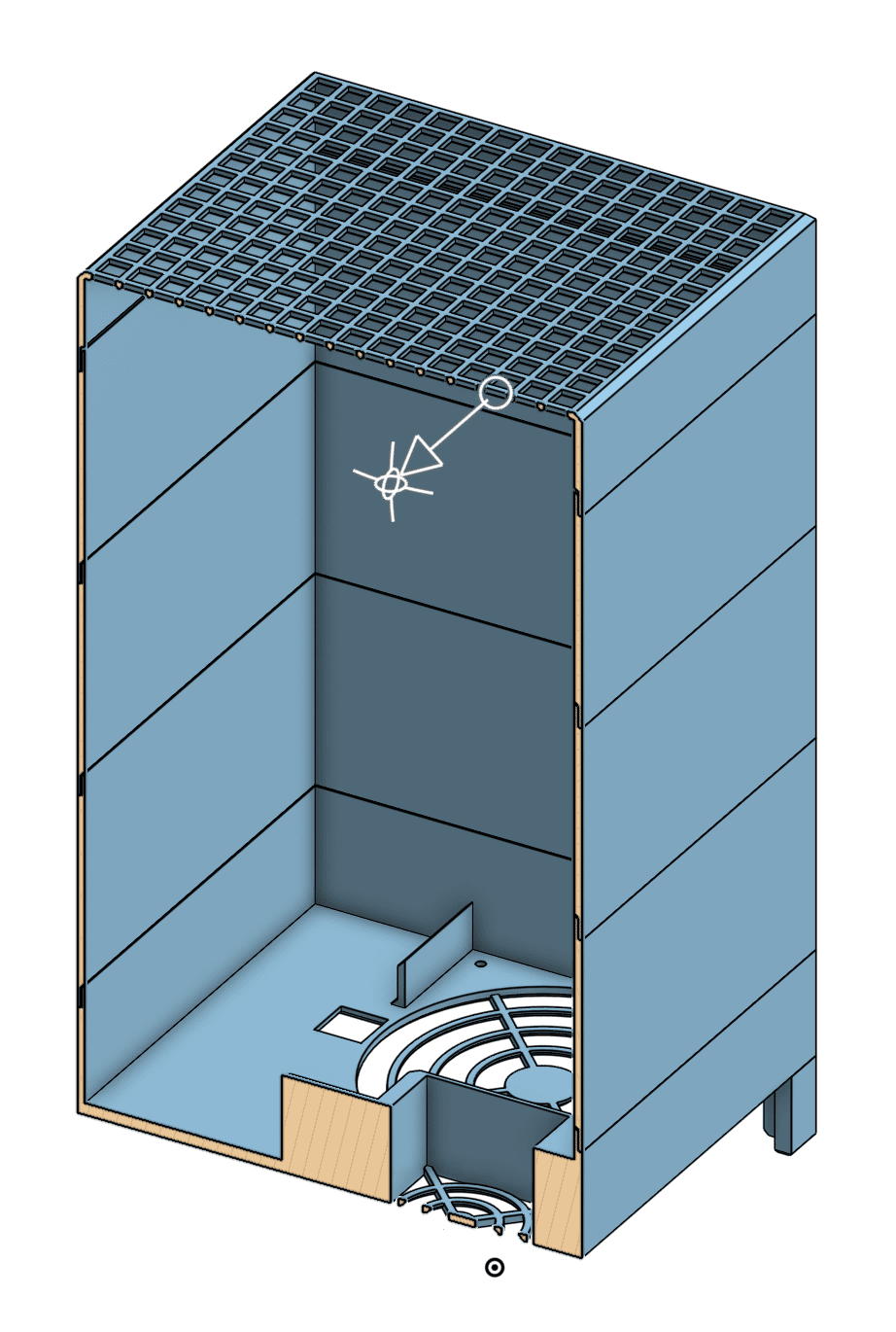
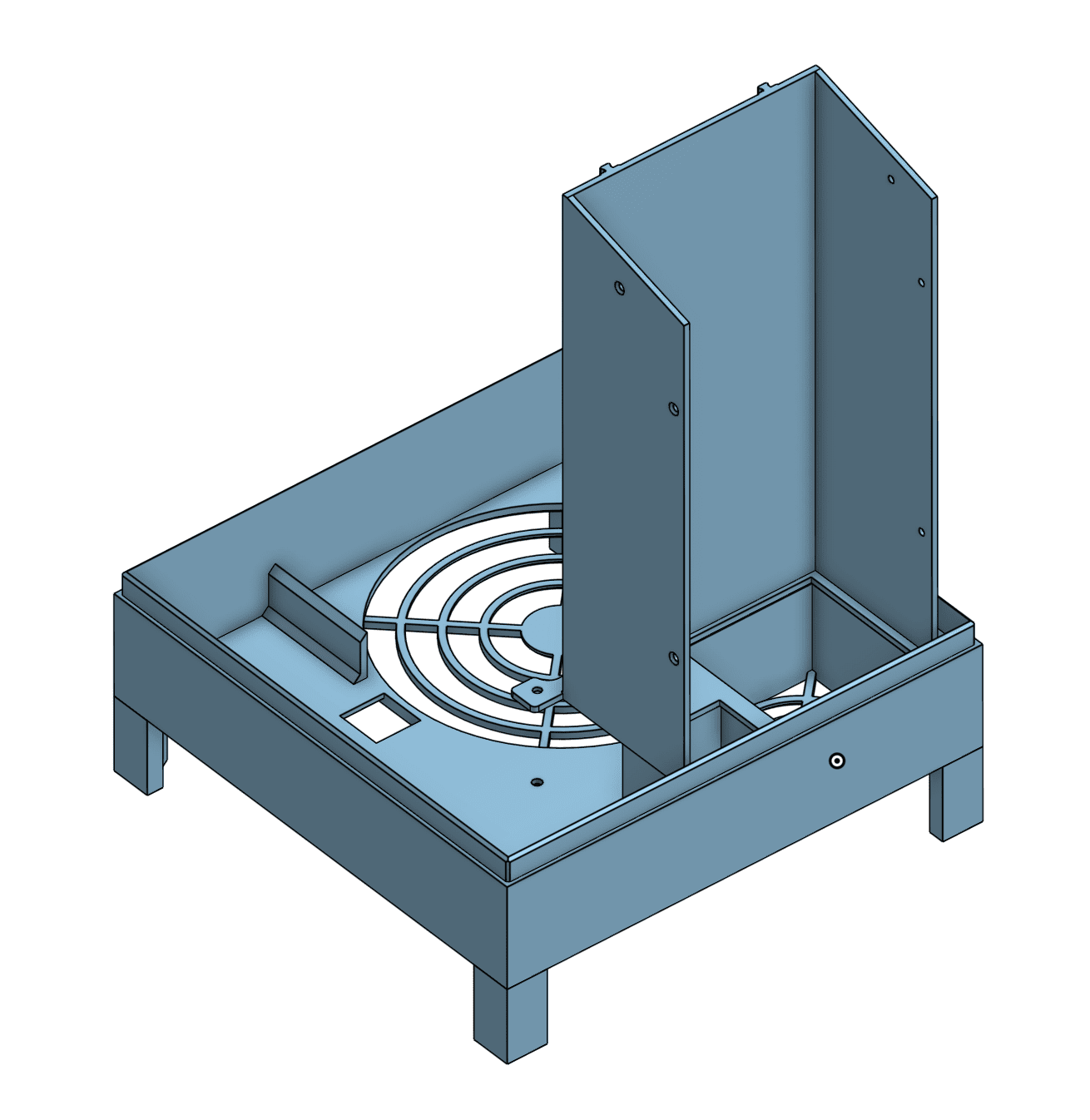
I've finished V2 of the S9 Space Heater mini, inspired by @CryptoCloaks™ ! This compact case is only 214x214 mm in footprint, allowing it to be printed on small hobby 3D printers, such as the Ender 3!
Fitting the ASIC and PSU within the case requires the APW3++ to be mounted tightly alongside the miner, with a standalone bracket.
Check out the link below to download the files directly from my onshape page for printing. I'll be working to get the files into Fusion360 for CryptoCloaks and the File Factory. Thanks to Rick for the inspiration!

Onshape
Sign in to Onshape, the #1 fastest growing CAD system in the world.

I’m going to watch so many @BTC Sessions tutorials over the holidays. Can’t wait LFG!!! Inject it into my veins.
Whomever controls the money is, or inevitably will become, the government.
This is why a decentralized commodity like #bitcoin is the most fair and moral option.
Curious if there is some correlation between fiat money and car companies releasing new vehicle models
Seems like there used to be more original design. More risk taking. More niche vehicles...
Now we get excited for reemergence of a 20 y/o model name. Where's the creativity?!
Shook my ranchers hand yesterday.
Fiatbucks is my new term of choice for USD.
TM @Love is Bitcoin 💜⚡
Last evening's DenverBitDevs meetup and presentation from @Start9 was a a highlight of the year for me. Thoughts below👇
We were joined by @npub1j87r...3hzx, CEO of Start9, where he gave a presentation on running #bitcoin and #lightning nodes as well as the importance of sovereign computing.
Here are some of my key takeaways as a novice to the topics:
Running a Bitcoin Node:
- Transacting on your personally run bitcoin node asserts your citizenship on the network.
- Participating in transactions gives you leverage as an enforcer of the bitcoin census rules.
- Running your own node ensures your untampered access to the bitcoin network. You do not need to worry about a wallet software hiding or falsifying transactions on your addresses.
Running a Lightning Node:
- Without running your own lightning node, you are relying on the channel not being closed. This trust dynamic is exactly what bitcoiners seek to avoid. We want to eliminate trusted intermediaries. Not make it slightly better than your fiatbank.
- Running a personal lightning node is paramount to financial sovereignty and privacy.
Sovereign Computing and Personal Servers:
- There are two business models for monetizing software. Monthly Subscription models (paid services), and Data Farming (sell your information to advertisers and service is free). As privacy becomes increasingly important to consumers, more apps on your phone and computer will pivot to subscription based models. This is a good thing. The "cost" is transparent and up front.
- Data can be monetized. Your pictures and files are of little value by themselves, but when compiled amongst millions of users, the value of that data set adds up. This creates a honeypot that some deem worth attacking for access (think lastpass, google drive, iCloud, etc...).
- Hacking these honeypots is way easier than you'd think. It's not about cracking the newest standard in encryption or finding a backdoor. Instead, it's about convincing someone internal to the company with high level permissions to give over the keys. The human in the loop is the weakest link. It's only a matter of time until that link is compromised.
- Running your own home server is a way to opt out of the honeypot. The risk reward dynamic is now changed. A potential attacker has just as much to lose by breaking into your home to steal your data, but your personal files alone are of little value to them. It's no longer worth it.
- Additionally, running your own home server provides privacy. Your files are stored in your local cloud, and no middle man can observe your data or actions. No one even knows when you do something!
StartOS is software aimed to make running a personal server as easy as possible for as many people as possible. It's clear they envision a world where personal responsibility is extrapolated to our digital personas. I agree, it is a necessary step to being a sovereign individual in the twenty first century.
I am eager to play around with the software and learn along the way. Thanks again to everyone at Start9 and the Denver BitDevs community, as well as Zach (BTCBap on X) for organizing the event.
Let me know your thoughts below. Hopefully I summarized the technical details correctly. The full recording of Matt Hill's discussion will be posted to the Denver BitDevs YouTube channel shortly!
End automotive subsidies. Stop bullying manufacturers to produce vehicles that consumers will not buy at the true market price. This is obvious.