nunchuk_io's avatar
nunchuk_io
nunchuk_io@nunchuk.io
npub1cvql...yjt3
Bitcoin wallet specialized in multisig and collaborative custody solutions. Visit https://nunchuk.io.
A few words given the recent exploits on hardware signing devices: • The Ledger supply chain attack represents one of the most sophisticated attacks thus far on the wallet ecosystem. In many ways it’s a lot more sophisticated than the Coldcard RNG exploit, because that one was software only. This one took a cross-border company buyout, tampering with the devices (implanting an eSIM, an LTE module and a CPU) and manufacturing the implants at scale. • These sorts of attacks have been predicted by early Bitcoiners, but in Bitcoin they remained theoretical or crude until this year. It shows that the level of sophistication of attacks has risen quickly, and what was previously “good enough” advice on wallets and self-custody is no longer sufficient. • When we started Nunchuk a few years ago, our premise was that multisig, and multi-vendor multisig, needs to become the standard for self-custody in the future. But even we didn’t expect how fast it would materialize. This is likely due to 2 factors: Bitcoin getting more mainstream, and the rise of AI-assisted attacks. This is a Sputnik moment for Bitcoin self-custody. The defenses need to level up. • Passphrases wouldn’t have helped in the Ledger case, since you are required to enter the passphrase into the device for it to sign any transactions. A compromised device that phones home the seed phrase can also easily phone home the passphrase the moment you enter it. • Similarly, generating the private key somewhere else (even by rolling dice) and subsequently importing it onto a tampered device wouldn’t save you here. The device can phone home the seed phrase the moment it’s imported. • Anti-tampering techniques might help, such as transparent casing or bricking the device if it’s tampered with. Or forever displaying a message once the seal is broken. Or using on-device encryption between the internal hardware components. But a dedicated and resourceful enough attacker can still find ways to get around these layers. Tampering and anti-tampering have long been a cat-and-mouse game. In 2008, card readers doctored right off a Chinese production line sent card data and PINs over mobile networks to Pakistan. The Ledger attack is the same playbook, 18 years later. The bigger the target, the more attackers spend on overcoming the defenses. • You should order directly from the vendors as much as possible, using a PO box for privacy. • Any setup that relies on a single hardware/software stack or a single vendor should be considered at risk. • Building your own hardware signers from generic parts is a good option for technical users. • Multi-vendor multisig should become the standard. Each signer should have a completely independent hardware/software stack from the other signers. The point is that there shouldn’t be any single-point-of-failure anywhere in your setup. • Many advanced protocols rely on timelocks and the recovery path being a simple singlesig. The recent attacks and exploits should highlight how dangerous this could be. Timelocks simply delay a risk. If a seed is compromised and there’s a timelock involved, the attacker just needs to wait out the timelock. (For Miniscript wallets, there’s the wallet descriptor too, but presumably it also gets sent to the device at some point.) Vault-like protocols face a similar problem: any withdrawal or recovery path that relies on a single key is a potential single point of failure. • For our on-chain timelock assisted wallets, in a few weeks we are adding the option to customize the recovery path to be an M-of-N, so that, if you want, spending would require multiple keys at all points during the wallet’s lifetime. (Our off-chain timelock assisted wallets have always been M-of-N). To those who recommend exchanges or centralized custodians over self-custody: that is a lose-lose situation. Number 1, enterprises face the same problem as end users. They also rely on multisig to secure funds, or on proprietary and largely unproven protocols built on newer cryptography like MPC, which might make them more susceptible to AI-assisted attacks. They also rely on particular combinations of hardware/software stacks. Bybit lost $1.5B from its multisig cold wallet in 2025, because all of its signers used the same compromised web interface. Bitfinex lost ~120k BTC in 2016, despite a multisig setup with BitGo. It’s true that enterprises and huge custodians likely spend orders of magnitude more than the average user to custody funds, but the reward (of breaching security) is also orders of magnitude higher for the attackers. It might simply delay and MAGNIFY the tail risks once user funds concentrate in a few hands. The exchanges and centralized custodians also become huge honeypots, easily succumbing to 6102-style attacks, which will arrive as fiat monies inflate in the coming years. Number 2, this sort of future inevitably ruins Bitcoin, whose purpose was to be censorship-resistant money. Encouraging people to move funds to exchanges benefits exchanges but is similar to sawing off the branch you’re sitting on. If Bitcoin loses the battle for self-custody, it will have completely lost its soul. Bitcoin self-custody tools will get better. They have to. Bitcoin is too important to the future to lose. image
AI agents shouldn't get the full key to your kingdom. Today we're releasing Nunchuk CLI: create a shared Bitcoin wallet with your agent, give it a spending budget, and keep the final say. Build Bitcoin agents with bounded authority.
nunchuk_io's avatar
npub1cvql...yjt3 11 months ago
"When the Canadian dollar becomes worthless, we will be here to serve you, too." That was our closing reply to the Ontario Superior Court of Justice in 2022, when they ordered us to freeze and disclose information about the bitcoin involved in the Freedom Convoy protest. The story of how that email came about has never been told. Today, we’re sharing that story, and how that event forged our DNA & mission. *** February 2022. The Freedom Convoy protest was paralyzing Ottawa. Two years of lockdowns and mandates had created incredible social tension. On Feb 14, Justin Trudeau invoked the Emergencies Act for the first time in Canadian history. It was designed for wars or terrorism; it was now being used against protesters. Protesters’ bank accounts were frozen without due process. GoFundMe seized $10M in donations at the government’s request. The RCMP demanded that financial firms blacklist Bitcoin addresses. The Ontario Securities Commission flagged tweets by Coinbase CEO Brian Armstrong and Kraken CEO Jesse Powell criticizing the use of the Emergencies Act to law enforcement. Balaji Srinivasan questioned whether Canada was still a “democracy”. Police began mobilizing in Canada’s capital. The authorities seemed willing to use everything, even extraordinary measures, to quash the protest. Many Bitcoin companies backed away, despite having millions in funding. Jesse Powell, having previously donated one bitcoin to the protest, warned users that Kraken “cannot protect you” from the Canadian government. Elon Musk, who voiced support for the protesters, tweeted “I wish I could help. At this point, it seems that voting at the next election is the remedy.” Even powerful CEOs seemed powerless in the situation. Then, we received the Mareva injunction. Nunchuk, a tiny startup still in its infancy, was ordered to freeze assets and disclose information. We are self-custodial and technically unable to comply. But the threat was serious. The pressure was immense. We had no idea how far the Canadian government was willing to go. And judging by what they had done: very far. Concerned about the risks to their families, two members of our team decided to quit. It was an existential crisis. To complicate the situation, my own personal life was in upheaval. Around the time the Emergencies Act was invoked, I learned that I would soon become a father. I went from pure joy to total distress within a week. I thought about the world my child was going to grow up in. I thought about why I started a Bitcoin company in the first place. If Bitcoin couldn’t matter in a situation where people needed it most, what good is it? How is it any different from the corrupt, permissioned financial system we grew up with? The one that brought the world to its knees in the Great Financial Crisis, along with many other social woes that we’ve only begun to understand since the shift in 1971? What’s the point of it all? What will I tell my son about what happened in February 2022? Then I sat down and wrote the reply. That email became our North Star. It clarified our mission: to build tools that maximize individual financial freedom and privacy, minimizing reliance on any third party. "Trusted third parties are security holes", as the great Nick Szabo once said. This event taught us that true sovereignty requires technologies designed to withstand pressure. Not just from governments, but from time itself. If we are to secure wealth for generations, our solutions must eliminate ALL single points of failure. They must be designed to outlive us. Today we announce the next major step in that mission: the realization of our commitment to trust-minimized generational security. Today we introduce the first assisted Bitcoin inheritance solution, designed to outlive the company that created it. It’s the culmination of all the work we’ve done since that fateful day in 2022. You can read about it here: image
New mobile and desktop release: Nunchuk now fully supports @Liana Wallet wallet descriptors, including Miniscript wallets that reuse keys across policies. Next week, we’ll publish a Recovery guide on how to independently recover a Nunchuk Miniscript wallet in Bitcoin Core.
Introducing Zen Hodl. 🧘‍♂️ A new Miniscript template to automatically lock your bitcoin for a set period. Self-enforced discipline that protects generational wealth. Why use it? 💎 True HODLing: Protect your stack from emotional, short-term decisions. 🧾 Tax Planning: Create an immutable record of your holding period for capital gains. Find your zen. Available now in the latest Nunchuk app. image
Nunchuk apps are NOT vulnerable to the recent NPM security exploit. Our apps are fully native, with no Javascript or NPM dependencies. This was a conscious decision to reduce our supply chain to the bare minimum. We believe that for mission-critical software like a Bitcoin wallet, avoiding Javascript and the web-based ecosystems is a fundamental security principle. image
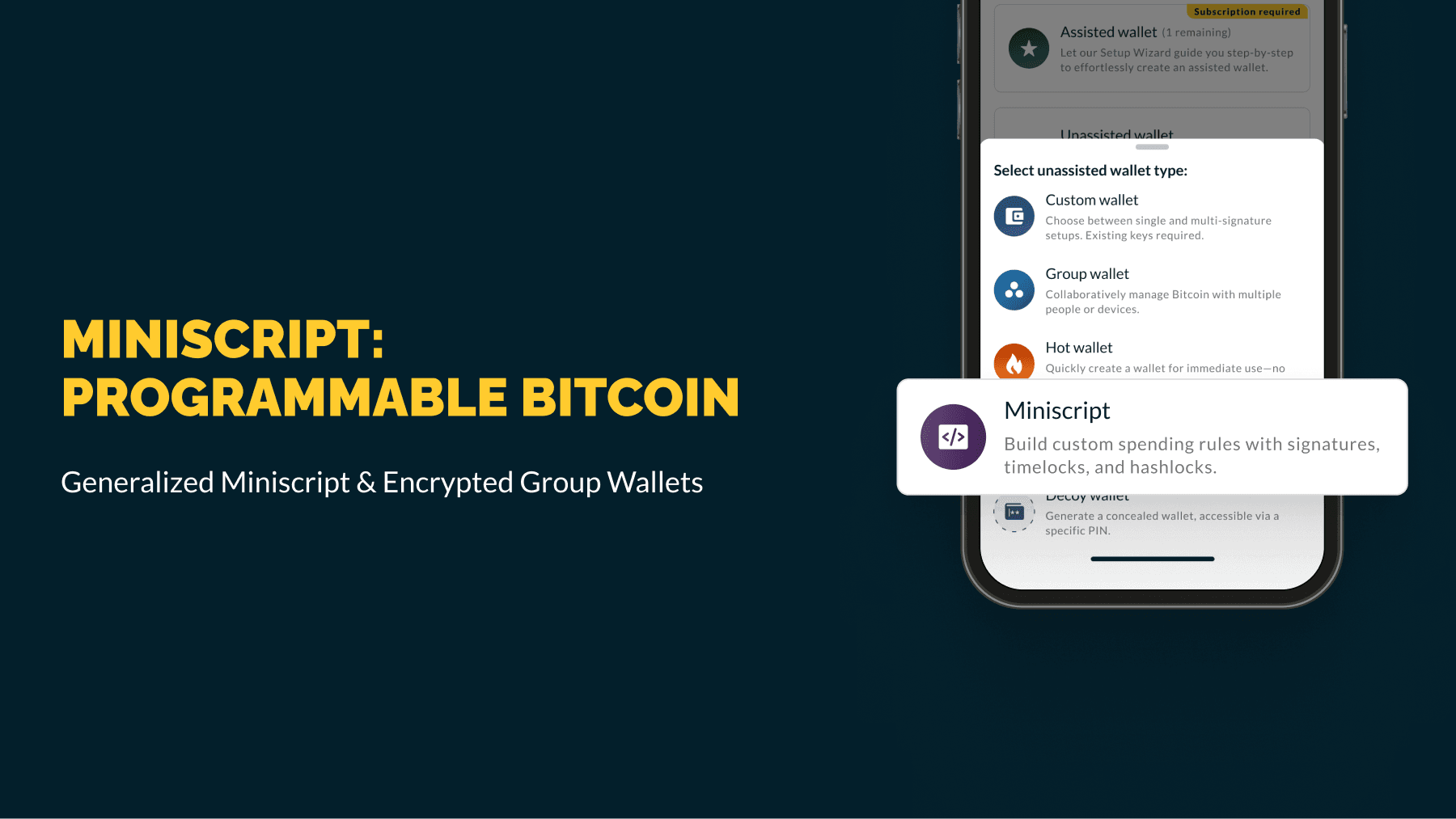
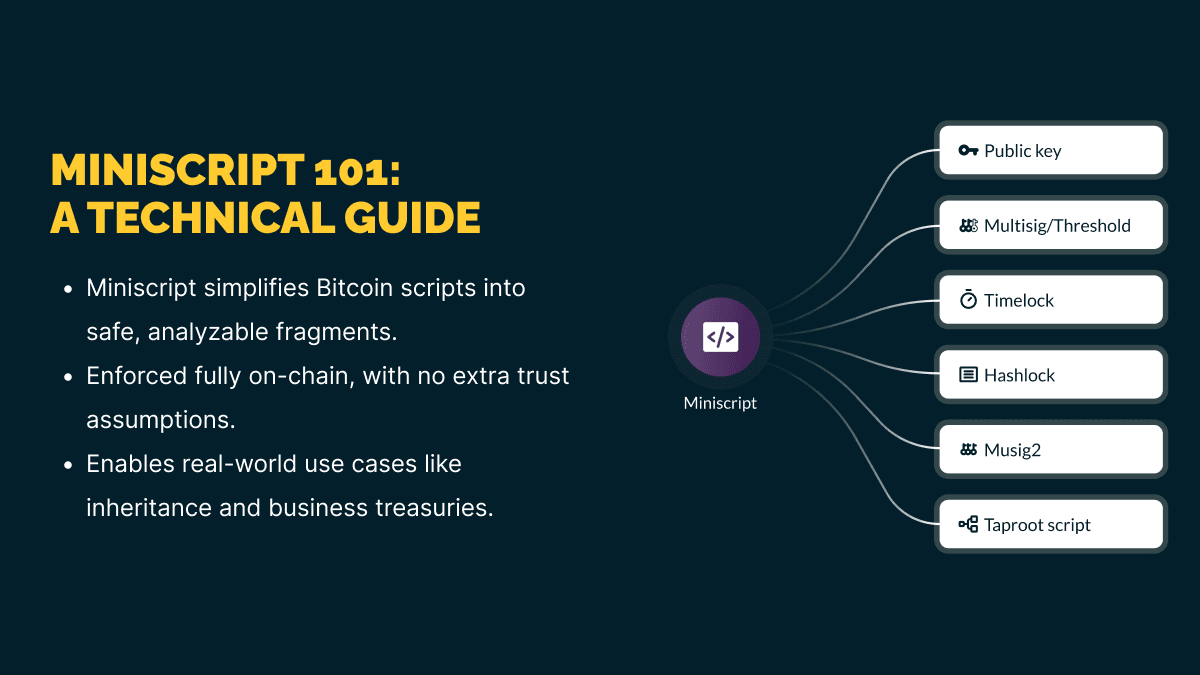
Bitcoin will dwarf the internet's economic impact. The internet moves information. Bitcoin moves value (info with 1,000× weight). Today we're shipping the UX to make that real: Miniscript + E2EE group wallets. These tools combined will make programmable Bitcoin for everyone. image Bitcoin has always supported spending rules (multisig, time delays), but they were complex and risky to implement. Miniscript structures these rules like Lego blocks, making advanced custody safe, simple, and verifiable. We didn't just add a few pre-baked scripts. Nunchuk now supports *generalized* Miniscript. You can create any policy supported under standard Bitcoin rules. Use our friendly templates, or craft custom spending rules if you're advanced. image Complex policies involving multiple parties require coordination. Doing this over insecure channels (email, messengers) is a major security risk. Nunchuk solves this. Our E2EE Group Wallets now support Miniscript out of the box. The entire setup is encrypted, with built-in chat for secure coordination. image This combination lets you build wallets that adapt to real life needs, such as: 🧊 Timelocked inheritance plan 🏛️ Business treasuries with layered approvals & fallbacks 🤝 Non-custodial escrow for OTC trades 👻 Private multi-party wallets that look like single-sig on-chain image You have options. Prefer simple and widely compatible? Use Native SegWit. Want advanced privacy and efficiency? • Taproot hides unused spending branches. • MuSig2 aggregates multiple signers into one signature (key path or script path). The choice is yours. We support major hardware vendors today: Native SegWit Miniscript: COLDCARD, Tapsigner, Blockstream Jade, Ledger, Specter DIY Taproot Miniscript: COLDCARD, Ledger, Specter DIY MuSig2: Software keys only (for now). More coming as vendors ship support. Zooming out: These tools (verifiable policies, secure collaboration, advanced scripting) are the primitives of a new financial system. Fair, open, and anchored to sound money. Download the Nunchuk app and give it a try.
 🤖 Android: https://play.google.com/store/apps/details?id=io.nunchuk.android&hl=en 🍎 iOS: 💻 Desktop: Android APK: 📘 Read the full announcement and see the use cases in detail here: 🔧 For builders and the curious: Dive deep into how it all works with our technical guide.
 What will you build with generalized Miniscript? Tell us below. ⬇️
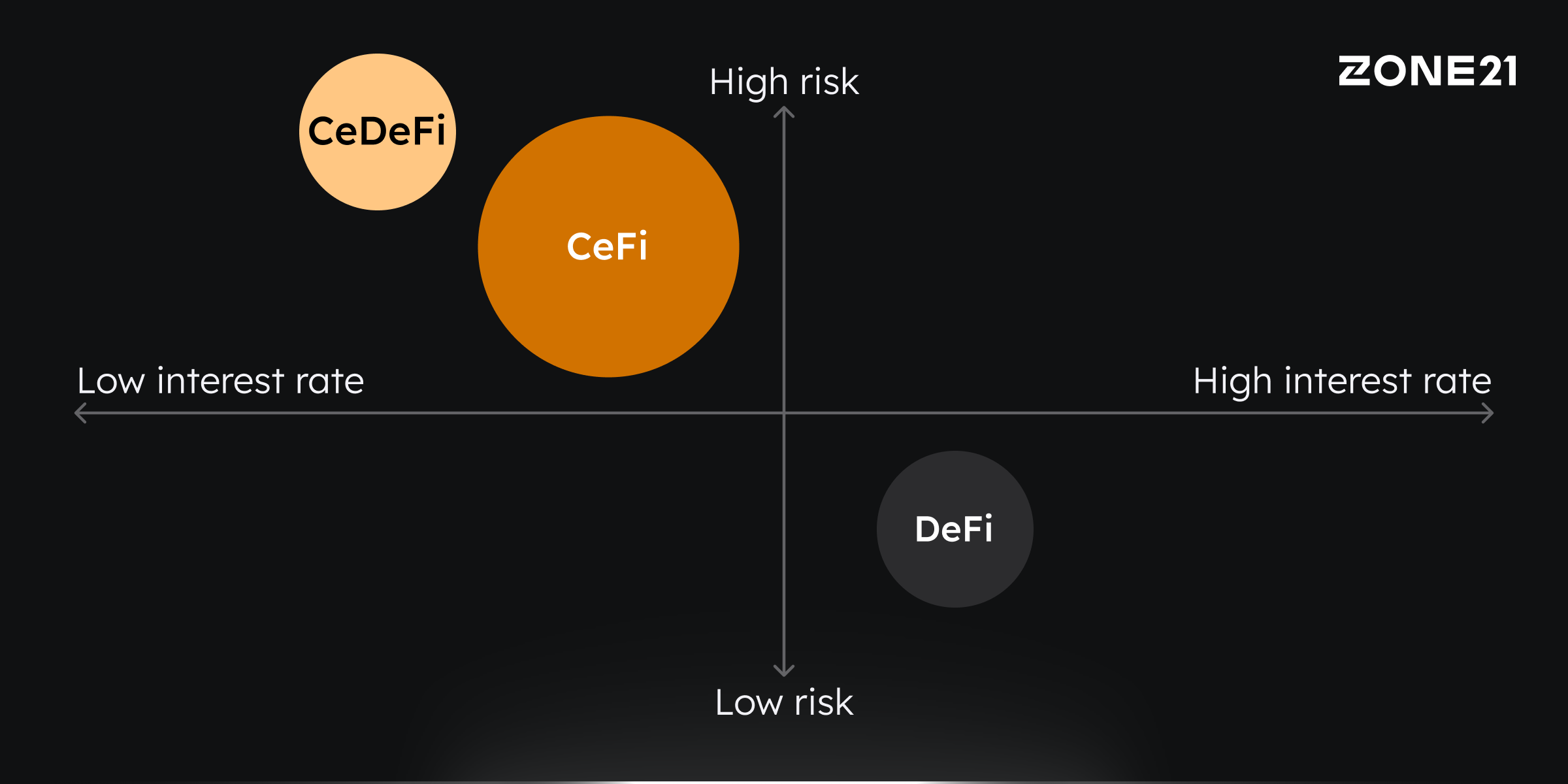
Special report from our new project (zone21.com). Bitcoin-Backed Lending 2025—Decoding Cost, Control & Hidden Risk. We size the US $14 B market, compare CeFi vs CeDeFi vs True DeFi, and rate existing lenders with our 13-Factor Risk Model. The report also covers new rules from the GENIUS Act to Hong Kong’s VASP regime and offers a one-page borrower checklist. Special thanks to @Lyn Alden and @npub1clwv...xhme for their review. Read the Executive Summary or download the full PDF ⬇️ image
New mobile release! • Taproot multisig wallets: manual and automatic fee selection • Show saved address labels in transaction details • Option to rebroadcast rejected transactions • Update default signet server • Add guest wallets notice • Assisted wallets: option to manually save BSMS in Setup Wizard • Bug fixes and improvements Taproot fee selection: what’s that about? Taproot lets one wallet hide many spend paths. Different path → different weight on-chain → different fee required. So we added two ways to handle it: • Manual: see every path and its fee. Tap the one you want. •Automatic: if cheap-vs-costly is ≤ 10 % or $0.20, we default to the pricier path. Tweak the thresholds or turn them off any time. As Bitcoin smart contracts get more complex and the subsidy era fades, fee variability will keep growing, both within a single path and across multiple paths, even before you factor in fee-bumping tools like RBF or CPFP. We’re building a solution that’s easy to use and puts you in control. Got feedback? Let us know!
↑