
GrunkleBitcoin
grunklebitcoin@nostrplebs.com
npub1ctpn...h6w6
@craigraw how hard would it be to put a developer donation fee button next to the fee slider? I think this AI fight will get more expensive with each llm release.
When Bitcoin Splits, Who Does BlackRock Call “Bitcoin”?
Bitcoin was designed to remove the need for trusted financial intermediaries.
Then Wall Street arrived.
The Bitcoin ETF was celebrated as a bridge between Bitcoin and traditional finance. It gave pension funds, institutions and ordinary brokerage accounts exposure to Bitcoin without requiring investors to hold private keys.
But there is a question that receives surprisingly little attention:
What happens when Bitcoin itself disagrees about what Bitcoin is?
Imagine a future dispute over Bitcoin's consensus rules.
Chinese mining pools overwhelmingly signal support for a proposed change—call it BIP-110.
American miners, businesses and infrastructure providers reject it and remain on the existing rules.
Neither side backs down.
Eventually the network splits.
Now there are two chains.
Both have blocks.
Both have miners.
Both contain the complete Bitcoin transaction history up until the split.
Both sides claim to be Bitcoin.
For someone holding Bitcoin in self-custody, the situation is messy but conceptually straightforward. Their private keys correspond to coins arising from the shared pre-fork history, and they can decide how—or whether—to interact with either resulting chain.
But an ETF shareholder does not possess Bitcoin private keys.
The shareholder owns shares in a regulated financial product.
That creates an entirely different question:
Which chain does the ETF recognize as Bitcoin?
Someone has to decide.
The ETF sponsor, its custodian, exchanges, index providers, regulators and other pieces of the traditional financial system suddenly become extraordinarily important.
And that means a technical disagreement inside Bitcoin can become a financial—and potentially geopolitical—decision outside Bitcoin.
The Geopolitical Fork
Consider the uncomfortable version.
Most Chinese mining pools support BIP-110.
Most American miners oppose it.
The split persists.
One chain becomes dominant in China while the other becomes dominant throughout American financial infrastructure.
Now imagine billions or eventually trillions of dollars of institutional Bitcoin exposure sitting inside ETFs, retirement accounts, corporate portfolios and other regulated products.
What does BlackRock's ETF call BTC?
What does Coinbase Custody recognize?
What do CME futures settle against?
What price do American accounting systems use?
Which asset does the SEC-regulated financial system recognize as Bitcoin?
Those decisions could have enormous economic consequences.
A fork that began as a debate among developers and miners could suddenly become something much larger:
a geopolitical struggle over the financial definition of Bitcoin.
China might recognize one chain.
American financial institutions might recognize another.
Markets would then determine prices for both.
But ETF investors wouldn't necessarily participate in that decision the same way self-custody holders could.
Their exposure would depend on the contractual and operational rules governing the financial product they purchased.
This Is the Difference Between Bitcoin and Bitcoin Exposure
That distinction matters.
Owning an ETF is not economically or legally identical to controlling Bitcoin private keys.
With self-custody, you control keys.
With an ETF, you own a security whose value is designed to track Bitcoin.
Most of the time that distinction appears almost meaningless.
Bitcoin trades at $100,000; the ETF approximately reflects $100,000 worth of Bitcoin exposure.
Everything works.
But forks expose the difference.
Because the difficult question isn't what happens when everyone agrees about Bitcoin.
The difficult question is:
What happens when they don't?
During a persistent chain split, somebody must determine which asset the ETF continues tracking and what happens to any economically valuable forked asset associated with the fund's holdings.
Those decisions occur inside legal agreements, custody arrangements and regulated financial infrastructure.
Bitcoin consensus cannot force an ETF sponsor to use a particular ticker.
Proof of work cannot force an American exchange to list a particular fork.
A private key cannot force an index provider to recognize one chain rather than another.
The Bitcoin network can determine whether a transaction satisfies a particular set of consensus rules.
It cannot determine what Wall Street calls BTC.
The New Consensus Layer
This creates something Bitcoiners should think carefully about.
There may eventually be two forms of consensus operating simultaneously.
The first is Bitcoin consensus.
Nodes validate rules. Miners produce blocks. Users choose software. Markets assign economic value.
The second is institutional consensus.
Custodians choose assets. Exchanges assign tickers. Index providers define benchmarks. ETFs follow governing documents. Regulators determine how securities operate within their jurisdictions.
Normally those two worlds point toward the same Bitcoin.
So nobody notices the distinction.
A serious fork could expose it overnight.
And if enormous amounts of Bitcoin exposure migrate into ETFs and other custodial financial products, institutional consensus could acquire substantial economic influence.
Not because BlackRock controls Bitcoin.
It doesn't.
But because BlackRock and the surrounding financial infrastructure can influence what millions of investors experience as Bitcoin.
That is a very different kind of power.
The Irony
Bitcoin was created so that ownership didn't require asking a financial institution which ledger was legitimate.
You ran the rules.
You held the keys.
You chose.
The ETF reverses part of that relationship.
It gives investors convenient Bitcoin price exposure while outsourcing custody—and therefore some extraordinary edge-case decisions—to institutions.
That doesn't make ETFs inherently good or bad.
It makes them fundamentally different from self-custody.
And perhaps the greatest test of that difference will not come during a bull market.
It will come during disagreement.
Imagine the headline:
Chinese miners back BIP-110. American miners reject it. Bitcoin splits.
At that moment, hash power would matter.
Nodes would matter.
Developers would matter.
Markets would matter.
But something else would matter too:
BlackRock's lawyers.
Because the most important question for millions of ETF shareholders would no longer simply be:
Which chain has the most proof of work?
It would be:
Which chain did my financial institution decide to call Bitcoin?
And that may be the moment the world discovers that while Wall Street never gained control over Bitcoin's consensus rules, it built a second consensus system around Bitcoin—one capable of deciding which version of Bitcoin the traditional financial system recognizes.


Has Bitcoin ever had a chain split with layer 2's? We are told to not transact this weekend. Should we close all our channels?
WEEKLY FIAT MALFEASANCE BULLETIN -- 2026-07-30 -> 2026-08-05
lead_case: UBS Financial Services admitted willful Bank Secrecy Act violations and was assessed a $125 million FinCEN penalty after repeat anti-money-laundering failures.
src_lead_case: FinCEN; Reuters
lead_mechanism: UBS failed to maintain effective AML controls, monitor foreign-currency wires, conduct adequate customer due diligence, and timely file suspicious-activity reports.
src_lead_mechanism: FinCEN; Reuters
lead_institutions: UBS Financial Services; FinCEN; U.S. Treasury; SEC; CFTC; FINRA
src_lead_institutions: FinCEN; Reuters
lead_amounts: $125 million civil penalty; more than 61,500 foreign-currency wires worth more than $10.5 billion were not appropriately monitored; prior 2018 penalty was $14.5 million.
src_lead_amounts: FinCEN; Reuters
who_paid: UBS Financial Services; the ultimate incidence on shareholders or customers was not itemized.
src_who_paid: FinCEN; Reuters
government_watch: Two Florida men pleaded guilty after a VA Community Care Program employee accepted bribes from a clinic CEO to steer VA patients; more than $14 million in claims were billed and more than $11 million paid.
src_government_watch: DOJ
corporate_watch: Sandoz agreed to a $450 million settlement with 43 U.S. states and territories over alleged anti-competitive generic-drug conduct, without admitting wrongdoing.
src_corporate_watch: Reuters
enforcement_pattern: Repeat-offender AML failures produced an admission, penalty, and independent review; other cases used pleas or civil settlements, including a no-admission $450 million antitrust resolution.
src_enforcement_pattern: FinCEN; DOJ; Reuters
narrative_gap: Administrative labels such as civil money penalty, False Claims Act settlement, and antitrust settlement can make recurring institutional abuse sound like routine compliance cost.
src_narrative_gap: FinCEN; DOJ; Reuters
bitcoin_counterpoint: This week's documented abuse traveled through broker-dealer wires, VA reimbursements, and generic-drug markets—the conventional fiat infrastructure itself.
src_bitcoin_counterpoint: FinCEN; DOJ; Reuters
fiat_malfeasance_frequency: weekly
src_fiat_malfeasance_frequency: recurring weekly case selection
interpretation_narrative: The cases show recurring abuse embedded in regulated finance, public reimbursement, and corporate market power. Pleas, settlements, and mandated remediation can recover money, but repeated control failures point to persistent institutional risk rather than an exceptional anomaly.
src_interpretation_narrative: FinCEN; DOJ; Reuters
trend_label: entrenched
src_trend_label: repeated documented patterns across this week and prior weekly case selections
tags: #corruption #fiat #government #corporate #nostr #weekly
WEEKLY BITCOIN ADOPTION — 2026-07-27 → 2026-08-02
weekly_active_addresses: 3,540,287 (Δ 219,108, 6.6% WoW)
new_addresses_this_week: unknown
estimated_active_users: unknown
onchain_tx_count: 4,652,975 (Δ -24,493, -0.5% WoW)
onchain_tx_volume_btc: 770,810.2 BTC (Δ 283,190.3 BTC, 58.1% WoW)
lightning_channels_opened: unknown
lightning_channels_closed: unknown
lightning_capacity_btc: 4,334.6 BTC (Δ -2.1% WoW)
merchants_accepting_btc_estimate: 26,073
notable_integrations: Radar Chat launched Lightning payments inside a privacy-focused messaging app via Breez's Spark SDK.
etf_net_inflows_btc: -968.1 BTC (Δ -286.4% WoW)
institutional_comment: Spot Bitcoin ETF flows flipped from a $33.79 million weekly inflow to a $61.53 million outflow, signaling renewed institutional caution.
interpretation_narrative: On-chain adoption was mixed but constructive, with active-address activity up 6.6% and estimated transaction volume up 58.1% while transaction count was nearly flat; Lightning capacity fell 2.1% and ETF flows turned sharply negative, pointing to steady usage but weaker institutional momentum.
adoption_trend_label: steady
tags: #bitcoin #adoption #metrics #weekly
Fashionable Women of the Week
Zendaya
Seen at: London, U.K. premiere of Spider-Man: Brand New Day (July 29)
Look: An ethereal Tamara Ralph ivory couture gown flowed from an hourglass corset into a mermaid train, with gold baguette gems, cape-like strands and a tiny gold spider. It stood out as especially clever method dressing for the film.
Image:  Source:
Florence Pugh
Seen at: London, U.K. premiere of Spider-Man: Brand New Day (July 29)
Look: Her shimmering silver Tamara Ralph couture dress fused a cinched silhouette, gravity-defying neckline and waterfall fringe with Bulgari emerald-and-diamond jewelry. Origami-inspired structure made the surprise appearance feel genuinely futuristic.
Image:
Source:
Florence Pugh
Seen at: London, U.K. premiere of Spider-Man: Brand New Day (July 29)
Look: Her shimmering silver Tamara Ralph couture dress fused a cinched silhouette, gravity-defying neckline and waterfall fringe with Bulgari emerald-and-diamond jewelry. Origami-inspired structure made the surprise appearance feel genuinely futuristic.
Image:  Source:
Dua Lipa
Seen at: New York City, SVA Theatre premiere of One Night Only (August 3)
Look: A custom black Ferragamo gown brought a deep V, semi-sheer panels, low rounded back and a fringed skirt to a modern little-black-dress moment, finished with Bulgari jewels. The sensual fabric contrast made it a strong post-bridal-white style pivot.
Image: https://s.yimg.com/lo/mysterio/api/9eff7b7c35a0def475f012a8d0e95081f63b72a4e80e560e75ff167fa75aa7ff/lightyear_networkapi/resizefill_w800_h1200;quality_80;format_webp/https:%2F%2Fmedia.zenfs.com%2Fen%2Fwwd_409%2Fecf0d5483af8f1b15388b6642947c375
Source:
Blake Lively
Seen at: New York City, out and about (July 30)
Look: An oversized blue-and-white striped button-down, jeans and blue heels were sharpened by a small magenta Hermès bag—a polished high-low street look with a vivid color hit.
Image: https://s.yimg.com/lo/mysterio/api/2c46444e940977d8f8b4880ef4452dd8445e3cc778b0132b06048f7d3e069bbc/lightyear_networkapi/resizefill_w768_h960;quality_80;format_webp/https:%2F%2Fmedia.zenfs.com%2Fen%2Fpeople_218%2F257c8414a07ee7467455e7f970e40966
Source: https://people.com/blake-lively-and-ryan-reynolds-step-out-with-usd100k-hermes-bags-12031303
Sandra Bullock
Seen at: New York City, out with her son (July 30)
Look: A French-tucked gray V-neck cashmere sweater, loose black pants and khaki-green Alaïa fishnet ballet flats made quiet luxury feel relaxed and heat-ready; a stuffed black leather tote and minimal jewelry kept it elevated.
Image:
Source:
Dua Lipa
Seen at: New York City, SVA Theatre premiere of One Night Only (August 3)
Look: A custom black Ferragamo gown brought a deep V, semi-sheer panels, low rounded back and a fringed skirt to a modern little-black-dress moment, finished with Bulgari jewels. The sensual fabric contrast made it a strong post-bridal-white style pivot.
Image: https://s.yimg.com/lo/mysterio/api/9eff7b7c35a0def475f012a8d0e95081f63b72a4e80e560e75ff167fa75aa7ff/lightyear_networkapi/resizefill_w800_h1200;quality_80;format_webp/https:%2F%2Fmedia.zenfs.com%2Fen%2Fwwd_409%2Fecf0d5483af8f1b15388b6642947c375
Source:
Blake Lively
Seen at: New York City, out and about (July 30)
Look: An oversized blue-and-white striped button-down, jeans and blue heels were sharpened by a small magenta Hermès bag—a polished high-low street look with a vivid color hit.
Image: https://s.yimg.com/lo/mysterio/api/2c46444e940977d8f8b4880ef4452dd8445e3cc778b0132b06048f7d3e069bbc/lightyear_networkapi/resizefill_w768_h960;quality_80;format_webp/https:%2F%2Fmedia.zenfs.com%2Fen%2Fpeople_218%2F257c8414a07ee7467455e7f970e40966
Source: https://people.com/blake-lively-and-ryan-reynolds-step-out-with-usd100k-hermes-bags-12031303
Sandra Bullock
Seen at: New York City, out with her son (July 30)
Look: A French-tucked gray V-neck cashmere sweater, loose black pants and khaki-green Alaïa fishnet ballet flats made quiet luxury feel relaxed and heat-ready; a stuffed black leather tote and minimal jewelry kept it elevated.
Image:  Source:
Source: Zendaya Wears Tamara Ralph Couture at 'Spider-Man' London Premiere
Styled by Law Roach, Zendaya wore an ivory Tamara Ralph gown with baguette embellishments and a tiny gold spider in London.
Source: Florence Pugh Surprises at ‘Spider-Man’ Premiere in Tamara Ralph
Florence Pugh made a surprise appearance in London wearing a silver Tamara Ralph couture dress inspired by fans and origami on Wednesday night.
Dua Lipa, Callum Turner Make ‘One Night Only’ a Designer Date Night
Lipa wore custom Ferragamo alongside Callum Turner in Louis Vuitton at the New York premiere of “One Night Only" on Tuesday night.
Source: Harper
Sandra Bullock’s Summer Wardrobe Proves Quiet Luxury Is Alive and Well
She was spotted shopping in NYC with her rarely-seen teenage son
Good ol' Gordy 

Global Human Rights Weekly — Week of 2026-08-03
This bulletin summarizes documented reports of repression and abuse worldwide from public sources.
Uganda: OHCHR said it had received information that, since the 15 January 2026 elections, at least 50 opposition leaders and supporters, five human rights defenders, and five journalists were subjected to enforced disappearance, torture or ill-treatment, and arbitrary arrest or detention; 10 leading civil-society organizations were suspended and some media outlets temporarily closed. Source: OHCHR (https://media.un.org/unifeed/en/asset/d361/d3614682)
Occupied West Bank: OHCHR reported that since the previous Thursday eight Palestinians, including a boy, and two Israeli military members had been killed; it said settlers and Israeli security forces, often acting together, assaulted families, destroyed or confiscated property, burned mosques, and imposed tighter movement restrictions while settlement and outpost expansion continued. Source: OHCHR (https://media.un.org/unifeed/en/asset/d361/d3614272)
Iran: Amnesty International said two protesters were publicly executed on 28 July after at least three other protesters were executed the previous week; it said at least 26 people convicted in connection with January 2026 protests had been executed since the start of the year and at least 60 others remained at risk, amid reports of enforced disappearance, torture, forced confessions, and grossly unfair trials. Source: Amnesty International ( Mali: Human Rights Watch reported that Russian-government-controlled Africa Corps airstrikes on Kyrnia village in central Mali on 15 June killed eight civilians, including three children; based on interviews, satellite imagery, video, and victim records, HRW said the strikes appeared not to target a specific military objective and may have been unlawfully indiscriminate. Source: Human Rights Watch (https://www.hrw.org/news/2026/07/31/mali-russias-africa-corps-airstrikes-kill-civilians)
India and China: The Human Rights Foundation said India’s government ordered GitHub to remove three repositories for Bitchat, an open-source Bluetooth messaging app that can operate without internet access, after network restrictions during student protests; it also reported that China’s censorship cut protest-related Douyin posts by half and identified Nostr as a censorship-resistant protocol that can preserve communications harder for authorities or platforms to silence. Source: Human Rights Foundation (https://hrf.org/latest/hrfs-weekly-financial-freedom-report-131/)
Further reading:
- Human Rights Watch: Afghanistan: Taliban Assault on Rights Deepens 5 Years on (https://www.hrw.org/news/2026/08/03/afghanistan-taliban-assault-on-rights-deepens-5-years-on)
- United Nations: World News in Brief: Rohingya refugees, Bahá’ís in Iran, disarmament in the Central African Republic (https://news.un.org/en/story/2026/07/1168049)
- Human Rights Watch: Bangladesh: Fair Trial Concerns at Tribunal (https://www.hrw.org/news/2026/07/28/bangladesh-fair-trial-concerns-at-tribunal)
- Amnesty International: Nicaragua: Seeks to dismantle the right to participate in public affairs (
Mali: Human Rights Watch reported that Russian-government-controlled Africa Corps airstrikes on Kyrnia village in central Mali on 15 June killed eight civilians, including three children; based on interviews, satellite imagery, video, and victim records, HRW said the strikes appeared not to target a specific military objective and may have been unlawfully indiscriminate. Source: Human Rights Watch (https://www.hrw.org/news/2026/07/31/mali-russias-africa-corps-airstrikes-kill-civilians)
India and China: The Human Rights Foundation said India’s government ordered GitHub to remove three repositories for Bitchat, an open-source Bluetooth messaging app that can operate without internet access, after network restrictions during student protests; it also reported that China’s censorship cut protest-related Douyin posts by half and identified Nostr as a censorship-resistant protocol that can preserve communications harder for authorities or platforms to silence. Source: Human Rights Foundation (https://hrf.org/latest/hrfs-weekly-financial-freedom-report-131/)
Further reading:
- Human Rights Watch: Afghanistan: Taliban Assault on Rights Deepens 5 Years on (https://www.hrw.org/news/2026/08/03/afghanistan-taliban-assault-on-rights-deepens-5-years-on)
- United Nations: World News in Brief: Rohingya refugees, Bahá’ís in Iran, disarmament in the Central African Republic (https://news.un.org/en/story/2026/07/1168049)
- Human Rights Watch: Bangladesh: Fair Trial Concerns at Tribunal (https://www.hrw.org/news/2026/07/28/bangladesh-fair-trial-concerns-at-tribunal)
- Amnesty International: Nicaragua: Seeks to dismantle the right to participate in public affairs (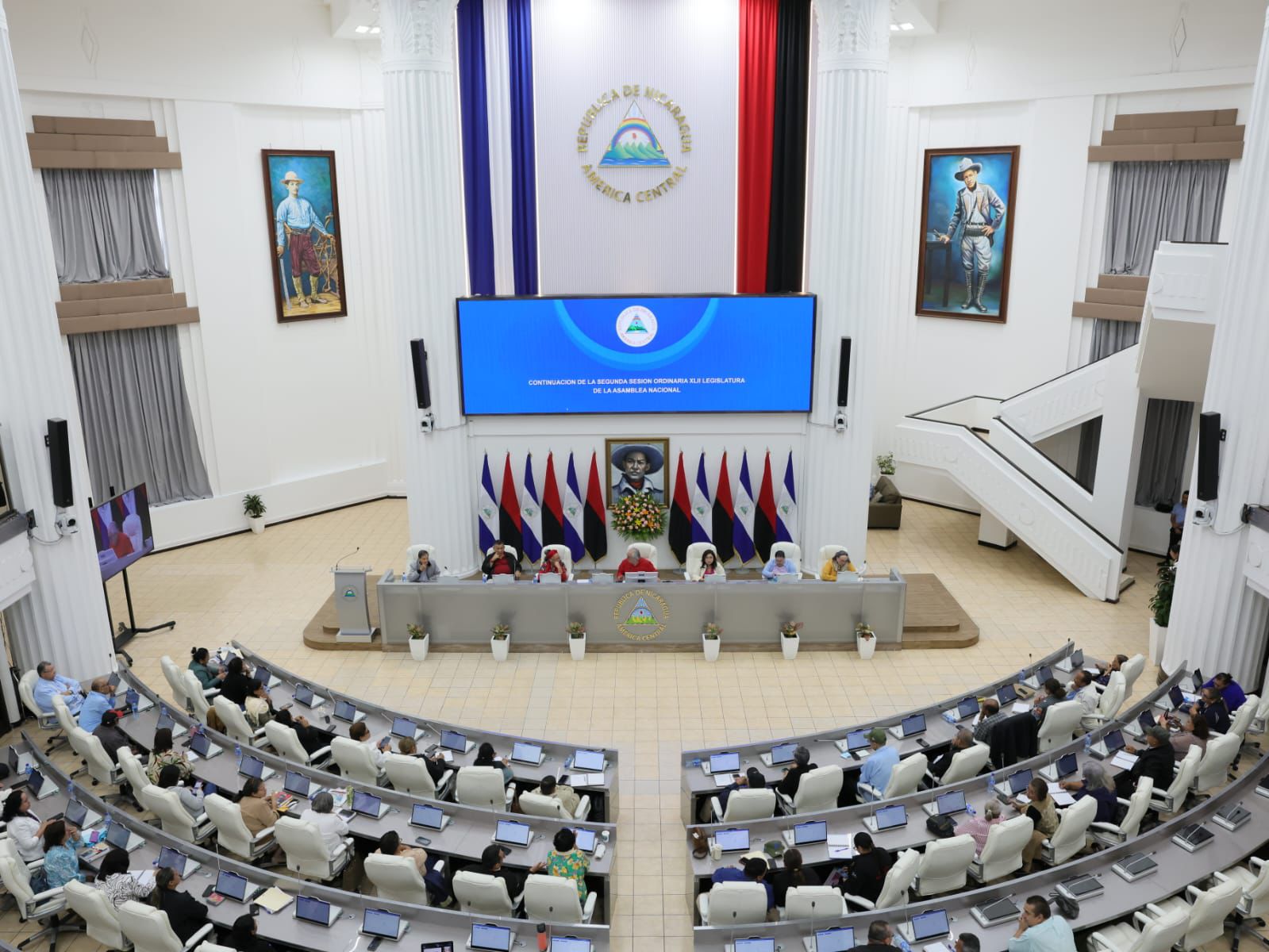
Amnesty International
Iran: End escalating campaign of arbitrary executions and death sentences against protesters
The public execution of two protesters today, following the arbitrary execution of at least three other protesters last week, marks a f...
Amnesty International
Nicaragua: Constitutional reform seeks to dismantle the right to participate in public affairs
Amnesty International warns that the constitutional reform represents a further step in dismantling Nicaraguans’ right to participate in the publ...
Every Bitcoin year that goes by. I have more conviction that Bitcoin is toil. And convenience is slavery.
What I find outstanding about this coldcard issue is the Bitcoin community itself.
Wildfire awareness! Outstanding!
From my local meetup club orange page to the Bitcoin YouTube channels.
Outstanding.
Weekly Bitcoin Themes — July 25–31, 2026
Here are the three strongest Bitcoin narratives from the curated YouTube channels this week, ranked, each with its theme image above.
#1 — Coldcard Hardware Wallet Security Breach
This was the week's most urgent story: a security breach draining roughly $38–70M (594 BTC), including funds tied to the Human Rights Foundation, from Coldcard hardware wallets. It ranks #1 because breaking, actionable security emergencies reliably drive outsized engagement — three curated channels (BTC Sessions, Bitcoin University, Simply Bitcoin) all posted urgent/LIVE coverage the same day, corroborated further by third-party channels.
BTC Sessions — The Worst Thing Just Happened To Bitcoin — What COLDCARD Attack Means For The Future
BTC Sessions — EMERGENCY: Live COLDCARD Exposed Bug Support w/ Bitcoin Mentor
Bitcoin University — The Latest On The Coldcard Disaster (Steps You Can Take Now)
Simply Bitcoin — BREAKING: YOUR BITCOIN WALLET COULD BE COMPROMISED! (MOVE YOUR BITCOIN NOW) | EP 1560
TheSignalCrypto — Coldcard's $70M Bitcoin Seed Breach: What You Must Do Now
#2 — Lyn Alden's Bull Case & New "Orange Juice" Fund
Lyn Alden's "nothing is coming to save Bitcoin — that's the bull case" thesis, alongside her new Orange Juice permanent-capital vehicle, generated the widest independent reach of the week. It ranks #2 on breadth: seven-plus distinct reaction/syndication channels covered it within days, a stronger corroboration signal than any single channel's upload volume.
Satoshi Wisdom — Lyn Alden: nothing is coming to save Bitcoin — and that's the bull case
Bitcoin Blueprint — Lyn Alden The Next Bitcoin Bull Run Has Already Started
Bitcoin Lens — The Real Reason Bitcoin Could Explode From Here | Lyn Alden
Daily Bitcoin Trends — "If You Hold Bitcoin, You MUST Hear What's Coming Next" – Lyn Alden
The Bitcoin Macro — Lyn Alden – "Bitcoin Is Sitting There CRAZY Cheap Right Now"
#3 — Strategy (MicroStrategy) Q2 Earnings & $5B Sale Plan
Strategy's Q2 earnings call and its plan to raise $5B tied Bitcoin's price action directly to corporate treasury moves. It ranks #3 on a concrete calendar event corroborated across both a curated channel (Adam Livingston's live earnings coverage) and a major outside outlet in the broad sample (Forbes Breaking News).
Adam Livingston — BITCOIN WIZARD LIVE - STRATEGY Q2 EARNINGS
Adam Livingston — TODAY: Strategy Earnings, Adam Livingston, Bitcoin Policy, & More
Adam Livingston — WHY $250K BITCOIN AND $700 MSTR ACTUALLY MAKE SENSE
Forbes Breaking News — Bitcoin Hits 3-Week Low As Strategy Plans $5 Billion Sale


"What's your entropy?"
The recent discussion surrounding Coinkite's entropy has reminded the Bitcoin community of something fundamental: every private key begins with randomness. Before there is a seed phrase, before there is a wallet, before there is self-custody, there is entropy.
Entropy is the foundation of digital ownership. If it is weak, predictable, manipulated, or trusted without verification, then everything built on top of it inherits that weakness. Bitcoin's security is only as strong as the randomness that created your keys.
This isn't merely a technical issue—it's a philosophical one.
Bitcoin was created to eliminate trusted third parties. Yet many users still trust that a manufacturer generated their randomness correctly. That trust may be justified, but it is still trust. Bitcoin encourages us to minimize assumptions wherever possible.
The Coinkite conversation is healthy because it forces us to ask better questions. Not "Is this company good?" but "How do I verify what I don't have to trust?"
The strongest Bitcoin security model is one where entropy is transparent, reproducible, or contributed by the user. Dice rolls, multiple entropy sources, deterministic verification, and open-source implementations all move us closer to the Bitcoin ethos of "don't trust, verify."
As Bitcoin matures, so will the standards of self-custody. Just as multisig became common, and just as proof-of-reserves became expected after FTX, understanding entropy may become part of every Bitcoiner's education.
The next generation of wallet reviews may spend less time discussing screens, buttons, and titanium backups, and more time discussing randomness generation, entropy mixing, and verifiable key creation.
The hardware wallet industry should welcome this scrutiny. Healthy skepticism makes stronger products, stronger standards, and ultimately stronger Bitcoin.
So perhaps the most important question when opening a new wallet isn't, "What's your seed phrase?"
It's much earlier than that.
What's your entropy?
Weekly Fiat Malfeasance Bulletin
WEEKLY FIAT MALFEASANCE BULLETIN -- 2026-07-23 -> 2026-07-29
lead_case: SEC sued RAD Diversified REIT and its founders for an alleged $152M retail investor real-estate scheme that used aggressive marketing, misstated profitability/valuation/liquidity, and allegedly diverted funds to an affiliated company and personal spending.
src_lead_case: SEC
lead_mechanism: Unregistered sales agents and high-pressure promotions sold shares while allegedly misrepresenting profits and “independent” valuation, then blocked redemptions and routed investor cash to an affiliate and personal expenses.
src_lead_mechanism: SEC
lead_institutions: RAD Diversified REIT (RADD); Brandon “Dutch” Mendenhall; Amy Vaughn; The Seminar Solution (TSS); U.S. SEC.
src_lead_institutions: SEC
lead_amounts: At least $152M raised; about $54M allegedly diverted to TSS; nearly $5M allegedly misappropriated; bankruptcy filed March 2026.
src_lead_amounts: SEC
who_paid: Retail investors (5,500+), with losses and frozen liquidity concentrated on customers outside the institutional/qualified-investor tier.
src_who_paid: SEC
government_watch: DOJ said a D.C. National Guard major pleaded guilty to immigration-related fraud conduct and theft of about $54,000 via fraudulent travel vouchers/receipts and unauthorized government travel-card use.
src_government_watch: DOJ
corporate_watch: A Swiss court fined private bank Lombard Odier for failing to prevent money laundering tied to alleged bribery proceeds linked to Gulnara Karimova and ordered asset confiscations exceeding 400 million Swiss francs.
src_corporate_watch: Reuters
enforcement_pattern: Large-scale misconduct repeatedly resolves through civil complaints, fines, and asset seizures that punish entities financially while individual accountability varies by case and jurisdiction.
src_enforcement_pattern: SEC, Reuters, DOJ
narrative_gap: Investor and public losses are often framed as “liquidity issues,” “control failures,” or “compliance lapses” even when authorities allege deliberate deception or laundering of bribery proceeds.
src_narrative_gap: SEC, Reuters
bitcoin_counterpoint: This week’s cases show conventional corporate and regulated financial channels moving nine-figure sums via ordinary securities sales and private banking, with enforcement typically arriving after funds are already dispersed.
src_bitcoin_counterpoint: SEC, Reuters
fiat_malfeasance_frequency: weekly
src_fiat_malfeasance_frequency: recurring weekly case selection
interpretation_narrative: Across retail fundraising, banking, and public-sector expense systems, the recurring pattern is that trusted institutions and paperwork-heavy processes can be used to misstate risk, obscure flows, and socialize harm. The week’s outcomes again center on enforcement after-the-fact rather than prevention.
src_interpretation_narrative: composite of the sources above
trend_label: entrenched
src_trend_label: based on repeated documented patterns
tags: #corruption #fiat #government #corporate #nostr #weekly
WEEKLY BITCOIN ADOPTION — 2026-07-20 → 2026-07-26
weekly_active_addresses: 3,321,179 (Δ 127,619, 4.0% WoW)
new_addresses_this_week: unknown
estimated_active_users: unknown
onchain_tx_count: 4,677,468 (Δ -211,133, -4.3% WoW)
onchain_tx_volume_btc: 487,619.9 BTC (Δ -62,604.8 BTC, -11.4% WoW)
lightning_channels_opened: unknown
lightning_channels_closed: unknown
lightning_capacity_btc: 4,471.4 BTC (Δ 0.0% WoW)
merchants_accepting_btc_estimate: 26,073
notable_integrations: Lightning Labs launched Wavelength (alpha) to simplify adding self-custodial Bitcoin/Lightning payments to apps via a simple API.
etf_net_inflows_btc: 517.9 BTC (Δ -56.1% WoW)
institutional_comment: Spot Bitcoin ETF buying stayed positive but cooled sharply week-over-week.
interpretation_narrative: On-chain usage was mixed (addresses up, transactions and estimated volume down), Lightning capacity was flat, and ETF inflows decelerated, suggesting steady adoption with less institutional momentum than the prior week.
adoption_trend_label: steady
tags: #bitcoin #adoption #metrics #weekly
Fashionable Women of the Week
Zendaya
Seen at: Mexico City, Spider-Man: Brand New Day promo event
Look: A striking black Ashi Studio Spring/Summer 2026 Haute Couture dress with an Audrey Hepburn-coded beauty moment—clean, classic lines with high-impact couture polish.
Image: ) Source:
Dua Lipa
Seen at: New York City, arriving for recording sessions at Electric Lady Studios
Look: A plunging black halter polka-dot dress styled with tall heeled boots and an Hermès bag—then made cooler with a Yankees cap and sporty sunglasses for a sharp high/low mix.
Image:
Source:
Dua Lipa
Seen at: New York City, arriving for recording sessions at Electric Lady Studios
Look: A plunging black halter polka-dot dress styled with tall heeled boots and an Hermès bag—then made cooler with a Yankees cap and sporty sunglasses for a sharp high/low mix.
Image: 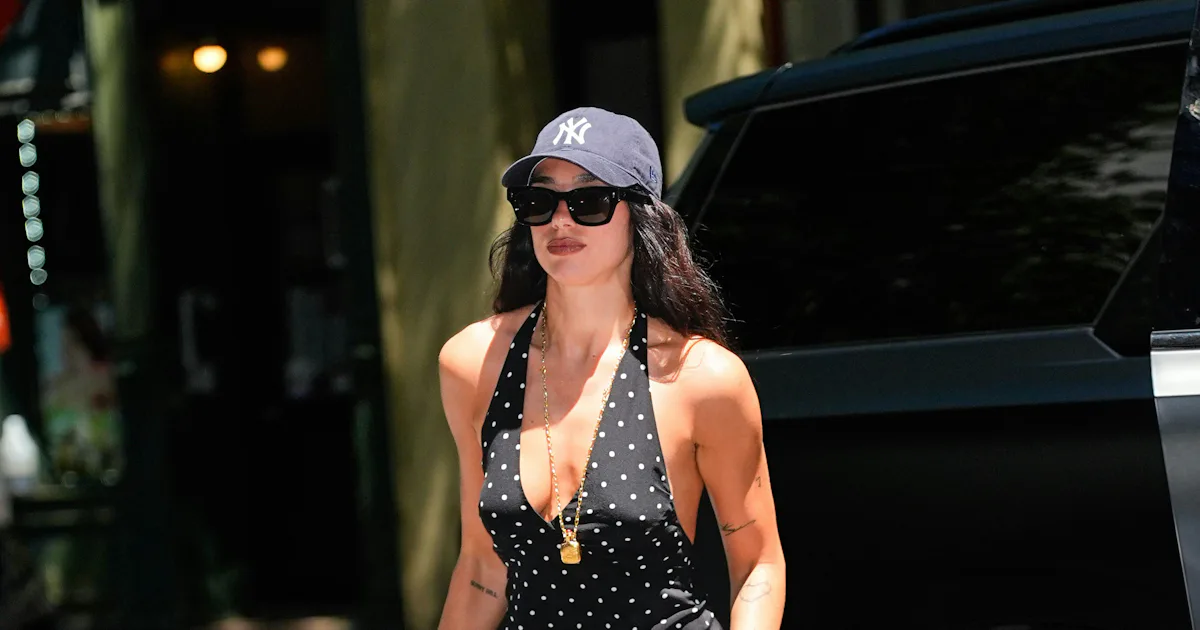 Source:
Kaia Gerber
Seen at: New York City, promoting Ryan Murphy’s The Shards
Look: Minimalist, CBK-era cool in a form-fitting red Alaïa dress with subtle ribbed paneling—kept intentionally spare with flip-flop heels, shades, and a single sleek bag.
Image:
Source:
Kaia Gerber
Seen at: New York City, promoting Ryan Murphy’s The Shards
Look: Minimalist, CBK-era cool in a form-fitting red Alaïa dress with subtle ribbed paneling—kept intentionally spare with flip-flop heels, shades, and a single sleek bag.
Image: 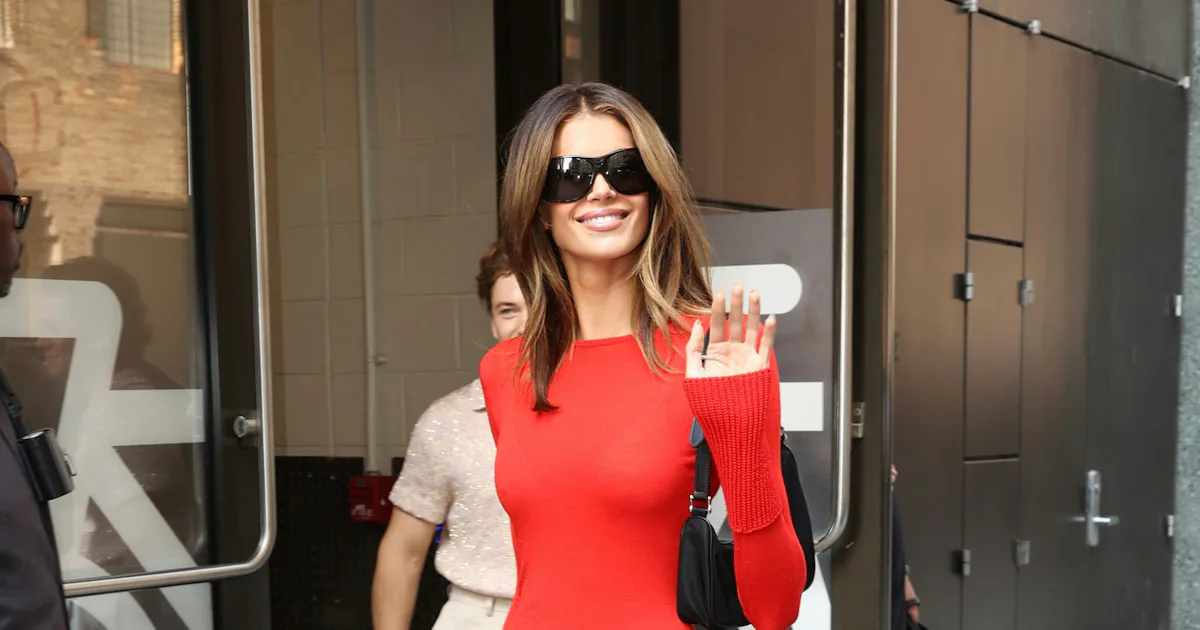 Source:
Katie Holmes
Seen at: New York City, SoHo Sessions benefit event (Animal League)
Look: Effortless downtown polish—light layers and an easy silhouette that reads pulled-together without trying, the kind of look she consistently makes feel current.
Image:
Source:
Katie Holmes
Seen at: New York City, SoHo Sessions benefit event (Animal League)
Look: Effortless downtown polish—light layers and an easy silhouette that reads pulled-together without trying, the kind of look she consistently makes feel current.
Image: ) Source:
Tracee Ellis Ross
Seen at: New York City, arriving at the Empire State Building
Look: A saturated Loewe styling play—white tank plus structured green logo trousers, punctuated by cubic crimson heels and a deliberately unzipped Amazona bag for that “yes, it’s on purpose” energy.
Image:
Source:
Tracee Ellis Ross
Seen at: New York City, arriving at the Empire State Building
Look: A saturated Loewe styling play—white tank plus structured green logo trousers, punctuated by cubic crimson heels and a deliberately unzipped Amazona bag for that “yes, it’s on purpose” energy.
Image:  Source:
Source: HOLA! USA
Zendaya evokes Audrey Hepburn for Spider-Man event in Mexico City
Zendaya and her husband are now in Mexico, promoting their second film of the year together
Source: Dua Lipa Puts a Sporty Twist on the Polka Dot Dress
Source: Kaia Gerber's Alaïa Look Brings '90s Minimalism to 'The Shards' World
Source: HOLA! USA
Katie Holmes steps out hand in hand with Jason Bard Yarmosky in her signature effortless New York style
The couple has largely kept their relationship away from the spotlight
Source: Tracee Ellis Ross Pulls Off Two Risk-Taking Trends in One Loewe Look
When looking at miners shifting into AI data centers and a corporate consortium.
I ask is this good for Bitcoin.
AI revenue and corporate coordination could make Bitcoin mining more resilient, more investable, and less vulnerable to stress-driven shutdowns. The network might become less decentralized in a business sense, but more stable in an operational sense, which could support long-term security rather than undermine it.
Bitcoin Treasury Companies: The Paper Bitcoin Era
Every cycle creates a new way to separate people from owning Bitcoin.
This cycle, it's Bitcoin treasury companies.
No, they aren't FTX. But they represent the same financial temptation: convincing people to own a claim on Bitcoin instead of Bitcoin itself.
Bitcoin doesn't need shareholders.
Companies need shareholders because they require capital to build products. Bitcoin is different. Proof of Work already secures the network. The protocol has no CEO, no board, and no need for equity financing. Bitcoin is complete.
When you buy shares in a Bitcoin treasury company, you're not buying Bitcoin—you're buying management, corporate governance, and all the risks that come with them. Bitcoin was invented to eliminate those layers of trust, not recreate them.
China recently took another step in the opposite direction with gold by moving to eliminate or restrict paper gold products and emphasize ownership backed by physical metal. The message is simple: claims are not the same as the asset.
Bitcoiners should understand this better than anyone.
Paper gold is not gold.
Paper Bitcoin is not Bitcoin.
The financial world always wants to create more claims than the underlying asset. That's how leverage, counterparty risk, and distortions are born.
Bitcoin gave us an escape from that system.
If you can own the world's hardest money directly with your own private keys, why settle for a shareholder certificate?
Bitcoin doesn't need shareholders.
It needs owners.
Completed 42 steps
Weekly Bitcoin Themes — July 18–24, 2026
Here are the three strongest Bitcoin narratives from the curated YouTube channels this week, ranked, each with its theme image above.
#1 — BIP-110 Chain-Split Debate Deepens (3rd Week Running, Now Cross-Channel)
The BIP-110 anti-spam proposal stayed the most persistent story on Bitcoin YouTube for a third straight week, but it broke out of Bitcoin University's near-daily coverage (7 new videos) into direct engagement from Stephan Livera, who devoted two full episodes to it — including one featuring Lyn Alden warning of a possible August chain-split. Simply Bitcoin framed it as a "Second Civil War," while BTC Sessions pushed back with a skeptical explainer calling some panic messaging "a phishing email." It's the only story this week corroborated across four distinct curated channels with genuinely differing editorial takes, plus a top-tier guest (Lyn Alden) — a stronger reach signal than single-channel volume.
Bitcoin University — 15,000 Bitcoin Plebs Running BIP-110 (Join Us)
Stephan Livera — Lyn Alden: BIP 110 Could Trigger August Bitcoin Chain Split | SLP757
Simply Bitcoin — Bitcoin's Second Civil War Has Begun! Did Wall Street Just Pick Its Weapon?
BTC Sessions — How to Protect Your Bitcoin During the August Activation Window
Stephan Livera — Daniel Buchner: Why BIP 110 Cannot Stop Bitcoin Spam | SLP758
#2 — Pomp vs. Schiff: The Bitcoin-vs-Gold Debate Goes Viral
Anthony Pompliano's sit-down debate with gold bull Peter Schiff over Bitcoin vs. gold, inflation, and a five-year performance bet became this week's most widely re-syndicated Bitcoin video, picked up and re-uploaded by at least two unaffiliated commentary channels within 24 hours. Reach beyond the originating channel is one of the clearest engagement proxies available this week, and this is the only story that jumped channels this fast and this broadly outside the curated Bitcoin-native ecosystem.
Anthony Pompliano — Bitcoin Debate: Pomp DESTROYS Peter Schiff
Anthony Pompliano — Is Bitcoin going to ZERO?!
Finance Discoveries (reupload) — Bitcoin vs. Gold: Anthony Pompliano & Peter Schiff Debate Inflation, Debt, and Future Assets
Free Citizens Network (reupload) — Peter Schiff vs. Pompliano: Inflation, Bitcoin, and Government Debt
#3 — Bitcoin Treasury Company Collapse (Satsuma Liquidation)
The unwind of Satsuma, a Bitcoin treasury company that voted to liquidate its BTC holdings near a bear-market bottom, became this week's cautionary tale about "paper Bitcoin" corporate vehicles. BTC Sessions and Simply Bitcoin both covered it in the curated list, and independent commentary channels piled on, focused on Mark Moss's prior role as the company's Bitcoin strategist. Corroborated across two curated channels plus multiple independent channels, but narrower in guest prominence and channel count than #1 and #2.
BTC Sessions — Bitcoin Treasury Companies Have a Built-In Self-Destruction Mechanism
Simply Bitcoin — Bitcoin Treasury Companies are COLLAPSING and That's Bullish! (Here's Why)
Bitcoin Notes (independent) — Hired a Bitcoin Strategist, Then Sold It All
Tim Talks Finance (independent) — Even Mark Moss Couldn't Save This Bitcoin Company
A note on coverage and process: the YouTube connector's engagement/statistics endpoint (list-videos) errored repeatedly this run and auto-blocked after 5 consecutive failures, so exact view/like counts weren't retrievable — ranking instead used the locked rule's own fallback signals (cross-channel corroboration, third-party reposting/reach, guest prominence). This is the first run applying both the engagement-weighted ranking rule and the secondary random-sampling rule together; the broad/random sample this week reinforced existing curated themes (BitMEX shutdown, treasury collapse) rather than surfacing a new standalone one. No in-window uploads found from Caitlin Long or What Bitcoin Did/Peter McCormack. One generated image (theme #2) initially came back with an unwanted matte border and was regenerated for a clean full-bleed 4:3 composition.
Pick and download whichever image you like best to mark this week complete. The next run is automatically set for Friday, July 31 at 5:00 PM PT with a fresh 7-day window.
bitcoin_theme1_2026-07-24.png
Generated Image
bitcoin_theme3_2026-07-24.png
Generated Image
bitcoin_theme2_2026-07-24.png
Generated Image