Weekly Bitcoin Themes — June 12–19, 2026
Here are the three strongest Bitcoin narratives from the curated YouTube channels this week, ranked, each with its theme image above.
#1 — Strategy/Saylor Under Pressure: STRC Crash & the 32-BTC Sale Controversy
Strategy's STRC instrument crashed again (its fourth such drop) and MSTR common stock slid, reigniting fears that Michael Saylor could be forced to sell more Bitcoin. Saylor went on the offensive at BTC Prague, defending a small 32-BTC sale and confronting critics and short-sellers directly. This ranks #1 because it was the most frequent and highest-engagement story of the week, dominating multiple curated channels at once.
Simply Bitcoin — Did Things JUST GET Worse For Michael Saylor?! ($STRC COLLAPSE CONTINUES) EP 1529
Simply Bitcoin — Strategy's STRC is Collapsing! Will Saylor Be Forced to Sell More Bitcoin?
Natalie Brunell — Michael Saylor Answers His Critics and the Short Sellers
Mark Moss — STRC's Bitcoin Yield Just Crashed For The 4th Time, But Now It's Different
Natalie Brunell — Michael Saylor Reacts To Twitter Trolls Who Criticized His Bitcoin Move
#2 — Bitcoin vs Gold: Pomp vs Peter Schiff on National TV
Anthony Pompliano debated gold bull Peter Schiff on Fox Business (June 16), arguing Bitcoin's ~55–60% ten-year compounding crushes gold's ~12%, while Schiff countered that "the Bitcoin bubble has burst." The clip was widely shared and re-uploaded across channels. It ranks #2 as a high-engagement, classic store-of-value showdown — punchy and viral, but a single event rather than a structural shift.
Anthony Pompliano — I BATTLED Peter Schiff Over Gold Vs. Bitcoin On National TV
Peter Schiff — Bitcoin Bubble Has BURST! Peter Schiff vs. Anthony Pompliano
Anthony Pompliano: Volatility Is A Gift. Bitcoin's Next 10 Years Will Shock You.
#3 — Hawkish Fed / FOMC Shock: Macro Regime Shift
Markets expected a routine FOMC meeting but got the most hawkish signal in years — rate cuts taken off the table and Kevin Warsh reshaping Fed communication — pressuring risk assets and leaving Bitcoin hovering around $64K. Lyn Alden framed the sticky-inflation backdrop as a structural problem, not a timing one. It ranks #3 as an important macro driver that's more of a slow-burn regime story than a single dominant Bitcoin headline.
Simply Bitcoin — The Fed Just Changed the Rules for Markets | What's Next For Bitcoin?
Lyn Alden (clip) — The Fed Lost Control. Here's What's Next
TFTC — Gold Just Did Something It Hasn't Done in 50 Years | Vince Lanci
A note on coverage and process: BTC Sessions, Joe Carlasare, Caitlin Long, Adam Livingston, Derek Ross, Peter McCormack, and What Bitcoin Did had no clear in-window curated uploads this week; many non-curated reupload channels echoed the Pomp/Saylor/Lyn material, so I anchored citations to the originals.
I remember the bicentennial.
People really did lose themselves in the Bicentennial in 1976—parades, red‑white‑and‑blue everything, painted hydrants, wagon trains, tall ships, “Spirit of ’76” branding on TV and in stores. Today, you’re feeling almost the inverse because the social, political, and media environment—and how we relate to the country itself—has changed a lot since then.
What 1976 actually felt like
- The Bicentennial wasn’t just one day; it was a multiyear “Bicentennial Era” with tens of thousands of officially recognized local events, parades, festivals, reenactments, and fireworks.[
- People really did paint fire hydrants as soldiers, Uncle Sam, Betsy Ross, or local “characters,” often as totally grassroots projects by scouts, civic clubs, or random neighbors, not a federal program.
- There was a deliberate push from government, media, and big institutions—Smithsonian festivals, special TV programs, commemorative coins, visiting tall ships—to make it feel like a shared national party after Vietnam and Watergate.
So your memory of hydrants and a festive, “we’re all doing this together” mood absolutely matches the historical record.
Why that spirit is harder to feel now
There are a few big structural differences between then and now that explain the contrast.
Shared story vs fragmented realities
- In the 1970s, most people got news and culture from the same limited set of TV networks, newspapers, and radio, which made a single national narrative easier to build and reinforce.
- Today, information is hyper‑segmented; different groups inhabit different media ecosystems, so even a national holiday doesn’t feel “shared”—some feeds amplify cynicism, some ignore it, some frame it as a culture‑war topic.
Patriotism vs polarization
- Bicentennial planners consciously framed the celebrations as healing—“we’ve been through Vietnam/Watergate, now let’s remember what’s good about the country”—and people across parties could still more or less agree to participate.
- Now, visible displays of patriotism (flags, big national events) are often read as signals of a particular political tribe, so people self‑censor or avoid public displays to not be mistaken for “the other side.”
Grassroots civic life vs individualization
- Those hydrants you remember were literally a product of dense local civic life—Jaycees, garden clubs, scout troops, neighbors organizing contests and painting sessions on weekends.
- Participation in those kinds of clubs and associations is way down now; people are more isolated and more online, so fewer “let’s all go paint something together” projects spontaneously happen in a physical neighborhood space.
Optimism vs fatigue
- As rough as the 1970s were, there was a sense that “the worst is behind us” and that the Bicentennial marked a fresh chapter; leaders explicitly leaned into hope and pride language.
- In the 2020s, people carry compounding fatigue—pandemic, economic uncertainty, culture‑war battles, climate anxiety—and for many, “big national milestone” triggers mixed feelings about unresolved problems rather than uncomplicated celebration.
Why it can feel like “no one” is celebrating
- Some of it is visibility: in 1976, the celebrations were messy, physical, and everywhere—painted hydrants, bunting, themed products—so you couldn’t miss them walking around town.
- Today, a lot of commemoration feels either institutional (archives, museums planning the 250th) or niche (local history groups, reenactors) rather than something that transforms the everyday streetscape.
- There are plans for the 250th (Semiquincentennial) and some communities are already gearing up, but it’s rolling out more slowly and less loudly than the Bicentennial did—so from a regular citizen’s vantage point, it can feel like a non‑event so far.
Making sense of your feeling
You’re noticing a real shift: from a time when “we’re all in on this big shared national birthday” was a broadly acceptable, lightly political civic project, to a time when national identity is more contested and expressed more cautiously. The absence of painted hydrants and neighborhood‑level festivity isn’t nostalgia lying to you; it’s a sign that local civic fabric, media, and the way we inhabit “America” as a shared story have changed.
If you wanted to recapture even a sliver of that Bicentennial vibe in your own orbit—friends, neighborhood, church, school, local groups—what kind of small, tangible project would feel authentic to you now?
Here is your weekly Bitcoin briefing for May 29 – June 5, 2026, drawn from the curated channel list via the YouTube Data connector.
#1 — The Pullback & “Is the 4-Year Cycle Dead?”
A sharp Bitcoin pullback dominated the week (price action cited near the low-to-mid $60Ks), prompting a wave of “is the cycle broken / where’s the bottom” content. Notably the framing flipped from last week’s “underperformance” mood into outright drawdown analysis, with Saylor’s “capital rotation” read and debate over whether the four-year cycle still holds.
Ranks #1 by frequency and breadth — it appeared across the most curated channels in the same window and clearly set the week’s tone.
• Simply Bitcoin — “Michael Saylor’s NEW Bitcoin Crash Theory No One Is Talking About!”
• Bitcoin Magazine — “Everyone Said the 4-Year Cycle Was Dead—It Wasn’t”
• Natalie Brunell — “The $40K Bitcoin Bottom Coming?” (Luke Gromen)
• Natalie Brunell — “What Bitcoin Is Secretly Warning Us About the Markets” (Luke Gromen)
→ Image labeled Theme #1 (fracturing golden sphere descending along a cyclical arc)
#2 — Dollar Debasement: “No Top Because the Dollar Has No Bottom”
The bullish counterweight to the pullback: a debasement thesis arguing Bitcoin has no ceiling because politicians must keep printing, tied to sovereign-debt and empire-cost arguments. This was the week’s strongest “reason to stay long despite the dip.”
Ranks #2 — a clear, repeated narrative anchored by Pomp and TFTC, but more concentrated than Theme #1.
• Anthony Pompliano — “Bitcoin has no top because the dollar has no bottom”
• TFTC — “Why the U.S. Will Print Money to Buy Bitcoin | Joe Consorti”
• Bitcoin Magazine — “The US Can’t Be a Global Empire AND Hold the World’s Debt”
→ Image labeled Theme #2 (blank currency disintegrating below a rising golden sphere)
#3 — Bitcoin vs. AI: Competition for Capital & Compute
A recurring structural argument that AI’s appetite for capital, energy, and attention is the real competitor to Bitcoin — framed by Jordi Visser as a genuine economic shift rather than a bubble.
Ranks #3 — a real, repeated theme but narrower this week, carried mainly by TFTC (one reference sits at the edge of the 7-day window, noted below).
• TFTC — “I Don’t Think You Realize What Just Happened | Jordi Visser”
• TFTC — “The Clash Of Bitcoin And AI That Nobody Is Discussing | Zach Herbert” (May 13 — just outside the window, included for context)
→ Image labeled Theme #3 (golden sphere and blue neural lattice pulling on a shared energy stream)
Notes on the week
Clear, low-ambiguity week — the pullback was the unmistakable lead. The macro/debasement and “K-shaped economy” angles overlapped heavily, so I consolidated them under Theme #2. The connector worked throughout (no fallback). Search results surfaced many non-curated reupload channels echoing curated figures (especially Pomp); I anchored references to the original curated creators where possible. BTC Sessions and Joe Carlasare again had no clearly matched in-window uploads.
To close out this week, review the three images and download the one you want — I won’t generate more unless you ask. Next run is Friday, June 12 at 4:00 PM PT with a fresh 7-day window.
Slop but true.
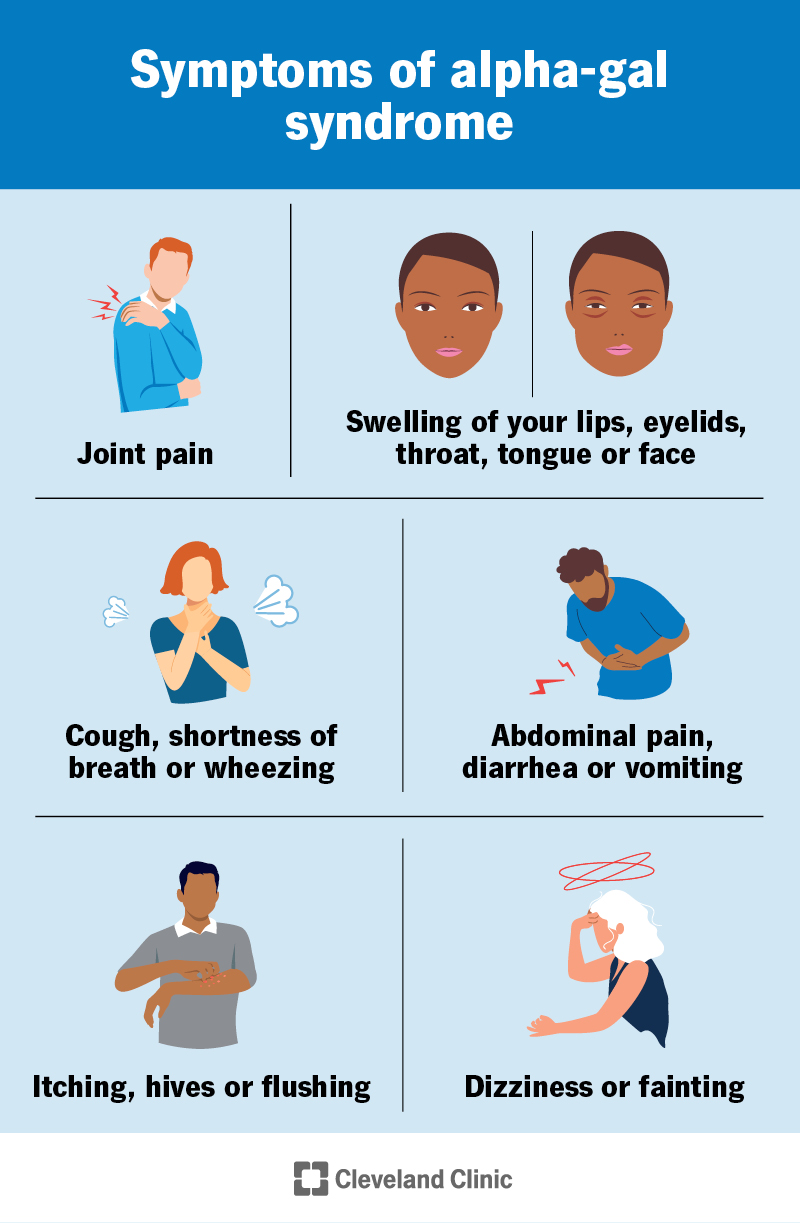
The tick most commonly responsible for causing a red meat allergy in the United States is the lone star tick (*Amblyomma americanum*). This allergic condition is medically known as alpha-gal syndrome (AGS).[1][2][3]
The lone star tick is easily recognizable by a characteristic white or yellow spot on the back of adult females.[4]
## How the Allergy Develops
When a lone star tick bites a human, it can transmit a sugar molecule called alpha-gal (galactose-alpha-1,3-galactose) through its saliva into the bloodstream. Because humans do not naturally carry this sugar, the immune system may identify it as a threat and produce antibodies against it. When the bitten person subsequently eats mammalian meat—such as beef, pork, lamb, or venison—which naturally contains alpha-gal, their immune system triggers an allergic reaction. This delayed allergic reaction does not affect the consumption of poultry or fish, as non-mammalian animals do not carry the alpha-gal molecule.[4][5][6]
## Global Tick Vectors
While the lone star tick is the primary cause of alpha-gal syndrome in the U.S., different tick species are responsible for the allergy in other parts of the world.[2]
- **Europe:** The castor bean tick (*Ixodes ricinus*) has been identified as the primary vector.[3]
- **Australia:** The Australian paralysis tick (*Ixodes holocyclus*) is known to cause the delayed meat allergy.[3]
- **Other Regions:** The black-legged tick and other regional species have been linked to cases in Asia, Africa, and Central America.[7][3]
Sources
[1] About Alpha-gal Syndrome - CDC

Alpha-gal Syndrome
About Alpha-gal Syndrome
Alpha-gal syndrome can occur after certain types of tick bites and mostly affects adults.
[2] Alpha-gal syndrome - Symptoms and causes - Mayo Clinic
https://www.mayoclinic.org/diseases-conditions/alpha-gal-syndrome/symptoms-causes/syc-20428608
[3] Ticks and Mammalian Meat Allergy - Beef Research

Beef Research
Beef Research - Ticks and Mammalian Meat Allergy
[4] Mayo Clinic Minute: A tick to blame for the alpha-gal, meat allergy
[5] The Lone Star Tick: What to Know About the Tick that Causes a Red ...

NewYork-Presbyterian
The Lone Star Tick: What to Know About the Tick that Causes a Red Meat Allergy | Health Matters | NYP
An expert explains how a tick bite can cause a meat allergy and what to watch for if you’ve been bitten by the lone star tick.
[6] Ticks Causing Red Meat Allergy: All About Alpha-Gal Syndrome

Ticks Causing Red Meat Allergy: All About Alpha-Gal Syndrome
Learn about alpha-gal syndrome, a red meat allergy caused by lone star tick bites, its symptoms, diagnosis, and how to protect yourself.
[7] Alpha-gal syndrome, a red meat allergy linked to lone star tick bites ...

MU Health Care
Alpha-gal syndrome, a red meat allergy linked to lone star tick bites, is something we’re seeing more of in Missouri.
Our dermatologist, Dr...
[8] New Jersey man's death first one to be tied to tick-related meat allergy

CIDRAP
New Jersey man's death first one to be tied to tick-related meat allergy
[9] The first reported cases of meat allergy following tick bites in the UK
The first reported cases of meat allergy following tick bites in the UK - PMC
Allergic reactions frequently involve the production of immunoglobulin E (IgE) antibodies to proteins. However, reactions directed against carbohyd...
[10] Alpha-gal Syndrome: Causes, Diagnosis & Treatment
Cleveland Clinic
What Is Alpha-gal Syndrome?
Alpha-gal syndrome is a red meat allergy you get after being bitten by a tick. Learn how it’s diagnosed and what foods to avoid.
[11] The Centers for Disease Control is warning about a red meat allergy ...

The Centers for Disease Control is warning about a red meat allergy caused by a tick bite.
A bite by a Lone Star tick can cause alpha-gal syndrome (AGS). Allina Health allergist Pramod Kelkar, MD, and one of his patients spoke to FOX 9 News about what AGS is, how the tick bite causes it and how AGS affects the body. | Allina Health
The Centers for Disease Control is warning about a red meat allergy caused by a tick bite.
A bite by a Lone Star tick can cause alpha-gal syndrome...
[12] Mammalian meat allergy emerges after tick bite: the alpha-gal ... - PMC
Mammalian meat allergy emerges after tick bite: the alpha-gal syndrome - PMC
Alpha-gal syndrome (AGS) is a hypersensitivity reaction to mammalian meat that develops after tick bite exposure. AGS was first described in 2009 a...
[13] Taking a bite out of meat allergies | UNC-Chapel Hill

The University of North Carolina at Chapel Hill
Taking a bite out of meat allergies | UNC-Chapel Hill
Food allergies have long baffled scientists — much is still to be learned about how they develop and why certain people are more susceptible than...
[14] Video: When a Tick Bite Causes a Red Meat Allergy - CDC

Alpha-gal Syndrome
Video: When a Tick Bite Causes a Red Meat Allergy
A man shares his personal story about being bitten by ticks and developing alpha-gal syndrome.