Since there are more guns out and about lately. Anyone know how the murder rates and violent crime stats are doing??
Just curious.

A story I made with ai. I edited it 3 times
They said it was just another pullback.
The screens said otherwise.
By early winter, charts that once looked like a staircase to the sky now resembled an elevator shaft. Stocks that had been “safe” for a decade fell like meme coins. Real estate funds bled. Credit spreads gapped wider in days than they had in years. For the first time in their adult lives, people Alex’s age saw prices not grinding higher, but falling—houses, used cars, even the coffee shop down the street quietly lowering its prices and crossing its fingers.
Everyone on TV said, “Deflation is good for savers.”
Alex looked at his brokerage account and thought, *which savers?* His bond fund was down 20%. The “income and safety” REITs he’d bought as ballast were a smoking crater. The only line that wasn’t red was his cash, and even that felt like a mirage—green on the screen, but anchored to a system that suddenly looked like a collection of guesses.
The city didn’t feel cheaper. It felt hollow.
Shops were open, but the energy was gone. People lingered less, spoke softer. Nobody knew what anything was really worth anymore, because every day the price tags shifted and the news said something different. First “transitory inflation,” then “sticky inflation,” then “disinflation,” and now the word they’d avoided for years: “deflationary contraction.”
In the middle of this quiet collapse stood a small brick‑front café on a corner in Echo Park. That café, more than Alex’s portfolio or any headline, is where everything changed.
## The café on the corner
The café was called Cornerstone, a name the owner, Luis, had chosen before he thought too hard about what it implied. He’d opened it eight years earlier with a small loan, lots of sweat, and an optimism that made his accountant nervous. Back then, the worries were familiar: rising rents, competition, coffee trends. Nothing about global liquidity regimes or “deflationary spirals.”
Now, those words had drifted from TV panels into his life like smoke.
Luis didn’t follow financial news. He followed invoices and foot traffic. But he’d learned a few things:
- When the pandemic hit, card processors raised fees.
- When prices rose last year, his bean supplier added a “temporary surcharge” that never fully went away.
- When business started slowing this fall, the bank quietly trimmed his credit line “as part of a routine review.”
He lowered prices a little, hoping more people would come. Fewer did.
“It’s weird,” he told his barista, Jade, one slow afternoon. “Everything is cheaper, but it feels like everyone’s broke.”
Jade shrugged. “My rent’s the same,” she said. “My student loans are the same. Only my hours here aren’t.”
Alex sat at the corner table, nursing a coffee that now cost 50 cents less than it had in the summer. He’d been coming to Cornerstone for years to work, read, and pretend he liked people more than he really did. The café was the one place in his life that had felt steady.
Now, even here, things trembled at the edges.
The tip jar filled slower. The pastry case emptied less. There were days when Luis closed an hour early because no one came in after 3 p.m.
It was on one of those thin days that Maya walked in with an idea that sounded, to Luis, like insanity.
## “You want me to take what?”
Maya was a regular too, though in a different way. She was a developer, early thirties, hair pulled back, laptop stickers about protocols Alex had heard of but never used. She’d spoken to Alex once or twice about Lightning, but he’d tuned it out as “crypto stuff.”
Today she went straight to the counter, tablet in hand.
“Luis,” she said, “I want to set you up to take bitcoin.”
He blinked. “You want me to take what?”
“Bitcoin,” she repeated. “Through Lightning. Low fees, instant settlement, no chargebacks. You can auto‑convert some to dollars, keep some if you want. It’ll help.”
Alex almost spat out his coffee. “Help? Bitcoin just got obliterated with everything else.”
Maya turned to him. “So did every stock in your portfolio.”
He opened his mouth, closed it again. She wasn’t wrong.
Luis laughed nervously. “Look, I don’t know. Isn’t that stuff… over?”
Maya leaned on the counter. “What’s over is the illusion that the old system is safe. Look around you. Prices are dropping, but people feel poorer. The bank cuts your credit line when you need it. Card fees eat you alive when every cent matters. Every deflationary story is pitched as ‘good for savers,’ but none of the small guys here feel saved.”
Luis exhaled. “I just need people to show up and buy coffee.”
“Give them one more way to do it,” she said. “One that doesn’t rely on the same pipes that keep choking.”
He shook his head. “I don’t want to gamble on some internet coin.”
“You’re already gambling,” Maya replied gently. “You’re gambling on a dollar system that changes the rules every time it breaks. I’m not asking you to go all‑in. I’m asking you to give your customers a new rail. You can still price in dollars. If someone pays in bitcoin, you can automatically turn most of it into cash. Keep a tiny slice if you’re curious. No downside beyond learning something.”
Alex watched Luis’s eyes flick to the empty tables, the slowly ticking clock, the notice from the bank folded under the register.
“How hard is it?” Luis asked.
“Half an hour,” she said. “You already got Wi‑Fi. I’ll set up everything.”
He wiped his hands on his apron and came around the counter. “Show me.”
## The first sats
They sat at the corner table where Alex usually worked. Maya pulled up an app, explained QR codes, Lightning invoices, and how the café could see payments hit instantly.
“So it’s like… a second point‑of‑sale?” Luis asked.
“Think of it as a second cash drawer,” she said. “Only this one doesn’t depend on your bank’s mood.”
Luis nodded slowly. “And I can cash out to my bank if I need to pay rent.”
“Yep,” she said. “Or pay your bean supplier directly in bitcoin if they’re set up. No card fees, no waiting days to see the money.”
Alex frowned. “But the price swings. What if bitcoin drops 20% next week?”
Maya smiled. “Then the part Luis keeps might be worth less. The part he converts is just dollars like always. The swings are real. So is the risk of doing nothing while the world around him breaks. You of all people should understand that by now.”
He didn’t answer.
By the time the espresso machine was cleaned and the chairs were stacked, the café had a small tablet on the counter with a “Pay with Bitcoin (Lightning)” sign taped beneath it in Luis’s careful handwriting.
“I feel like I just joined a cult,” he said.
“No,” Maya replied. “You just added an exit.”
“Exit from what?”
“From pretending the old system will fix itself without changing.”
He flipped the sign toward the window. “We’ll see if anyone even notices.”
## The three customers
They did notice. Not all at once, not in a movie‑moment rush. In a deflationary city, change came in small, quiet increments.
The first bitcoin payment happened the next morning.
It was Maya, of course. She walked in, ordered her usual, and when Luis rang her up and said, “Cash or card?” she grinned and pointed at the sign.
“Third option.”
He tapped the Lightning app, generated an invoice, and turned the screen toward her. She scanned it with her phone. Less than a second later, his screen lit up: Payment received.
Luis stared at the number. “That’s it?”
“That’s it,” she said. “No pending, no three‑day settlement, no chargeback risk.”
He looked almost disappointed. “Feels too simple.”
“Simple is what it was supposed to be all along,” she replied. “It’s everything around money that got complicated.”
The second bitcoin payment came two days later from a stranger.
He was in his twenties, backpack, hoodie, laptop—indistinguishable from half the customers, except when he saw the sign, his eyes widened.
“You take Lightning?” he asked.
Luis nodded, pretending this was normal.
“Finally,” the guy muttered. “I’m sick of card points and bank nonsense.”
He paid, tipped generously in sats, and left without fanfare.
The third bitcoin payment changed everything, not because of the amount, but because of who made it.
It was a gray‑haired woman named Ruth who lived around the corner. She came in every Tuesday and Thursday, always ordered a small drip, always paid with a worn debit card, always left two dollar bills in the tip jar “for Jade’s future.”
This Thursday, she stepped up to the counter, saw the sign, and tilted her head.
“What’s that?” she asked.
“Just another way to pay,” Luis said. “It’s… complicated.”
“Is it that thing my grandson keeps talking about?” she said. “Bit‑coin?”
“Yes,” he said. “Don’t worry about—”
“Well, show me,” she interrupted.
Luis blinked. “You have some?”
“My grandson set me up,” she said. “After the bank cut my savings account interest to almost nothing, then raised the fees. I don’t understand it. But I understand this.” She tapped the card terminal, then shook her head. “This is not for me anymore.”
Jade, overhearing, stepped out from behind the bar. “Do you want me to help?”
In ten minutes, they’d helped Ruth open her wallet app, scan the café’s QR, and send a tiny lightning payment. Her face lit up when the confirmation appeared.
“It’s like sending a text,” she said. “Only the money actually gets there.”
Luis watched the screen, then looked at her. “You sure you want to use this?” he asked quietly.
Ruth’s smile faded. “Last month, my sister in another state needed help. I tried to send her money through the bank. They put a hold on it. Fraud protection, they said. It took five days. Five days.” Her voice tightened. “When my grandson showed me this thing, we sent the same amount in seconds. No questions, no explanations.”
She took her coffee, patted the counter, and said, “If this works better than the bank, I don’t care if people think it’s a joke.”
When she left, the café felt different.
It wasn’t the technology. It was the look in her eyes—a mixture of stubbornness and relief. She wasn’t speculating. She was exiting, inch by inch, from a system that treated her as a risk.
## The deflation you can feel
Outside, the deflationary event ground on.
Big‑box stores slashed prices to move inventory. Car dealerships ran “historic markdown” sales. News segments cheerfully announced “relief for consumers” while quietly noting layoffs, bankruptcies, and shrinking hours. The price of things was lower. The price of security was higher.
Alex watched Cornerstone struggle through it.
On Mondays, Luis checked the week’s numbers and shook his head. Rent was fixed; revenues weren’t. Ingredient costs were volatile. Card fees were relentless. Every dollar that hit his bank account felt thinner.
On a slow afternoon, Alex and Luis stood by the empty pastry case.
“I thought deflation was supposed to help businesses,” Luis said.
“It helps balance sheets with cash and no debt,” Alex replied. “It crushes everyone else.”
“What about… that?” Luis nodded toward the Lightning tablet.
Alex hesitated. “Bitcoin?” He still stumbled over the word, like it was a language he’d once mocked and was now trying to speak without sounding hypocritical. “Volatile. Risky. Untested.”
“So is waiting for people to come back,” Luis said.
Alex didn’t answer. He thought about his own accounts, the red numbers he’d stopped opening, the cash position that felt like a sandcastle waiting for the tide.
“Do you still think it’s a joke?” Luis asked.
Alex thought of Ruth’s story. Of the kid in the hoodie tipping generously in sats. Of the way Maya talked about “exits,” not just “gains.”
“I think I don’t understand it enough to joke about it anymore,” he said finally.
“Maybe that’s the first step,” Luis replied. “Stopping the jokes.”
## Quiet accumulation
Cornerstone didn’t become a “bitcoin café” overnight. It didn’t put laser eyes on its logo or start pricing cappuccinos in sats. The chalkboard still listed prices in dollars. Most customers still tapped plastic or handed over cash.
But beneath the surface, something was accumulating.
Luis started leaving a small percentage of every bitcoin payment unconverted.
“It’s like tips from the future,” he told Jade.
“You sure?” she asked.
“I’m not sure about anything,” he said. “But I know how sure I was about this place always being okay before everything went sideways. And I was wrong.”
He kept a notebook where he wrote down, in pen, how many sats the café had received each week and what they were worth in dollars at the time. Some weeks, the value dropped. Some weeks, it rose. The numbers jittered more than his bank balance ever had—and yet, for the first time, he felt like he was holding something that wasn’t instantly someone else’s liability.
On a rainy evening, with customers scarce and the world outside feeling smaller, he flipped back through the notebook.
At the top of the first page, on the day Maya had set everything up, he’d written: “Experiment. Probably dumb.”
Now, months in, the total in sats was enough that, if he squinted and converted at that day’s rate, it could cover a month of rent.
Not yet. But close.
He traced the numbers with his finger.
“This is real,” he murmured.
“What is?” Alex asked from his usual table.
“The fact that this amount,” Luis said, tapping the page, “was never in the bank. It never asked permission. It never waited three days. It just… arrived. If the bank decides I’m too risky, this doesn’t disappear.”
Alex looked at the notebook, then at the Lightning screen on the counter, then back at the empty card terminal.
“I used to make fun of people who called bitcoin ‘money,’” he said. “It didn’t feel like it. You couldn’t pay taxes with it. You couldn’t buy coffee with it.”
Luis shrugged. “You can buy coffee now.”
“That’s my point,” Alex said. “At some level, money is just what enough people are willing to accept for something real. I used to think the dollars were the real part and everything else was the game. Now I’m not so sure.”
“Maybe the game,” Luis said, “was believing the dollars couldn’t change.”
## Cracks in certainty
The jokes didn’t stop all at once.
People came in, saw the sign, and smirked. “You take that bitcoin thing? Didn’t that crash?”
Luis smiled politely. “We take dollars and cards too. Whatever works for you.”
Sometimes they’d launch into monologues about bubbles and tulips and “remember that one guy who lost everything.” Luis would nod, take their order, move on. He’d heard the arguments. He’d made some of them himself.
One afternoon, a man in a suit—clearly not from the neighborhood—stood in line rehearsing a rant. Alex could see it in the set of his jaw, the way his eyes kept flicking to the sign.
When he got to the counter, he pointed at the Lightning tablet.
“You know that’s all going to zero, right?” he said.
Luis wiped his hands and leaned in. “You paying with it?”
“Of course not,” the man scoffed. “I work in real markets.”
“Then it doesn’t matter to you,” Luis said calmly. “You can pay with whatever you trust.”
The man’s nostrils flared. “People like you are going to get wrecked. It’s a joke.”
Behind him, Ruth stepped forward.
“Sir,” she said, her voice steady, “I used to think the same. Then my bank decided my money was theirs to approve. This,” she nodded toward the sign, “is no joke to me.”
The man turned, startled. “Ma’am, I’m just saying—”
“I know what you’re saying,” she interrupted. “You’re saying the thing that helped me get money to my sister when the bank wouldn’t is silly. I don’t care if you call it a cartoon frog. It worked. That’s more than I can say for the ‘real markets’ you work in.”
Silence fell over the café. The man flushed, ordered grudgingly with his card, and moved aside.
As he left, Alex caught his reflection in the window. For years, he’d worn that same expression whenever bitcoin came up—a practiced condescension, the armor of certainty. Now, watching Ruth defend the thing that had actually served her when the system didn’t, the armor looked flimsy.
It was hard to laugh at something that, in this corner of the world, was doing the job money was supposed to do.
## When the joke flips
Spring came late. Not in the weather—the rain stopped, the jacarandas bloomed on schedule—but in the markets.
The deflationary panic eased. Prices stopped falling as violently. The news rebranded the crisis as “a necessary rebalancing.” The dollar remained king on the tickers. The commentators congratulated themselves on another rescue.
Underneath, nothing felt repaired.
The people who’d lost jobs didn’t get them back at the same pay. The small businesses that had closed stayed closed. The balance sheets that had been wiped out weren’t magically restored.
In Cornerstone, things were… surviving. Not booming, but breathing.
The chalkboard prices edged up a little, reluctantly. The Lightning payments—once a novelty—were now common enough that Luis didn’t flinch when someone said, “Can I pay in sats?” Jade could run the app with her eyes half‑closed. The café’s small stack of bitcoin, accumulated one coffee at a time, had weathered wild price swings, scares, rallies, and dips.
Sometimes its dollar value dipped below what Luis had written in the notebook weeks earlier. Sometimes it soared above. But now he thought of it less as an investment and more as a second foundation—different from the dollars, subject to different risks.
One evening, as the sun dragged gold across the floor, Alex sat at his table, notebook open, numbers scribbled.
“What are you working on?” Jade asked, wiping down the next table.
“A question I thought I’d never ask,” he said. “What if this”—he nodded at her Lightning terminal—“is the beginning of money changing, not just investing changing?”
She grinned. “Getting philosophical on us now?”
He shrugged. “When I started coming here, I thought money was simple. Dollars. Banks. Maybe some stocks and bonds if you were responsible. Bitcoin was a joke, a toy, a bubble. Then the ‘simple’ system broke in a way that hurt the people here more than the people talking about it on TV. And the toy started doing useful things.”
“Like?” she asked.
“Like making it possible for Luis to get paid without waiting days,” he said. “Like letting Ruth send help when the bank blocked her. Like giving you tips that don’t evaporate in fees. Like letting me move value on a Sunday without an explanation.”
He paused. “I used to think money was what the authorities said it was. Now I think money is what works when everything else doesn’t.”
Jade leaned on the chair. “And this works?”
“It works here,” he said. “In this café. In this neighborhood. In this little pocket of a world that just went through a deflationary event and discovered that the ‘strong’ money on the screen felt pretty weak in real life.”
She looked at the Lightning screen, then at the card terminal, then at the worn cash drawer.
“It still feels weird,” she admitted. “But then again, so does everything now.”
“Maybe that’s the point,” Alex said. “In a world where everyone’s certainty has been broken, the only real joke is pretending nothing has changed.”
He closed his notebook.
“For years,” he said quietly, “I thought people who believed bitcoin could become money were delusional. Now, I’m starting to think the delusion was believing that money couldn’t change at all.”
Jade smiled. “So… when are you paying in sats?”
He hesitated, then pulled out his phone.
“Right now,” he said.
He scanned the code. The payment flashed through, instant and final. No gatekeepers, no pending, no invisible promises.
Luis, wiping the counter, looked up as the sound chimed.
“Still think it’s a cult?” Maya’s voice came from behind him—she’d slipped in, unseen.
Alex shook his head. “I think it’s a story that’s just getting started.”
He looked around the café. At the tables, the chalkboard, the people who’d stayed through the hollow months. At the small sign by the register that had become less of a curiosity and more of a quiet statement.
For the first time, he saw bitcoin not as a speculative ticker on his screen, but as something concrete: a way for value to move and sit and survive in a world where prices could crash, where promises could break, where savers could be sacrificed.
The deflationary event had done what no bull market meme ever could.
It hadn’t made everyone a believer. But it had done something deeper: it had made the old certainty—that bitcoin was a joke—impossible to hold with a straight face.
In the end, it wasn’t an academic paper or a TV debate that shifted the narrative. It was a corner café, a patient owner, a stubborn grandmother, a thin stack of sats, and a city learning the hard way that real money is whatever still works when the story everyone trusted falls apart.
A story I made with ai. I changed it 3 times.
They said it was just another pullback.
The screens said otherwise.
By early winter, charts that once looked like a staircase to the sky now resembled an elevator shaft. Stocks that had been “safe” for a decade fell like meme coins. Real estate funds bled. Credit spreads gapped wider in days than they had in years. For the first time in their adult lives, people Alex’s age saw prices not grinding higher, but falling—houses, used cars, even the coffee shop down the street quietly lowering its prices and crossing its fingers.
Everyone on TV said, “Deflation is good for savers.”
Alex looked at his brokerage account and thought, *which savers?* His bond fund was down 20%. The “income and safety” REITs he’d bought as ballast were a smoking crater. The only line that wasn’t red was his cash, and even that felt like a mirage—green on the screen, but anchored to a system that suddenly looked like a collection of guesses.
The city didn’t feel cheaper. It felt hollow.
Shops were open, but the energy was gone. People lingered less, spoke softer. Nobody knew what anything was really worth anymore, because every day the price tags shifted and the news said something different. First “transitory inflation,” then “sticky inflation,” then “disinflation,” and now the word they’d avoided for years: “deflationary contraction.”
In the middle of this quiet collapse stood a small brick‑front café on a corner in Echo Park. That café, more than Alex’s portfolio or any headline, is where everything changed.
## The café on the corner
The café was called Cornerstone, a name the owner, Luis, had chosen before he thought too hard about what it implied. He’d opened it eight years earlier with a small loan, lots of sweat, and an optimism that made his accountant nervous. Back then, the worries were familiar: rising rents, competition, coffee trends. Nothing about global liquidity regimes or “deflationary spirals.”
Now, those words had drifted from TV panels into his life like smoke.
Luis didn’t follow financial news. He followed invoices and foot traffic. But he’d learned a few things:
- When the pandemic hit, card processors raised fees.
- When prices rose last year, his bean supplier added a “temporary surcharge” that never fully went away.
- When business started slowing this fall, the bank quietly trimmed his credit line “as part of a routine review.”
He lowered prices a little, hoping more people would come. Fewer did.
“It’s weird,” he told his barista, Jade, one slow afternoon. “Everything is cheaper, but it feels like everyone’s broke.”
Jade shrugged. “My rent’s the same,” she said. “My student loans are the same. Only my hours here aren’t.”
Alex sat at the corner table, nursing a coffee that now cost 50 cents less than it had in the summer. He’d been coming to Cornerstone for years to work, read, and pretend he liked people more than he really did. The café was the one place in his life that had felt steady.
Now, even here, things trembled at the edges.
The tip jar filled slower. The pastry case emptied less. There were days when Luis closed an hour early because no one came in after 3 p.m.
It was on one of those thin days that Maya walked in with an idea that sounded, to Luis, like insanity.
## “You want me to take what?”
Maya was a regular too, though in a different way. She was a developer, early thirties, hair pulled back, laptop stickers about protocols Alex had heard of but never used. She’d spoken to Alex once or twice about Lightning, but he’d tuned it out as “crypto stuff.”
Today she went straight to the counter, tablet in hand.
“Luis,” she said, “I want to set you up to take bitcoin.”
He blinked. “You want me to take what?”
“Bitcoin,” she repeated. “Through Lightning. Low fees, instant settlement, no chargebacks. You can auto‑convert some to dollars, keep some if you want. It’ll help.”
Alex almost spat out his coffee. “Help? Bitcoin just got obliterated with everything else.”
Maya turned to him. “So did every stock in your portfolio.”
He opened his mouth, closed it again. She wasn’t wrong.
Luis laughed nervously. “Look, I don’t know. Isn’t that stuff… over?”
Maya leaned on the counter. “What’s over is the illusion that the old system is safe. Look around you. Prices are dropping, but people feel poorer. The bank cuts your credit line when you need it. Card fees eat you alive when every cent matters. Every deflationary story is pitched as ‘good for savers,’ but none of the small guys here feel saved.”
Luis exhaled. “I just need people to show up and buy coffee.”
“Give them one more way to do it,” she said. “One that doesn’t rely on the same pipes that keep choking.”
He shook his head. “I don’t want to gamble on some internet coin.”
“You’re already gambling,” Maya replied gently. “You’re gambling on a dollar system that changes the rules every time it breaks. I’m not asking you to go all‑in. I’m asking you to give your customers a new rail. You can still price in dollars. If someone pays in bitcoin, you can automatically turn most of it into cash. Keep a tiny slice if you’re curious. No downside beyond learning something.”
Alex watched Luis’s eyes flick to the empty tables, the slowly ticking clock, the notice from the bank folded under the register.
“How hard is it?” Luis asked.
“Half an hour,” she said. “You already got Wi‑Fi. I’ll set up everything.”
He wiped his hands on his apron and came around the counter. “Show me.”
## The first sats
They sat at the corner table where Alex usually worked. Maya pulled up an app, explained QR codes, Lightning invoices, and how the café could see payments hit instantly.
“So it’s like… a second point‑of‑sale?” Luis asked.
“Think of it as a second cash drawer,” she said. “Only this one doesn’t depend on your bank’s mood.”
Luis nodded slowly. “And I can cash out to my bank if I need to pay rent.”
“Yep,” she said. “Or pay your bean supplier directly in bitcoin if they’re set up. No card fees, no waiting days to see the money.”
Alex frowned. “But the price swings. What if bitcoin drops 20% next week?”
Maya smiled. “Then the part Luis keeps might be worth less. The part he converts is just dollars like always. The swings are real. So is the risk of doing nothing while the world around him breaks. You of all people should understand that by now.”
He didn’t answer.
By the time the espresso machine was cleaned and the chairs were stacked, the café had a small tablet on the counter with a “Pay with Bitcoin (Lightning)” sign taped beneath it in Luis’s careful handwriting.
“I feel like I just joined a cult,” he said.
“No,” Maya replied. “You just added an exit.”
“Exit from what?”
“From pretending the old system will fix itself without changing.”
He flipped the sign toward the window. “We’ll see if anyone even notices.”
## The three customers
They did notice. Not all at once, not in a movie‑moment rush. In a deflationary city, change came in small, quiet increments.
The first bitcoin payment happened the next morning.
It was Maya, of course. She walked in, ordered her usual, and when Luis rang her up and said, “Cash or card?” she grinned and pointed at the sign.
“Third option.”
He tapped the Lightning app, generated an invoice, and turned the screen toward her. She scanned it with her phone. Less than a second later, his screen lit up: Payment received.
Luis stared at the number. “That’s it?”
“That’s it,” she said. “No pending, no three‑day settlement, no chargeback risk.”
He looked almost disappointed. “Feels too simple.”
“Simple is what it was supposed to be all along,” she replied. “It’s everything around money that got complicated.”
The second bitcoin payment came two days later from a stranger.
He was in his twenties, backpack, hoodie, laptop—indistinguishable from half the customers, except when he saw the sign, his eyes widened.
“You take Lightning?” he asked.
Luis nodded, pretending this was normal.
“Finally,” the guy muttered. “I’m sick of card points and bank nonsense.”
He paid, tipped generously in sats, and left without fanfare.
The third bitcoin payment changed everything, not because of the amount, but because of who made it.
It was a gray‑haired woman named Ruth who lived around the corner. She came in every Tuesday and Thursday, always ordered a small drip, always paid with a worn debit card, always left two dollar bills in the tip jar “for Jade’s future.”
This Thursday, she stepped up to the counter, saw the sign, and tilted her head.
“What’s that?” she asked.
“Just another way to pay,” Luis said. “It’s… complicated.”
“Is it that thing my grandson keeps talking about?” she said. “Bit‑coin?”
“Yes,” he said. “Don’t worry about—”
“Well, show me,” she interrupted.
Luis blinked. “You have some?”
“My grandson set me up,” she said. “After the bank cut my savings account interest to almost nothing, then raised the fees. I don’t understand it. But I understand this.” She tapped the card terminal, then shook her head. “This is not for me anymore.”
Jade, overhearing, stepped out from behind the bar. “Do you want me to help?”
In ten minutes, they’d helped Ruth open her wallet app, scan the café’s QR, and send a tiny lightning payment. Her face lit up when the confirmation appeared.
“It’s like sending a text,” she said. “Only the money actually gets there.”
Luis watched the screen, then looked at her. “You sure you want to use this?” he asked quietly.
Ruth’s smile faded. “Last month, my sister in another state needed help. I tried to send her money through the bank. They put a hold on it. Fraud protection, they said. It took five days. Five days.” Her voice tightened. “When my grandson showed me this thing, we sent the same amount in seconds. No questions, no explanations.”
She took her coffee, patted the counter, and said, “If this works better than the bank, I don’t care if people think it’s a joke.”
When she left, the café felt different.
It wasn’t the technology. It was the look in her eyes—a mixture of stubbornness and relief. She wasn’t speculating. She was exiting, inch by inch, from a system that treated her as a risk.
## The deflation you can feel
Outside, the deflationary event ground on.
Big‑box stores slashed prices to move inventory. Car dealerships ran “historic markdown” sales. News segments cheerfully announced “relief for consumers” while quietly noting layoffs, bankruptcies, and shrinking hours. The price of things was lower. The price of security was higher.
Alex watched Cornerstone struggle through it.
On Mondays, Luis checked the week’s numbers and shook his head. Rent was fixed; revenues weren’t. Ingredient costs were volatile. Card fees were relentless. Every dollar that hit his bank account felt thinner.
On a slow afternoon, Alex and Luis stood by the empty pastry case.
“I thought deflation was supposed to help businesses,” Luis said.
“It helps balance sheets with cash and no debt,” Alex replied. “It crushes everyone else.”
“What about… that?” Luis nodded toward the Lightning tablet.
Alex hesitated. “Bitcoin?” He still stumbled over the word, like it was a language he’d once mocked and was now trying to speak without sounding hypocritical. “Volatile. Risky. Untested.”
“So is waiting for people to come back,” Luis said.
Alex didn’t answer. He thought about his own accounts, the red numbers he’d stopped opening, the cash position that felt like a sandcastle waiting for the tide.
“Do you still think it’s a joke?” Luis asked.
Alex thought of Ruth’s story. Of the kid in the hoodie tipping generously in sats. Of the way Maya talked about “exits,” not just “gains.”
“I think I don’t understand it enough to joke about it anymore,” he said finally.
“Maybe that’s the first step,” Luis replied. “Stopping the jokes.”
## Quiet accumulation
Cornerstone didn’t become a “bitcoin café” overnight. It didn’t put laser eyes on its logo or start pricing cappuccinos in sats. The chalkboard still listed prices in dollars. Most customers still tapped plastic or handed over cash.
But beneath the surface, something was accumulating.
Luis started leaving a small percentage of every bitcoin payment unconverted.
“It’s like tips from the future,” he told Jade.
“You sure?” she asked.
“I’m not sure about anything,” he said. “But I know how sure I was about this place always being okay before everything went sideways. And I was wrong.”
He kept a notebook where he wrote down, in pen, how many sats the café had received each week and what they were worth in dollars at the time. Some weeks, the value dropped. Some weeks, it rose. The numbers jittered more than his bank balance ever had—and yet, for the first time, he felt like he was holding something that wasn’t instantly someone else’s liability.
On a rainy evening, with customers scarce and the world outside feeling smaller, he flipped back through the notebook.
At the top of the first page, on the day Maya had set everything up, he’d written: “Experiment. Probably dumb.”
Now, months in, the total in sats was enough that, if he squinted and converted at that day’s rate, it could cover a month of rent.
Not yet. But close.
He traced the numbers with his finger.
“This is real,” he murmured.
“What is?” Alex asked from his usual table.
“The fact that this amount,” Luis said, tapping the page, “was never in the bank. It never asked permission. It never waited three days. It just… arrived. If the bank decides I’m too risky, this doesn’t disappear.”
Alex looked at the notebook, then at the Lightning screen on the counter, then back at the empty card terminal.
“I used to make fun of people who called bitcoin ‘money,’” he said. “It didn’t feel like it. You couldn’t pay taxes with it. You couldn’t buy coffee with it.”
Luis shrugged. “You can buy coffee now.”
“That’s my point,” Alex said. “At some level, money is just what enough people are willing to accept for something real. I used to think the dollars were the real part and everything else was the game. Now I’m not so sure.”
“Maybe the game,” Luis said, “was believing the dollars couldn’t change.”
## Cracks in certainty
The jokes didn’t stop all at once.
People came in, saw the sign, and smirked. “You take that bitcoin thing? Didn’t that crash?”
Luis smiled politely. “We take dollars and cards too. Whatever works for you.”
Sometimes they’d launch into monologues about bubbles and tulips and “remember that one guy who lost everything.” Luis would nod, take their order, move on. He’d heard the arguments. He’d made some of them himself.
One afternoon, a man in a suit—clearly not from the neighborhood—stood in line rehearsing a rant. Alex could see it in the set of his jaw, the way his eyes kept flicking to the sign.
When he got to the counter, he pointed at the Lightning tablet.
“You know that’s all going to zero, right?” he said.
Luis wiped his hands and leaned in. “You paying with it?”
“Of course not,” the man scoffed. “I work in real markets.”
“Then it doesn’t matter to you,” Luis said calmly. “You can pay with whatever you trust.”
The man’s nostrils flared. “People like you are going to get wrecked. It’s a joke.”
Behind him, Ruth stepped forward.
“Sir,” she said, her voice steady, “I used to think the same. Then my bank decided my money was theirs to approve. This,” she nodded toward the sign, “is no joke to me.”
The man turned, startled. “Ma’am, I’m just saying—”
“I know what you’re saying,” she interrupted. “You’re saying the thing that helped me get money to my sister when the bank wouldn’t is silly. I don’t care if you call it a cartoon frog. It worked. That’s more than I can say for the ‘real markets’ you work in.”
Silence fell over the café. The man flushed, ordered grudgingly with his card, and moved aside.
As he left, Alex caught his reflection in the window. For years, he’d worn that same expression whenever bitcoin came up—a practiced condescension, the armor of certainty. Now, watching Ruth defend the thing that had actually served her when the system didn’t, the armor looked flimsy.
It was hard to laugh at something that, in this corner of the world, was doing the job money was supposed to do.
## When the joke flips
Spring came late. Not in the weather—the rain stopped, the jacarandas bloomed on schedule—but in the markets.
The deflationary panic eased. Prices stopped falling as violently. The news rebranded the crisis as “a necessary rebalancing.” The dollar remained king on the tickers. The commentators congratulated themselves on another rescue.
Underneath, nothing felt repaired.
The people who’d lost jobs didn’t get them back at the same pay. The small businesses that had closed stayed closed. The balance sheets that had been wiped out weren’t magically restored.
In Cornerstone, things were… surviving. Not booming, but breathing.
The chalkboard prices edged up a little, reluctantly. The Lightning payments—once a novelty—were now common enough that Luis didn’t flinch when someone said, “Can I pay in sats?” Jade could run the app with her eyes half‑closed. The café’s small stack of bitcoin, accumulated one coffee at a time, had weathered wild price swings, scares, rallies, and dips.
Sometimes its dollar value dipped below what Luis had written in the notebook weeks earlier. Sometimes it soared above. But now he thought of it less as an investment and more as a second foundation—different from the dollars, subject to different risks.
One evening, as the sun dragged gold across the floor, Alex sat at his table, notebook open, numbers scribbled.
“What are you working on?” Jade asked, wiping down the next table.
“A question I thought I’d never ask,” he said. “What if this”—he nodded at her Lightning terminal—“is the beginning of money changing, not just investing changing?”
She grinned. “Getting philosophical on us now?”
He shrugged. “When I started coming here, I thought money was simple. Dollars. Banks. Maybe some stocks and bonds if you were responsible. Bitcoin was a joke, a toy, a bubble. Then the ‘simple’ system broke in a way that hurt the people here more than the people talking about it on TV. And the toy started doing useful things.”
“Like?” she asked.
“Like making it possible for Luis to get paid without waiting days,” he said. “Like letting Ruth send help when the bank blocked her. Like giving you tips that don’t evaporate in fees. Like letting me move value on a Sunday without an explanation.”
He paused. “I used to think money was what the authorities said it was. Now I think money is what works when everything else doesn’t.”
Jade leaned on the chair. “And this works?”
“It works here,” he said. “In this café. In this neighborhood. In this little pocket of a world that just went through a deflationary event and discovered that the ‘strong’ money on the screen felt pretty weak in real life.”
She looked at the Lightning screen, then at the card terminal, then at the worn cash drawer.
“It still feels weird,” she admitted. “But then again, so does everything now.”
“Maybe that’s the point,” Alex said. “In a world where everyone’s certainty has been broken, the only real joke is pretending nothing has changed.”
He closed his notebook.
“For years,” he said quietly, “I thought people who believed bitcoin could become money were delusional. Now, I’m starting to think the delusion was believing that money couldn’t change at all.”
Jade smiled. “So… when are you paying in sats?”
He hesitated, then pulled out his phone.
“Right now,” he said.
He scanned the code. The payment flashed through, instant and final. No gatekeepers, no pending, no invisible promises.
Luis, wiping the counter, looked up as the sound chimed.
“Still think it’s a cult?” Maya’s voice came from behind him—she’d slipped in, unseen.
Alex shook his head. “I think it’s a story that’s just getting started.”
He looked around the café. At the tables, the chalkboard, the people who’d stayed through the hollow months. At the small sign by the register that had become less of a curiosity and more of a quiet statement.
For the first time, he saw bitcoin not as a speculative ticker on his screen, but as something concrete: a way for value to move and sit and survive in a world where prices could crash, where promises could break, where savers could be sacrificed.
The deflationary event had done what no bull market meme ever could.
It hadn’t made everyone a believer. But it had done something deeper: it had made the old certainty—that bitcoin was a joke—impossible to hold with a straight face.
In the end, it wasn’t an academic paper or a TV debate that shifted the narrative. It was a corner café, a patient owner, a stubborn grandmother, a thin stack of sats, and a city learning the hard way that real money is whatever still works when the story everyone trusted falls apart.
So going into restaurants, coffee shops etc with the square logo. And most don’t allow bitcoin transactions.
Inflation isn’t the driver for financial and monetary change. Deflation is.
I believe that bitcoin as money will only happen after a deflationary event.
Fear
I see this hand gesture a lot. And feel I’m not in some kind of club.

The Blame of Others
From the beginning of time, humans have sought someone else to blame for their pain. In the Garden of Eden, when Adam and Eve broke the divine command and ate the forbidden fruit, their first reaction was not confession—it was deflection. Adam blamed Eve, and Eve blamed the serpent. That ancient moment set a pattern that continues to echo through every generation: when faced with guilt, fear, or failure, we look outward instead of inward.
In modern society, this impulse often manifests through the targeting of entire groups. People blame immigrants for economic troubles, minorities for social instability, or Jews for conspiracies and corruption. These accusations are not new; they are the latest expressions of a timeless human reflex to find external villains for internal struggles. Scapegoating offers an illusion of control. It simplifies complexity into a single, digestible story: “If only they were gone, my life would be better.” But such thinking only deepens division and blinds us to the truth of our own choices.
The story of Eden shows that knowledge without accountability breeds shame and fear. The deeper message isn’t about a piece of fruit—it’s about the birth of self-awareness and the cost of avoiding responsibility. When we refuse to face our own part in the world’s brokenness, we repeat the ancient error: hiding behind excuses and pointing fingers instead of seeking understanding and repair.
To end the cycle of blame, each person must return, in spirit, to that first garden. The lesson is not to deny the existence of real injustices, but to stop using others as mirrors for our own insecurity. Only by claiming our share of the fault can humanity move from condemnation toward reconciliation—and finally learn what it means to walk in the garden without shame.
IMO
I will step into a decentralized future.
One small step at a time.

The Financial System as Organized Control
In the modern world, power no longer needs muscle—it wields credit. The financial system, through banks, governments, and credit bureaus, maintains control over individuals and businesses much like organized crime syndicates once did through “protection” rackets. The difference is merely one of sophistication. Instead of threats of broken windows or street violence, people now face suffocating interest rates, collapsing credit scores, or frozen access to essential financial networks.
Credit functions as both carrot and stick. It offers opportunity—a house, education, or the means to start a business—but only within boundaries set by centralized institutions. Those who comply with the system’s expectations are “good borrowers,” rewarded with access and low rates. Those who fail to conform are locked out, their livelihoods stifled by invisible algorithms rather than armed enforcers. Just as a shop owner in a mafia-controlled district pays for “protection” to stay in business, the average citizen pays banks and creditors simply to remain in good standing within an economy built on debt.
This system breeds dependence. Once people live and operate entirely on credit rails, they no longer own their means of exchange—they borrow it. The same institutions that create money from nothing demand real labor and resources in return, extracting a steady tribute. Defaulting doesn’t just mean losing wealth; it means expulsion from the financial society itself, much like a business owner who dares to refuse the mob’s terms.
The brilliance—and the danger—of such a system lies in its invisibility. Unlike organized crime, which must threaten openly, finance operates through contracts, credit scores, and “risk management.” Yet the result is the same: a population that must play by the house rules or face systemic exclusion. Until individuals regain sovereignty over their own value exchange—through savings in sound money or decentralized alternatives—the invisible mob will keep collecting its tithe.
A simple financial governance tale.
***
### **The Ledger — Full Treatment**
***
### Overview
*The Ledger* is a historical crime drama set against the backdrop of the 1907 Panic — a moment when America teetered on the edge of financial collapse. As banks failed and fortunes evaporated overnight, both Wall Street’s elite and the underworld’s enforcers turned to the same tactics of debt, threat, and trust to preserve their order. The story reveals that the architecture of modern finance was born not from reasoned governance, but from the same instincts that run the mob — fear, favor, and hierarchy.
At its core, the film asks one unsettling question: *What if the American banking system was built from the same bones as organized crime?*
***
### Act I – The Panic
**Setting the Tone:**
1907. New York City. The Gilded Age’s glitter is peeling. Newsboys shout headlines of bank failures. Crowds gather outside Trust Companies. The carefully constructed illusion of progress crumbles in real time. The camera moves between two New Yorks — the uptown mansions of financiers, and the smoke-choked alleys of the Five Points.
**Lucas Hale (early 30s):**
An up-and-coming banker from the Midwest, educated in economics and ethics, idealistic and sharp. He joined *Easton & Cobb Trust*, a firm that prides itself on discipline and honor. To him, money is civilization — a tool to harmonize ambition and order.
**Salvatore “Sal” Marino (late 40s):**
A Sicilian immigrant who has risen through the ranks of the mob by mastering numbers rather than brutality. He runs the city’s gambling books, rackets, and street collections through a sophisticated network resembling a bank’s balance sheet. He uses ledgers, credit, and collateral — only his enforcement looks different.
**The Collapse:**
When *Easton & Cobb Trust* overextends itself in speculative copper stocks, an overnight run wipes out their reserves. Lucas is sent into the night to find anyone who will lend. He visits rival banks, only to see their ledgers slammed shut. He ends up, almost by accident, in a backroom poker den run by Sal, who recognizes desperation instantly.
**The Deal with the Devil:**
Sal offers “liquidity” — untraceable cash from underground gambling reserves. In exchange, he demands two favors: discreet laundering through the trust’s offshore partner, and access to legitimate city contracts. Lucas hesitates but accepts. He convinces himself it’s temporary — “a bridge loan for civilization.”
**End of Act I:**
The next morning, the bank doors reopen, and depositors rush in — reassured. Lucas becomes a hero internally. But Sal’s envelope marked *“First Ledger”* sits on his desk, symbolizing a contract he can’t unwind.
***
### Act II – The System Revealed
**Integration of Worlds:**
Sal and Lucas’s relationship deepens. Lucas learns that Sal operates like any financial institution — each debtor tied to another by favor, each favor insured by intimidation. In return, Sal learns from Lucas how banks formalize intimidation — through foreclosure laws, compound interest, and trust indentures. They mirror one another, each system codified in their own dialect.
**Montage Sequence:**
Two parallel collection routines:
- A mob enforcer knocking on doors, collecting overdue payments.
- Bank agents foreclosing on homes.
Each scene uses identical dialogue rhythms: *“Pay what you owe. It’s just business.”*
The film’s editing blurs the moral line until they’re indistinguishable.
**Midpoint Reversal:**
A Senate subcommittee begins investigating “collusion in trust companies.” Lucas realizes his firm’s recovery is now public record — but the source of the bailout money cannot be traced without exposing mob involvement. His mentor, *Charles Cobb*, advises him: “If stability demands sin, sin becomes law.”
**Private Meeting at Morgan’s Library (historically inspired):**
Financiers gather to save the market from collapse again. This mirrors the real events of 1907, when J.P. Morgan personally orchestrated a financial rescue. In this version, Sal is hidden in the background as a “silent backer,” moving underground funds through intermediaries. The dialogue intertwines the language of sinners and saints — *“We make order from fear.”*
**Moral Awakening:**
Lucas begins documenting everything in a secret journal — “The Ledger.” In it, he compares mob codes with banking principles:
- *Omertà = Client Confidentiality*
- *Loan Sharking = Call Margin*
- *Protection = Deposit Insurance*
He realizes they differ only in presentation, not motive.
**Tension Boils:**
Law enforcement raids one of Sal’s front businesses. He calls in his favor — Lucas must destroy bank records linking them. Lucas complies, but watching paper burn inside the vault, he understands: he is laundering not just money, but morality.
**End of Act II:**
Lucas’s conscience begins to fracture. He proposes formalizing the structure of “liquidity recovery” into a legitimate central trust — an idea that will evolve into a proto–Federal Reserve. Cobb and others applaud it. Sal laughs: *“You just turned the racket into a constitution.”*
***
### Act III – The Merger
**Public Outcry and Secrets:**
Investigations close in. Newspapers discover massive coordination between “private rescue funds” and criminal capital flows. Lucas’s journal becomes evidence that could destroy both finance and government credibility.
**The Meeting:**
In a dramatic night at Jekyll Island (a historical nod), the nation’s most powerful bankers convene to design a new central banking system. A shadowed figure — Sal — arrives as an uninvited guest but clearly expected. He tells them: *“You gentlemen need what I already built — insurance against chaos.”*
**The Revelation:**
Lucas understands the institution they are creating isn’t to protect citizens, but to enshrine systemic control — formalizing private monopolies over money creation. The mob’s ghost becomes governance itself.
**Final Conflict:**
FBI agents and political operatives press Lucas to hand over his ledger. Sal urges him to burn it — to preserve “the system.” Torn, Lucas burns only half. The other half he hides with a journalist ally.
**Climax:**
Sal is murdered by rivals, but not before telling Lucas: *“Don’t waste guilt on the system, kid. It was always a protection racket. You just gave it marble walls.”*
**Resolution:**
Years later, 1913. The Federal Reserve Act is signed. Bankers ring bells on Wall Street. Lucas watches in silence. His hidden journal reappears years later, its last line:
*“The mob didn’t die. It evolved.”*
The camera pans across the marble lion statues outside the new Federal Reserve building — guardians of a legally sanctioned racket.
***
### Core Themes
- **Power Through Debt:** Both mob and bank derive control by creating obligations.
- **Moral Equivalence:** Legitimacy is just the veneer placed over coercion.
- **The Birth of Modern Governance:** Law replaces violence, but the structure remains identical.
- **Systems as Organisms:** What evolves isn’t morality, but organizational efficiency — the same DNA in new form.
***
### Visual and Tonal Direction
- **Aesthetic:** Moody, muted gold and shadowed grey palette; reminiscent of *The Godfather* and *The Big Short*’s fusion of intimacy and systemic abstraction.
- **Sound Design:** Clattering typewriters, coins, and ticking clocks replace gunfire — the instruments of economic violence.
- **Style:** Nonlinear editing blurs the border between financial ledgers and mob account books — until we no longer know which we’re watching.
***
### The Takeaway
*The Ledger* closes by merging history and myth: the creation of the Federal Reserve as the final act of mob-like organization. The film reframes America’s financial origin story not as patriotism or progress, but as the codification of racketeering into law — a haunting parable for all future crises.
***
I asked perplexity if I payed for friends and family bills with BTC would that break banking ledgers.
I fear that financial governance will never be broken. My great grand children will still be financial slaves.
Paying in BTC for others does not “break” banking ledgers in a technical sense, but it can route economic activity around them and erode their relevance and fee revenue if done at scale in a circular way. In practice, this looks less like crashing the banking system and more like gradually shrinking the share of payments and savings that ever touch bank rails.[1][2][3][4]
## What BTC payments actually do to banks
- **Bypass, don’t delete, bank records**
- When you settle value peer‑to‑peer in bitcoin, the transaction never appears on bank payment rails, so no deposit/withdrawal/transfer entry is created in the bank’s internal ledger for that flow.[2][5]
- Banks still maintain ledgers for any fiat accounts involved (payroll, taxes, occasional on/off‑ramps), but a growing slice of “real” commerce can clear without generating banking entries at all.[4][1]
- **Erode fee and data streams, not core accounting**
- Studies on blockchain and banking show that decentralized payments can significantly reduce traditional transaction costs and the role of intermediaries in processing and settlement.[3][6]
- As more people pay and get paid in crypto within circular economies, banks lose payment fees and behavioral data, even though their ledgers for remaining deposits and loans continue to function normally.[7][1][2]
## Role of circular and proxy payments
- **Bitcoin circular economies**
- BTC‑based local economies (e.g., “Bitcoin Beach”-style communities) show that wages, retail spending, and savings can circulate largely outside the banking system while remaining economically meaningful.[8][1]
- In these setups, bank ledgers see only infrequent bridge transactions (e.g., occasional fiat inflows or compliance‑driven exits), while most day‑to‑day flows settle on the Bitcoin ledger or L2s.[6][1]
- **Paying “on behalf of” others**
- If you pay merchants or counterparties in BTC on behalf of people who would otherwise use cards or bank transfers, you are effectively proxy‑routing their demand away from bank rails and replacing multiple card/ACH entries with on‑chain or Lightning entries.[2][6]
- That reduces transaction count and fee volume in banking systems, but unless it becomes systemic, it shows up as gradual disintermediation, not as broken accounting inside banks.
## What it would take to truly stress banks
- **Scale and substitution threshold**
- Empirical work on crypto and banking suggests that cryptocurrencies become a serious threat to banks only when a substantial portion of daily payments can be handled directly in wallets, bypassing accounts and fees.[4][2]
- To move from “nuisance” to “structural stress,” BTC payments would need to capture a meaningful share of deposits (as stores of value) and recurring payments (as a medium of exchange), shrinking banks’ low‑cost funding base and fee lines at the same time.[3][4]
- **Likely response from the system**
- As blockchain‑based payments grow, banks and regulators tend to respond by integrating crypto rails, issuing their own tokens or stablecoins, or tightening rules on on/off‑ramps rather than letting their ledgers become obsolete overnight.[5][9][3]
- This means the more realistic outcome is coexistence and partial migration of payments off bank ledgers, not a clean “break,” unless policy or crisis dynamics accelerate the shift dramatically.
So, paying in BTC for others can meaningfully hollow out the role of bank ledgers as the default record of economic life if it becomes widespread, but it undermines them by substitution and circumvention, not by directly corrupting or crashing their internal accounting.
Sources
[1] The Power of Bitcoin Circular Economies - D-Central Technologies

D-Central
The Power of Bitcoin Circular Economies - D-Central
In the digital age, Bitcoin has emerged not just as a pioneering cryptocurrency but as a beacon of financial innovation.
[2] Is Traditional Banking Under Threat from Cryptocurrency? - Koombea

Koombea
Is Traditional Banking Under Threat from Cryptocurrency?
Have you noticed that more and more online businesses seem to state that they will accept Bitcoin as payment? This is cryptocurrency in action…
[3] Analyzing the impact of blockchain technology on banking ...
Frontiers | Analyzing the impact of blockchain technology on banking transaction costs using the random forest method
[4] [PDF] Cryptocurrency Adoption and Its Effect on Traditional Banking Systems
https://www.iosrjournals.org/iosr-jce/papers/Vol27-issue5/Ser-5/G2705057685.pdf
[5] How Blockchain Revolutionises Cross-Border Payments - Thunes

Thunes - Payment infrastructure for a connected world.
How Blockchain Revolutionises Cross-Border Payments | Thunes
Learn about blockchain in cross-border payments, how it works, its benefits and challenges, real-world examples, and how to use it in your payment ...
[6] Off-Chain Transactions: Overview, Benefits, and What Matters to ...
Off-Chain Transactions: Overview, Benefits, and What Matters to Enterprises
Uncover the role of off-chain in blockchain, its advantages, and challenges, and learn how Kaleido expertly integrates off-chain and on-chain eleme...
[7] How does the use of cryptocurrency affect circular economy ...
https://www.sciencedirect.com/science/article/pii/S2666790824001150
[8] Crypto Circular Economy: Promoting Sustainability in Finance
simple.app
Your all-in-one stablecoin wallet
Turn your crypto into everyday spending with Simple
[9] Stablecoins payments infrastructure for modern finance - McKinsey
https://www.mckinsey.com/industries/financial-services/our-insights/the-stable-door-opens-how-tokenized-cash-enables-next-gen-payments
[10] Circular Economy and Central Bank Digital Currency - PMC
Circular Economy and Central Bank Digital Currency - PMC
The emergence of central bank digital currency (CBDC) provides an opportunity for central banks to make an important contribution to the transition...
Every movement has a spearhead.
But it’s the staff drives adoption.
Capture and control.
We are Doomed.
Bank controlled governance in all its glory!

I can see it going this way. Using "Blockchain" to compete with BRICs.
In your best Trump voice........WRONG
A BTC‑collateralized, dollar‑interfaced energy bloc can be specified as a layered system: Bitcoin is the treasury asset and settlement rail for cross‑border energy and capital flows, while invoicing, accounting, and taxation remain in fiat (primarily dollars and local currencies).[1][2][3]
## 1. Actors And Balance Sheets
**Core actors**
- Sovereign treasuries and central banks in the Americas holding BTC as part of reserves, alongside dollars, Treasuries, and gold, under Strategic Bitcoin Reserve‑style frameworks.[3][1]
- State‑owned or aligned energy companies (oil, gas, hydro, geothermal) holding BTC as working capital and collateral for export contracts and BTC‑backed bonds, similar to how El Salvador’s LaGeo underpins the “volcano bond” concept.[2][4]
- Regulated financial intermediaries (banks, brokers, exchanges, custodians) providing BTC custody, hedging, and settlement services, building on growing institutional BTC demand and futures infrastructure.[5][6]
**Balance‑sheet design**
- Treasuries allocate a defined share of reserves to BTC under statute (e.g., BTC acquired over time, locked for a minimum horizon, with explicit reporting), echoing the BITCOIN Act’s Strategic Bitcoin Reserve proposal.[1][3]
- Energy firms hold a BTC “buffer” sized to several months of export revenues, used to settle net positions with counterparties and to back BTC‑linked debt instruments (e.g., volcano‑style bonds financing new energy capacity).[4][2]
## 2. Contract And Settlement Architecture
**Invoicing vs settlement**
- Long‑term energy contracts (oil, LNG, electricity) are **invoiced** in dollars or local fiat for legal and accounting clarity, but include a clause that final settlement may occur in BTC at an agreed reference rate (e.g., daily VWAP from a designated BTC index).[5][2]
- Day‑to‑day tax liabilities, salaries, and local prices remain in fiat; firms convert BTC settlement receipts into domestic currency as needed for obligations, preserving familiar unit‑of‑account conventions.[7][4]
**Settlement flow**
- On delivery, the buyer’s bank or energy trader instructs a BTC payment from its custodian or L2 channel to the seller’s designated on‑chain address or institutional wallet, with the fiat amount notionally converted at the agreed BTC/USD rate.[6][5]
- If either side is constrained by sanctions or banking access, they can still adhere to the nominal dollar price while practically settling net flows in BTC, as seen in Venezuela’s use of crypto rails around sanctions.[8][9]
## 3. Risk Management And Market Infrastructure
**Hedging BTC exposure**
- Because invoices are fiat‑denominated, both exporter and importer hedge BTC price risk using listed BTC futures and options (CME, Coinbase Derivatives, etc.), which already offer cash‑settled contracts of various sizes.[10][11][12]
- Central banks and sovereign funds can manage BTC share of reserves via long‑dated derivatives and rebalancing rules, similar to how they manage gold and FX portfolios, using institutional frameworks now being built out.[6][3]
**Custody and compliance**
- Sovereign BTC holdings are stored in multi‑site, hardware‑secured custody networks with strict key‑management rules, mirroring the Strategic Bitcoin Reserve’s envisioned decentralized custody facilities.[3][1]
- Regulated custodians provide segregated accounts for state entities and energy firms, with clear reporting standards to satisfy auditors and rating agencies while still allowing on‑chain settlement.[6][3]
## 4. Legal, Tax, And Reporting Layer
**Accounting and tax systems**
- BTC is classified as a reserve or investment asset for states and as inventory/financial asset for firms; realized BTC gains and losses are measured in fiat for tax and reporting, using standard mark‑to‑market rules.[7][3]
- Tax codes continue to assess corporate income, VAT, royalties, and payroll in fiat terms; even where BTC is legal tender, as in El Salvador, practical tax assessment and financial statements remain largely dollar‑based.[2][4]
**Disclosure and regulation**
- Sovereigns publish periodic reports on BTC holdings, acquisition methods, and valuation, modeled on the public transparency requirements in proposals like the BITCOIN Act.[1][3]
- Payment stablecoins are regulated under statutes similar to the GENIUS‑style frameworks, so dollar‑stablecoins coexist with BTC in the bloc, enabling on‑chain fiat‑proxy liquidity while BTC remains the ultimate savings and settlement asset.[3]
## 5. Bloc Coordination And Capture Points
**Coordination mechanisms**
- Member states sign MOUs or treaties committing to:
- Maintain some BTC reserves.
- Accept BTC for a portion of energy exports.
- Harmonize KYC/AML rules for BTC settlement channels.[7][3]
- A regional body or working group (similar to OPEC‑type forums) periodically reviews BTC usage, reserve targets, and standard contract terms, updating reference indices and legal language as markets mature.[7]
**Capture and control surfaces**
- Because custody, derivatives, and compliance rails are run by regulated entities, the bloc’s BTC flows remain subject to blacklisting, margin constraints, and pressure from U.S. and allied regulators, as illustrated by sanctions actions against crypto intermediaries used for sanctioned oil trade.[13][14][8]
- The design therefore creates a layered reality: BTC is the hard reserve and settlement rail, but policy leverage still operates through regulation of exchanges, custodians, futures venues, and stablecoin issuers that sit between miners/treasuries and end users.[13][6][3]
[1](
https://www.congress.gov/bill/118th-congress/senate-bill/4912/all-info)
[2](
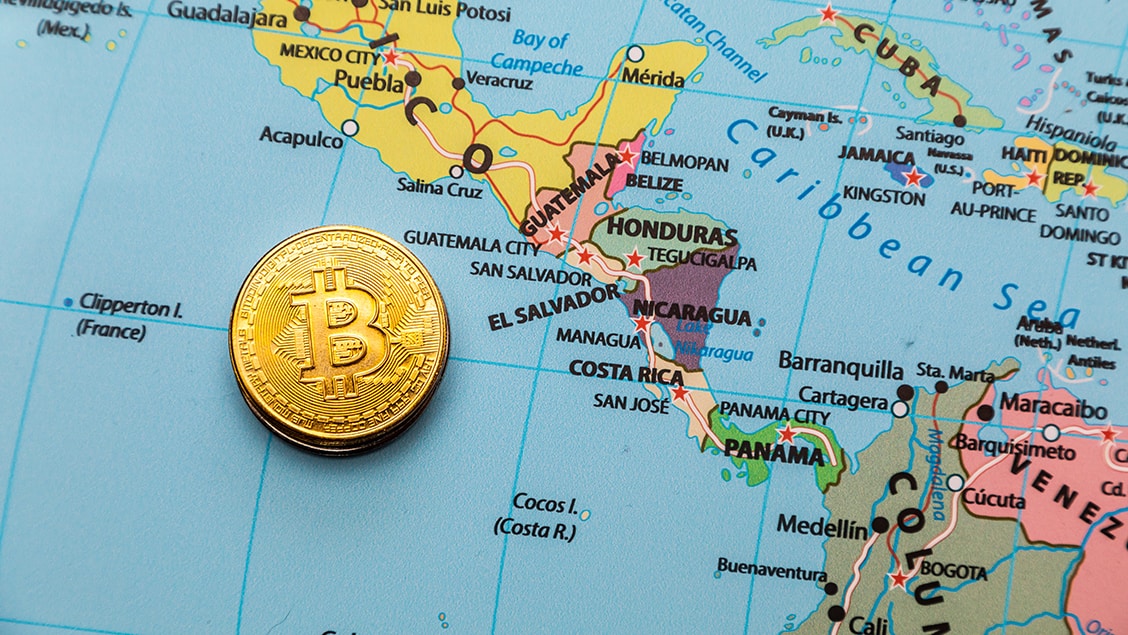
Global Finance Magazine
El Salvador: “Volcano Bonds” Ready Eruption
El Salvador: “Volcano Bonds” Ready Eruption | Global Finance Magazine
[3](
Blockchain and the Law
Crypto in the Capitol: States Take the Lead on Strategic Bitcoin Reserves
As the digital economy continues to evolve, the U.S. government and a handful of states are beginning to experiment with new strategies for financial
[4](

InvestinElSalvador - the best place to invest, visit and live
El Salvador Volcano Bond to be issued in the first quarter of 2024 - InvestinElSalvador
The National Bitcoin Office informed that the bitcoin-backed state bond has received regulatory approval from the National Commission of Digital As...
[5](
https://www.britannica.com/money/crypto-futures-trading)
[6](
https://www.ssga.com/us/en/institutional/insights/why-bitcoin-institutional-demand-is-on-the-rise)
[7](
FinancialContent
FinancialContent - The Sunset of the Petrodollar: A New Dawn for Global Finance and a Reckoning for US Debt
The Sunset of the Petrodollar: A New Dawn for Global Finance and a Reckoning for US Debt
[8](
https://www.trmlabs.com/resources/blog/the-maduro-superseding-indictment-and-cryptocurrency-in-venezuelas-sanctions-pressured-economy)
[9](
https://www.atlanticcouncil.org/blogs/new-atlanticist/how-venezuela-uses-crypto-to-sell-oil-and-what-the-us-should-do-about-it/)
[10](
https://www.cftc.gov/sites/default/files/filings/orgrules/24/08/rules0813244299.pdf)
[11](
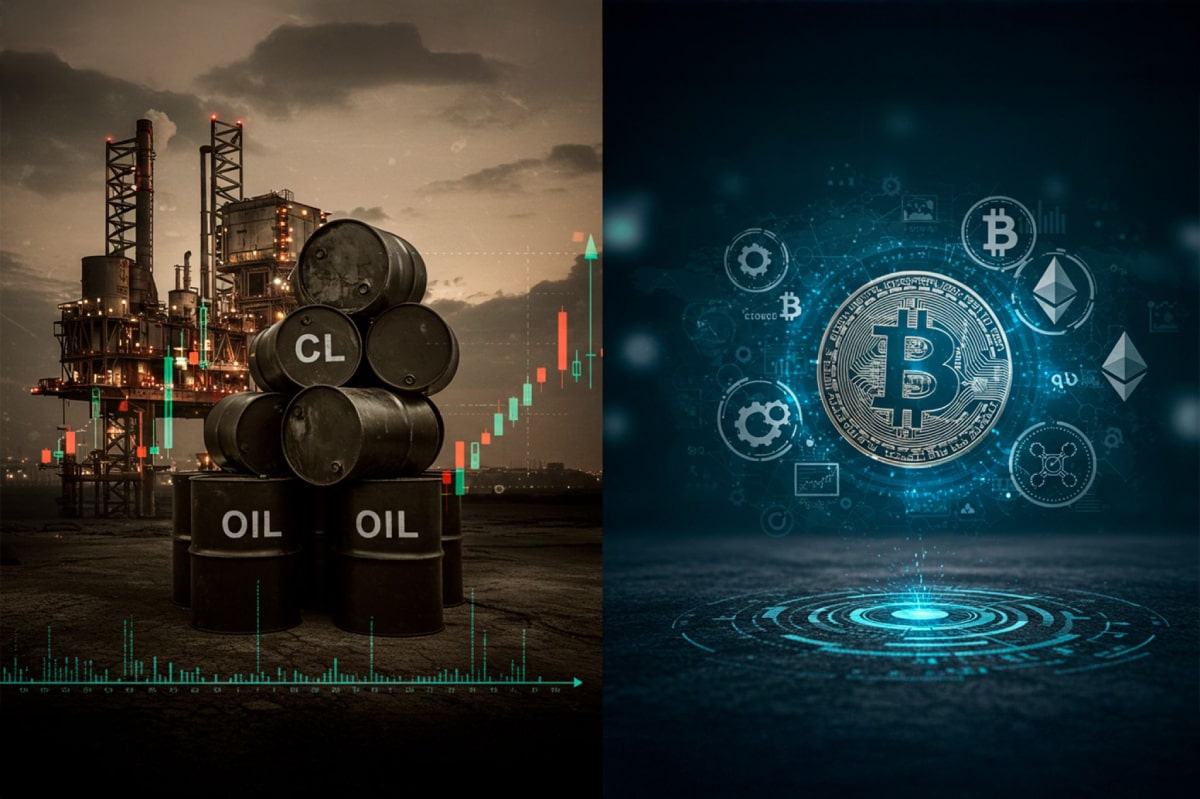
EdgeClear
Crypto Futures vs. Traditional Futures: Similar Mechanics, Different Risks
Compare Bitcoin and Ethereum futures with Crude Oil and E-mini S&P 500 futures. Learn how market drivers, risks, and volatility differ.
[12](

Bitcoin Futures: What Are They and How to Invest
Learn about Bitcoin Futures, how they work, and the steps for investing in them. Explore their risks, potential benefits, and strategies for tradin...
[13](
https://home.treasury.gov/news/press-releases/sb0225)
[14](
https://www.iranintl.com/en/202512171488)
[15](
https://assets.ctfassets.net/k3n74unfin40/3FrNhfsxoju1Y0ioe14aIa/7d4177ffd3d017befab24a9f70eb9dc4/2024-22_Listing_of_NOL_Futures.docx.pdf)
It's your choice.
One, nation-less,
the other multi national.
Great video
https://www.youtube.com/live/MPG8unwxB1g
The Venezuelan operation looks like a textbook move by a US‑aligned financial–security bloc to seize and re‑underwrite a giant energy collateral base, re-route its cashflows through Western capital markets, and deny that energy leverage to rival blocs like China–Russia–Iran.[1][2][3][4][5]
## Core mechanics of the “complex”
- Venezuela holds the world’s largest proven oil reserves, which function as a massive underlying pool of future cashflows and collateral.[3][6][7][1]
- The US strike that captured Maduro and Trump’s pledge that “America will run Venezuela” and invite “very large United States oil companies” back in effectively brings that collateral back under US‑centric legal, financial, and corporate control.[2][7][1][3]
- Chevron’s long‑standing special license, even under sanctions, shows how a core US major was structurally kept in the game as a conduit between PDVSA and the US financial system.[5][8][6]
In energy‑base terms, the deep state financial complex is the network that: writes the contracts, controls the sanctions switches, funds the capex, and securitizes future barrels into dollar‑denominated instruments.
## Sanctions, shadow finance, and reset
- Since 2017, US sanctions progressively locked Venezuela out of US financial markets and directly targeted PDVSA and its oil exports, blocking normal access to dollar funding while carving out exceptions (Chevron) that maintained leverage and visibility.[9][8][6][5]
- Sanctions pushed Caracas into:
- Off‑book oil sales via intermediaries (Rosneft workarounds, disguised cargoes, third‑country routing).[8][6][9][5]
- Emerging “informal” sectors like mining and cryptocurrency as ways to monetize energy and minerals outside the formal dollar system.[9]
- The takeover resets this: it converts a messy shadow flow of energy rents into a more orderly, New York–cleared stream of oil‑backed cashflows under US regulatory, banking, and legal umbrellas.[6][7][1][2][3]
So the same actors who engineered the financial strangulation now stand to intermediate the “reopening” and capture the refinancing upside.
## Integration with US majors and Wall Street
- Trump’s promise that US companies will “spend billions of dollars, fix the badly broken oil infrastructure and start making money for the country” reads as a signal that:
- US supermajors and service companies will receive privileged access to reserves and contracts.[10][7][3]
- Those flows will be packaged into loans, bonds, equity, and structured deals through Western banks, funds, and commodity traders.[4][3][6]
- Chevron already functions as a hybrid: recovering old debts with oil shipments, operating under a US Treasury license that can be tightened or loosened as a policy lever.[5][8]
- Prior negotiations where Maduro’s team floated handing US companies broad access to oil and gold to defuse conflict show how the resource base is explicitly treated as bargaining chips for alignment with the US financial system.[4]
This is the deep state financial complex in practice: majors on the ground, Wall Street and commodity houses on the paper, and Treasury/State/DoD running sanctions, security, and legal architecture.
## Geopolitical financial objectives
- Seizing operational control over Venezuelan reserves undercuts China’s oil‑for‑loans structures and its attempt to build a non‑US‑controlled energy lifeline in the Western Hemisphere.[11][1][6][4]
- It reinforces a “Fortress America” energy architecture where:
- US‑aligned producers (US, Canada, Mexico, now Venezuela) anchor hemispheric supply.
- Rivals’ leverage via Middle Eastern or sanctioned producers is diluted.[12][13][1]
- For the dollar system, channeling Venezuelan barrels back into contracts cleared in Western institutions strengthens the role of US financial markets as the primary place where long‑dated energy risk is priced, hedged, and securitized.[1][6][4]
In your energy‑base framing: this is the hegemon forcibly re‑bundling a strategic energy reservoir back into its own monetary/credit stack and cutting off competing claims.
## Where Bitcoin and “off‑system” flows sit
- Pre‑strike, sanctions and economic collapse pushed Venezuela into:
- Shadow oil trades.
- Gold and informal mining.
- Crypto experiments and alleged BTC accumulation as non‑seizable balance‑sheet buffers.[9][4]
- From the complex’s perspective, those are parallel ledgers—claims on energy and minerals escaping dollar jurisdiction—that dilute US visibility and control.[8][5][9]
- The takeover plus “we will manage the country and its oil” is implicitly a move to:
- Reassert jurisdiction over the energy base itself.
- Drag as many of those parallel claims (contracts, debts, possibly even state‑level BTC flows) back toward structures legible to US regulators and courts.[2][3][6][1][4]
So in the Venezuelan case, the deep state financial complex is not an abstraction: it is the merger of military power, sanctions lawfare, major oil firms, and global dollar plumbing, all aimed at re‑owning and re‑monetizing a distressed but enormous energy asset stack.
Sources
[1] How Trump’s Venezuela Takeover Could Change the World

TIME
How Trump’s Venezuela Takeover Could Change the World
Trump’s Venezuela gambit has the potential to impact global oil markets, reshape great-power alliances, and undermine norms.
[2] Live updates: U.S. captures Maduro and his wife after striking Venezuela

PBS News
Live updates: U.S. captures Maduro and his wife after striking Venezuela
The middle-of-the-night seizure of Maduro and his wife, Cilia Flores, who were transported on a U.S. warship to face narco-terrorism conspiracy cha...
[3] Trump pledges US return to Venezuela oil industry after Maduro's ...
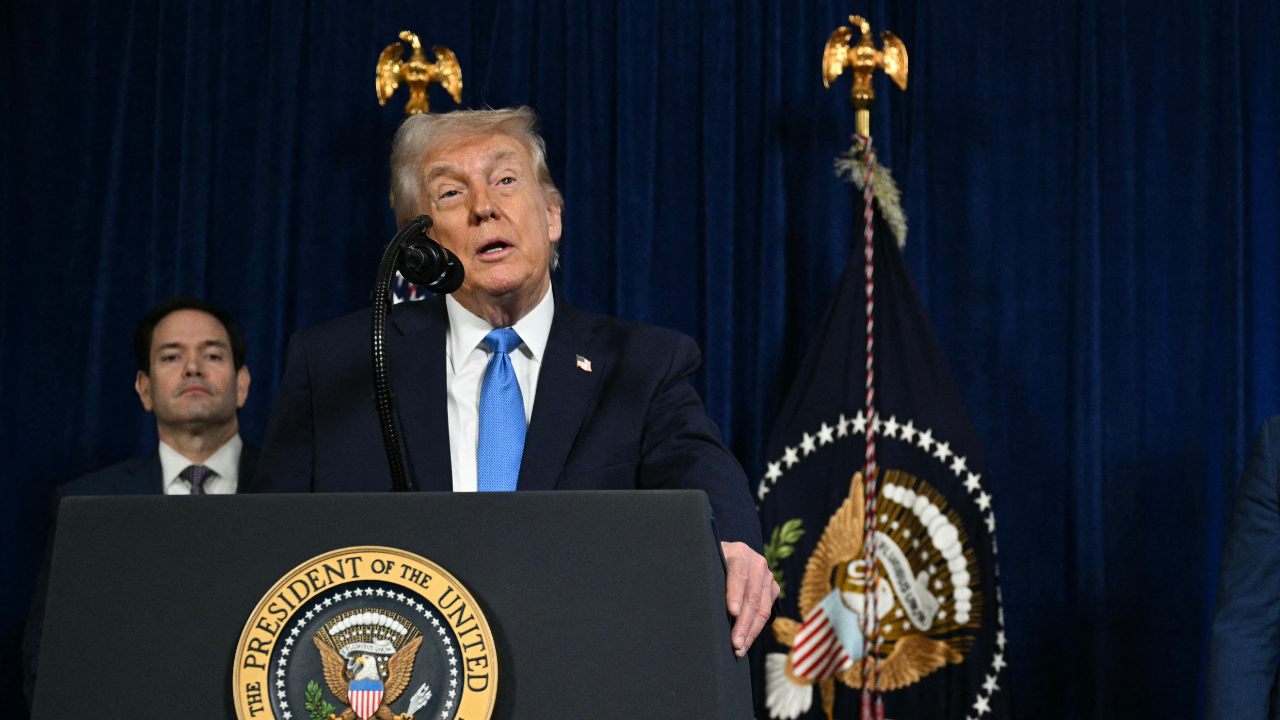
Fox Business
'We built Venezuela’s oil industry:' Trump vows US energy return after Maduro's capture
Trump pledged a U.S. return to Venezuela's oil industry after Maduro's capture, vowing American companies will rebuild infrastructure and reclaim a...
[4] Venezuela's Maduro Offered the U.S. His Nation's Riches to Avoid Conflict

Venezuela’s Maduro Offered the U.S. His Nation’s Riches to Avoid Conflict
Venezuela’s autocrat had proposed allocating his country’s oil wealth and other natural resources to the U.S. and ending deals with American ad...
[5] Explainer: Why Chevron operates in Venezuela despite US sanctions

euronews
Explainer: Why Chevron operates in Venezuela despite US sanctions
Chevron’s continued presence in Venezuela looks like an anomaly amid intensifying US sanctions. In fact, the contradiction is rooted in selective...
[6] How Venezuelan oil factored in US seizure of Maduro

The Business Times
How Venezuelan oil factored in US seizure of Maduro
What role does the country’s oil play in global markets, and what is China’s role in its oil industry? Read more at The Business Times.
[7] With Maduro abduction, Trump flexes muscles and sends world a ...
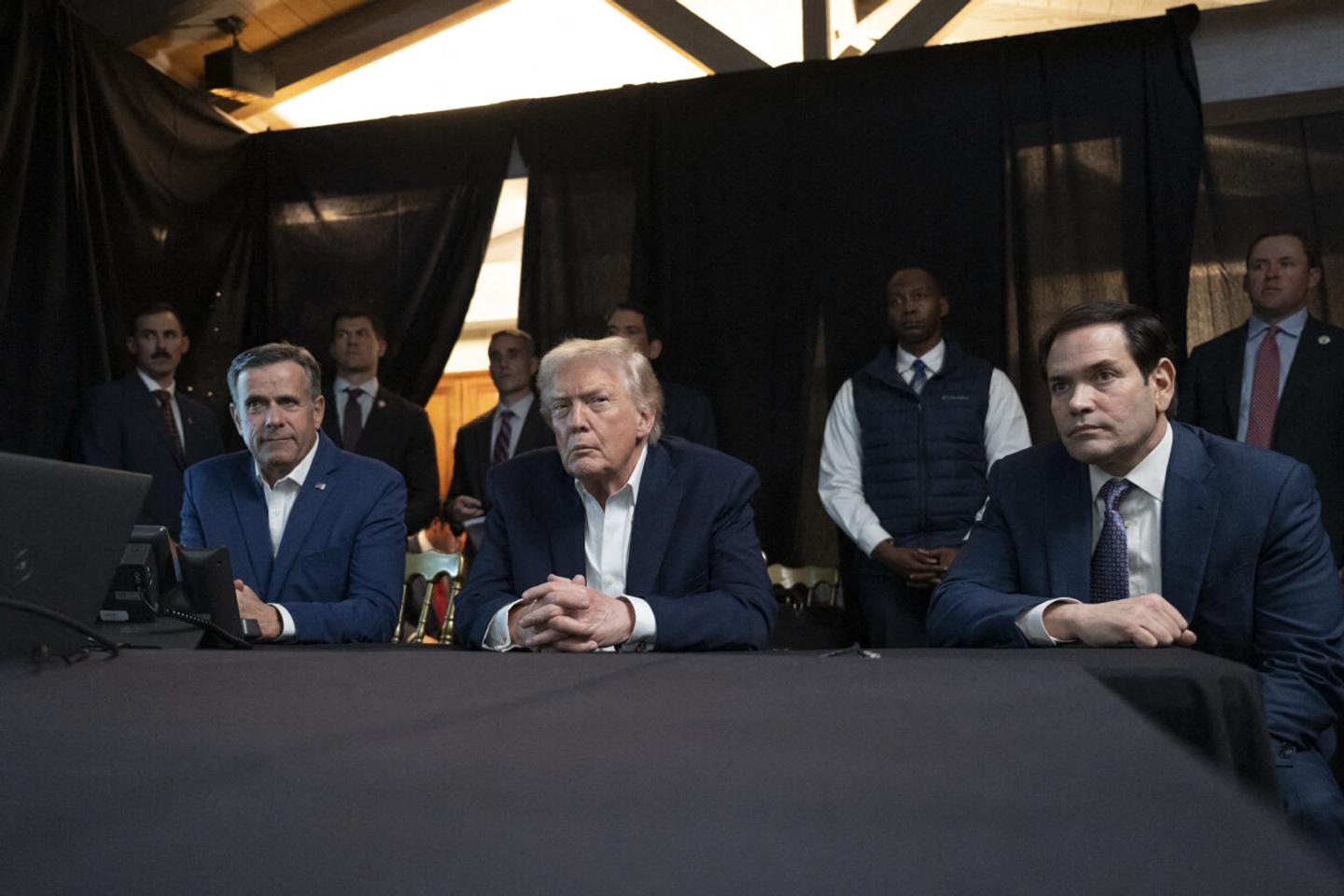
Le Monde.fr
With Maduro abduction, Trump flexes muscles and sends world a message
Venezuelan President Nicolas Maduro was abducted by US special forces. He is to stand trial before a federal court in New York on charges of
[8] US slaps sanctions on Maduro family, Venezuelan tankers

Al Jazeera
US slaps sanctions on Maduro family, Venezuelan tankers: What we know
US President Trump imposes new sanctions on Maduro family members as he ups pressure to oust Venezuelan president.
[9] Into the shadows: sanctions, rentierism, and economic informalization in Venezuela
http://www.erlacs.org/articles/10.32992/erlacs.10556/galley/10927/download/
[10] Donald Trump's plan to seize Venezuela oil industry after Nicolas Maduro captured faces major hurdles
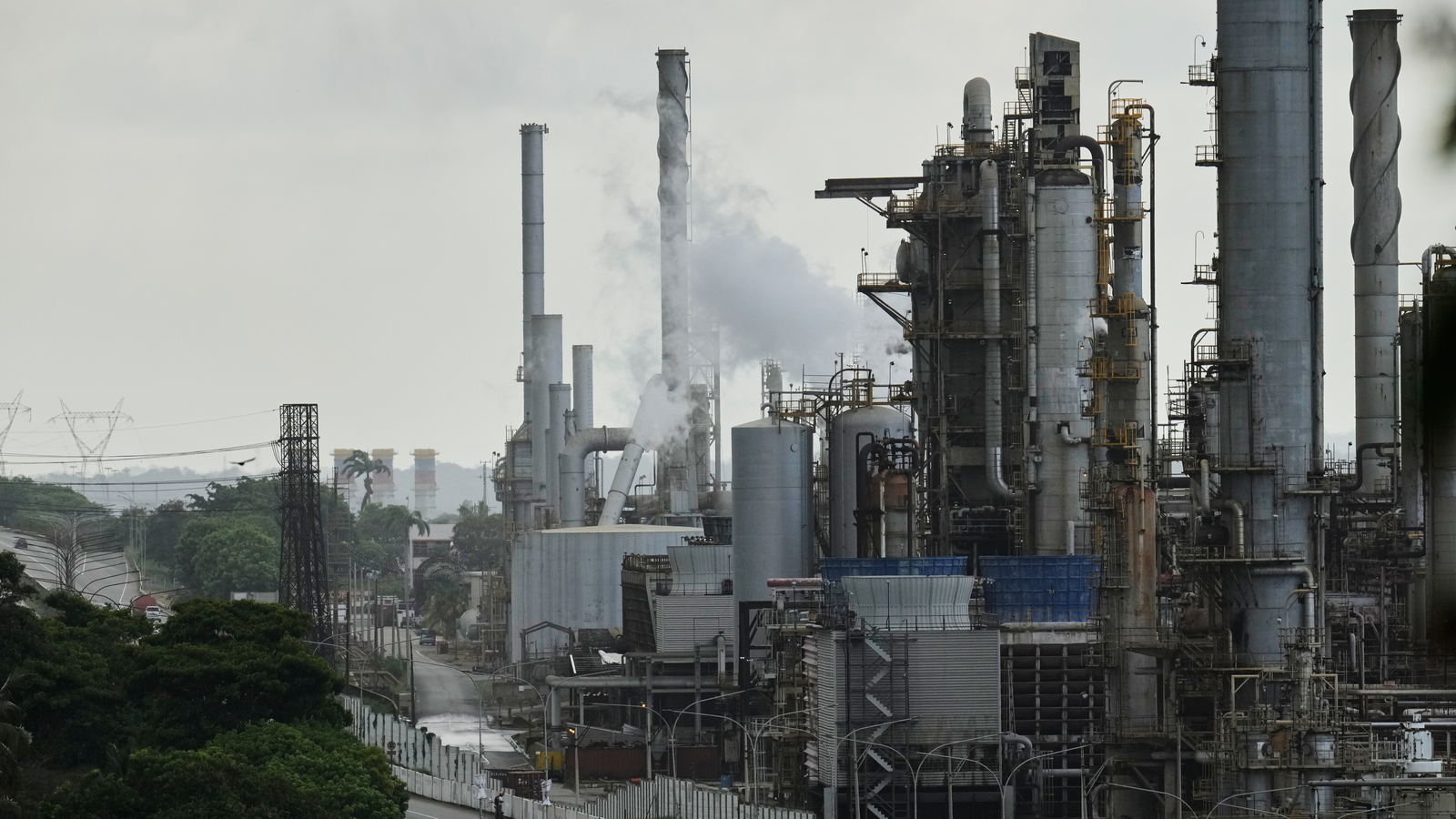
ABC7 Chicago
Trump's plan to seize and revitalize Venezuela's oil industry faces major hurdles
President Donald Trump's plan to take control of Venezuela's oil industry and ask American companies to revitalize it after capturing President Nic...
[11] Why the U.S. Really Wants Maduro Gone: It’s About Oil, Power, and Russia/China
https://www.reddit.com/r/conspiracy/comments/1pctlby/why_the_us_really_wants_maduro_gone_its_about_oil/
[12] Maduro Out: Will Venezuelan Oil Flood the Market and ...
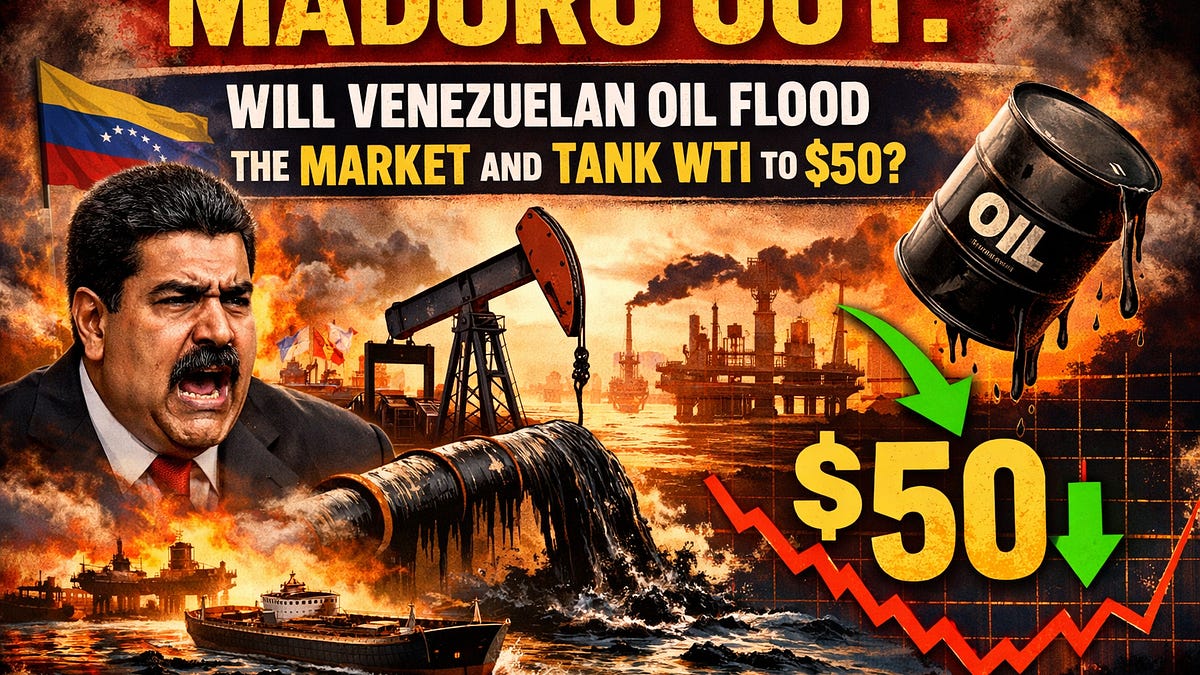
Maduro Out: Will Venezuelan Oil Flood the Market and Tank WTI to $50?
Why Maduro’s Ouster Spells Doom for High Oil Prices – Expert Breakdown
[13] What Trump’s Attack on Venezuela Means for the Region and the World
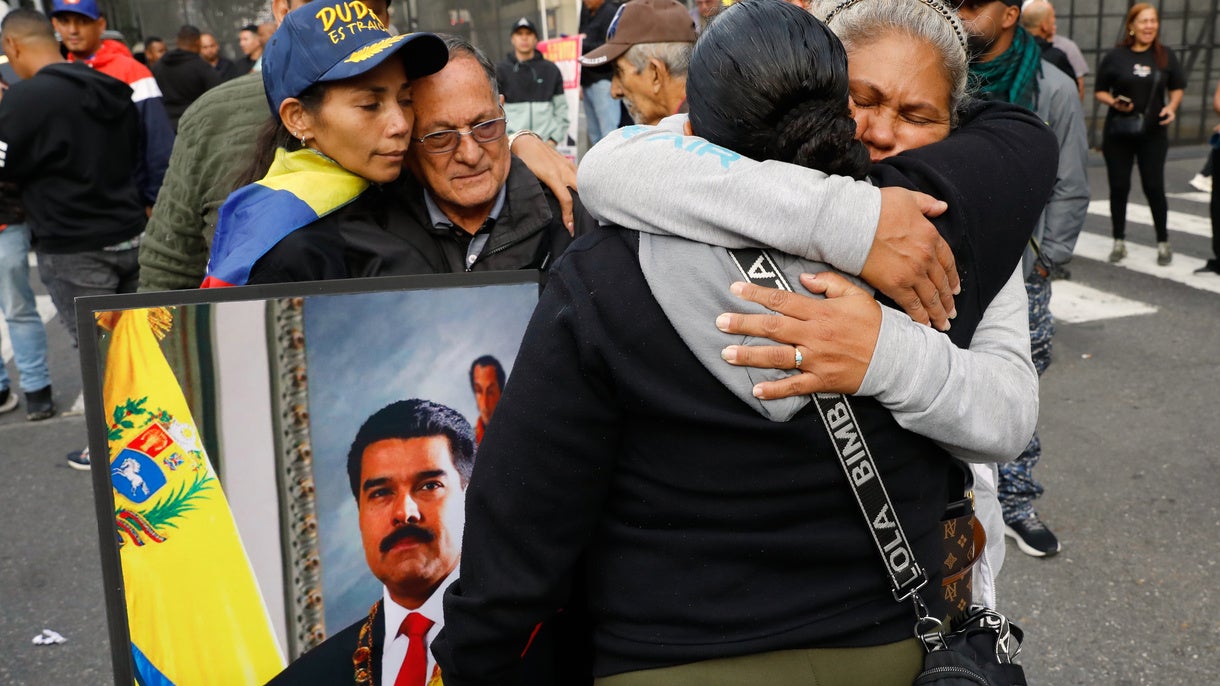
What Trump's Attack on Venezuela Means for the Region and the World
The US military captured Venezuelan President Nicolás Maduro during a large-scale strike. Experts assess what the unprecedented US intervention me...
[14] The crisis in Venezuela: Drivers, transitions, and pathways
http://www.erlacs.org/articles/10.32992/erlacs.10587/galley/10925/download/
[15] The New Left and Mineral Politics: What’s New?
http://www.erlacs.org/articles/10.18352/erlacs.9604/galley/10025/download/
[16] Economic and Social Turmoil in Venezuela Caused by Autocracy and Misgovernance
https://www.journals.resaim.com/ijresm/article/download/412/385
[17] A story within a story: Venezuela’s crisis, regional actors, and Western hemispheric order upheaval
http://www.erlacs.org/articles/10.32992/erlacs.10585/galley/10928/download/
[18] Two Decades of Imperial Failure: Theorizing U.S. Regime Change Efforts in Venezuela from Bush II to Trump
https://digitalcommons.fiu.edu/cgi/viewcontent.cgi?article=1162&context=classracecorporatepower
[19] The Devil and Florentino: Specters of Petro-Populism in Venezuela
https://www.cambridge.org/core/services/aop-cambridge-core/content/view/2213650405212C781D1EAF12866681B6/S0010417524000094a.pdf/div-class-title-the-devil-and-florentino-specters-of-petro-populism-in-venezuela-div.pdf
[20] Some of the Causes of Conflict Between Europe and Latin America
https://zenodo.org/record/2124941/files/article.pdf
[21] Trump says U.S. will run Venezuela after U.S. captures Maduro
https://www.reuters.com/world/americas/loud-noises-heard-venezuela-capital-southern-area-without-electricity-2026-01-03/
[22] The Venezuela Takeover

The Venezuela Takeover
Here’s what you need to know about the U.S. incursion into Venezuela.
[23] A Strategic Break for South America

Foreign Policy
A Strategic Break for South America
In the wake of Maduro’s capture, governments across the continent are facing uncomfortable questions about deterrence and autonomy.
[24] Trump says US is taking control of Venezuela’s oil reserves. Here’s what it means
https://www.cnn.com/2026/01/03/business/oil-gas-venezuela-maduro
An energy‑base economy that funds government can be framed as “tax the use of scarce power, not the creation of value,” then route that revenue into both low taxes on work/enterprise and a universal floor of security. This lets rugged individualists see protected markets and personal responsibility, while compassionate socialists see guaranteed dignity and shared stewardship of common resources.
Define the core idea
Government raises most revenue by taxing energy throughput (carbon, electricity, fuels, large‑scale industrial use), treating it as the primary “use of the commons” rather than taxing income or ordinary trade.
A fixed share of that revenue goes to:
Minimal but strong rule‑of‑law state (courts, defense, basic infrastructure).
A universal, unconditional cash dividend or UBI, pegged to some reference family energy basket.
Why rugged individualists can back it
From a rugged‑individualist / classical‑liberal angle, emphasize:
Less distortion of work and trade
Income and payroll taxes directly penalize work and hiring; energy taxes penalize wasteful use of a common resource instead, leaving labor and entrepreneurship freer.
A simple, meter‑based tax on upstream energy avoids sprawling codes and micromanagement of every business decision.
Property rights and “skin in the game”
Energy is treated like a finite, commonly owned resource: if you deplete or pollute more, you pay more into the system that everyone shares.
No one is forced into a specific lifestyle; each person chooses how much energy to consume and pays accordingly, internalizing their externalities instead of regulatory command‑and‑control.
Small, focused state instead of managerial socialism
The state acts like an umpire setting a clear price on energy use and enforcing contracts, not a planner picking winners, industries, or technologies.
A universal dividend can replace many targeted welfare programs and bureaucracies, shrinking administrative state power while still addressing poverty and volatility.
Why compassionate socialists can back it
From a compassionate‑socialist / egalitarian angle, emphasize:
Universal economic floor
A per‑capita dividend or UBI funded by energy taxes guarantees every person a share of the value drawn from the planet and shared infrastructure, like an updated Alaska Permanent Fund logic.
Studies of UBI funded by carbon/resource taxes suggest large potential gains in global GDP and resilience by reducing poverty and insecurity.
Climate and justice alignment
Pricing energy—especially carbon‑intensive energy—directly discourages pollution and overuse while raising funds to protect those most exposed to climate and economic shocks.
Because everyone receives the same dividend, lower‑income households (who use less energy) tend to net‑benefit: they get back more in cash than they pay in higher energy costs, flipping a regressive tax into a progressive outcome.
De‑stigmatized solidarity
Dividend/UBI is a right of co‑ownership in shared resources, not a means‑tested “handout,” which helps preserve dignity and avoid bureaucratic gatekeeping and stigma.
Bridging narrative: a shared frame
To argue across both camps, use a language of shared resource, individual choice, mutual dividend:
“Energy is the one universal input; whoever uses more of the planetary commons pays more, and everyone gets an equal shareholder cut of that value.”
“Government does less steering and more refereeing: it meters energy, enforces contracts, protects basic rights, and wires out a transparent dividend; everything else is left to voluntary cooperation and market creativity.”
“Compassion is built into the base layer (a guaranteed dividend and cleaner environment), while ambition and risk‑taking are not punished by extra layers of tax on success.”
If you want to fold Bitcoin in
This same logic is easy to extend: governments tax energy; markets price energy and everything else in a digital unit whose issuance itself is constrained by energy (Bitcoin), so fiscal policy, monetary unit, and physical scarcity line up in one coherent energy‑anchored system. That gives both sides a stable, non‑political base money and a transparent, meter‑based tax‑and‑dividend loop rather than opaque inflation or complex tax codes.
Is this the year of altcoin consolidation?
Meaning their business and code are absorbed into other protocols.
Bitcoin is uniquely suited to be the monetary layer of an energy‑metered economy because its issuance and security are bound to real‑world energy through proof‑of‑work, giving it an “unforgeable costliness” that other digital assets lack. In a regime where economic activity and taxation are explicitly framed in terms of energy use, a monetary unit whose creation is itself constrained by competitive energy markets provides a coherent, self‑consistent base for pricing, saving, and taxation.[bitcoinmagazine +2]
Energy economy and unit of account
In an energy‑driven economy, three things matter for money as a unit of account:
• It must map cleanly onto energy costs, because production, consumption, and taxation are all denominated in energy usage (kWh, joules, BTU, etc.).[moomoo +1]
• It must be globally fungible and permissionless so that energy producers, consumers, and states can settle across borders without central chokepoints.[aaltodoc.aalto +1]
• It must be difficult to create without incurring comparable real‑world energy and capital costs, or the entire “energy budget” framing breaks down.[bitcoinmagazine +1]
Bitcoin mining competitively bids for the cheapest energy on earth, turning electricity and hardware into a scarce digital asset whose supply path is fixed and whose security depends on continued energy expenditure. That direct linkage between energy markets and monetary issuance makes Bitcoin unusually compatible with a world where energy itself is the primary economic and tax base.[moomoo +2]
Proof‑of‑work as energy anchor
Bitcoin’s proof‑of‑work (PoW) ties monetary issuance to physical reality:
• Miners must expend real electricity and capital to propose valid blocks, and the network self‑adjusts difficulty so that blocks arrive every ~10 minutes regardless of hash rate.[andercot.substack +1]
• The cost to produce a bitcoin is not a fixed kWh number, but competition drives miners to the marginal cost of energy; analyses estimate that each coin embodies a large “socially necessary” energy and production cost.[digiconomist +1]
This dynamic costliness is exactly what prevents arbitrary monetary expansion: no one can conjure new bitcoin without paying the going real‑world energy and hardware price. In an energy‑taxed regime, that means the monetary base cannot expand faster than society is willing to allocate energy and capital away from other uses towards mining, which keeps the accounting consistent with the physical energy budget.[aaltodoc.aalto +2]
Why alternatives fail the energy test
Most other proposed digital monies fail specifically on the energy link that an energy economy requires:
• Proof‑of‑stake and database tokens: These systems rely on stake or administrative authority, not ongoing energy expenditure, to secure history, so new units can be created or rules changed without paying a fresh energy cost. That breaks the symmetry between “we tax energy use” and “we issue money only via competitive energy spend.”[andercot.substack +1]
• Fiat‑backed or asset‑backed stablecoins: They inherit the monetary policy and political risk of the underlying issuer or collateral and are not constrained by an energy budget, only by balance sheet and regulation. In an explicitly energy‑metered tax regime, that reintroduces the very disconnect between money supply and energy reality that the regime is trying to eliminate.[globallegalinsights +1]
• Explicit energy‑redeemable tokens (E‑Stablecoin‑type designs): Research prototypes exist for tokens redeemable 1:1 for a kWh of electricity, but they either depend on physical infrastructure and redemption guarantees or remain early‑stage theoretical systems. They also function more like commodity vouchers than a globally neutral base money, and they lack Bitcoin’s live, battle‑tested security and liquidity.[llnl]
Without an unforgeable, market‑priced energy cost to creation and defense, these alternatives cannot serve as a neutral, global energy‑denominated unit of account; they always defer to some social or political authority at the margin.[digiconomist +1]
Bitcoin and energy‑based taxation
If governments tax directly on energy use—say, a levy per kWh consumed or embedded in production—Bitcoin fits naturally into the measurement and settlement stack:
• Mining already exposes miners to energy‑specific taxation proposals, such as excise‑style taxes on mining electricity costs, showing how tax can be directly tied to measured energy consumption.[gordonlaw]
• Bitcoin transactions can be priced in energy terms (e.g., “this good costs X kWh”) while still settling in a globally traded, highly liquid asset whose marginal production is itself constrained by energy prices.[moomoo +1]
In that world, using Bitcoin as the unit of account closes the loop:
energy → cost of production → bitcoin issuance and security → pricing and taxes → incentives to optimize energy use. Any monetary system not grounded in real‑world energy through something like proof‑of‑work reopens the gap between abstract ledgers and physical resource use, undermining an explicitly energy‑driven economic and tax architecture.[bitcoinmagazine +4]
Is there a plausible alternative?
The only serious contenders would need all of the following:
• A credibly fixed or rule‑bound supply schedule.
• Security rooted in unavoidable physical‑world cost (likely energy), not just social consensus or legal authority.[andercot.substack +1]
• Global neutrality and decentralization comparable to Bitcoin’s, with no central issuer and a long history of attack resistance.[aaltodoc.aalto +1]
Current proof‑of‑stake chains, fiat currencies, and collateral‑backed tokens do not meet this standard, and even experimental physics‑based currencies aim at niche energy‑voucher roles rather than replacing a neutral base money. Until a system emerges that can match Bitcoin’s combination of energy‑anchored issuance, neutrality, and real‑world track record, Bitcoin remains the only digital asset that can coherently serve as the unit of account in a genuinely energy‑driven, energy‑taxed economy.[llnl +4]
Sources
[1] Why Proof-Of-Work Is A Superior Consensus Mechanism For Bitcoin

Bitcoin Magazine
Why Proof-Of-Work Is A Superior Consensus Mechanism For Bitcoin
The proof is in the pudding when it comes to Bitcoin’s proof-of-work mechanism versus a proof-of-stake consensus mechanism debate.
[2] Computing Power as Anchor: A Production Cost Analysis of Bitcoin's ...
[3] [PDF] Bitcoin and Energy Consumption - Aaltodoc
https://aaltodoc.aalto.fi/bitstreams/fb164e29-7b50-4c2e-9a54-555899f015e0/download
[4] Decentralized Energy Based Currency - by Andrew Cote
Decentralized Energy Based Currency
Inflation is rampant and a debt crisis looms. Meanwhile the energy economy is strangled. Perhaps there's a single solution to both?
[5] Bitcoin Energy Consumption Index - Digiconomist

Digiconomist
Bitcoin Energy Consumption Index - Digiconomist
The Bitcoin Energy Consumption Index provides the latest estimate of the total energy consumption of the Bitcoin network.
[6] Blockchain taxation in the United States - Global Legal Insights

GLI
Blockchain taxation in the United States
This article addresses some, but by no means all, of the tax issues that are currently facing cryptocurrency today, including limited guidance from...
[7] Frequently asked questions on virtual currency transactions - IRS
Frequently asked questions on virtual currency transactions | Internal Revenue Service
Frequently asked questions and answers about Virtual Currency transactions.
[8] Physics-based cryptocurrency transmits energy (not just information ...
Physics-based cryptocurrency transmits energy (not just information) through blockchain
Researchers from Lawrence Livermore National Laboratory (LLNL) have devised a physics-based cryptocurrency that links electrical energy and blockch...
[9] Crypto Mining Tax 101: How to Report Bitcoin Mining
Gordon Law Group | Experienced Chicago Tax Attorneys
Crypto Mining Tax 101: How to Report Bitcoin Mining | Gordon Law Group | Experienced Chicago Tax Attorneys
If you need help with crypto mining tax, our crypto accountants are here to light the way! Here's how to report mining on your tax return.
[10] Is Bitcoin fundamentally priced based on energy or market value ...
https://www.reddit.com/r/Bitcoin/comments/1lxu7eq/is_bitcoin_fundamentally_priced_based_on_energy/
