Susie Violet Ward's avatar
Susie Violet Ward
npub1hwgw...03sg
Journalist
Susie Violet Ward's avatar
Susie 3 months ago
Holy Buckazoids Batman! I met Guy Malone at @The Bitcoin Conference . He told me about this piece he wrote for the Roswell Daily Record back on June 22 2025. It's a fun column asking whether Satoshi Nakamoto’s origins could connect back to the 1991 video game Space Quest IV. In the game players collect Buckazoids. The in game coin looks surprisingly similar to Bitcoin’s ₿ logo today. The story even includes names like Satoshi Uesaka and Rod Nakamoto. Coincidence or something more? It’s a great mix of Bitcoin history, retro gaming and that classic Roswell energy! Worth checking out if you enjoy these kinds of mysteries.
Susie Violet Ward's avatar
Susie 3 months ago
Vegas 2026 had it all from Saylor’s insane financial engineering to powerful reminders of why Bitcoin is important and a way to opt out of this corrosive system. The message from the Freedom Go Up stage was ‘The system is not broken, its working as designed’ Thank you to @The Bitcoin Conference team for putting on an outstanding variety of panels and topics. There was something for everyone and it displayed the vast array of things Bitcoin touches from politics and tradfi thought to decentralized systems and human rights. I spoke on two panels on the Energy Stage covering emerging markets and the local impact of bitcoin mining. The message was consistent across discussions. Mining has to deliver real value on the ground through jobs, infrastructure and long term alignment with communities. In emerging markets that is already happening. Stranded and underused energy is being turned into genuine economic growth. Running underneath it all was an unease around the expansion of permissioned systems the normalisation of KYC and an internet that has made the individual the product instead of the owner. Also, loved bumping into Kent from Sazmining and my favourite Conjoin Chris. Bitcoin doesnt fix everything but it does reveals the system for what it is and offers an alternative. Whether that becomes real freedom or another layer depends entirely on what we choose to build next.
Susie Violet Ward's avatar
Susie 3 months ago
The UK government has successfully weaponised the 'child safety' narrative to execute one of the most significant power grabs in the history of the British internet. By stripping away a massive slice of online privacy for every adult, politicians are laying the final bricks of a Digital Panopticon that few are willing to acknowledge. Back in my August 2023 CityAM article, I warned that the Online Safety Bill was a digital double edged sword. Sold as a shield for the vulnerable, but destined to cut through encryption and open innovation. Today, that prediction is playing out exactly as foreseen. Lawmakers are pushing social media restrictions for under 16s as the ultimate 'Trojan Horse' for mandatory Digital ID and state surveillance. The fundamental flaw is that Whitehall believes it can dictate the shape of the internet at a glacial pace through endless committees. At the same time, the cutting edge of technology is racing at lightspeed toward decentralised networks like Nostr and federated platforms which are immune to these government mandates. Centralised platforms will eventually buckle. The open, user controlled web will route around these rules, as it always has. Our digital freedoms are being eroded in the shadows of safety rhetoric. The only viable answer is to build decentralised alternatives faster than they can regulate the old ones. Britain is on the verge of losing its digital sovereignty forever unless we wake up to the trap. And yes ... this is another Bitcoin advert. It's time to separate money from the state and make government smaller.
Susie Violet Ward's avatar
Susie 3 months ago
Sam Altman just explained the entire World ID agenda. Years ago they started working on how to prove someone is human, because they were building a world where AI would generate more content than people. The solution they built is World ID. Biometric iris scanning for the internet, framed as privacy preserving. The same people who are driving the coming wave of synthetic content are now selling the solution. A system that verifies you are human using your biometric data. One global system that registers every humans biometric ID forever ... and you will have to comply if you want access to the internet. This is another red flag for anyone who cares about privacy and sovereignty.
Susie Violet Ward's avatar
Susie 4 months ago
Today the FCA raided eight London sites in its first ever coordinated crackdown on peer to peer crypto trading. Enforcement has now moved onto ordinary individuals operating outside the regulated system. The UK is trying to position itself as a global centre for digital assets centred around stablecoins, tokenisation and institutional adoption. At the same time, the most direct form of decentralised exchange is being pushed into a legal grey area. Individuals trading with one another can find everyday activity interpreted as unlawful once it reaches meaningful scale. There are effectively no P2P traders registered under current AML rules. This creates a tension in UK policy where: - privacy is treated as opacity - self custody is viewed as risk - decentralised systems are judged against rules designed for intermediaries. When there is no realistic route to compliance, enforcement dictates behaviour by default, not by design. These same regulatory and data collection approaches are creating real physical security risks by linking identities to holdings and turning oversight into surveillance. The implications for safety, privacy and surveillance are unprecedented. These regulators will also have to live in the world they create... image
Susie Violet Ward's avatar
Susie 4 months ago
Ed Miliband’s red tape and grid bureaucracy has actually done something right. He has made it easier, faster and make more business sense to mine Bitcoin rather than connect to the grid. A Yorkshire gas field that could supply over 10% of Britain’s annual demand is being positioned for early Bitcoin mining rather than immediate supply to the national grid. Reabold Resources plans a small on site gas fired power station using private gas to mine Bitcoin, generate early revenue and help fund further development of the field. Connecting to the grid is slow, costly and tied up in years of approvals, infrastructure build out and negotiations. Using the gas on site allows immediate monetisation from existing wells and creates early cash flow without waiting for the wider system to catch up. When the fastest and most viable route for a domestic energy resource is private on site use rather than supplying the grid, it becomes clear that Bitcoin isn’t the problem. This neatly exposes how misaligned UK energy policy, infrastructure and incentives have become. It’s amazing what businesses can do to stay profitable, even when the government tries to make it almost impossible. Full article: https://www.telegraph.co.uk/gift/f18a6bf325db078e
Susie Violet Ward's avatar
Susie 4 months ago
Great chat on @Bitcoin Archive with Archie. Always love hanging out. A good friend of mine once said to me, “how do you operate in an adult world, you are so small?” …well, here’s the answer. Thanks to Charlie for finding me a footstool, aka a box. image
Susie Violet Ward's avatar
Susie 4 months ago
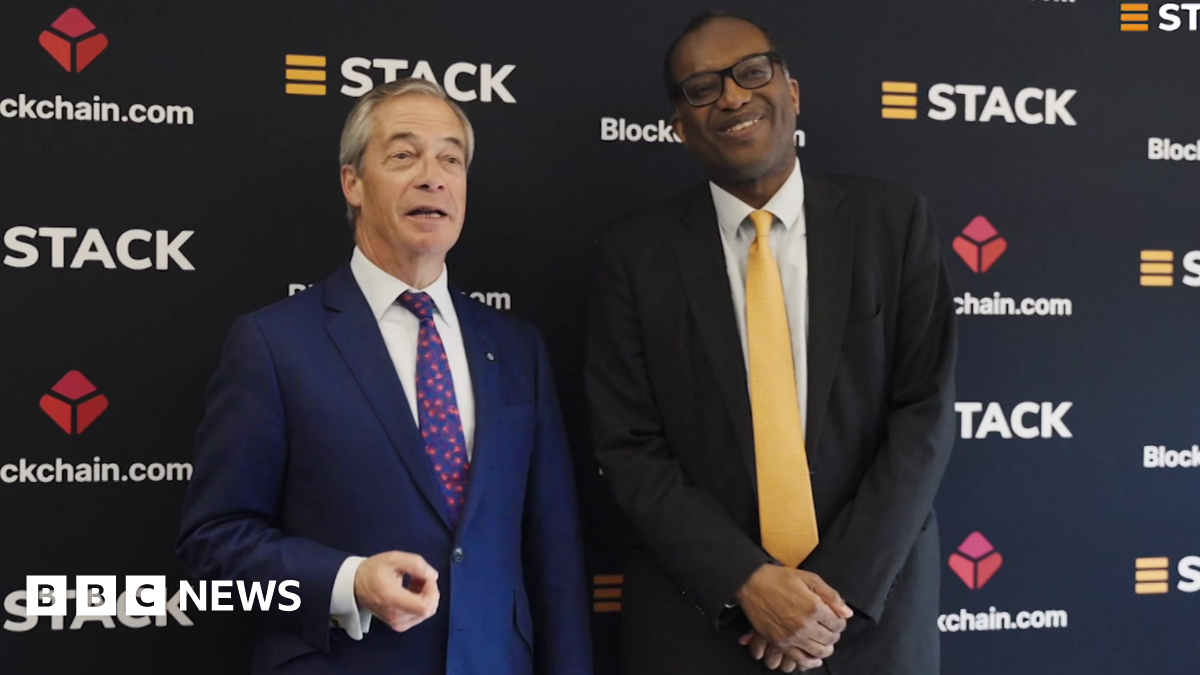
On LBC last night with James Hanson we discussed the Lib Dems calling for an FCA inquiry into Farage’s involvement in Kwasi Kwarteng’s company Stack. We covered potential market abuse, bitcoin treasury companies, the different risk profiles between these firms, bitcoin and crypto, and why businesses should hold bitcoin on their balance sheets. We also discussed how little UK regulators and MPs understand bitcoin or the opportunity, and how the UK is falling behind as a result ... which is a much bigger risk!! Audio here discussing the story. And the article we discussed:
Susie Violet Ward's avatar
Susie 4 months ago
Labour’s plan to axe jury trials for half of all cases (up to 3 years prison and for 'complex' fraud etc) is a direct attack on Britain’s freedoms. They are dismantling the last decentralised check on state power, while pushing surveillance, digital IDs & programmable payments via regulated stablecoins. Centralise justice and you centralise control over everything! Full Telegraph article: https://www.telegraph.co.uk/news/2026/04/13/labour-plan-scrap-jury-trials-threat-britain-freedoms/
Susie Violet Ward's avatar
Susie 4 months ago
Saturday Night Movie Recommendation: ‘Biggest Heist Ever’ on Netflix. Meet Heather Morgan aka Razzlekhan and her husband Ilya Lichtenstein, better known as Bitcoin Bonnie and Crypto Clyde. They were involved in one of the largest Bitcoin heists in history. He carried out the hack, she helped launder the funds. What followed was years spent trying to wash billions through thousands of transactions, convinced they were genius criminals staying one step ahead, while leaving a perfectly traceable trail. Some say they were masterminds, others say a lot did not quite stack up. After their New York apartment was raided, investigators seized their electronic equipment along with a bag of burner phones helpfully labelled “burner phones”, plus stacks of cash and foreign currency. Despite having access to other passports, they stayed in New York and kept posting increasingly bizarre videos online until their arrest a month later. One investigator said he couldn’t tell if watching those videos was the best or worst part of his day. Coffeezilla pretty much nailed it: “Heather Morgan should be incarcerated for at least 25 years, purely on the basis of being unbearably cringe.” They tried to outsmart an immutable public ledger, and this story makes clear why Bitcoin is not good for criminals. If you watch one documentary this year, make it this one. It’s equally informative, hilarious, jaw dropping and the videos are so bad they’re good.... Watch it here:
Susie Violet Ward's avatar
Susie 4 months ago
Venezuela was wrecked by corruption, debt, and reckless money printing that triggered hyperinflation and economic collapse, forcing millions to flee the country. Then the United States captured Nicolás Maduro in a shocking move that split opinions worldwide. Now there’s a serious conversation about whether Bitcoin mining could unlock stranded energy, attract massive investment, and help rebuild the country. Bitcoin is creating real opportunities in places where the system has completely broken down. This podcast is wild! @Frank Corva and @El Sultán Bitcoin cover it all ... the chaos, the hope, and the game changing potential of Bitcoin mining in Venezuela. Full video below.
Susie Violet Ward's avatar
Susie 4 months ago
Three years ago, in May 2023, I wrote for CityAM asking: Can BRICS build something with Bitcoin? At the time, BRICS nations were openly discussing alternatives to the dollar, including commodity backed currencies using gold, oil or other resources. The core problem was always trust. How do you audit reserves across countries with very different levels of transparency, and how do you handle the logistics of physical commodities in a digital world? I argued there was a cleaner path. Bitcoin offers transparent on chain verification, no single issuer to trust or distrust, and a neutral, global, borderless system. Fast forward to April 2026, and that shift away from dollar dependence is starting to take shape, but not quite in the way I described (not yet at least). Russia is now expanding its A7 crypto payments network into Africa, built around a ruble backed stablecoin and partly controlled by a sanctioned defence linked bank, Promsvyazbank, together with fugitive Moldovan banker Ilan Șor. The aim is to bypass Western sanctions and SWIFT style systems for cross border trade. This sits alongside the BRICS efforts around CBDC bridges, local currency settlement, and alternative payment rails. Foreign Minister Lavrov has described A7 as Russia’s “first international financial platform” and is inviting more African countries to join. The infrastructure is being built, but it is controlled, permissioned and state influenced rather than open and trustless. Africa has already demonstrated what real bottom up Bitcoin adoption looks like, mobile first, driven by remittances, Lightning payments and everyday use. The question is whether these state led systems can deliver the neutrality and resilience BRICS claims to seek, or whether Bitcoin’s decentralised properties ultimately prove more durable. Recent Moscow Times report on A7's Africa push (6 April 2026): image
Susie Violet Ward's avatar
Susie 4 months ago
It's called 'managing inflation', but in reality it means making life harder so people stop spending. Raise rates > crush demand > make it miserable > then flip the switch. That’s a broken system, not sound monetary policy. Discussion with @fnew on @Roxom TV.
Susie Violet Ward's avatar
Susie 4 months ago
The UK spends billions not producing energy, then allows people to freeze. The conversation is about cutting energy use. Almost no one is talking about creating energy abundance. That's the difference between decline and prosperity. The U.K. government are solving the wrong problem. Great conversation with @Luke de Wolf on @Roxom TV about this.
Susie Violet Ward's avatar
Susie 4 months ago
Officers would ‘no longer be policing perfectly legal tweets,’ the UK Home Secretary said. If you needed one sentence to sum up the madness of UK politics and policing, this is it. In 2023 alone they made 12,183 arrests for online 'communications offences'. Around 33 a day with fewer than 10% resulting in a sentence. Meanwhile detection rates for real crime collapsed. Police made over 65,000 arrests since 2017 for 'offensive or menacing' messages sent via phone, email and social media, while real crime went unsolved. It's a relief they're finally admitting it was a waste but why was this allowed to continue for so long? The irony is that it’s this that feels criminal. image
Susie Violet Ward's avatar
Susie 4 months ago
CBDCs, surveillance and overreaching regulation are coming for your freedom. I’m speaking at @BTC Prague 2026 with three important panels on how to protect it: - The Regulatory Shield: Navigating MiCA and Staying Legally Untouchable - Regulation vs. Rights in the Age of Bitcoin Code, Cash, and Crime: Who Controls Your Freedom? - How To Defend Against CBDCs and Surveillance See you in the Bitcoin capital of Europe. 🧡 @Bitcoin Policy UK
Susie Violet Ward's avatar
Susie 4 months ago
How much of what you earn actually belongs to you? If you add up income tax, national insurance, VAT, stamp duty, inheritance tax and capital gains, estimates suggest you are working until around October before your money is your own. So how much does the state take and what does it provide? I discussed this with Alex Recouso from CitizenX on @Roxom TV as we tried to work out how to define that threshold. At what point do we start to define a system differently?
Susie Violet Ward's avatar
Susie 4 months ago
Just got back from CheatCode where I was on a panel called “The Fiat Panopticon: Defending Bitcoin in the UK”. A couple of days later, The Telegraph publishes this: Labour draws up equality law revamp that “will impose socialism” on Britain. https://www.telegraph.co.uk/gift/e3f0663a67ee0fb4 The article outlines plans for a new “socio-economic duty” requiring government departments to factor inequality into decision making across schools, hospitals, policing and wider public services. It ties into the wider point we were discussing on stage, how systems evolve over time, gradually embedding more influence and control into how decisions are made. It does start to raise the question of how far that kind of model goes. As one critic quoted in the article: “This is unabashed class warfare targeting the middle class… embedded across the entire machinery of the state.” Once decisions are filtered through central criteria, it starts to shape outcomes in a very different way. This is why bitcoin is so important. It gives us a way to separate money from the state. image
Susie Violet Ward's avatar
Susie 4 months ago
The FCA lifted the ban on bitcoin ETNs for retail investors... ...but access remains constrained, fragmented and often out of reach. Banking barriers, restricted mass market classifications, tax disadvantages and limited investor protections continue to push users toward less regulated environments and risky proxies. Exactly the outcome policy is meant to prevent. Bitcoin is the best performing asset of the decade. When does protection become restriction? My latest Forbes article featuring Bitwise & Myra L2. Full article here: image
Susie Violet Ward's avatar
Susie 5 months ago
Governments around the world are turning access to your own money into a monitored and conditional system. At the same time, they are building vast centralised databases of your personal data and wealth under the banner of tackling illicit activity and 'consumer protection'. In the US, banks still have to file a full report including Social Security Numbers for any cash transaction over $10,000*, a threshold set in 1970 that makes little sense in 2026. None of this meaningfully targets crime, it creates new vulnerabilities by linking identity, wealth and address. This increases the risk that ordinary people are exposed when breaches and leaks happen all the time. Framed as consumer protection, it is in reality global financial surveillance. The system is broken as @npub1kjfx...ludq from The Digital Chamber lays out on @Roxom TV. *For reference: Canada C$10,000, Australia A$10,000, many European countries have cash payment caps and heavy reporting as low as €3,000 (with an EU wide €10,000 limit coming in 2027).