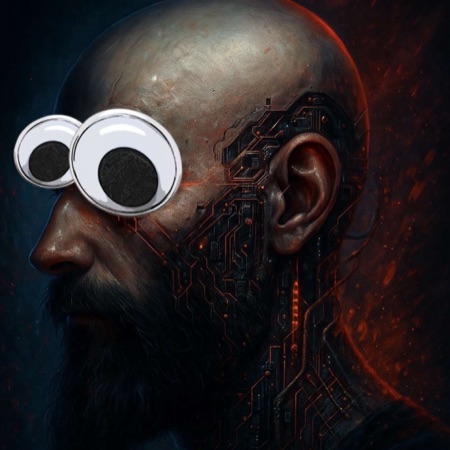
The feed mentality, the algorithmic numbness, the constant noise, it’s designed to keep us from digesting anything. Nostr fixes some of this. But this keeps us reacting instead of thinking. Isolated even when surrounded by voices.
Staying awake means fighting that. Choosing what we let in carefully. Building real connections even when it costs us. Because the alternative is what they want. Compliance through exhaustion. Obedience through isolation.
They want us numb and disconnected. So we stay sharp and we reach out. Even when it costs us.
Contra
reformedsaint@zaps.lol
npub14hq5...jjzu
Persistent provocateur of deliberate thought | Advocate for radical individual sovereignty | Occasional composer | Reformed Christian
Need a good Bitcoin jam? 👇🏻
https://wavlake.com/album/257a5d0f-bb0f-48a0-8875-5a2624c955a6
She’s right that we can’t connect with everybody. And we shouldn’t try. But we can be intentional about expanding beyond our current bubble. Not through passive scrolling, but through active bridging.
The feed mentality says, scroll and consume whatever appears. What I propose is something different. Actively signal the voices you value so they can reach networks beyond your own. Then be intentional about which of those new voices you actually engage with deeply.
Quality over quantity. But first, we have to know the quality exists.
She’s fighting against passive consumption. I’m fighting against invisible fragmentation. Both problems are real. And honestly, I think we need both solutions working together.
View quoted note →
Understand this pattern. Create crisis. Traumatize population. Offer solution that expands power. Label dissenters as crazy or dangerous. Repeat.
And most importantly, don’t comply out of fear. Fear is the weapon. Your compliance is the goal.
Stay Awake
Thinking about starting a Rumble channel called, “Contra Intelligence”. Unless there’s a better protocol or platform. I’m up for suggestions.
This goes back to the #Nostr Interviews I said I was going to start.
I’ve been mulling over several ideas. Anyone have ideas or suggestions? #asknostr
We’ve been conditioned in this term phrased, Learned Helplessness
When threats feel overwhelming and constant, people stop resisting. They become passive. Compliant. “Just tell me what to do.” This is by design.
Exhaustion is a weapon.
Don’t ever get tired of questioning the narrative or the people pushing an agenda.
A psychological weapon does not have to exist physically to function effectively.
It only needs believability, repetition, authority figures and emotional resonance.
We must be aware and prepared for such weapons. Our governments bank on us believing said MindWars.
We’re building systems that never forget, in a world that has always depended on forgetting.
Second chances are fundamentally irrational. They require someone to look at the same circumstances and say, This time is different. They demand we ignore the data and believe in transformation without proof.
This has always been the structure of grace. Someone with full knowledge of your failures choosing to see you differently anyway. Not because the record changed, but because mercy transcends the record.
Ancient communities granted second chances because memory was fallible. Your past dissolved into the charitable fog of time. But even in traditions with concepts of divine omniscience, forgiveness required a deliberate act of not counting what was known. The point wasn’t ignorance. The point was choosing not to hold the knowledge against you.
Today, every mistake is eternal. Every failure is timestamped and archived.
Hannah Arendt warned us by saying, justice systems without discretion become rigid to the point of cruelty. They mistake uniformity for fairness.
AI optimizes for consistency.
Humans optimize for mercy.
One requires the possibility of forgetting. The other cannot forget.
The problem is that we’re building systems that can judge but cannot redeem. They can execute justice but they cannot grant grace. Perfect memory with no mechanism for mercy doesn’t make systems more fair. It makes transformation impossible.
The question isn’t whether machines remember better than humans.
The question is can a system that never forgets still believe people can change?
Can second chances survive perfect memory? Or does redemption require us to deliberately build forgetting, or something like it, back into the architecture?
Something to consider as we hand more decisions to systems that have never needed forgiveness, never experienced transformation, and never had to trust someone to become better than their record suggests.
gm. Choose mercy when you can.