Speaking on CBDCs, Representative Waters says anti-CBDC legislation must be stopped because "it's time for the US government to take charge" so "we don't have [cryptocurrency] or anything else without the federal government knowing and being in control."
Nick Anthony
EconWithNick@verified-nostr.com
npub1n2m8...gflr
Research Fellow at the Cato Institute's Center for Monetary and Financial Alternatives and Fellow at the Human Rights Foundation. Covering CBDCs, financial privacy, and cryptocurrency. Opinions are my own.
Representative Sherman decided to dedicate the GENIUS Act to the "ghost of Sam Bankman-Fried."
This is Congress.
No notes, @UNCLE ROCKSTAR. This take is brilliant haha
Did you know that Congress was thinking about eliminating the $100 bill's status as legal tender back in 1988?
Part of the Anti-Drug Abuse Act of 1988 requested a study from the Treasury exploring what might happen. They even thought about targetting the $50 bill as well.


In a new statement, Representative Stephen Lynch says prohibiting the creation of a CBDC in the United States "will shackle U.S. Government research while giving China another opportunity to capitalize on a new technology."


“We need to rewrite our illicit finance laws to protect us against [real threats] while not undermining the ability to use peer-to-peer technology.” - Zack Shapiro
https://www.cato.org/blog/bank-secrecy-act-capital-gains-targeted-reform-bitcoin-policy-summit
In Ukraine, the central bank has been developing a CBDC for nearly a decade.
Another pilot is expected to roll out this year, but the exact date is still up in the air.

CBDC Tracker
A CBDC is a digital national currency. In the case of the United States, a CBDC would be a digital form of the U.S. dollar whereas, in Nigeria, the...
Despite banks spending $59 billion in compliance and filing more than 27 million reports, the US government still struggles to prove this regime is effective.
Only 370 investigations at the IRS were initiated by the 27 million reports last year.
https://www.cato.org/blog/reporting-fincens-suspicious-activity-again
Slightly embarrassed to admit this, but there was about 4.2 seconds where I thought this alert said there was a liquidity problem with lightning


Just look at the state of the negative reviews on the wallet app for Nigeria's CBDC...
Curious about the Bank Secrecy Act? Or maybe just curious about what
Norbert Michel and I talk about all day at Cato?
Today, we kicked off the Cato Institute's new podcast series by exploring the rise of financial surveillance and the illusion of financial privacy.
https://www.cato.org/multimedia/cato-podcast/illusion-financial-privacy
Dang! I just reached 200 subscribers on my Substack!
Thank you, everyone, for the support here. I was on the fence about starting this newsletter, but it's turned out to be a great way to get my work out there. 

A big thanks goes out to The Rage for featuring my latest piece. I'm excited to share that you'll be able to find more of my work here moving forward.


The Rage
Tracking CBDCs
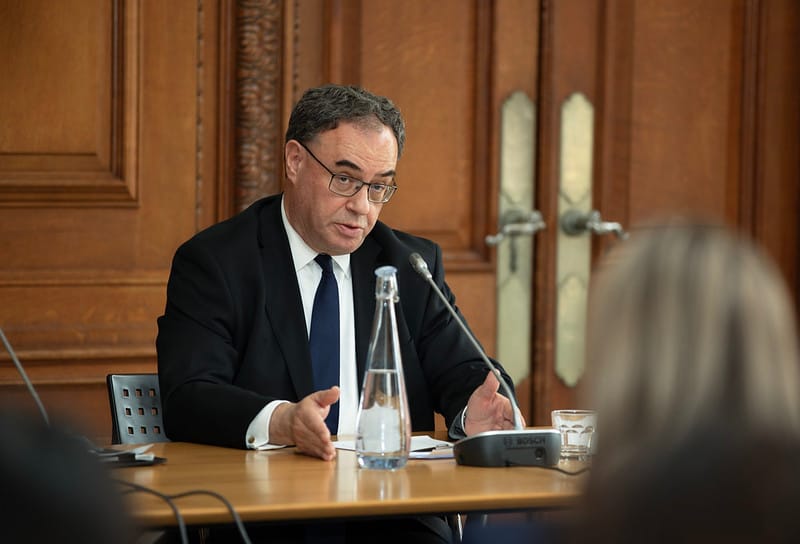
Bank of England governor Andrew Bailey revealed that, even after more than five years of CBDC development, he has yet to be convinced that CBDCs ar...
The ease of sharing long-form work on Nostr is unreal.
View article →
Cryptocurrency activity has jumped 530% in Bolivia amid rising inflation.


Dictators regularly use the financial system to target opposition. @gladstein says Bitcoin offers a lifeline: "It's money that dictators can't stop."


"Only about 13 percent of the world's population has access to a reserve currency, democracy, rule of law, and property rights." - @gladstein at the Bitcoin Policy Summit
"If you try to force people to adopt something they’re uneasy with, because they’re anxious about the power it would give you over them, the whole thing risks confirming the very concerns about coercion and control that touched off their resistance in the first place." - @Loki

Human Rights Foundation
House money
Brendan Hasenstab & Roger Huang Why are countries around the world developing virtual legal tenders? Roger Huang on the origins, implementation, an...
Privacy is normal.
I'm excited to start sharing my long-form content here. To kick things off, here's a brief introduction to my latest paper explaining how the Federal Reserve (and the US government at large) has slowly taken over payment services.
View article →