Take a look at these two insects. Pretty similar right?
Both flying insects, both yellow and black. Both have stingers.
But to a gardener they could not be more different.
The image on the left is a honey-bee. They are critical to the pollination of many plants, especially those that produce nuts and fruits. In a world without the honey-bee we'd still have food because grains and other plant-based food is often wind/self pollinated.
But we'd have less variety, growing food would be harder, and prices would be a lot more.
The image on the right is a yellow-legged hornet. They stress your gardens: they chew bark, damage fruit and - most importantly - hunt other pollinators. A garden without them is a healthier garden.
But the point is, if you don't know your insects, haven't researched how each impact the garden and have a "no flying insects" policy for your garden, your garden will grow more slowly, and garden by garden - you create a world where food is more expensive, and less bountiful.
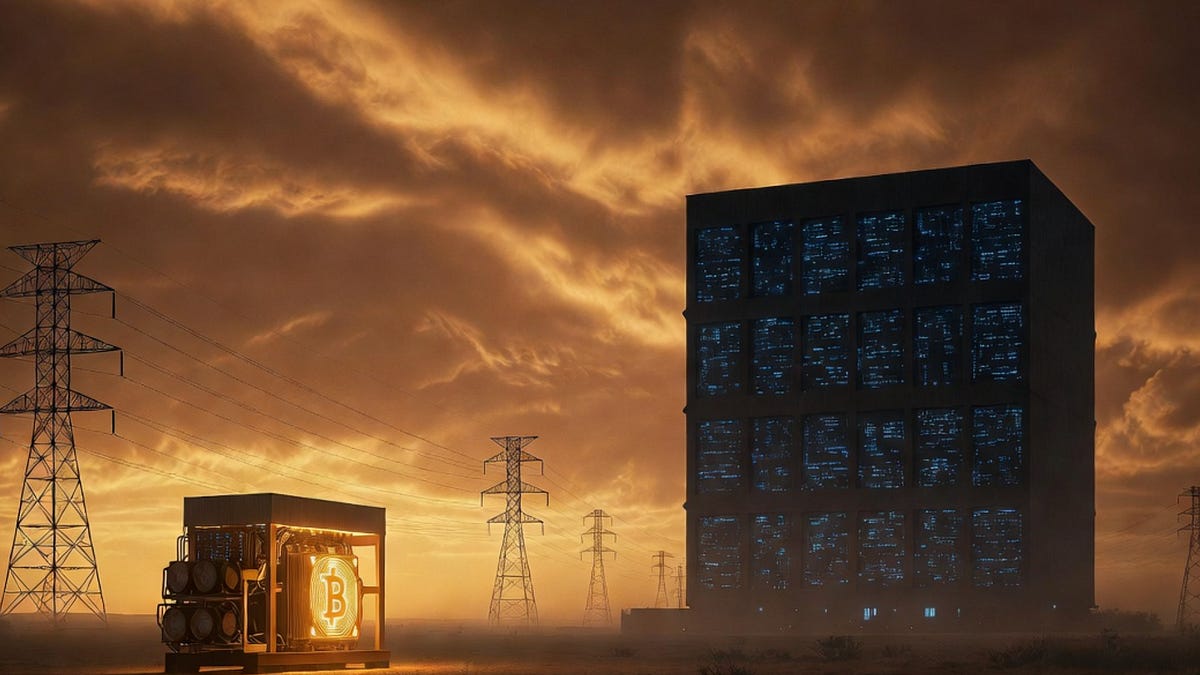
Lumping bees and hornets under "flying insects" is like lumping bitcoin mining operations and AI data centres under "data centres": technically accurate, useless for policy, and dangerous for the grid.
Yet that is exactly what happened in Cedar Falls yesterday. The city council voted unanimously to block a Bitcoin mining facility from its 60% wind-powered industrial park - an operation that would have monetised surplus energy, and balanced the intermittency of that wind energy, without competing with a single resident for electricity.
Source:
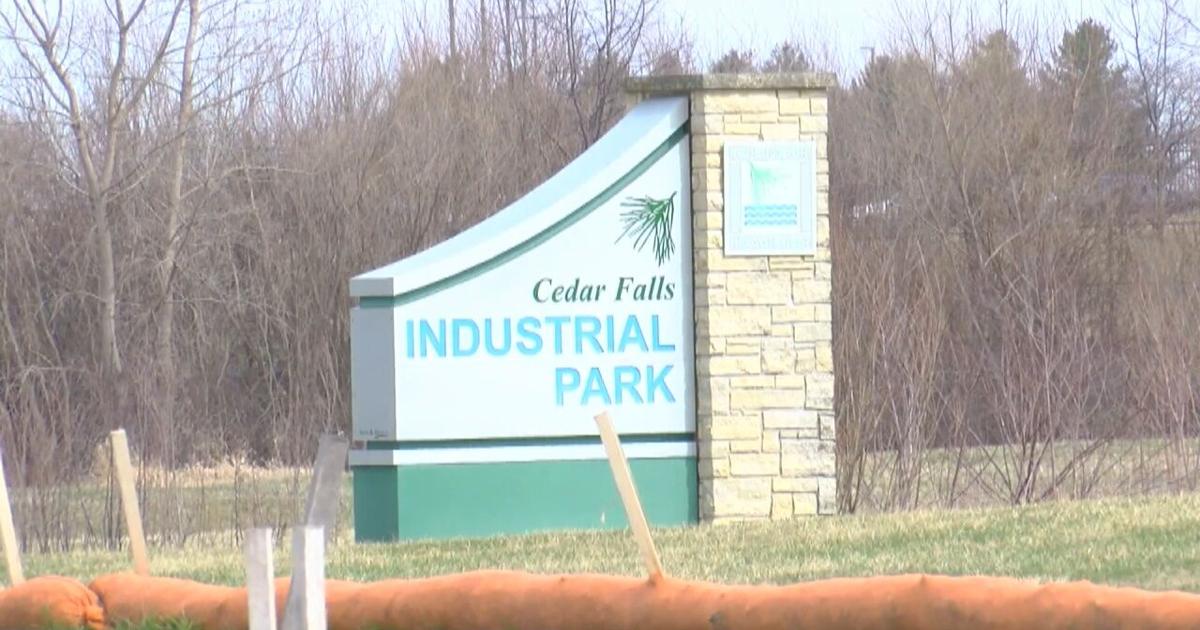
KWWL
No crypto mining in Cedar Falls after unanimous council vote
CEDAR FALLS, Iowa — Cedar Falls will not be home to a new cryptocurrency mining facility after the city council voted against zoning changes.
They banned the bee.
Because here is the nuance most people miss: the gardener who sprays pesticide on all flying insects does not get a pest-free garden. They get an unpollinated one. The fruit costs more. The garden grows more slowly. And the pests still find a way in.
That's what Cedar Falls just did.
A grid with flexible load has a shock absorber. When demand spikes, the miner steps aside in less than a second, freeing capacity without anyone building a new power plant.
A grid without Bitcoin Mining has no buffer. No surplus buyer. No way to balance supply and demand in real time without firing up gas peaker plants that cost more and sit idle most of the year.
The gardener who knows the difference between the bee and the hornet has a healthier, more balanced, more resilient garden.
The grid operator who knows the difference between Bitcoin mining and AI datacenters has a healthier, more balanced, more resilient grid.
The word 'data centre' is doing the same work as 'flying insect.' It collapses two fundamentally different things into one category so that people can avoid understanding the difference. The resilience of the grid suffers - and consumers get higher prices.

I just got back from the Bitcoin Energy Summit in Lisbon and I have a question that won't leave me alone.
First some context: Bitcoin mining is now stabilizing the grids of 7 nations, 4 agencies (including the Spanish Govt and the World's largest energy policy association) just called for more flexible demand being critical to the resilience of the grids of the future - and Bitcoin mining is the world's most flexible load resource by an order of magnitude.
So in light of this my question is this: why is 95% of the Bitcoin adoption conversation about Bitcoin-as-money when Bitcoin-as-energy is already deployed on grids across three continents?
Is it possible that energy is the Bitcoin usecase that paves the road for mainstream acceptance of Bitcoin in the West?
I've been in this space for four years now. When I started, the conversation was "bitcoin mining wastes energy." A group of Bitcoiners including Troy Cross changed that. Then it became "ok maybe it doesn't waste energy, but it's not useful."
@gladstein ,
@jack and others changed that too.
But here's what I noticed in Lisbon. Three separate European organisations - the European Bitcoin Energy Association, Free Madeira, and the Institut National de Bitcoin in France - are all independently converging on the same conclusion.
Rachel Geyer, Chair of EBEA said energy is what will move the needle for Bitcoin in Europe.
André Loja at Free Madeira said energy is the most topical issue in Europe right now.
Bastien Desteuque, directeur général at INBi (Bitcoin Policy Insitute of France) said they're focusing on mining because France has spare nuclear capacity and that's where the biggest opportunity is.
Three organisations. Same conclusion.
And that's before you get to what's actually being built. In Sweden, a man I coach runs ASIC hardware that earns almost two-thirds of its revenue from frequency regulation - keeping the lights on, responding in seconds to the need of the grid operator, and helping to stabilize the grid an incredible11,247 times last year alone. (Yes, you read that sentence right).
In Lisbon, I watched Kenji Tateiwa present a circular economy where bitcoin mining heat grows tropical fish and the CO2 gets converted to charcoal and micro diamonds. Bastian outlined how France's surplus nuclear energy could be absorbed by bitcoin mining by 2027.
The conversation has quietly moved from "does bitcoin mining help grids?" to "how many services can one machine provide?"
We've been thinking about this like monoculture - one machine, one function. What I saw in Lisbon is permaculture. The same hardware doing frequency regulation, heat capture, Sats-minting ... and potentially in the near future - voltage regulation (something that would have prevented the 28 April 2025 Iberian Peninsular Blackout.
I talked to Bitcoin founders after the keynote who told me the energy thesis had opened their eyes. These are people who worked to advance Bitcoin payment infrastructure, and they hadn't fully grasped this.
So here's my question. If energy is already Bitcoin's most mature real-world use case in the West - more deployed than payments, more proven than store-of-value at institutional scale - why are we still treating it as a footnote?
What other Bitcoin use case is this far along ... at least in the West?
Excited to see what happens next.
The Part I Didn't Tell You
(Nostr first post)
A couple of months ago my daughter and I had a conversation about drinking.
My wife and I decided after researching the impacts of drinking on teenage brain development that we had a simple clear "no drinking" rule for our children.
But I didn't just say the rule, we explained why
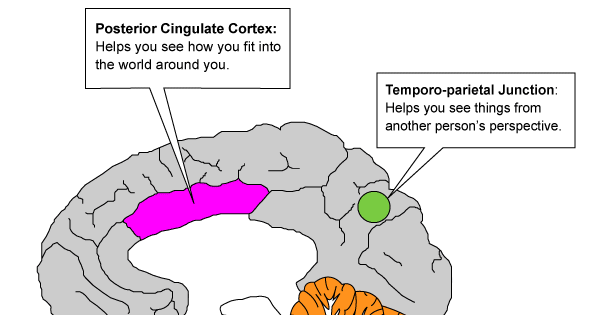
"Because we love you, and part of loving you is keeping you safe. Your brain - particularly your cerebral cortex - is still developing. Alcohol interferes with that development. What you have is precious, and we want to protect it so you can reach your potential."
Like her Dad, she's been brought up to challenge things that don't make sense - even if they come from me. She's scientific in her mindset and demands evidence for things. She looked at me for a moment, paused. Then she said, "OK. That makes sense" the way she only does when something has landed.
That conversation with my daughter at our dinner table is the same thing I did with Greenpeace, with journalists, with policymakers, with central bankers - the same method, the same respect for the other person's autonomy, just at a different scale.
I'll back up and explain what I mean by that.
For the last four years, I've called myself different things at different times - an ESG analyst, a Bitcoin mining analyst, a climate activist, an environmentalist. All true, but none of them complete.
I've correctly said that the Bitcoin narrative changed because we had good data, good collection of data, a good presentation of data, and the truth was coming out.
And that's true. But it wasn't truth alone. Truth is like water - it needs a container. And there was a part of the container I wasn't telling anyone about.
During the battle, I couldn't. If I'd said publicly that I was applying decades of influence methodology to every soundbite, every chart, every rebuttal - opponents would have said, "See? It's not about the evidence at all."
So I kept quiet. And the data became the visible story.
But the truth is that every single element was carefully contextualised, nuanced, framed for maximum impact.
It was no coincidence that my rebuttals would regularly ratio accounts with ten times my following. It was no coincidence that the head of Greenpeace's anti-Bitcoin campaign sat across from me and said, "We monumentally failed. We should have engaged with people like you from the start."
There was no randomness to journalists changing their editorial policies, or critics quietly deleting tweets they'd been posting for years.
It was by design.
There's a well-known rule that a lie will travel halfway around the world before the truth can get its pants on.
The research confirms it - lies spread ten times faster AND disperse ten times further. Which means that to reach parity, the truth doesn't just need to be correct - it needs to be a hundred times better.
Truth is like gold. The gold is already there - buried under rock and stone. But without someone willing to chip away at the false layers, nobody sees it.
That's what I focused on - not adding anything to the truth, but removing what was obscuring it.
The data was real and essential.
But data by itself was sitting in papers and spreadsheets that just got ignored.
The influence craft - the framing, the sequencing, the story structure, the Socratic approach, the non-attachment to outcome - that's what made the data travel.
Neither works without the other. The gold is real, but without the right extraction tools, it stays buried.
Now here's where it gets interesting...
Ten compliments and one insult - what do you remember? The insult right?
What does the media prefer to cover - ten positive things about Bitcoin, or one negative? The negative off course. And when we look at our own capabilities versus our incapabilities - which do we doubt? We doubt our capabilities. We never doubt our incapabilities.
The exact same dynamics that create false narratives about Bitcoin create false narratives inside people.
The FUD-busting techniques I employed to help change the Bitcoin narrative - I have used for ~20 years to help people bust their own fears, their own uncertainties, their own doubts.
I don't use the blunt instruments of positive affirmations or pop psychology. I use a much more deadly weapon against FUD: the sword of indisputable logic, expressed clearly.
Used correctly, logic disarms fear, makes the uncertain clear, and turns doubt into certainty.
Because fear (F.E.A.R) is false evidence appearing real. And that is true whether it's operating at the scale of a global disinformation campaign against Bitcoin, or inside the mind of a single person.
When we present the real evidence to the masses about Bitcoin, people are able to embrace Bitcoin.
When I present the real evidence to an individual about their own capabilities, their fears and doubts and uncertainties dispel. They start taking action. And the adoption of their vision imprints itself on the world.
The method is the same, the chisel is the same - just different gold.
So what am I actually doing now?
I'm teaching other Bitcoiners influence. And influence has four applications.
1. You can use it to change narratives - useful for Bitcoin, but also for changing the narrative on your own company so you're more likely to get investment.
2. You can use it to lead effectively.
3. You can use it to coach people in your team.
4. And yes, you can use it to sell - not selling the way it's traditionally done, but selling as an act of service which enriches and empowers the other person.
Whether it's through my work with HRF, through Bitcoin policy institutes around the world, or through key individuals who are now influencing at a nation-state level, my job is to work behind the scenes to train the people who are right now influencing investors, politicians, central bankers, national grid operators across four different continents to incorporate Bitcoin.
It will never be my name on those conversations.
These people already have the talent.
Half the time my role is just removing the blindspots they can't see which all humans have - the things standing between them and their full potential when the stakes are highest.
When someone walks into a room with a prime minister or a central banker and says exactly the right thing in exactly the right way - that's them.
I'm the aanoying person they workshopped this conversation with for weeks become who asked the pointed questions before forcing them to practice before game day, like any good coach should who believes in their players and demands the best of their does:
"What does this person already believe?",
"What's the bridge between that belief and where you need them to get to?",
"How show me how you're going to say it",
"I'd say "no" if you said it like that, do that again but add this part in",
"There, that's better."
Sometimes the person that Bitcoiner is talking to is the president of Chile.
Sometimes its the political left, centre, and right in France.
Sometimes it is the Prime Minister of New Zealand
Sometimes it's a central banker in Ethiopia
Sometimes its the national grid operator of South Africa or Sweden.
Sometimes it's a merchant banker who's about to fund a company listing at the intersection of HPC and Bitcoin mining onto the NASDAQ.
On my book on influence, I wrote that truth is like gold. The stone needs to be chipped away so it can be seen. That chipping away is the art of influence, but influence (at least the type I coach) only works if there the gold, the truth, exists.
That's the part I couldn't tell you at the time while we were in the middle of a war about Bitcoin and energy. But it's important I tell you now, because it affects what happens next.
Yes, we won the energy narrative.
But it's critical that we don't come out of that win thinking truth and data do the job by themselves.
They were necessary ... but they were not sufficient.
The next battles - nation-state adoption, regulatory frameworks, the conversations happening right now behind closed doors in rooms most Bitcoiners will never see - will not be won by better data alone.
They'll be won by people who know how to carry truth into a room and put it down in front of someone in a way they can receive it.
Because truth is like water - it needs a container in order to be absorbed and appreciated.
And for as long as I'm here, because I care about truth and therefore Bitcoin I'll continue to coach those people to build the container to be their best and destroy their own inner FUD - for Bitcoin, for their companies, for the people they lead, for their families, and for themselves.
Clarity means getting clear on not only your passion, but the riverbanks for that passion.
For example, I used to waste a lot of energy pouring my time into too many projects where I was passionate about the mission, but the direction it travelled was ill-defined
Your energy is like water - when directed with skill, it can give life to whole river valleys. But when the banks of the river are not clear, it can be a destructive force that squanders not only your time and energy, but those of other people.
Getting clear on both what you are doing (the water) and how (the banks of the river) is a much better way to serve others and make an impact.
For example, I'm passionate about many tech and bitcoin projects, and I'm equally clear that I only invest in what I know really really well: that is Bitcoin and Bitcoin mining projects running on landfills. That's it. That allows me to be very clear whenever I get one of the myriads of unsolicited LinkedIn messages from people telling me about their tech project, and asking if I want to hear their pitch. I've been that person, so I always do this respectfully, and promptly, so the person can focus their efforts where they are more likely to yield fruit.
I am very passionate about helping people grow missions that I care about. But I don't do this through investment any more (stopped that in 2020 to focus on Bitcoin). I don't do this through setting up JVs or taking sweat equity in new ventures (I've already started and exited a tech company, not looking to repeat that), and I only coach people who implement the results of coaching sessions immediately (yes, you can test for this before working with someone). For others, I have some free ebooks I offer, or I refer them to other coaches.
Helping people reach their potential is one of my core values. I fulfil this value in two ways that I've found have the biggest impact on helping people: the first is teaching breathwork and meditation (my volunteer time, alongside Bitcoin advocacy), and the second is coaching (my income). I don't do free coaching because I trialled it many years ago and found that it was a disservice both to those I coached and my impact, because they implemented very little.
When it comes to Bitcoin advocacy, I focus on putting out free content about Bitcoin and Bitcoin mining, that anyone is welcome to use without attribution. Requests such as "I'd love to pick your brains on ...", "can you read over my proposal on...", "I'd love to have a call with you about (something where the objective is not sated/not clear/not aligned to how I operate)", or "can you be an unpaid/ equity-remunerated advisor about..." are examples of water that does not flow between the banks of the river, and as such would leave me feeling swamped, and the other party getting underwhelming value. I learnt the hard way that every time I say "yes" to an invite like that, I was saying "no" to having real impact.
For example, the reason I was able to do so much environmental advocacy work for Bitcoin and make a difference in this niche was that there were a lot of these sorts of requests I did not take up, that would have defocused me, and watered down my impact.
If you haven't already gotten clear on not just your own passion, but the river banks for that passion, I would highly recommend you do both. It doesn't just protect your time and energy, it protects the time of energy of others and makes sure that everyone get the best of you.



 Source: