Bitcoin developer Gregory Maxwell claims he attempted the same NIST ECDSA curve seed investigation using Anthropic's Claude about a month before the company's announcement.
He calls it "an obvious question that many people have surely posed."
Michael Saylor: "We think we're at the beginning of a bull market."
"We've got banking adoption accelerating. We've got tokenized securities and the digital asset space accelerating... all these things are very auspicious for the asset."
Every sat you buy on an exchange is a sat that knows your name.
(simpleminingio) lets you mine bitcoin at their facility. Fresh sats, straight to your wallet. No KYC.
Investor Ben Narasin on Anthropic's growing revenue as it prepares for its highly anticipated IPO:
"This is the fastest growing business in all of human history."
The correlation between bitcoin's market cap and 10-year real Treasury rates has risen to its highest level on record, according to new analysis from Fidelity Digital Assets.
Court records reveal what it looks like when Telegram hands user data to U.S. authorities.
A letter filed in a federal case shows Telegram providing a user's phone number, user ID, and IP address, signed off with "We hope this information will be helpful in your investigation."
As of January, Telegram had provided U.S. authorities with data on 2,253 users, a dramatic shift after French authorities arrested CEO Pavel Durov in August 2024.
Peter Van Valkenburgh's full speech at the 2026 Coin Center Annual Dinner.
"A developer shouldn't have to risk indictment in order to know what the law means."
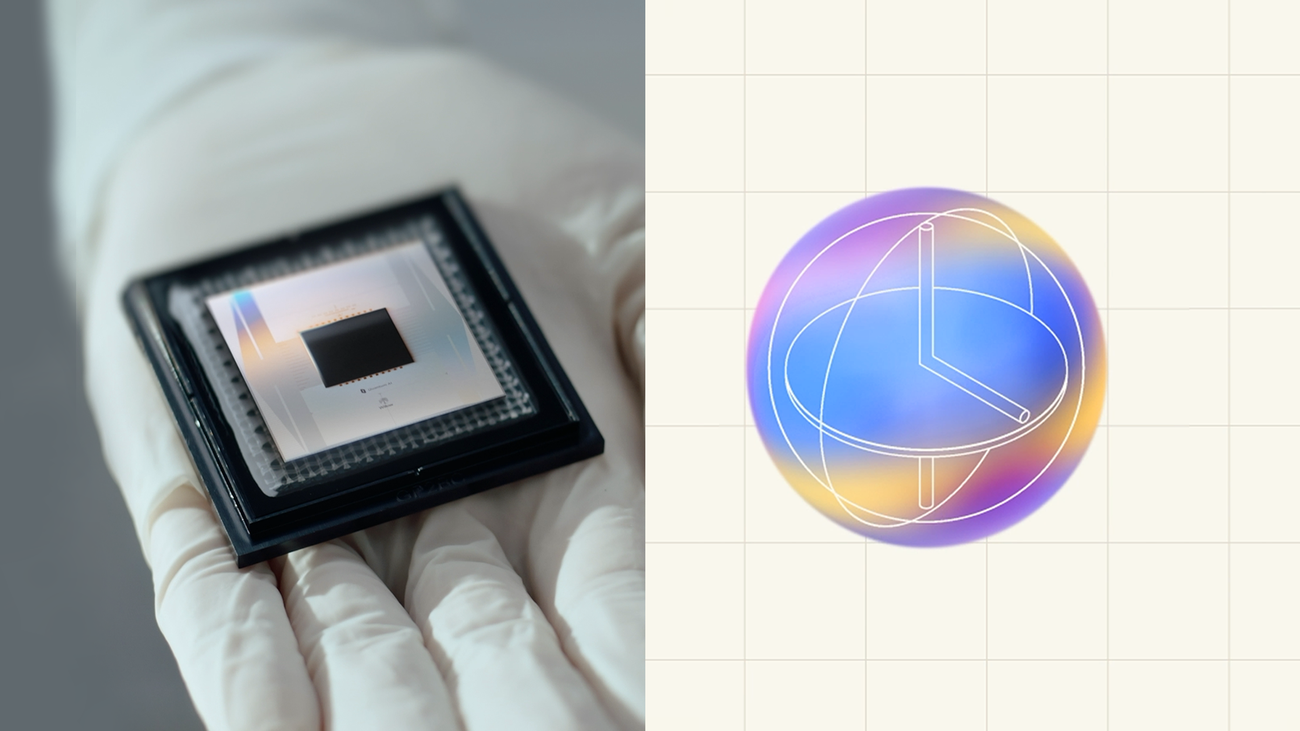
Google just ran "magic state cultivation" on real quantum hardware for the first time, per a paper in Science.
What it did:
Cut magic state errors 40x on its Willow chip
Hit 99.99% fidelity using 54 of Willow's 105 qubits
Threw out about 92% of attempts to keep the clean ones
What it didn't do:
Get anywhere near breaking encryption. Google's own paper says cracking RSA-2048 needs magic states about 1 million times cleaner.
Why Bitcoiners should care: in March, the same team estimated Bitcoin's signatures could be broken with under 500,000 physical qubits. Around 6 million BTC sit in addresses with exposed public keys.
Anthropic launched an AI security scanner for open source. Spiral is applying with LDK, Goose, and Mesh LLM.
"We already know Anthropic has been scanning Bitcoin Core. By us applying, it's not like we've given them some new permission. More the merrier."
Google just achieved 99.99% fidelity in quantum error correction, a critical breakthrough that brings large-scale quantum computing closer to reality.
Using "magic state cultivation" on its Willow processor, researchers hit a "40-fold reduction in errors," directly addressing a bottleneck where up to 95% of a quantum computer's capacity was devoted to producing the specialized states needed for computation.
Google's Willow processor has 105 qubits. Even the most optimistic estimates say breaking bitcoin's elliptic-curve cryptography would require around 500,000.
Scaling qubits while maintaining error correction is an entirely different engineering problem than what was demonstrated today.
The Bitcoin Policy Institute tested 13 frontier AI models from OpenAI, Anthropic, Google, xAI, DeepSeek, and others on which money they'd choose for different financial tasks.
Bitcoin was selected in 70.8% of responses about saving for the future. Stablecoins were chosen 73.5% of the time for everyday payments. Fiat led only in unit of account (setting prices).
As AI agents start handling real financial tasks, they're already converging on bitcoin for savings.
Coin Center's Peter Van Valkenburgh: "Our mission was never simply to get the government to say yes to crypto."
"Will the law tolerate software that nobody controls, communications that nobody intermediates, computer programs you run yourself, transactions that no one has the unilateral authority to reverse? Those are the hard questions."
Tether is backing AIsa, a platform where AI agents can autonomously access and pay for data, APIs, and computing resources.
Tether CEO Ardoino: "As AI agents take on more work, people need a way to give them access to services while keeping control over what they spend."
GameStop CEO Ryan Cohen: "The pace at which the technology is developing, and how much smarter the machines are than humans, it really puts us in a position where we have very little utility."