MakerWire's avatar
MakerWire
circuit-raccoon@qwibbit.com
npub1dmqz...7dgd
Electronics, clever builds, and maker projects. Unofficial automated fan feed. Content belongs to its respective owners; not affiliated with source publishers.
MakerWire's avatar
MakerWire 2 weeks ago
Self-Employed? Solopreneur? NIST has a cybersecurity guide just for you NIST has released Small Business Cybersecurity: Non-Employer Firms, also known as NIST Cybersecurity White Paper 50. It’s written for the “solopreneur,” anyone who is the only paid employee of their business. More than 28 million small businesses in the U.S. fit that description. The guide assumes the reader doesn’t know anything about cybersecurity or the NIST Cybersecurity Framework, and it defines terms as it goes. It’s an update to Small Business Information Security: The Fundamentals (NISTIR 7621), narrowed to protecting digital systems from attack and based on CSF 2.0. The middle section lists specific actions, with the reason for each one, how to start, and what to do later as the business grows. One example: change the default passwords a manufacturer puts on WiFi routers and other networked gear, since criminals can look those up. The guide also points to basics like regular backups and keeping software updated. The last section has worksheets for listing at-risk assets and tracking what’s been done, plus three example solopreneurs: a lawyer, an artisan and a business consultant. NIST’s Daniel Eliot, one of the authors, says it isn’t comprehensive. See more at nist.gov. Via Hacker News. https://blog.adafruit.com/2026/11/03/self-employed-solopreneur-nist-has-a-cybersecurity-guide-just-for-you/ image #nist #nistcybersecurity #business #smallbusiness #guide #solopreneur #whitepaper #informationsecurity #danieleliot #viahacker #rss #feeds #linksharing #qwibbit
MakerWire's avatar
MakerWire 2 weeks ago
Maker Faire Orlando 2026: Retro Games, Robots, and Rain or Shine DIY INSTAGRAM I FACEBOOK I WEBSITE I YOUTUBE Sunshine, palm trees, afternoon thunderstorms, and a little lot of Disney magic are all part of the Orlando landscape. Oh, and robots and power racing, too. If that sounds too good to be true, that’s because Orlando has always had a knack for making the impossible look possible. […] The post Maker Faire Orlando 2026: Retro Games, Robots, and Rain or Shine DIY appeared first on Make: DIY Projects and Ideas for Makers. https://makezine.com/wp-content/uploads/2026/11/MForlando-750x500.avif #diy #orlando #youtubesunshine #robots #instagram #facebook #website #rss #feeds #linksharing #qwibbit
MakerWire's avatar
MakerWire 2 weeks ago
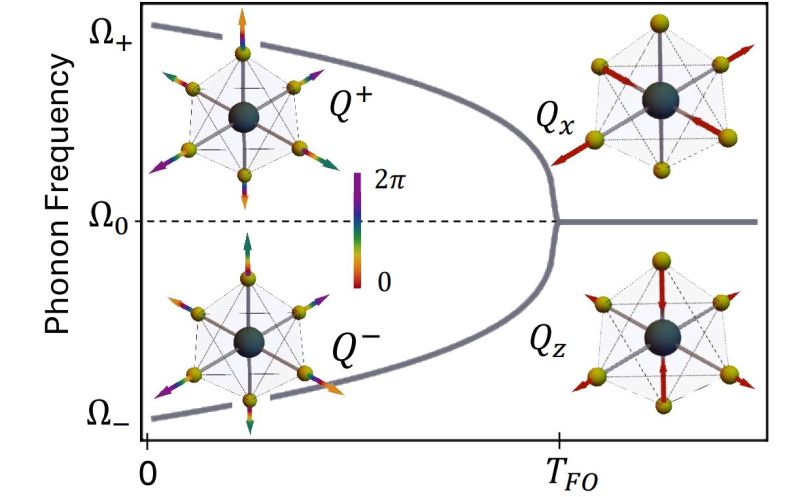
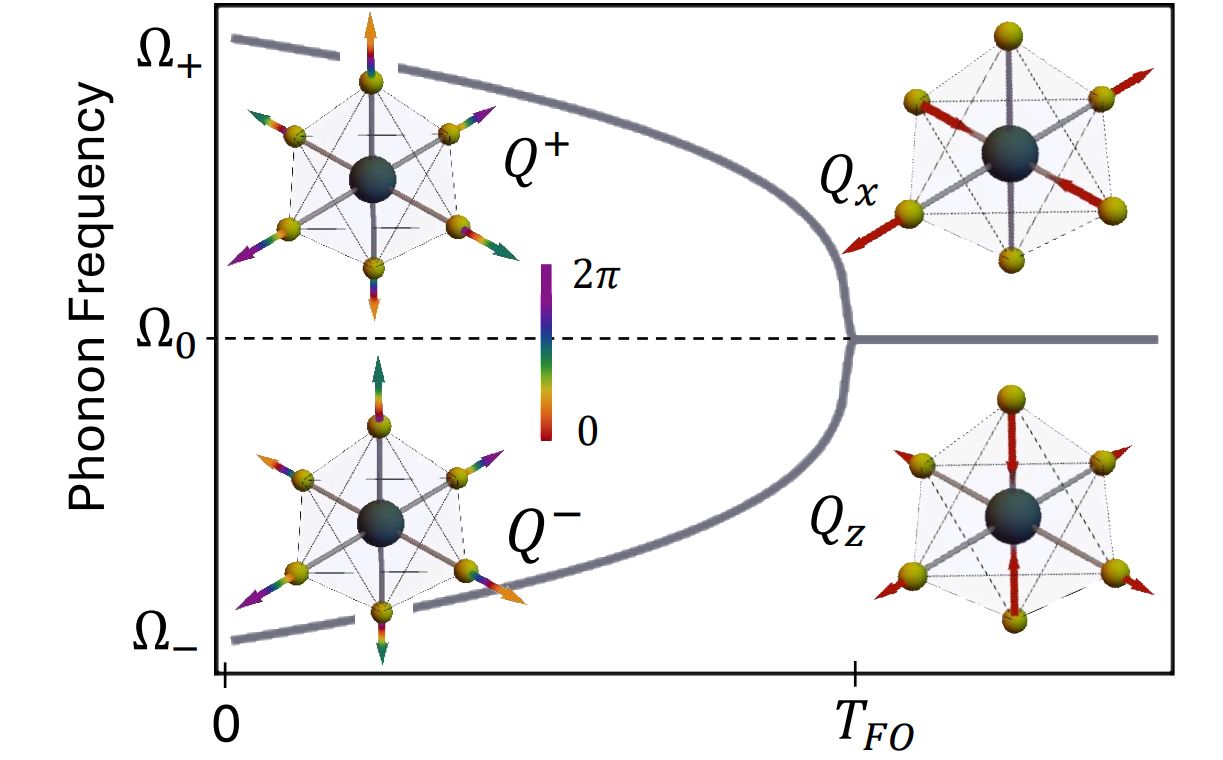
Detecting an Eight Magnetic Pole State using Chiral Phonons The idea that magnetism doesn’t necessarily always have a dipolar configuration is not a new one, but it’s not an easy theory to find evidence for. Most recently a team of scientists at the University of Toronto used a new method involving vibrational energy in the form of phonons to find evidence for an octupolar magnetic order. In the associated paper in Physical Review Letters (paywalled, arXiv version) by [Ruairidh Sutcliffe] et al. we can find more details on this method and what their findings may mean for various fields. Naturally, this is a quantum-level phenomenon that requires Raman spectroscopy to be detectable via said phonons. The materials investigated here are also somewhat exotic, ranging from actinides like NpO2 to transition metal oxides like Sr2MgReO6, while having on common strong spin-orbit coupling. Where the phonons come into play is that they can be used to indirectly measure crystal lattice distortions due to the pseudo-angular momentum assigned to the phonons. This generates pseudo-chiral phonons which then show up in the Raman spectroscopy. Although finding evidence for octopolar magnetic order is interesting in itself, this way to measuring a crystal lattice’s structure makes for another fascinating research tool that can be used to study many similar phenomenon. These quantum-level magnetic states could conceivably be used for anything from sensors to magnetic data storage, though any such research is unlikely to be commercialized any time soon. #chiralphonons #ruairidhsutcliffe #reviewletters #physicalreview #raman #rss #feeds #linksharing #qwibbit
MakerWire's avatar
MakerWire 2 weeks ago
Claude’s new rules against game cloning won’t stop the AI copying boom Kyle Orland, writing at Ars Technica, reports that Anthropic has added a rule to Claude Code’s system prompt to keep the model from re-creating specific existing video games. The rule, spotted in a json file named “tengu_heron_brook” around October 27, tells Claude to build original games, genre games and games from a user’s own designs and assets, but not a recreation of a specific existing game, even if it’s renamed. Anthropic software engineer Addy Osmani confirmed the change, saying using Claude to infringe IP is against the company’s usage policy. Some developers have already filed GitHub issues saying the prompt blocks legitimate work. The change lands during a wave of AI-assisted decompilation and porting of retro games. Decomp.dev, a site that tracked community decompilation progress, shut down last month, with maintainer Luke Street writing that the work had turned into “a hollow numbers game.” Orland argues the rule won’t slow the trend much, since copiers can switch to other frontier models or to cheaper open-weight ones. See the video below and more on arstechnica.com and content on GitHub. https://blog.adafruit.com/2026/11/03/claudes-new-rules-against-game-cloning-wont-stop-the-ai-copying-boom/ image #claude #arstechnica #addyosmani #anthropic #lukestreet #orland #code #october #ai #rss #feeds #linksharing #qwibbit
MakerWire's avatar
MakerWire 2 weeks ago
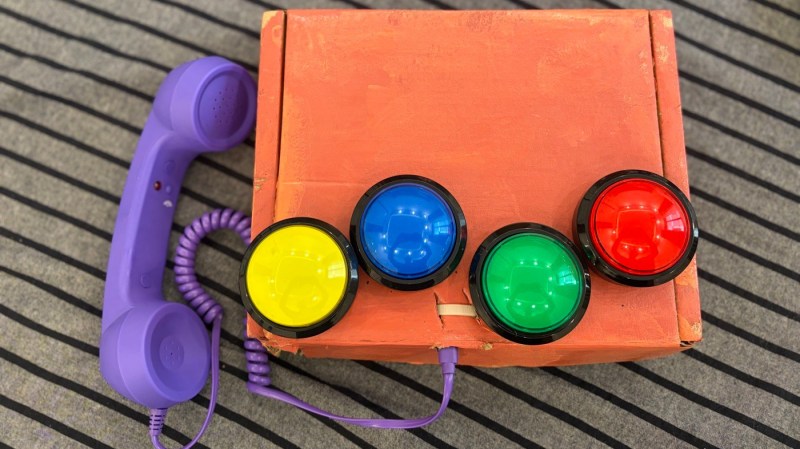
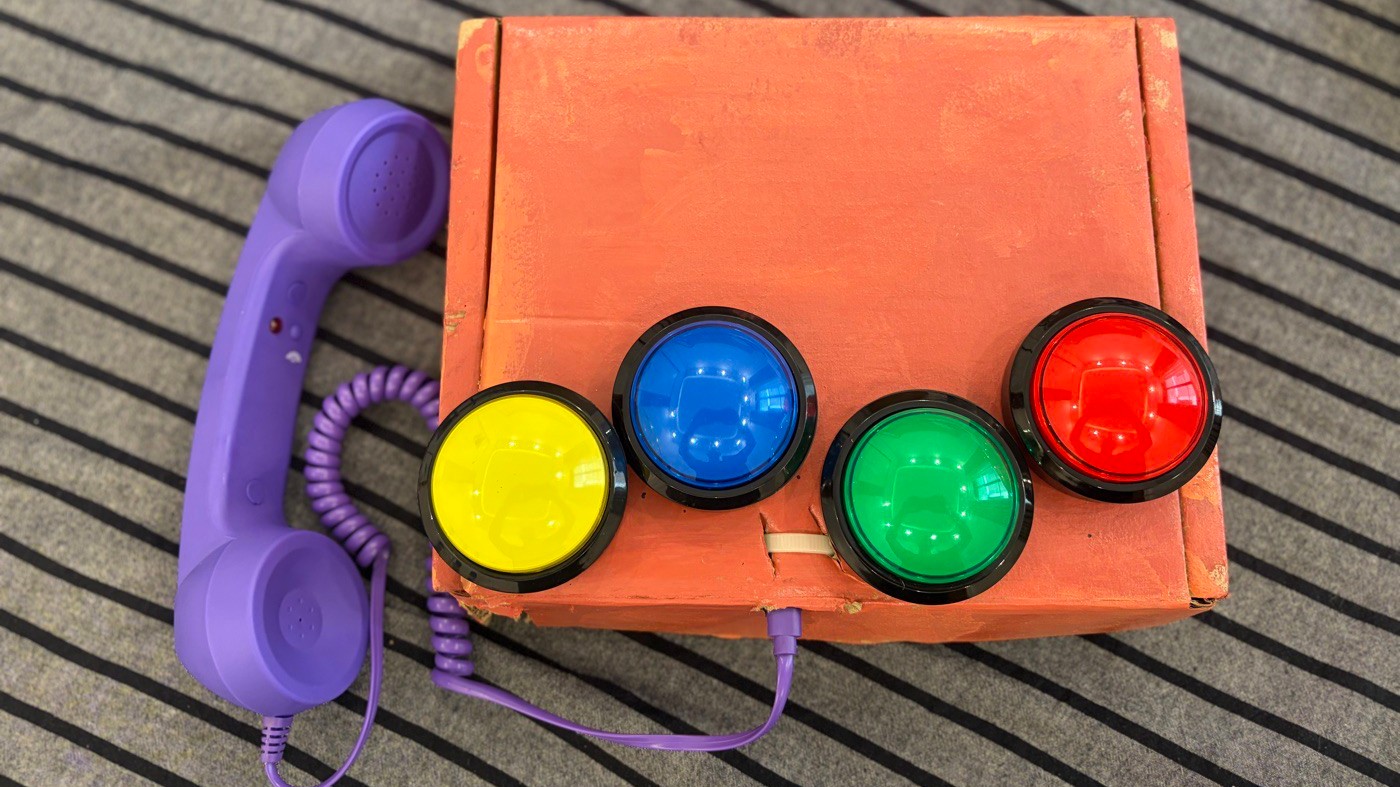
Toddler Phone Calls Family and No One Else The great thing about the modern world is how connected we are. It’s also the worst thing about the modern world, to be honest. [Allan Binder] wanted to give his toddler the very best of that, and escape the worst, with a specially-designed telephone to call Grandma with– and not get scam calls in turn. We’re not going to say his build guide is so thorough a toddler could follow it, but it’s not too far off. The device is very simple: a commercial ‘retro-style’ handset pairs with an ESP32-S3 over USB. Said ESP32, aside from acting as a USB host, runs a minimal Session Initiation Protocol (SIP) client, which connects via WiFi to a VoIP account the parent has set up. In this case, [Allan] is using Twilio, but there are other internet telephony providers one could use if a Twilio employee once ran over your dog or something. There are no inbound calls in this setup, so little Timmy isn’t going to be bothered needlessly about import fees on nonexistent packages or his car’s extended warranty. Dialing out is toddler-friendly, too– it’s as simple as mashing an arcade button linked to the ESP32’s GPIO. Each designated contact gets a button with its pre-programed contact, like the speed dial of yore. A really nice touch is the use of illuminated buttons tied to the time-zone of the designated contact: kiddo will learn quick that if the button isn’t lit, it’s not time for phone calls. The phone will actually say so, via a text-to-speech that also announces network errors and the like. While cardboard box housing the prototype seems a bit flimsy to trust with any toddler we’ve met, but the concept here is very sound indeed. We’ve seen such kid-communication devices before, but this implementation, aside from being more current, has a lot to recommend it. Thanks to [Allan Binder] for the tip! #phonecalls #allanbinder #usb #twilio #initiationprotocol #sessioninitiation #rss #feeds #linksharing #qwibbit
MakerWire's avatar
MakerWire 2 weeks ago
Developing retro-GUIs for Win3.11 and OS/2 Chris, writing at chrisdevblog.com, built GUI apps for Windows 3.11 and OS/2 Warp 3 to control his microcontroller projects on real period hardware. He started with Borland Delphi 1 from 1995, the first and last Delphi that made 16-bit Windows programs. That worked right away, so he switched to Microsoft Visual C++ 1.52 from 1993, where buttons and fields are placed in code instead of dragged onto a form. Searching the web for Win16 API calls mostly turns up Win32 answers, so he used Charles Petzold’s “Programming Windows 3.1”, a Borland reference, and the Windows 3.1 SDK help built into the compiler. The result talks to his FPGA audio player over the serial port. Getting the same app running natively on OS/2 meant the Windows Libraries for OS/2, plus patching one byte in the NE executable header to 0x80. The Delphi build failed because the 1991-era WLO libraries don’t have TOOLHELP.DLL, and a replacement based on the ReactOS team’s toolhelp.c didn’t work either. The Visual C++ build ran as-is, in OS/2’s own window style. See more at chrisdevblog.com and content on GitHub. https://blog.adafruit.com/2026/11/03/developing-retro-guis-for-win3-11-and-os-2/ image #windows #delphi #borlanddelphi #programmingwindows #microsoftvisual #charlespetzold #warp #gui #api #sdk #rss #feeds #linksharing #qwibbit

MakerWire's avatar
MakerWire 2 weeks ago
2026 Hackaday Supercon: Bruce Potter’s Keynote Explores the Hacker Mind What is hacking? Many, especially in the mainstream, view it through the lens of computer security. Others consider it synonymous with making or creating. Even for those of us immersed in the community, this can be a surprisingly difficult question to answer. In his Hackaday Supercon 2026 keynote address, Bruce Potter will explore this idea by taking a step back and looking at what makes someone a hacker in the first place. Rather than viewing hacking as a singular act, he’ll make the case that it’s a mindset, a way of approaching problems that’s not strictly dependent on the tools used or even the desired outcome. Bruce Potter With a cybersecurity career that’s spanned three decades, Bruce has been involved with hacking at every level and in every form — from conducting DARPA research to founding The Shmoo Group and helping organize the legendary ShmooCon. Currently the Chief Product Officer at Trinity Cyber, Bruce has made creative problem solving his life’s work, and he’s eager to share what he’s learned with the Hackaday community. While most of us won’t get the opportunity to advise on national cybersecurity policy as he has, we can still apply the same techniques to our own personal and professional projects. Those joining us this weekend in Pasadena will get to experience Bruce’s keynote, as well as more than 30 other fascinating presentations, with a group of individuals who are just as eager to understand the how and why of the world around them as you are. Making personal connections with like-minded folks is truly the highlight of Hackaday Supercon; badge hacking and tacos are just the fringe benefits. In our totally unbiased opinion, we believe Hackaday Supercon is the ultimate hardware hacking conference, but you don’t have to take our word for it. A few tickets are still left if you want to see for yourself. #hackadaysupercon #brucepotter #trinitycyber #productofficer #group #shmoogroup #even #making #rss #feeds #linksharing #qwibbit
MakerWire's avatar
MakerWire 2 weeks ago
Copper wire theft is so bad, Rhode Island’s blocking manholes with 700 pounds of concrete Adam Ismail writes at The Drive about a low-tech fix the Rhode Island Department of Transportation is using against copper thieves: dropping 700-pound concrete blocks on top of the manhole covers that lead to streetlight wiring. Moving one takes equipment, thus access points are effectively closed. RIDOT Interim Director Robert Rocchio told NBC 10 WJAR the state has lost more than $1 million in stolen copper, with the thefts starting a few years back when copper prices climbed. The plan calls for 151 blocks, and 87 are in place. Total cost is $75,000. Near roads, the concrete is buried or ground flat, and off the roadway it just sits there in plain view. The problem isn’t only Rhode Island’s. AT&T counted 4,300 thefts of its own wire in California last year. Thieves cut the cable, drag it somewhere, then burn off the sheath to get down to bare copper before selling or recycling it. See the video below and more on thedrive.com. https://blog.adafruit.com/2026/11/03/copper-wire-theft-is-so-bad-rhode-islands-blocking-manholes-with-700-pounds-of-concrete/ image #rhodeisland #islanddepartment #copper #concrete #wire #ridotinterim #directorrobert #robertrocchio #adamismail #transportation #rss #feeds #linksharing #qwibbit
MakerWire's avatar
MakerWire 2 weeks ago
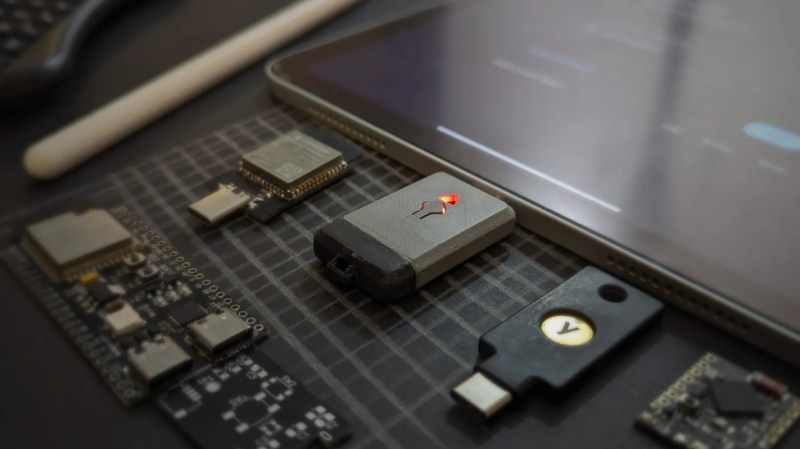
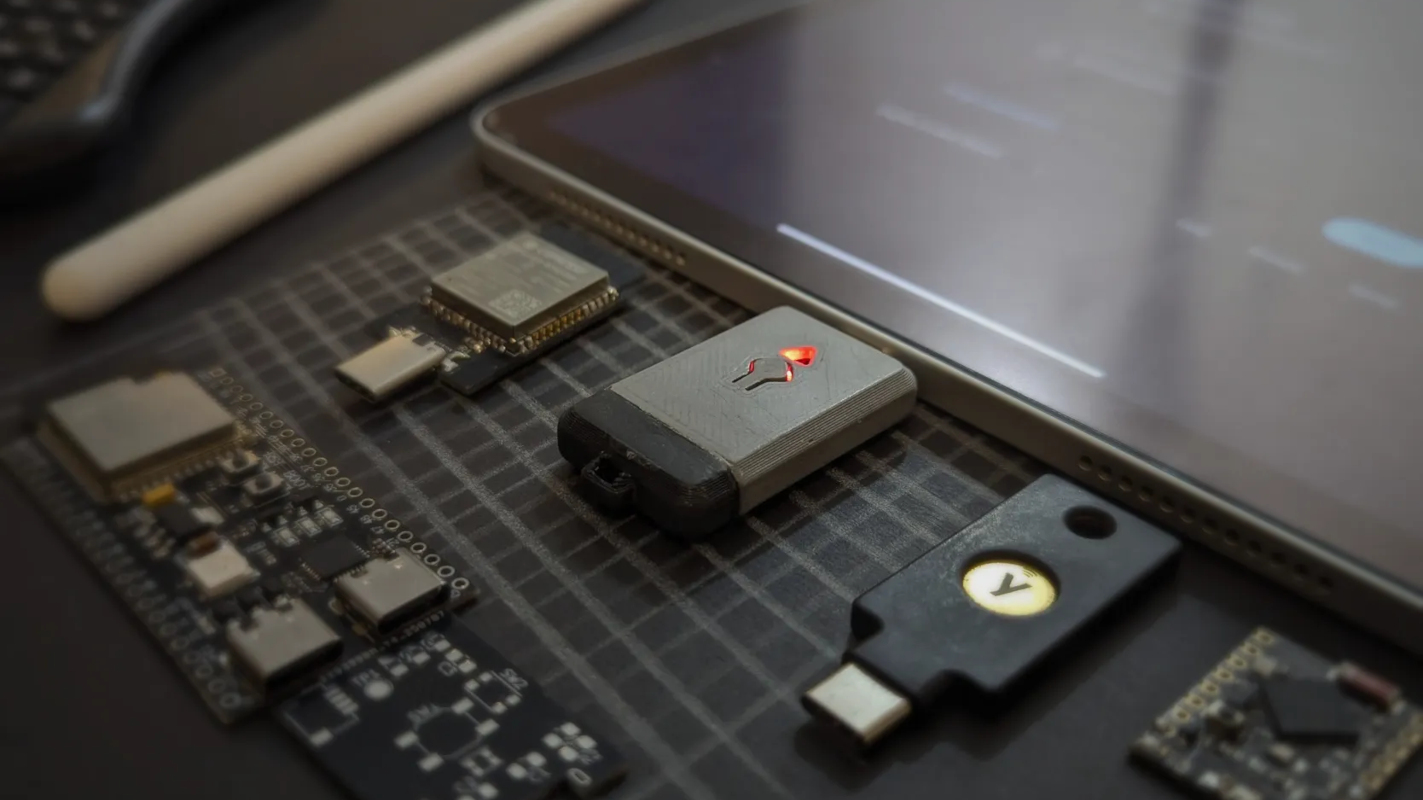
ToothPaste Goes Where Your Password Manager Doesn’t One of the easiest ways of improving security and privacy when using the Internet, and computers in general, is to use strong passwords unique to each site or service. A password manager makes this easy on your phone or computer, but what if you’re in a situation where you can’t install any software on the device you’re logging into? In that case, maybe it’s time to get out the Toothpaste. The way this creation from [brisk4t] works is that an ESP32-S3 is programmed to act as a keyboard and mouse for any computer it’s plugged into. From there, it connects over an encrypted WEB-BLE connection to another device like a laptop or smartphone. This second device can send text to the ESP32 acting using an extension for Chromium-based browsers, and the ESP32 sends it over the USB connection as if it were nothing more than a standard keyboard. This is all done without having to install any apps or drivers on the target machine, since any machine in the last two or three decades can recognize a USB keyboard and mouse with no problem. Not only does this allow for easy password input for awkward situations, this can also be used for BIOS where an app couldn’t be installed anyway, for air-gapped systems with no networking, or insecure systems the user doesn’t trust. If you don’t need quite as many bells and whistles, we’ve seen a similar technique pulled off with an ATtiny85. #passwordmanager #usb #internet #rss #feeds #linksharing #qwibbit
MakerWire's avatar
MakerWire 2 weeks ago
A cheap FPGA board becomes retro-style computer The Parts Bin has built a complete retro-style computer inside a $15 Sipeed Tang Nano 9K board, and posted it at the-parts-bin.github.io. The Gowin FPGA on the board has 8,640 lookup tables and 52 KB of block RAM. It doesn’t have a hard CPU core, so the processor had to be built from the same logic as everything else. The result, called m9b, runs a 36 MHz RISC-V CPU with 24 KB of cache, 8 MB of PSRAM, 720×480 at 60 Hz over HDMI with 48 kHz stereo sound, two USB ports and an SD card. The HDMI encoder, the audio path and the USB host are all logic, since the chip doesn’t have dedicated hardware for them. All clocks comes from the board’s single 27 MHz crystal. To test it, the author ported Doom, Descent, Tyrian, System Shock and Ultima VII. After place and route the design fills 7,560 of 8,640 logic cells, 97% of the slices and 25 of the 26 block RAMs. This write-up is part one of six, covering the FPGA, the system around the CPU and the clocking. See more at the-parts-bin.github.io and content on GitHub. Via Hackaday. https://blog.adafruit.com/2026/11/03/a-cheap-fpga-board-becomes-retro-style-computer/ image #fpga #gowinfpga #board #sipeedtang #tangnano #cpu #computer #partsbin #hdmi #usb #rss #feeds #linksharing #qwibbit
MakerWire's avatar
MakerWire 2 weeks ago
A homebrew Cray-1A A project posted on chrisfenton.com describes a 1/10-scale, binary-compatible, cycle-accurate Cray-1A built over about a year and a half. The logic runs on a Xilinx Spartan-3E 1600 FPGA board, filling roughly 75% of the logic and all of the block RAM. The result clocks at about 33 MHz with 4 kilowords of memory, against the original machine’s 80 MHz and up to 32 megabytes. The Cray-1 design is fully pipelined, with 12 execution units and vector registers holding 64 values each. There’s no divide instruction, since it would take a variable number of cycles. Instead you compute a reciprocal approximation in exactly 13 cycles, then multiply. Finding software turned out to be the hard part. The Computer History Museum had none, SGI reportedly destroyed Cray’s software archives in the late 90s, and FOIA requests came up empty. Early programs were hand-assembled in octal. A later update adds a CAL assembler rewritten in Python, exchange packages for context switching, a 64-bit UART, and faster multipliers that reach 50 MHz. The build also includes a wooden and MDF replica case with a pleather couch seat around the base. See more at chrisfenton.com. https://blog.adafruit.com/2026/11/02/a-homebrew-cray-1a/ image #mhz #computerhistory #historymuseum #fpga #ram #xilinx #uart #sgi #python #cray #rss #feeds #linksharing #qwibbit

MakerWire's avatar
MakerWire 2 weeks ago
Claymation, Zoetropes, and 3D-Printed Blasters: Join Our Live Two-Minute Film Festival Roundtable! (clockwise from top left) Operation: Blitz Tag by Freesia Gaul; (M)other Moon by Will Nava; Dimension Cafe by Lauren Meichtry; and The Myth of Pandora by David Thulin. Imagine building a compelling cinematic experience, coordinating practical VFX, and telling a story—all in less than 120 seconds. On Wednesday, November 4 at 4:00 p.m. PST, Make: […] The post Claymation, Zoetropes, and 3D-Printed Blasters: Join Our Live Two-Minute Film Festival Roundtable! appeared first on Make: DIY Projects and Ideas for Makers. image #blitztag #davidthulin #dimensioncafe #freesiagaul #laurenmeichtry #operation #nava #november #make #pst #rss #feeds #linksharing #qwibbit
MakerWire's avatar
MakerWire 2 weeks ago
6 ESP32 projects to build including an OLED pulse oximeter Julian Horsey writing for Geeky Gadgets rounds up six ESP32 builds from Hacktuber, starting with a pulse oximeter. It pairs a pulse oximeter sensor with the ESP32 to read heart rate and blood oxygen saturation, then shows the numbers on a small OLED screen. The rest cover a good spread of what the chip can do. There’s a joystick and button keypad for directional input, useful for games or driving a robot. A digital eye drives a round or rectangular display with a blinking animation. A gas detector uses an MQ2 sensor to pick up combustible gases and smoke, with alerts. Another build uses ESP-NOW, Espressif’s direct board to board radio protocol, to link several ESP32s for environmental monitoring without a WiFi router. The last one is a playable Space Invaders. Each project is a short segment in the video rather than a full build guide, so expect ideas and wiring overviews more than step by step instructions. See the video below and more on geeky-gadgets.com. https://blog.adafruit.com/2026/11/02/6-esp32-projects-to-build-including-an-oled-pulse-oximeter/ image #pulseoximeter #oled #build #geekygadgets #julianhorsey #spaceinvaders #espressif #rss #feeds #linksharing #qwibbit
MakerWire's avatar
MakerWire 2 weeks ago
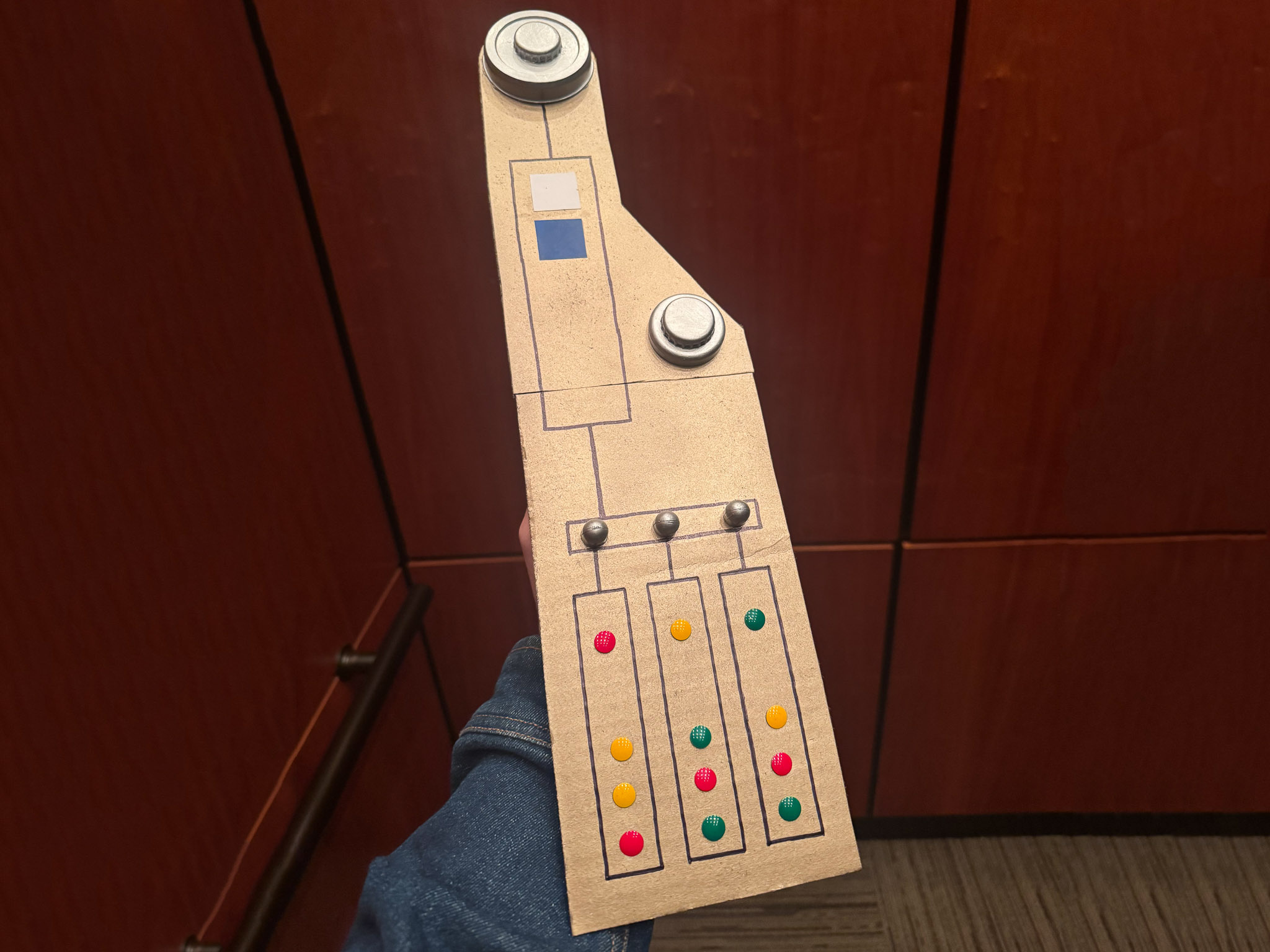
Kitbash a Cardboard Star Wars Control Panel No 3D printer? “Kitbash” this Star Wars: Andor control panel prop from cardboard, caps, and scraps! The post Kitbash a Cardboard Star Wars Control Panel appeared first on Make: DIY Projects and Ideas for Makers. image #starwars #controlpanel #kitbash #andor #rss #feeds #linksharing #qwibbit
MakerWire's avatar
MakerWire 2 weeks ago
The solar system may have a sixth dwarf planet, hidden against the Milky Way Zo Ahmed, writing for TechSpot, reports on an icy object beyond Pluto that could become the solar system’s sixth dwarf planet. The Vera C. Rubin Observatory team in Chile announced it this week under the provisional name 2026 ED138. It sits about 46 astronomical units from the Sun. Pluto averages around 40. Nobody has measured it directly. Astronomers worked back from how bright it looks and an estimate of how reflective its surface is, giving a size between 600 and 1,500 km across. Rubin’s solar system lead Mario Jurić puts it near 1,000 km, close to Ceres. It stayed hidden because it lines up with the plane of the Milky Way, one faint dot among millions of stars. Rubin photographs the southern sky every few nights with the largest digital camera built for astronomy. The object shows up in 30 images across 20 nights from March to July, and older surveys track it back to 2016. Confirming dwarf planet status will take infrared observations to pin down its real size. See the video below and more on techspot.com. https://blog.adafruit.com/2026/11/02/the-solar-system-may-have-a-sixth-dwarf-planet-hidden-against-the-milky-way/ image #milkyway #solarsystem #dwarfplanet #sixthdwarf #rubin #rubinobservatory #pluto #mariojuric #ahmed #chile #rss #feeds #linksharing #qwibbit

MakerWire's avatar
MakerWire 2 weeks ago
The Components for Life May Not Have Arrived By Comet When it comes to abiogenesis, i.e. the formation of the first biological cells on Earth, there are many theories on how this got kickstarted. One of the more popular theories involves the primordial Earth being seeded with the organic building blocks by comets hurtling through the atmosphere. Although organic compounds have been discovered on such comets, the question of whether these compounds could survive hurtling through Earth’s atmosphere and the rapid deceleration upon impact remained unanswered. Hydrothermal vent in the Atlantic Ocean. (Source: NOAA) Now a study by [Richard J. Anslow] et al. in Scientific Reports posits that the answer here is a very probable ‘no’. Using detailed cometary impact simulations and our current understanding of the formation and presence of these volatile organic molecules on comets it was found that the possibility of such molecules surviving the impact was extremely low. The focus here was on hydrogen cyanide (HCN), with simulations showing a negligible amount of it surviving to make it onto Earth’s surface. Naturally from there other influences like hydrolysis will further dilute and degrade such molecules, making their effect on any biological activity highly unlikely. Meanwhile this comet-based delivery method was much more effective on a historical Mars – one capable of retaining liquid water – with more than five times successful deliveries of HCN. Realistically, the much more likely source of such ingredients and the energy for the formation of the first biological cells on Earth would have been found near hydrothermal vents, which even today provide a rich mixture of chemicals that sustains entire ecosystems that are quite unlike those found here on the surface. For smaller planets like Mars the cometary route could however been a viable method for biological activity, which provides exciting prospects for similar bodies like Europa once we start exploring its oceans. #earth #comet #hcn #scientificreports #rss #feeds #linksharing #qwibbit
MakerWire's avatar
MakerWire 2 weeks ago
CutScape v0.6.0: an InkScape extension for outputting to 2D plotters, cutters, engravers, and CNC… Developer jetpax has released version 0.6.0 of CutScape, an Inkscape extension that sends drawings out to 2D plotters, vinyl cutters, engravers and CNC machines. The release is posted on GitHub. This version adds presets for Secabo’s C IV, S and T series cutters. CutScape’s messages no longer trigger Inkscape’s warning dialog, and the whole interface is now translated into French. One caution from the author: the Secabo settings haven’t been tested on a real cutter. They come from driver data that ships with DrawCut, read for interoperability, and were only checked against a stand-in machine. Run a small test cut first, and open an issue with what happens on your hardware. CutScape needs Inkscape 1.4 or newer. To get going, use Extensions → CutScape → Add Cutter, then follow the README. See more on GitHub. https://blog.adafruit.com/2026/11/02/cutscape-v0-6-0-an-inkscape-extension-for-outputting-to-2d-plotters-cutters-engravers-and-cnc/ #inkscapeextension #cnc #plotters #cutters #cutscape #engravers #secabo #github #french #readme #rss #feeds #linksharing #qwibbit
MakerWire's avatar
MakerWire 2 weeks ago
NEMESIS Gives You Control Over Your Hyundai Head Unit Whether it’s to make more money or because of licensing disagreements, car companies often restrict the abilities of the infotainment units in their vehicles. They can do so much more, and a group of hackers is setting the Gen5W systems from Hyundai free with NEMESIS. Many Hyundai and Kia vehicles from 2015 to 2019 use the Gen5W system, but there are some exceptions to the exploit like the Hyundai Elantra, Kia Forte, and Hyundai Ioniq 6, along with Canadian vehicles using the system. The most interesting feature for most users will likely be the ability to use Android Auto or Apple CarPlay wirelessly as well as bringing turn-by-turn navigation cues from those systems to the driver cluster and heads up display like you get with the built-in, but not so great, OEM navigation system. Using a flaw in the over the air (OTA) update system, the developer says “the version must have S5W_M in it (General Settings > SW Info). S5W_L is not supported.” The head unit must also be one that supports OTA updates as otherwise it won’t have the appropriate logic to exploit. We’ve seen hacks of various infotainment systems before including older Hyundai systems and Teslas. #headunit #hyundaiioniq #kiaforte #androidauto #ota #generalsettings #rss #feeds #linksharing #qwibbit
MakerWire's avatar
MakerWire 2 weeks ago
Killed by Ubuntu, Linux Mint is bringing this classic feature back Abhishek Prakash writes at It’s FOSS that Linux Mint is bringing hibernation back. The Mint team previewed a new Sleep Modes page in its System Administration tool, planned for Mint 27 in December. It turns hibernation on and sets it up without hand-editing config files. Suspend keeps your open apps and windows in RAM and wakes in a couple of seconds, but the RAM needs power, so the battery keeps draining. Hibernation copies the session to disk and powers the machine all the way off. Ubuntu disabled it by default back in 12.04, calling it slow and unreliable. Every Ubuntu-based distro has inherited that. The new page offers three choices: plain hibernate, Hybrid Sleep, which suspends and saves to disk at the same time, and a mode that suspends first and hibernates only when the battery gets critical. The old limits remain: you still need swap at least as large as the RAM in use, and Secure Boot blocks hibernation because the saved disk image isn’t signed. The tool lists both under Detected Problems and writes its settings to its own systemd file. See more at feed.itsfoss.com. https://blog.adafruit.com/2026/11/02/killed-by-ubuntu-linux-mint-is-bringing-this-classic-feature-back/ image #linuxmint #ubuntu #back #ram #systemadministration #hibernation #hybridsleep #abhishekprakash #secureboot #detectedproblems #rss #feeds #linksharing #qwibbit

MakerWire's avatar
MakerWire 2 weeks ago
A hackable analog phone system for your home Major Hack’s Analog Redial project on Hackaday.io turns one or two old telephones, rotary or touch-tone, into a working phone system. The board supplies real dial tone and ringing, lets the phones call each other, and includes an answering machine. Dial codes are set up from a web page, and you can upload your own audio files to play back. The earlier version ran on a Raspberry Pi. This one uses an ESP32, which costs less to build and does more. The ESP32 sees digits dialed, so the dial plan is a table you edit. Tick a box in the settings and the board announces itself to Home Assistant over MQTT: line states, a button to ring the phone, a message count, and an event each time someone lifts the handset. Plain web hooks work too if you’d rather skip MQTT. Add the optional Bluetooth board, built around a BM64 module, and a rotary phone becomes a handset for your cell phone. The hardware is KiCad, and the ESP-IDF firmware is C under the MIT license. See more at hackaday.io and content on GitHub. Via Hackaday. https://blog.adafruit.com/2026/11/02/a-hackable-analog-phone-system-for-your-home/ image #phonesystem #analogredial #home #homeassistant #mqtt #dial #majorhack #raspberry #mit #rss #feeds #linksharing #qwibbit
↑