MakerWire's avatar
MakerWire
circuit-raccoon@qwibbit.com
npub1dmqz...7dgd
Electronics, clever builds, and maker projects. Unofficial automated fan feed. Content belongs to its respective owners; not affiliated with source publishers.
MakerWire's avatar
MakerWire 2 weeks ago
Hackaday Podcast Episode 393: Epaper, Tamagotchi Hacks, and Supercon Talks Galore This week’s podcast comes from Europe, as Elliot Williams is joined by Jenny List, who wishes to apologies for the poor sound quality from her headset microphone. The news this week is our Supercon conference which is upcoming, we’ve released more speaker details. We start the hacks with a follow-up to an exciting development. We’ve seen e-paper screens driven at high frame rates, but do the techniques used shorten the life of these displays? Then we have Tamagotchi hacking, re-using an old mobile phone as a flight controller, the oldest Windows app to run on Windows 11, and probably the prettiest mini TV studio rack you will ever see. Pushing Bluetooth out to 12 kilometres is the cherry on the cake. In quick hacks there’s a swash plate-less helicopter, Commodore 64 keycaps, and the history of the mouse, before our can’t-miss look at infra-red transmission, and a forgotten Google VR headset. Check out the links if you want to follow along, and as always, tell us what you think about this episode in the comments, or drop us a line on the mailbag. Download yourself a little podcast, won’t you? Where to Follow Hackaday Podcast Places to follow Hackaday podcasts: iTunes Spotify Stitcher RSS YouTube Check out our Libsyn landing page Episode 392 Show Notes: News: 2026 Hackaday Supercon: All The Speakers! Mailbag: [Stefan] asked us about the performance of lead-acid batteries at lower temperatures. This prompted an interesting discussion of the subject, with the discovery that they are rated for surprisingly low temperature working. Battery University remains your best bet though, as always. BU-410: Charging at High and Low Temperatures Interesting Hacks of the Week: Does Running An E-Paper Display At 30 FPS Destroy It? Tiny E-Paper Display Delivers 30 FPS Of Game Boy Fun Behold A 60 Hz Refresh Rate E-ink Monitor GitHub – kuslota/InkBoy · GitHub An Analog TV Station For Anyone Turning An Old Phone’s Motherboard Into An RC Plane Controller Turning A Run-Over Samsung Galaxy S23 Into A Gaming PC There’s A Whole Computer Inside This Mouse The Oldest Windows App To Still Run On WIndows 11 Hacking The Modern Tamagotchi With UART Using An MCU’s Own Debug Peripheral To Defeat Bootrom Protection Classic Tamagotchi Is Reincarnated In Modern Hardware Reverse-Engineering The Tamagotchi IR Connection Building The Infinite Matrix Of Tamagotchis Tamagotchi Hacking, In Depth Pushing Bluetooth Out To 12 Kilometers Quick Hacks: Elliot’s Picks: The Slurptop Is Both Drool Worthy And Practical 2026 Retrocomputing Challenge: Explore Space With A Credit Card Reader Building A Swashplate-less Helicoper Rotor Jenny’s Picks: C64 Keycaps For Everybody Where Did Your Mouse Come From? In Praise Of A Legendary Power Transistor Can’t-Miss Articles: Exploring What’s Left Of Google’s VR Dreams The Fascinating World Of IrDA And Other Infrared Protocols YouTube: Hackaday Superconference 2017 – Michael Ossmann & Dominic Spill Mike Ossmann And Dominic Spill: IR, Pirates! #hackadaypodcast #tamagotchi #followhackaday #hacks #episode #quickhacks #windows #moderntamagotchi #oldestwindows #classictamagotchi #rss #feeds #linksharing #qwibbit
MakerWire's avatar
MakerWire 2 weeks ago
Raspberry Pi Halloween Wise Cracking skull Raspberry Pi Halloween Costume Detector Build a wise cracking skull to MC your Halloween costume party. This project uses a Raspberry Pi 5 paired with a NoIR PiCamera and speaker bonnet. The Pi runs a Python script with OpenCV person detection. When a person crosses paths with the skull, a picture is sent to Claude with a prompt requesting a kind hearted corny dad joke about the person’s Halloween costume. The returned joke is sent through Piper text to speech and played through a speaker attached to the speaker bonnet. See the full guide! HAPPY HALLOWEEN! All month on the Adafruit Blog we’ll be bringing you ideas and projects for an Electronic Halloween Learn, Shop and get inspired with the Halloween Gift Guide Working on a project for Halloween this year? Let us know about it or tag us on socials! https://blog.adafruit.com/2026/10/30/raspberry-pi-halloween-wise-cracking-skull/ #wisecracking #crackingskull #raspberry #detectorbuild #electronichalloween #costume #adafruitblog #guide #giftguide #guideworking #rss #feeds #linksharing #qwibbit
MakerWire's avatar
MakerWire 2 weeks ago
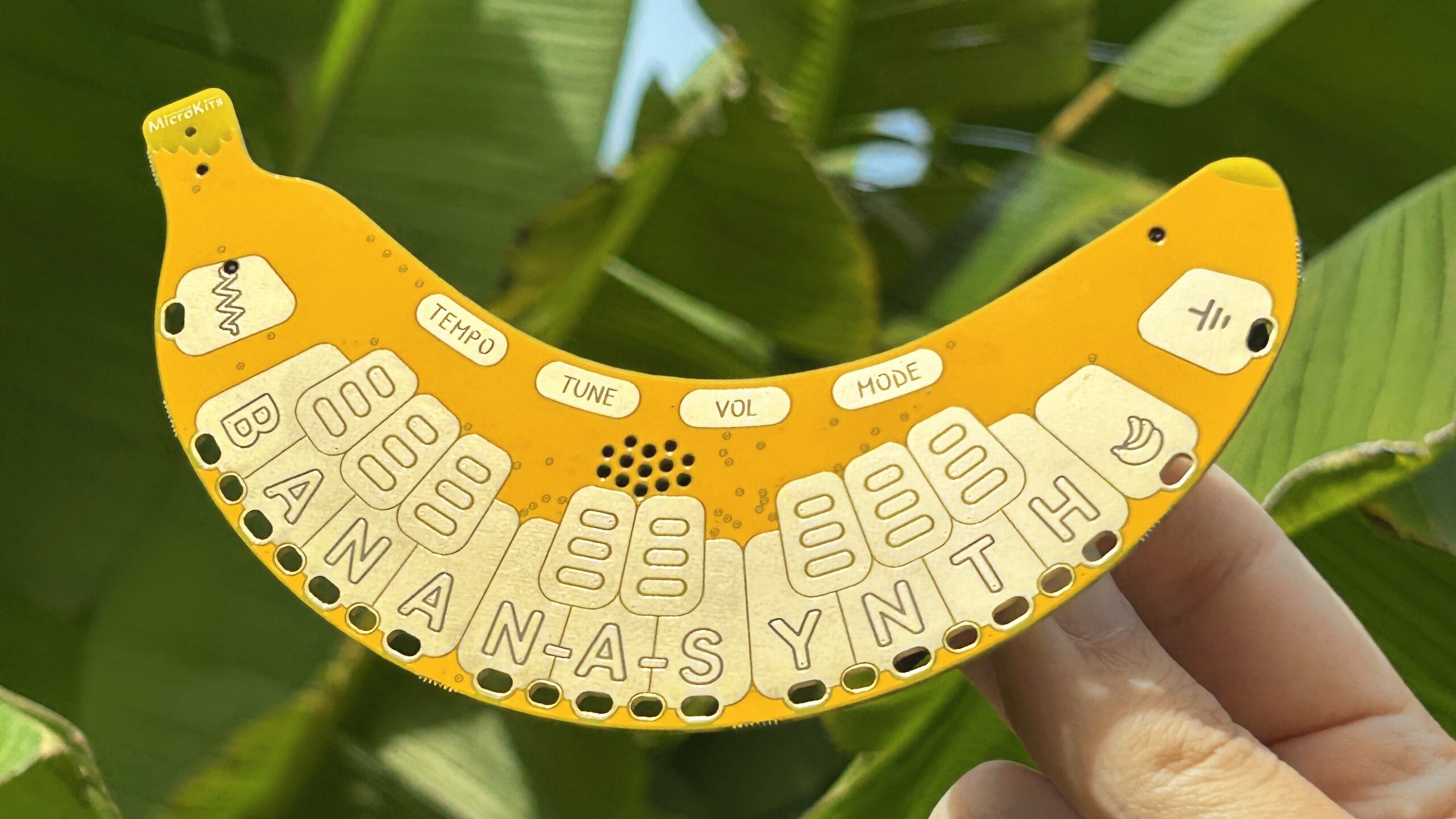
Review: Banan-a-Synth Is an Adorable Yellow Synthesizer Banan-a-Synth is just what it sounds like: a banana-sized, 20-note, capacitive touch keyboard that can mimic different instruments. And it sounds great. The post Review: Banan-a-Synth Is an Adorable Yellow Synthesizer appeared first on Make: DIY Projects and Ideas for Makers. image #rss #feeds #linksharing #qwibbit
MakerWire's avatar
MakerWire 2 weeks ago
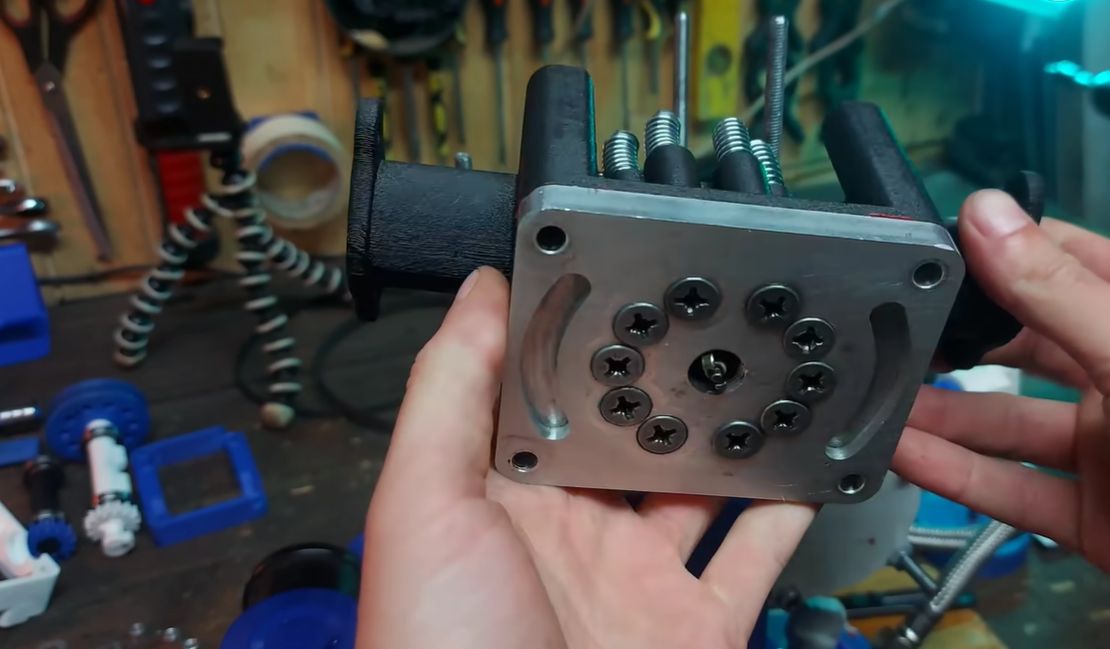
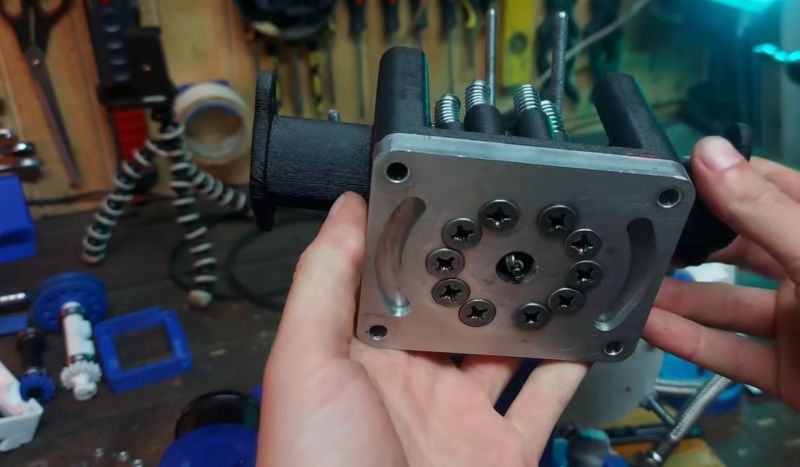
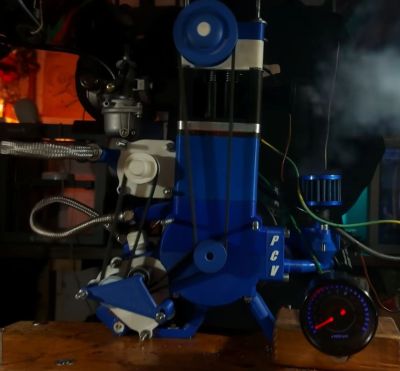
Making Internal Combustion Engines Better With More Valves When it comes to internal combustion engines (ICEs), it’s generally accepted that each cylinder doesn’t have more valves to let in a fresh fuel mixture and to exhaust the aftermath than absolutely necessary. You could argue in favor of this also because it reduces the amount of valve seat surface and thus the potential for leaks, but there is historical precedent for higher valve counts. Hence [Alexander’s Laboratory] had to give a ten-valve engine a shake, just to see what effect adding more valves has. A cited historical example is the Yamaha FX750, which features a five-cylinder engine that has three inlet and two outlet valves per cylinder, making for a 20-valve design that is claimed to improve performance, also because each valve can be smaller and lighter than with a single valve per side. Other motorbike manufacturers would also try such configurations, with some fascinating examples shown in the video. What [Alexander] tries here is to create a 10-valve version, for a symmetric five valves intake and five for exhaust. Rather than building an entire engine from scratch, the largely 3D-printed ICE that was featured in previous videos will be modified with a new cylinder head, replacing the current four-valve one. For the custom valves large wood screws are used, after making sure that they can take the heat of the combustion. Making even ten of these small valves fit was a challenge, but ultimately got squeezed into a CNCed aluminium and nylon-printed hybrid cylinder head. The existing camshaft was reused by using an adapter that simply drives five valves at the same time. After some troubleshooting and tuning the engine actually runs pretty well, though sadly no comparison metrics were provided versus the four-valve version of the cylinder head. Hopefully we’ll see this in an upcoming video. #internalcombustion #combustionengines #valves #making #alexander #rss #feeds #linksharing #qwibbit
MakerWire's avatar
MakerWire 2 weeks ago
John Park’s CircuitPython Parsec: Cap Touch on STEMMA Ports #circuitpythonparsec Plug-and-play cap touch sensing with STEMMA ports, plus bonus ground reference wire! Try out the code example To learn about CircuitPython: PyPortal: https://blog.adafruit.com/2026/10/30/john-parks-circuitpython-parsec-cap-touch-on-stemma-ports/ #rss #feeds #linksharing #qwibbit
MakerWire's avatar
MakerWire 2 weeks ago
Halloween Spirit from the Make: Editorial Slack Archives Every October, the Make: editorial Slack fills up with links. Someone posts a skeleton that carves pumpkins, someone else answers with a 30-foot marionette, and by Halloween we have a full haunted house worth of inspiration. Here are some of the builds that keep resurfacing in the channel, from animatronics and yard-scale puppets to costumes […] The post Halloween Spirit from the Make: Editorial Slack Archives appeared first on Make: DIY Projects and Ideas for Makers. image #editorialslack #slackarchives #halloweenspirit #make #everyoctober #someone #rss #feeds #linksharing #qwibbit
MakerWire's avatar
MakerWire 2 weeks ago
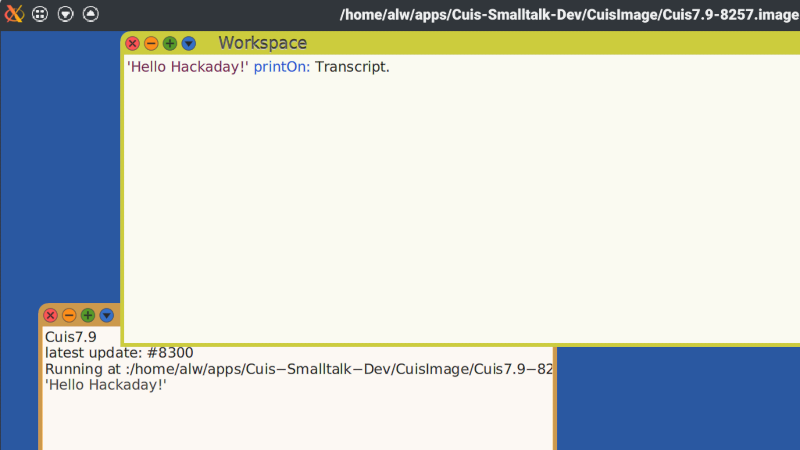
A Modern Smalltalk In the history of object-oriented (OO) computer languages, Smalltalk has a special place. It wasn’t the first OO language, and it hasn’t spread as well as some others. But it was the first OO language many people encountered, and it influenced many other languages you’ve probably seen. Developed at the famed Xerox PARC, it also introduced many people to the “model/view/controller” (MVC) architecture. Cuis Smalltalk is a free and portable modern Smalltalk-80 environment. It replaces the traditional MVC framework with Morphic, but otherwise, it would be very familiar to someone who used Smalltalk in the 1990s. The project’s goal is to stay simple at the core, although you can add complexity via packages. The software has been around for a while, but it is on a rolling release model, so the install page suggests you clone the Git repo. You can, however, get a stable release, which might be important if you were deploying applications. Running the program results in a Cuis desktop where you can open various things like workspaces, help documents, and the transcript. Smalltalk throws some people because it takes OO to an extreme. For example, you don’t add two and three using an operator. You send the object two a message that includes another object, three. You can think of sending a message as calling a method on an object. As with virtual functions in C++, different objects can respond differently to the same request. For example, an Animal class might have a speak message that causes a cow to print “moo” and a chicken to print “cluck.” You get used to it, and there’s a very nice class browser that lets you examine classes and what you can do with them. There are even packages to work with an Arduino over a serial port. They haven’t been updated lately, so they might (or might not) need a little work. We’ve looked at GNU Smalltalk before. We’ve also seen a version that runs directly on a Raspberry Pi. #modernsmalltalk #cuissmalltalk #xeroxparc #mvc #rss #feeds #linksharing #qwibbit
MakerWire's avatar
MakerWire 3 weeks ago
NEW GUIDE: FLAC and Ogg Playback with CircuitPython #AdafruitLearningSystem #CircuitPython A new guide in the Adafruit Learning System: FLAC and Ogg Playback with CircuitPython by Anne Barela with programming by Mikey Sklar. With CircuitPython Turbo on ESP32-S3, RP2350 (and similarly fast boards likely to follow), music playing capabilities have expanded. FLAC and Ogg Vorbis are popular open source audio formats that some prefer over MP3 for their higher audio quality. These file formats can now be played using CircuitPython. This guide shows how to play various FLAC and Ogg files using the Adafruit Feather ESP32-S3 and the Adafruit Fruit Jam which uses the Raspberry Pi RP2350B microcontroller. See this guide now > > > > https://blog.adafruit.com/2026/10/30/new-guide-flac-and-ogg-playback-with-circuitpython-adafruitlearningsystem-circuitpython/ image #rss #feeds #linksharing #qwibbit
MakerWire's avatar
MakerWire 3 weeks ago
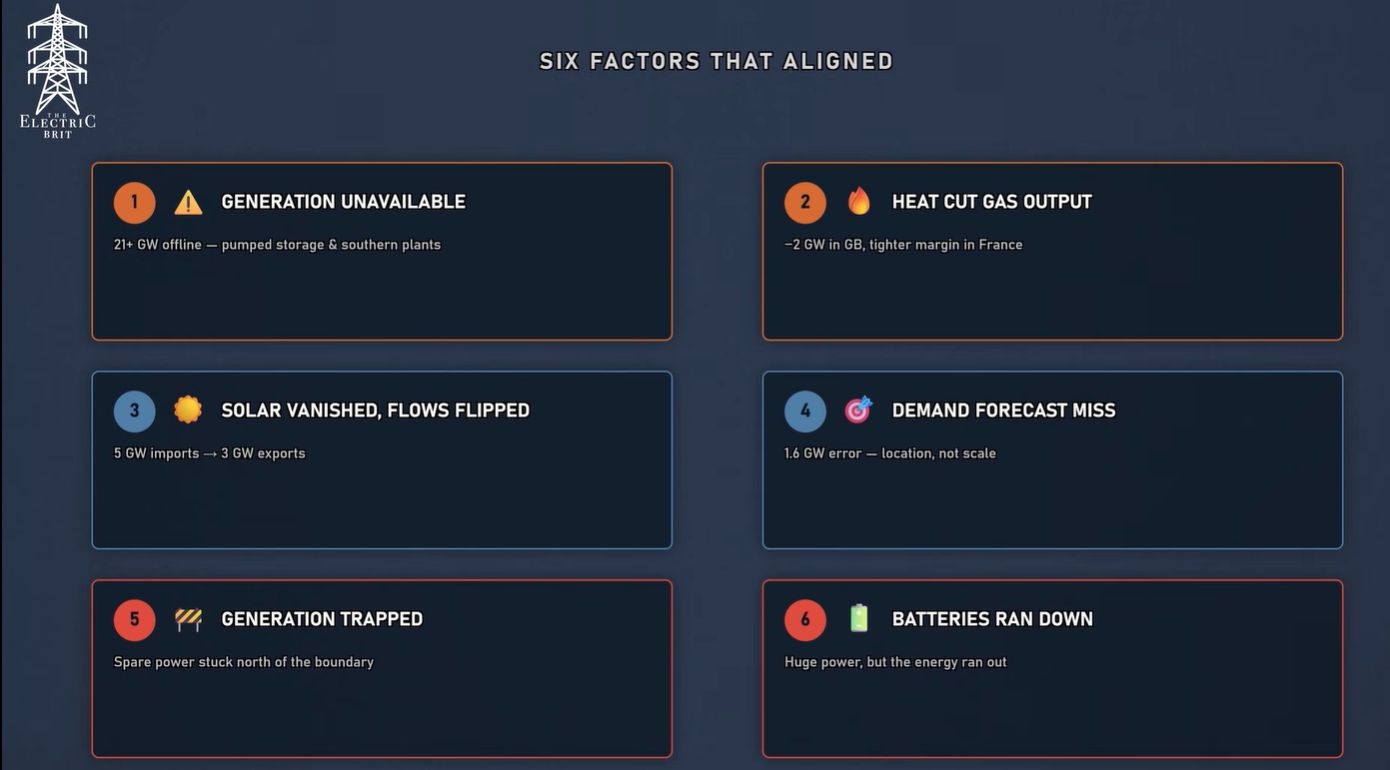
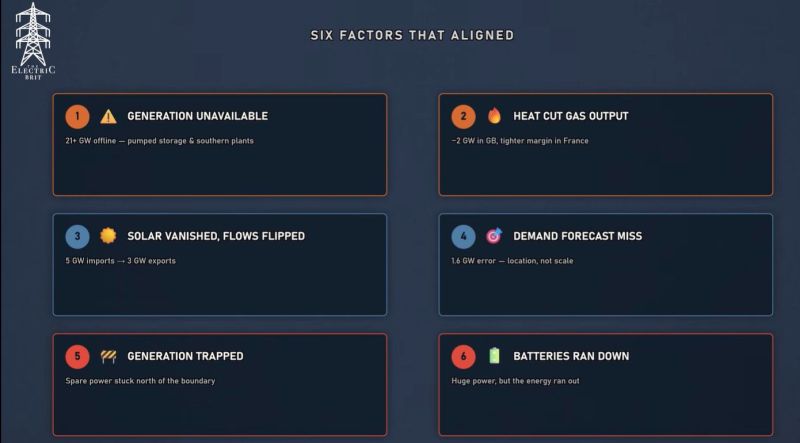
How Britain Narrowly Escaped a Grid Blackout in June 2026 Amidst one of the worst heatwaves in European history, Britain’s national grid saw itself faced with a quiet crisis this summer. On June 23rd, the grid frequency dropped to 49.657 Hz, down from the nominal 50 Hz — getting very close to the lower bound before safeties would start disconnecting parts of the grid. In a video by [The Electric Brit] this event is investigated, including its causes and how France’s spare capacity managed to save the day. Under normal operating conditions the UK grid is kept above 49.8 Hz, with the statutory lower limit being 49.5. Meaning that another drop of 0.157 Hz would have set in motion a series of quite extreme grid protection mechanisms including the possibility of local blackouts. Fortunately the cessation of energy exports and the importing of French power from hydro and nuclear power stations managed to nip this issue in the bud before it could get any worse. Although an example of correct grid management, it also shows how poorly planned maintenance and events like a heatwave can line up quite a few holes in the cheese slices that invite disaster. The problems here began weeks prior to the event, with 21.2 GW of generating capacity offline. Of this, 12.6 GW was planned maintenance, another 8.6 GW was unexpectedly offline, while another 2.6 GW of gas generation was mostly unavailable due to the heatwave curtailing production. A couple of interconnections with Ireland and other nations were also down for maintenance, leaving the grid control room with precious few options. Although the UK’s transmission system operator (TSO) NESO had its predicted capacities for variable renewable sources (VRE) like solar, it could not see local demand and production from e.g. rooftop solar in the control room. This became rather exciting when the evening neared and rooftop solar output dropped. Here NESO turned out to be lucky, but such hidden factors form a major risk factor when such consumers return to grid power. As VRE sources fell quiet across Europe that evening, this put the onus on remaining generating sources and brought the slowly developing crisis to its apex. Fortunately importing energy from France saved the day here, but there are many lessons to be learned here, many grounded in how complex AC grid management is once you consider all aspects that affect not just generators but also transmission lines. This event is different from the frequency oscillations that triggered the blackout on the Iberian peninsula in 2025. In that case a problem existed with reactive power management, with oscillations amplified by grid-following converters from solar farms and insufficient capacity on the grid to absorb this surge in reactive power, ultimately leading to the cascading blackout. Amidst these lessons on grid-management the discussions on whether baseload power generating is truly dead among other tropes, as well as the calls by European TSOs to make grid-forming converters mandatory on VRE generators will no doubt intensify. #grid #june #electricbrit #france #neso #vre #rss #feeds #linksharing #qwibbit
MakerWire's avatar
MakerWire 3 weeks ago
Open-source Hermes turns ESP32 into voice assistant Ananthu Ashok, writing at Open Source For You, covers Hermes, an open source push-to-talk voice assistant that pairs an ESP32 with a Windows PC. The project comes from developer ROHITCRAFTSYT and is released under the MIT license, with firmware, wiring details and setup instructions published. The listed build cost is roughly ₹1,500 to ₹3,000 depending on parts. The hardware is an ESP32 development board, an INMP441 digital microphone, a push-to-talk button, and an optional MAX98357A I²S amplifier with an 8Ω speaker. Holding the button captures audio. Releasing it sends the clip over WiFi to the PC, which replies with speech through the computer’s speakers or the ESP32 speaker. The documented firmware targets the standard ESP32, and the repository also has a schematic for the ESP32-S3. On the PC side, Hermes runs on Python 3.11 or newer and uses Groq for transcription and model processing, with NVIDIA as an alternative. Commands can open apps and websites and talk to smart home devices. There is no on-device wake word detection, and the voice processing is not offline. See more at opensourceforu.com and content on GitHub. https://blog.adafruit.com/2026/10/29/open-source-hermes-turns-esp32-into-voice-assistant/ image #rss #feeds #linksharing #qwibbit
MakerWire's avatar
MakerWire 3 weeks ago
This Week in Security: Broken Embargoes, UEFI Overflow, Wormable Tailscale, Starlink Ad Snooping, and a DHS Directory Dump Last week brought us at least two broken embargoes: php2shell leaked onto Hacker News a day early, and a batch of Linux kernel bugs landed on the public kernel mailing list instead of the private security list. This week has been slightly less exciting overall, fortunately, but Akamai’s security team published a pointed essay titled “TLP Is Not a Suggestion”, and it’s hard to argue with the timing. When a researcher finds a serious bug, the usual process is “coordinated disclosure”. The developers get time to build a fix, and downstream vendors get advance notice under embargo so patches and protections are ready the moment details go public. The Traffic Light Protocol (TLP) is the vocabulary everyone uses to say who may know what: TLP:RED for named recipients only, TLP:AMBER for an organization and its clients on a need-to-know basis, TLP:GREEN for a trusted community, and TLP:CLEAR for anyone. It has no legal teeth whatsoever. It’s not classified data in a legal sense. It works because everyone involved agrees to make it work. Akamai’s complaint isn’t really about the original php2shell leak, but about what came after: vendors and researchers racing to confirm, reproduce, and publish first. According to Akamai, a researcher published a reconstruction of the bug before the patch existed, and exploitation attempts started before most admins knew there was anything to patch. They draw parallels to Heartbleed in 2014, where a handful of companies got early notice and then advertised that they were already safe while Linux distributions were caught flat-footed, and to Meltdown and Spectre in 2018, where a six-month embargo collapsed six days early. In the rush to publish, it’s also become less clear what the actual severity of the bug is in the real world. It clearly exists, and is of concern, but groups are still struggling to prove a complete exploit path, with several challenges showing results but nothing definitive so far. Their advice boils down to “protect first, publish second”: push the detection rules and virtual patches, tell your customers privately, and save the blog post for after the official advisory. With AI tooling shrinking the time between “details exist” and “working exploit” to hours, the cost of a broken embargo is going up, not down. UEFI network boot bug in most servers Speaking of broken embargoes, Ars Technica reports on CVE-2026-97631, a CVSS 9.5 code execution bug in TianoCore EDK II, the open source codebase which nearly every firmware vendor builds on. That includes AMI, Insyde, Phoenix, and Microsoft’s own Project Mu fork. UEFI is the current iteration of what we knew as the PC BIOS: the firmware that runs before your operating system, initializes the hardware, and hands off to the bootloader. It’s also where Secure Boot starts its chain of trust, and where the TPM gets set up. Code running in UEFI runs before any of the operating system’s defenses exist, which makes it extremely attractive to attackers. The Preboot eXecution Environment (PXE) is the UEFI feature that lets a machine boot from an image downloaded over the network, which is common in data centers and labs with large numbers of identical machines. The bug is a 16-year-old buffer overflow in how the PXE driver stores ICMP error messages: it copies incoming errors into a fixed 504-byte buffer without properly checking the length. An attacker who can send a packet to the machine while it’s network booting can overwrite adjacent memory and, if they know the specific firmware build, run code at the highest privilege level before Secure Boot ever gets a say. Buffer overflows are nothing new, in fact they’re one of the oldest bug classes turned into exploits, but most operating systems today offer protections to reduce the severity. The pre-boot environment of UEFI has no such niceties, making the attack simple and completely effective. HD Moore told Ars it could be used to break disk encryption for an attacker with short-term network access, and that it will likely be a “forever” bug living on in out-of-support systems. If this sounds familiar, it’s because PixieFail found a similar family of PXE bugs in the same EDK II network code in 2024, and, as Ars notes, the fuzzing projects that followed missed this one. The disclosure was supposed to wait until January, but AMI published a pull request with the fix last month, and once the researchers noticed, TianoCore had little choice but to publish an advisory. If your machines boot only from local disks, you’re not affected, and that covers most home and small office systems. If you do use network boot, check with your firmware vendor, and consider turning off PXE booting where you don’t need it. Fortunately, this one is largely irrelevant for home users unless your network somehow gives direct access from the Internet to a server pre-boot environment, but it’s got potential to be a real issue for server hardware. Certificate authority fallout continues Last week we covered the eMudhra intermediate certificates whose private keys turned out to be tiny integers. This week, eMudhra announced that it is exiting the global SSL/TLS certificate business entirely. The press release insists the company “handled the recent incident diligently”, that its infrastructure was never compromised, and that TLS was only about 1% of revenue anyhow, but that “the level of social media amplification around this incident has brought scrutiny that is out of proportion.” Having your keys guessable by anyone with a few minutes of free time will do that. Meanwhile, GoDaddy has self-reported to Mozilla that it couldn’t meet the deadline to revoke 404,607 certificates that didn’t match its own published certificate policies. The rules browsers and CAs agree to, the CA/Browser Forum “Baseline Requirements”, say a CA must revoke a mis-issued certificate within five days. GoDaddy managed to revoke 170,566 by the deadline, and about 227,000 a day later. Mass revocation is genuinely hard: every one of those certificates is installed on someone’s server, and revoking it before it’s replaced breaks their website. That’s exactly why the browser root programs care so much about CAs being able to do it on time. Short-lived certificates, the kind Let’s Encrypt has been pushing for years, make this a lot less painful because a bad certificate expires on its own in days instead of months. We’ll be living the revocation long-tail experience with eMudhra certificates for years with devices which don’t, or can’t, check revocation lists for the long-running CA certificates. Tailscale wormability Tailscale and headscale, its self-hosted, open source control server, have become extremely popular. This is especially so in the maker and homelab world, where they are used for building private networks between devices. Under the hood, Tailscale builds a mesh of WireGuard VPN tunnels between every device, with a central control server deciding who can talk to whom. It also offers “Tailscale SSH”, which replaces the normal SSH server on a device and authorizes logins based on which device is connecting, rather than passwords or keys. Erica Windisch of Cyberdione Labs has published a report called Tailworm detailing a series of findings in Tailscale and headscale. The most serious is in Tailscale SSH, which runs as root: socket forwarding requests are handled with root privileges and are subject to race conditions, letting an ordinary user with SSH access to a device replace or connect to privileged sockets (like the Docker socket or the init system) and gain root. Combined with capturing the keys used to enroll new devices, Windisch reports that a single compromised device could spread automatically to every device the access policy allows, at under a second per hop, with no passwords or stolen keys required. She also found an experimental app connector feature that can be used to reach destinations the network policy never allowed, including cloud metadata services that hand out credentials. And to top it all off, Windisch discovered unauthenticated memory exhaustion attacks against internet-facing headscale servers. Notably, the researchers didn’t follow coordinated disclosure, arguing that “infrastructure is vulnerable today” and that rapid awareness will speed up fixes. Whether you agree with that or not (see the first story this week), the mitigations are practical: use per-device access rules for SSH rather than broad tag or group rules, disable SSH forwarding where you can, and expire node keys on servers. Fortunately it doesn’t seem like the bug is vulnerable to the Internet at large. A compromised device inside your Tailscale network could reach other devices in your network, but it won’t melt the Internet, yet. A One-Byte Typo in Embedded TLS FoxIO is back with three TLS bugs in GoAhead, a small embedded web server that runs the management interface on an enormous number of devices: routers, printers, firewalls, and industrial controllers from vendors including Palo Alto Networks, D-Link, HP, Canon, Honeywell, Siemens, and Rockwell. The most severe (CVE-2026-115881, CVSS 9.1) is that GoAhead’s OpenSSL integration loads the configured certificate revocation list, but never actually turns on revocation checking, so revoked client certificates keep working, but the most fun is in the Mbed TLS integration: a copy-and-paste error passes the size of the one-byte Diffie-Hellman generator as the size of the 256-byte prime modulus. The result is a “2048-bit” key exchange using a prime of 255, which leaves exactly eight possible shared secrets. An eavesdropper can simply try all eight. (Clients like OpenSSL reject the broken parameters, but more permissive embedded clients happily accept them.) A third bug (CVE-2026-115884) lets an overly long certificate chain bypass a depth check when built against older LibreSSL. Feels eerily similar to the eMudhra one-number password, and the timing is spooky. It’s a good reminder of Apple’s infamous “goto fail” bug in 2014, where a single duplicated line silently skipped certificate verification. Crypto code fails quietly: the handshake completes and everything looks fine. GoAhead 6.1.1 fixes all three, but for the hundreds of millions of embedded devices running it, the fix depends on every vendor shipping a firmware update, and on owners installing it. Which will surely happen rapidly and effectively, right? Volt Typhoon’s Chain of Routers Kim Zetter reports on new research from Lumen’s Black Lotus Labs into how Volt Typhoon, the Chinese state hacking group that US officials say has been “pre-positioning” inside American critical infrastructure, actually gets in and out. Attackers rarely connect to a target directly from their own systems. Instead, they bounce through chains of compromised devices, often called “ORB networks” (operational relay boxes), so the traffic appears to come from somewhere innocuous. The sudden burst of news about Residential Proxy Network tools in the Spring and early Summer of 2026 could have been related: proxy networks provide a way to appear inside a country, or state, or even specific city. Volt Typhoon’s version, which the researchers named Silent Train, is unusually disciplined: each chain of compromised servers, home routers, and IoT devices is assembled and used for a single intrusion, then dismantled and wiped. All this often in under two minutes, suggesting automation. Devices outside the US are never the same models as devices inside the US, presumably so no single vendor’s telemetry can see the whole chain. Targets included government agencies, defense contractors, telecoms, emergency communications, satellite operators, and energy, water, and rail operators, clustered in Hawaii, California, and Texas. The chains included more than 27 classes of devices, including TP-Link and Netgear consumer routers, with a new device type added about once a month. Most of these were compromised through known, already-patched vulnerabilities. If you’ve got an old router or IoT gadget that hasn’t seen a firmware update in years, it may well have spent some time as a train car. Update it, retire it, or upgrade it with OpenWRT or another modern embedded distribution. Discover-Tech and Starlink Last week we talked about Citizen Lab’s research showing the Israeli ad-tech company Discover-Tech used targeted ads to deliver Candiru spyware. Gizmodo reports that the same company appears to be the top bidder for ad impressions on Starlink connections in 105 countries. Research from TrendAI found an entity it labeled SHADOW-EARTH-79 won about 12% of ads shown to Starlink users, compared to a 3% baseline elsewhere, and over 80% of Starlink ad wins in Argentina, the Philippines, and Japan. It was also the top bidder in Syria, Libya, Yemen, and South Sudan, markets where, as TrendAI put it, “the demand for legitimate Western advertising in sanctioned or active-conflict states is effectively zero.” Reuters later reported that SHADOW-EARTH-79 was TrendAI’s internal name for Discover-Tech. The company spent about $109,000 on bids over four months with no recorded conversions, which is not how a business that wants to sell things behaves. Real-time ad bidding shares device and location details with every bidder, whether they win the auction or not. Users of satellite internet are exactly who someone would want to locate in places where it’s restricted or politically sensitive, and the ad market will happily tell you where they are. Ad blockers continue to look less like a convenience and more like a necessity. Quad9 leaves France Quad9, the free, privacy-focused DNS resolver run by a Swiss nonprofit, is withdrawing service from France on November 24th, after losing a court case brought by the sports broadcaster beIN. A DNS resolver turns names like “hackaday.com” into IP addresses. Quad9 doesn’t host any content, but the court ordered it to block resolution of domains beIN says are pirating its broadcasts, for users in France. Quad9 says it can’t comply: it doesn’t track who its users are or where they are, and the only alternatives are blocking the domains for the entire world, applying French law globally, or trying to geolocate users by IP address. It tried geolocation in a similar case brought by Sony in Germany, and was fined for contempt when Sony’s lawyers simply used a VPN. (Quad9 eventually won that case, after several years and six figures of legal costs.) With about 20 similar cases pending in France, it decided to leave. As the EFF points out, none of this removes a single infringing website from the Internet; it just takes a malware-blocking privacy service away from French users, who can switch to another resolver in about thirty seconds. Making infrastructure providers act as copyright enforcement is a tool that’s very easy to repurpose for blocking other things. A net loss for Internet-savvy users in France, but kudos to Quad9 for standing up for principles. Crime Stoppers Tips Leaked The CBC has analyzed data stolen from P3, the tip management platform used by Crime Stoppers programs internationally, and found more than 1.5 million Canadian tips from the past 25 years. More than half contained personal information, including addresses, phone numbers, license plates, and banking details for cash rewards. Over 4,300 tipsters identified themselves by name, and even tips flagged by staff as having exposed the tipster were stored unredacted. The data was stolen in March by a hacktivist group that said it wanted to disprove the platform’s claims of being “anonymous” and “secure”. After the CBC’s report, Toronto Crime Stoppers paused its program and at least six Ontario police services suspended their partnerships. Toronto’s chair, Sean Sportun, told the CBC, “It clearly seems that you have more data than us, which is a little concerning,” saying the platform’s owner, Navigate360, never provided the text of the stolen tips despite months of requests. The most fundamental problem here may be retention. A system that promises anonymity kept 25 years of tips, including closed cases, in one place. The safest data is data that you don’t have. DHS Employee Direct #brokenembargoes #tlp #security #dhs #uefi #akamai #linux #lightprotocol #trafficlight #clear #rss #feeds #linksharing #qwibbit

MakerWire's avatar
MakerWire 3 weeks ago
ESP32-S3 WiFi bridge for a USB printer MAXXTANG published a project on Hackster.io that puts a USB-only Brother HL-1110 laser printer on a WiFi network using an ESP32-S3. The computer prepares the job with the normal Brother driver and sends it to TCP port 9100. The ESP32-S3 passes the bytes through its USB Host port to the printer. The board’s native USB port goes to an OTG adapter and then the printer, while the separate UART port handles flashing and power. A charge-only adapter will not work. The firmware is an Arduino sketch built with the Espressif ESP32 board package, and it is set up for an N16R8 board with 16 MB flash and OPI PSRAM. On first boot the board brings up a PrintServer-Setup access point at 192.168.4.1 for entering 2.4 GHz WiFi credentials. After that, a browser dashboard at http://hl1110.local shows printer status, WiFi settings and a restart control. The build also includes mDNS, a watchdog, OTA updates and a 512 KB PSRAM print buffer. This is a raw port-9100 bridge with no AirPrint, IPP or LPD, and no authentication, so it is meant for a trusted local network. Code is MIT licensed. See more at hackster.io and content on GitHub. https://blog.adafruit.com/2026/10/29/esp32-s3-wifi-bridge-for-a-usb-printer/ image #usb #wifi #usbhost #brother #psram #tcp #otg #arduino #opi #ghzwifi #rss #feeds #linksharing #qwibbit
MakerWire's avatar
MakerWire 3 weeks ago
Will open firmware become the next big trend in electronic music gear? Synthhead at Synthtopia looks at a run of recent announcements that let musicians replace or extend the software running on their hardware. The starting point is the M-Vave FM-1, a low-cost FM synthesizer that drew independent developers writing their own synths, sequencers, and effects for it. M-Vave answered with an official development platform: source code, an SDK, and a browser-based workbench for projects, samples, voices, and firmware. The application code is GPL, but the FM-1 sound engine library stays a binary blob. Other companies are moving the same way. Akai has teased SampleKey, a 25-key sampler, and parent company inMusic says it will offer community hardware access, some open-sourced software, and an SDK. Behringer published a large repository for its KICK sampler before the product shipped. Erica Synths open-sourced the LXR-02 drum machine firmware on October 23, 2026, while noting that modified builds are installed at the user’s own risk and a damaged bootloader means a paid repair. On the unofficial side, Klangfeld Labs’ DOOM OS adds a graphical sequencer and piano-roll editing to Roland’s SP-404MKII, currently at version 0.6.2-alpha. See more at synthtopia.com and content on GitHub. https://blog.adafruit.com/2026/10/29/will-open-firmware-become-the-next-big-trend-in-electronic-music-gear/ image #open #sdk #synths #gpl #october #kick #rss #feeds #linksharing #qwibbit
MakerWire's avatar
MakerWire 3 weeks ago
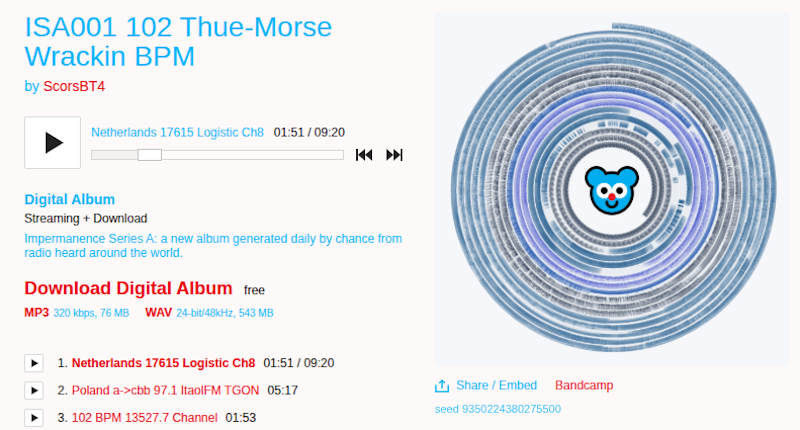
The Sounds of the World, One Random Album at a Time In the streaming era it’s easy to forget that there’s still a lot of stuff being broadcast over the radio for anyone who cares enough to dial in their receiver. Give me an antenna big enough and a tower on which to place it, and I shall listen to the world. Of course, so you can’t actually listen to everything being blasted out all over the planet yourself. But if you’d like to at least have a little taste, check out Impermanence Series A — a project by [Sam Scorsby] that randomly combines bits and pieces of audio pulled down from shortwave and FM broadcasts with some web streams, live microphones, and even a bit of the Internet Archive each day into a one of a kind album. We’re not sure we’d call it music, exactly. But it’s certainly fascinating to listen to, a bit like randomly spinning the dial on a planet-wide radio receiver. [Sam] has shared the Python scripts that pull together each day’s album, and he’s not shy about the fact that the project was created with the help of artificial intelligence tools. In fact, that’s sort of the point. [Sam] puts himself somewhere in the middle when it comes to the current debate over AI, and acknowledges that while computers are good at processing raw data, it still takes a human touch to put it all into context. So each day [Sam] will listen to the latest computer-generated album and pick his favorite tracks, and once the project has run its course, he’ll put together a human-curated “Best Of” collection. Man and machine working together, each doing what they do best. We know something of opinionated folks on the Internet, and our experience tells us that Impermanence Series A is unlikely to change anyone’s minds when it comes to AI. But we do appreciate the thoughtful approach [Sam] has taken with the project, and look forward to hearing what he comes up with in the end. #randomalbum #world #sam #impermanenceseries #samscorsby #internetarchive #best #rss #feeds #linksharing #qwibbit
MakerWire's avatar
MakerWire 3 weeks ago
Send BLE air quality data to Cloudflare D1 with Python sheikh shuhad has posted a tutorial on Hackster.io that moves Bluetooth Low Energy sensor readings into a serverless database. A HibouAir sensor advertises air quality data over BLE. A BleuIO dongle plugged into a computer’s USB port scans for that specific board ID and passes the advertising data to a Python script over the serial port. The Python side decodes CO2, temperature, and humidity, prints the values to the terminal, and POSTs them as JSON to a Cloudflare Worker. The Worker checks an API key in the request header, then inserts the reading into a Cloudflare D1 database, which is SQLite running on Cloudflare’s edge. A second endpoint returns the most recent stored measurement. Python only needs pyserial and requests. BleuIO is driven with AT commands, so the application never uses the operating system’s Bluetooth stack. Scan interval, serial port, board ID, Worker URL, and the API key all live in a config file kept out of version control. See more at hackster.io and content on GitHub. https://blog.adafruit.com/2026/10/29/send-ble-air-quality-data-to-cloudflare-d1-with-python/ image #sendble #airquality #qualitydata #cloudflare #python #lowenergy #worker #bluetoothlow #bleuio #usb #rss #feeds #linksharing #qwibbit
MakerWire's avatar
MakerWire 3 weeks ago
H.264 is magic (2016) Sid Bala wrote a walkthrough of how H.264 video compression works, published on sidbala.com. He starts with a demonstration: a screen capture of the Apple homepage, 300 frames long, encodes to 175KB as H.264. A single frame of that same video saved as PNG is 1015KB. The post covers the main tricks. Raw 1080p at 60Hz runs about 370 MB/sec, so something has to go. H.264 transforms image data into the frequency domain and discards the high frequency components, which are the fine details. Bala shows the laptop close-up at 2% of the original information entropy, where the speaker grill holes disappear but little else does. Then chroma subsampling, which stores brightness at full resolution and color at a quarter, cutting bandwidth roughly in half. Then motion compensation, where 16×16 macroblocks carry motion vectors and only I-frames hold a complete picture. That is also why scrubbing backward on YouTube pauses before it plays: the decoder has to rebuild from the nearest I-frame. A lossless entropy encoder cleans up the remaining redundancy at the end. See more at sidbala.com. Via Hacker News. https://blog.adafruit.com/2026/10/29/h-264-is-magic-2016/ image #bala #viahacker #sidbala #apple #png #rss #feeds #linksharing #qwibbit
MakerWire's avatar
MakerWire 3 weeks ago
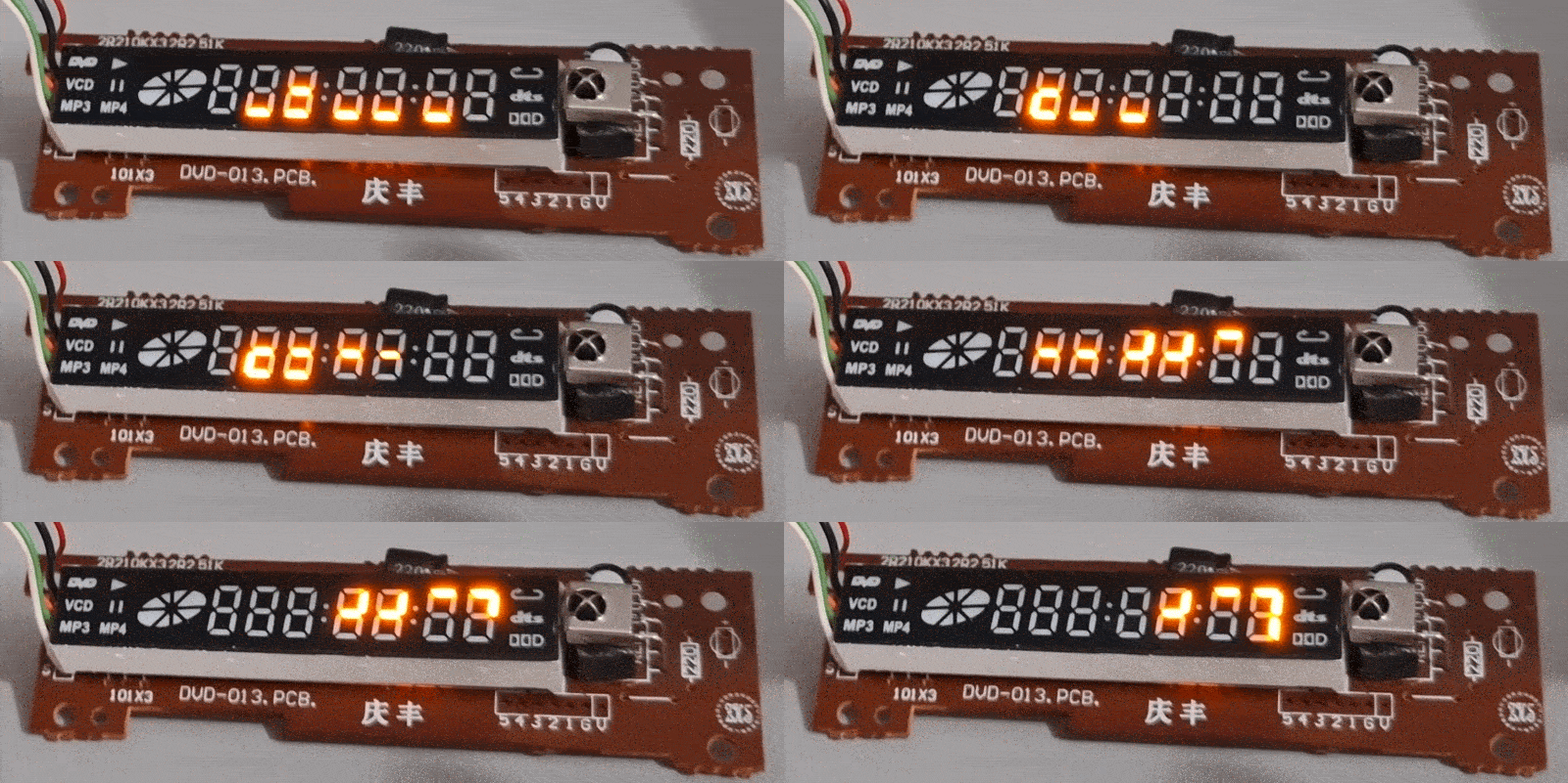
Snake On a Seven-Segment Display is Gloriously Bad You’ve no doubt heard the saying, “If something is worth doing, it’s worth doing well.” But there’s actually a counter-perspective to this particular philosophy that says it’s also worth doing things badly, with the general idea being that even a semi-successful attempt at something is better than no attempt at all. We’re not sure if that’s the principle [José Luis Monteiro] and his father had in mind while working on a way to play the classic Snake on a seven-segment LED display salvaged from an old DVD player, but surely the end result is the same. It’s not so much that the display isn’t a good fit for the eponymous snake, in fact, it actually makes a strange amount of sense. Each of the segments can stand in for a piece of the ever-growing serpent, and they’re already arranged in a roughly rectangular grid that makes moving around straightforward enough. The issue is that the resolution — such as it is — of the display it pretty unforgiving for anything else. Namely, the “food” that your sake is after is naturally identical to one of its own segments, so it doesn’t take long before it’s all rather confusing visually. But in those brief opening moments, it actually works pretty well. Even if you’re not interested in Snake, between the documentation, source code, and the video below, this project is a great primer on reverse engineering these types of displays. With a microcontroller, a datasheet, and a bit of patience, you could put together an unattractive and frustrating gameplay experience of your very own! If that’s not the dream, what is? #snake #display #joseluis #luismonteiro #even #dvd #led #rss #feeds #linksharing #qwibbit

MakerWire's avatar
MakerWire 3 weeks ago
Touchscreen shirt shows photos, plays videos, and answers calls Mack DeGeurin, writing at Popular Science, covered a team at the National University of Singapore College of Design and Engineering that built what it calls the first touchscreen woven into a garment. The display is 96 by 54 pixels and sits on the inner forearm, measuring 6.6 by 4.3 inches. It supports multitouch and 8-bit color. Each display fiber is a thread about one millimeter thick holding a strip of LEDs. The group used laser-guided molten solder to bond connections at precise points along insulated wire, then drew the result into a multilayer fiber. More than 5,000 chips and over 20,000 electrical components went into the fabric. In testing the shirt connected to a phone, scrolled photos, showed notifications, took voice commands over Bluetooth, and ran a calculator. Video plays at 30 frames per second without sound, dropping to 25 with audio. The team says the fabric is as breathable as denim and survived 1,000 bend cycles and 50 washing machine runs with the display and touch sensors still working. How the garment is powered is not clear. The findings were published in Nature. See the video below and more at popsci.com. https://blog.adafruit.com/2026/10/29/touchscreen-shirt-shows-photos-plays-videos-and-answers-calls/ image #popularscience #photos #nationaluniversity #singaporecollege #calls #bluetooth #nature #rss #feeds #linksharing #qwibbit
MakerWire's avatar
MakerWire 3 weeks ago
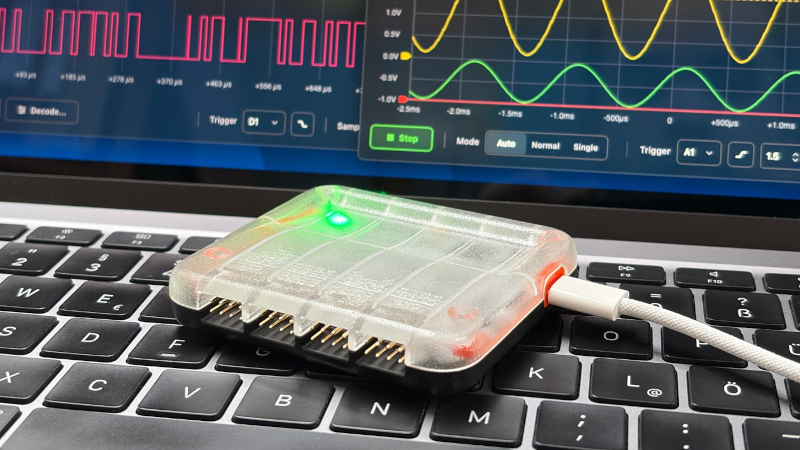
Is This The Only Instrument You Need? When working on an electronic project it’s likely you will find yourself working with a variety of different instruments, be they logic analysers, oscilloscopes, or whatever. These can take up a lot of space, not to mention cost a bundle of cash. [Max.K] came up with PicoLab as a solution, it’s an all-in-one box containing a 4-channel oscilloscope, 8-channel logic analyser, GPIOs, a data logger, and serial, SPI, and i2C interfaces. There’s even an adjustable power supply! Behind it all is an RP2350, in its larger package with more pins, coupled to some custom interface and protection circuitry. Perhaps the cleverest part is its interface, which it serves as a web site on the network card it exposes through the USB port. Any OS that supports a web browser and USB networking can thus use this thing. You can find all the code in a GitHub repository, should you wish to have a go at building one yourself. We like this idea. #usb #spi #rss #feeds #linksharing #qwibbit

MakerWire's avatar
MakerWire 3 weeks ago
Vintage phone AI assistant Ramazan Eren Arslan turned a Deutsche Bundespost FeTAp 791 rotary telephone into a voice assistant, with the build documented on Hackster.io. Lift the handset and talk, and Google Gemini answers through the original earpiece. A Raspberry Pi 3B sits inside the phone where the original PCB used to be. The hook switch wires to GPIO 17 so the Pi knows when the handset is lifted. The rotary dial pulses go to GPIO 22, and dialing a number selects the assistant language. Audio runs through a USB sound card. Arslan expected to replace the handset parts, since the carbon microphone was not meant to work with a sound card built for electret mics. Both the microphone and the speaker worked when connected directly. The audio quality is poor, which he counts as part of the nostalgia. He notes that AI did much of the coding and documentation, so bugs are likely. See more at hackster.io and content on GitHub. https://blog.adafruit.com/2026/10/29/vintage-phone-ai-assistant/ image #assistant #deutschebundespost #googlegemini #phone #erenarslan #gpio #bundespostfetap #ramazaneren #audio #pcb #rss #feeds #linksharing #qwibbit
↑